Waiting for Dusk
The course is open before the first group reaches it. Fairways extend toward a low white building, palm trees standing along the boundary. The grass holds the early light differently from how it will hold it later. Flatter, cooler, without the warmth that the afternoon will bring.
A bag stands beside a green. A caddie moves across the far side of the fairway. Nothing has started yet, though everything is in place for it to. There is a particular quality to a place prepared for a day that has not yet begun.
Figures cross the landscape in groups, bags carried between them. The distance between one group and the next repeats itself along the course. Each group moves the same way, at the same pace, toward the same horizon.
Seen from far enough away, the movement becomes a pattern rather than a sequence of individuals. The game produces a specific kind of choreography, one that repeats across every hole, every round, every tournament, governed by the same distances and the same measured intervals. Golf is a sport of repetition made to feel, each time, like a problem being solved for the first time.
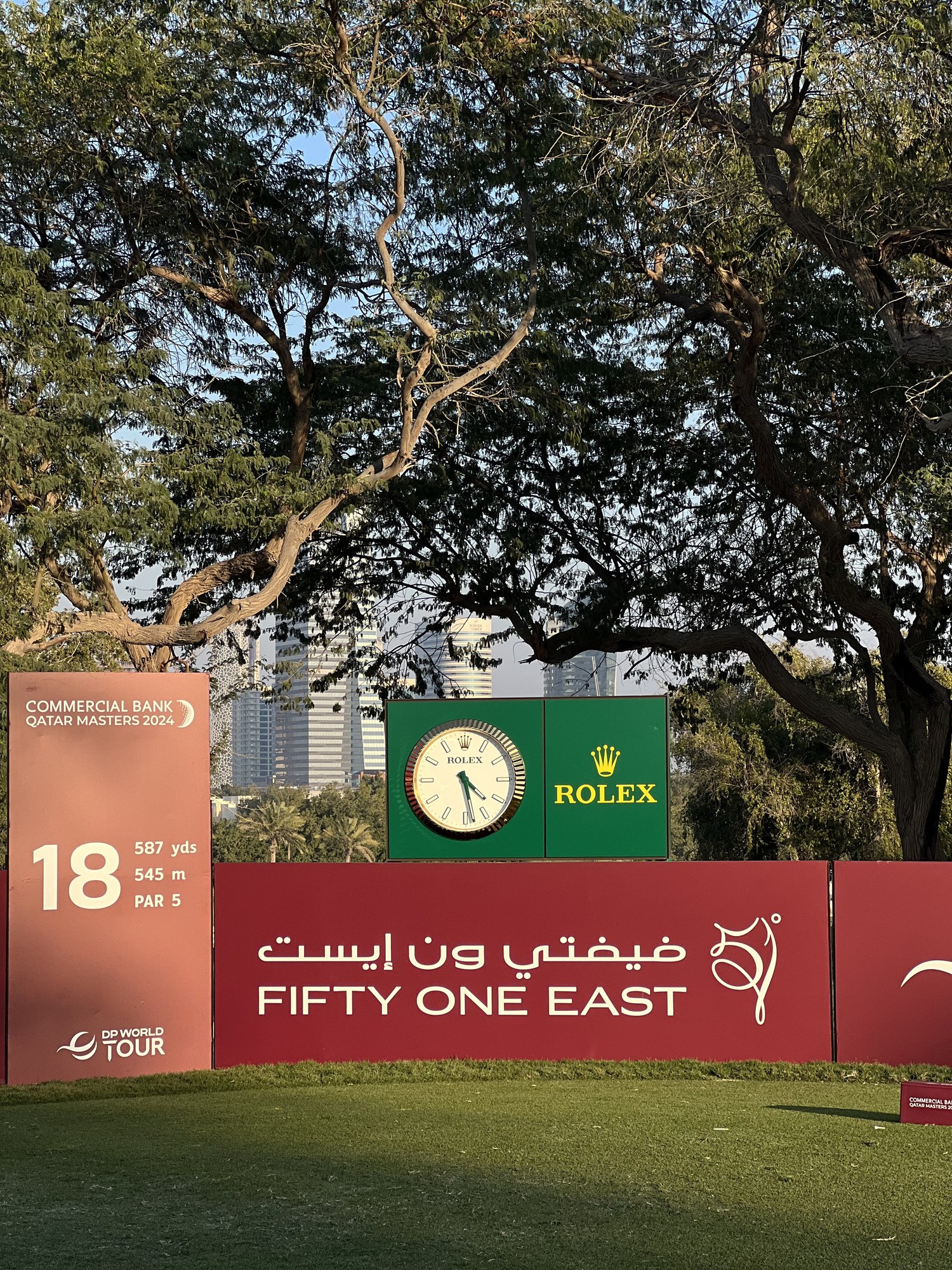
A clock stands among the palm trees, its face visible from several directions. Elsewhere, a board gives a distance and a direction, numbers fixed beside the fairway. At the tee, a marker names the hole and its par.
These objects do not explain the day. They divide it. Time and distance, marked and remarked at every interval, so that a day on the course can be read in increments rather than experienced as a whole. The landscape is crossed in units. The numbers are always there.
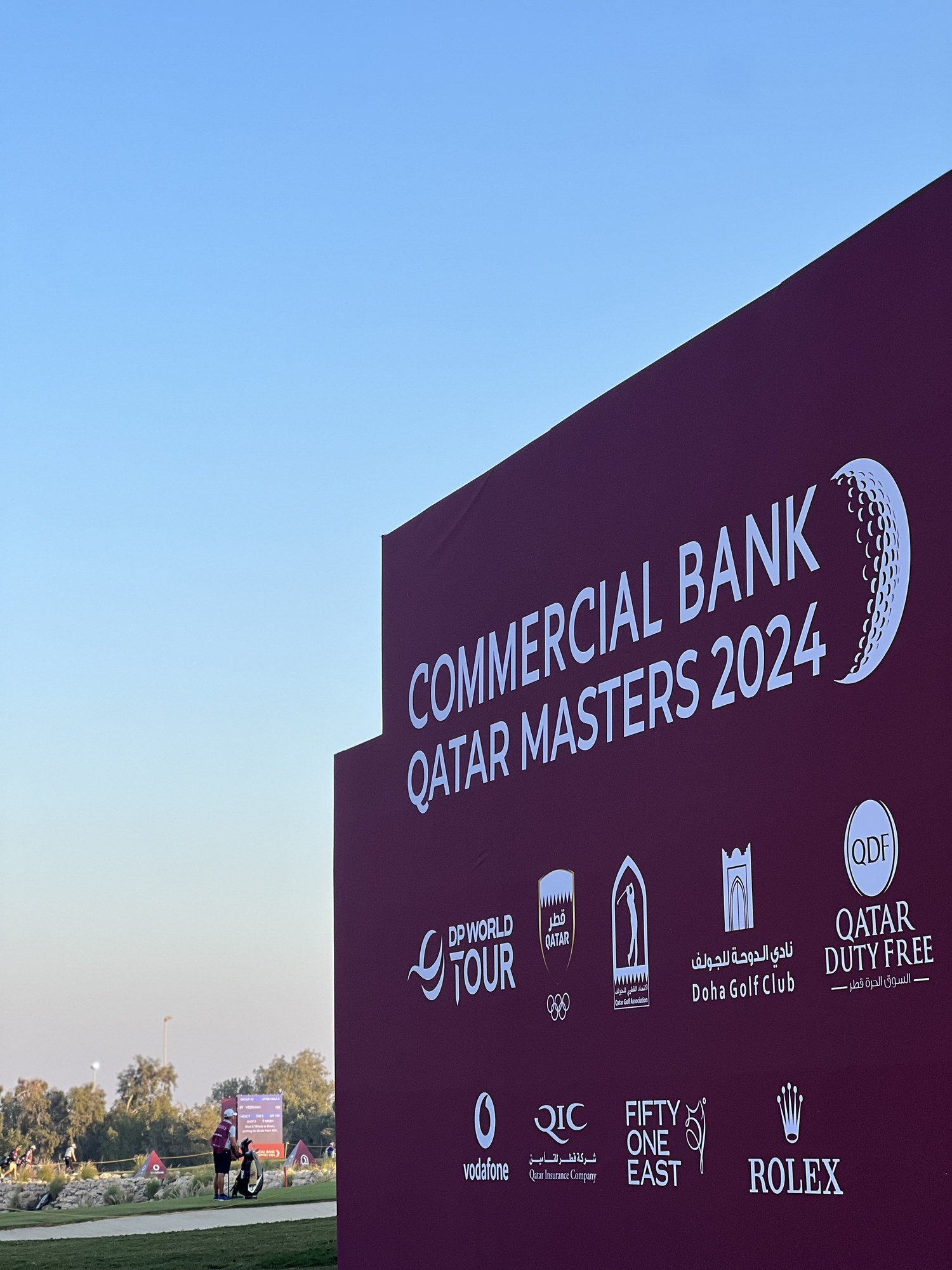
Beside the course, a sign names the tournament, partners listed beneath it in smaller type. Nearby, people stand without doing very much. A pause before a shot. A conversation that does not appear urgent. A wait for a group ahead to clear the green.
These moments take up most of the day, though they rarely appear in how a day like this is described. The sport generates a great deal of stillness alongside its action, and the stillness is what the photographs kept returning to. The pause, the wait, the moment held between one thing and the next.
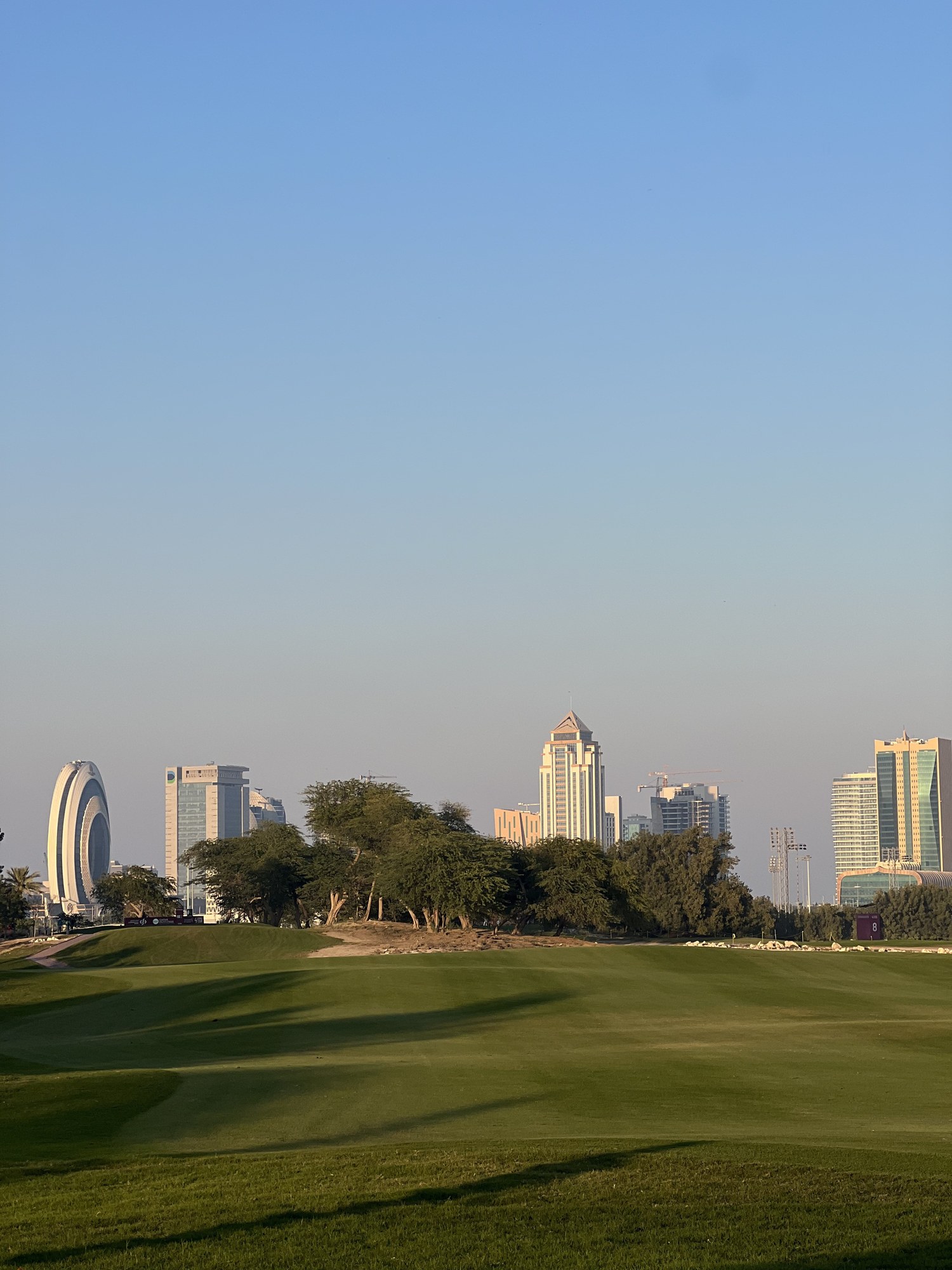
Beyond the course, the city is visible without being close. Towers sit along the horizon, pale against the sky, separated from the fairways by a wide stretch of grass and open ground.
The course and the city occupy the same view but not the same world. The fairways are governed by the same rules they have always been governed by. The towers behind them are indifferent to the score. There is something clarifying about that distance: the game proceeding with complete seriousness against a backdrop that does not notice it.
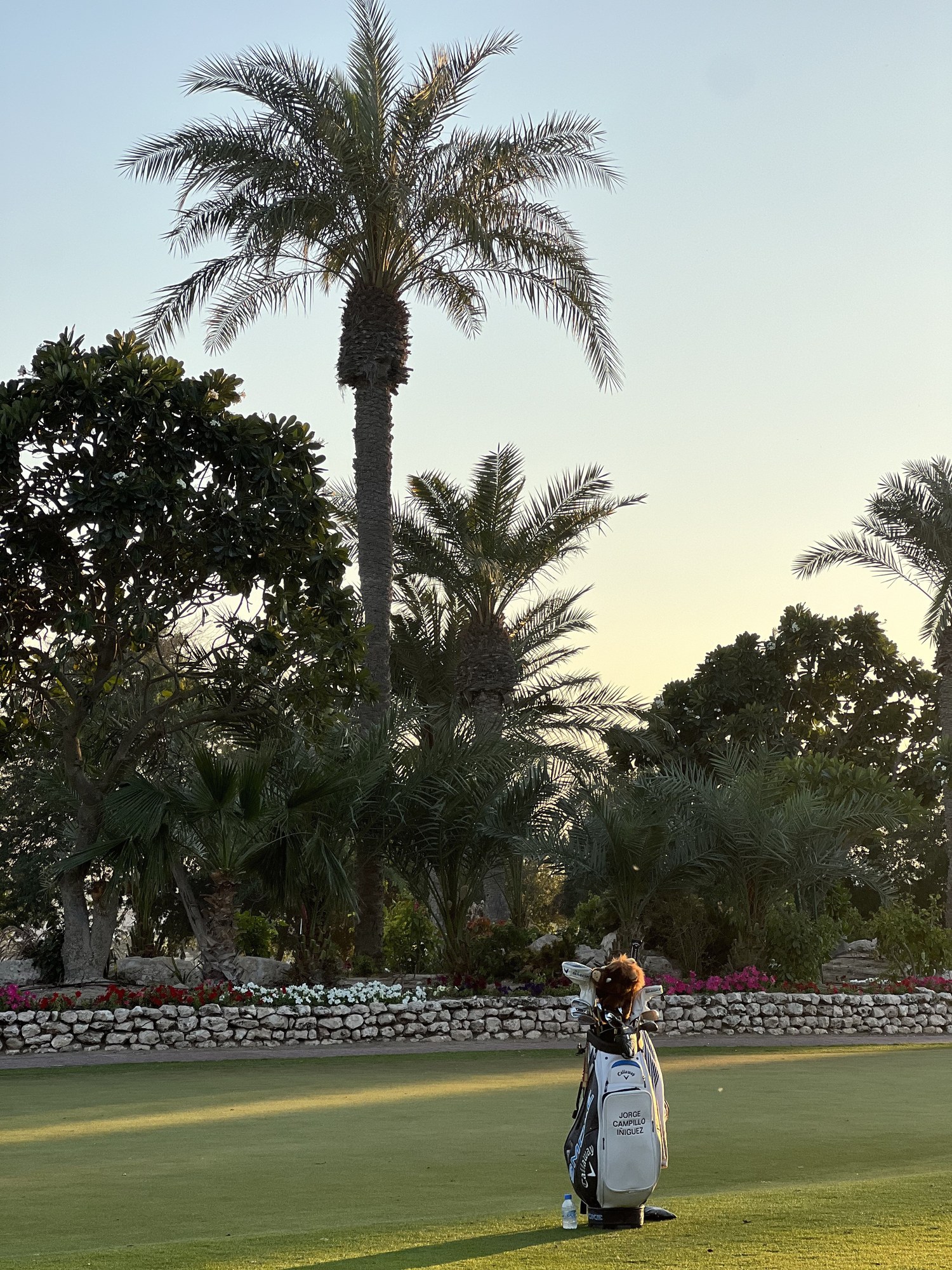
By late afternoon, the light has changed. Shadows extend across the fairways, longer than they were an hour before. The colour of the grass shifts toward gold, then deeper toward amber. A single bag stands beneath the palm trees, the sun low behind it, the sky open above.
This is the part of the day that lasts the shortest and is noticed the most. It has a quality of acceleration. The hour moves faster than it did at noon, the light losing ground in a way that makes it visible as something finite.
The last groups move across the course as the towers catch the remaining light. The grass holds its colour a little longer than the sky does. The score is still being kept somewhere, though it is harder to care about it now.
There is no final shot, no last putt shown here. Only the course, still occupied, still lit, the day continuing somewhere just beyond the frame.
A golf tournament in Doha, in the last hour of a desert afternoon. The specific quality of light that comes at that hour is the whole subject: the way it lands on the grass, on the bags, on the faces of people who have been outside all day and are beginning, slowly, to pack up.
The sport is the reason everyone is there. The light is what remains.
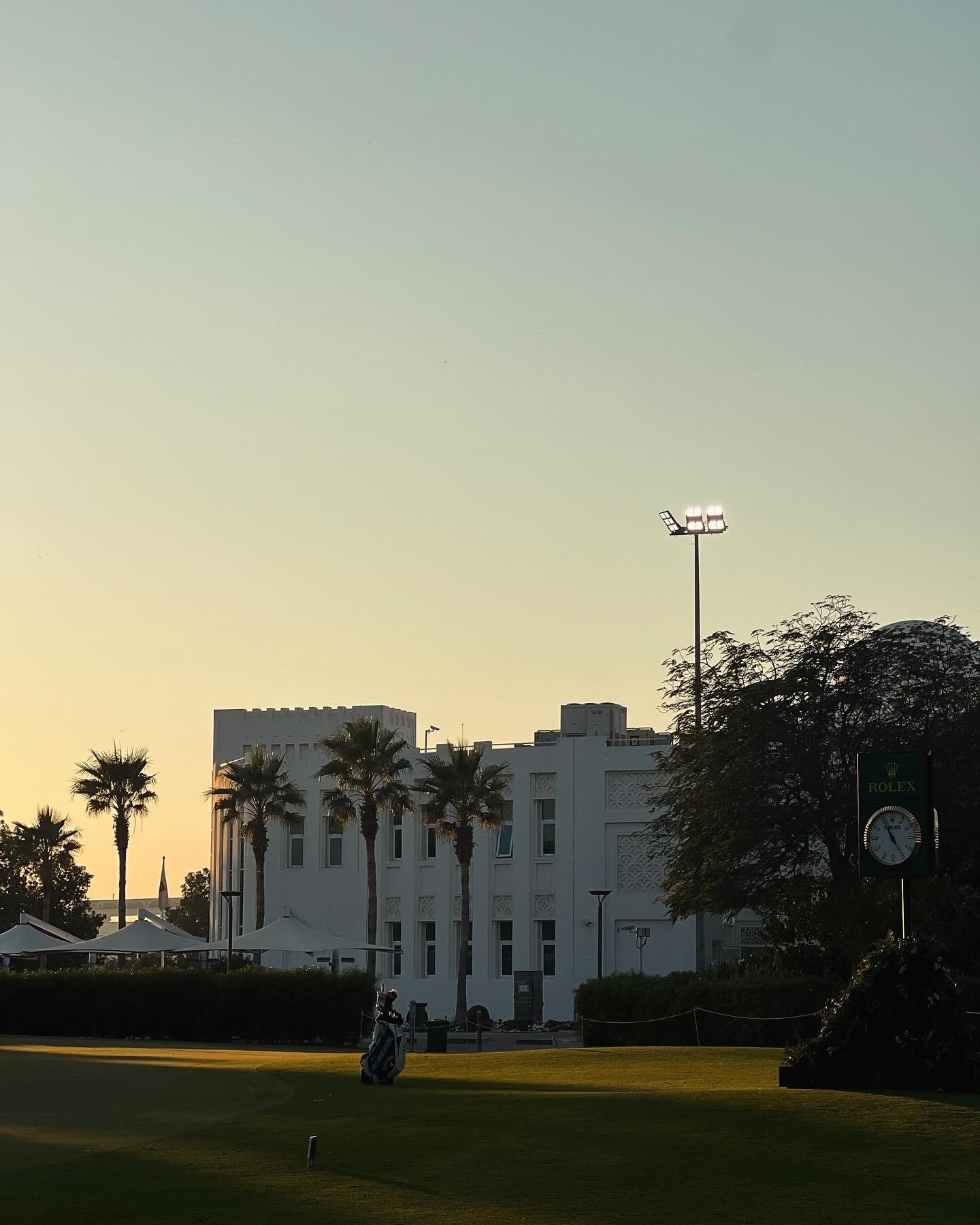
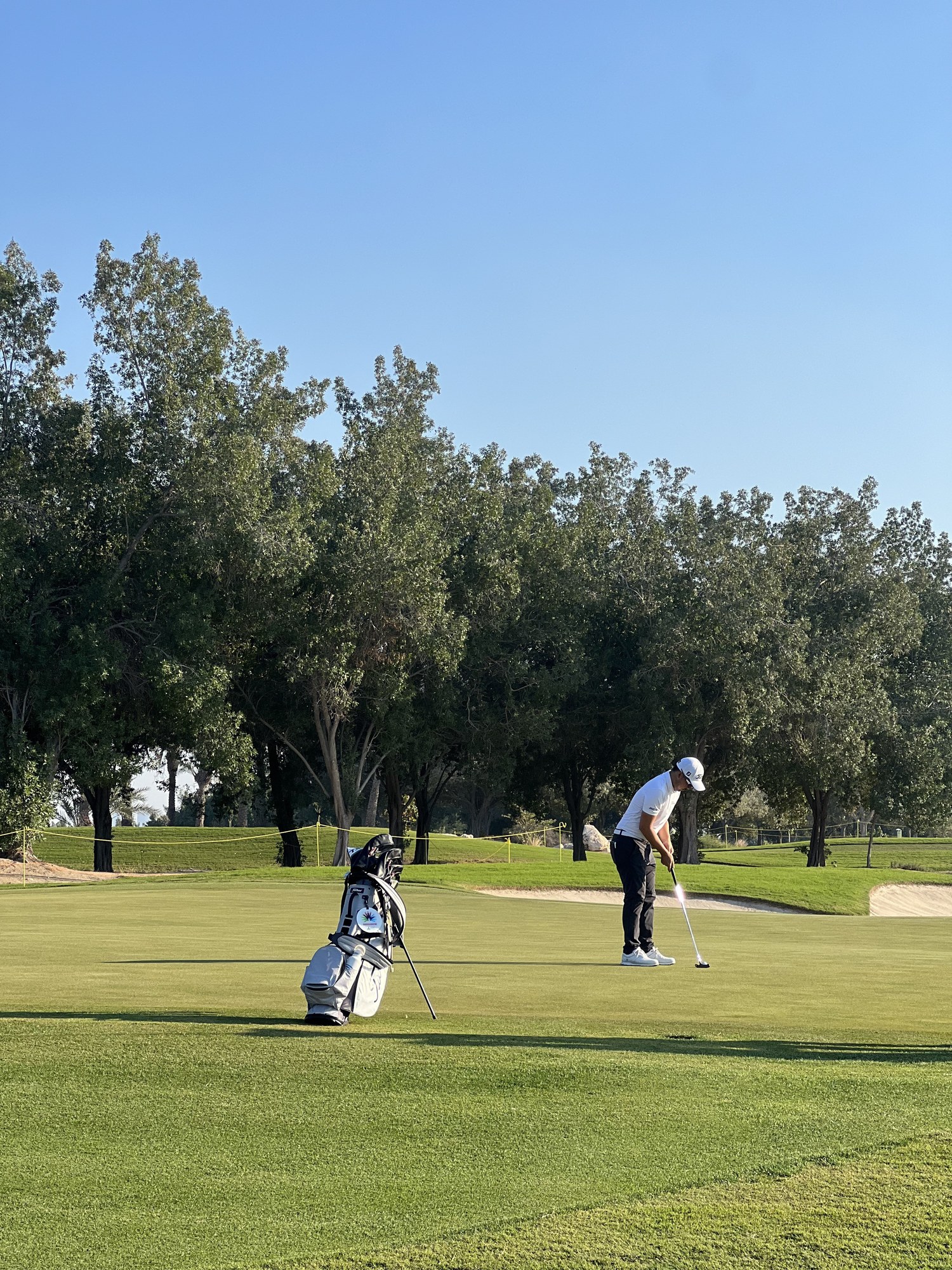
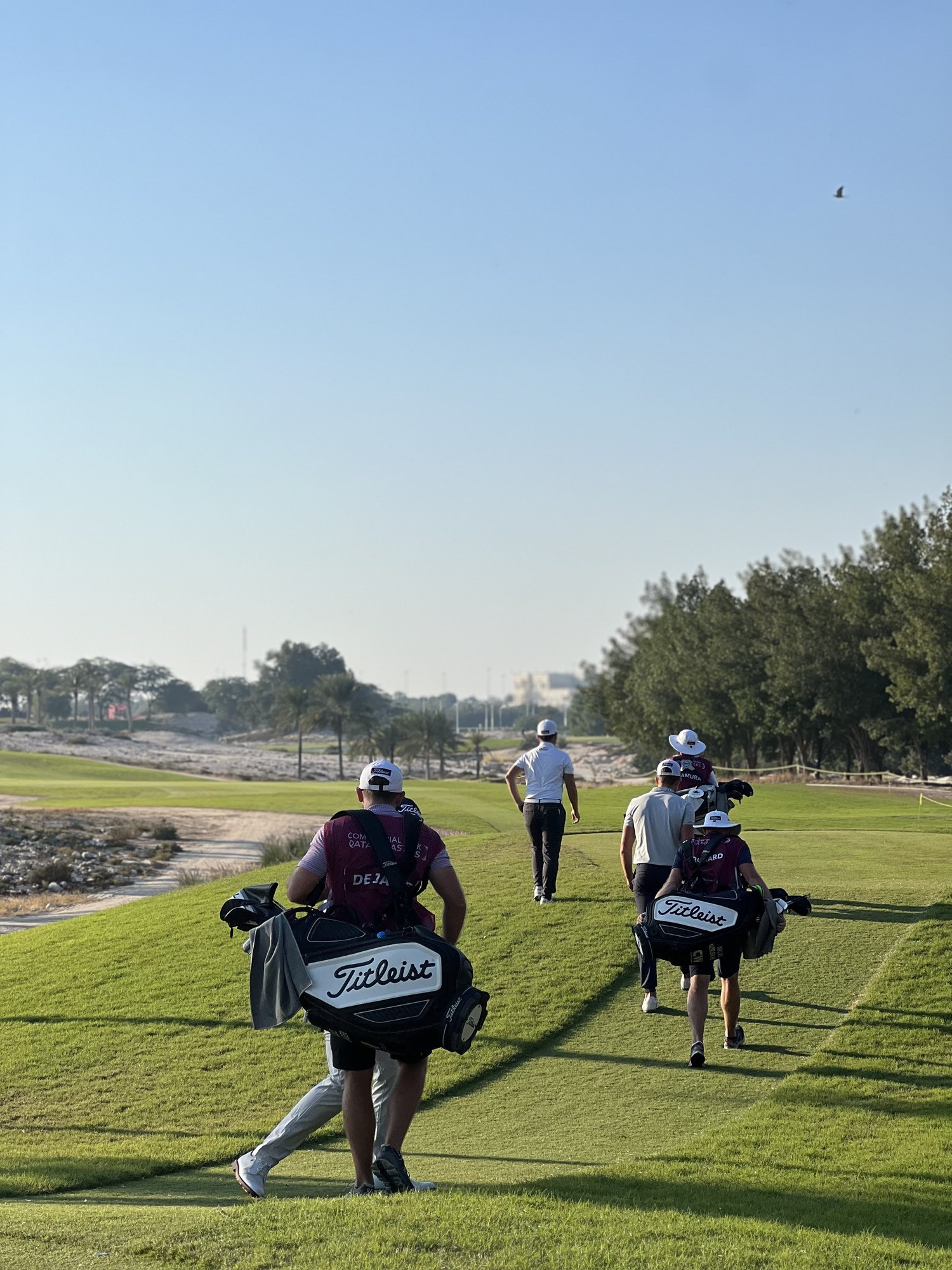
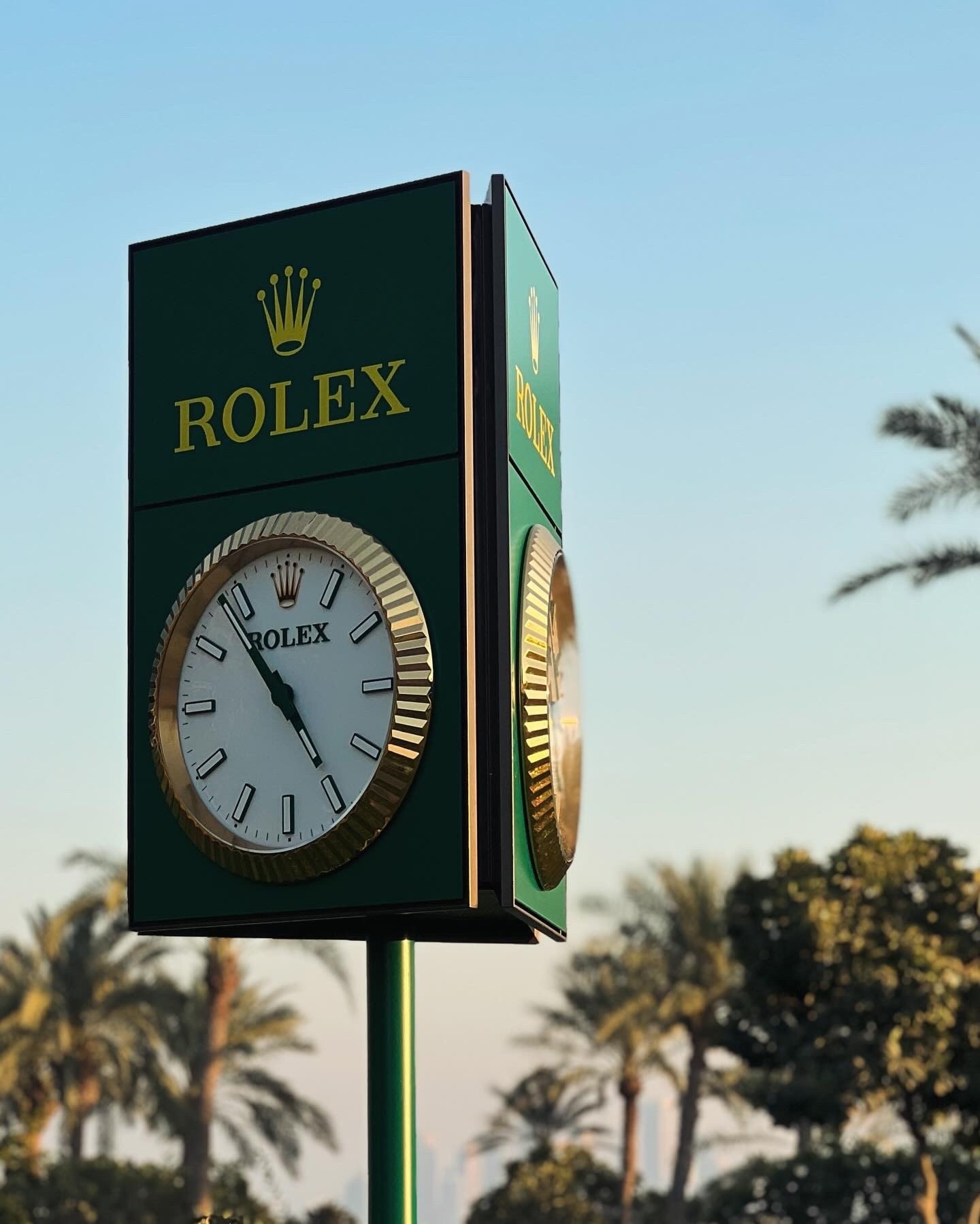
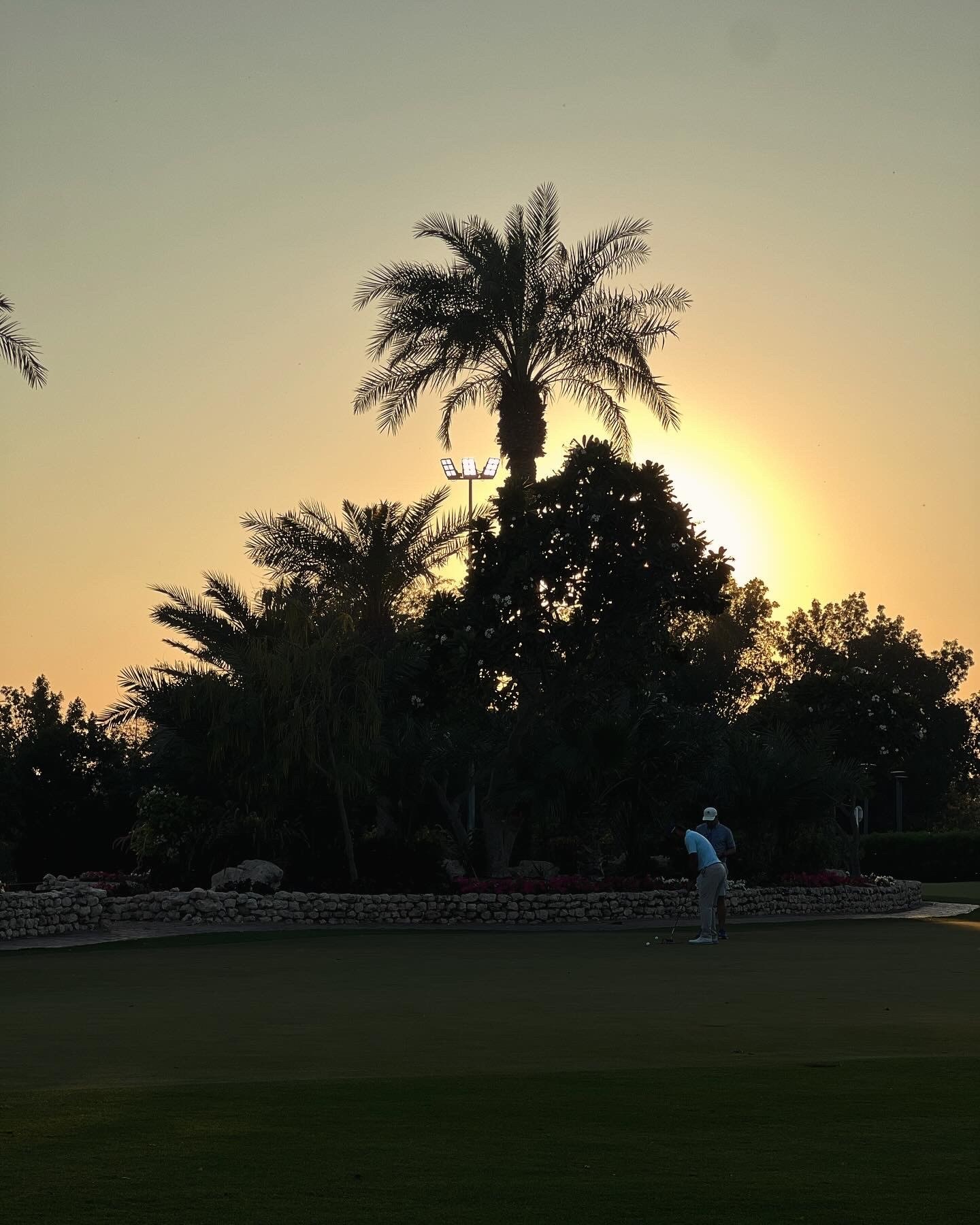
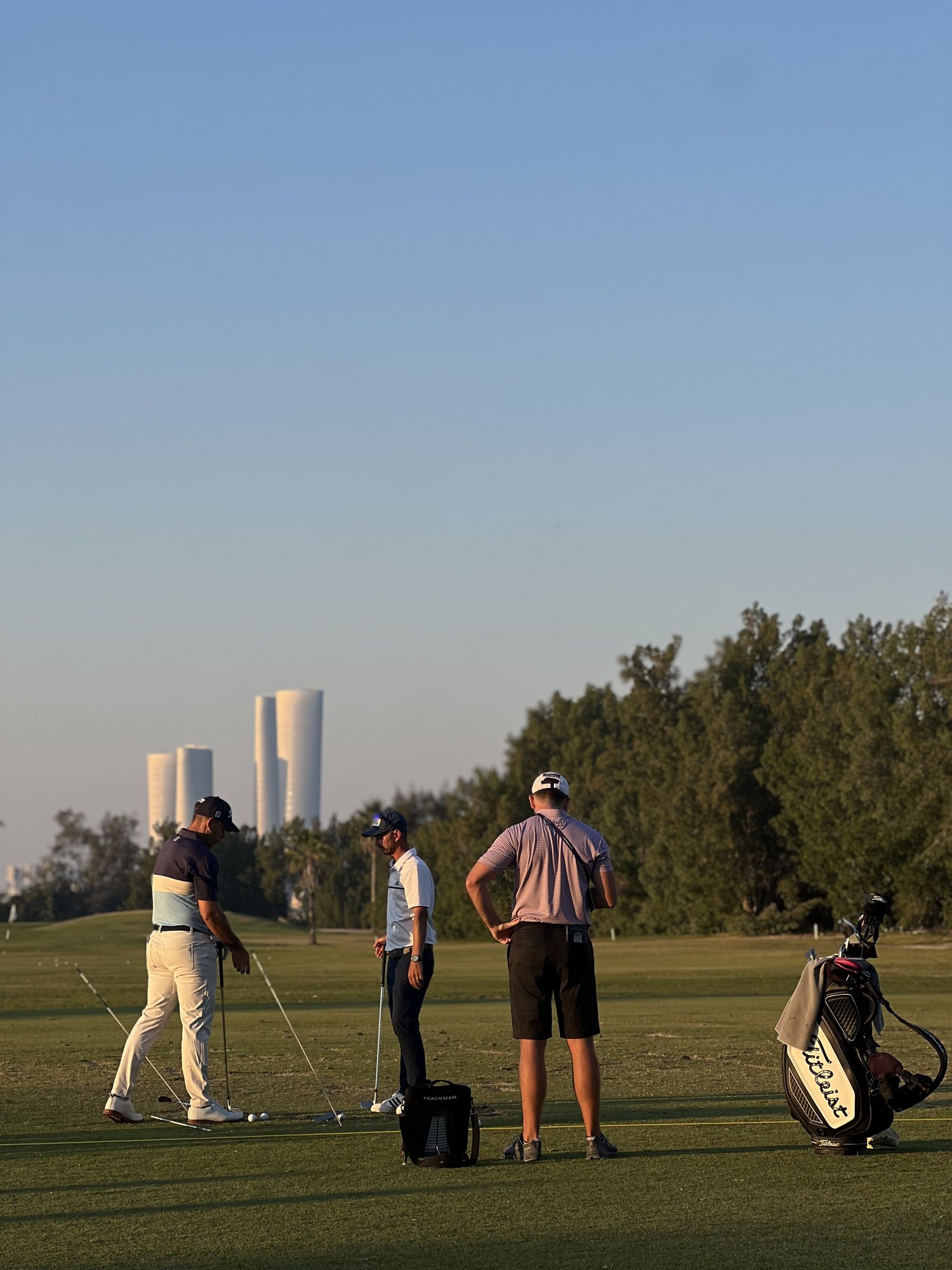
Doha Golf Club hosts the Commercial Bank Qatar Masters each year, the Gulf stop on golf's European tour, and the study was made across the tournament's closing afternoon, from the hour the light began to soften until the course gave it up entirely. Golf is the rare sport played inside a landscape rather than an arena, which makes its light a competitor's condition and a photographer's subject simultaneously.
The photographs follow the last forty minutes of usable sun: fairways holding warmth the sky has already lost, caddies crossing in silhouette, palms going to outline along the boundary, the low white clubhouse gathering the day's remainder. The tournament proceeds throughout, but the sequence tracks the light rather than the leaderboard, on the editorial conviction that the course at dusk explains the appeal of the sport better than any scorecard.
The study became Waiting for Dusk, the studio's third publication and its first in the Experience category, and its frames continue to circulate through the site, the golden fairway image has fronted the publication across every listing since. In the archive it stands as the Experience category's quietest entry and its clearest statement of method: arrive for the event, stay for the hour everyone else packs up in.