Giorgio Armani Tennis Classic
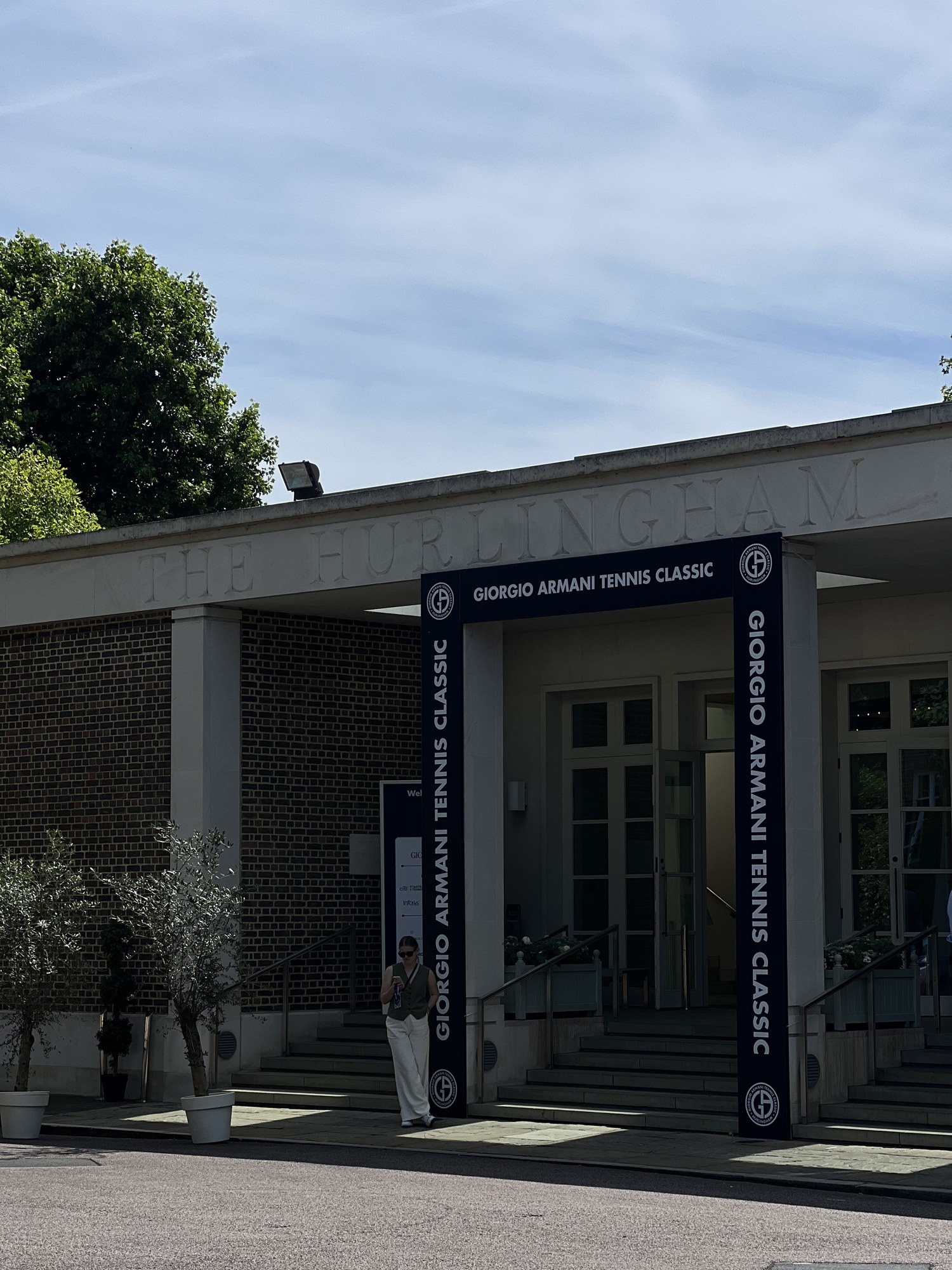
The approach to the Hurlingham Club begins before the entrance.
A drive lined with trees. A gate. The first signs that something has been added to a place that already exists.
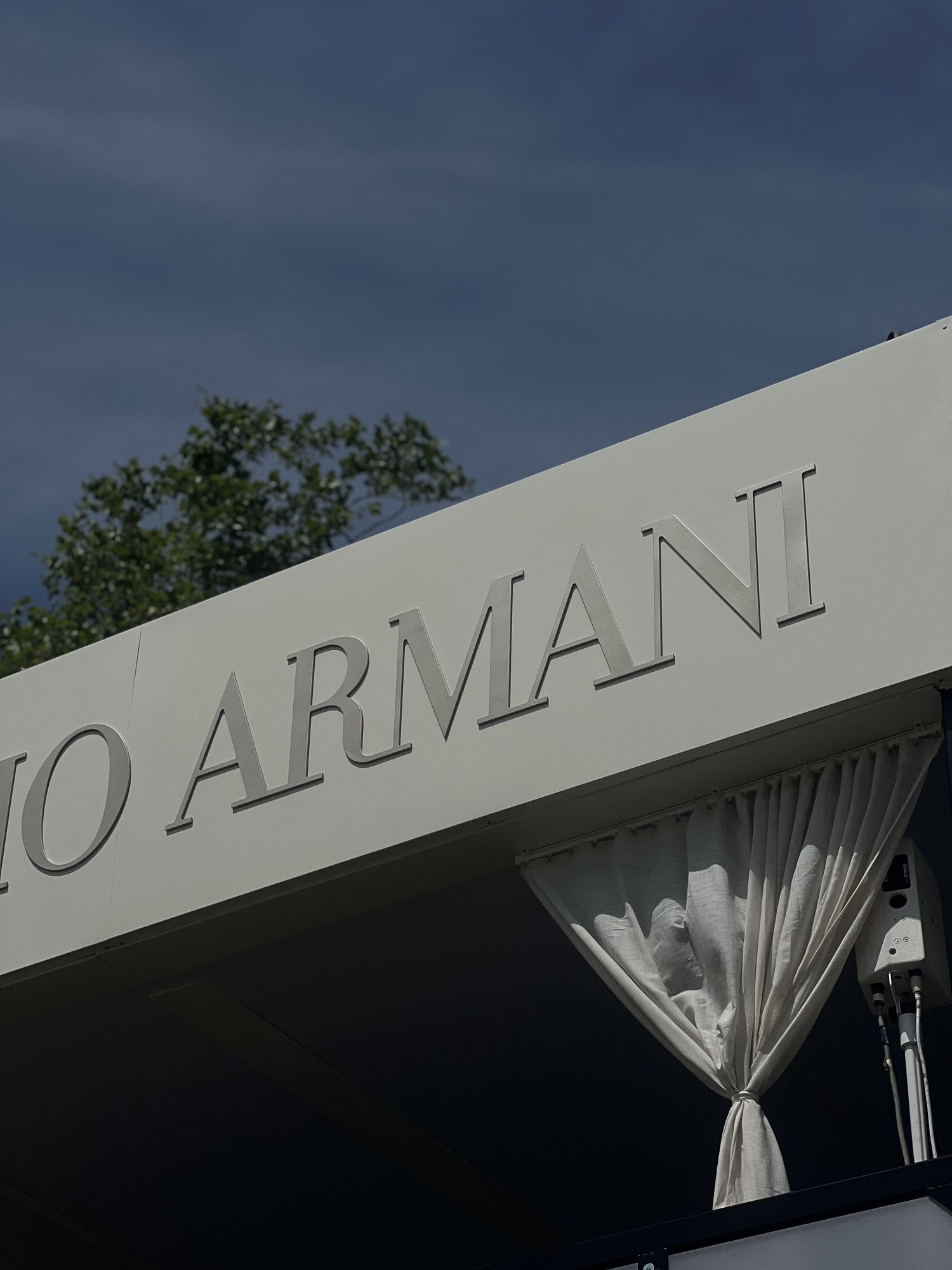
Signage appears before the club itself comes into view. Lettering on a wall, set against brick and ivy, naming an event that will only be here for a short time.
This is not a venue built for the occasion. It is a club that has, for a number of days, agreed to hold one.
Inside, the markers begin.
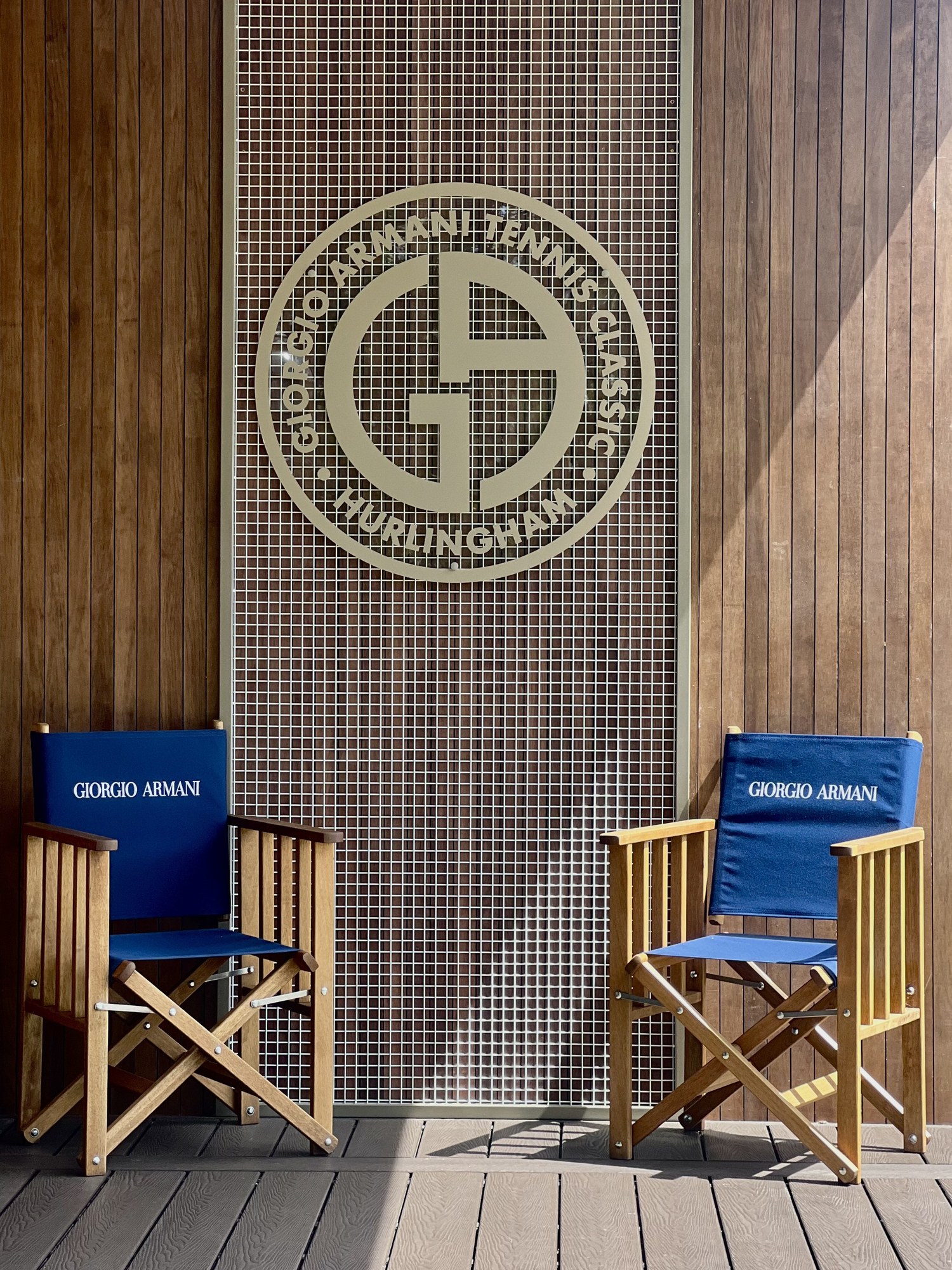
A panel bearing a crest and a name, mounted against timber. Two folding chairs set in front of it, each carrying the same lettering.
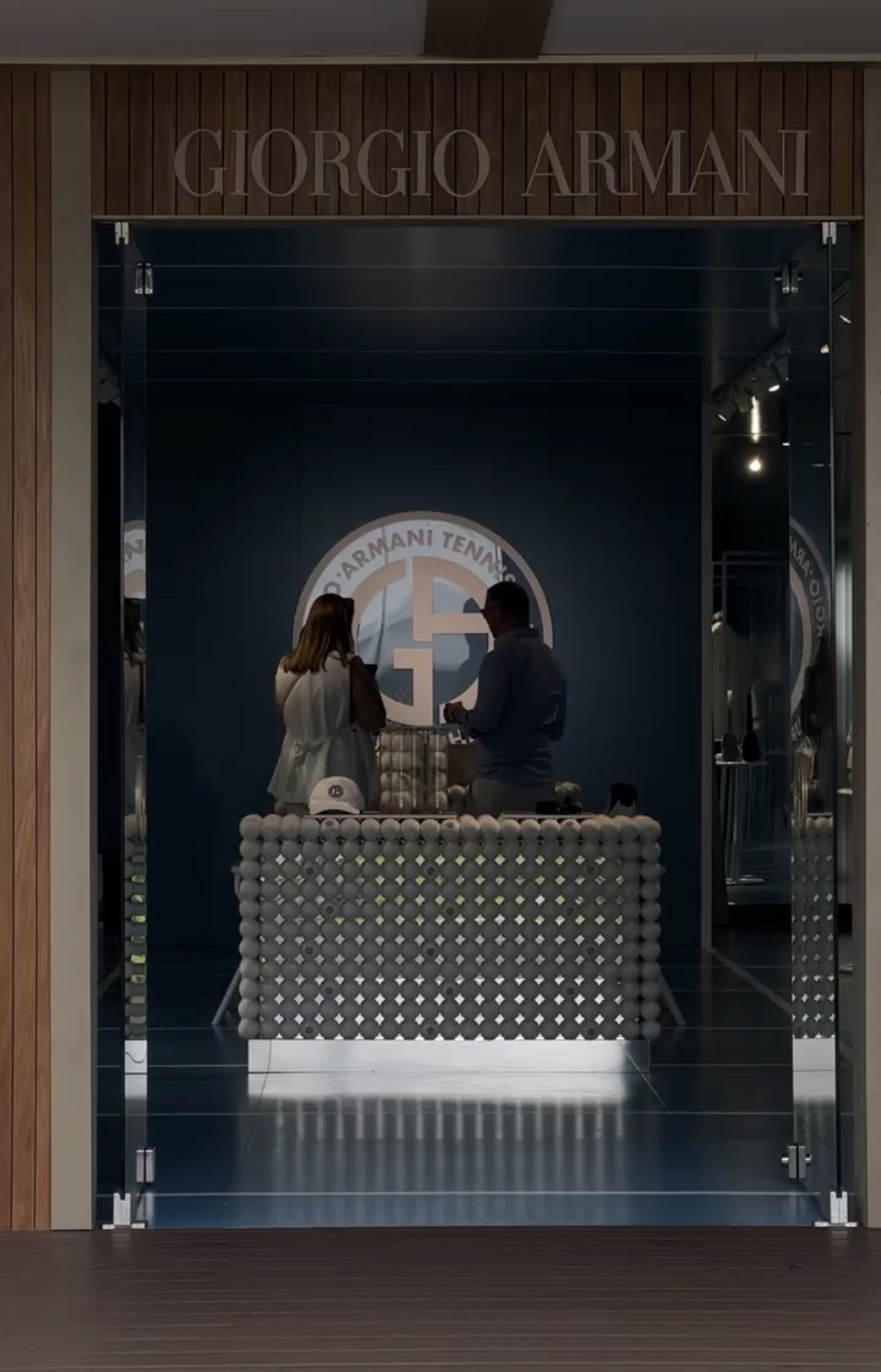
Nearby, a cabinet of products sits behind glass, arranged with the same care as any boutique. Caps, bottles, bags, set out in rows under soft light.
None of this required new architecture. A wall was used. A cabinet was filled. A chair was placed.
The fashion house has entered the building without changing it.
Before play, the courts are empty.
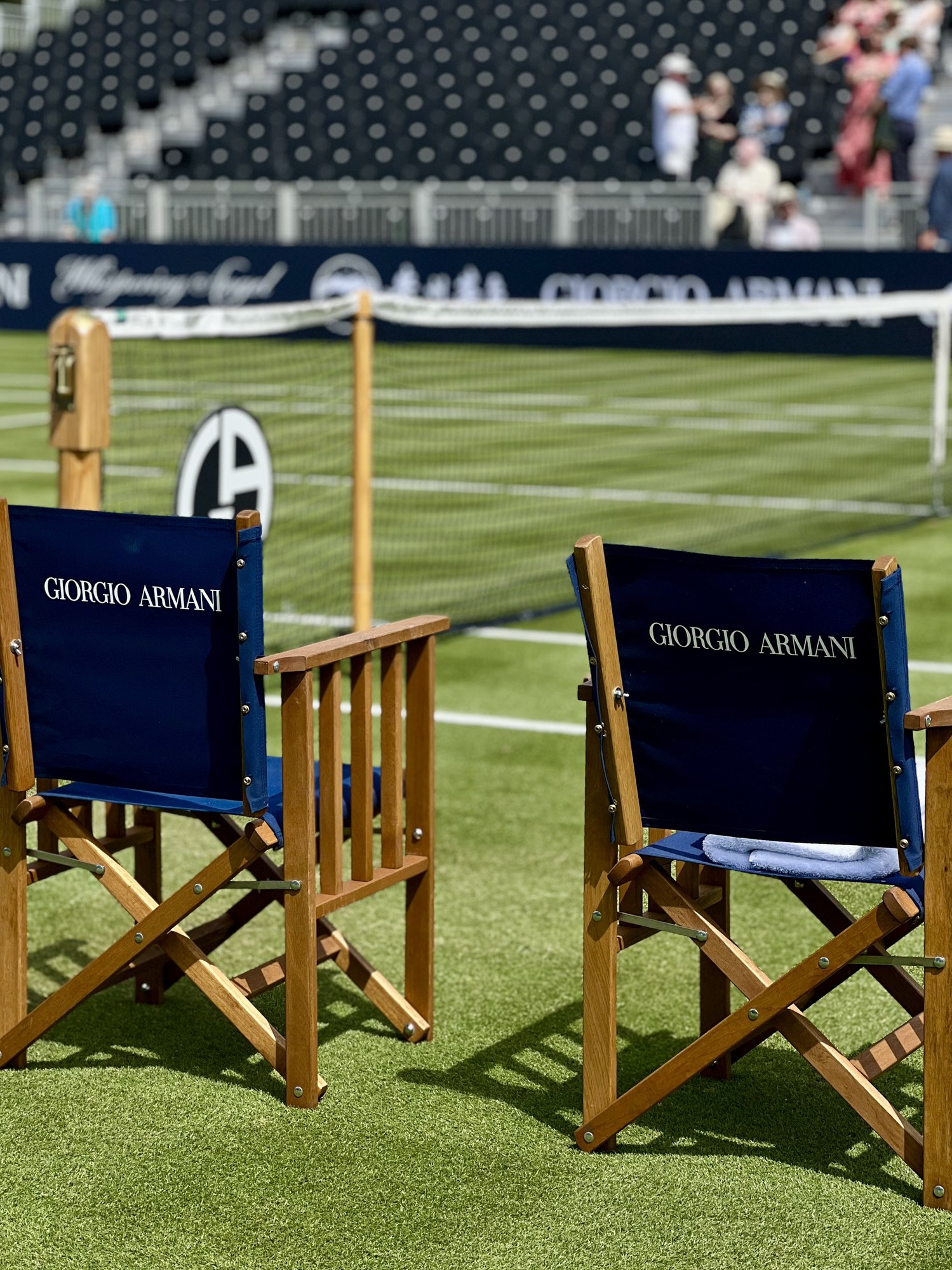
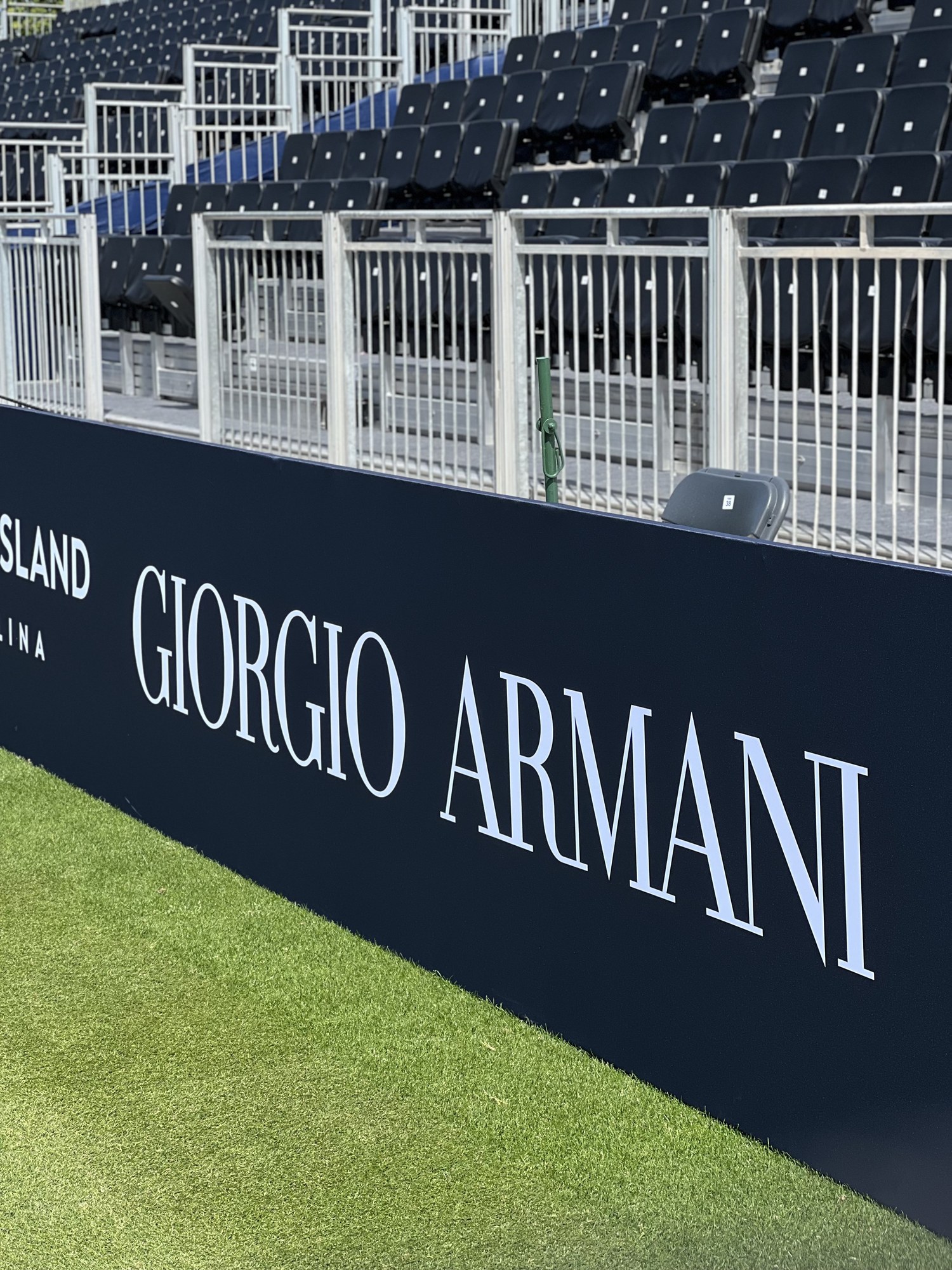
Two chairs face a panel, both carrying the same name. The grass is marked but unused. The stands above are empty too, a long run of navy seating with a name printed along the boundary in white.
Everything is positioned. Nothing is yet in use.
There is a particular quality to a space prepared for an audience that has not yet arrived.
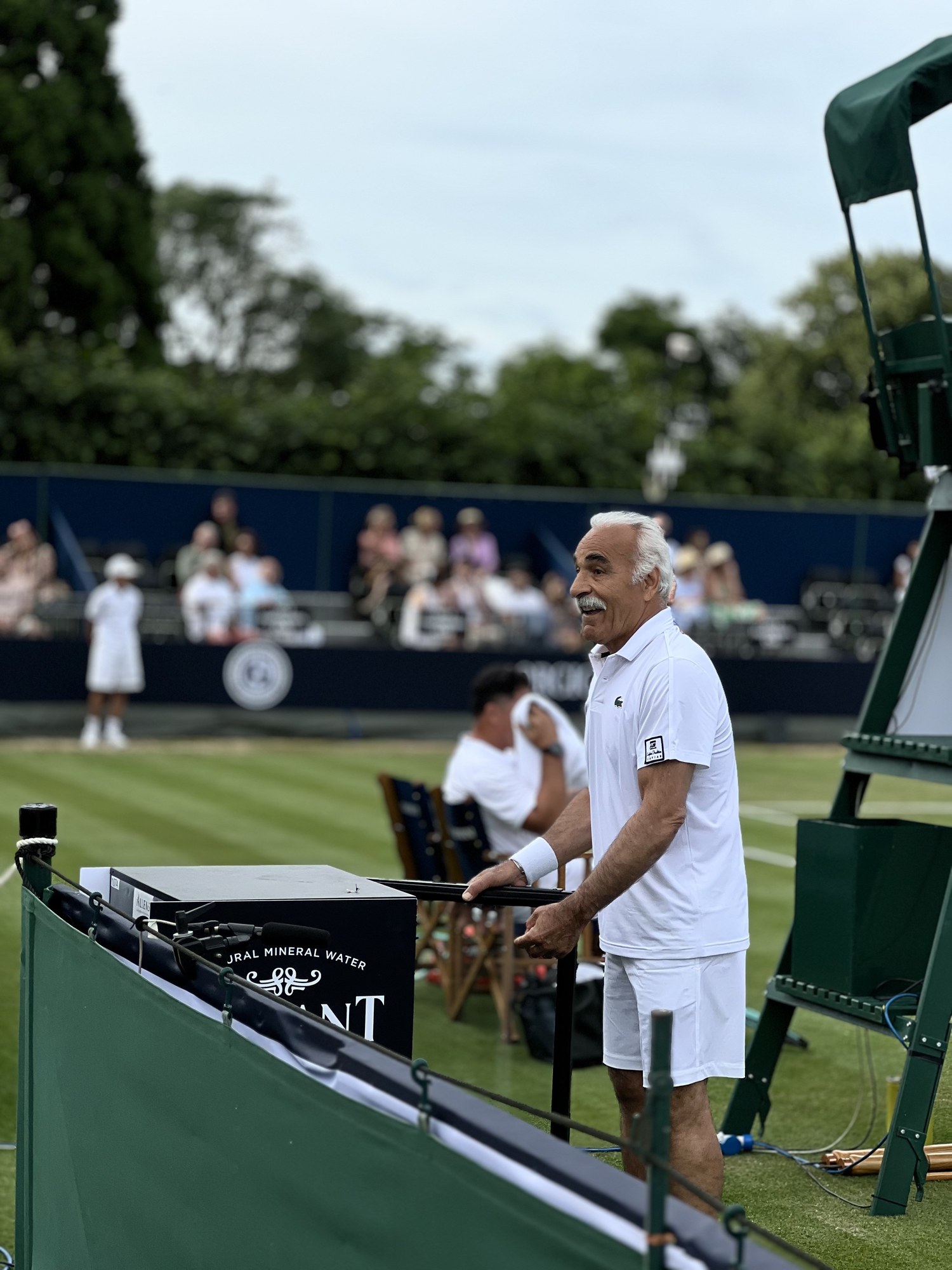
An official stands beside the court, dressed in white, a stopwatch in hand.
He is not part of the brand presence, and not part of the crowd. He occupies a third position, present throughout but rarely the subject of attention.
Figures like this hold an event together. They are visible in almost every photograph and the focus of almost none.
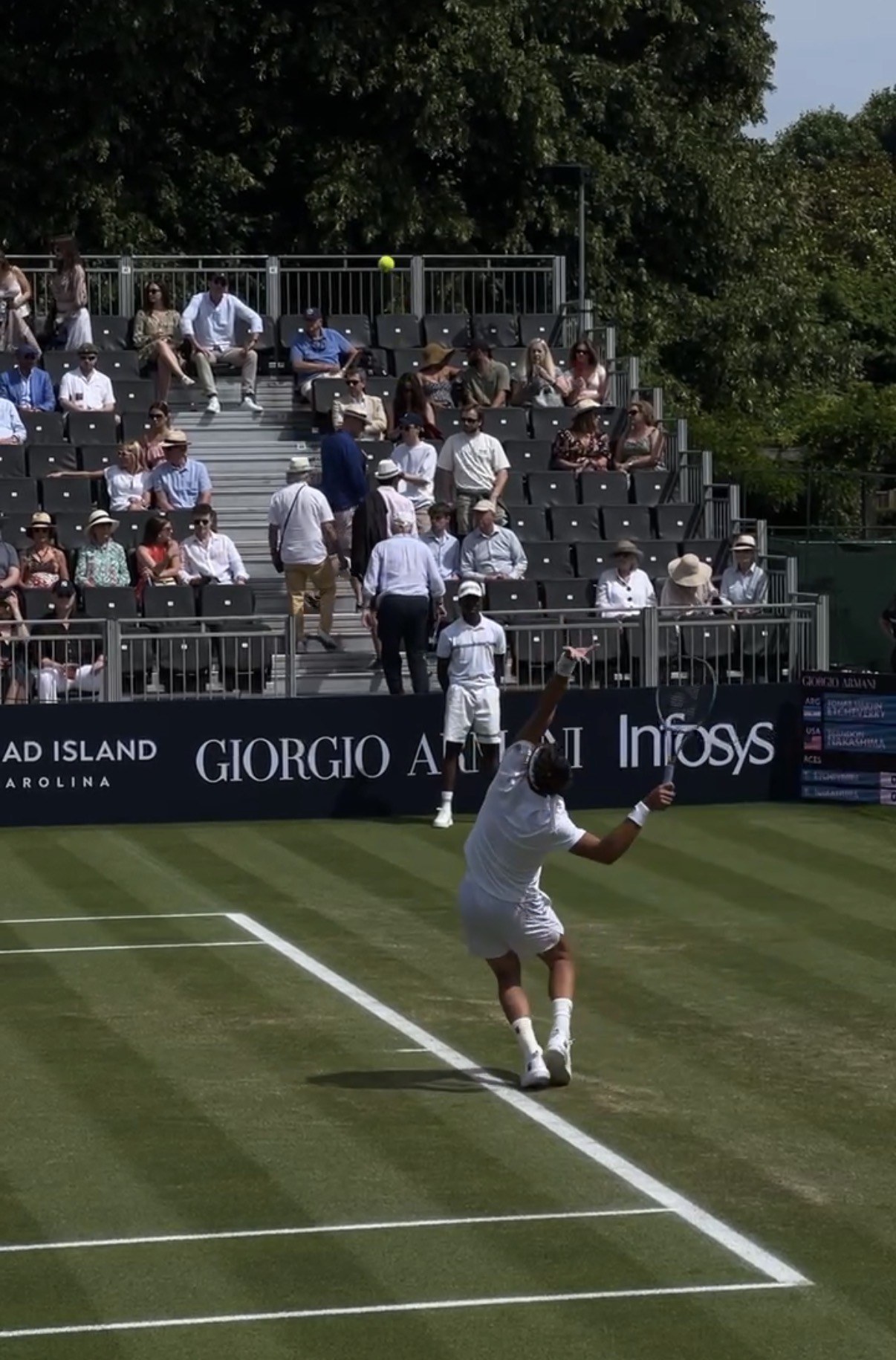
On court, a player reaches for a shot, the stands behind him full.
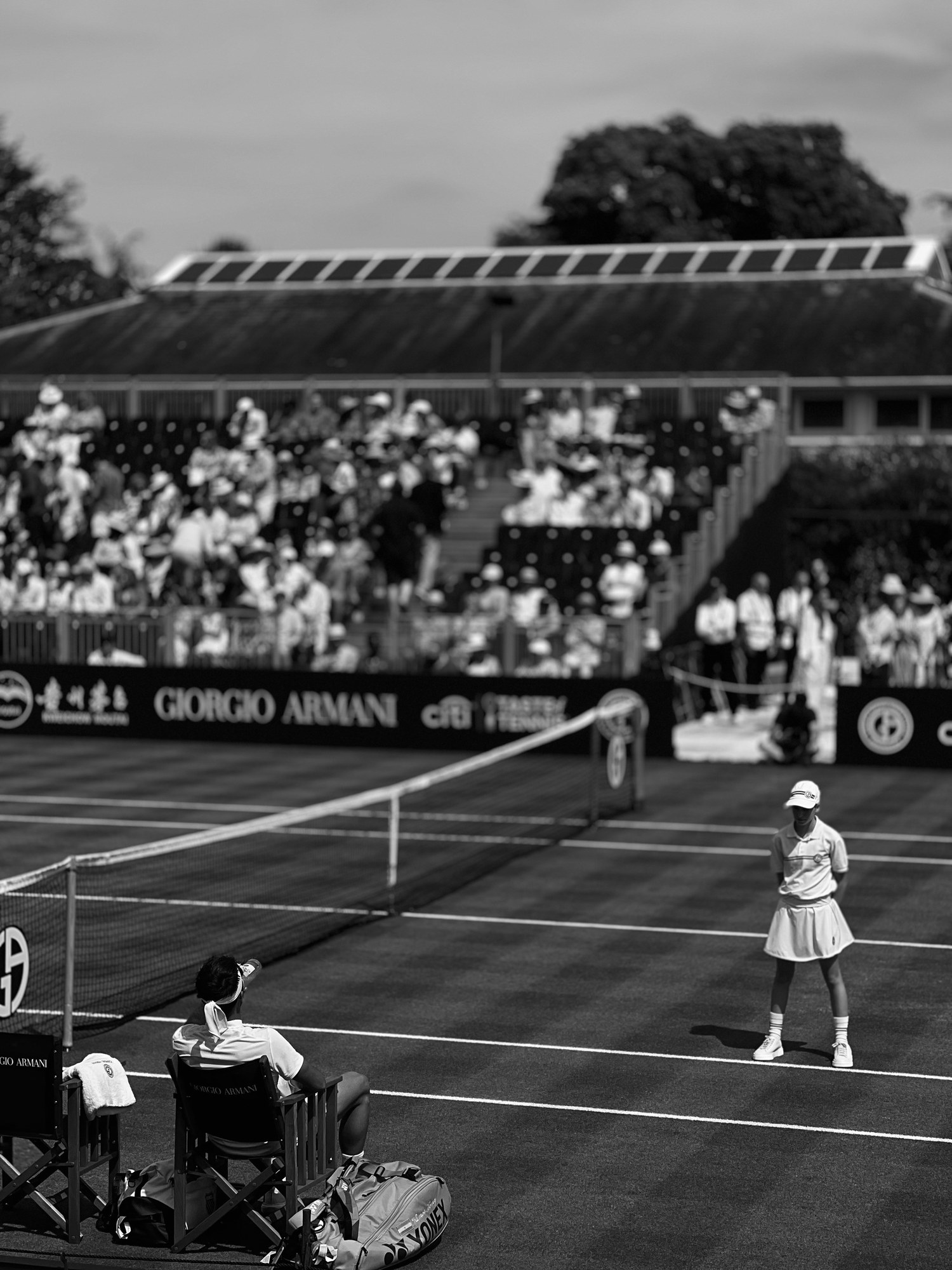
Elsewhere, in black and white, another rally is underway, a name printed on the screen beyond the baseline.
The tennis is present, but only briefly. It is one part of a longer sequence, not the centre of it.
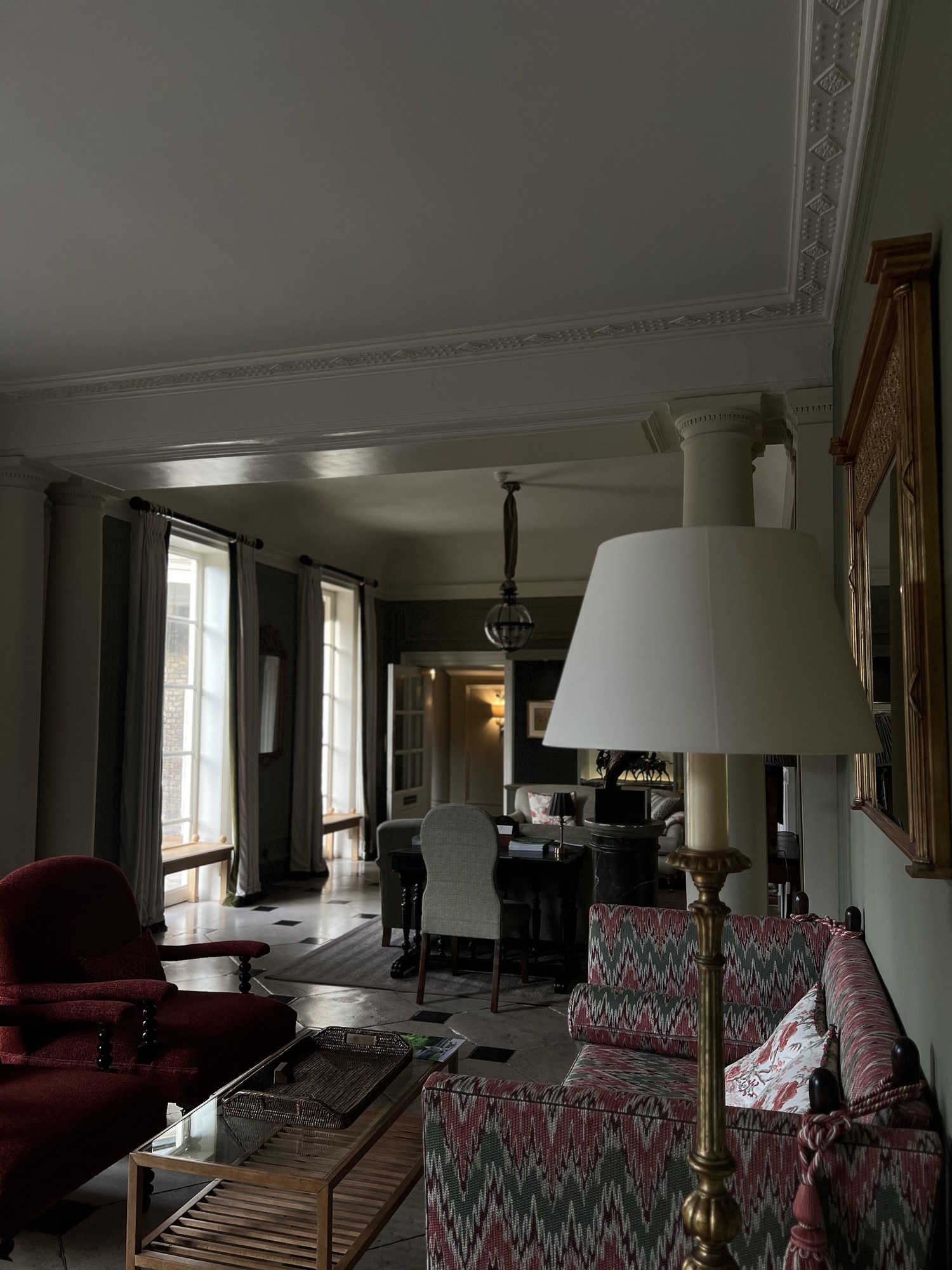
Inside the clubhouse, a room holds armchairs, paintings, a lamp lit against the daylight from tall windows.
This room existed before the event and will remain after it. Nothing here has been added for the occasion.
Elsewhere, a different kind of room has been built entirely for it. A pavilion, lit from within, a crest on the ceiling, two figures standing inside an interior made specifically for these few days.
One room has always been here. The other will not be here next week.
Both, for now, belong to the same afternoon.
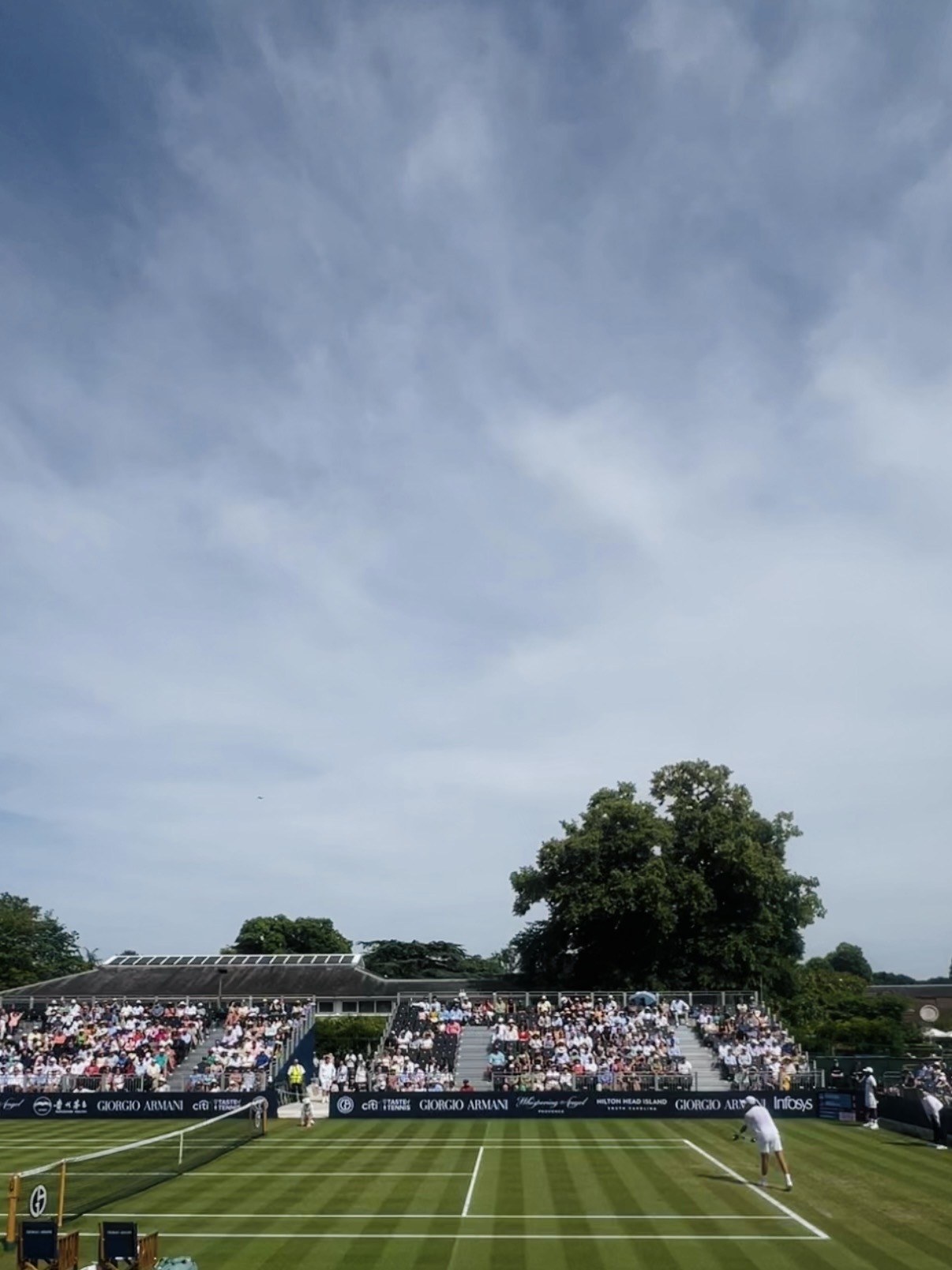
From a distance, the court widens.
Stands full, sky grey, the grass stretching out in front of the seating.
From here, the branding is harder to see. What remains is the shape of the place itself, the court, the stands, the trees beyond.
In a few days, this will be a club again, without an event inside it.
For now, it is both.
What the Giorgio Armani Tennis Classic demonstrates is a particular understanding of how a fashion house occupies a space. Nothing is rebuilt. Nothing is imposed. A wall is used, a cabinet is filled, a chair is placed. The intervention is light enough that the club's own character remains legible beneath it.
The two rooms sit alongside each other without disagreement: the one that has always been there, and the one built for the week. For a few days they constitute the same afternoon. That coexistence is as much the event as anything happening on the court.

The Giorgio Armani Tennis Classic is played each June at the Hurlingham Club in Fulham, the private members' club whose grounds have hosted lawn sport since the 1860s, and it functions as the quiet week before Wimbledon: exhibition tennis on grass, world-class players preparing, a fashion house's name over the gate. The event is the meeting point of three worlds, sport, luxury branding and English club tradition, and the study concerns the choreography of that meeting.
The photographs follow the layering: how a brand adds itself to a place that already exists, lettering set against hedges, hospitality structures placed among mature trees, the tension between temporary signage and permanent lawn. The tennis appears mostly at its edges. The real subject is the visual negotiation between an Italian fashion identity and a Victorian sporting institution, each lending the other something it cannot manufacture alone.
Within the archive the study extends the Experience category's central interest, the infrastructure of occasion, into its most refined register, and it pairs with the Ilkley Open as a two-part study of English lawn tennis as a hospitality format. It also serves as a reference for brand clients: a record of how sponsorship becomes atmosphere when it is designed with restraint, and how quickly it becomes wallpaper when it is not.