The Spaces Between
Formula One is often remembered through moments. A lap. A pass. A podium.
What remains unseen are the spaces that surround them. The corridors between team buildings. The machinery waiting behind closed doors. The empty circuit before spectators arrive. The atmosphere that exists before a race begins and after it ends.
At Silverstone, these moments are often more revealing than the event itself.
This study documents Formula One away from the racing line. Not through competition, but through observation.
Much of Silverstone's character exists beyond the circuit itself.
Inside the paddock, success begins long before a chequered flag appears. Trophies sit behind glass. Engineers move through routine. Cars wait in silence. Every team works toward an outcome nobody can yet predict.
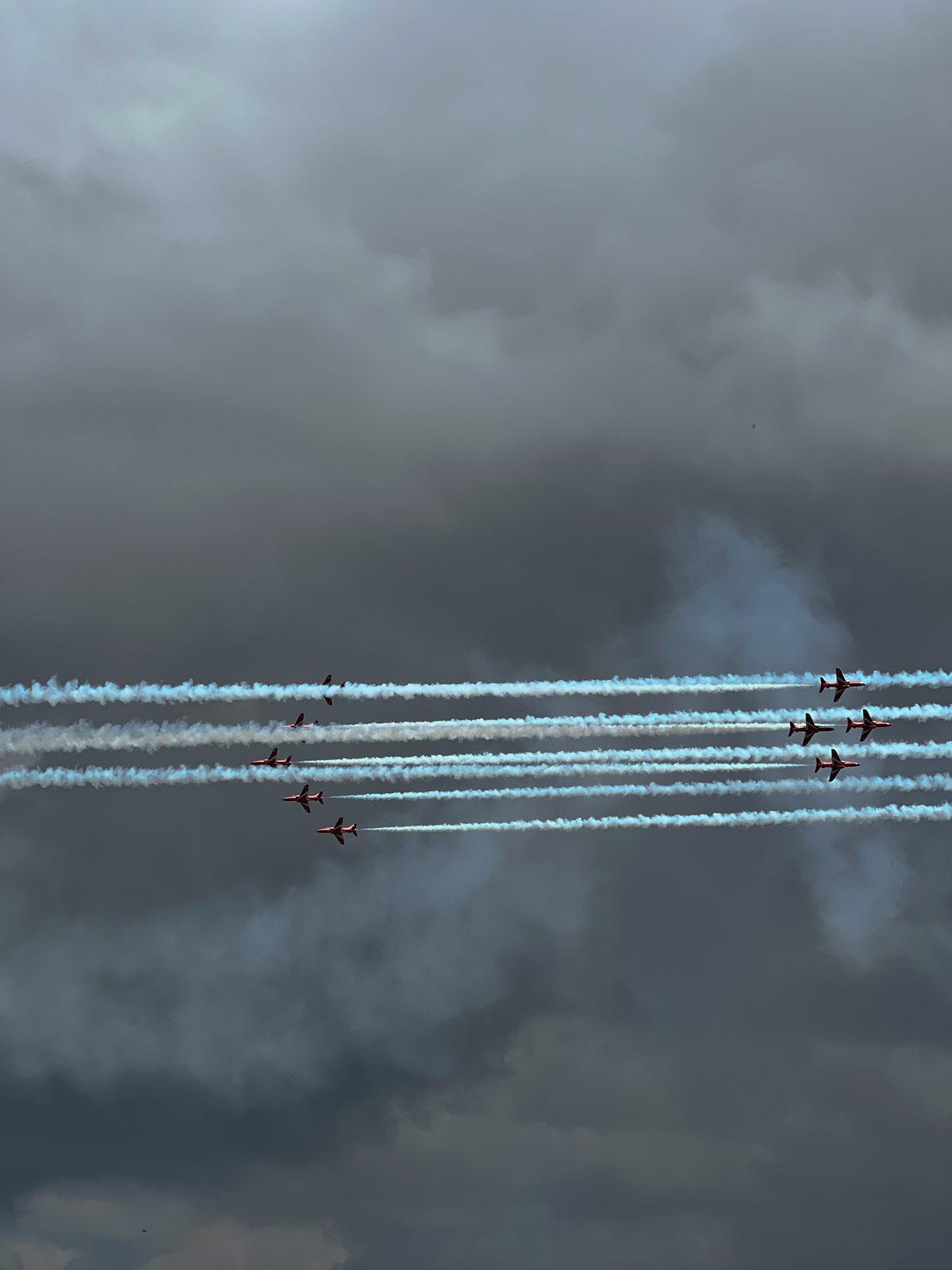
Beyond the garages, the circuit becomes something else entirely. Grandstands stand empty beneath changing skies. Aircraft trace temporary lines above the track. Start lights hang motionless above an empty pit lane. The anticipation before an event often carries more atmosphere than the event itself.
These moments are quieter. More reflective. More human.
Then come the consequences. Disappointment. Relief. Achievement. Celebration. A driver standing alone beside a gravel trap can tell as much of the story as a podium ceremony.
Formula One is often photographed through action. This study focuses on everything surrounding it. The architecture. The access. The preparation. The aftermath. The spaces between.
Formula One produces approximately two hours of competition once the lights go out. What surrounds those two hours runs to days: freight arriving, engineers resetting, team structures assembling and dismantling in the time it takes a grandstand to fill and empty.
The photographs in this study were made in those hours. Before the broadcast began. After the podium. In corridors that cameras rarely enter. Silverstone, away from the racing line, is a study in the infrastructure of excellence. Much of that infrastructure is never shown.
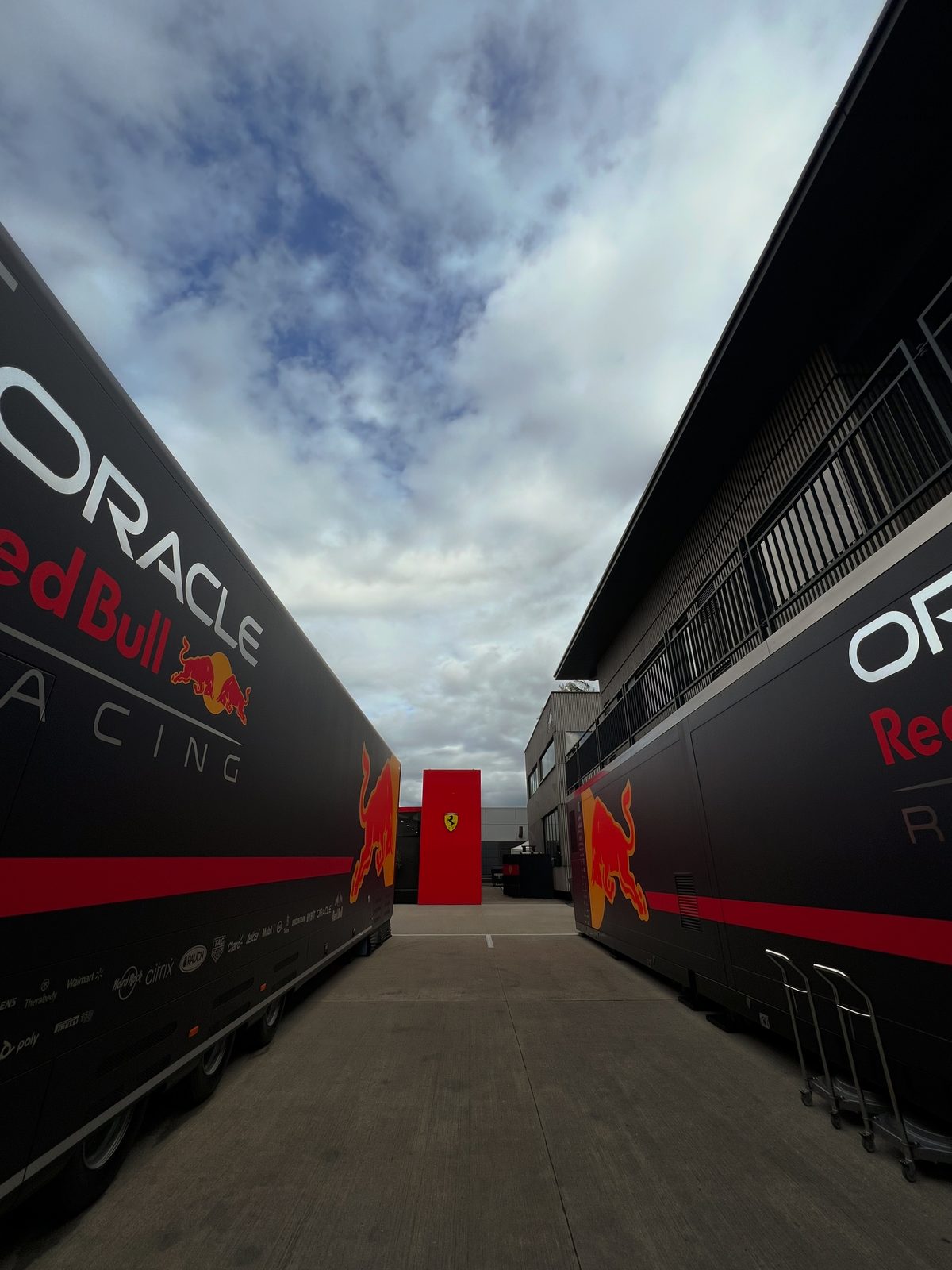
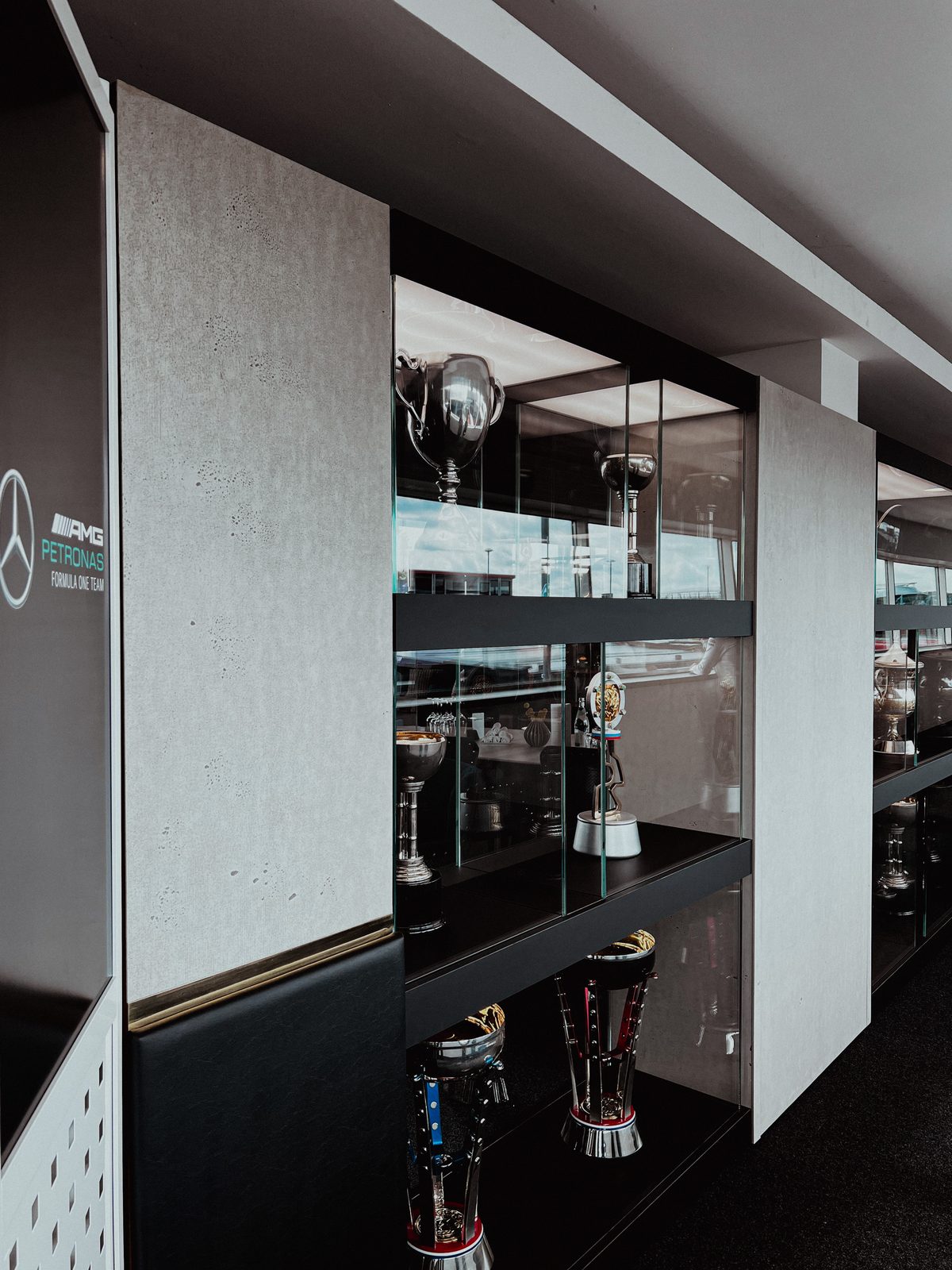
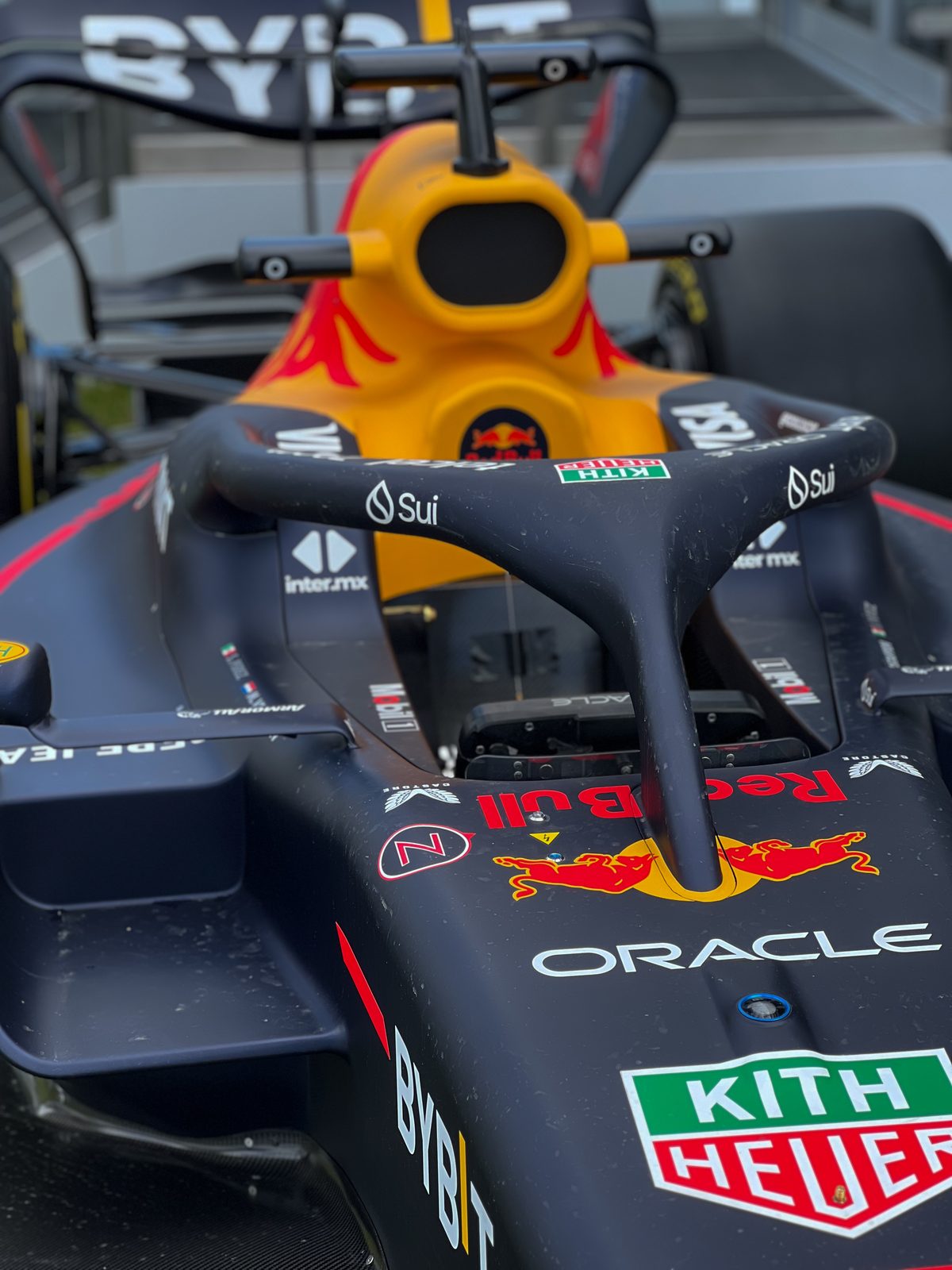
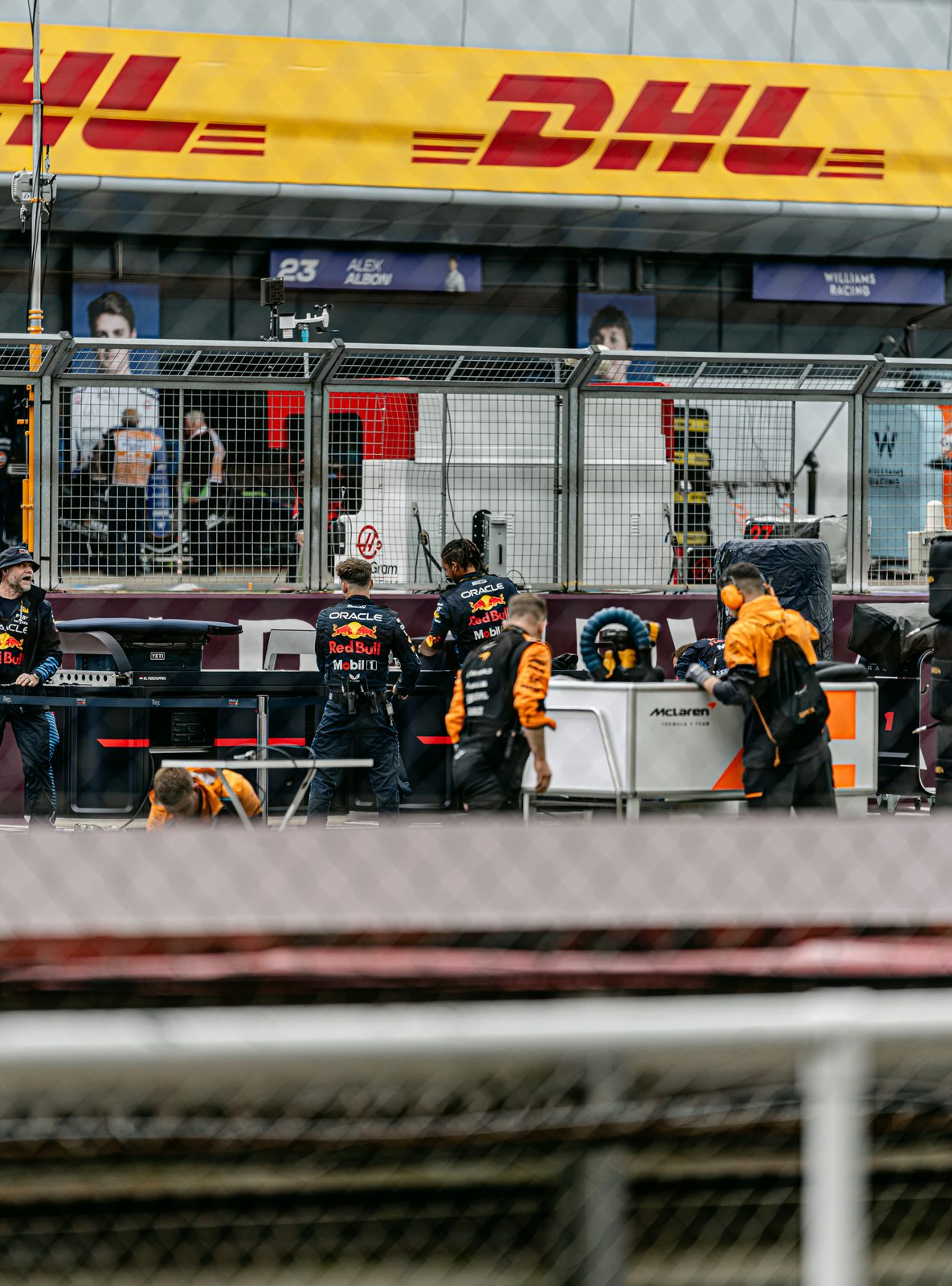

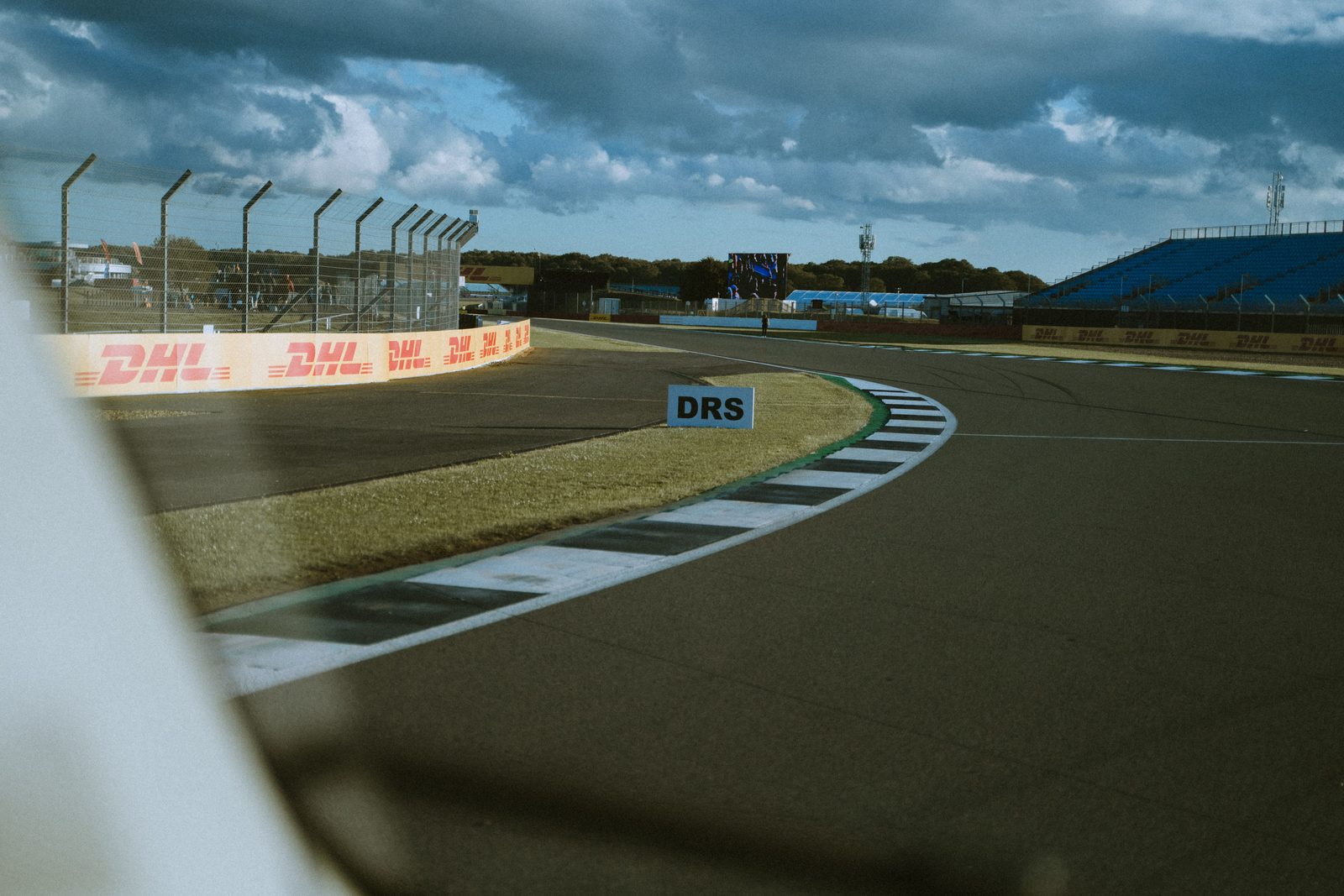
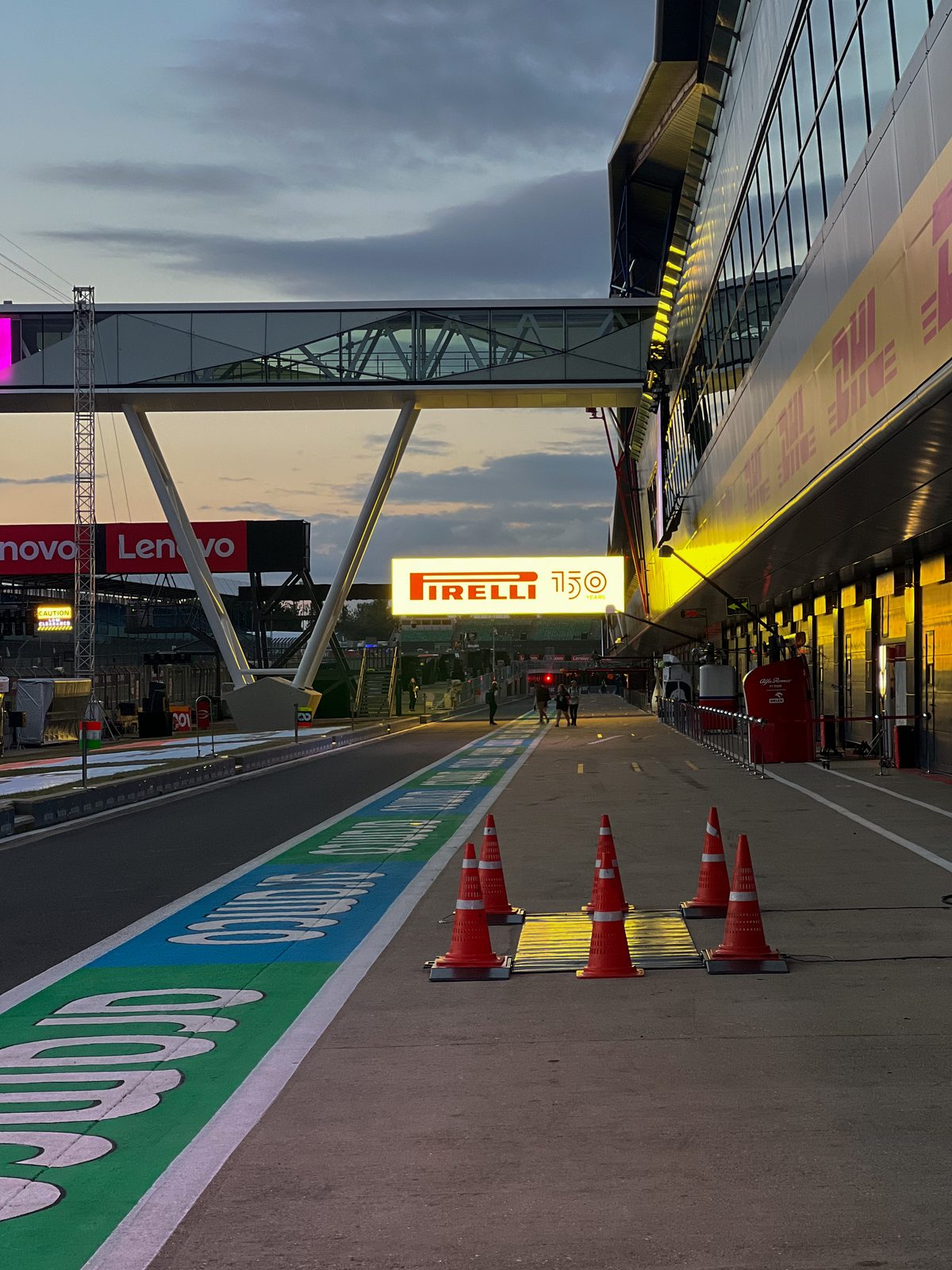
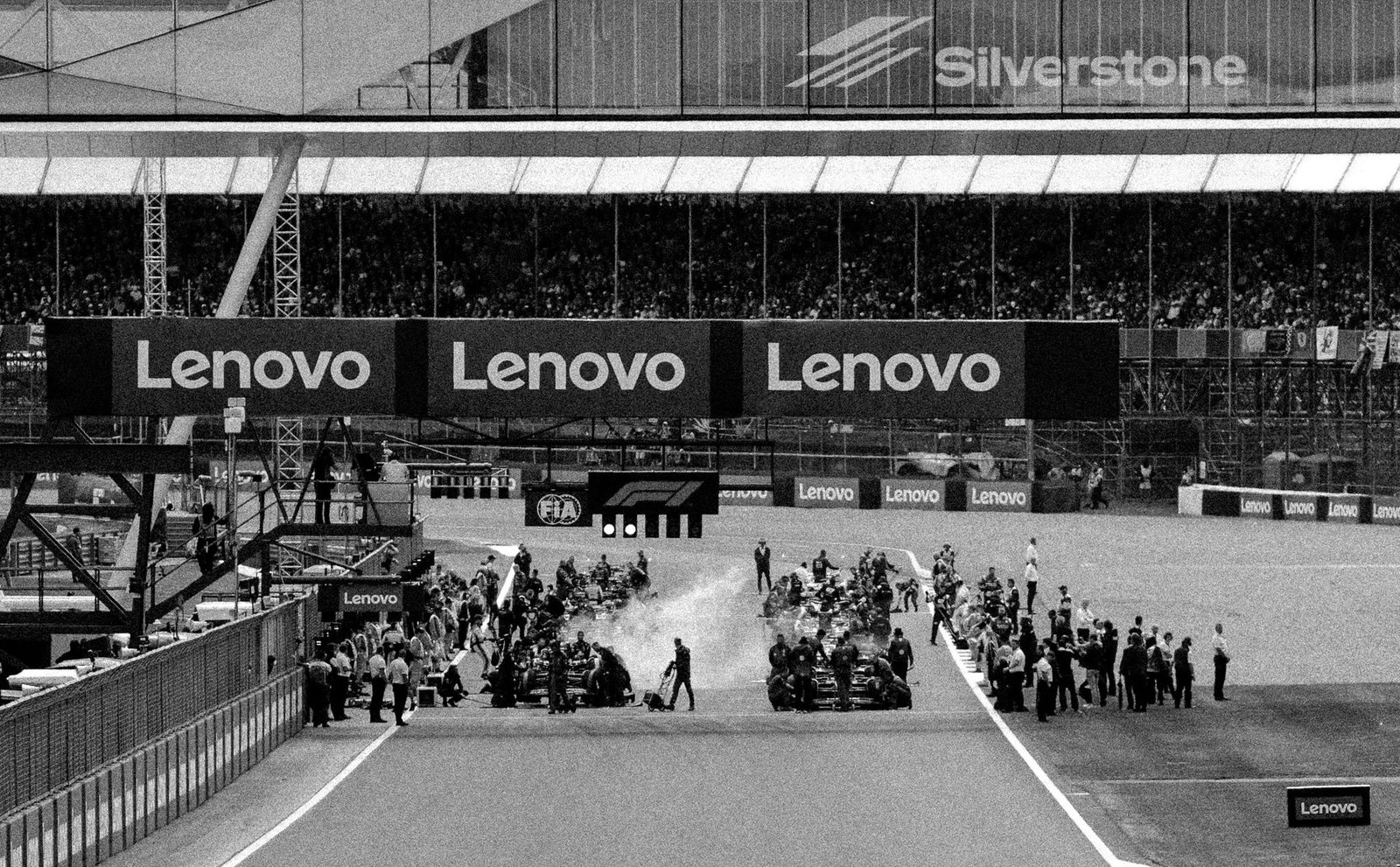
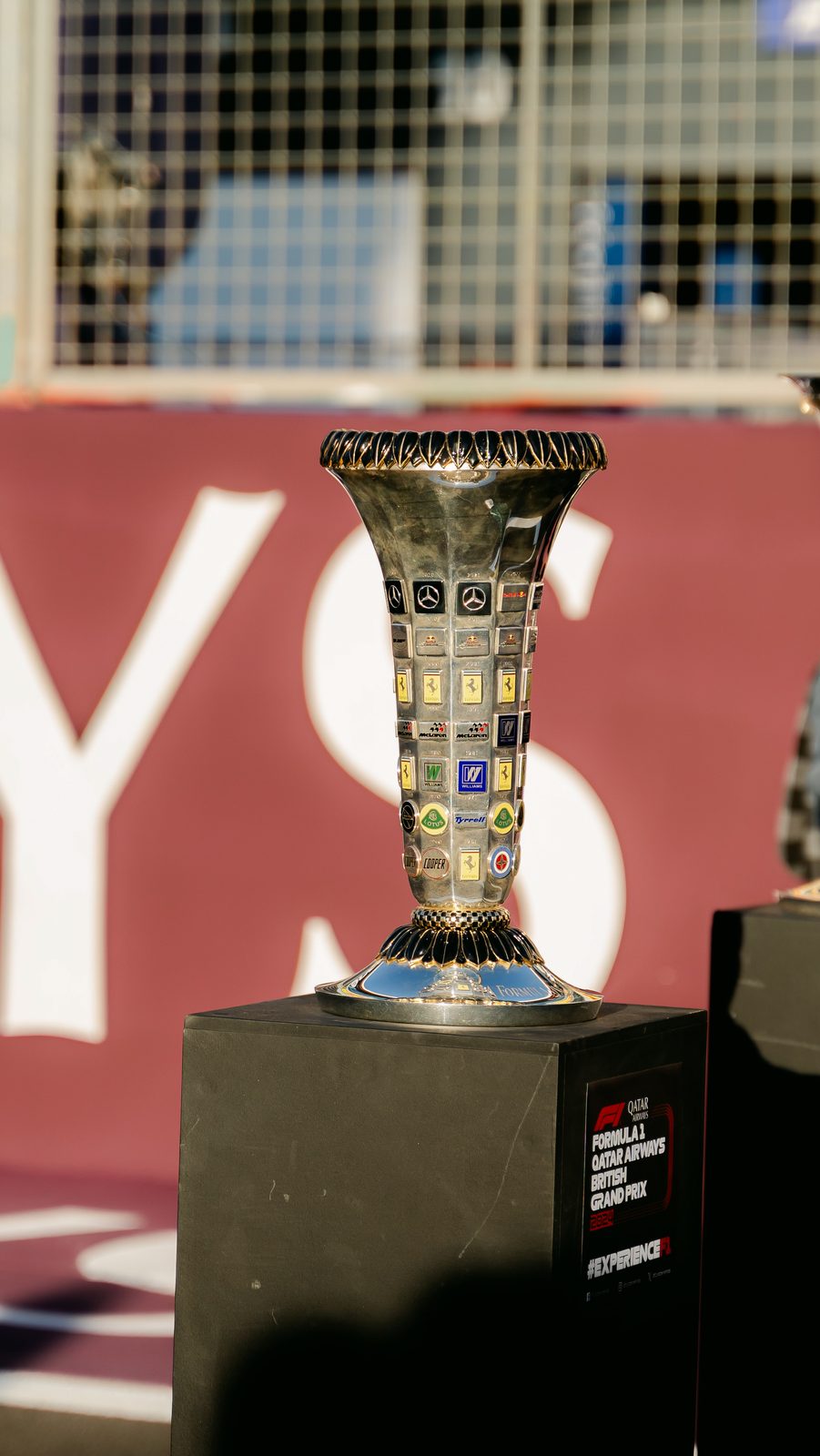
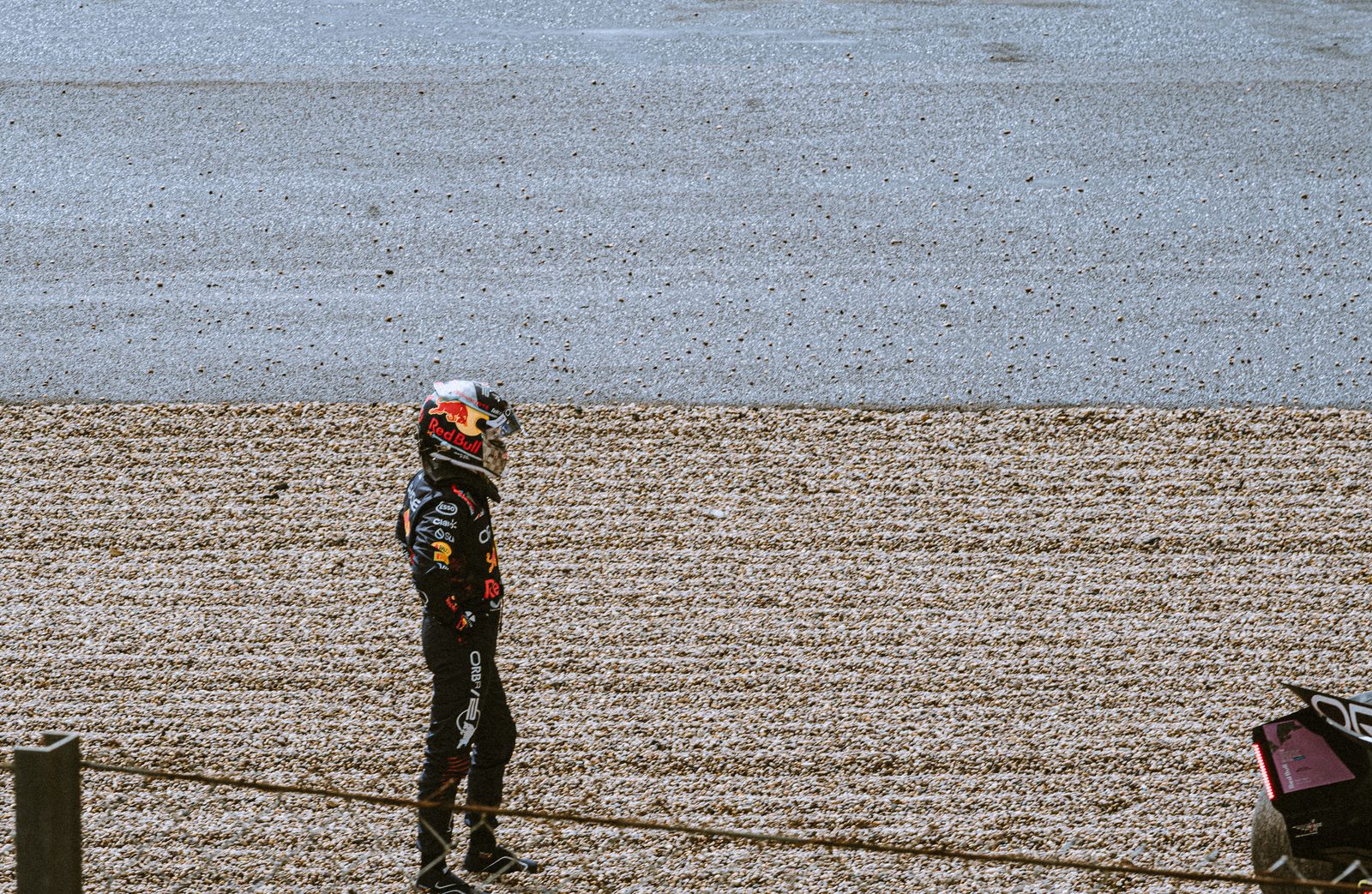
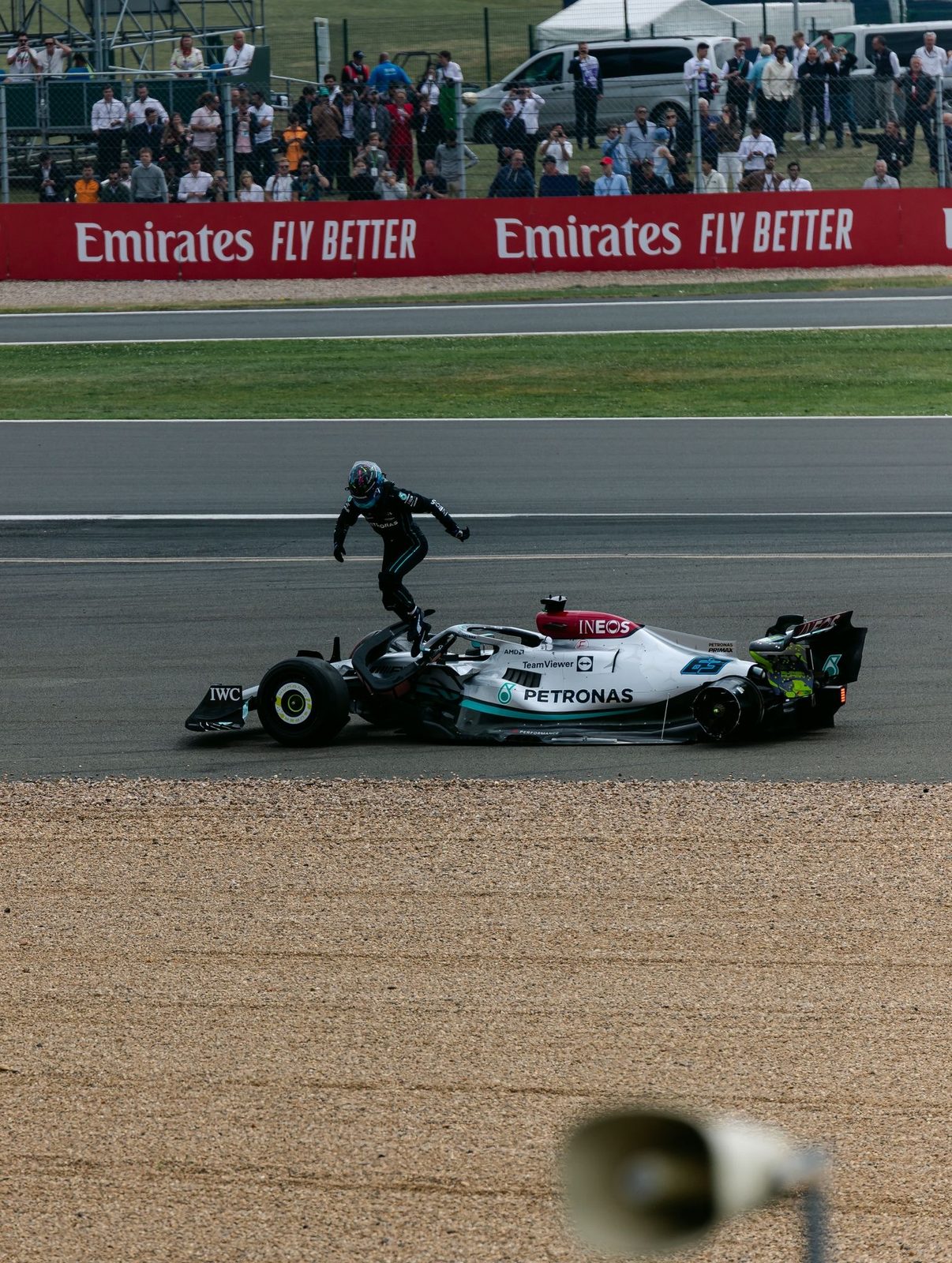
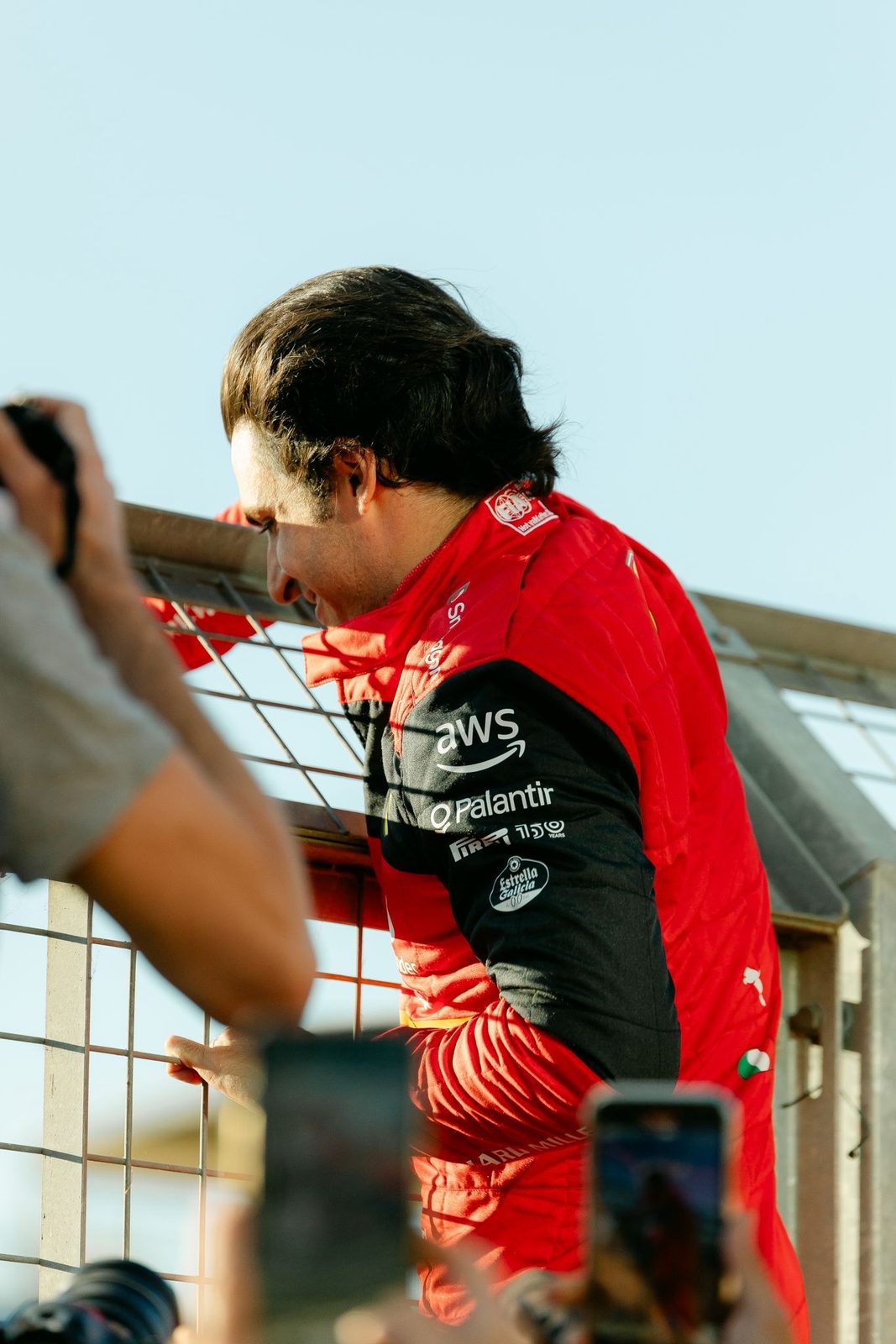
This is the study that started the studio's relationship with Formula One, made across race weekends at Silverstone and Lusail with the deliberate intention of ignoring the racing. The sport produces more photography per hour than almost any event on earth, all of it pointed at the same twenty cars; the study points the other way, at the corridors between team buildings, the machinery under covers, the circuit in the hours the broadcast has no use for.
The frames were made from public and paddock vantages across multiple visits, in the early mornings and the dead sessions when a circuit is essentially an industrial estate with flags. What emerged was a portrait of the sport's actual texture: logistics, waiting, weather, the enormous stagecraft that surrounds twenty minutes of competition. The black-and-white treatment across much of the sequence was chosen to hold the images apart from the sport's saturated broadcast palette.
The study became The Spaces Between, the studio's first publication, and set the editorial method everything since has followed: find the subject everyone photographs, then photograph what surrounds it. Within the archive it anchors the Experience category, and it remains the working answer to what editorial coverage of a sporting event offers that accredited photography does not: the event as a place, rather than a result.