Singapore
Singapore builds upward and then greens what it has built.
The Supertrees at Gardens by the Bay are steel and planted material, engineered to hold climate as much as they hold form. They sit between the glass domes of the conservatories and the tower hotels of Marina Bay, and at night they are lit from within. The effect is deliberate. The city does not apologise for its own ambition.
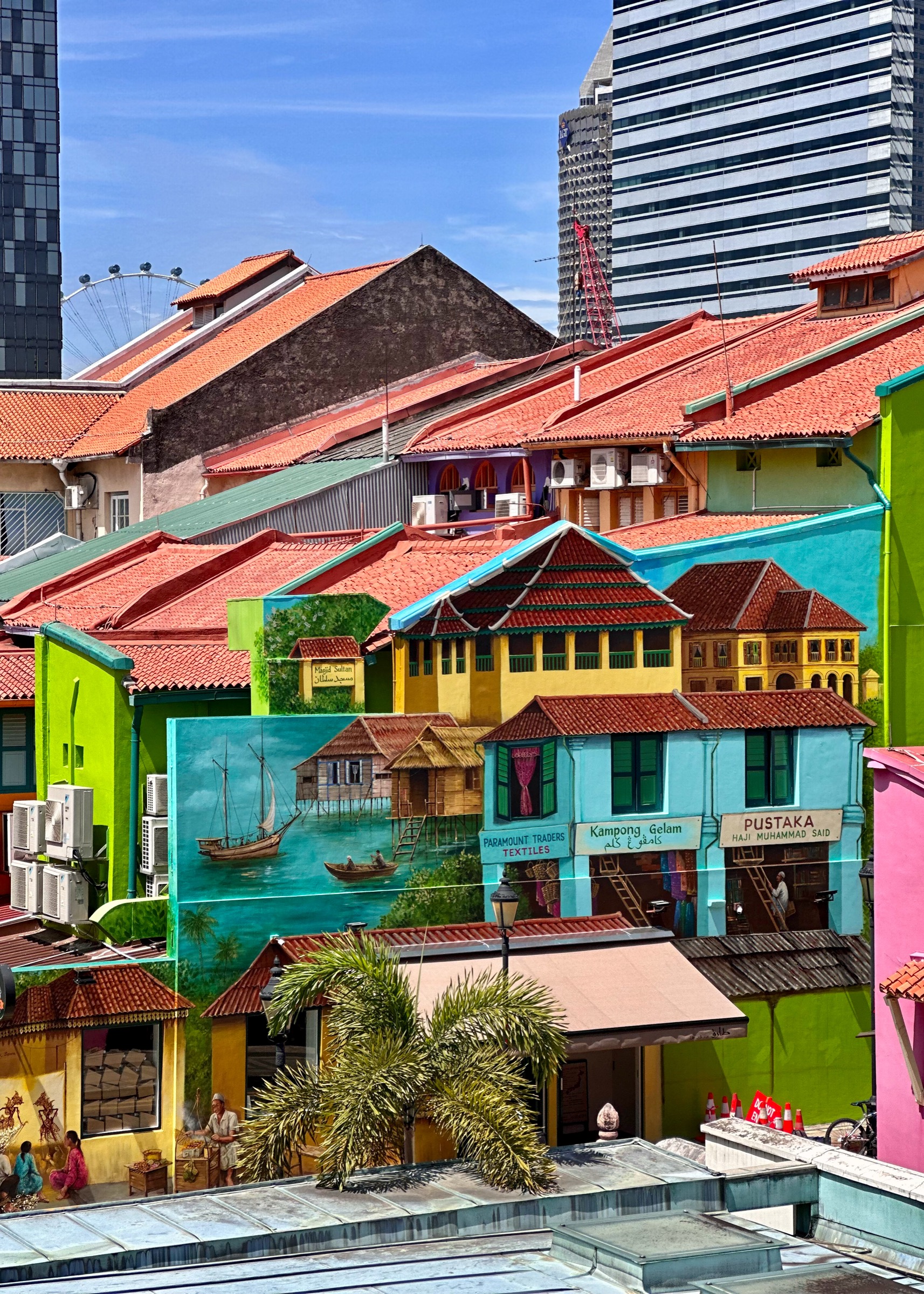
Kampong Glam holds a different register.
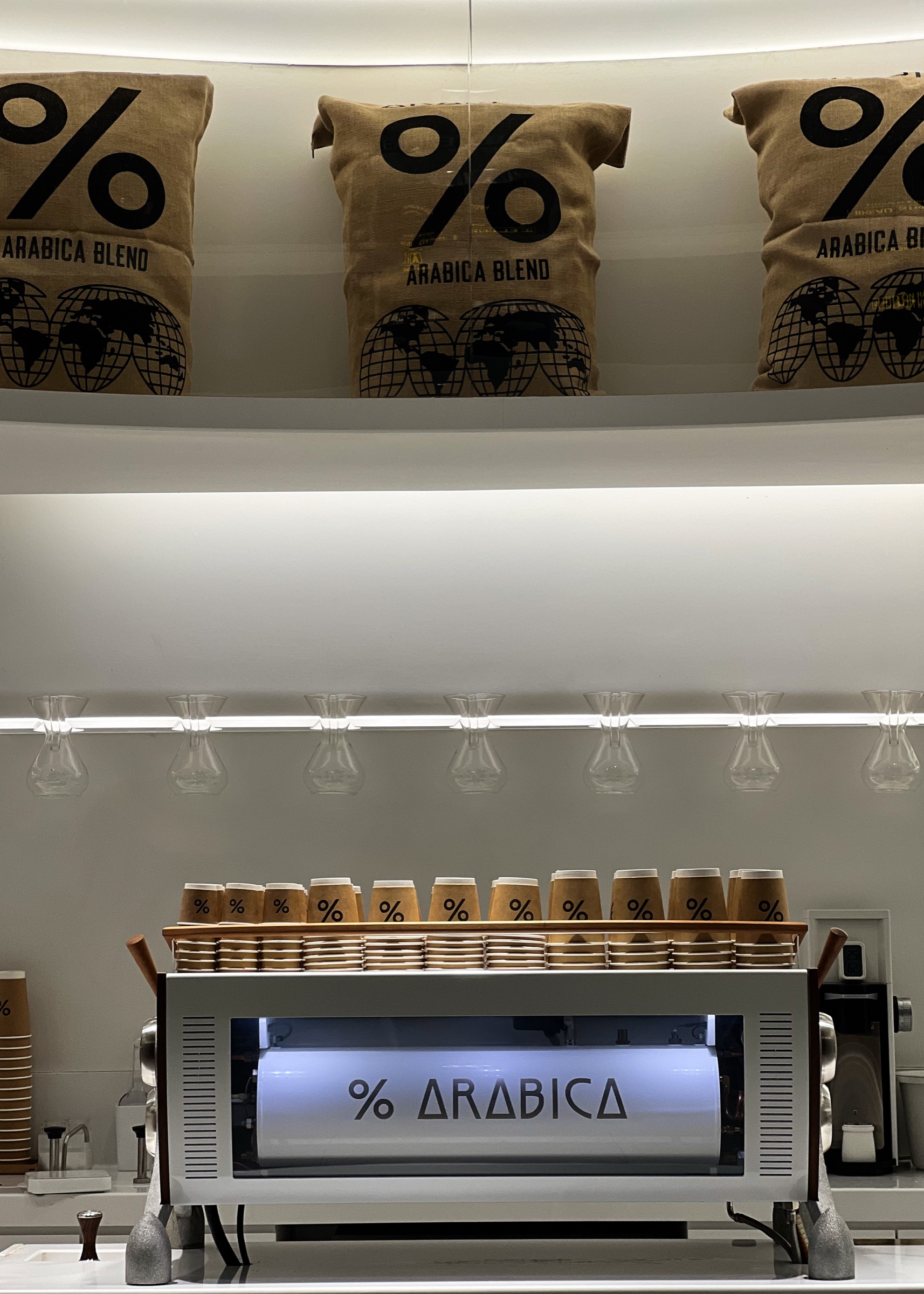
Shophouses in yellow, green and terracotta, with murals applied to gable walls that picture what stood here before the towers arrived. The heritage quarter and the financial district exist in the same eyeline without negotiating with each other. Elsewhere, a Cartier canopy in gilded glass. A % Arabica counter set in clean white, cups stacked in rows, bags of coffee hanging at the ceiling. The city accommodates many versions of itself at once.
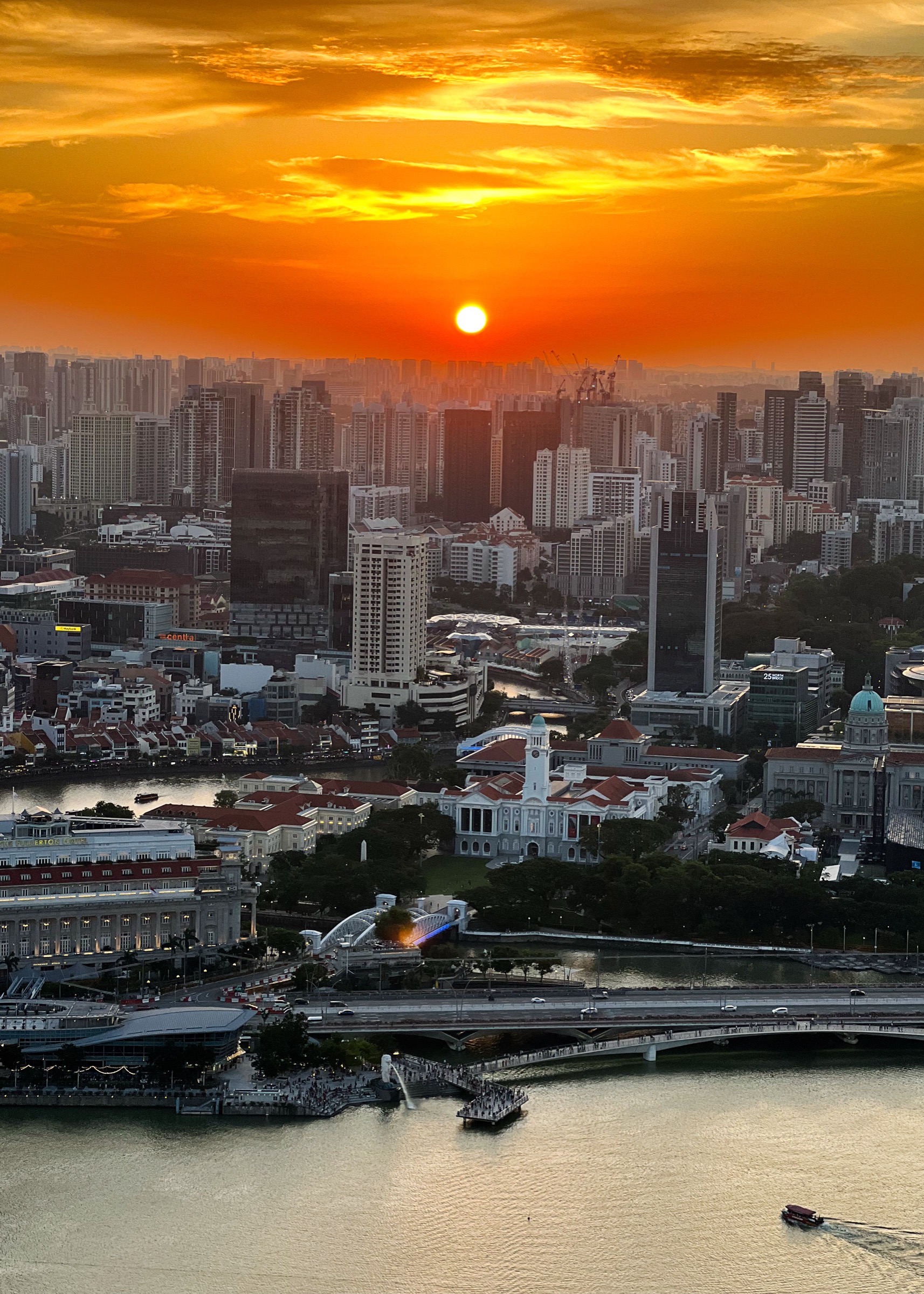
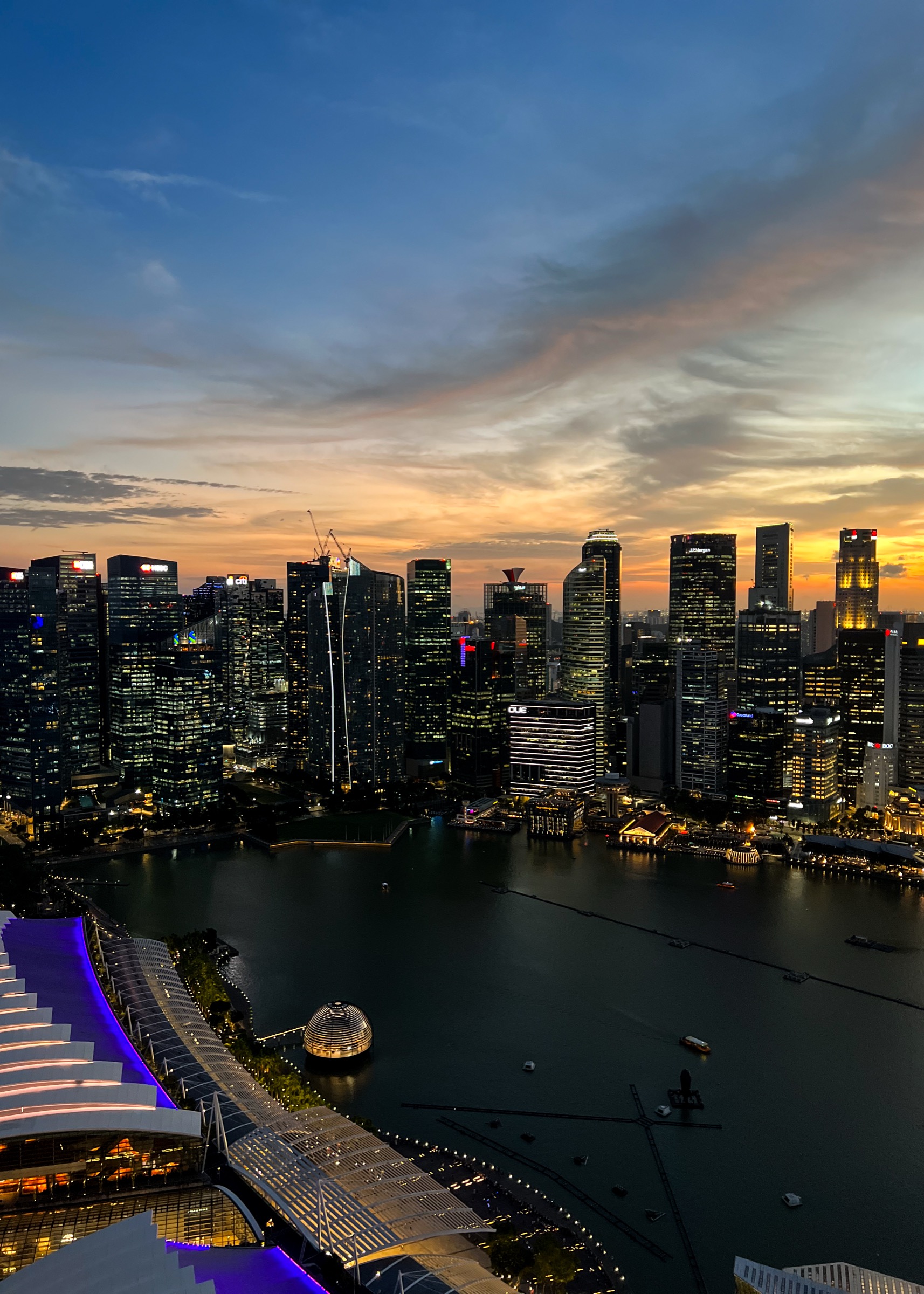
The bay holds the light at dusk.
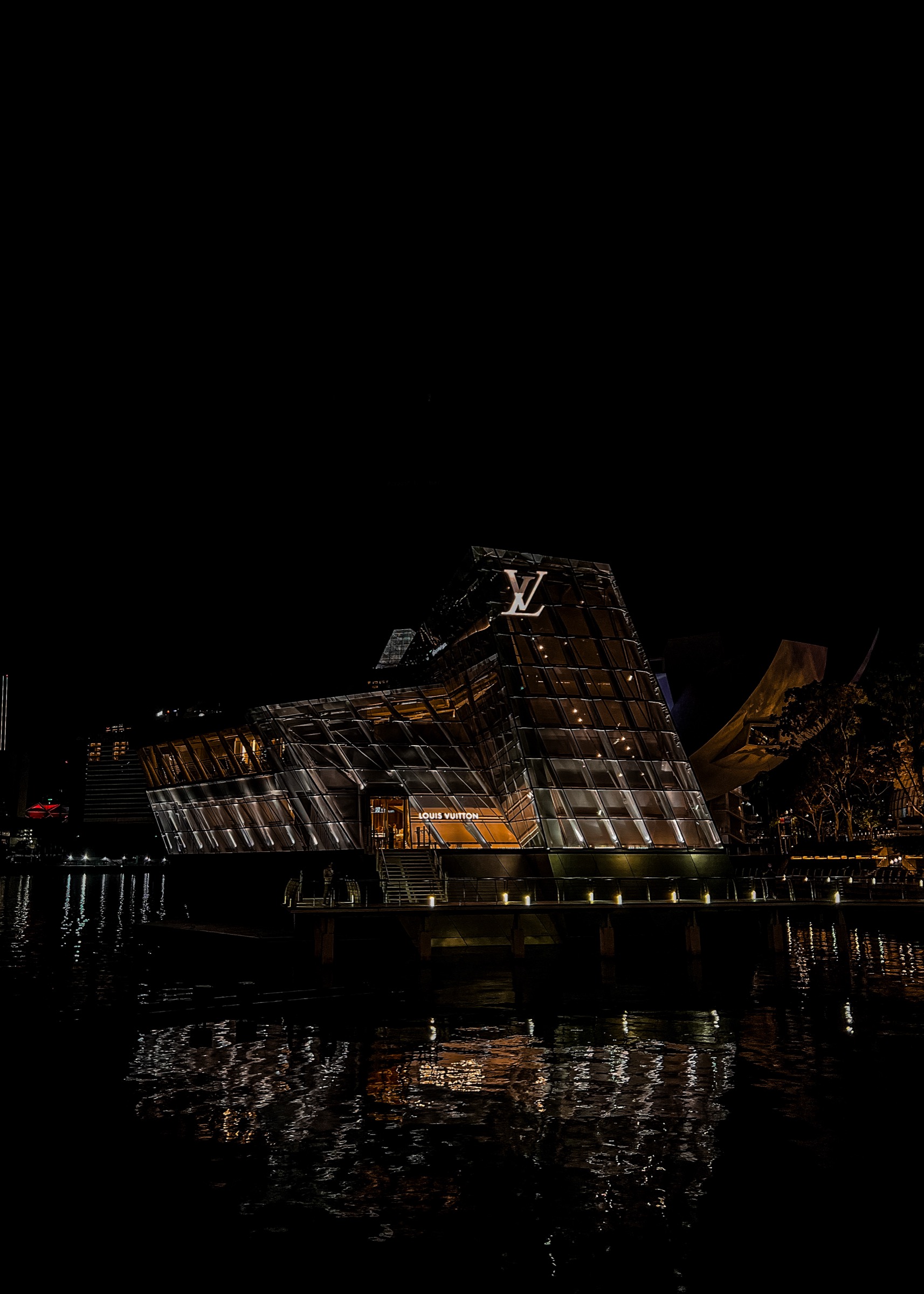
From the rooftop of Marina Bay Sands, the financial district fills the middle distance as the sky changes behind it. The city is performing something, though it is not immediately clear what. Buildings lit floor to floor, the water below still. Further along the waterfront, a glass structure sits on the water itself, holding the Louis Vuitton monogram above its entrance. It is architecture used as object, set apart from the city it belongs to.
What stays from Singapore is not any single building or quarter but the sense of a city held at a very particular pitch.
It does not feel accidental. The ambition is structural, and the darkness only sharpens it. Glass reflects water. Light carries further than it should. The city, after dark, is the clearest version of itself.
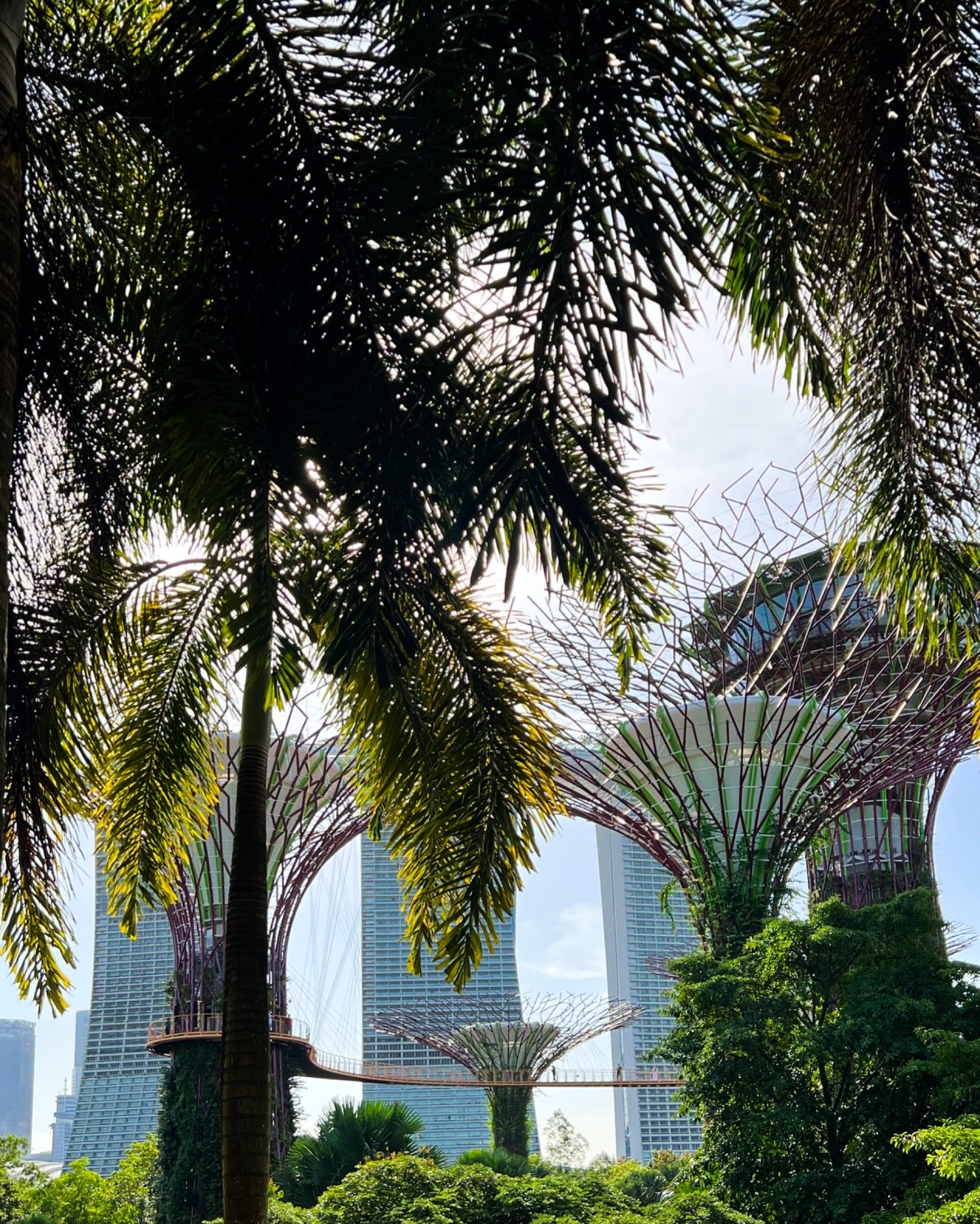
Singapore is the collection's study of engineered nature: a city-state that builds vertically and then plants what it builds, until the distinction between garden and infrastructure stops being useful. The study centres on Gardens by the Bay, the Supertrees and conservatories, and the wider habit they represent, climate held, shaped and exhibited as civic policy.
The photographs treat the Supertrees as what they are, architecture wearing botany, and follow the theme through the conservatories' managed atmospheres to the towers greened storey by storey. Singapore's tropical light is filtered through humidity and glass for most of the day, and the study works with that softness, letting the engineered and the organic blur the way the city intends.
In the archive Singapore pairs with its Raffles study, permanence and futurism, one city, and extends the collection's climate thread: alongside Kew's glasshouses and the Gulf's shaded streets, it documents the ways cities now curate weather. The study feeds the Journal's essays on seasons and buildings, and anchors the archive's Southeast Asian material with Kuala Lumpur and Langkawi.