Qanat Quartier
Qanat Quartier does not pretend to be original. It is Venice quoted at length: canals, footbridges, a campanile, facades in coral and lemon and rose, laid out on reclaimed land at the tip of The Pearl.
The honesty of the borrowing is what saves it. Nobody here is fooled and nobody is meant to be. The quarter offers the pleasure of the reference rather than the deception, the way a well-set table quotes a tradition without claiming to have invented dinner.
Water is the quarter’s whole argument, threaded between the buildings and crossed by low stone bridges.
In Venice the canals are infrastructure. Here they are atmosphere, still and mineral green, doing no work except the work of being looked at. The buildings lean over them all day like people over a balcony, and in the heat of the afternoon the water is often the only thing moving.
The Gulf builds mostly in sand tones and glass. Qanat Quartier commits instead to colour held against blue sky: pink arcaded balconies, yellow facades with white balustrades, shutters and awnings in competing reds.
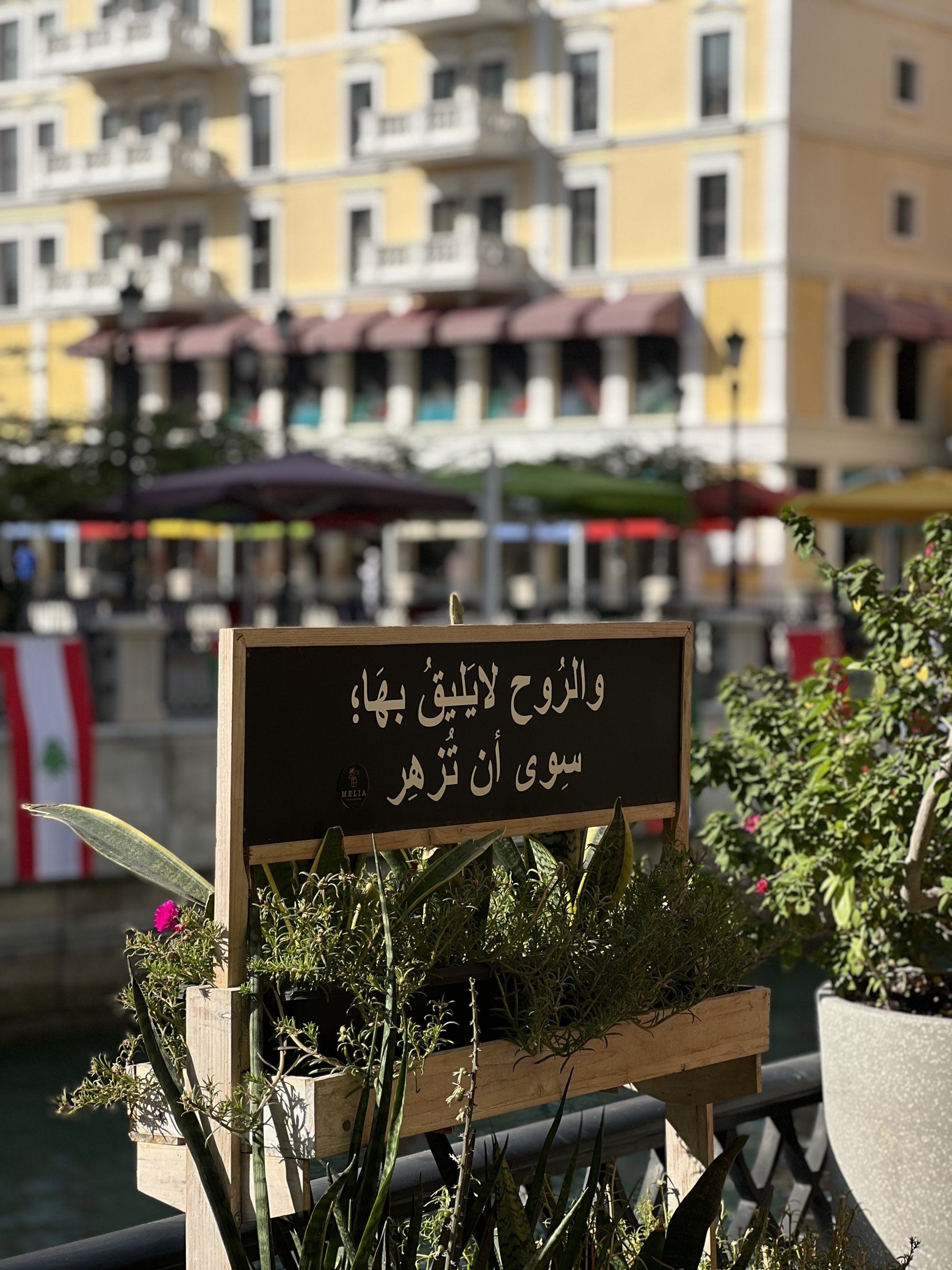
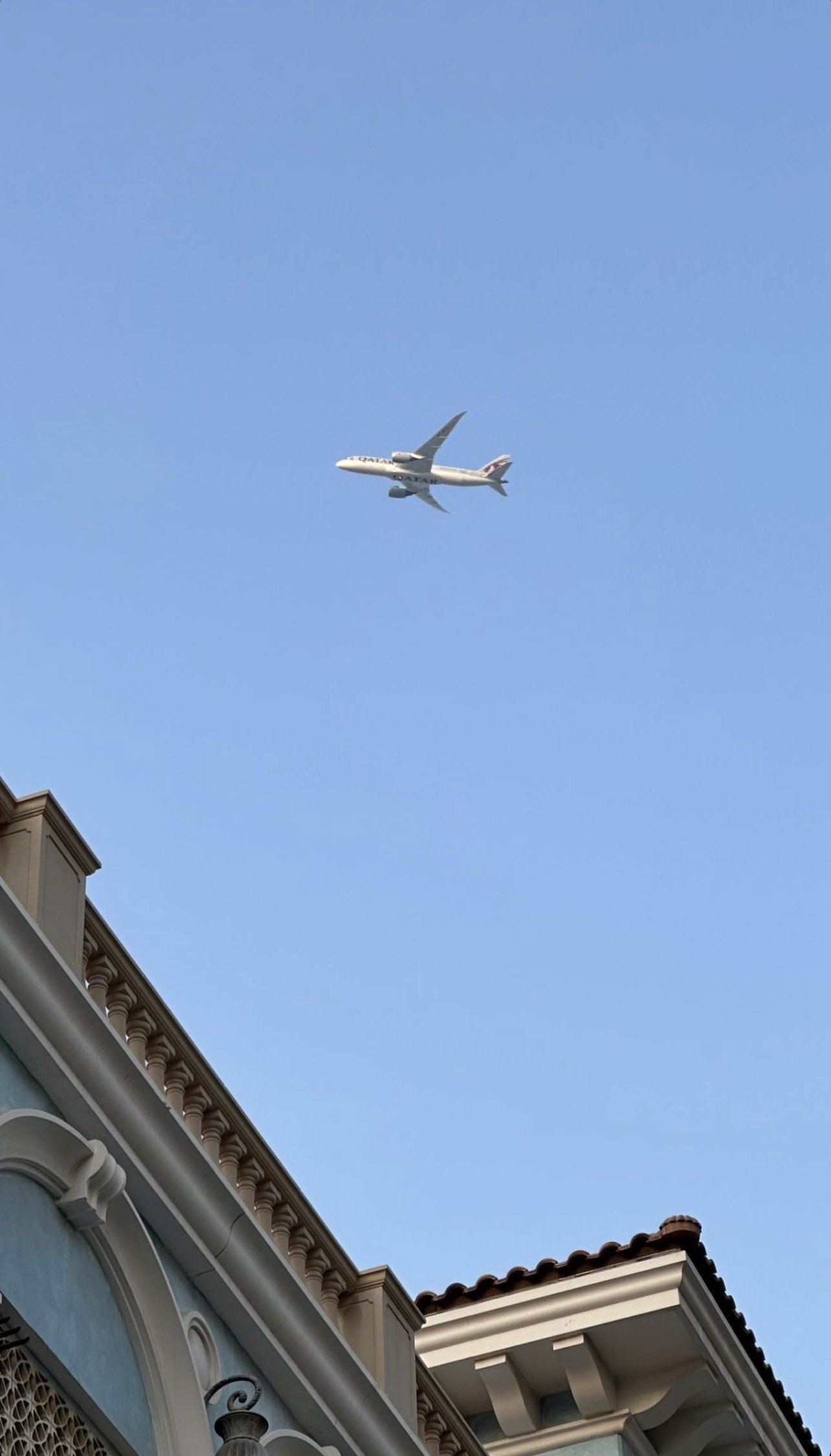
Under this light the palette does something the original could never do. Venice is weathered; this is saturated. A lane of stairs climbs under a green tree, a line of Arabic verse stands among the planters, and an airliner crosses above the rooflines every few minutes, descending towards the airport, stitching the borrowed city to the real one.
It is easy to condescend to places like this, and wrong.
A quarter built as a quotation still fills with actual life: residents, joggers, coffee at the water’s edge, evenings on the bridges. The photographs were made slowly, in the manner the quarter itself suggests. Doha did not need a Venice. It built one anyway, and then it moved in.
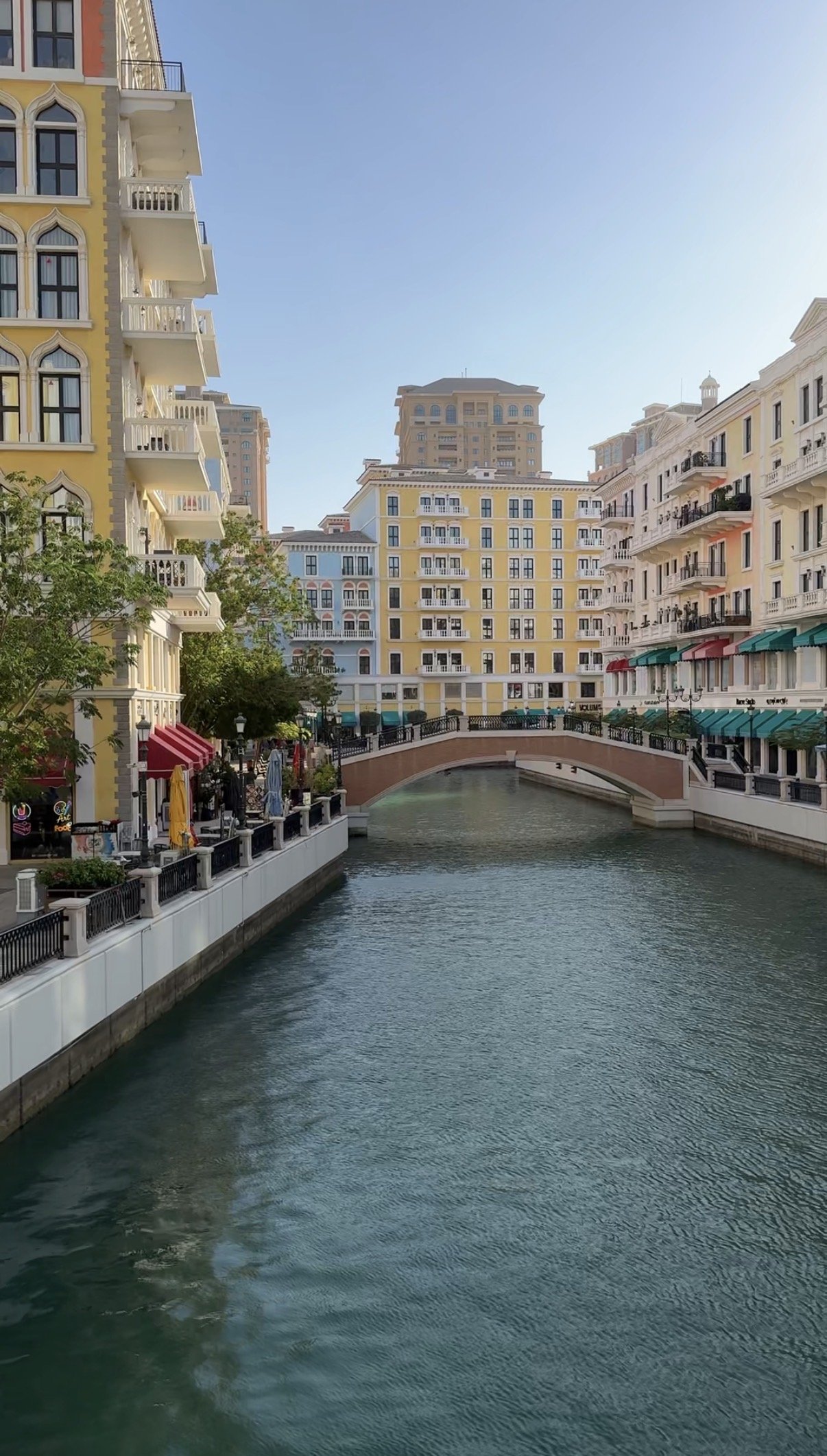
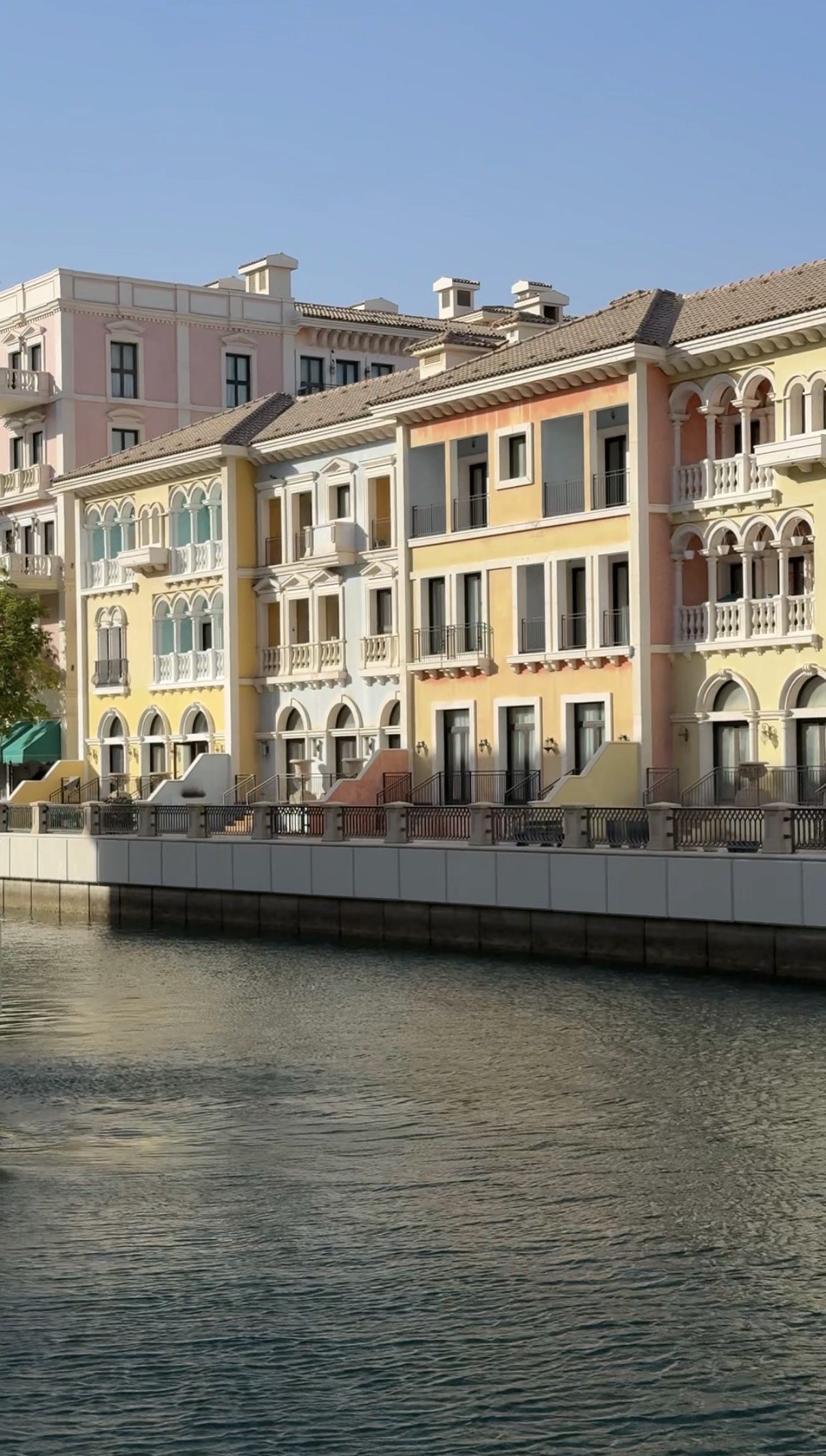
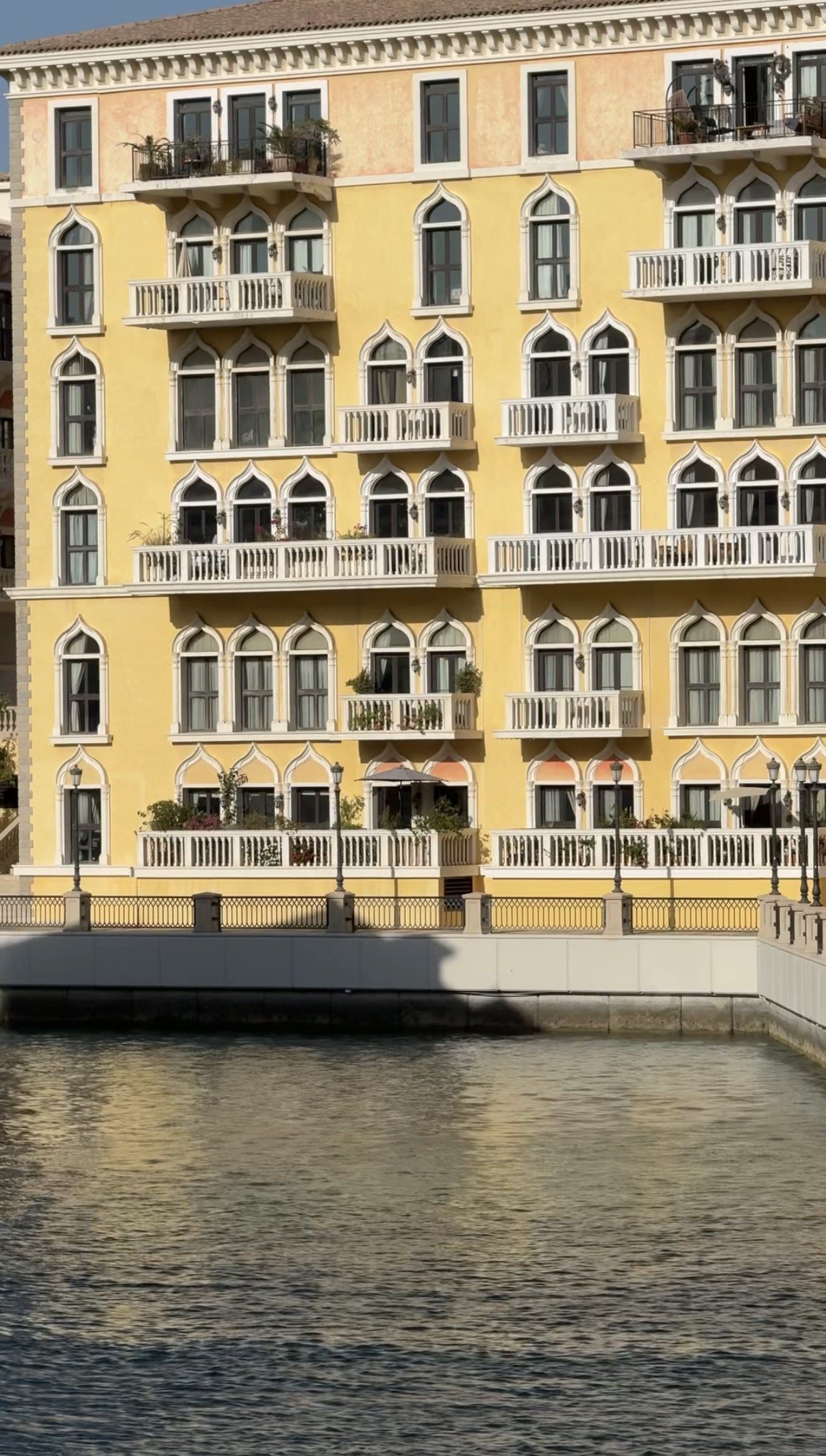
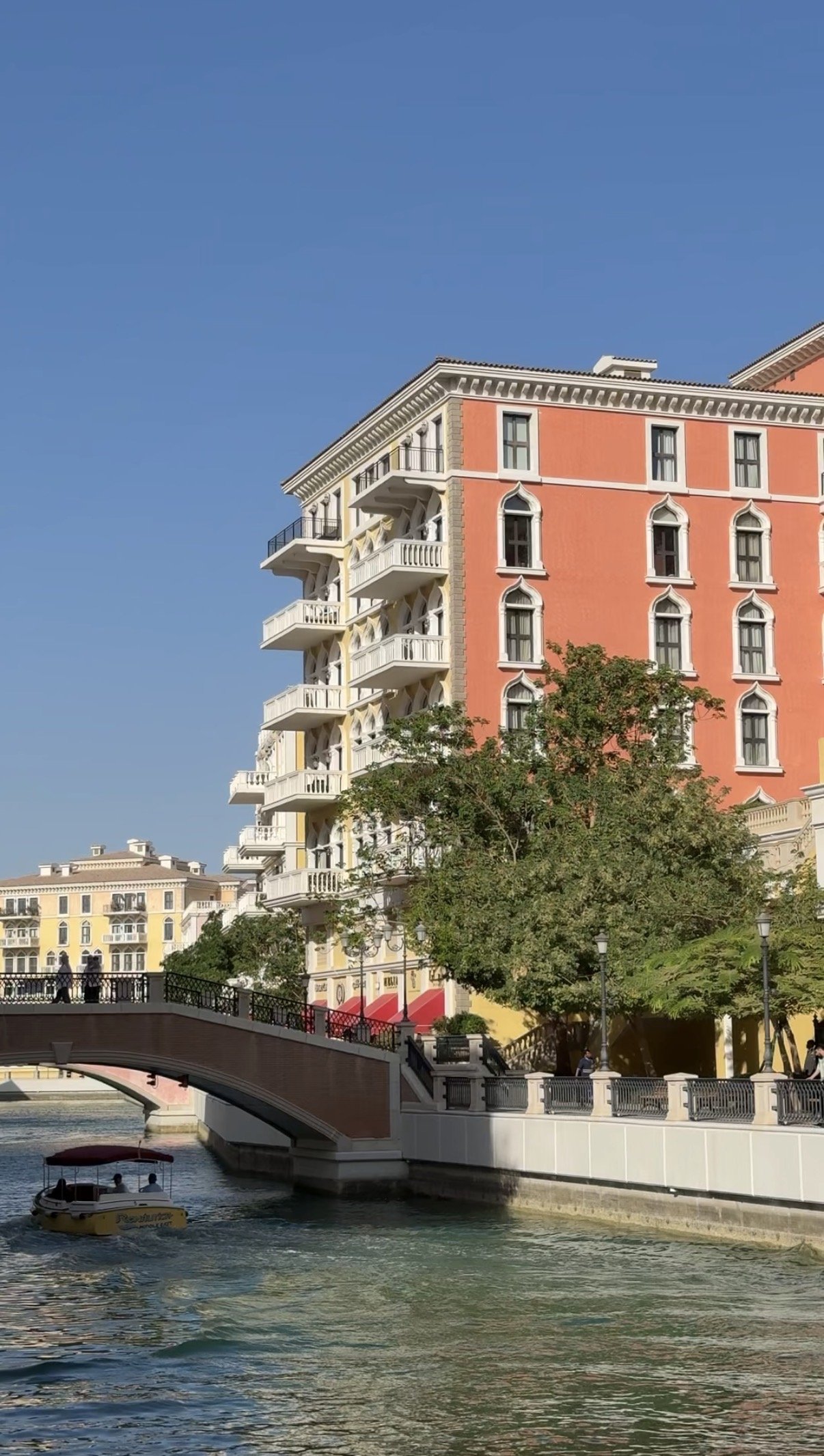
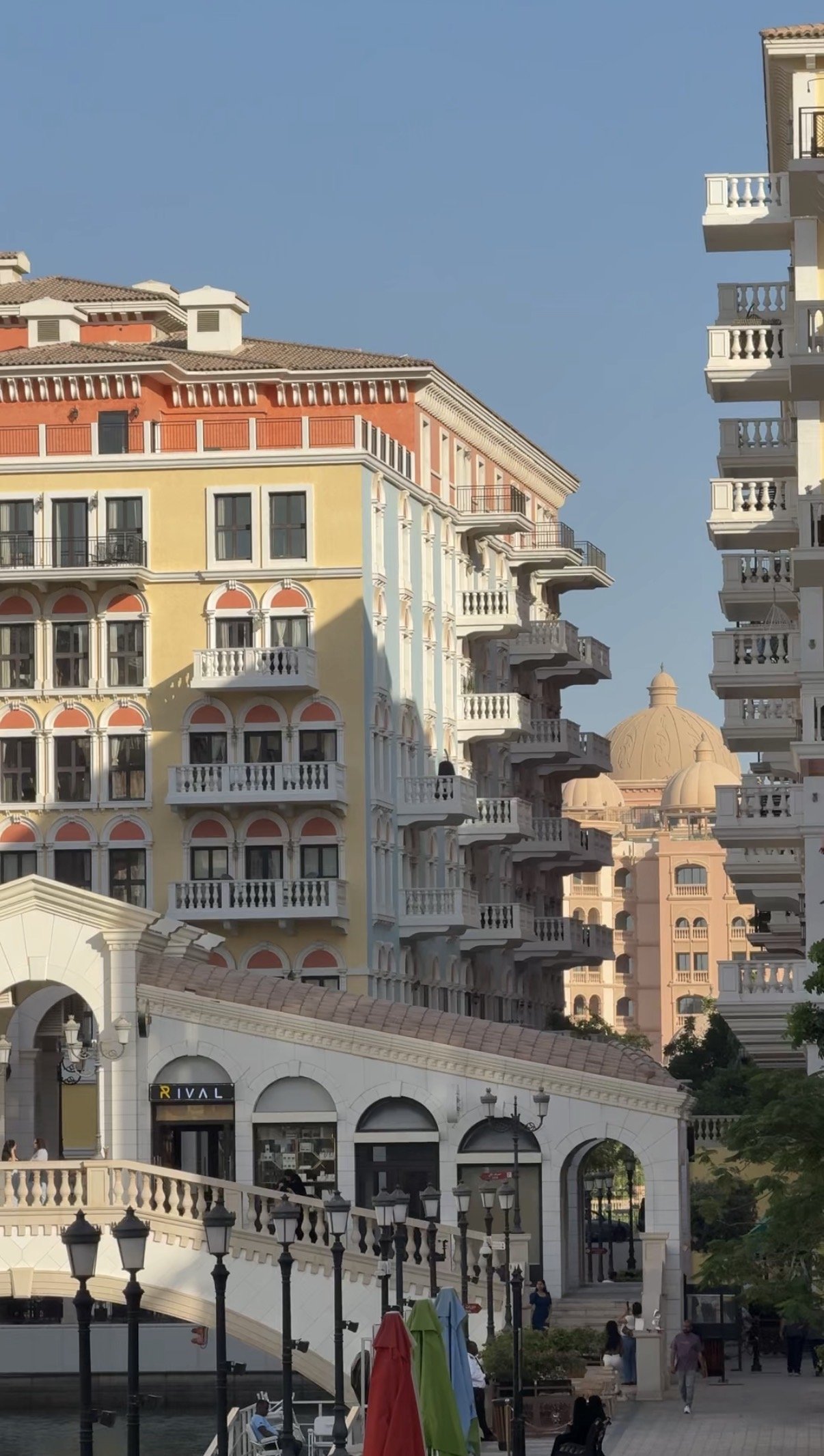
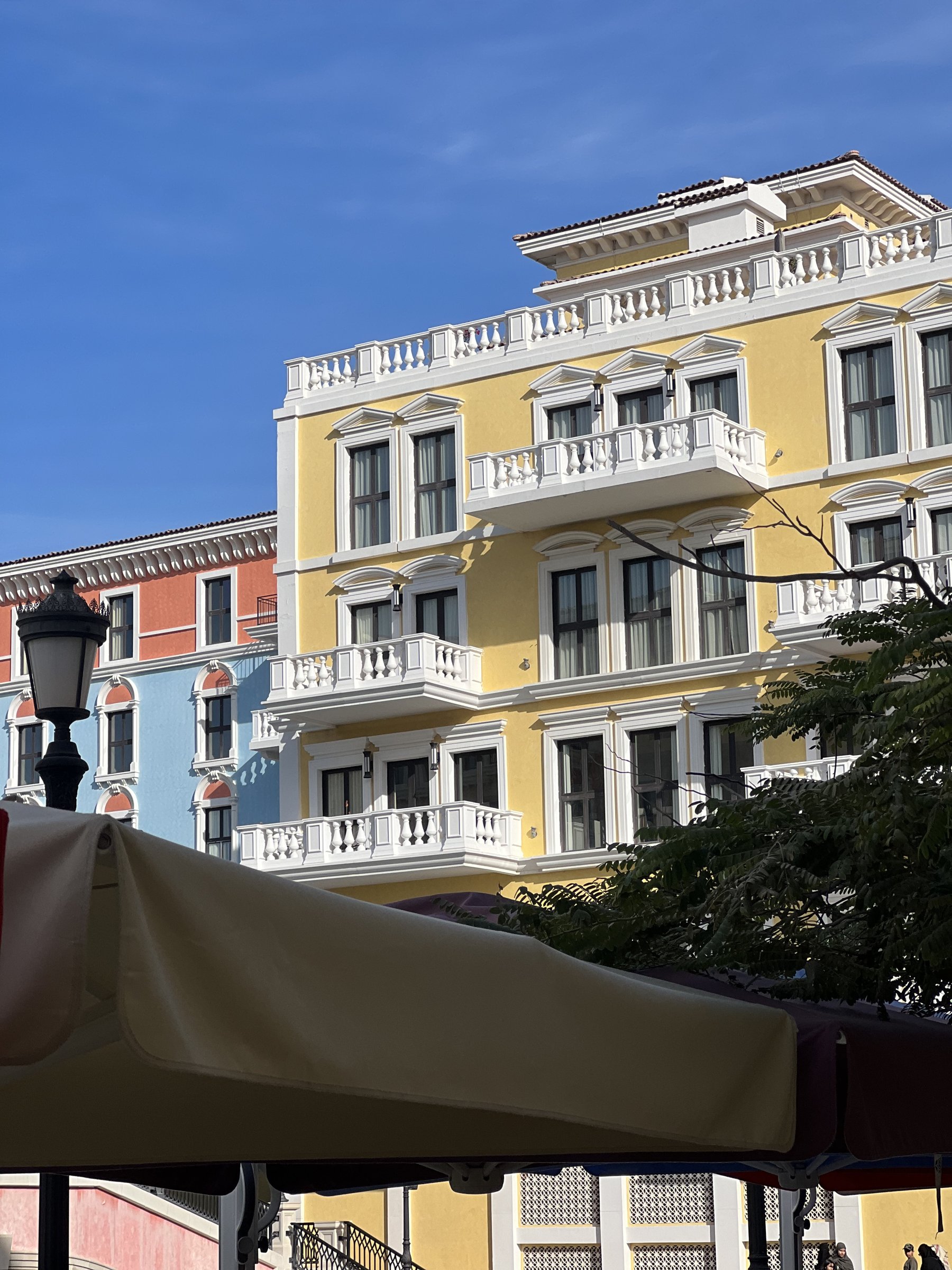
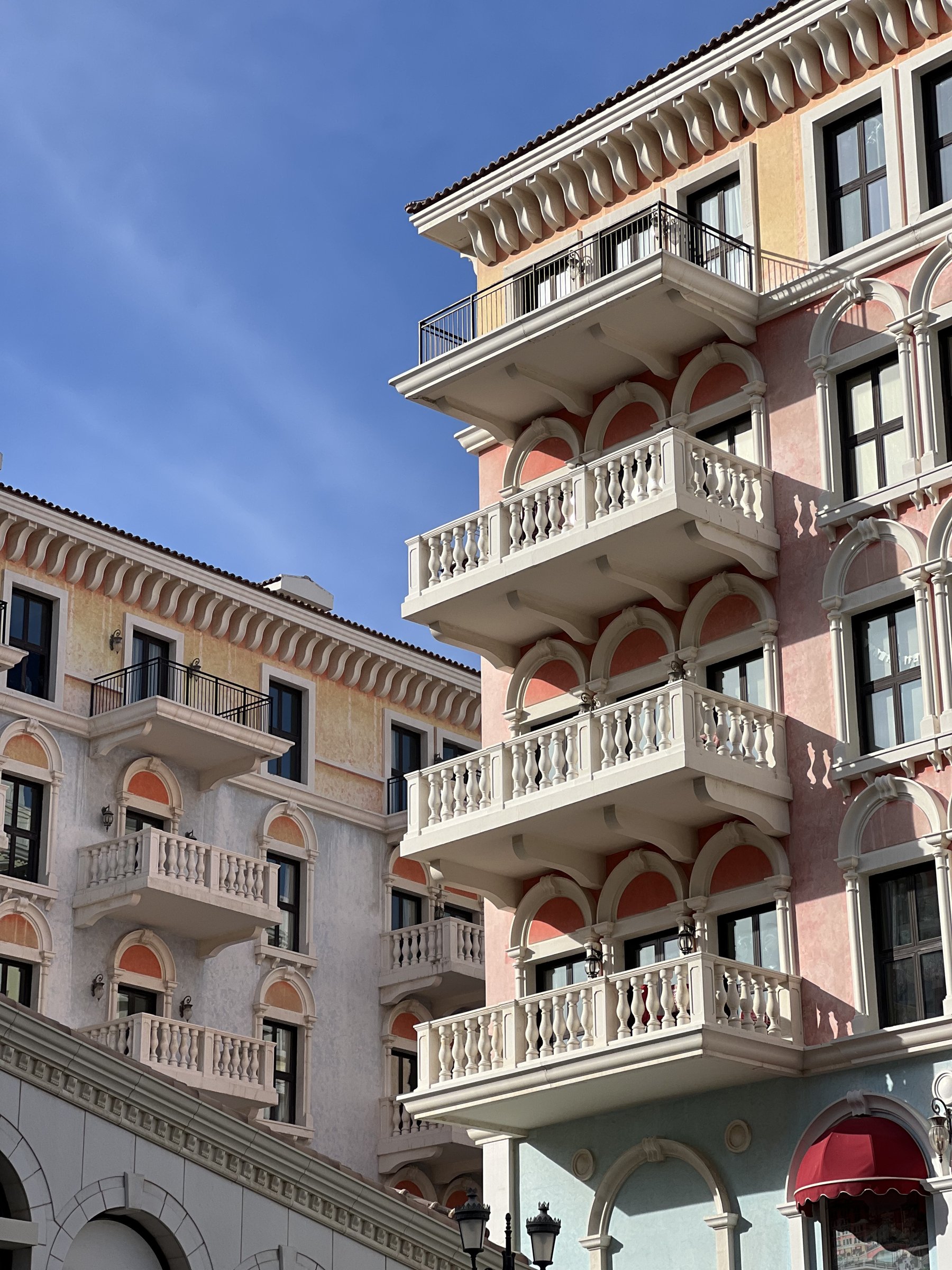
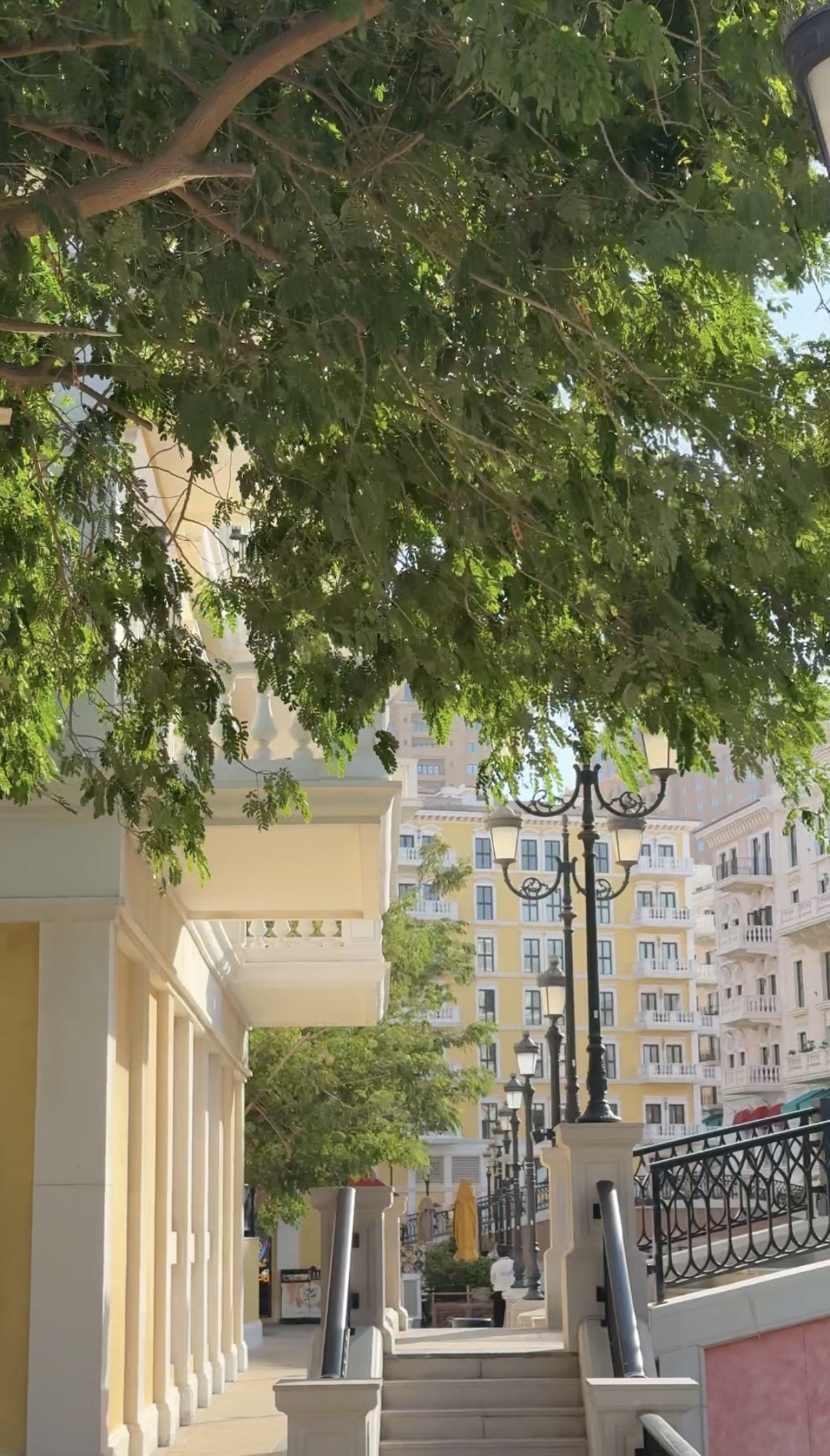
Qanat Quartier is the Venetian quarter of The Pearl, Doha’s ring of reclaimed islands, planned around canals, footbridges and a piazza rather than the towers the city is known for. Its facades run through a palette the Gulf rarely permits itself, coral, lemon, rose and powder blue, and the whole quarter descends to the water the way its model does, minus the sinking. The study was made on foot across a single bright day, from the canal mouth to the top of its stair lanes.
The photographs take the quarter at its word. Rather than hunting the seams of the imitation, they attend to what the place actually offers: saturated colour under a desert sky, still water between painted buildings, bridges that give every walk a middle, and the small surprises of an inhabited quotation, a line of Arabic verse among the planters, an airliner descending over Venetian rooflines on its way into Hamad.
The quarter sits a short walk from Gewan Island, whose crystal canopies answer these canals as The Pearl’s other set piece, and the two studies were made as neighbours. Where Gewan performs at night, Qanat Quartier belongs to daylight: a place that borrowed its form from one sea and takes all of its colour from another.