Gewan Island
Gewan Island is a made place, a crescent of reclaimed land beside The Pearl, and it does not pretend otherwise.
By day the island is an essay in shade: low buildings, close water, walking distances. At night it changes register entirely. The avenues switch on, and a place designed for retreat becomes a place designed for the evening.
The island’s spine is held under crowns of glass and steel, palm trees remade as architecture, their hexagonal canopies lit from within.
They cycle slowly through colour: gold, then blue, then green, then violet. The same street becomes four different streets in an hour. Light here is not applied to the architecture. It is the architecture, and the buildings around it are content to stand in its glow.
Underfoot and at hand, the island rewards the closer look.
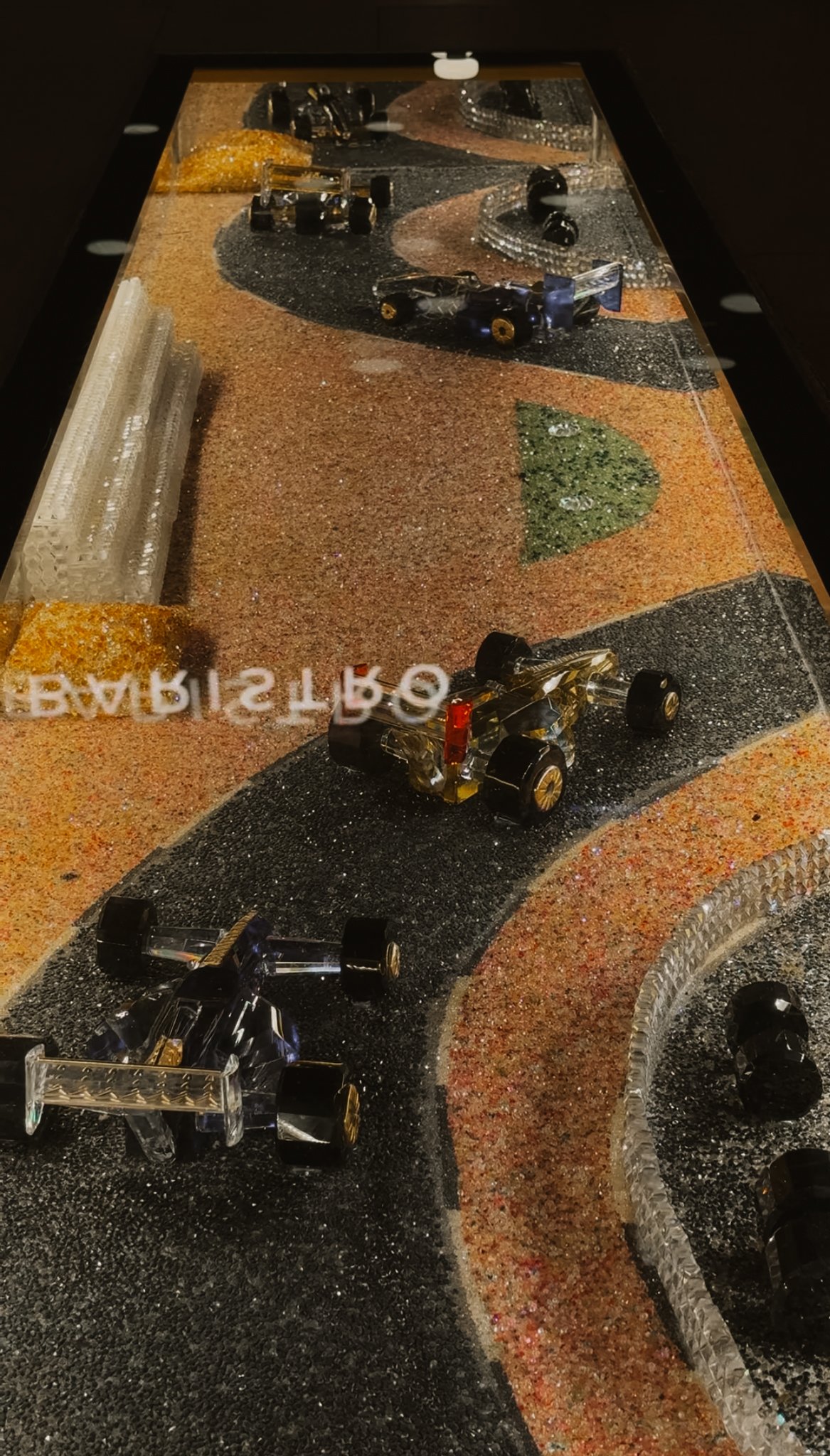
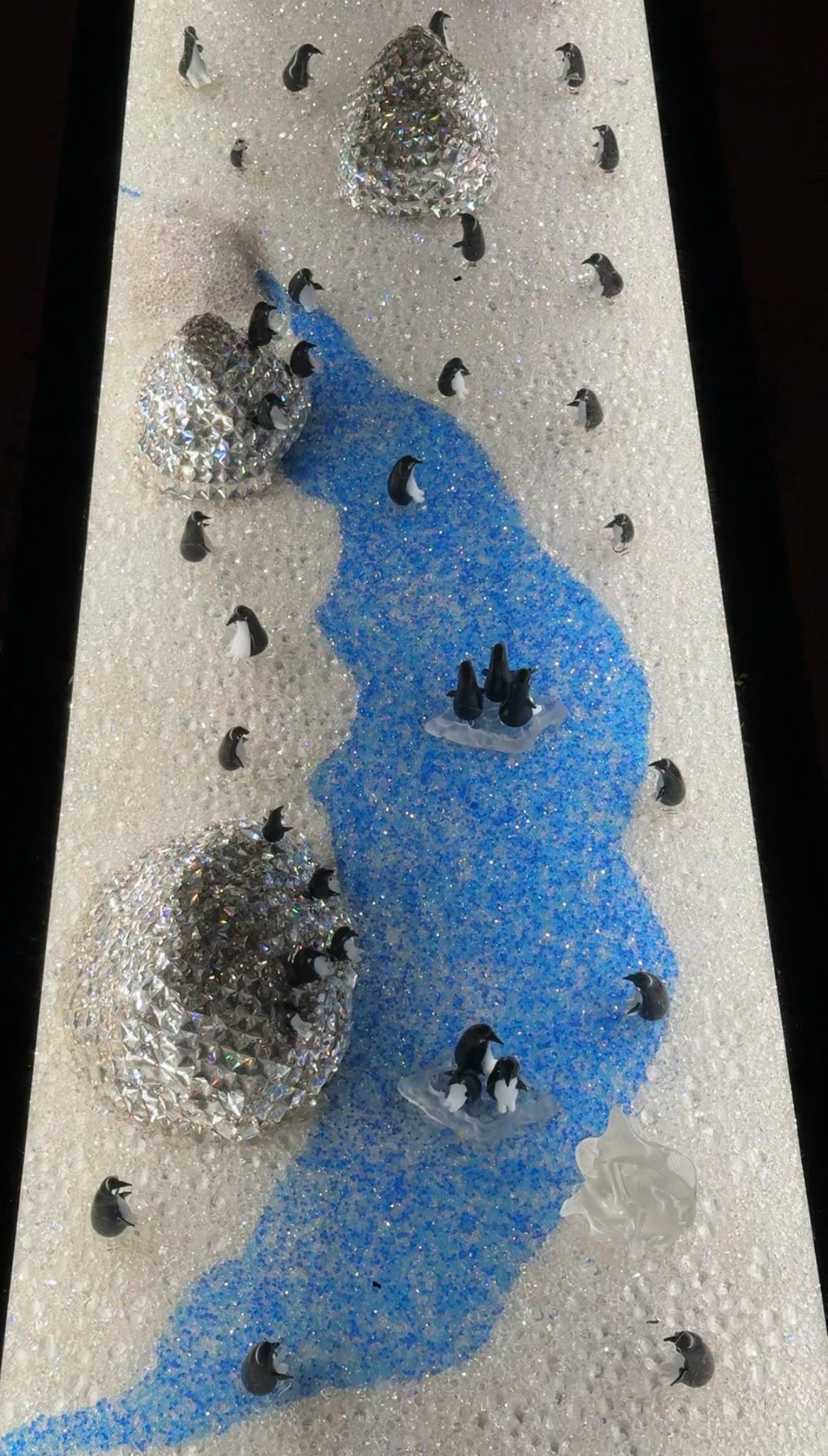
A tabletop is laid as a mosaic of a racing circuit, cars picked out stone by stone. Penguins cross a field of blue glass on another. Fountains run in narrow channels down the centre of the promenade. None of this is necessary, which is the point. Play, executed to jewel standard, is how a new place tells you it intends to be loved rather than merely occupied.
Made places earn belief through detail, and Gewan understands this.
The island photographs like a stage set that has decided to become a city street, and the people walking under the canopies treat it exactly as one. Doha across the water keeps its skyline. Gewan keeps its evenings.
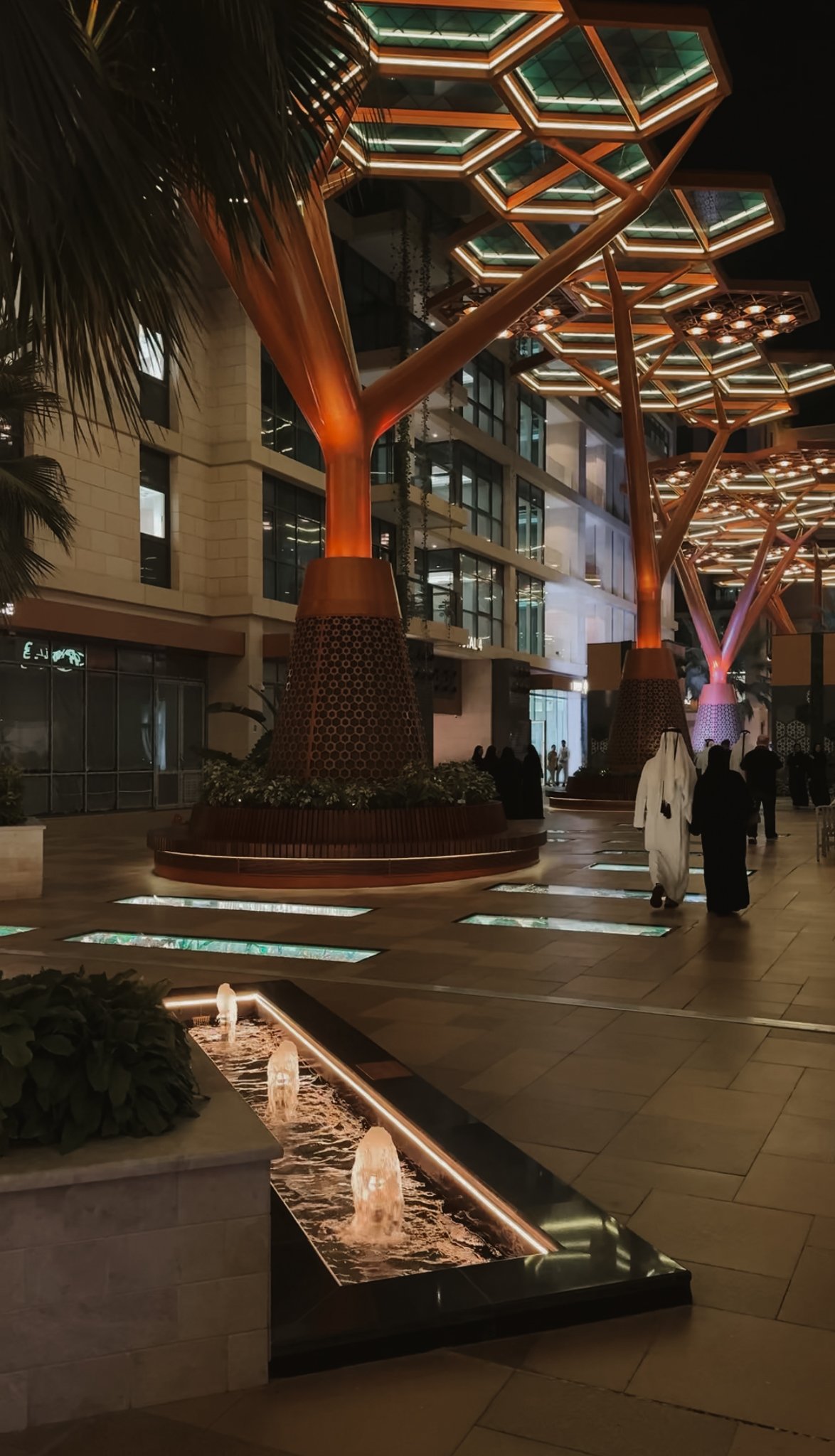
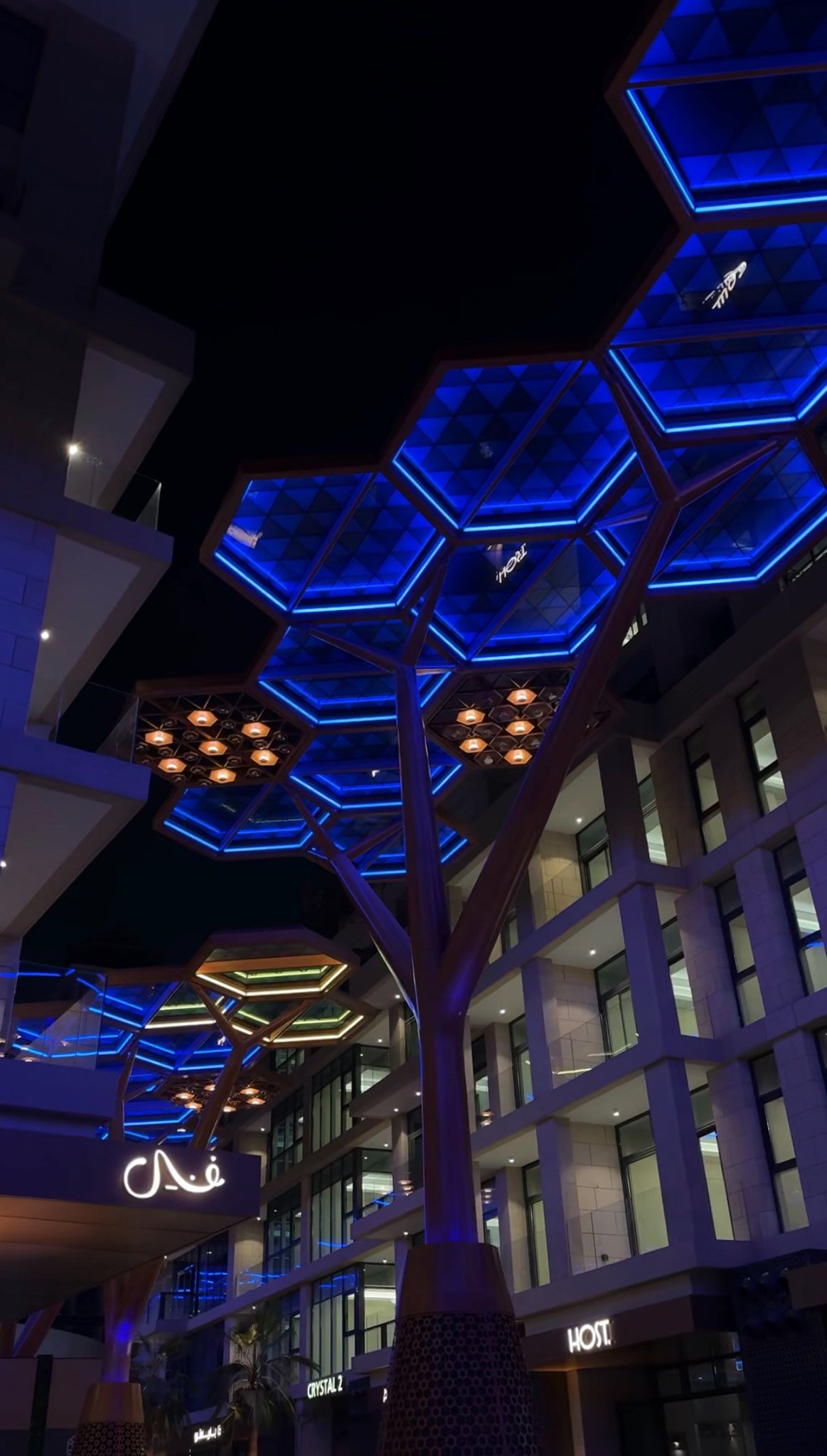
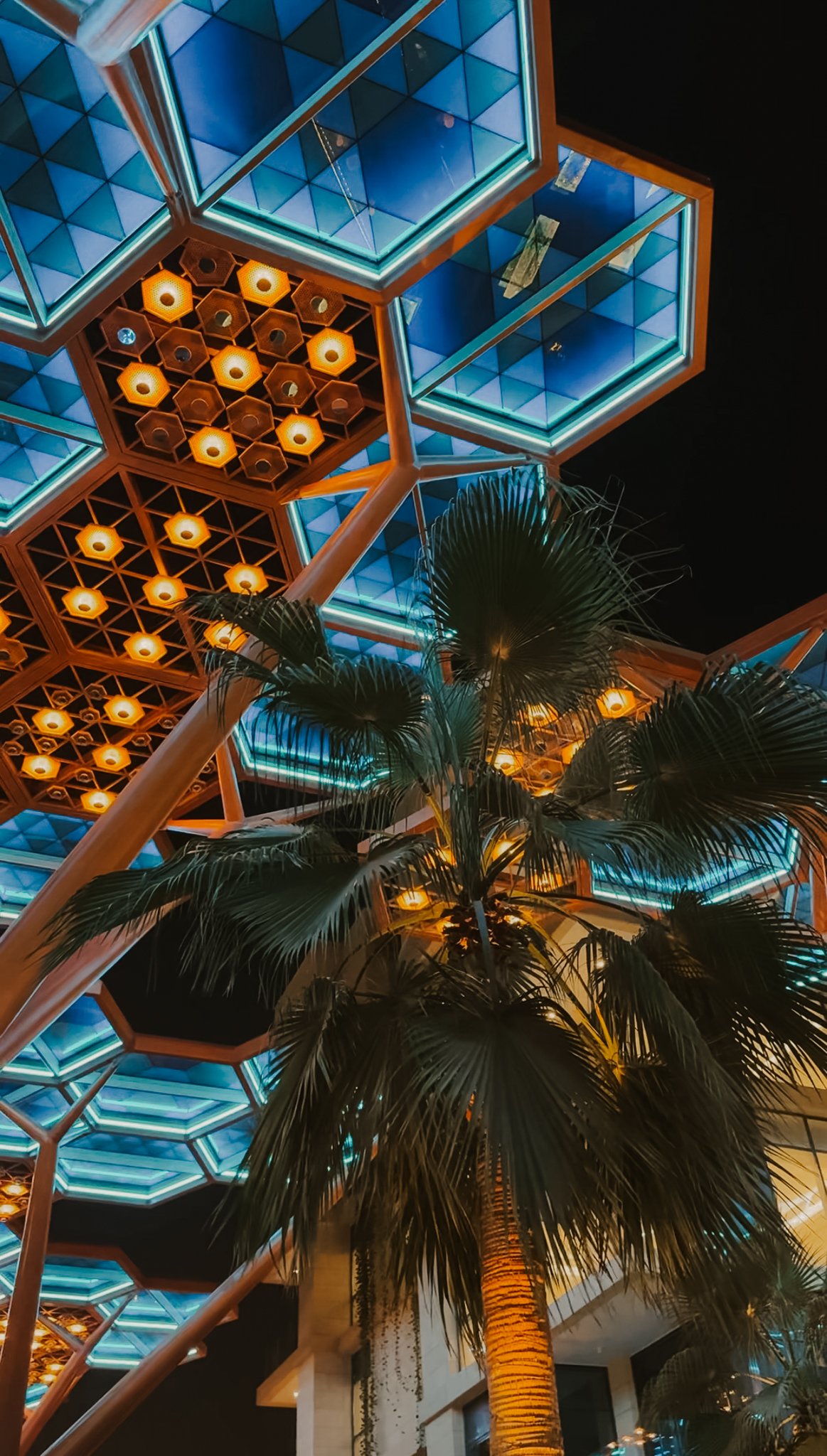
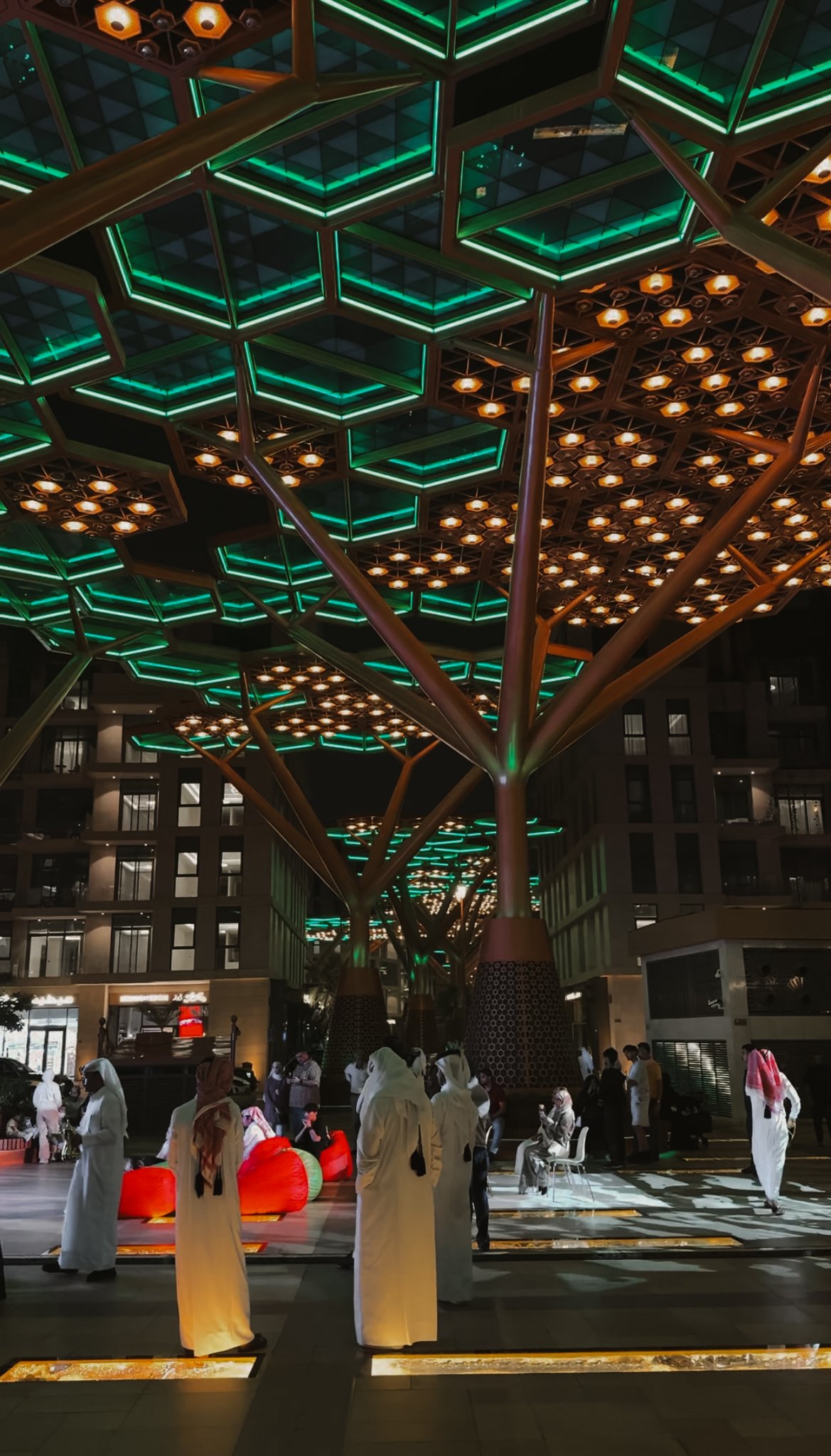
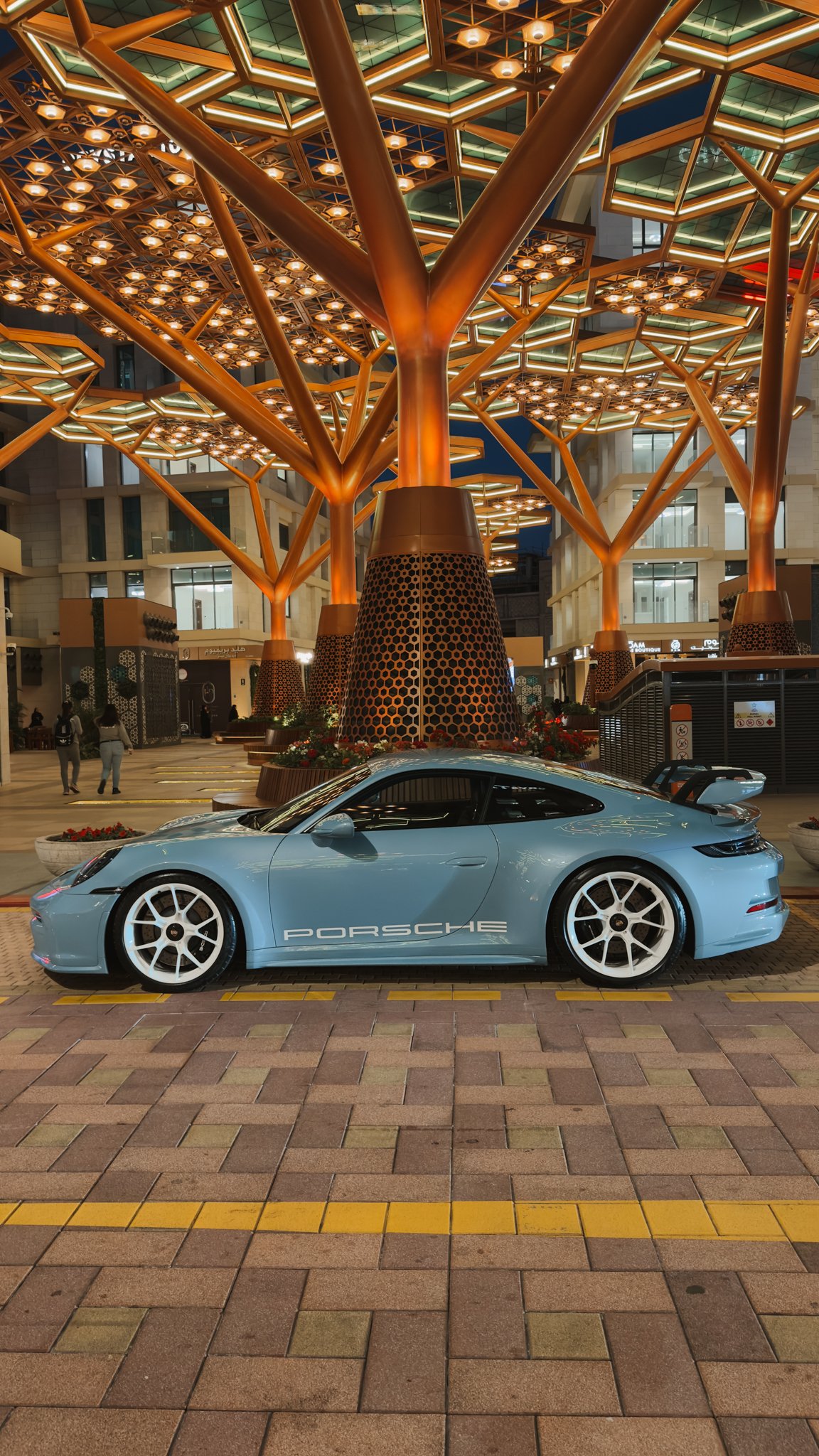
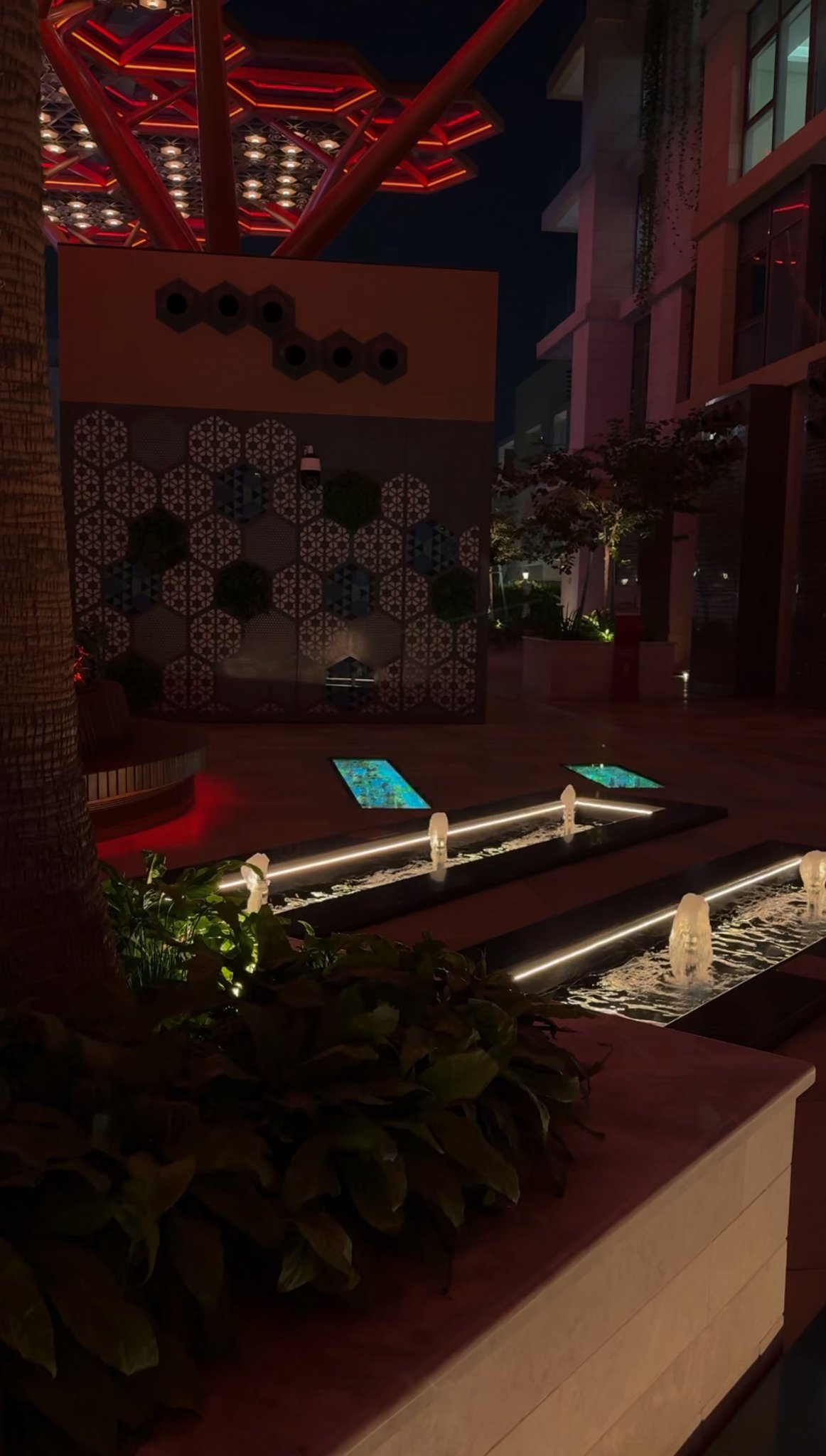
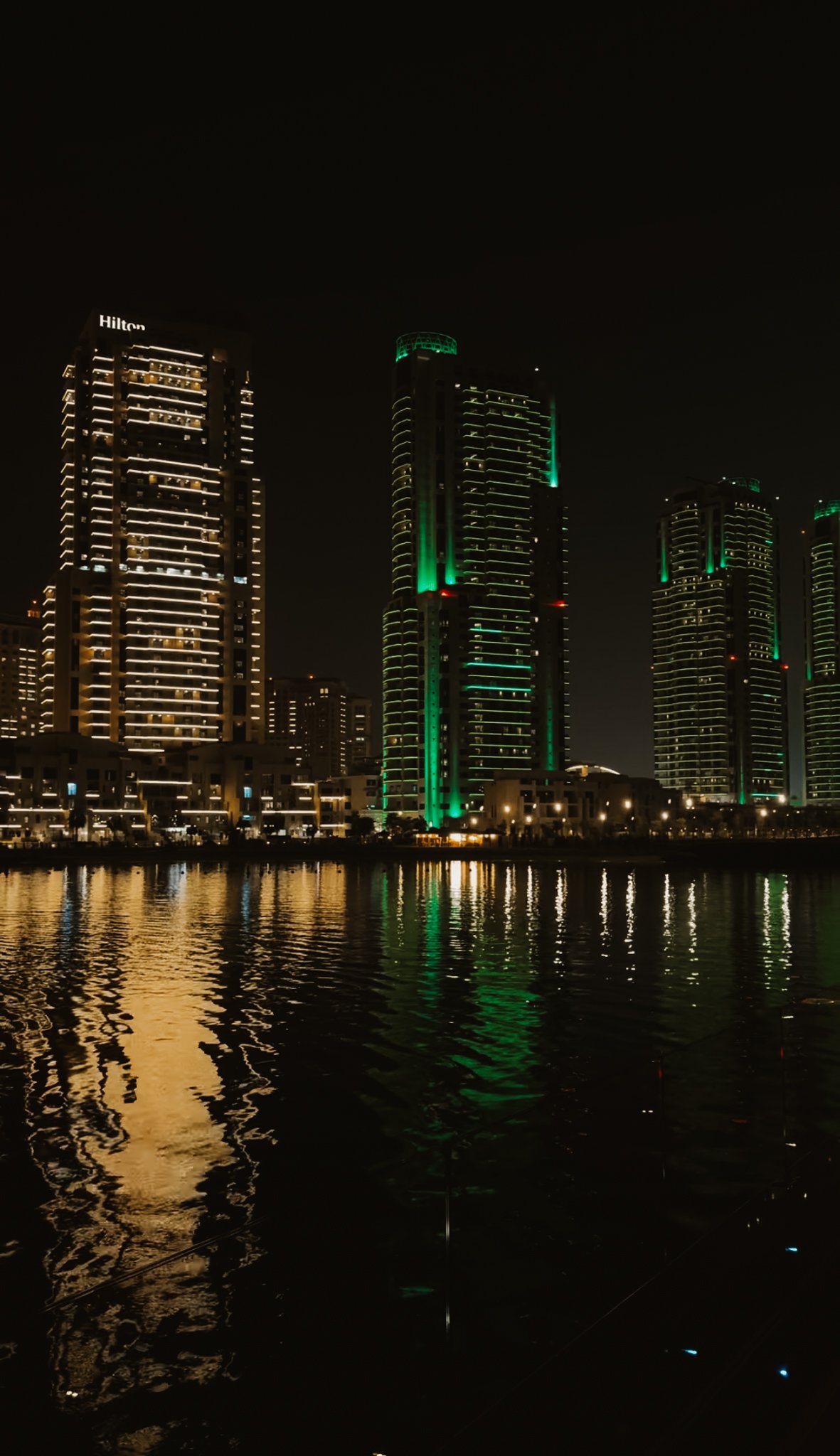
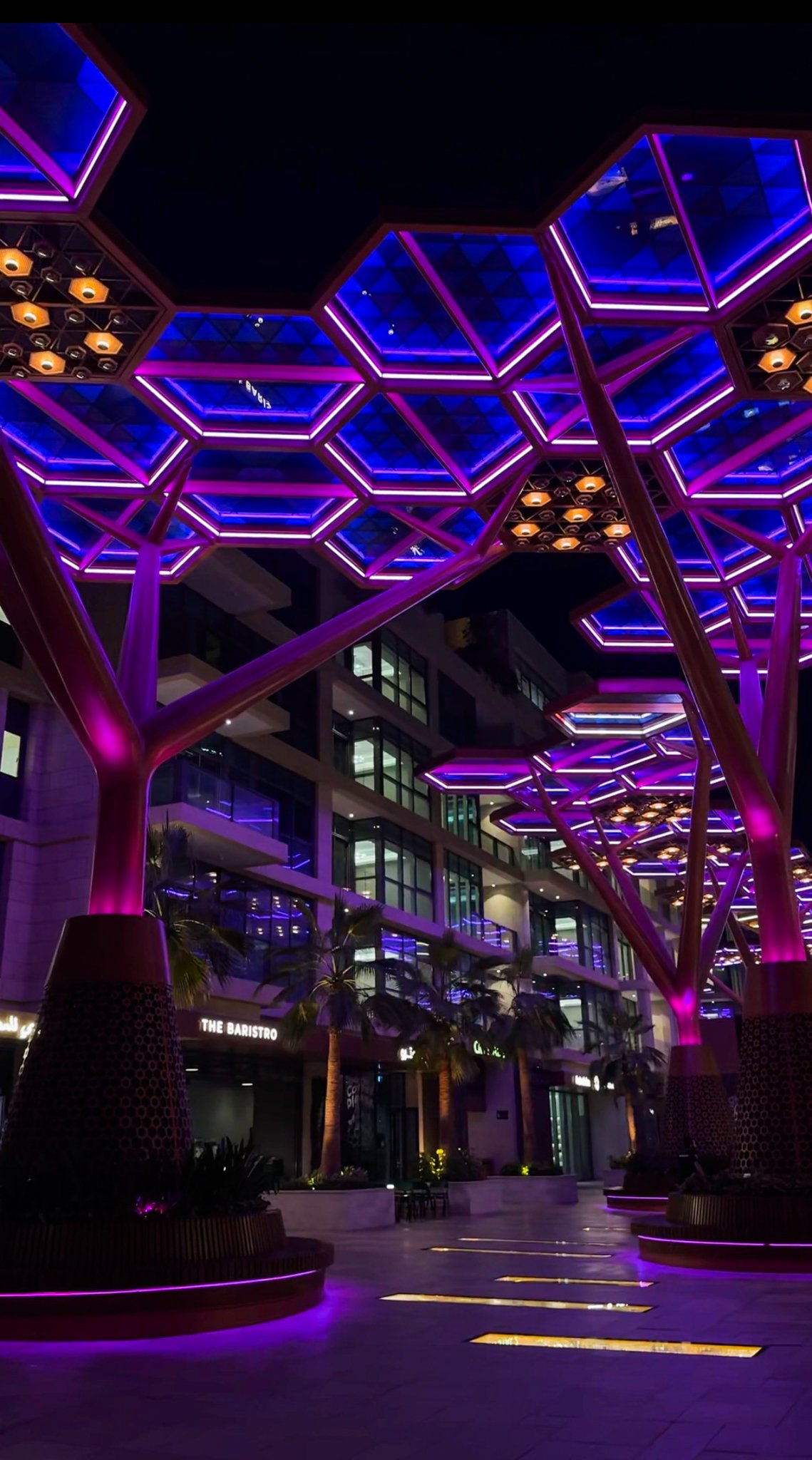
Gewan Island is Qatar’s newest address, a crescent of reclaimed land beside The Pearl, master-planned around lowness in a city that usually builds for skyline. Its centrepiece is the Crystal Walkway, a retail spine held under palm-shaped canopies of glass and steel that are lit from within after dark, cycling slowly through colour above fountains, mosaics and evening crowds. The study was made in a single walk along that spine, from the first canopy to the water’s edge.
The photographs attend to made light as a civic material. Doha is documented endlessly at dusk from across its bays; this study stands inside the illumination instead, where the canopies function as chandeliers at street scale and the paving, the planting and even the tabletops are finished to a standard usually reserved for interiors. The mosaics alone, penguins on glass ice, a racing circuit laid stone by stone, would justify the walk.
The island’s mornings are held in a sister study, Palms, made at the café on its quiet edge before the day began. Together the two frames of the same small island describe the full arc of its day: calm designed for the morning, spectacle designed for the night, and craft underwriting both.