Place Vendôme, Doha
Place Vendôme takes its name from a square in Paris, yet it stands in Lusail. The reference is deliberate. This is architecture quoting architecture, a European grammar rebuilt at the edge of the desert.
What it sells is almost beside the point. The building is the statement. Stone, symmetry and proportion arranged to make luxury feel inevitable.
This study looks past the windows. It documents the staging rather than the goods.
From the outside, the façades borrow from a continent of references. Corinthian capitals. Carved garlands. Domes that catch the afternoon sun. The scale is theatrical, and intentionally so.
Inside, the language continues. Arched corridors run the length of the building, lined with wrought lanterns and held up by columns that have no structural argument to make. They exist for the eye.
Light does most of the work. It falls through a scaled glass dome and across pale stone, softening every surface and lengthening every shadow. The space changes by the hour.
The boutiques are present, but they read as punctuation. Each is a small scene within a larger set.
The detail rewards a slower look. Plasterwork, balustrades, the repetition of an arch. Craftsmanship deployed not to be noticed in isolation, but to accumulate into atmosphere.
Place Vendôme is architecture in service of an idea: that luxury is a category of space before it is a category of object, that the corridor, the dome, the proportion of an arch prepare the visitor for what they are about to encounter before any label has been read.
The boutiques punctuate rather than define. A name in gold. A lit vitrine. A reflection caught in pale stone. What the building does to the experience of all of them is the real subject.
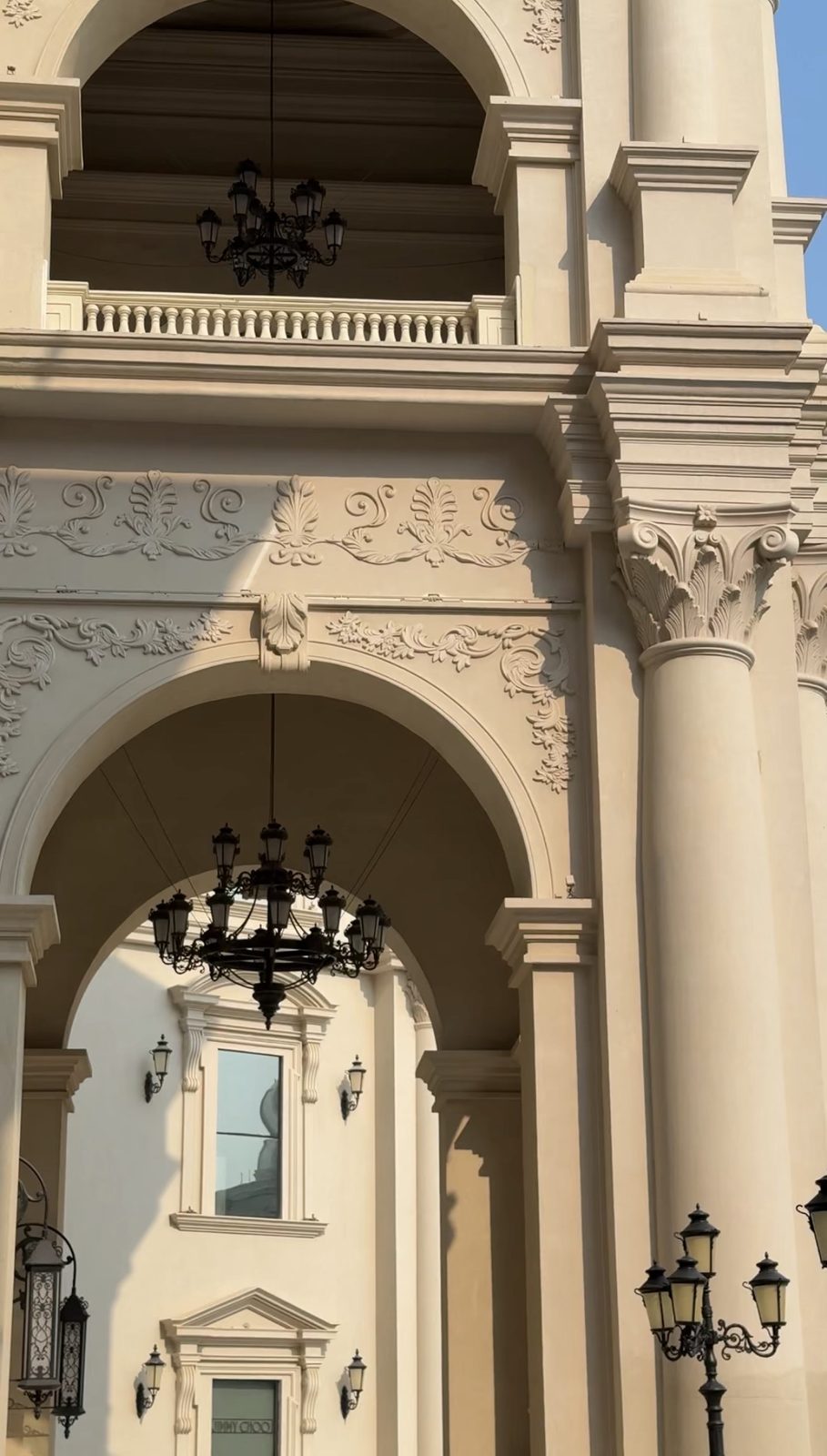
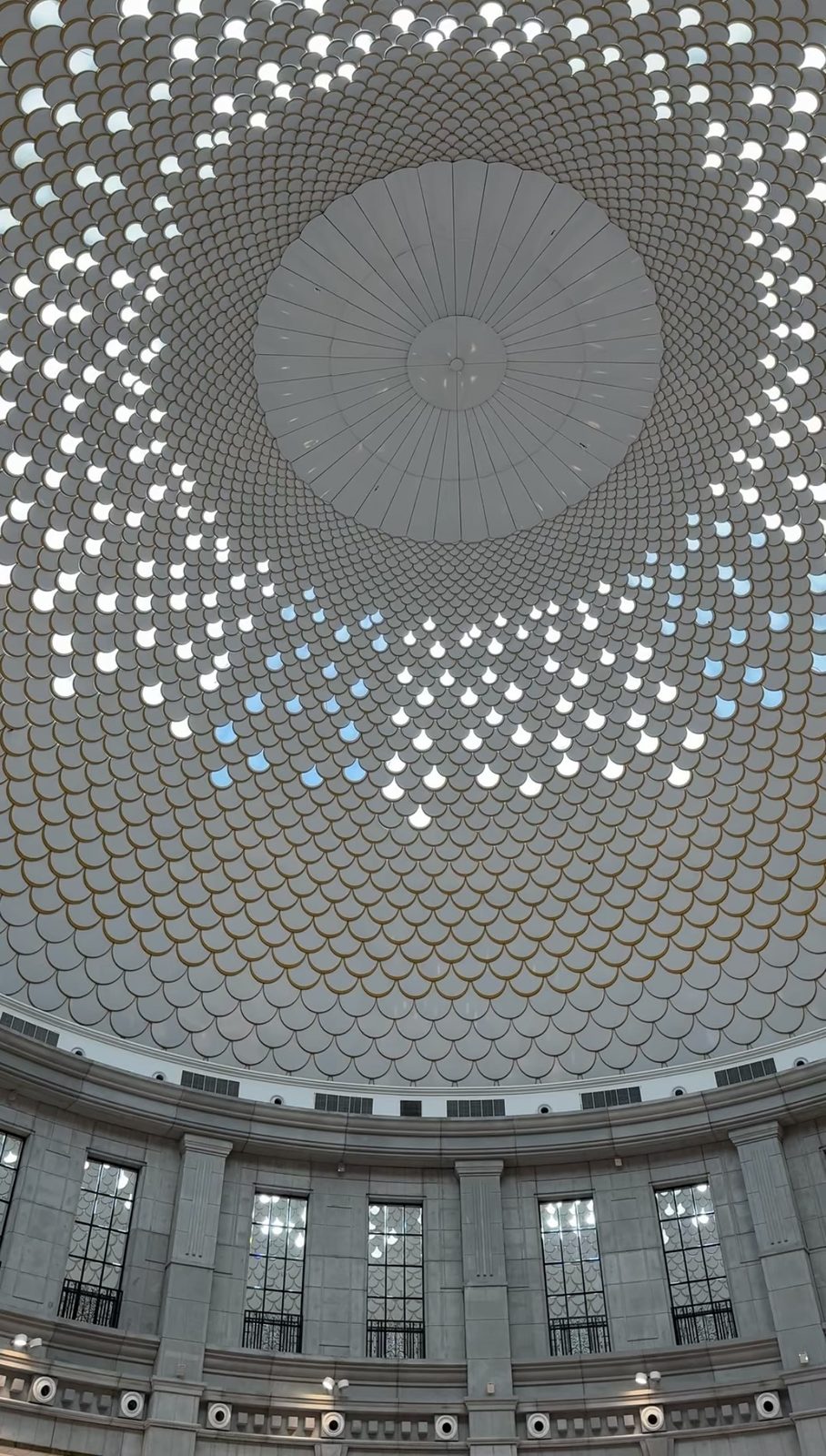
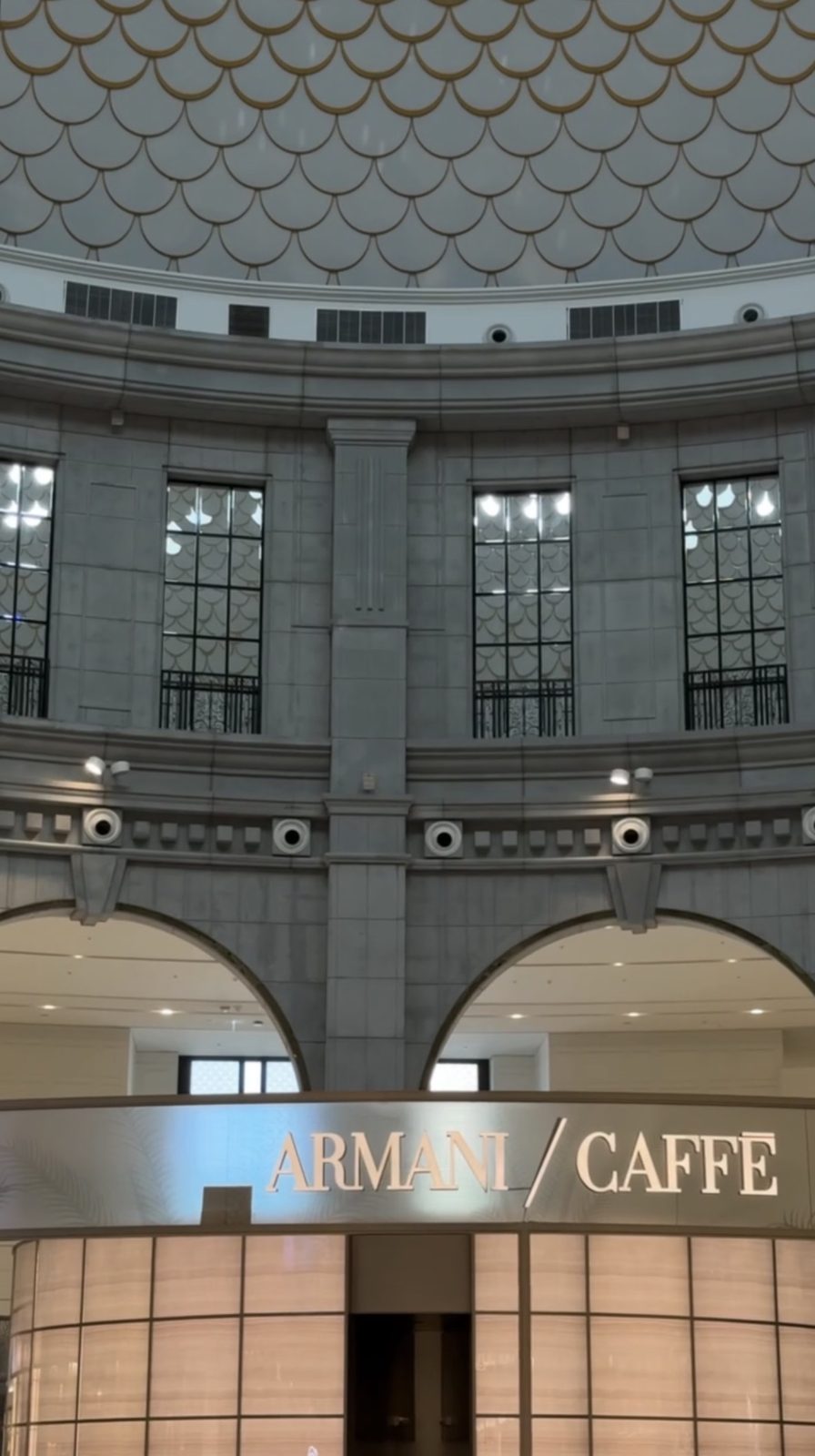
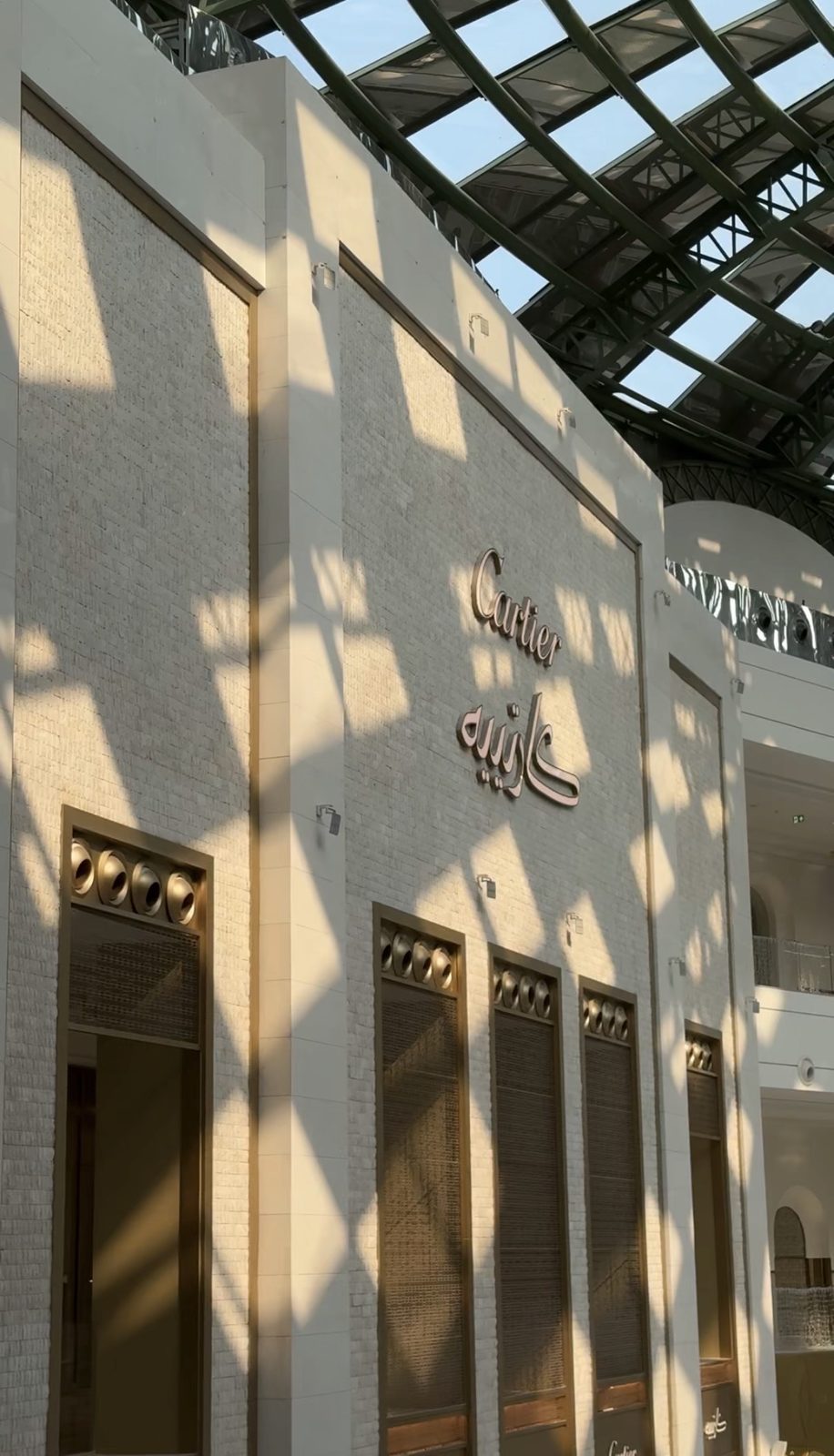
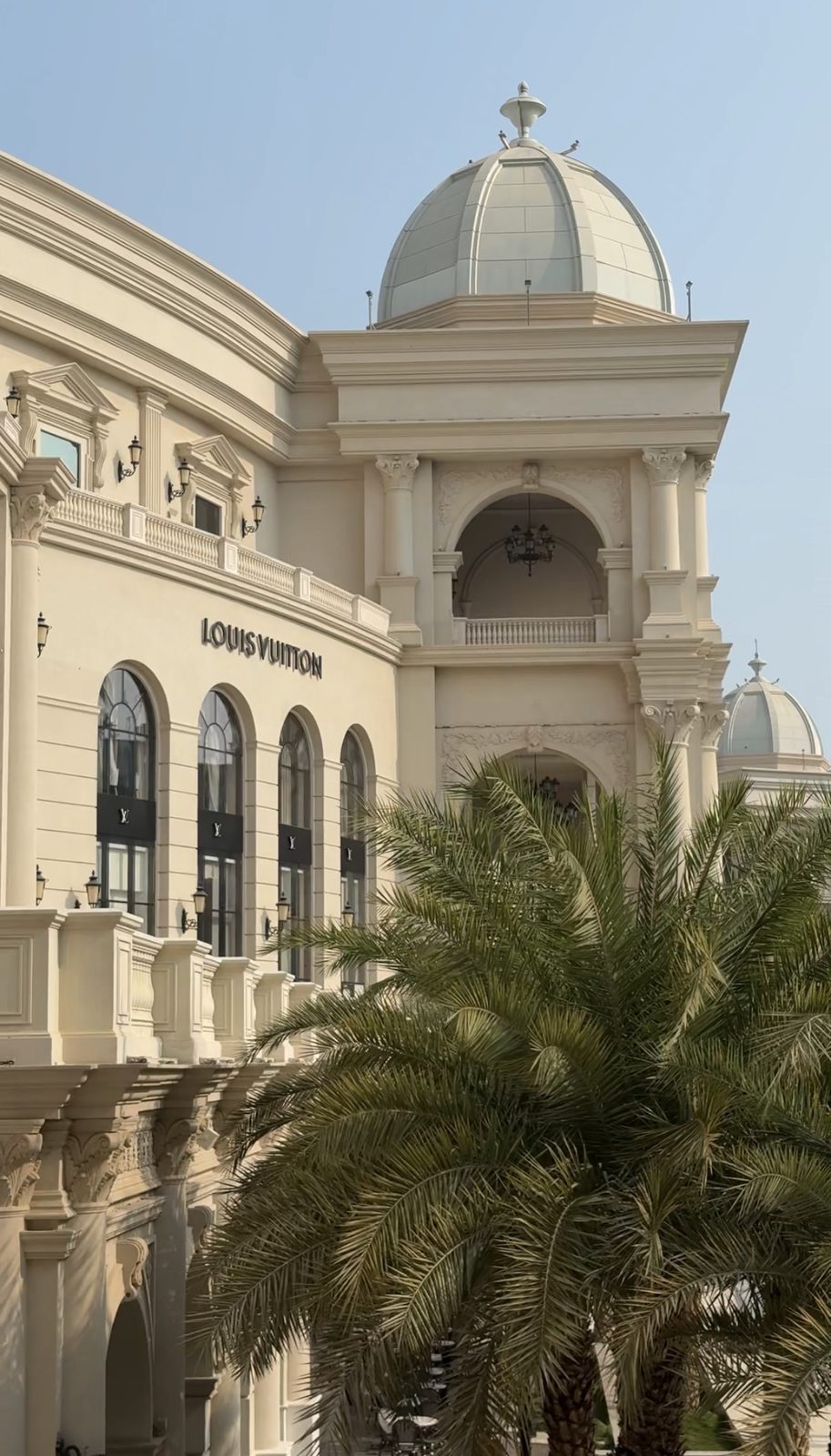
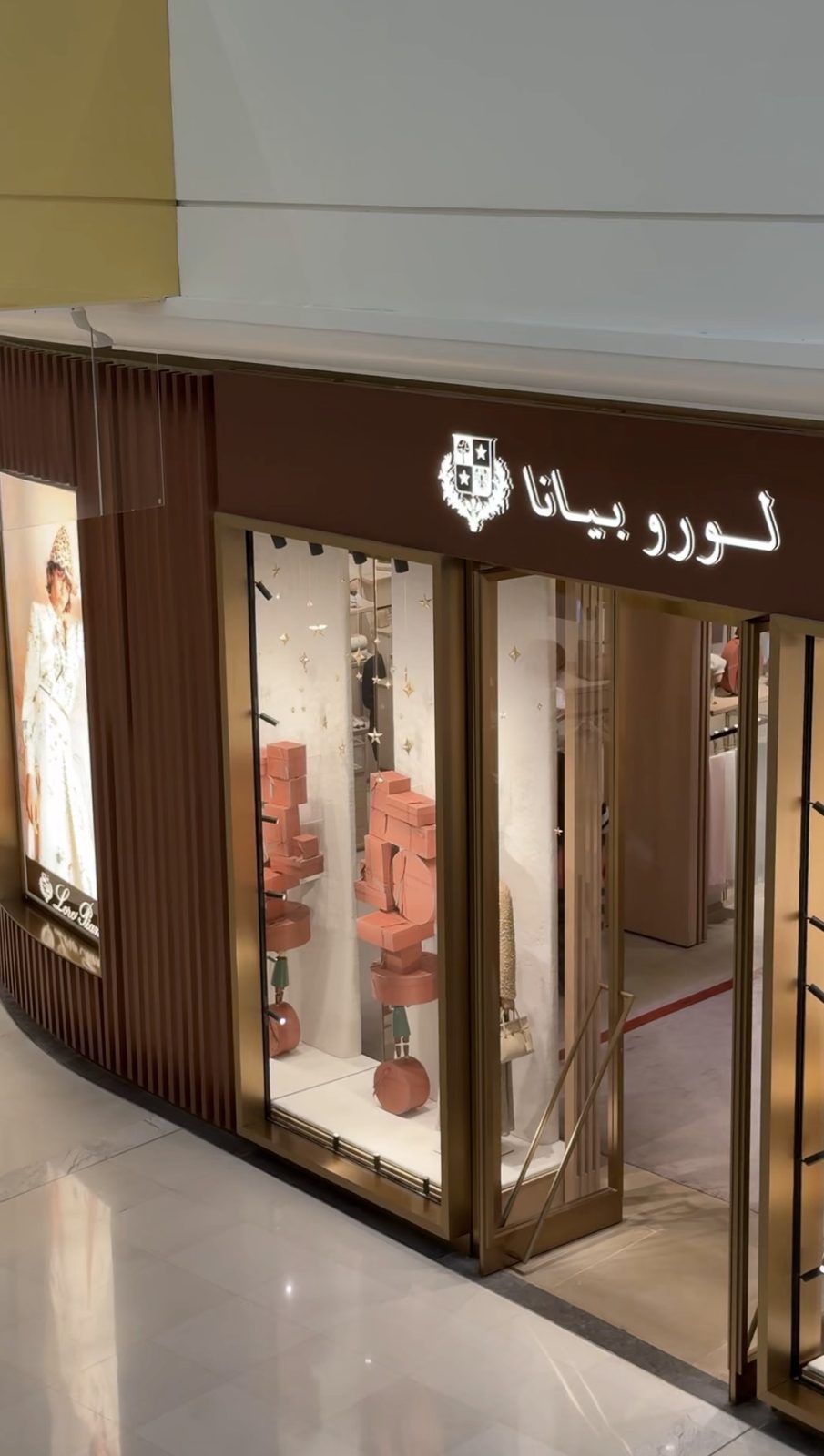
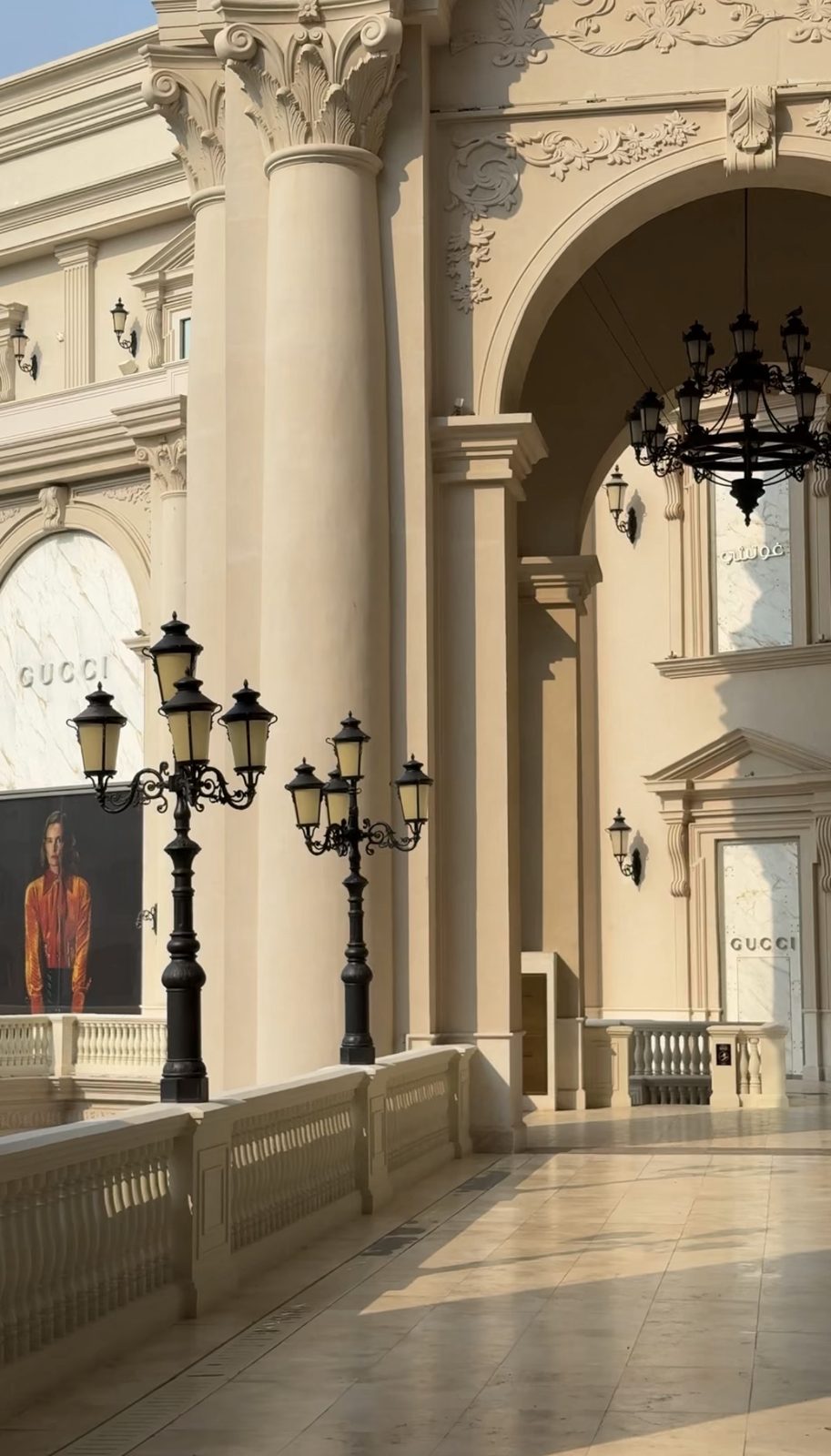
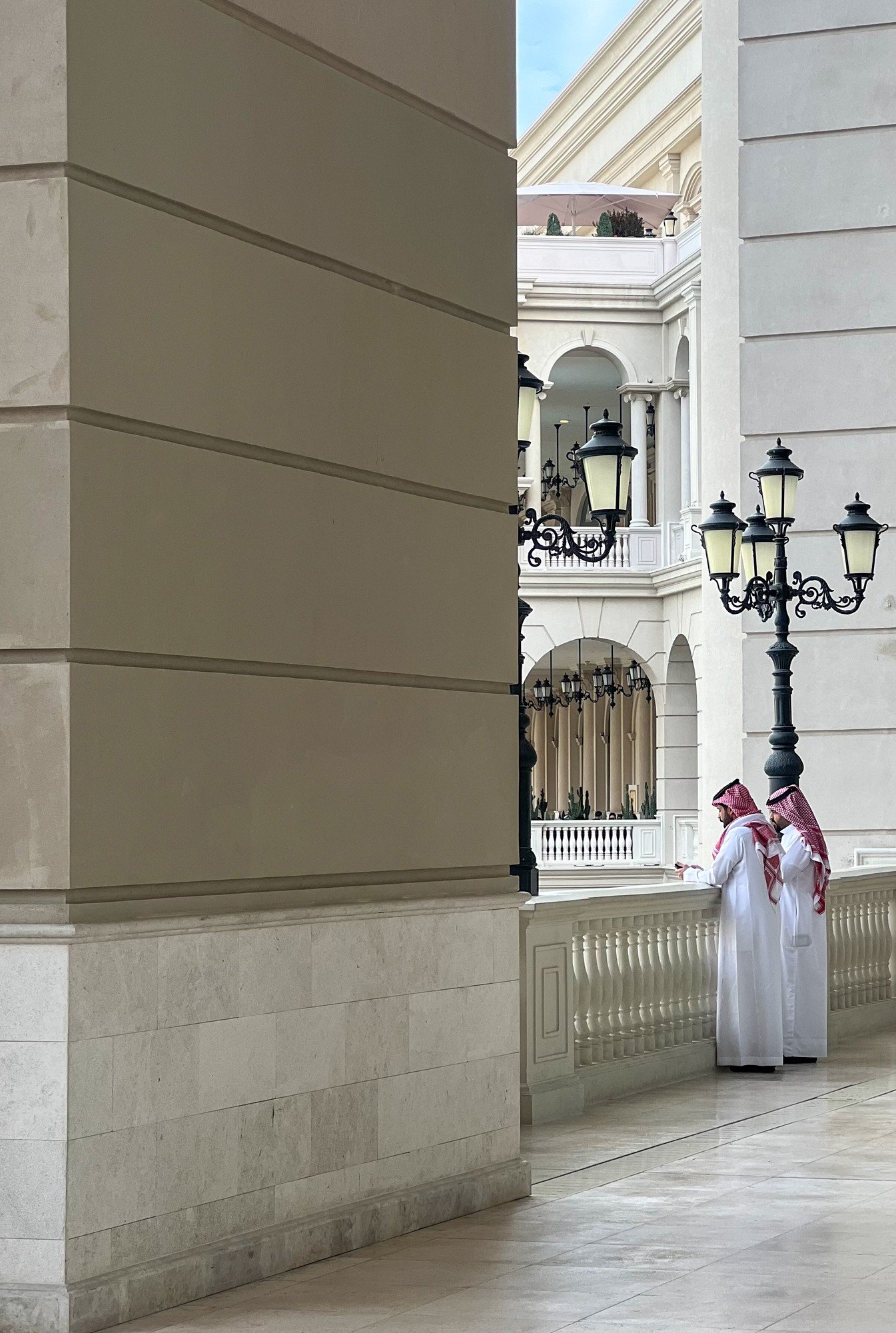
Place Vendôme is a Lusail mall named for the Parisian square, built as a quotation: mansard roofs, formal water, a European luxury grammar reconstructed at the Gulf's edge. The study takes the quotation itself as the subject, architecture citing architecture, and asks what the copy communicates that an original could not.
The photographs read the building's theatre: the fountains performing against the facades, the interior streets with their engineered Parisian light, the brand frontages inhabiting the fiction with complete confidence. The study withholds judgement deliberately; pastiche at this scale and quality becomes its own phenomenon, and the Gulf's relationship to European luxury is documented more honestly by attention than by irony.
In the archive Place Vendôme sits in the Places chapter as Doha's most explicit act of reference, pairing with Msheireb's opposite strategy of building from local grammar, and the two together frame the planned Doha publication's question about how a young city sources its identity. The study also serves the craft essays' interest in what luxury borrows, and from whom.