Dubai
Dubai builds upward before it builds outward.
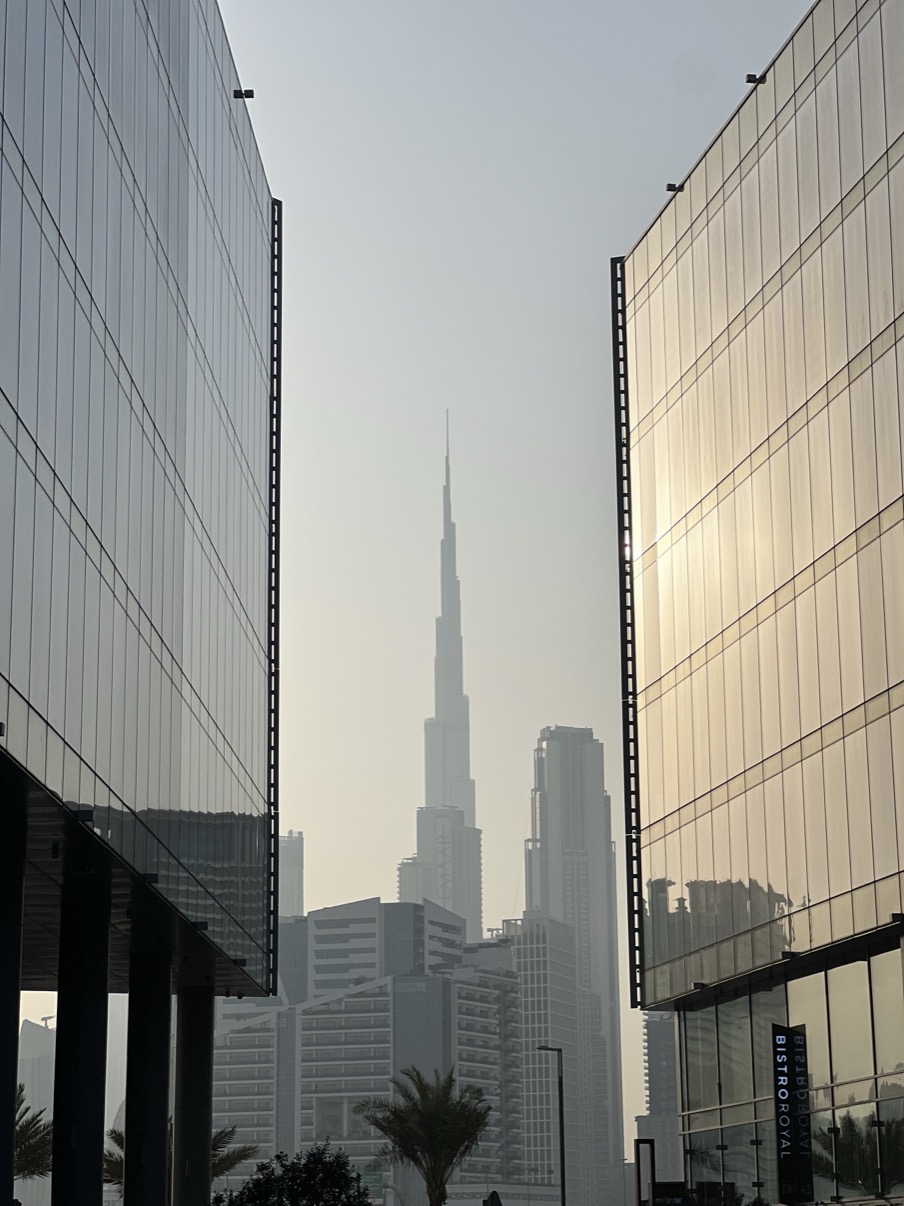
The skyline is familiar at a distance, but the city offers something different at street level: the undersides of towers, the gaps between glass facades, the haze that sits over the city in the middle of the day and reduces the tallest structures to outlines. Height here is not only architectural. It is atmospheric. It changes what the light does, and where the shadow falls.
This study approaches Dubai through the vertical. Not as a record of scale, but as an observation of how the city holds and directs light: from the full height of a tower against open sky, down through surfaces and shade, and into the quieter interiors that work with that same quality of light from a different angle.
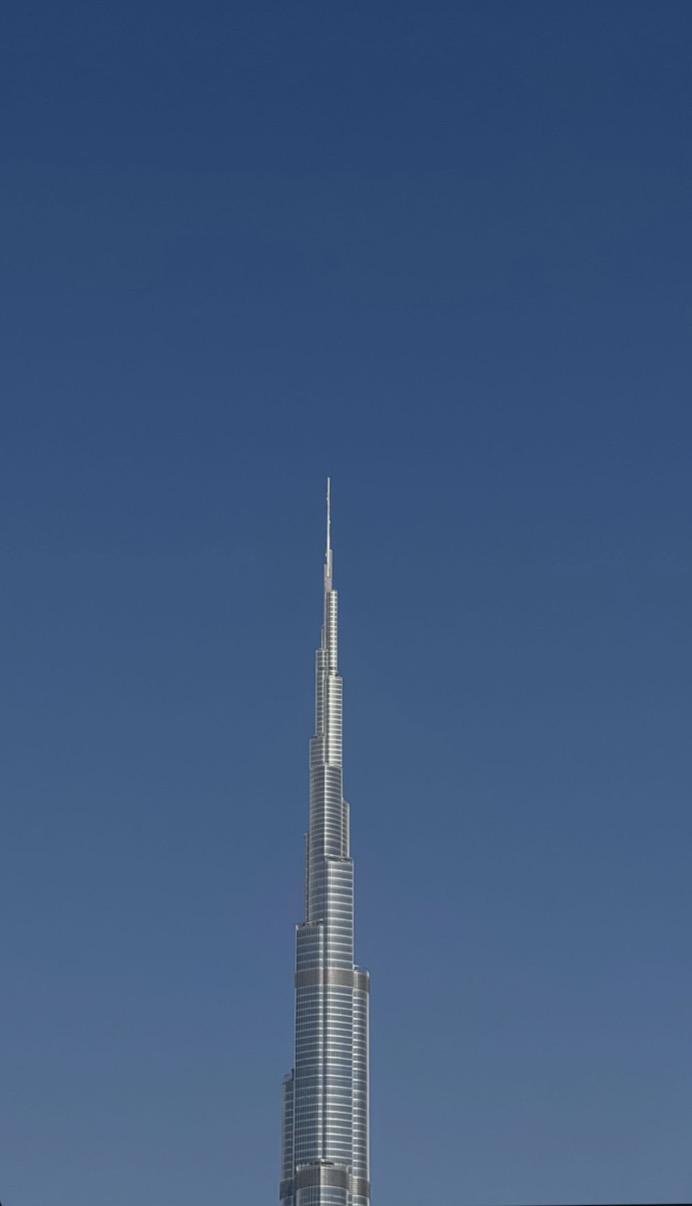
The tower rises and does not explain itself.
Seen against clear sky, the form narrows gradually until it becomes a point. There is no drama in the image, only the simple fact of height: a steel and glass structure dissolving into blue. The eye follows it up and finds no end that can be comfortably held. What remains in the frame is mostly sky, and within that sky, the tower seems almost quiet.
Vertical scale in Dubai does not shout. It simply exceeds. The city has normalised the extraordinary, so that towers carry no particular emotion at distance. What the photograph can do is stay with one, long enough for the height to become something other than information.
Inside, Dubai works through material.
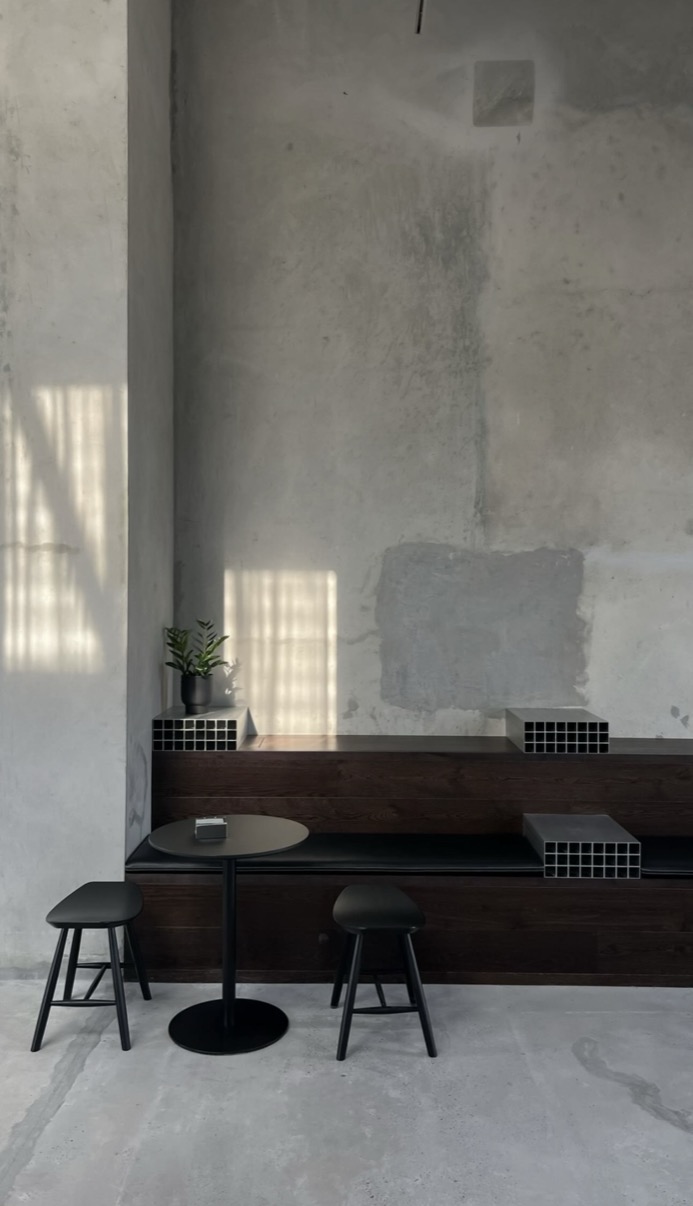
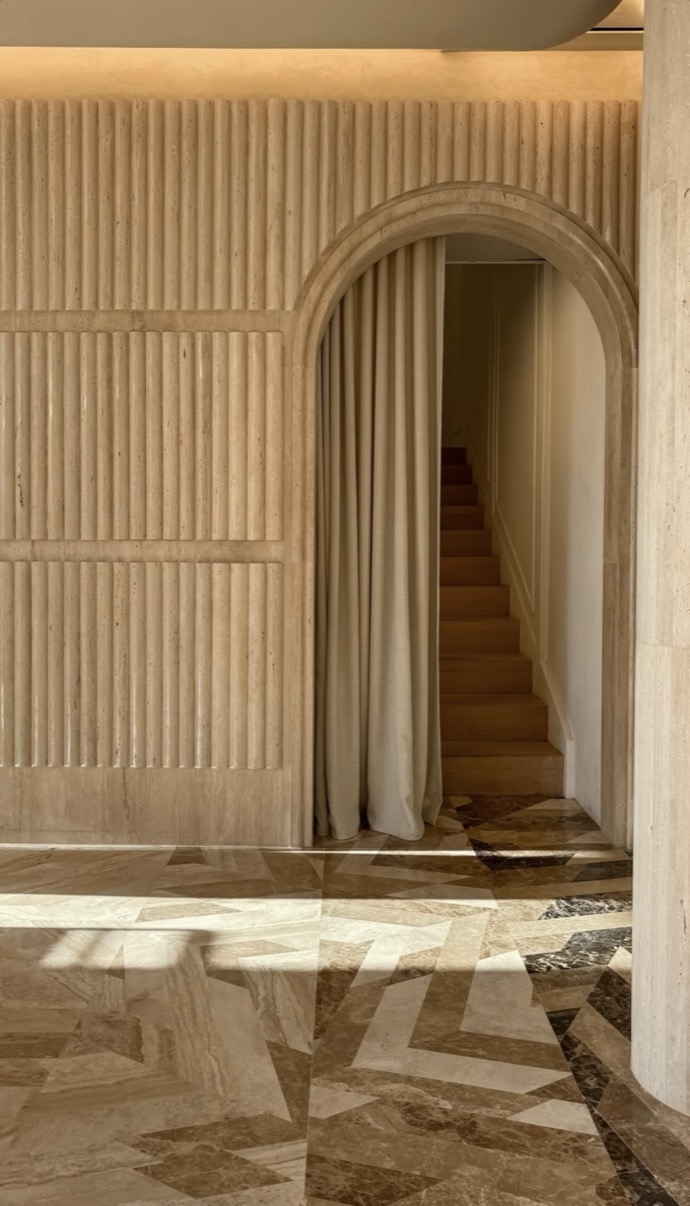
Travertine floors cut with geometric pattern. Fluted stone walls meeting a single arched opening, a curtain falling through it, stairs beyond. Bare concrete marked by water and time, a dark wooden bench along its base, stools set without symmetry, a small plant catching the only window of light. These interiors are made with attention. They do not compete with the scale outside. They answer it differently.
Surface here means the meeting point of light and material. Where the sun enters at an angle and makes a concrete wall into something worth looking at. Where a polished floor holds reflections of things that have already passed.
At night, the city becomes its own source of light.
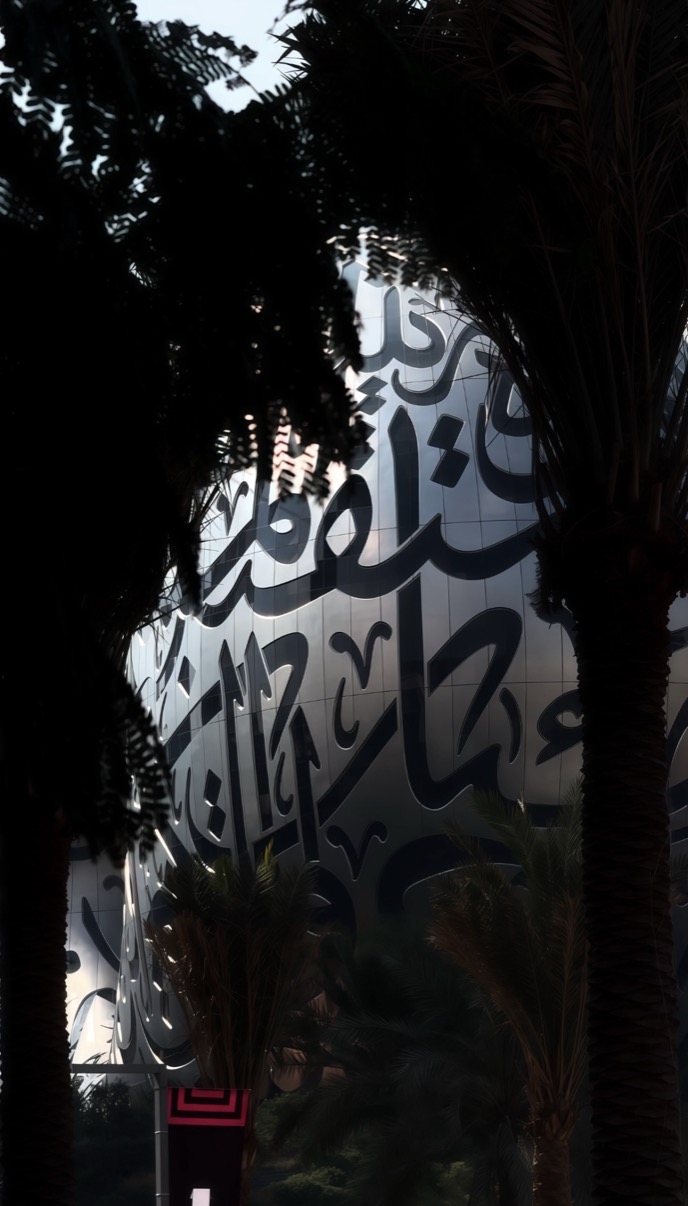
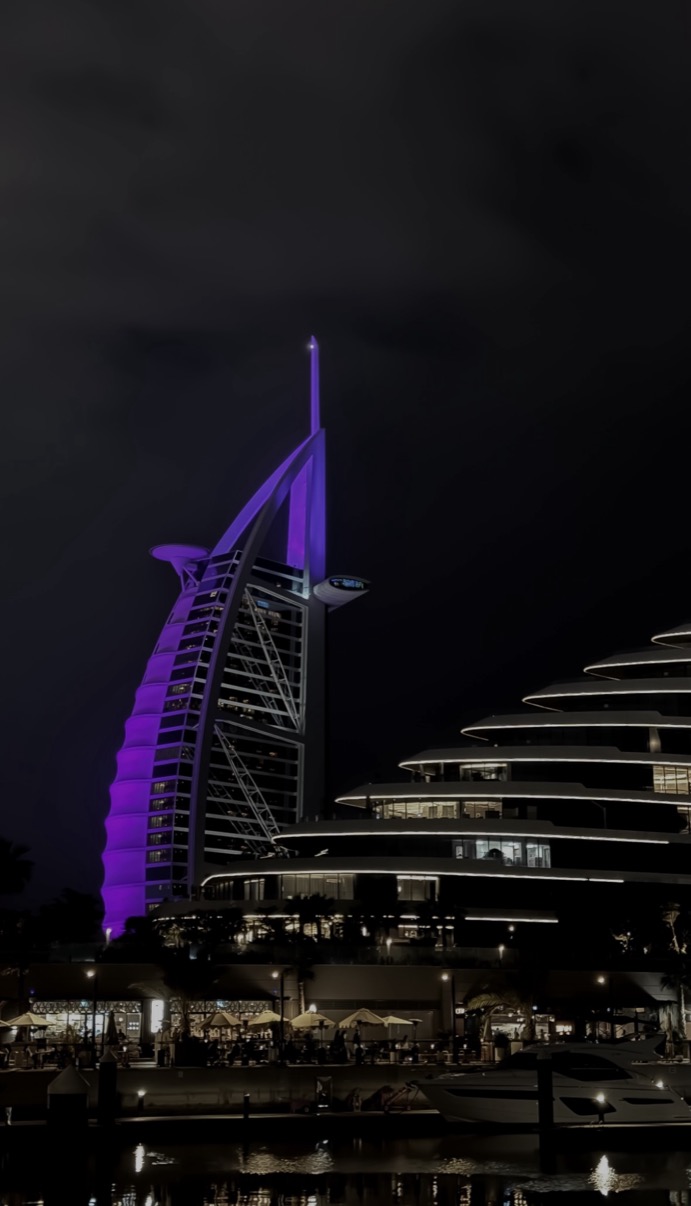
A calligraphy facade appears through silhouetted palms, the script rendered large and silver against a sky already losing its colour. Across the water, a tower blazes purple against cloud, while a lower structure beside it traces its tiers in white light. The water below holds both.
Shade in Dubai is not absence. It is contrast. The city uses darkness to make light more precise, and the most considered images are the ones where something has been withheld: a palm blocking half the frame, a haze reducing the skyline to suggestion, a shadow across concrete making a wall into a study.
This study is about light as it moves through height.
Dubai offers that movement at full scale: from the upper reaches of the tower against open sky, through the glass and stone that line the streets below, into the interiors that work with the same quality of light at a different intensity. The city is vertical, and so is the light that passes through it.
For mkd STUDIO, Dubai becomes a study not of scale for its own sake, but of what scale does to the atmosphere around it. How height changes light. How surfaces catch it. How shade holds what remains.
Dubai builds upward before outward, and its skyline is among the most photographed on earth, which is precisely why the study avoids it. The work was made at street level and mid-height, in the undersides, gaps and hazes where the vertical city meets the horizontal one: the districts where people move between towers rather than photograph them.
The photographs attend to the city's actual light, white, hazed, arriving through glass and dust, and to the spatial experiences the skyline conceals: canyon streets, podium shadows, the sudden theatrical gaps where the desert reasserts itself between developments. Dubai at street level is a city still deciding its own texture, and the study records the deciding.
In the archive Dubai completes the Gulf triangle with Doha and the pilgrimage cities, the commercial pole of the region's three registers, and hosts the archive's hospitality extremes, Atlantis The Royal and AURA, whose studies extend this one upward. It also feeds the Journal's vertical-light material, and awaits the fuller treatment a future Gulf publication will give it.