Corfu, after arrival
The room comes first.
Warm light through sheer curtains. Chairs set at an angle, a table still uncovered. Outside, the facade of another building: pale plaster, arched openings, a mountain beyond. The first hour in a place has its own register, before the city settles into familiarity. Before you have walked anywhere or understood anything about where you are. Corfu in that first hour is simply a quality of light and an open window.
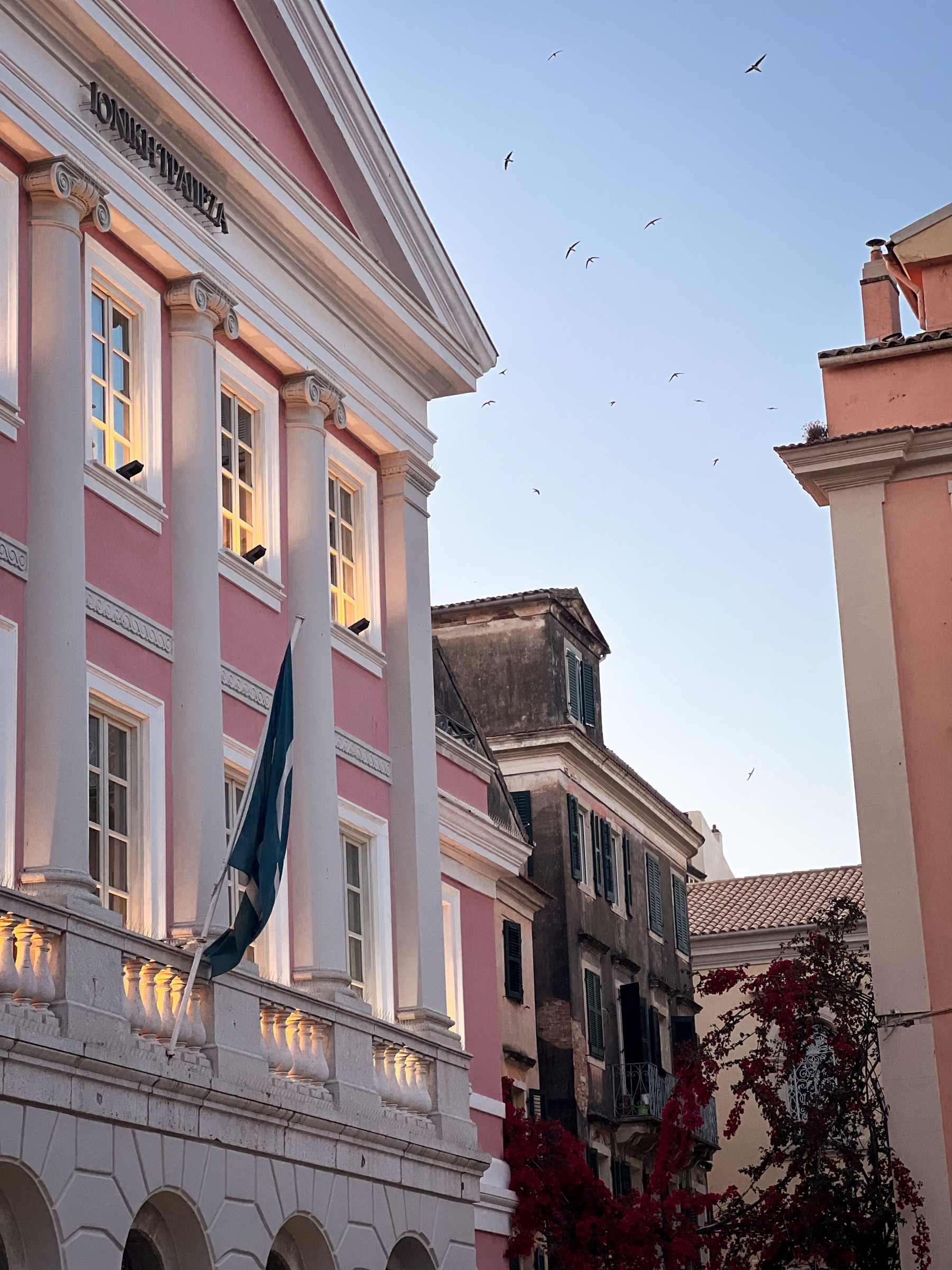
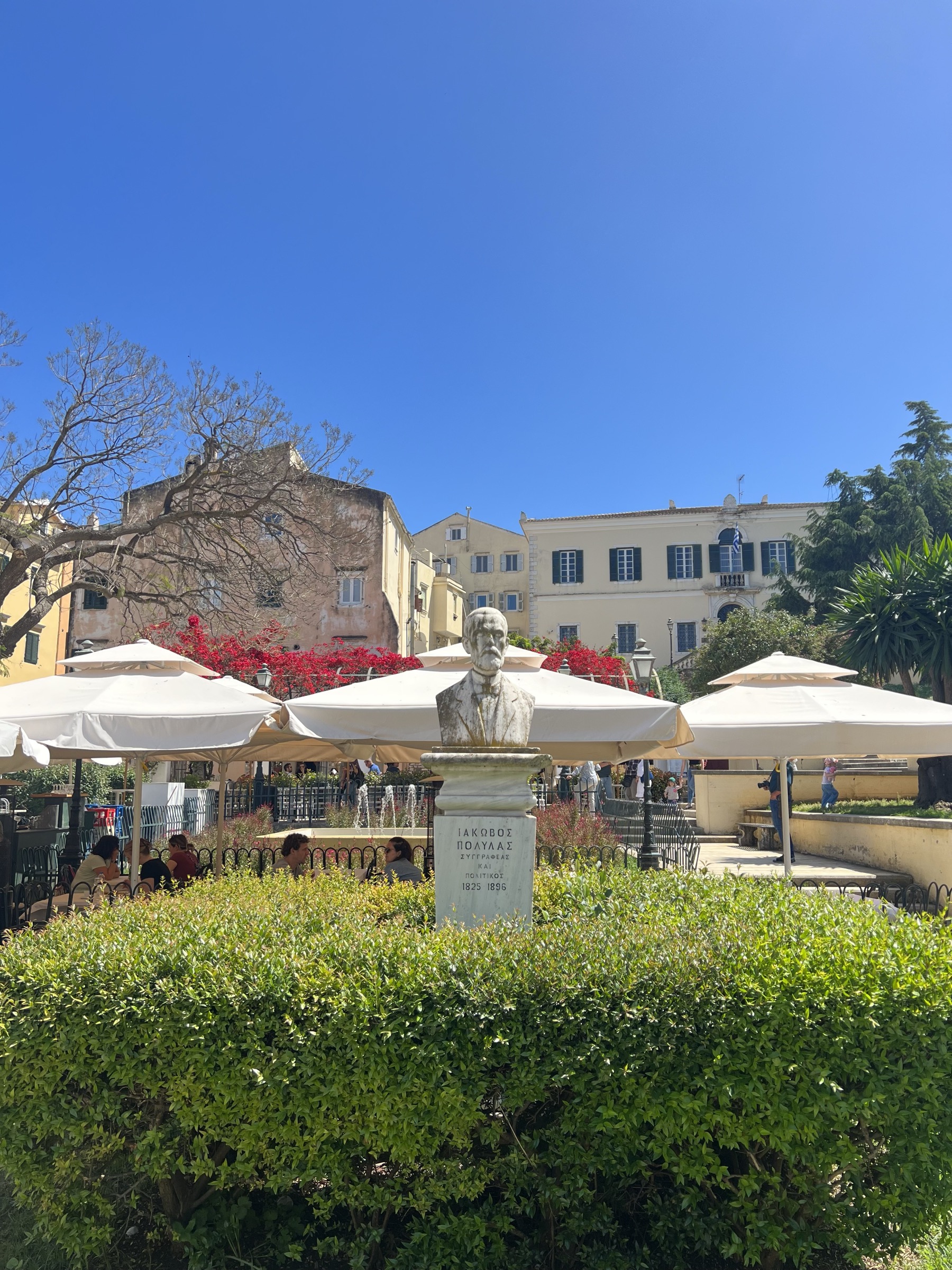
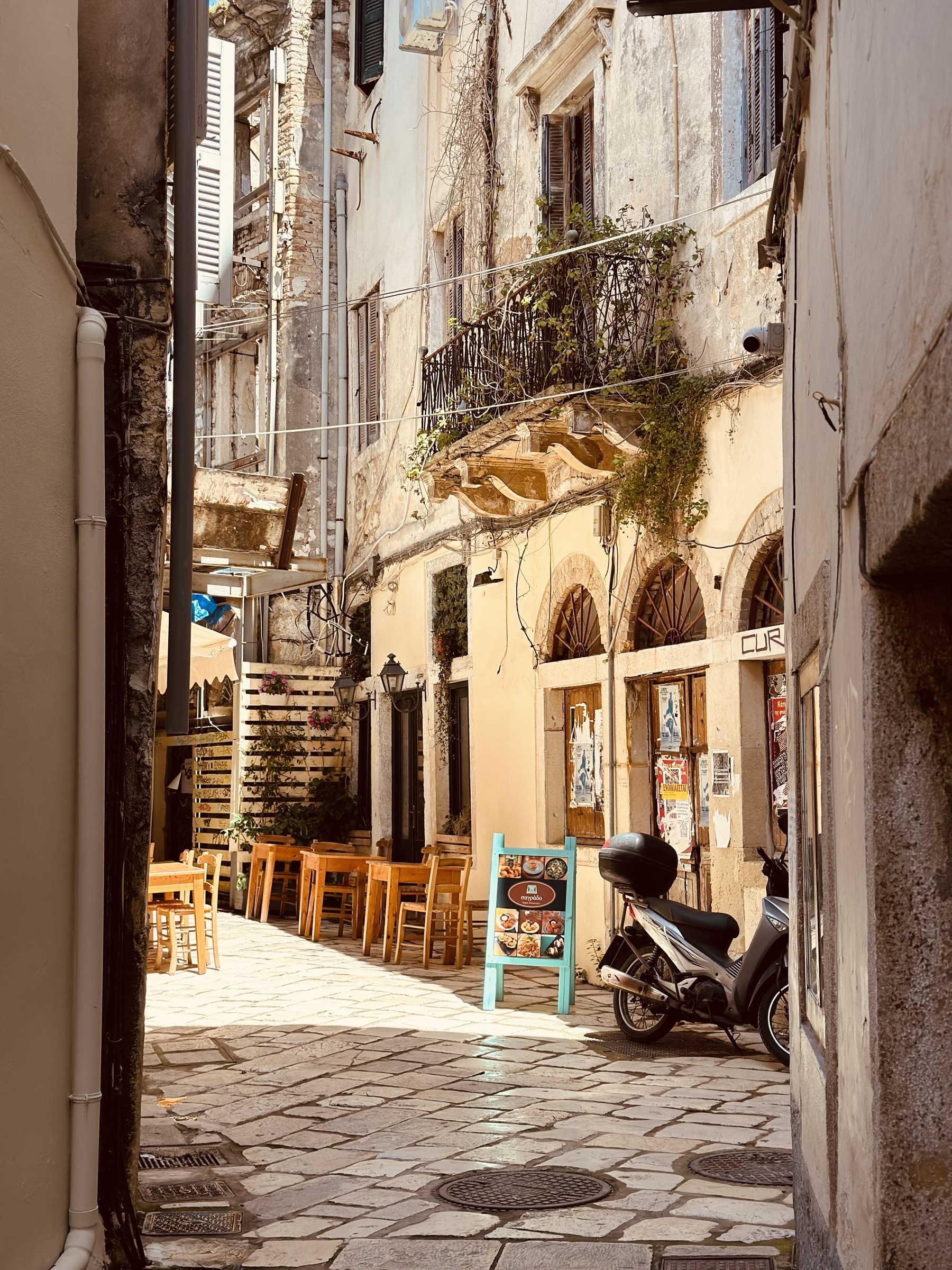
Corfu Town carries its Venetian inheritance without announcement.
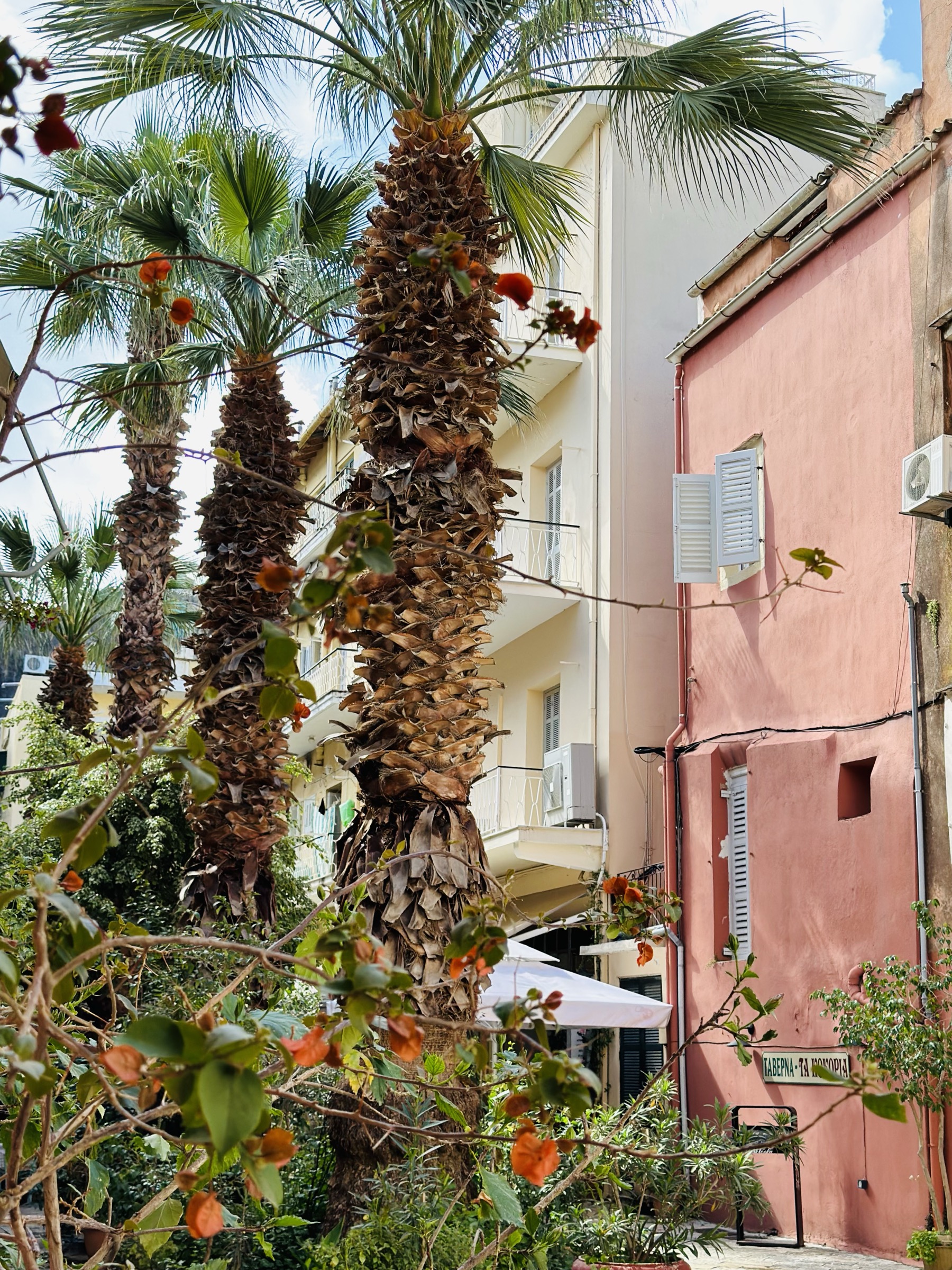
Arches, narrow passages, plaster facades in ochre and rose. The layering is visible everywhere: one era built into the walls of another, the whole thing weathered into something that no longer reads as any one period but as accumulated time. A square holds umbrellas, a statue, people at tables. Further in, an alley opens between old walls. The city does not present itself as spectacle. It continues, at its own pace, and you move through it at whatever pace you can manage.
The light changes late in the afternoon.
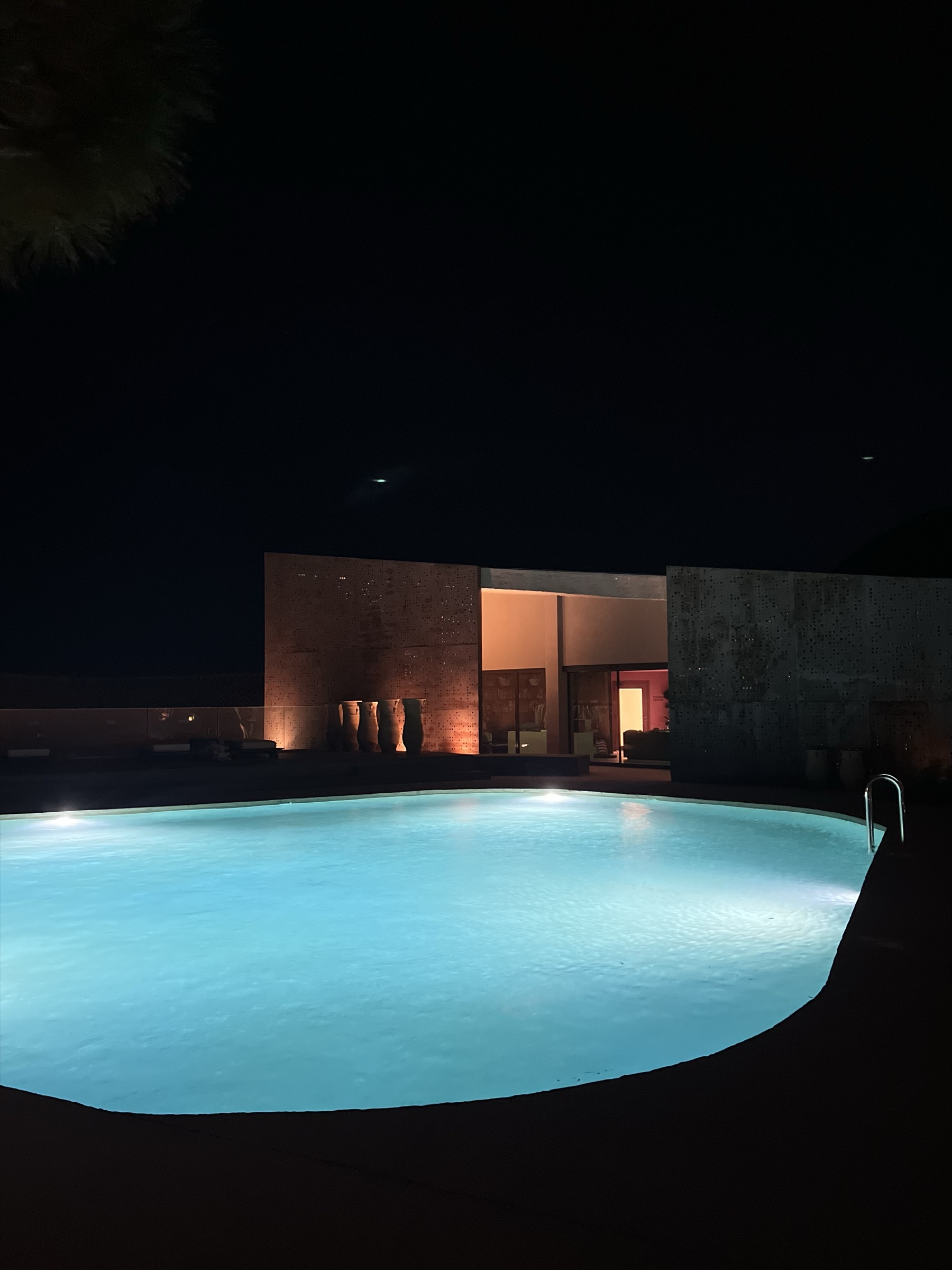
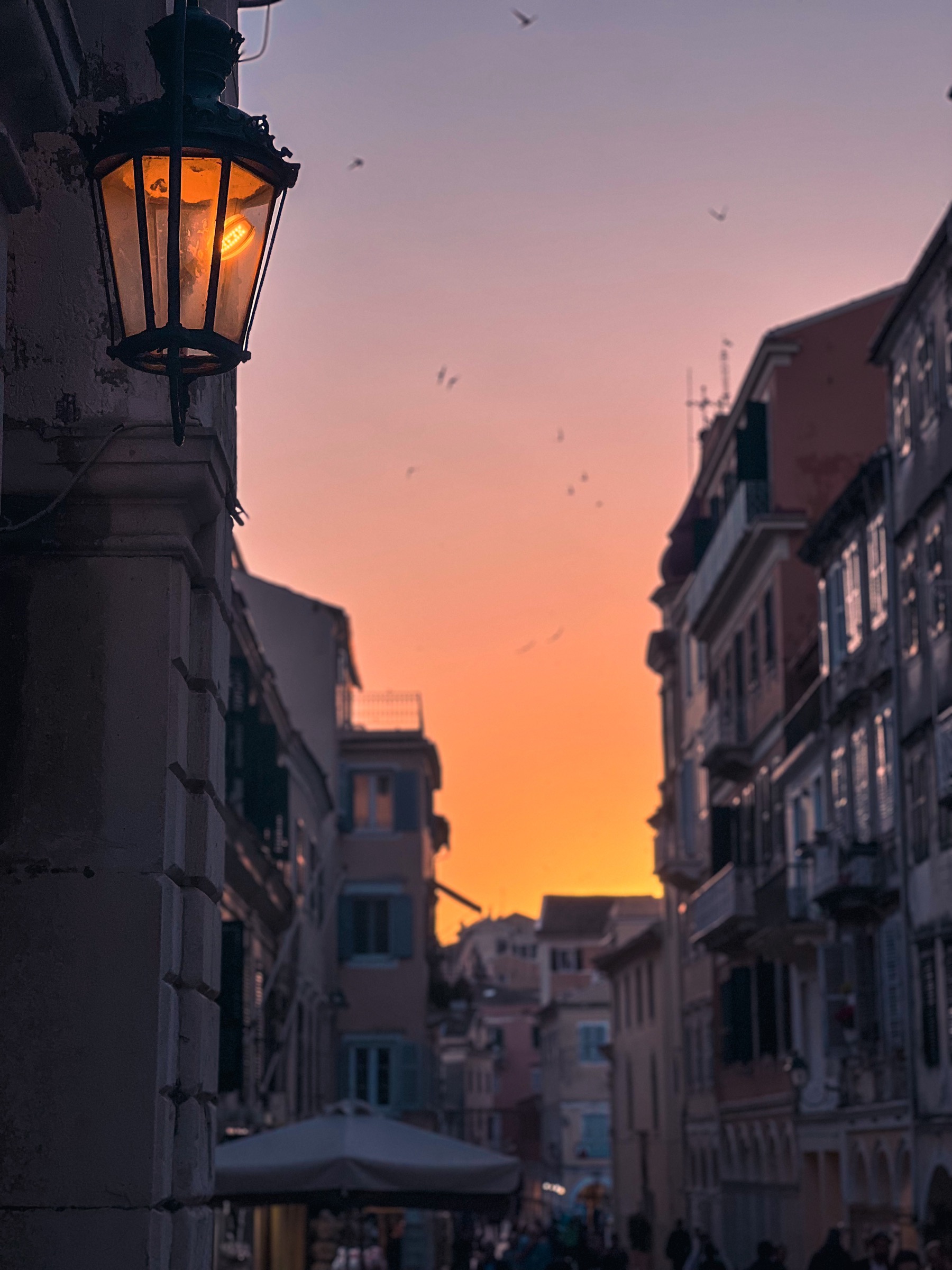
A street lamp ignites before the sky has fully darkened. Birds move in numbers between the buildings. The warmth in the stone holds on for a while after the sun has gone, and then the night settles in its own unhurried way. The pool reflects what remains of the sky. A lit interior becomes the only light on a dark street. What stays is not one image but an accumulated sense of the place after the day is done.
Corfu does not announce what it is. The Venetian inheritance sits in the walls without ceremony, the arches and facades weathered into something that no longer reads as any particular period but simply as the place itself.
What accumulates across a stay is not a set of monuments but a quality of light and a pace. The first hour held it, before understanding arrived. The last hour held it again, in a different register. The city in between was everything that connected them.
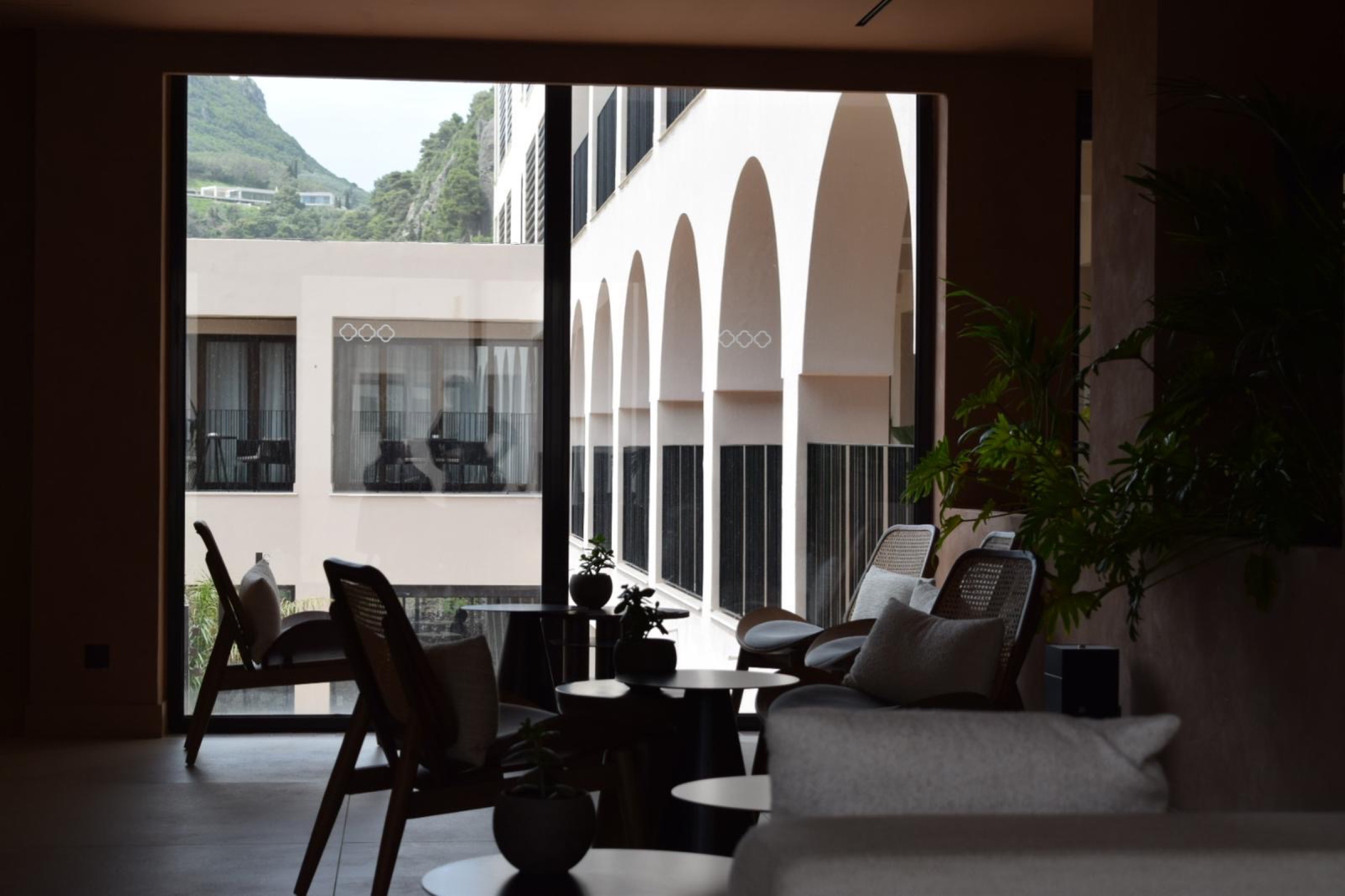
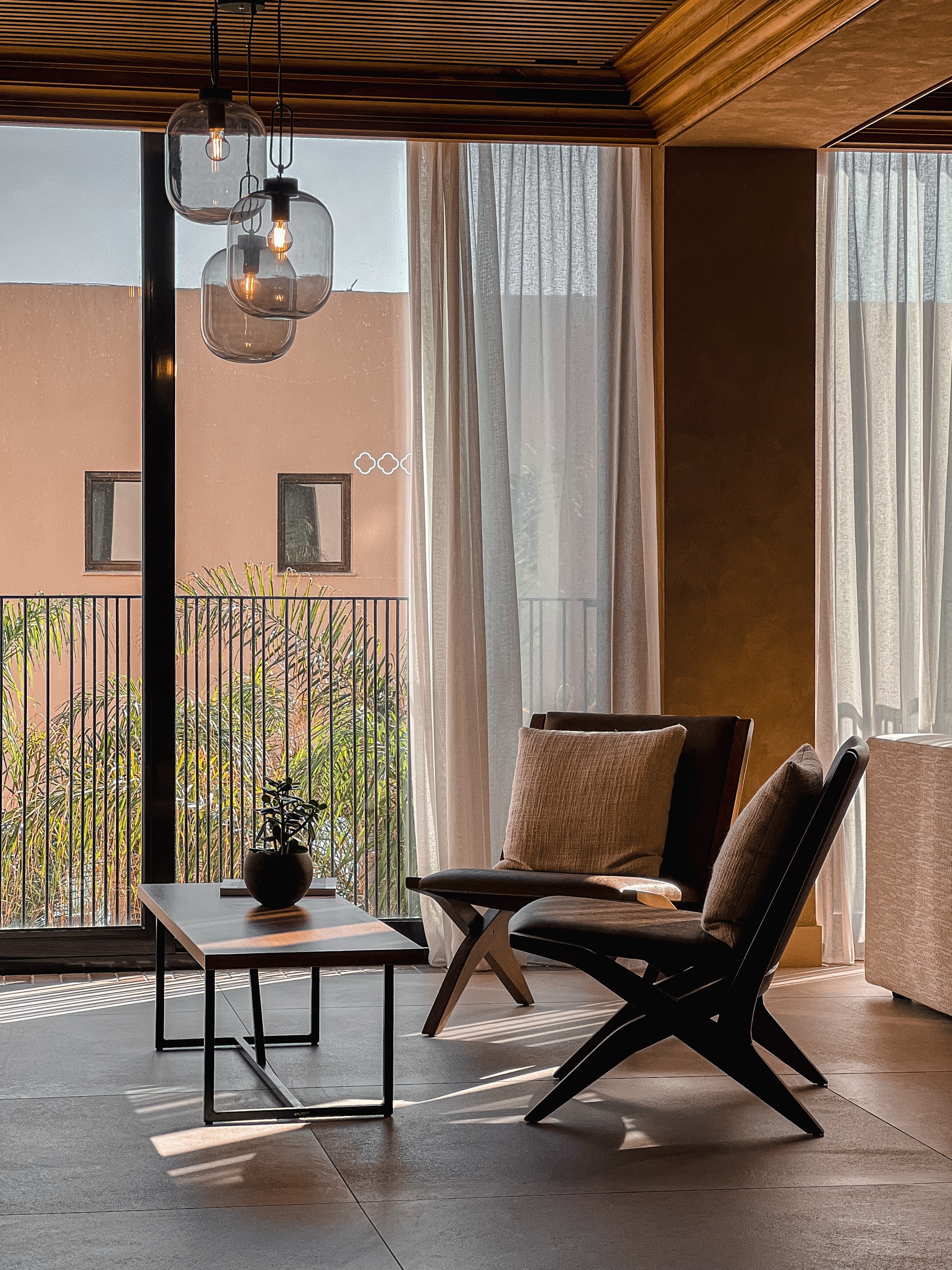
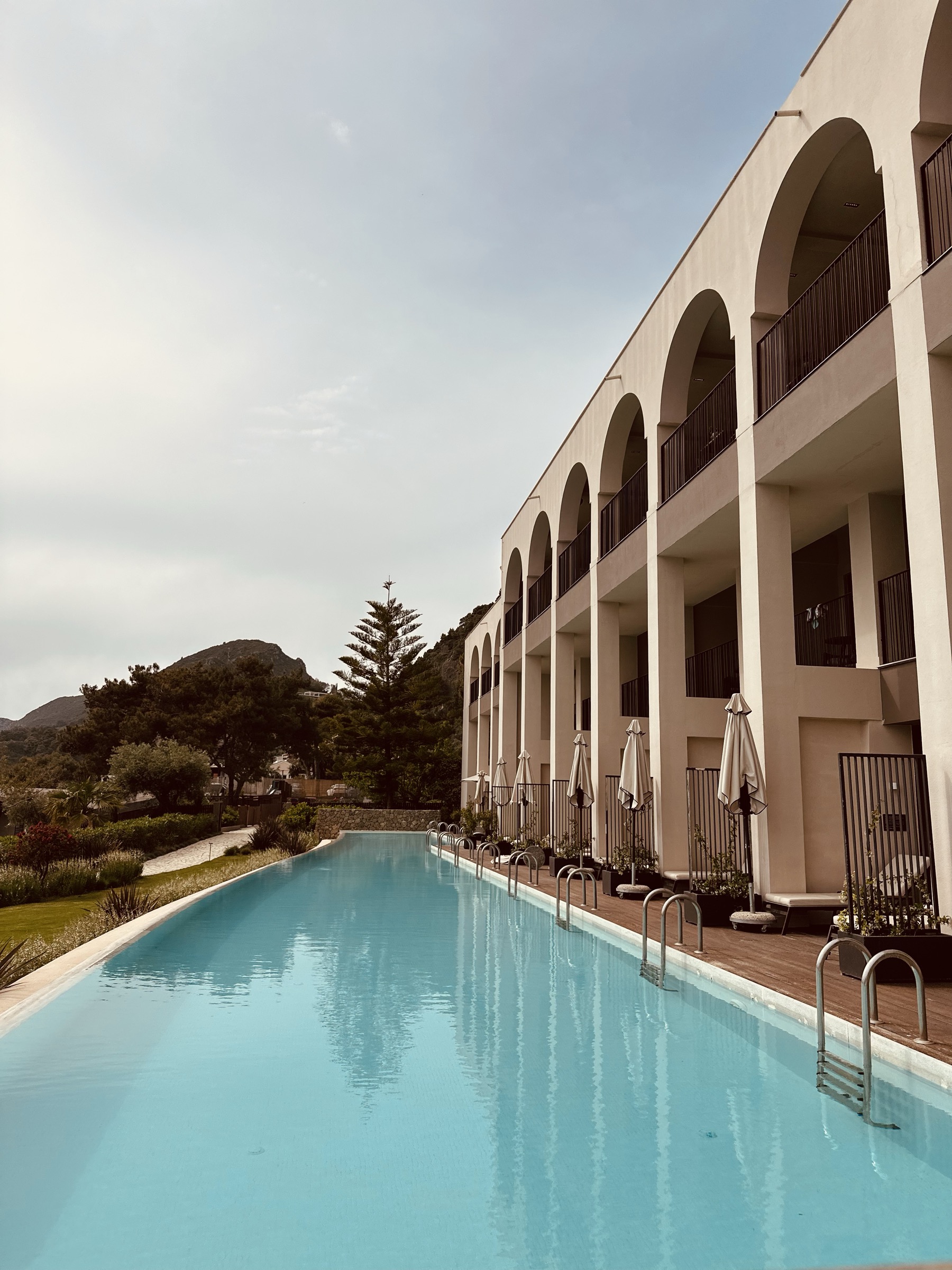
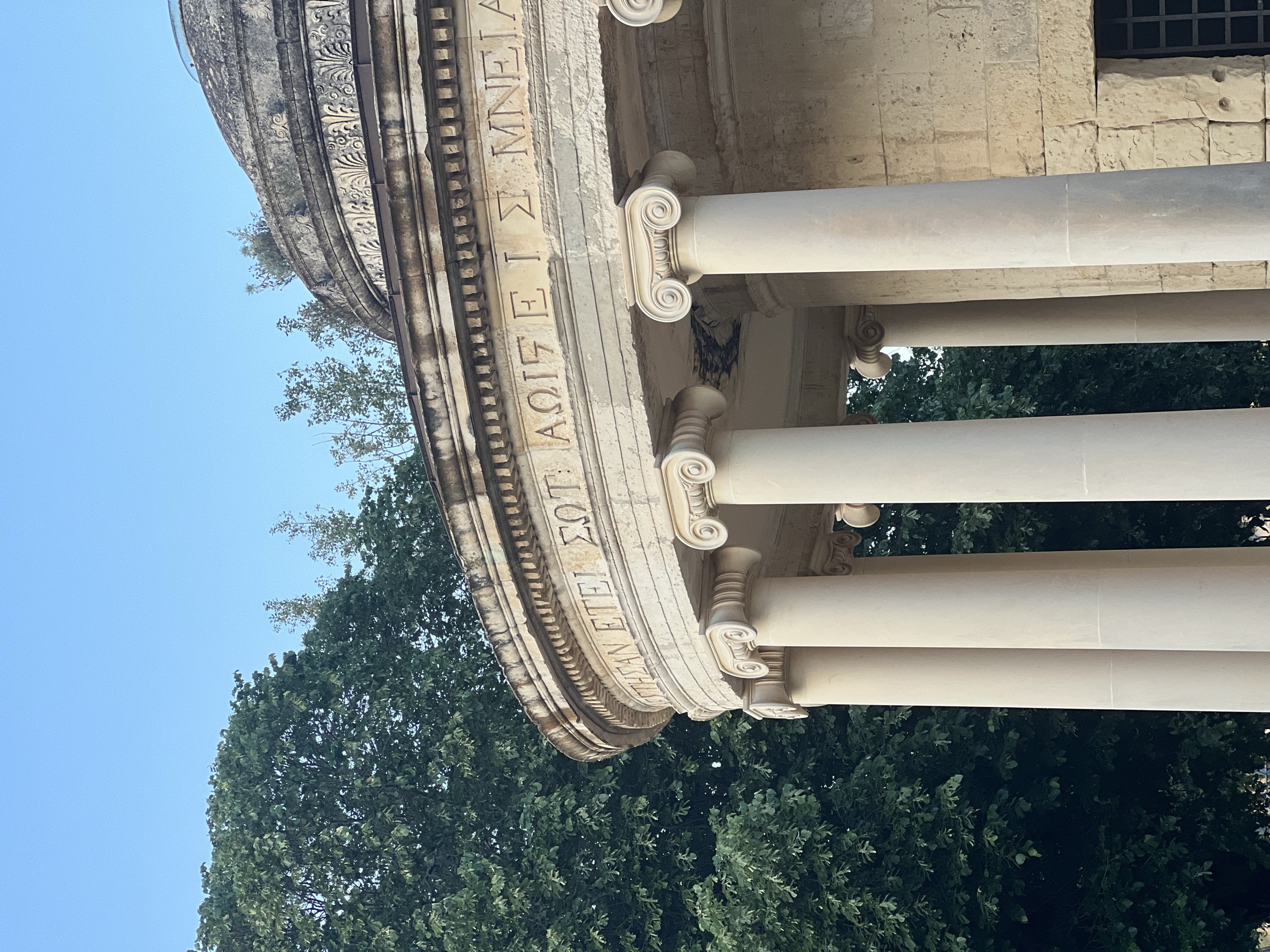
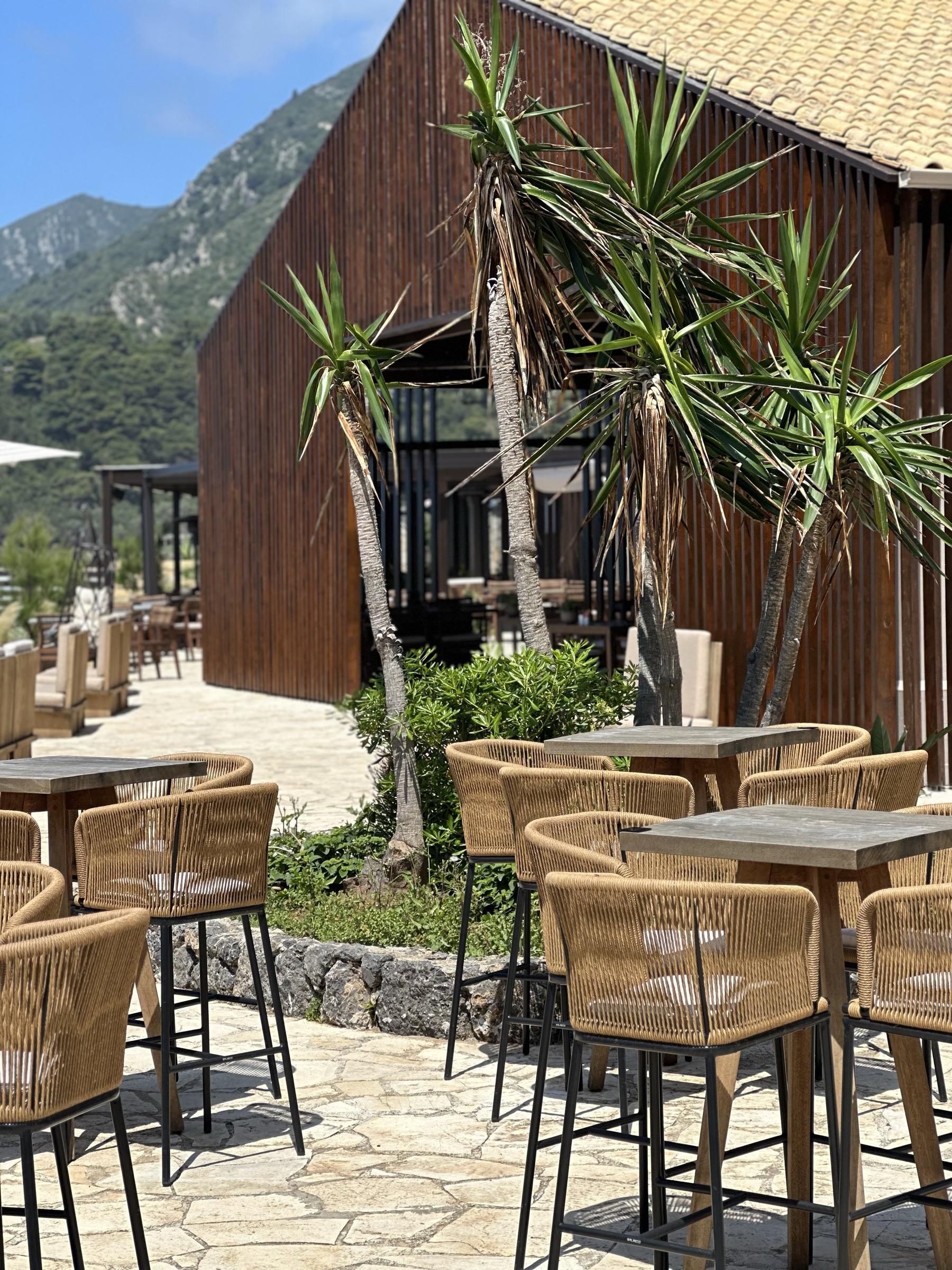
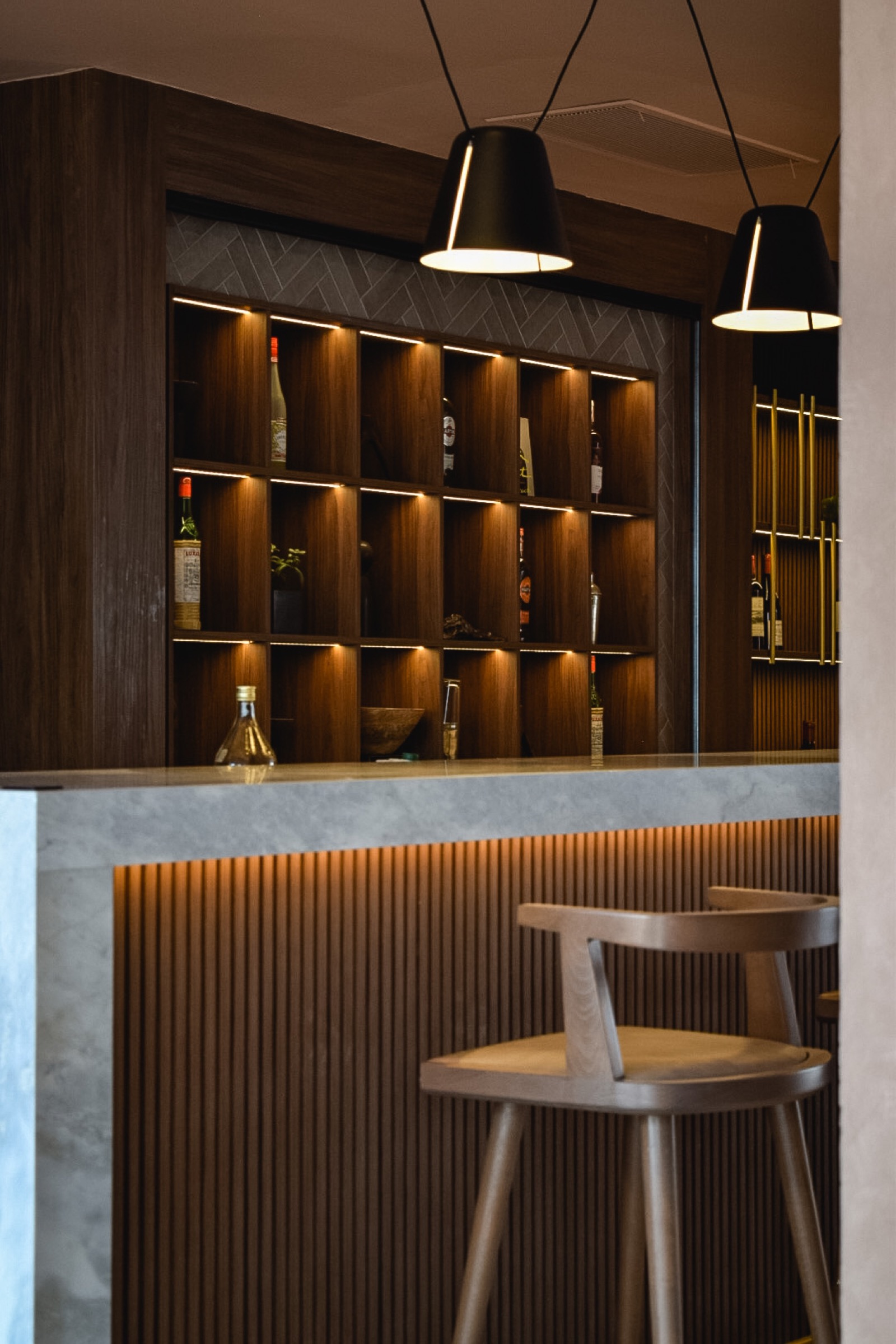
Corfu sits in the Ionian, greener than the Aegean postcards suggest, Venetian in its bones, and the study concerns a specific hour of it: the one immediately after arrival. The premise is that a traveller's first hour has its own register, the room before unpacking, the view before naming its parts, and that this register is worth photographing before familiarity replaces it.
The photographs stay inside that window: light through sheer curtains, chairs at their found angles, the facade opposite with its pale plaster and mountain beyond, the town descending toward water not yet walked to. Nothing in the sequence is oriented or explained, because the subject is precisely the state before orientation, when a place is all texture and no map.
In the archive Corfu functions as a method study as much as a place study: it isolates the arrival state that every other study passes through on the way to knowledge, and holds it still. The Journal's essay on the first ten minutes descends directly from this work, and the studio returns to its premise on every trip since, the first hour photographs differently, and only once.