Milan
Milan does not introduce itself gently.
The Duomo appears at the end of a street before you expect it, its Gothic spires rising out of proportion to everything around them. The piazza opens without warning into something vast, a scale of civic ambition that has not diminished with time.
The city is not fashionable in the way that word is usually meant. It is older than fashion, more grounded in stone and ceremony. What it carries is not a current moment but a long one: centuries of accumulated weight, expressed in marble, ornament and the plainness of Lombard light falling across a pale facade at the end of the day.
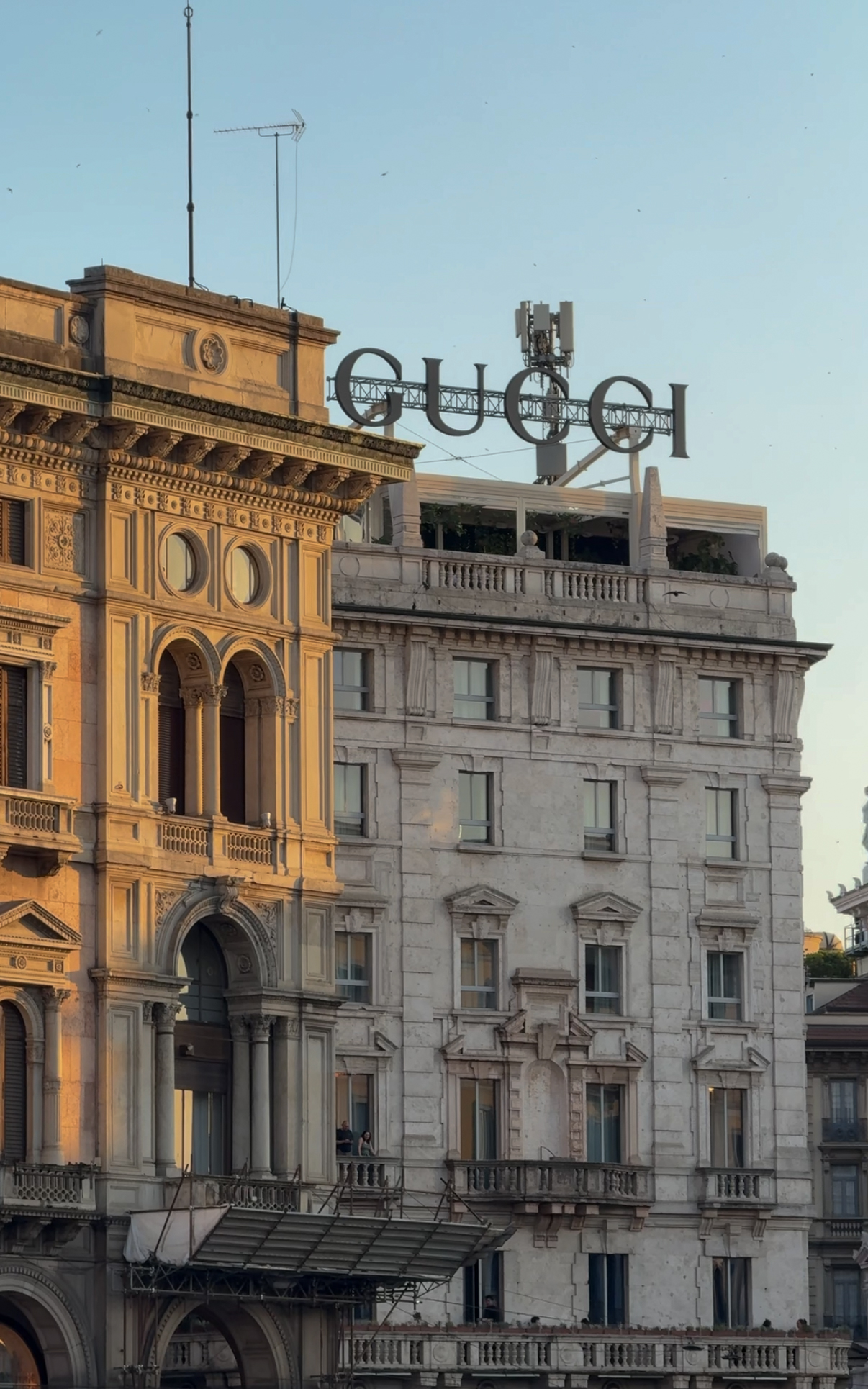
Commerce coexists with all of this without displacing it. The boutiques occupy the ground floors of buildings built for other purposes. The architecture continues above them, indifferent.
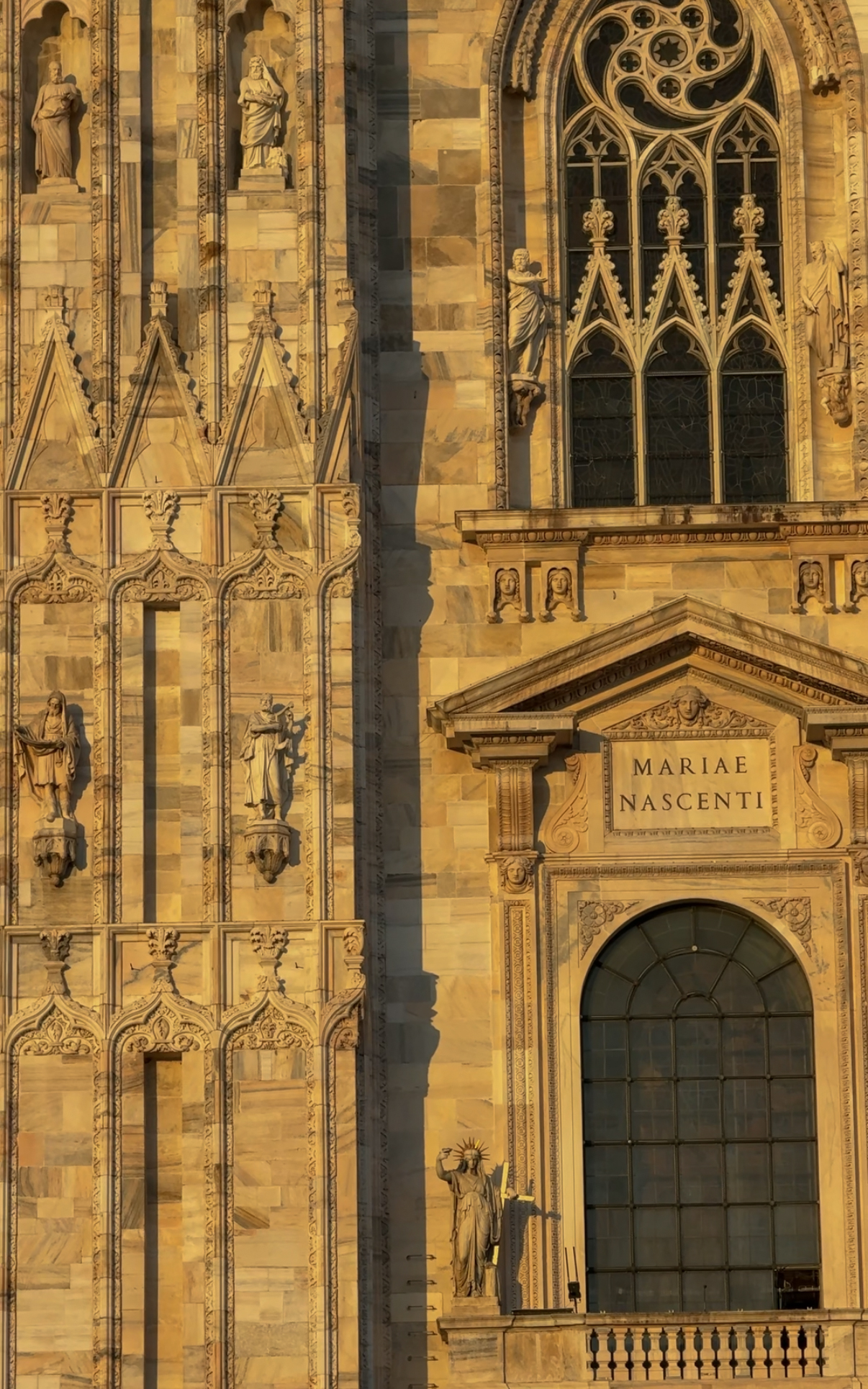
The Duomo is Milan's clearest statement, and also its most patient one. Work began in 1386 and did not finish until 1965. What remains is not a monument to any single period but an accumulation of intention: Gothic spires, classical cornices, inscriptions in Latin, doorways that frame the city behind you as you pass through them.
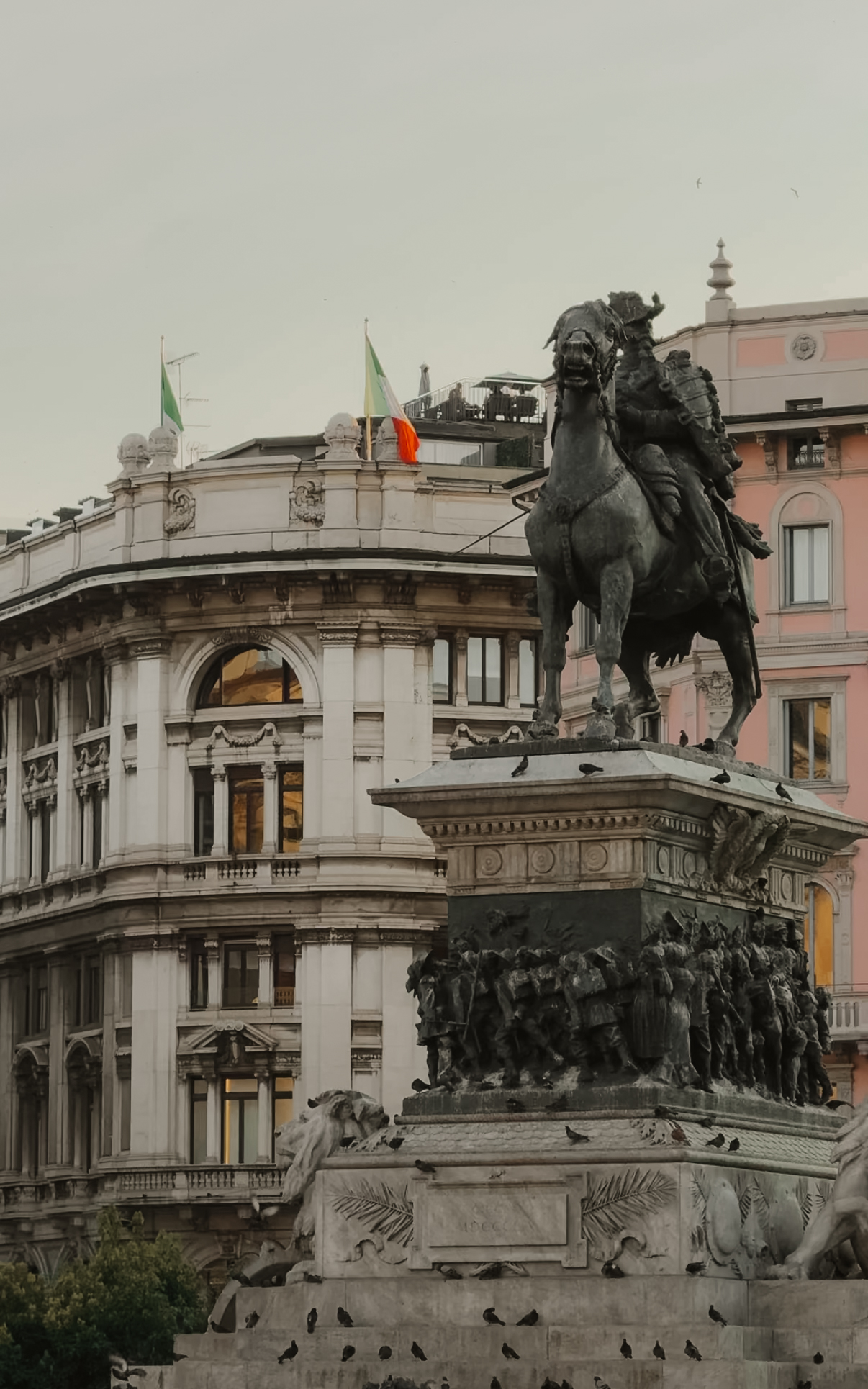
The equestrian statue in the piazza has stood since 1896, indifferent to the market that has grown around it. The pedestal carries its reliefs of battle and ceremony. The building behind opens its arched ground floor to the street, its upper storeys carrying flags in still air.
Elsewhere, facades of pale stone line the streets in the neoclassical manner: orderly windows, carved lintels, rusticated bases. The city reads, in this register, as a series of measured statements about permanence. Each building asserting that it intends to remain.
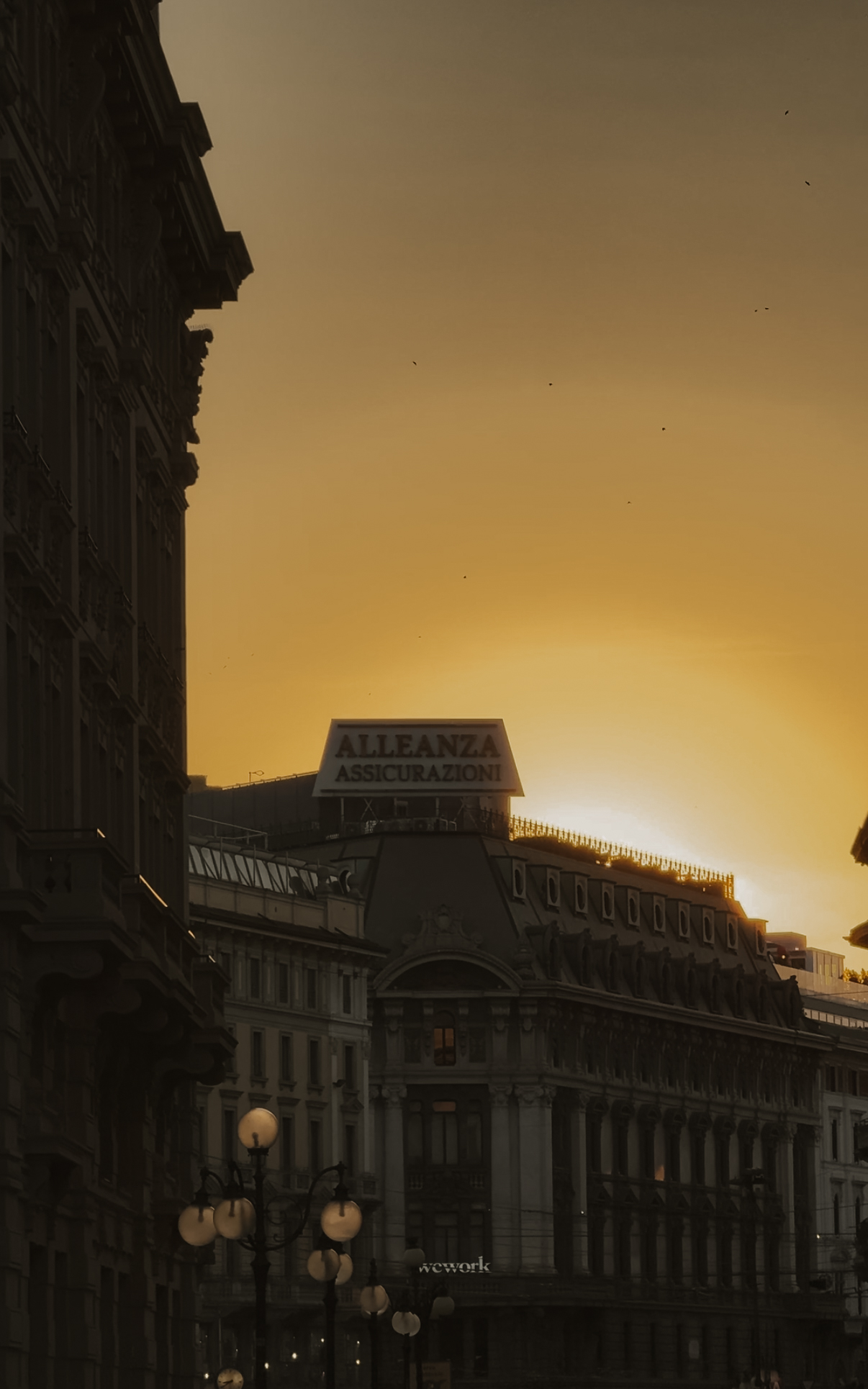
The light in Milan arrives late and changes quickly. Through most of the day the city holds a flat northern clarity, the stone reading pale and factual. Then, in the hour before sunset, something shifts.
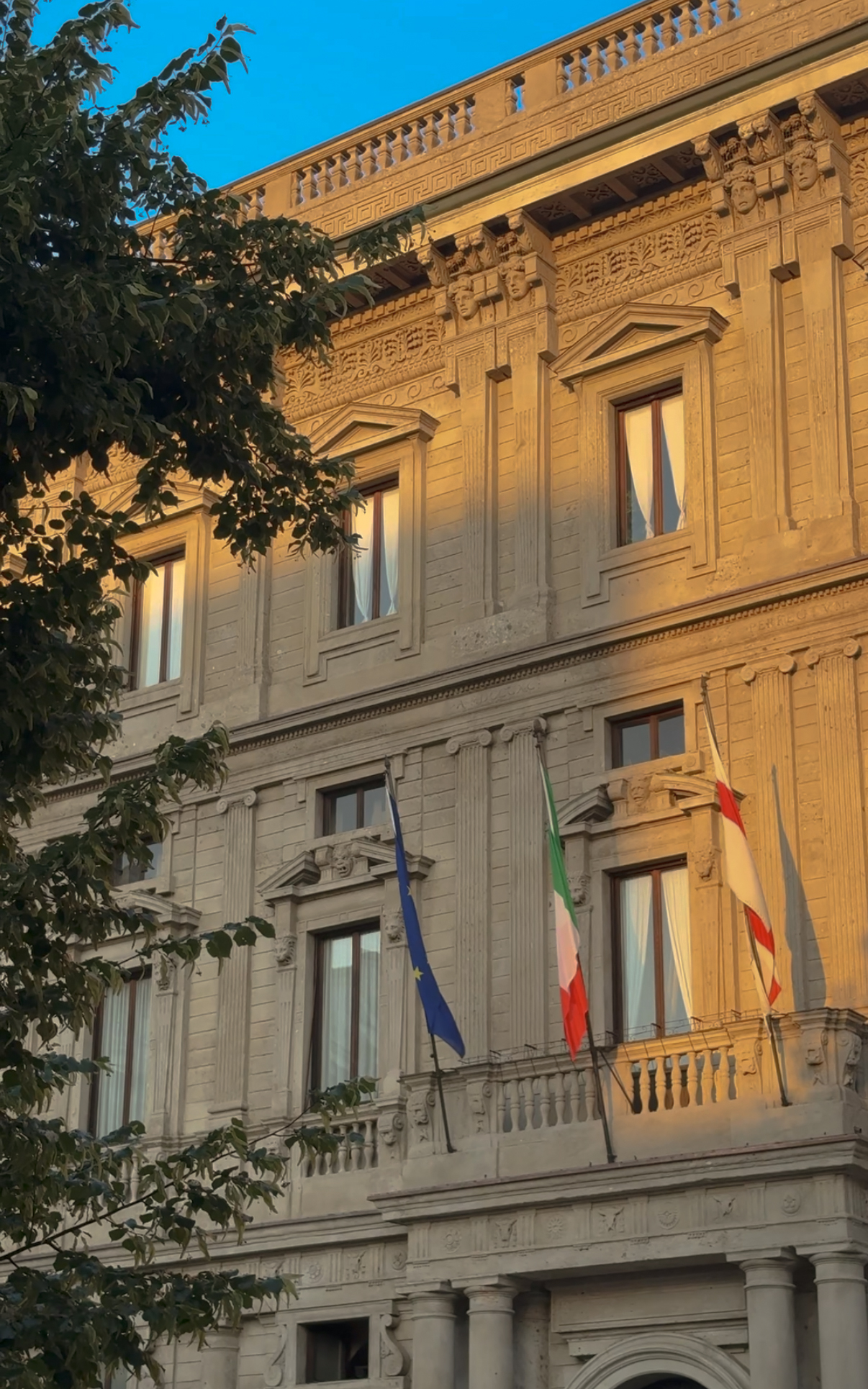
The civic buildings in the piazza take on warmth they did not have in the afternoon. A rooftop sign holds its edge against a sky that has turned the colour of old bronze. Street lamps ignite before the light has fully left. The silhouette of a Baroque cornice becomes, briefly, something close to theatrical. Not because the city has changed, but because the light has found a different angle.
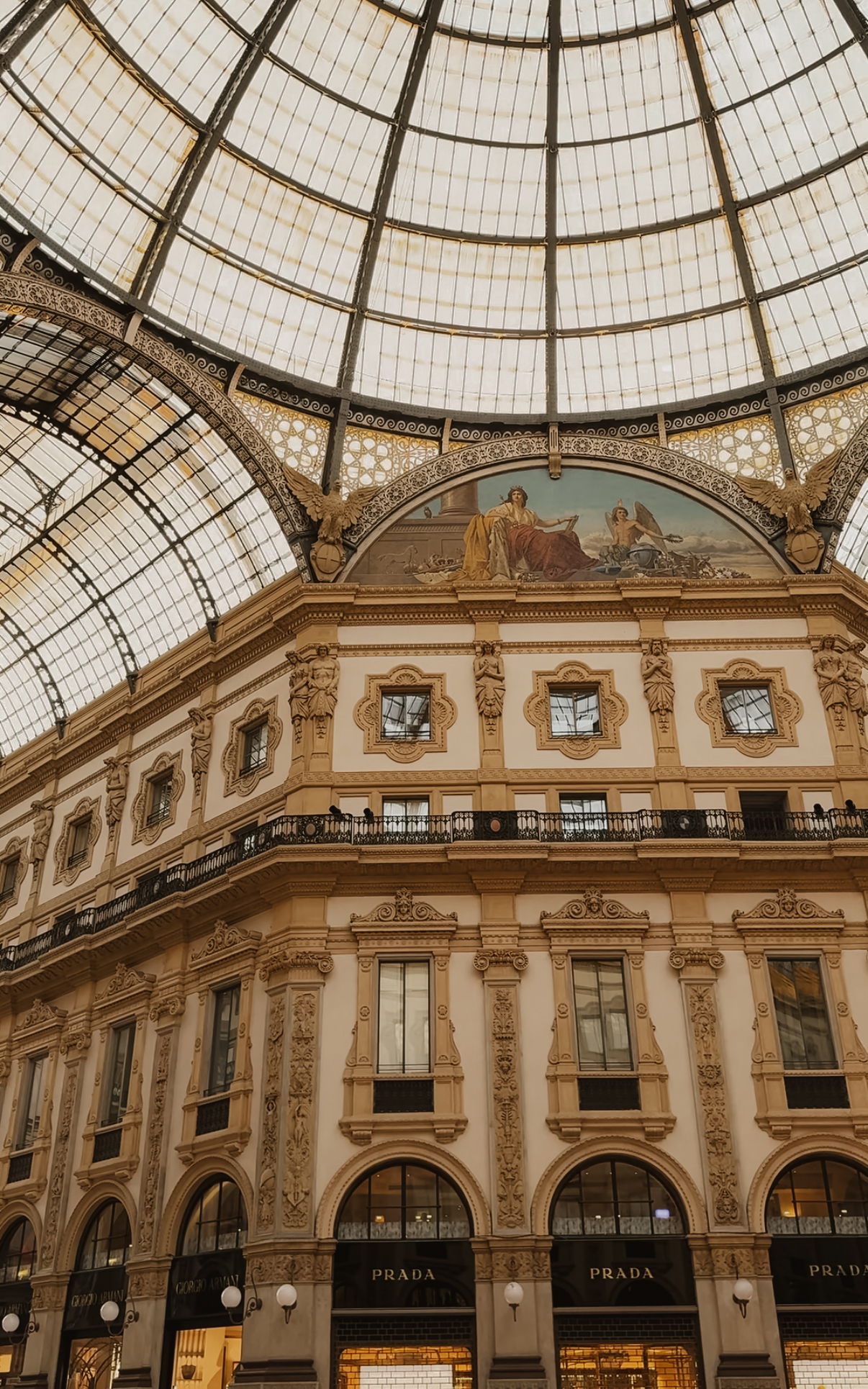
Inside the Galleria, where the glass dome filters everything, the hour is less legible. The light there is consistent, always generous, falling across mosaic floors and gilded shopfronts in a way that flatters the whole interior equally and at all hours.
Milan has not tried to resolve the tension between what it was and what it has become. The resolution happened over centuries and by accumulation.
The Galleria Vittorio Emanuele II, completed in 1877 as a monument to unified Italy, now houses some of the most recognised names in contemporary retail. The marble floor carries the same patterns. The glass dome is unchanged. What has shifted is only the contents of the ground-floor tenancies. And not by much.
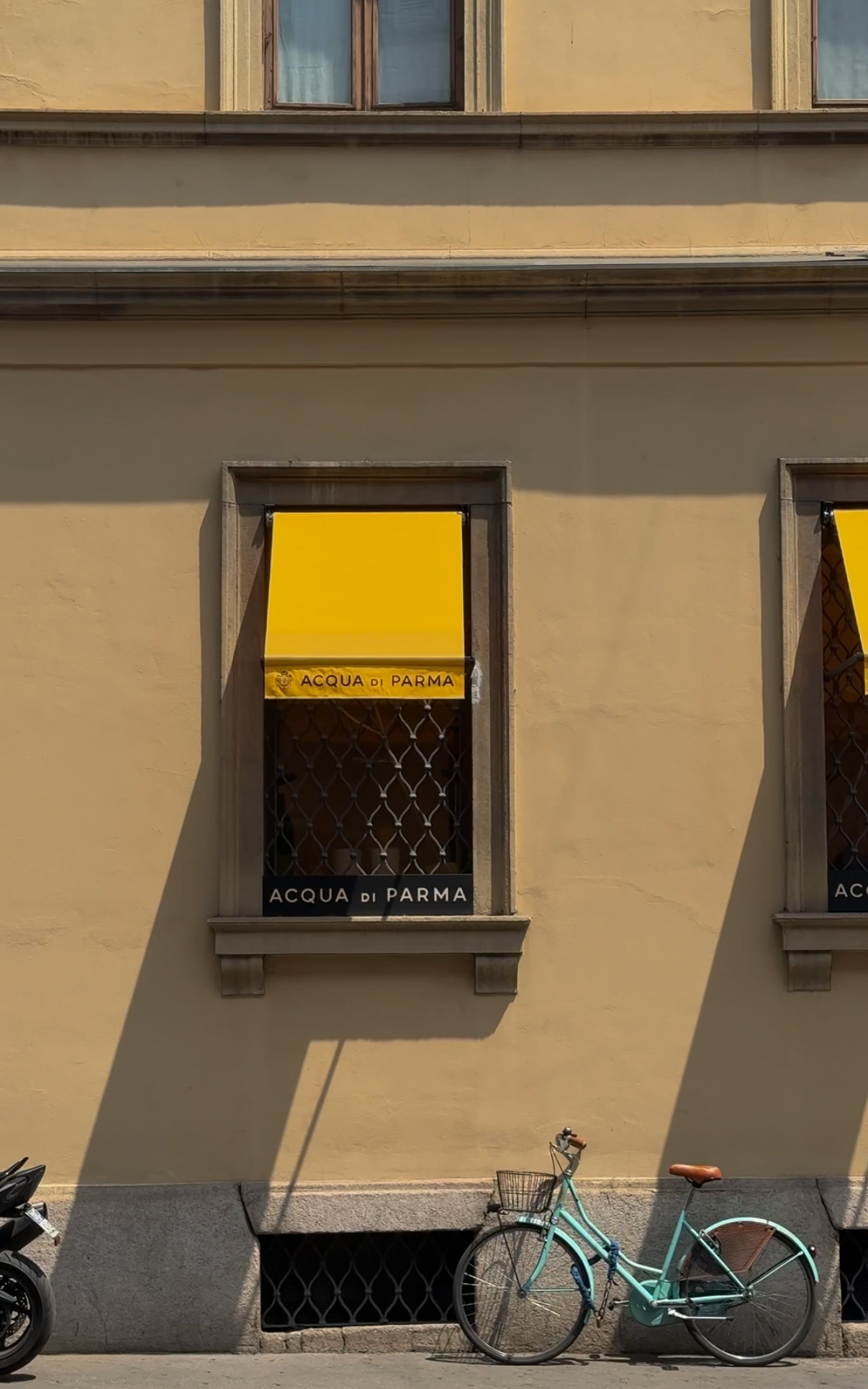
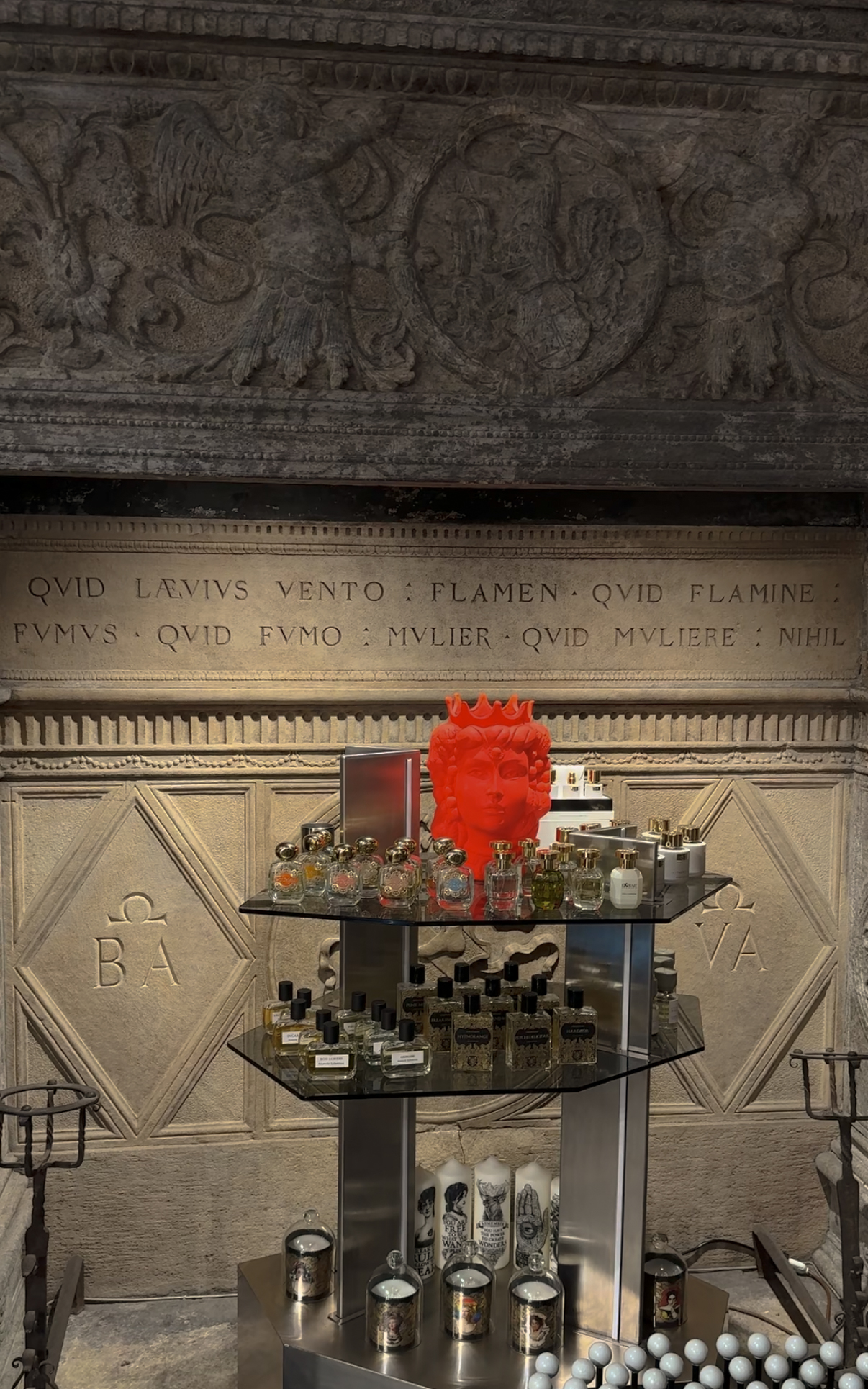
On the street, a yellow awning sits against a building of considerable age, vivid against the pale stone above it. A bicycle leans against the base of the facade. Further inside, carved stone carries Latin inscriptions above a display of perfume. The building contains both things without difficulty. History in Milan does not require preservation. It simply continues.
Milan endures without effort. The stone asks for nothing except to be looked at carefully.
Milan conducts itself as Italy's working capital, fashion, finance, design, and its beauty is correspondingly businesslike: the Duomo erupting at the end of an ordinary street, the Galleria's glass dome over what remains, essentially, a shopping arcade of genius. The study was made between these civic set pieces and the city's quieter luxury, the courtyards and arcades where Milan actually lives.
The photographs work the contrast the city itself maintains: Gothic extravagance above, brisk commerce below; the Galleria's mosaics under the feet of people checking their phones. Milan's light is northern Italian, precise, slightly grey, flattering to stone, and the study uses it to hold the architecture and the everyday in the same register.
In the archive Milan connects the Places and Craft categories, its boutiques, Loro Piana's courtyard, Fueguia's shelves, have their own studies, and the city stands in the collection as the place where commerce and beauty have negotiated the longest truce. The study feeds the Journal's essays on retail rooms, and remains the archive's reference for photographing a city that works for a living.