Turin
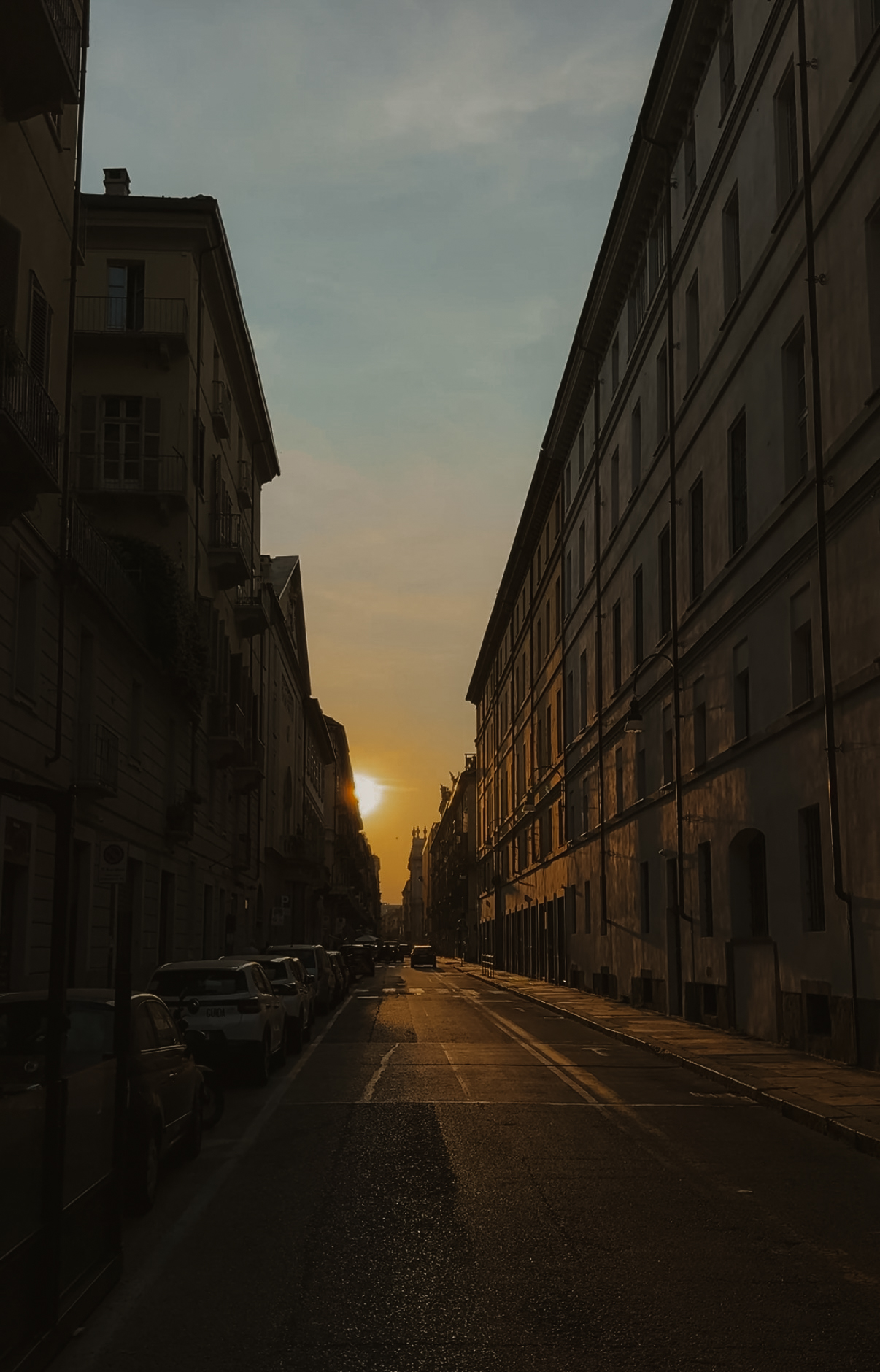
Turin is planned in a way that remains legible from the street.
The grid runs to the river and to the hills beyond, and the city's civic spaces are connected not through proximity but through alignment: one monument visible from the next, one square opening into a street that ends at another. This geometry is not incidental. It reflects the ambition of Savoy urban planning, which understood the city as a sequence of composed views, each one calibrated to direct movement and attention.
What results is a place that reveals itself through distance as much as detail. The hills arrive at the end of every long street. The architecture holds its line. The city is quiet in a way that is particular to places where the structure itself has done most of the work.
The civic spaces of Turin are organised around hierarchy rather than accumulation.
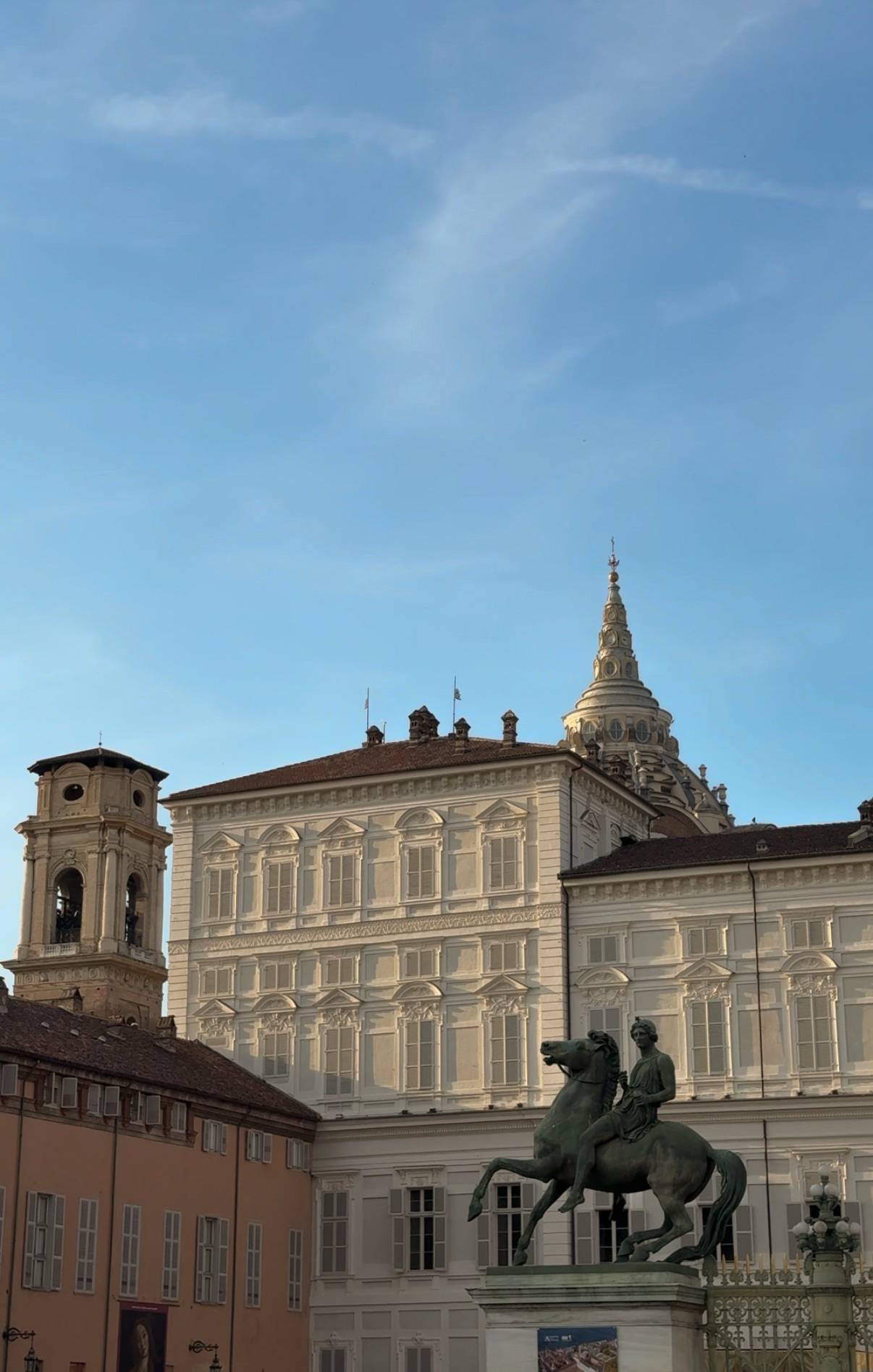
The Royal Palace sits behind its equestrian monument with the Baroque dome of the Cappella della Sindone rising above the roofline. The composition is deliberate: monument, palace and chapel arranged in a sequence that rewards distance rather than proximity. The closer you stand, the less of it you hold. It is a city that asks you to step back.
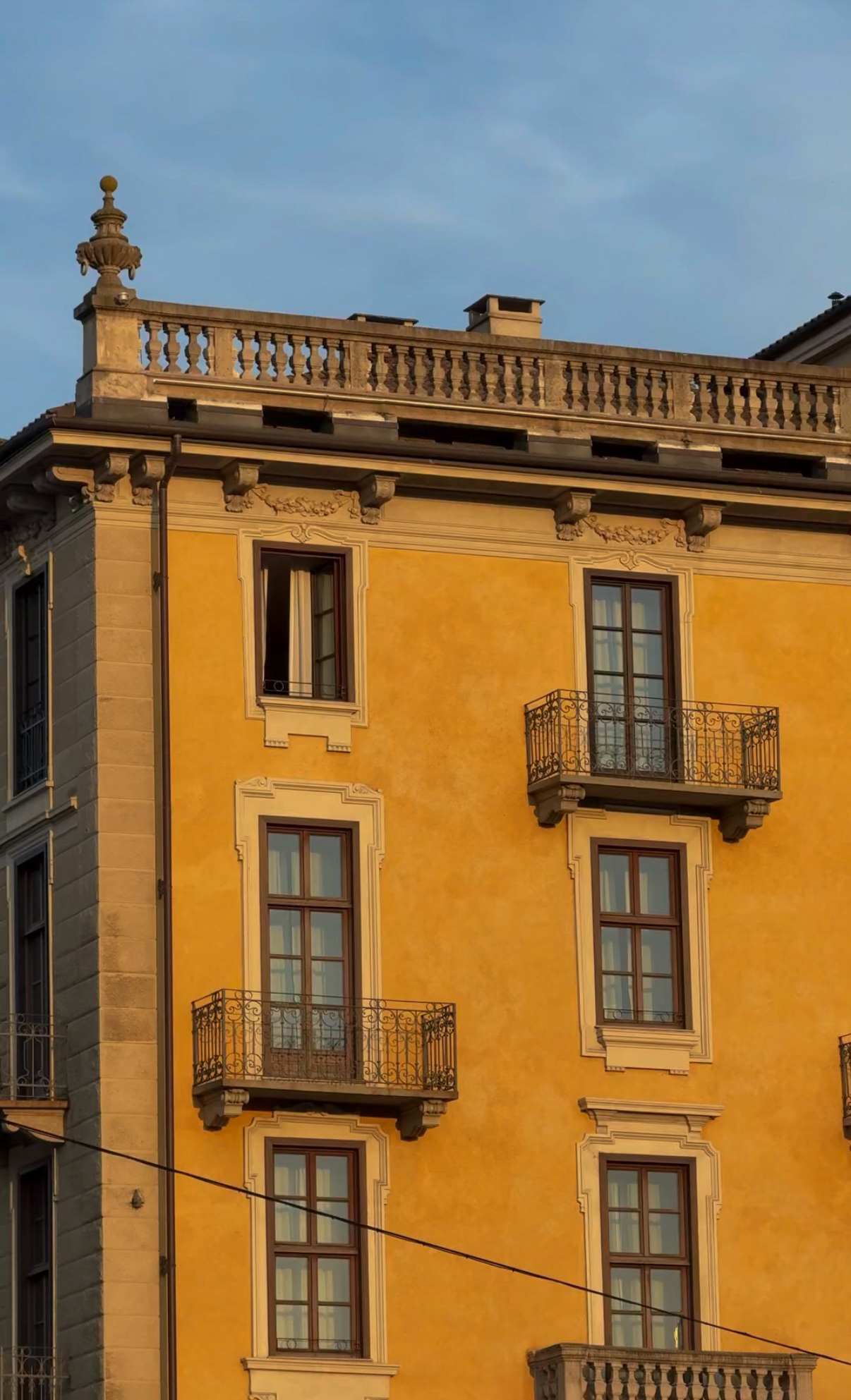
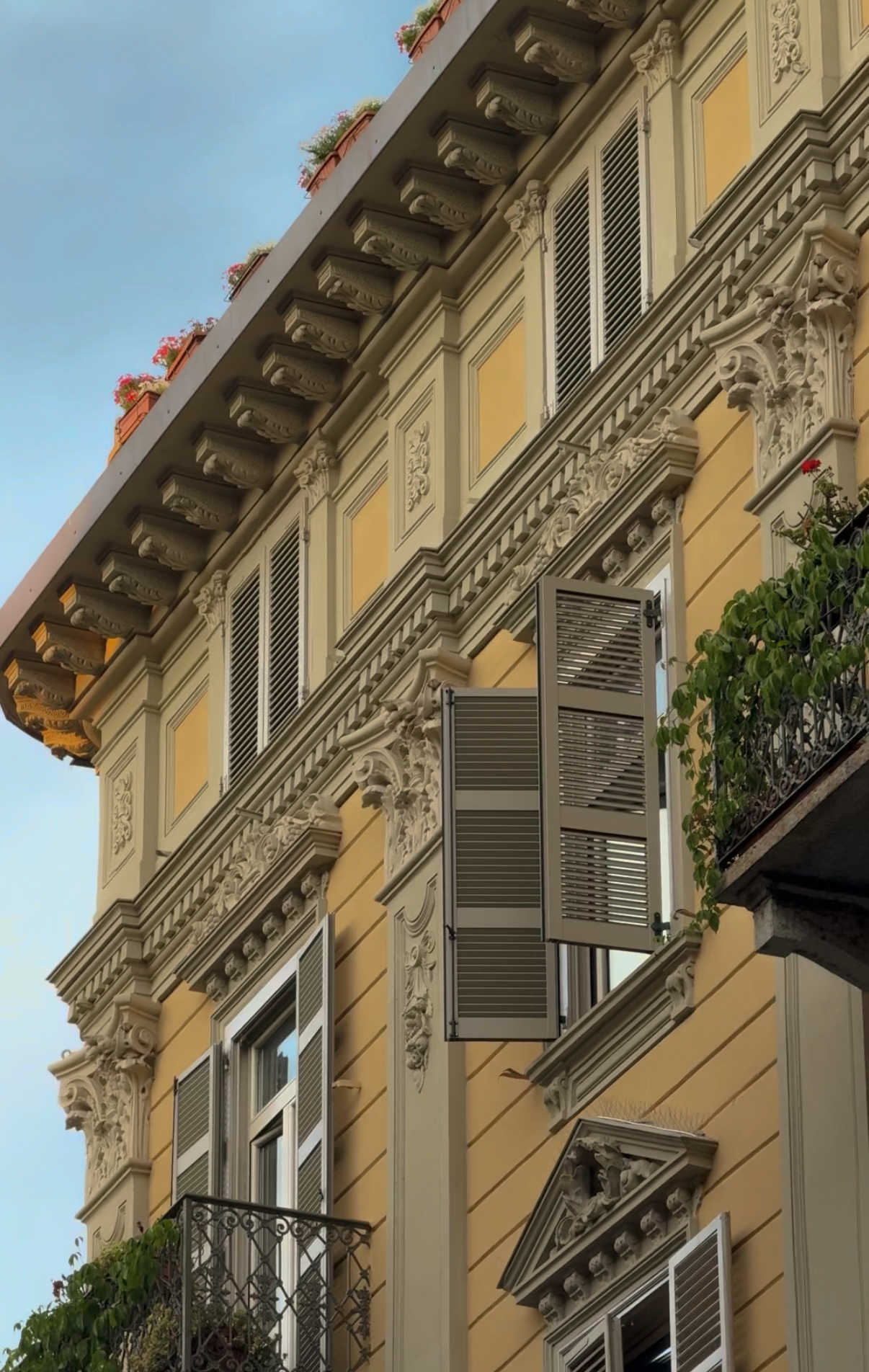
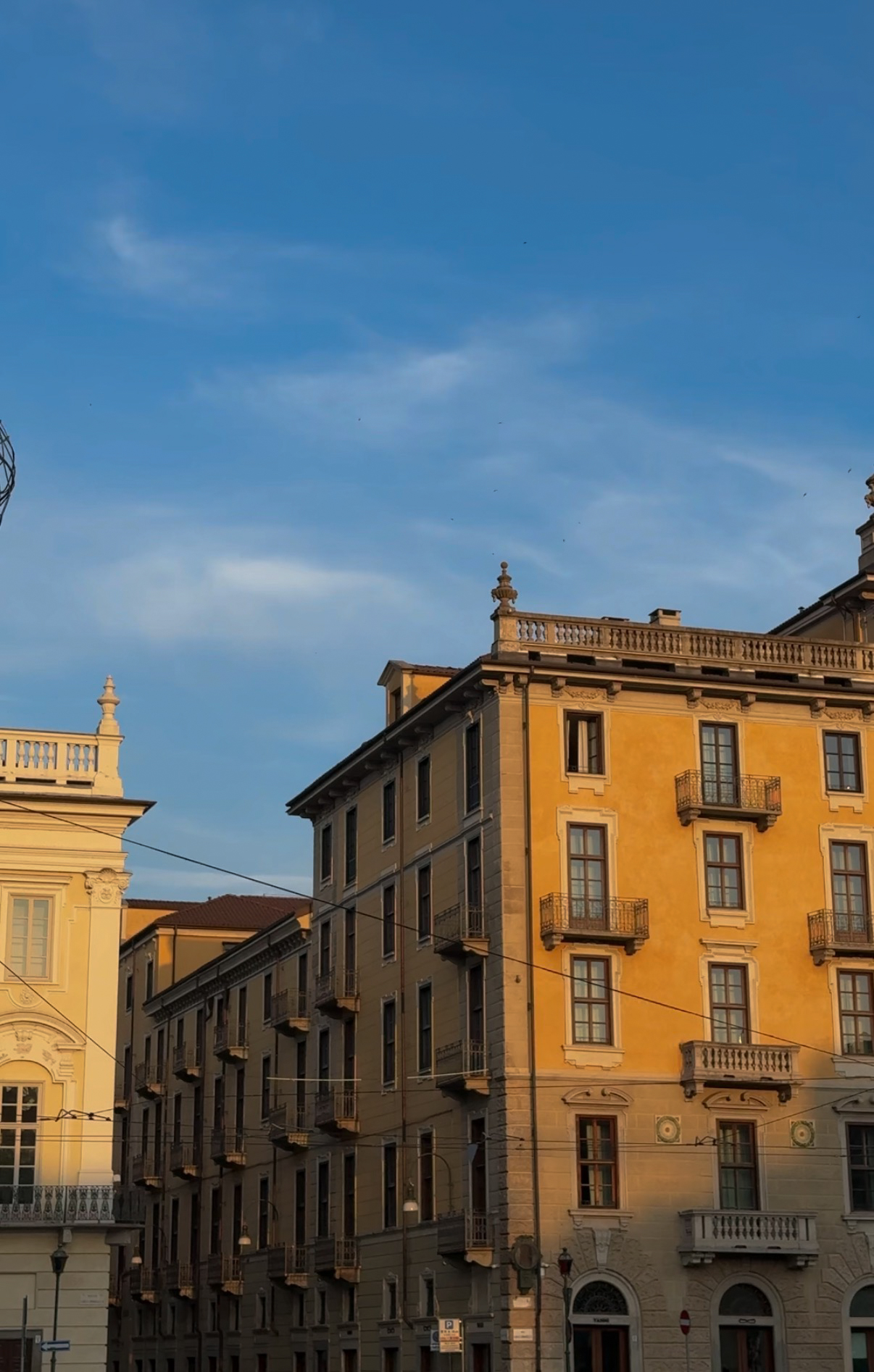
The piazzas do not announce themselves as destinations. They function as intervals, points of arrival and departure between one long street and the next. The architecture around them holds its line without variation: regular facades, consistent cornices, the same orderly fenestration repeated until the eye understands it as rhythm rather than decoration.
What Turin communicates through its civic planning is not grandeur in the Italian manner but control. The feeling of a city where the design preceded the building, and the building followed the design.
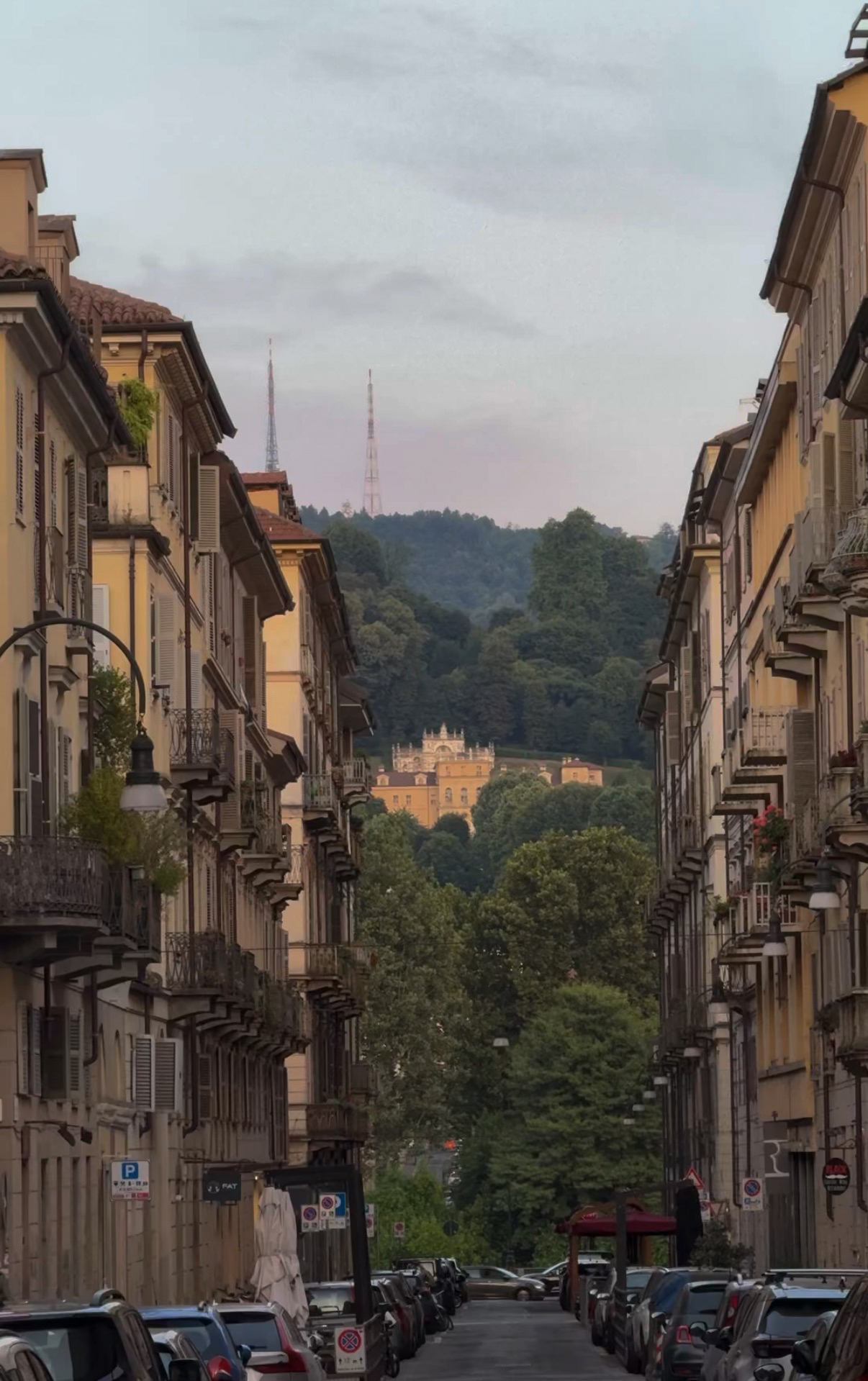
The avenue descends and the villa appears on the hill.
It is a composed view: residential facades on either side, the street drawn down the middle, the hillside rising at the far end with trees, and set into them, a yellow building of considerable scale. The distance gives it clarity. At street level, the foreground holds its details: balconies, parked cars, a lamp curving out over the road. But the eye settles beyond all of it, on the villa framed by the avenue's geometry.
This is how Turin works. Streets do not simply connect places; they frame them. The grid creates sightlines, and the sightlines create relationships between near and far that the grid alone cannot account for.
The long street at sunset operates by the same logic. Buildings on either side create a corridor, and within that corridor the sun sits at the far end, low and flat. The architecture becomes secondary to the view it makes possible.
As the light falls, the city's geometry becomes atmosphere.
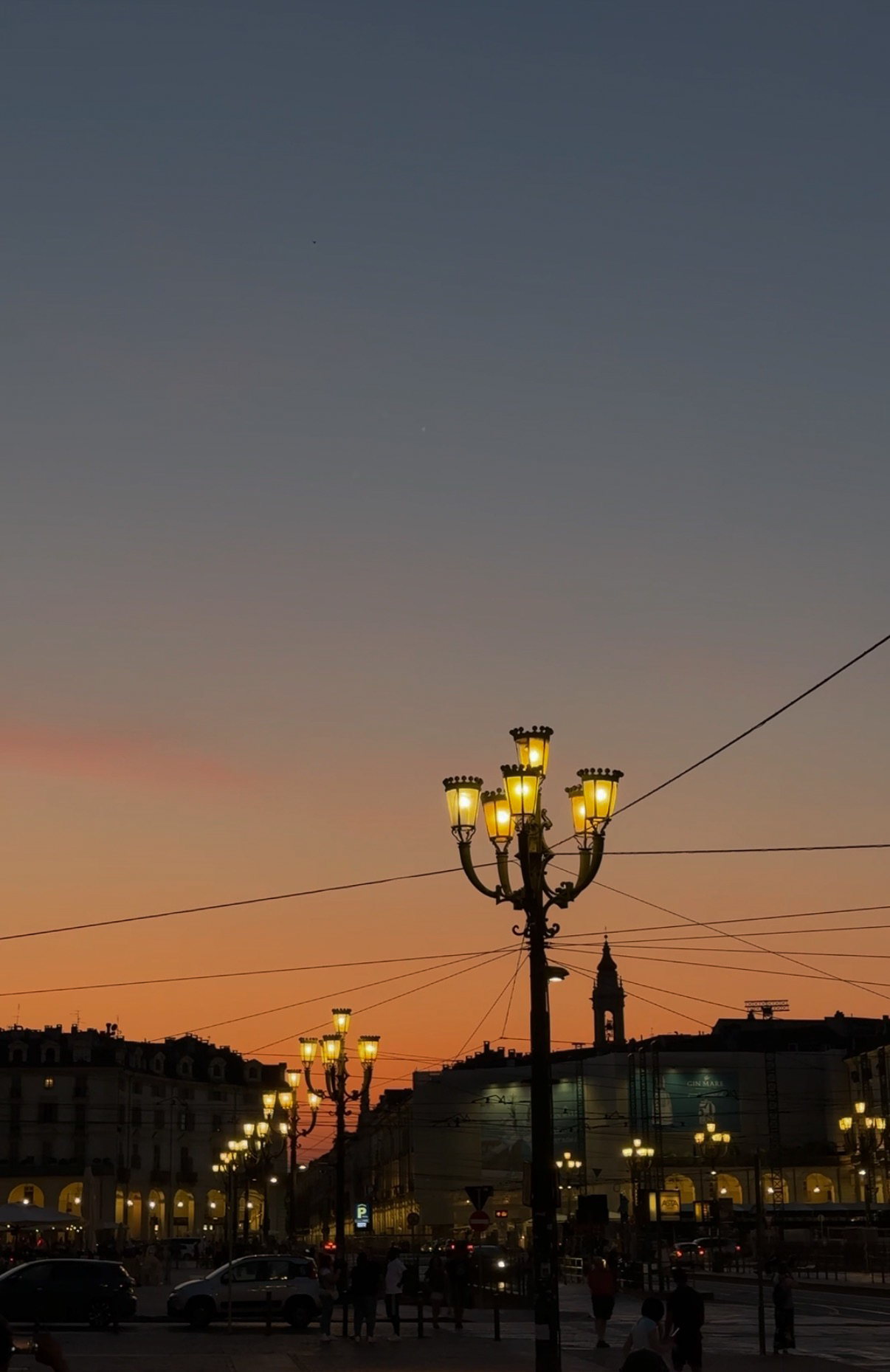
The facades that were precise in the afternoon soften into ochre and amber. In the piazzas, ornate street lamps ignite before the sky has fully darkened, and the effect is of a city staging its own transition: the last of the orange above the rooflines, the first warm points of light below.
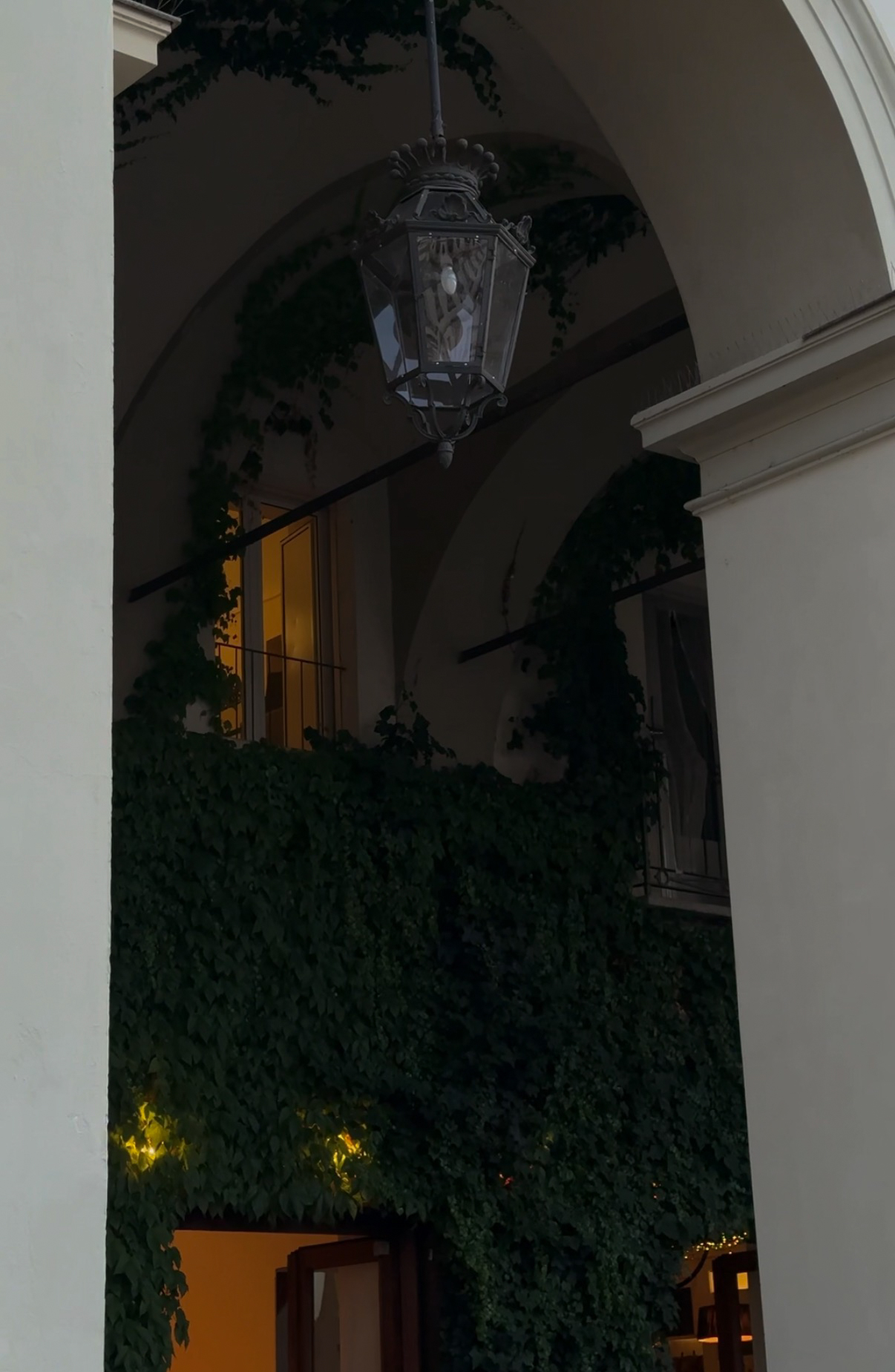
In a courtyard, a lantern hangs beneath a stone arch grown over with ivy. The interior behind it is lit. The contrast is particular to this hour: the darkness of the exterior, the warmth at the door, the lamp between them catching the eye before anything else does.
The city settles into evening without drama. The lamps trace the square. The hills disappear into the background. What remains is a quality of light that belongs to Turin at this hour: warm, evenly distributed, the product of a civic design that placed the lamps as carefully as it placed everything else.
Turin waits at the end of every long street.
Turin is the planned city of the collection: a Roman grid extended by Savoy ambition, arcaded streets running to the river and the Alps beyond, monuments aligned so that each frames the next. The study was made along those alignments, and its subject is legibility, a city whose intentions can still be read from any pavement.
The photographs follow the sightlines the planners left: porticoes in perspective, the Mole Antonelliana appearing where the streets intend it to, hills closing the vistas like a decision. Turin's character is a kind of austere generosity, seventeen kilometres of arcades keeping the weather off everyone equally, and the study attends to that municipal seriousness with matching sobriety.
In the archive Turin completes the Italian material alongside Milan and the Italia surfaces study, and it gives the European chapter its clearest case of urbanism as authorship. The study also feeds the Journal's interest in what a map leaves out, Turin being the rare city where the map and the experience largely agree, which turns out to be its own kind of atmosphere.