The Lexus Ilkley Open
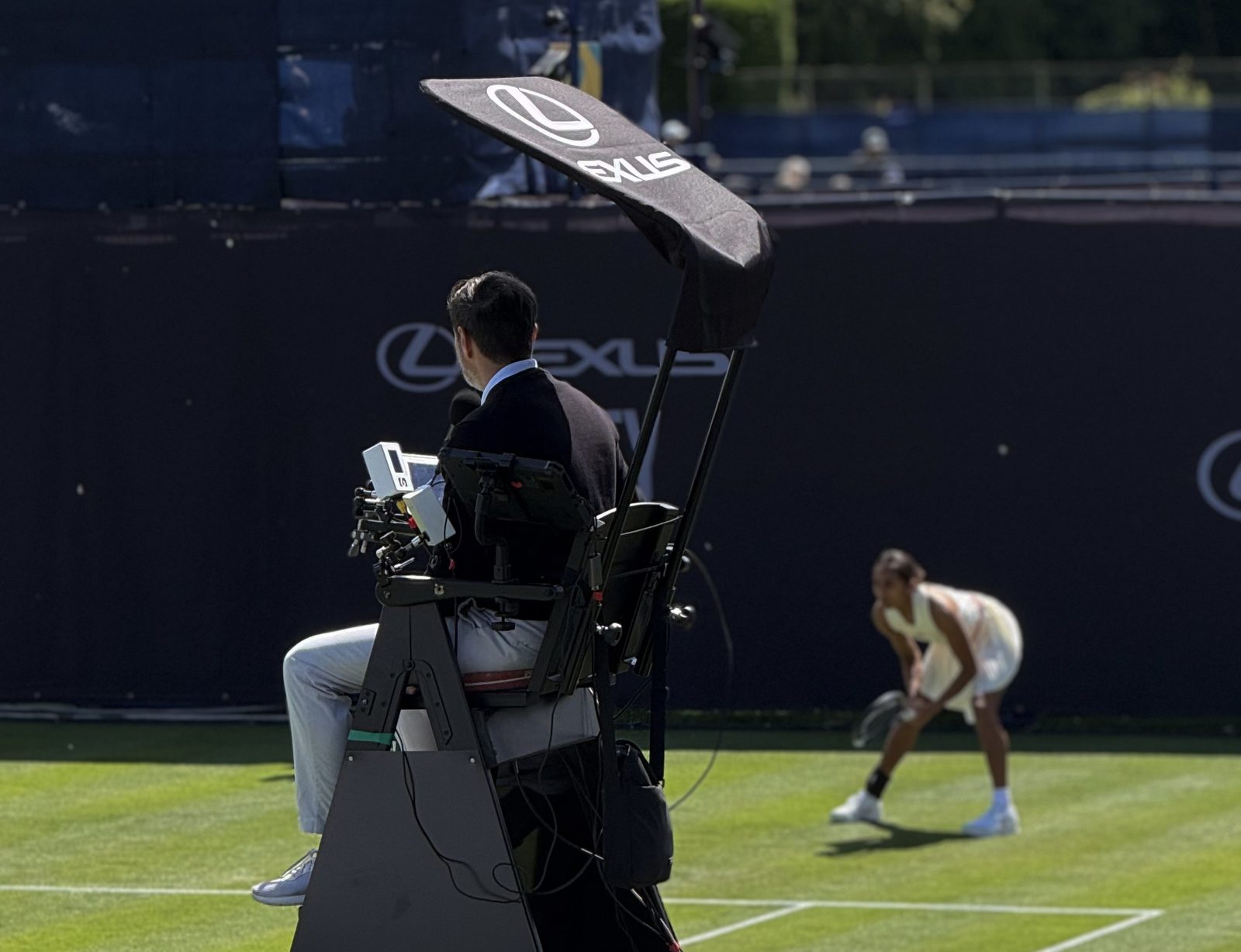
The Lexus Ilkley Open sits in a pocket of Yorkshire, grass courts laid out beneath the moor.
It is a professional tournament, but the first thing you notice is not the tennis. It is everything arranged around it.
Hospitality terraces. Partner names. The quiet order of a place preparing to be watched.
Professional tennis is usually photographed through the moment of competition. The dominant frame is the swing, the reach, the decisive point.
What surrounds all of that is rarely the subject: the details that shape the experience before a ball is struck, the relationship between sport, hospitality and the partners whose names sit at the edge of every court, the environment built to hold the event rather than the event itself.
Courts are marked by hand. A single ball rests on cut grass. The umpire's chair waits above the baseline before a player has arrived.
Sponsor presence is constant at Ilkley but never loud. It is folded into the surfaces of the place rather than imposed on top of them. The Lexus name sits in the same register as the club's own signage. The environment that emerges from these decisions is coherent in a way that most event spaces are not.
The tennis is the reason everyone is here.
It is rarely the whole of what they remember. What tends to stay is something more ambient: the sound of a match from two courts over, the quality of the afternoon light on Yorkshire grass, a particular meal at a hospitality terrace with the moor visible behind it. The event is the occasion. The place is the memory.
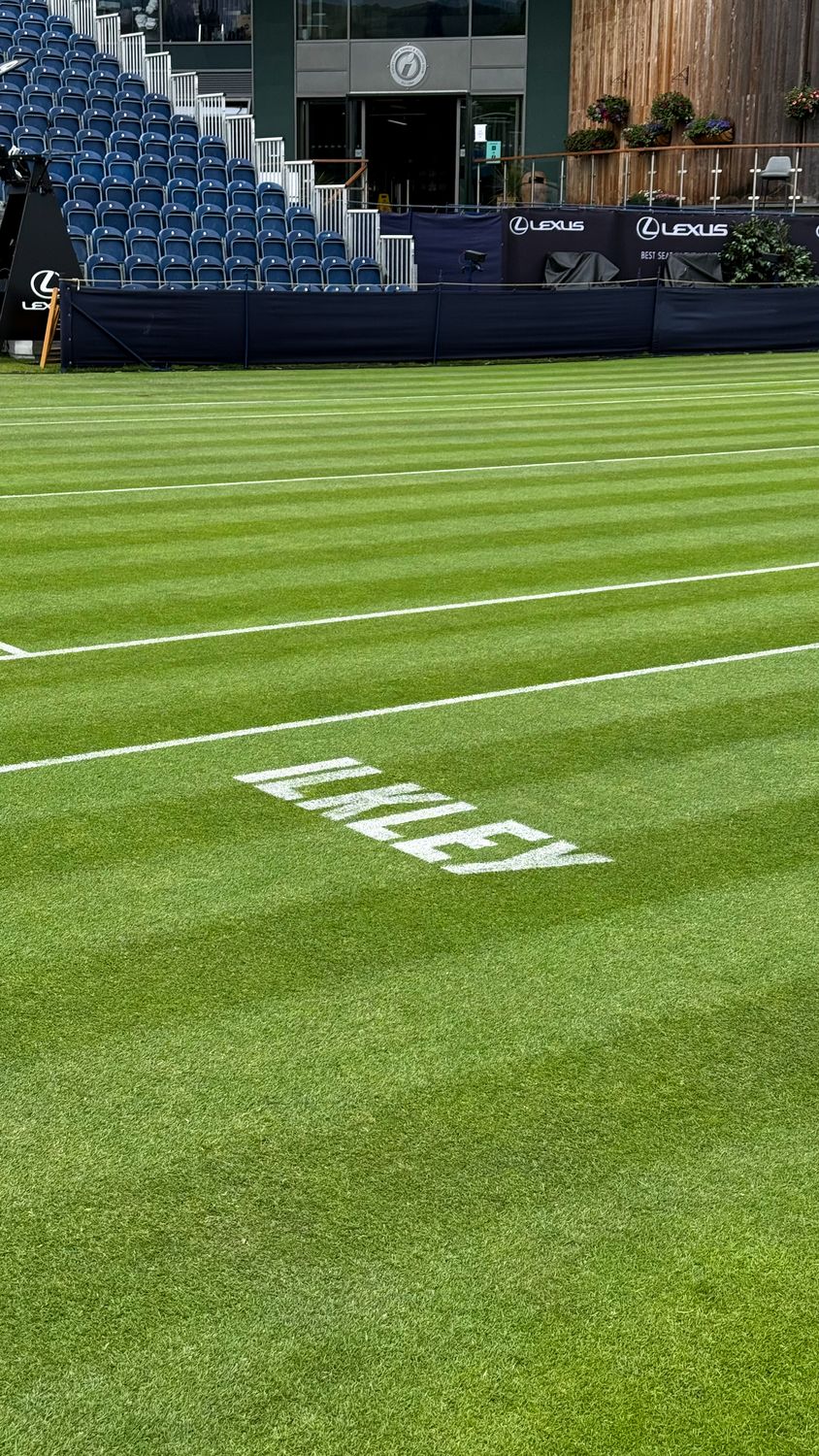
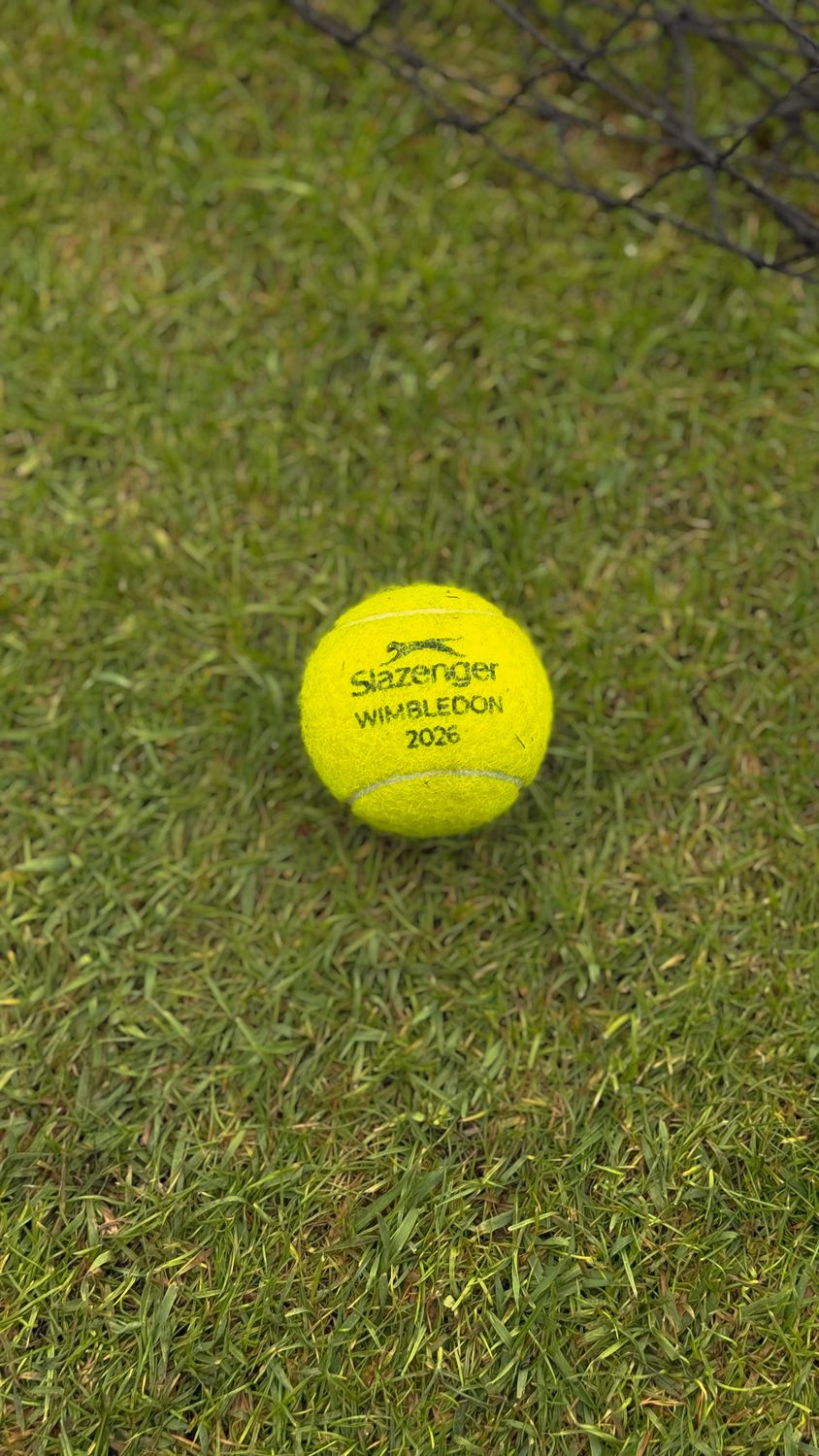
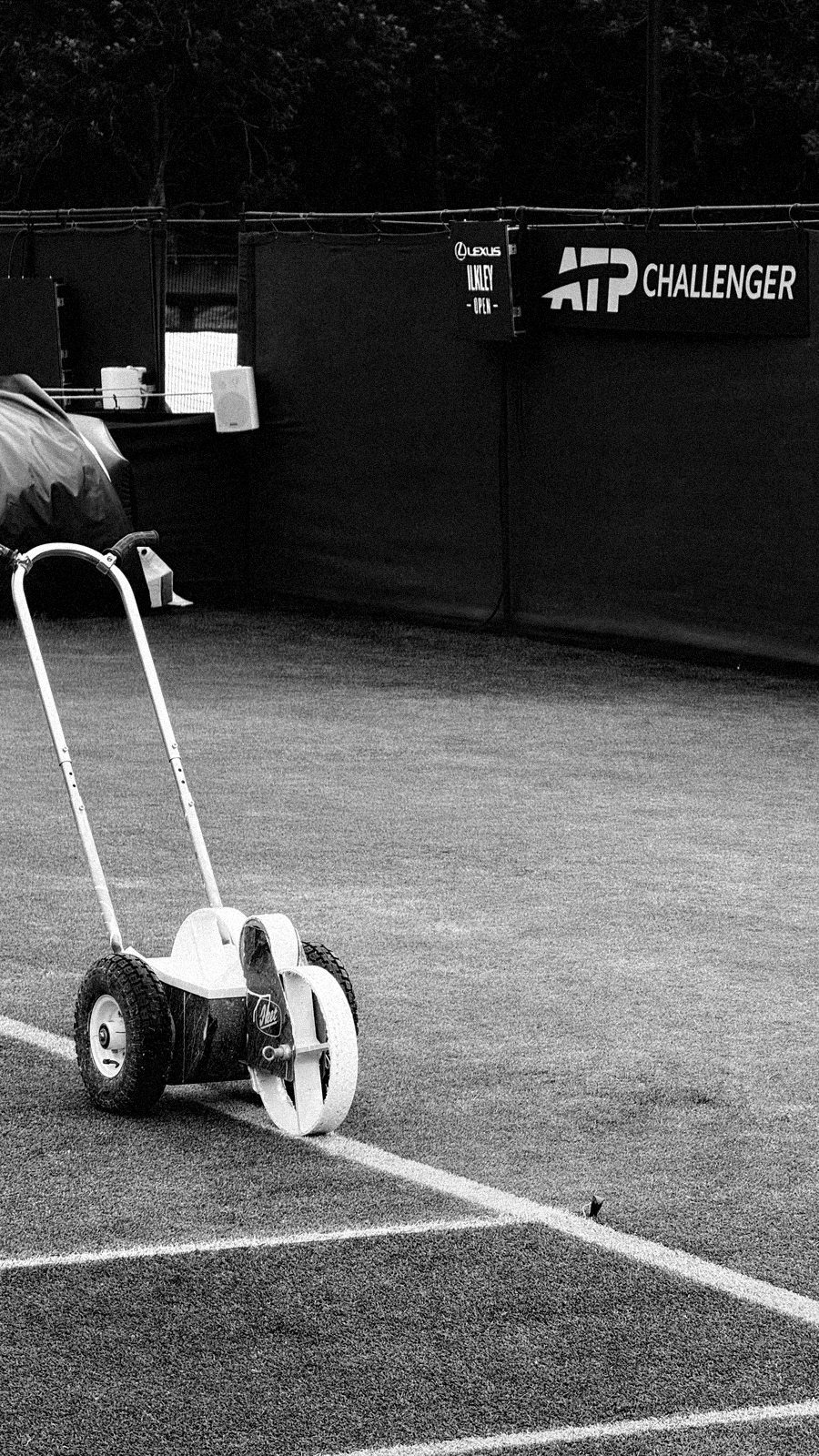
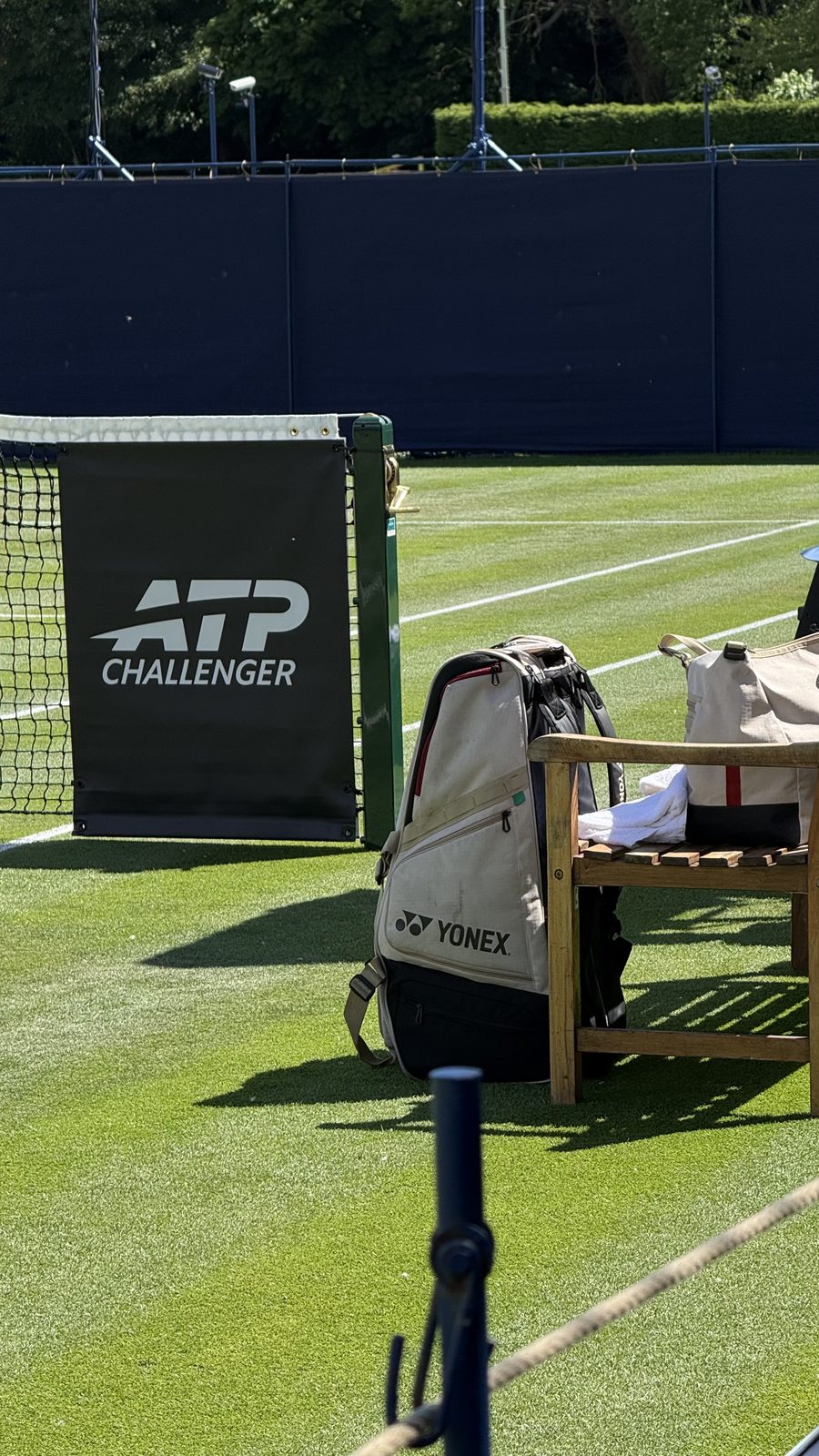
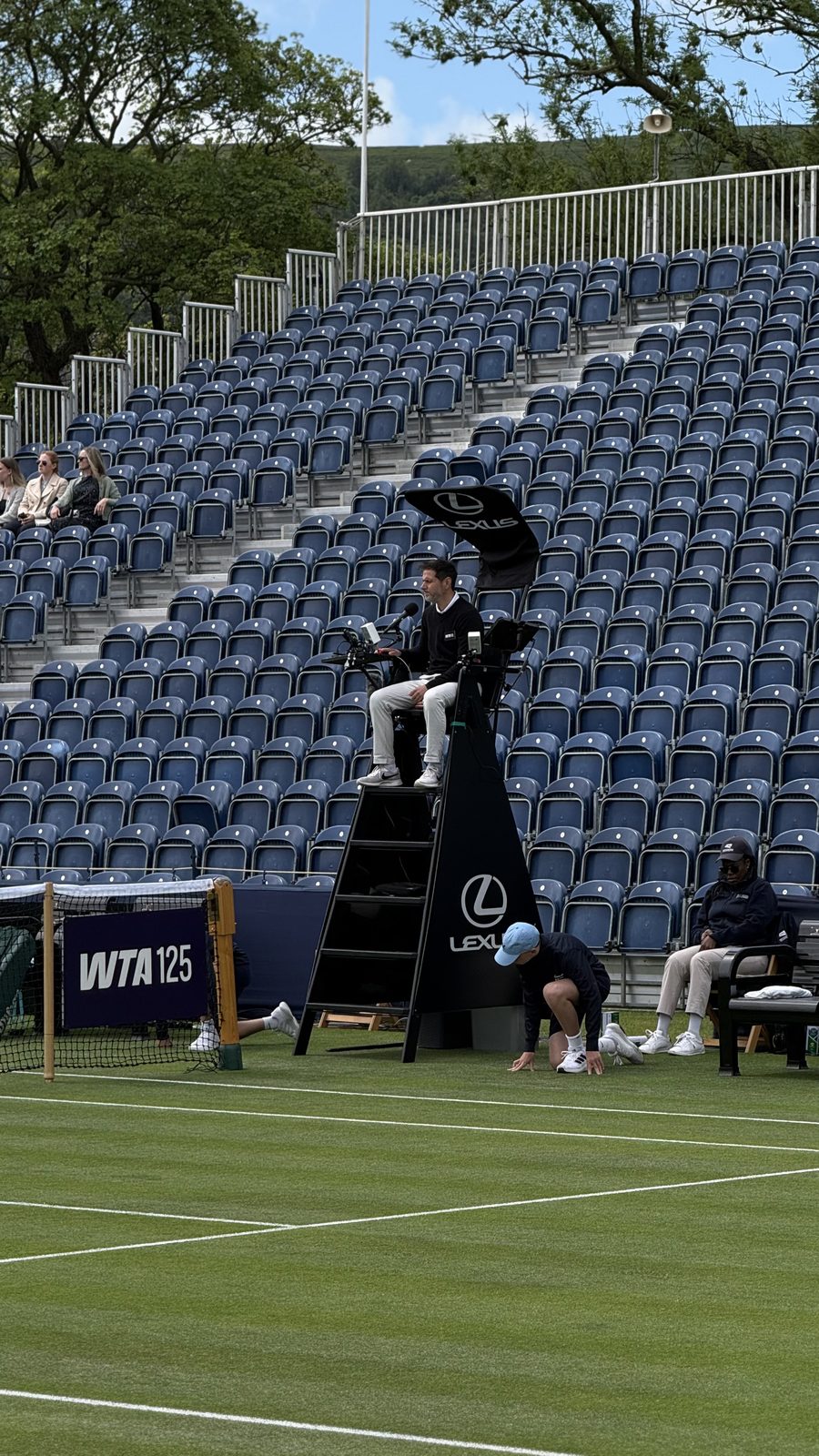
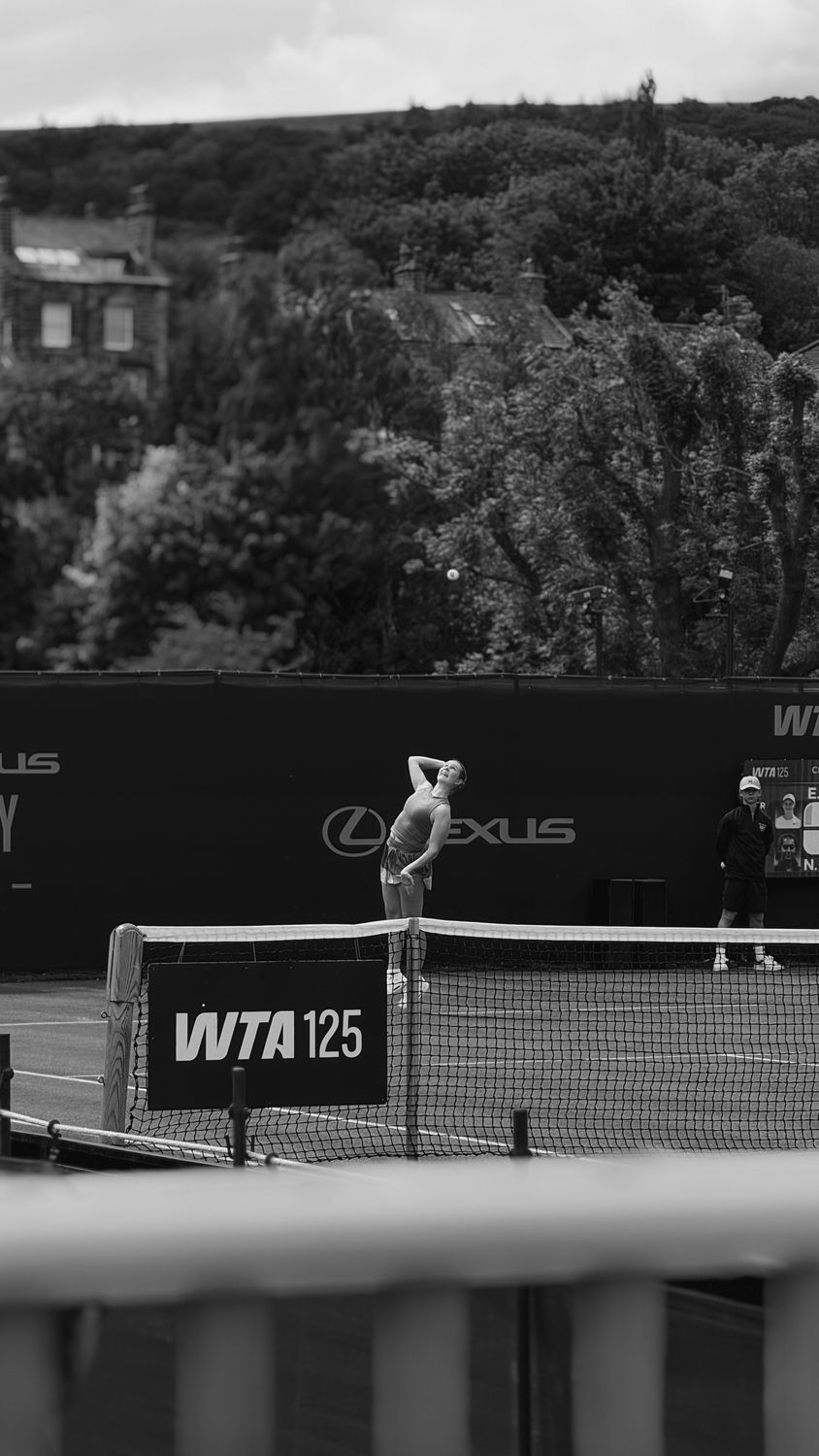
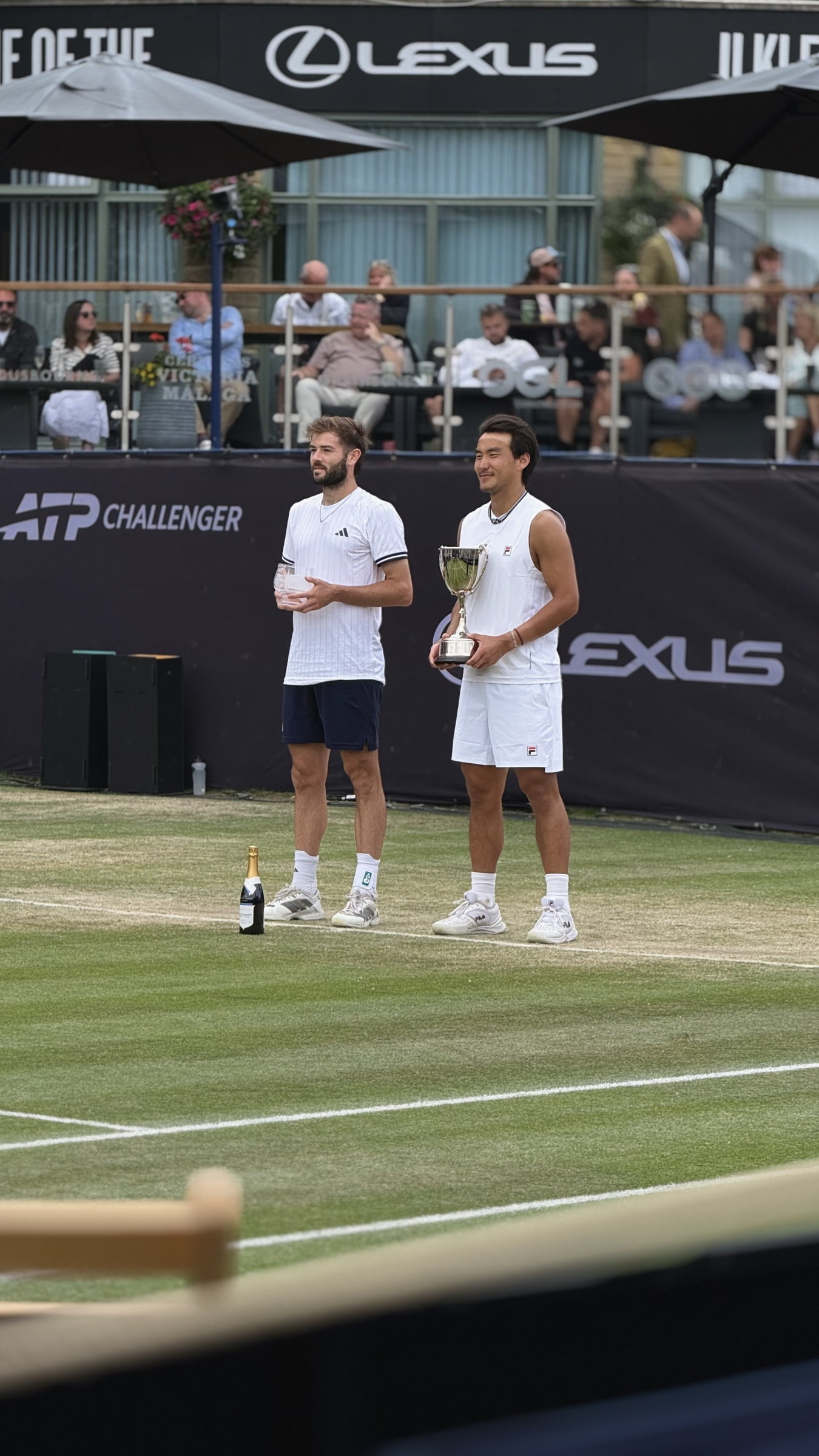
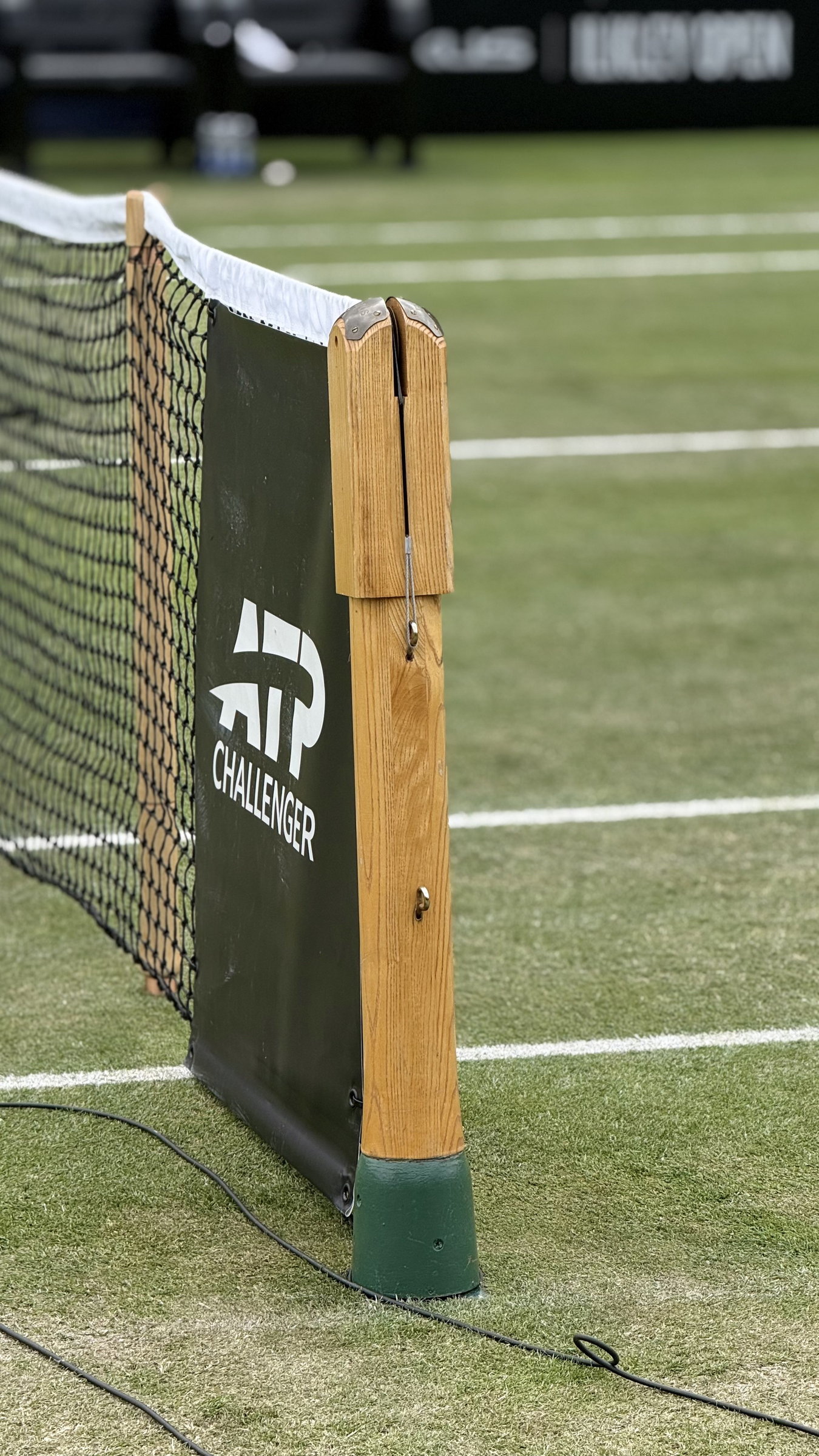
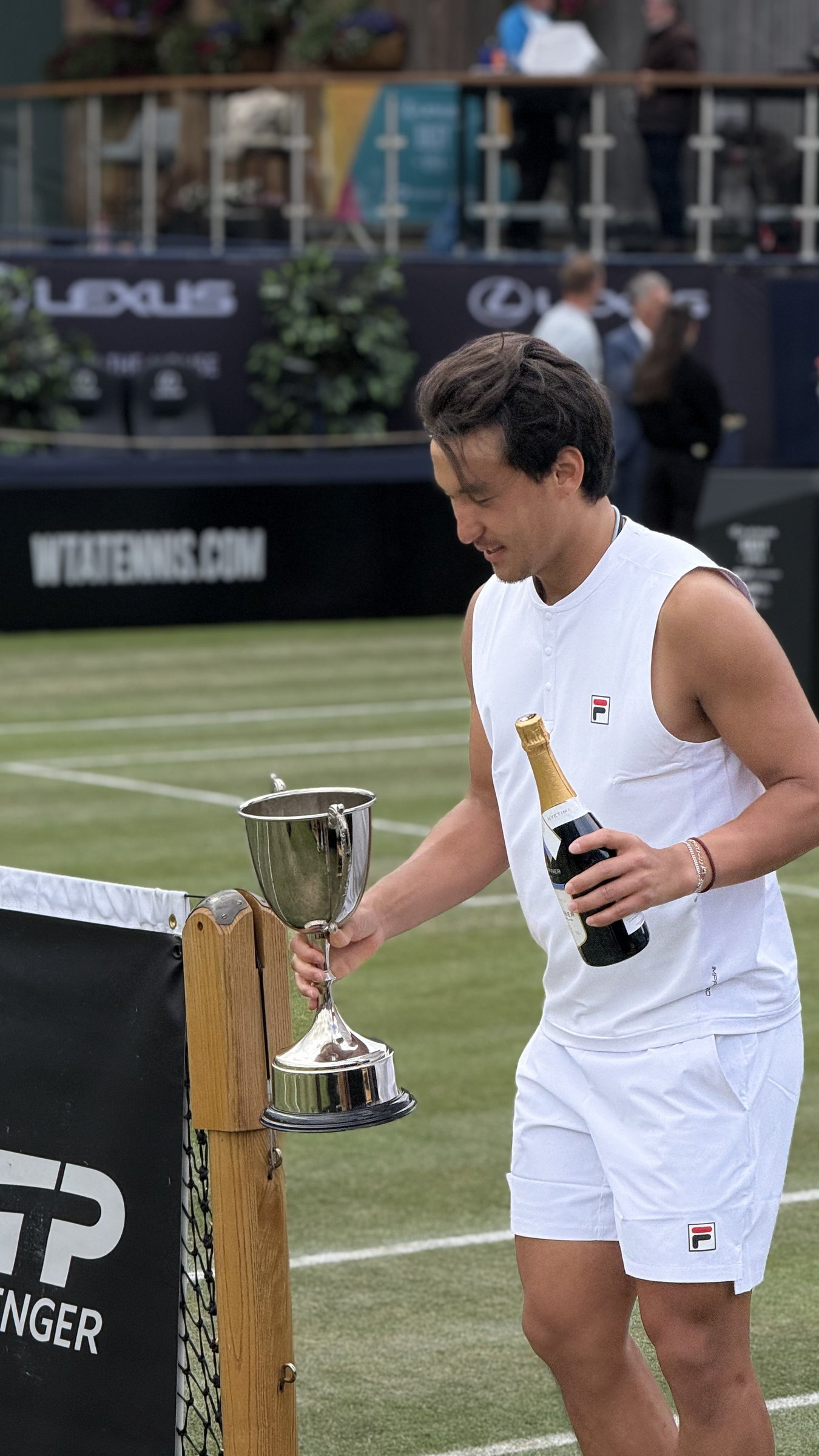
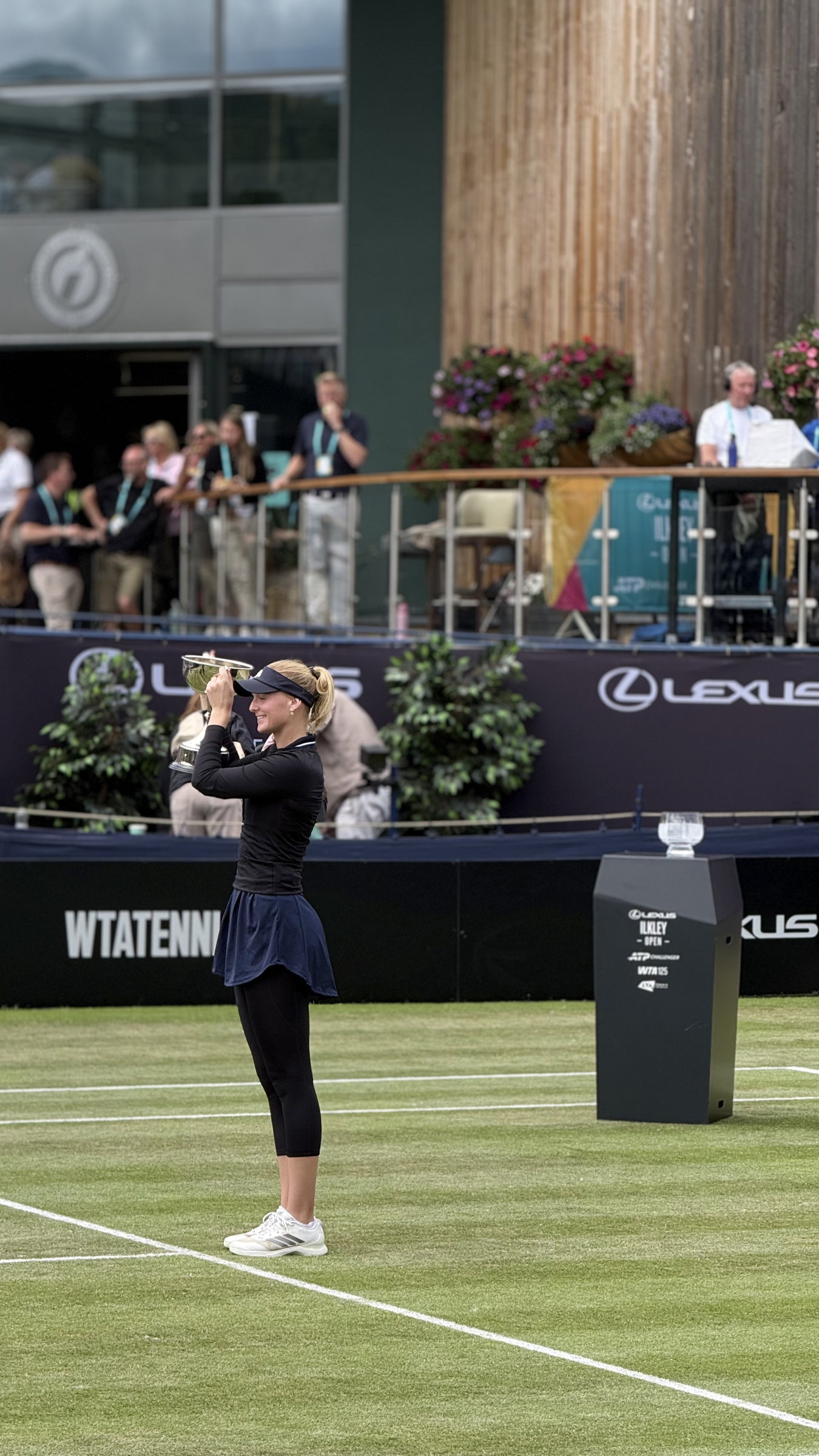
The Lexus Ilkley Open is a professional tennis tournament played on grass courts beneath Ilkley Moor, part of the circuit through which players climb toward Wimbledon, and it happens fifteen minutes from where this studio is based. The study exists partly for that reason: the archive documents occasions worldwide, and this is the world-class occasion that assembles annually in its own landscape, Yorkshire stone, moorland weather, hospitality terraces among the sightscreens.
The photographs concern the tournament's composition rather than its results: partner names set against hedges and canvas, the terraces where hospitality and sport negotiate their shared audience, the courts held inside a valley that does most of the scenography for free. Provincial professional sport has its own visual register, more intimate than the tour's showpieces, more constructed than club tennis, and the study documents it with the same seriousness the archive gives Silverstone.
Within the archive, Ilkley pairs with the Armani Classic as the second panel of English lawn tennis, and it holds a particular place as the local study: proof that the editorial method does not require distance to work. For commissioning purposes it is also the studio's standing example of event documentation for partners and sponsors, how a brand's presence at an occasion can be recorded as atmosphere rather than logo inventory.