The Fourball
A corporate golf day is not arranged around golfers. It is arranged around companies, and then the companies are divided into fours.
The sheet goes up in the morning. Four names, a tee time, a starting hole. From that point the day is settled: these four people, this course, the next five hours.
None of the four chose the other three.
It rained from the first tee until the turn.
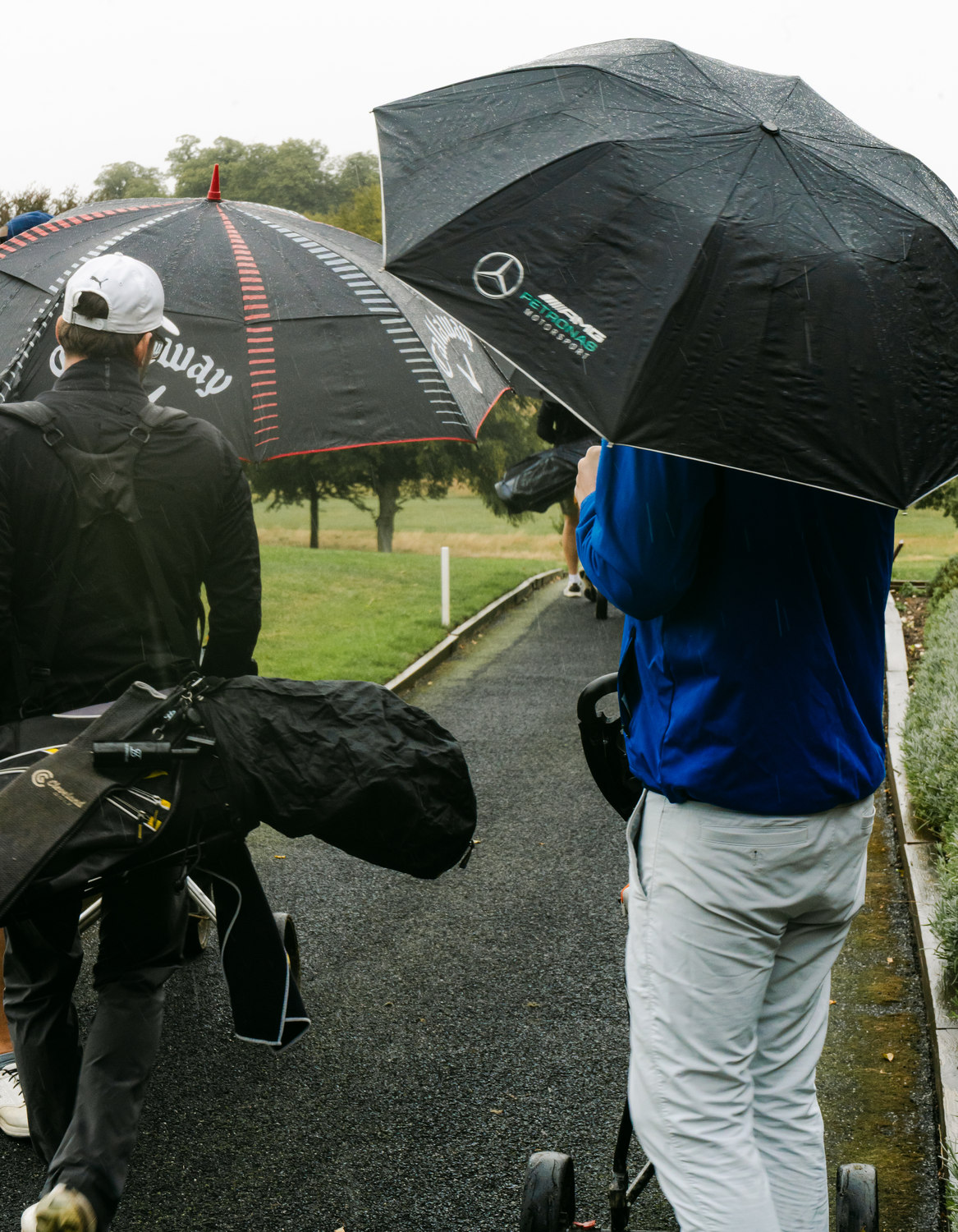
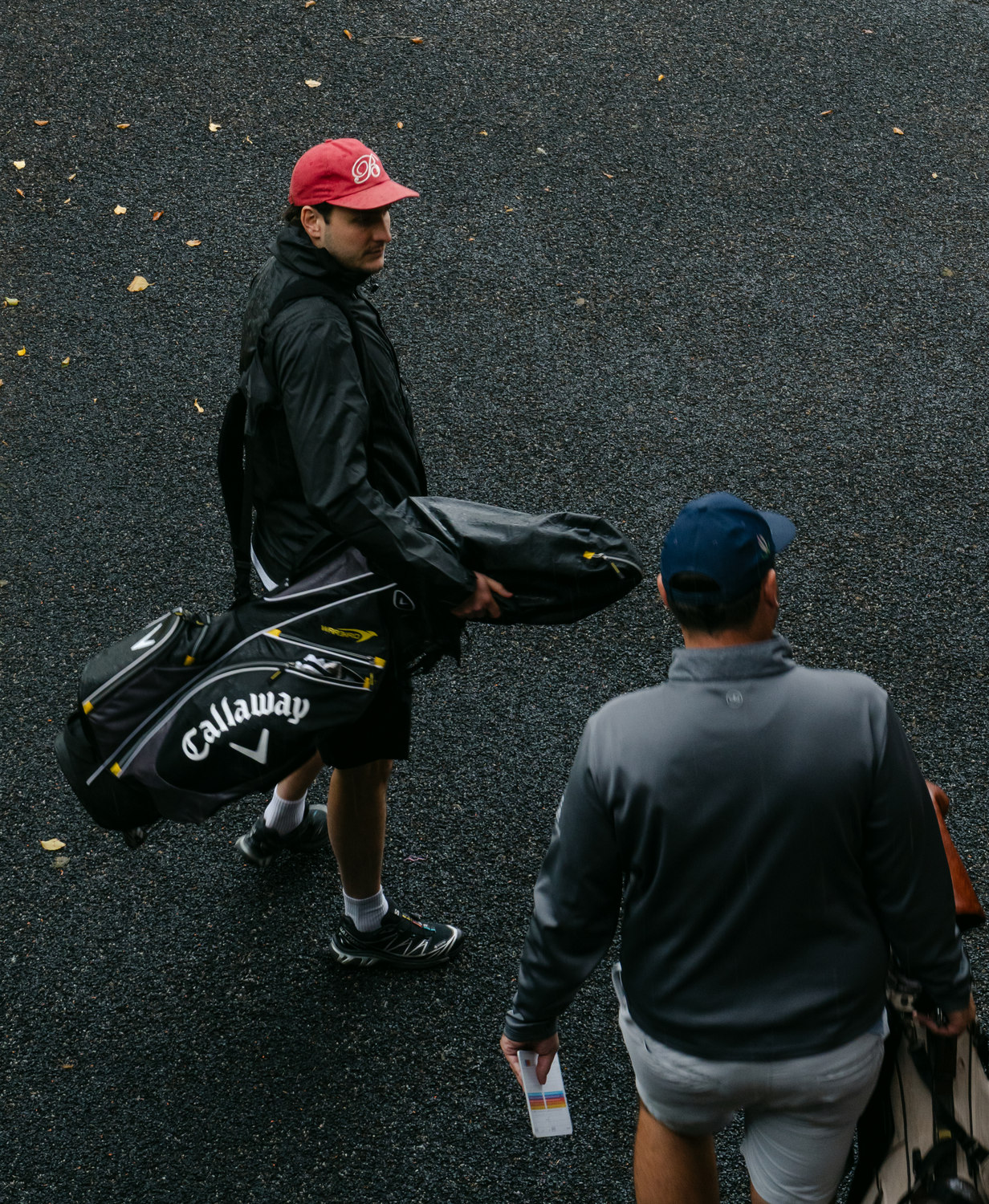
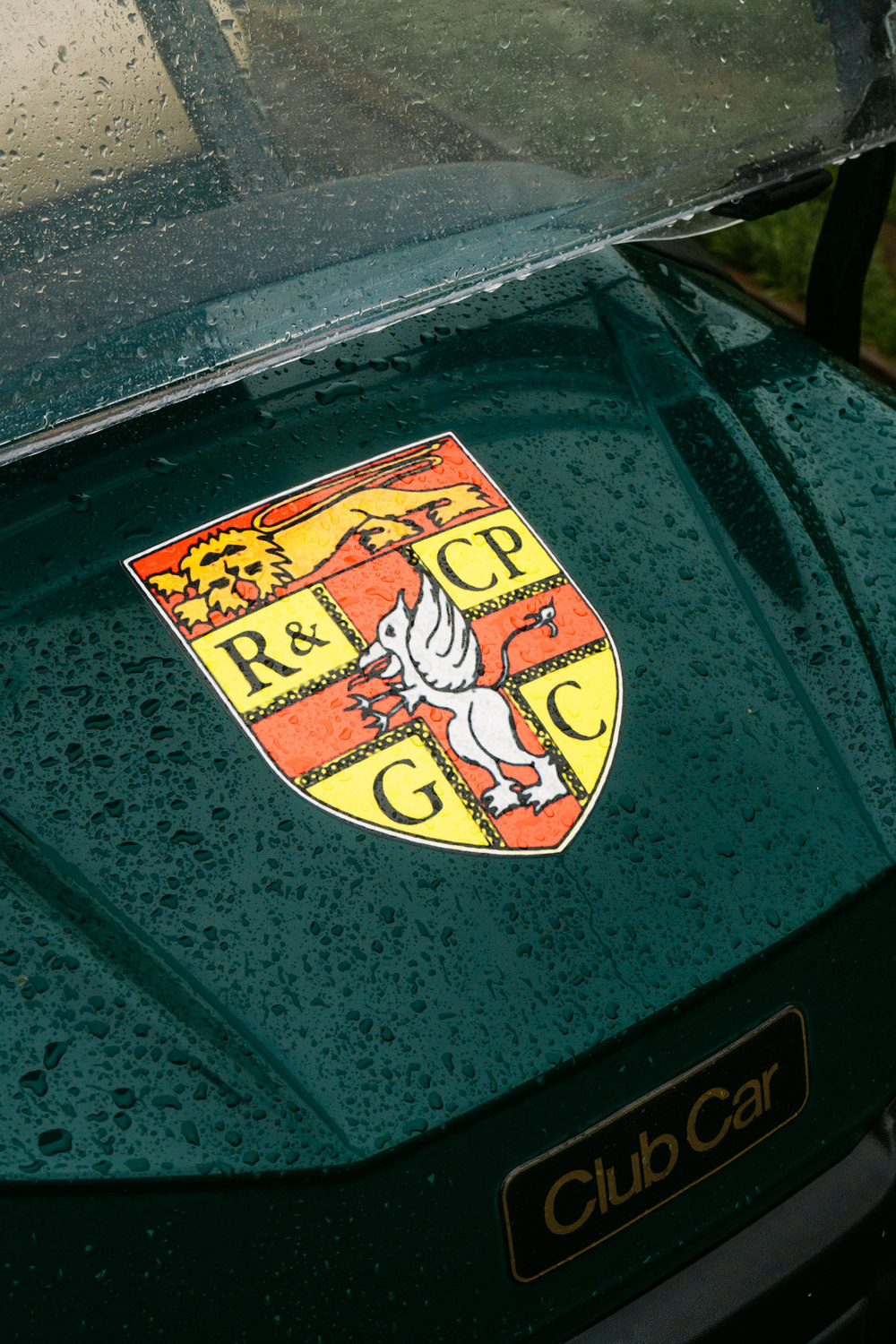
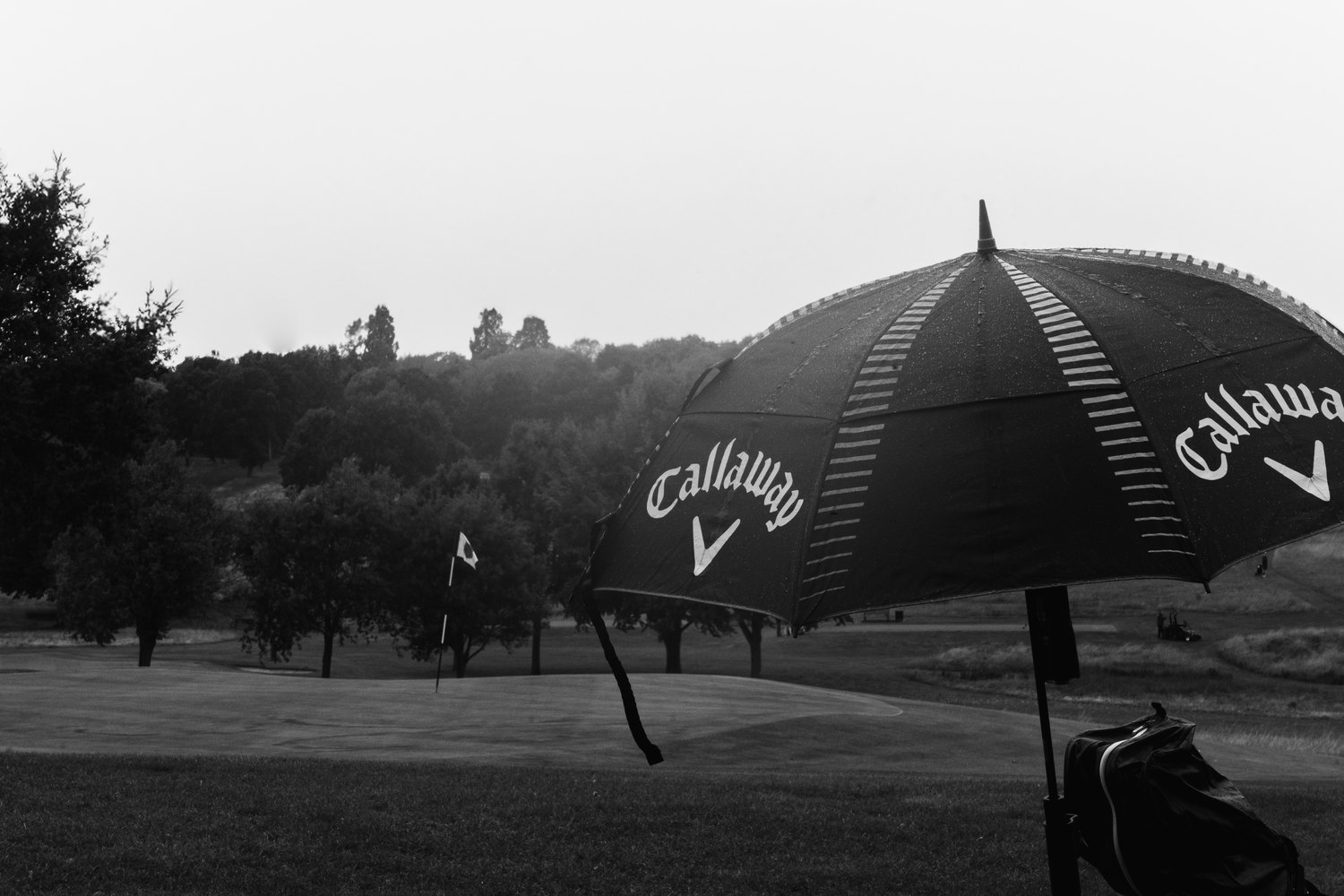
Umbrellas went up on the path before anyone had reached a fairway. Bags were carried rather than wheeled across the wet ground, and the club crest on the bonnet of a buggy sat beaded with water all morning.
Rain is the one part of a golf day that cannot be hosted. It arrives for everybody at once, and the four of them are wet together before they have finished exchanging names.
Five hours is a long time to spend with three people you have just met, and far too long to spend in silence.
Golf leaves gaps. The walk to the next shot. The wait on a blind tee. The minute spent standing still while somebody else reads a putt.
Conversation fills them because there is nothing else available to fill them with. Very little of it is about golf.
By the back nine the group has a shape. Who hits first. Who talks. Who turns out to be good.
A phone comes out on the fairway and somebody is photographed mid-swing by a man he met at half past seven.
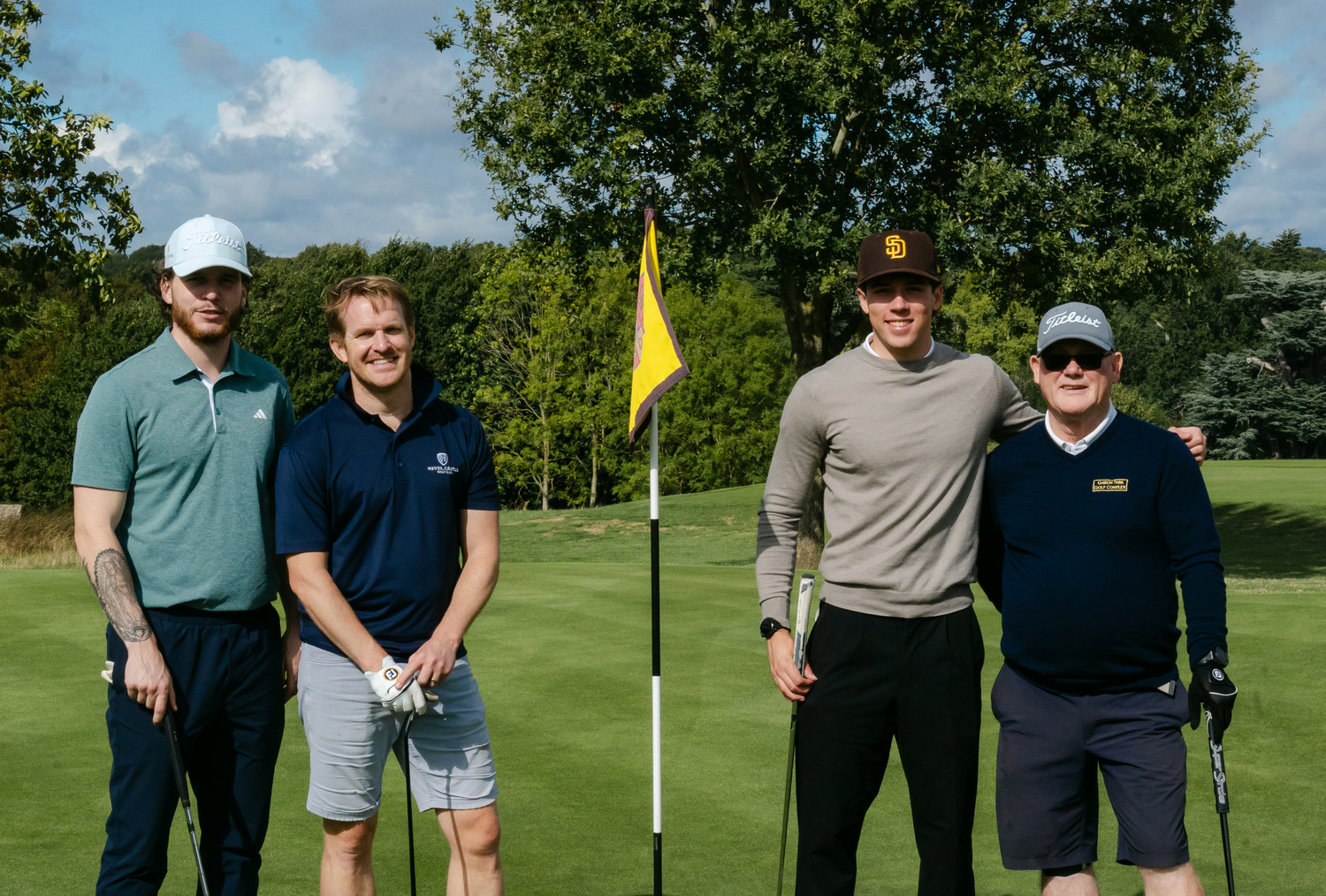
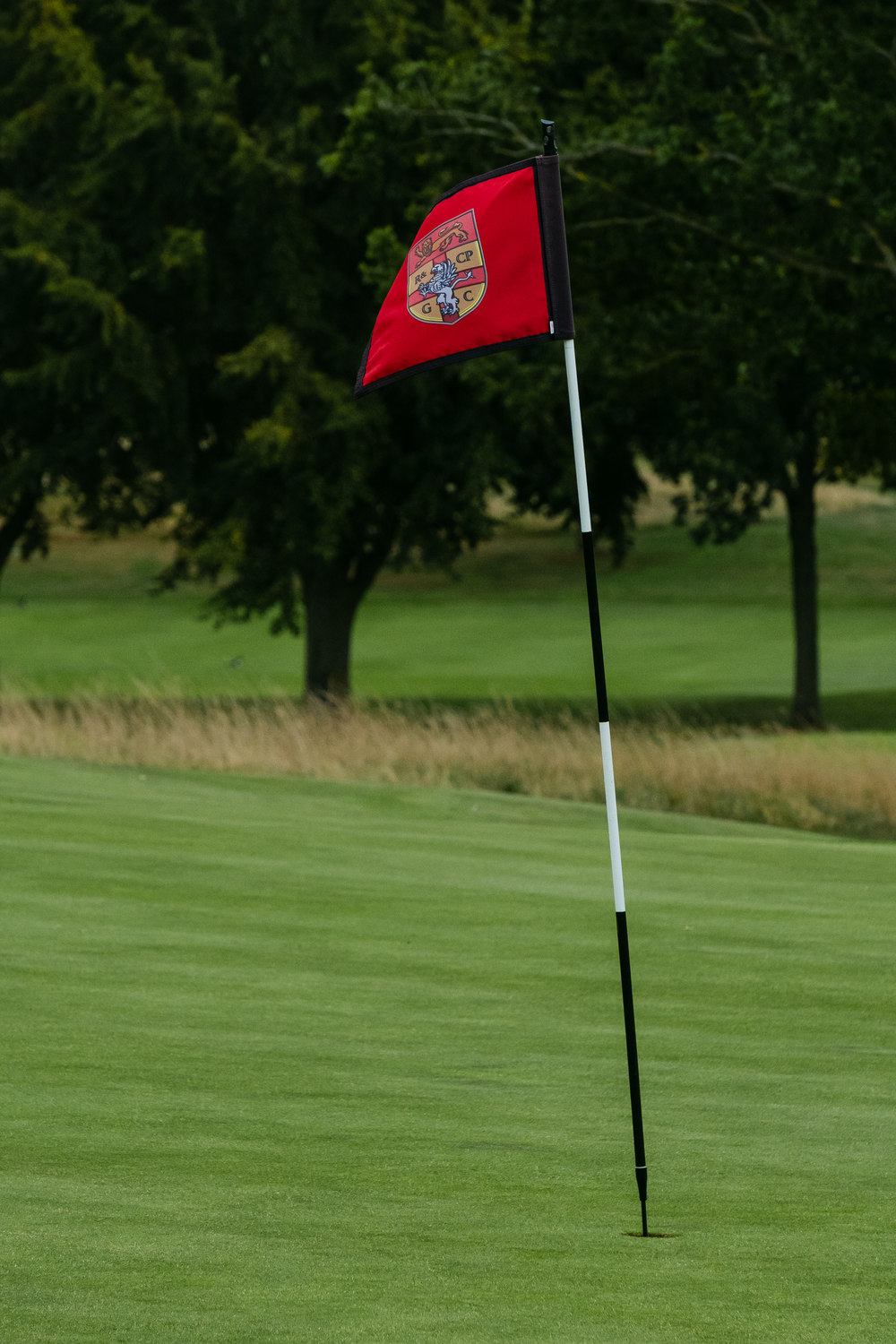
At the flag they stand together for a picture, the way groups do at the end of a round.
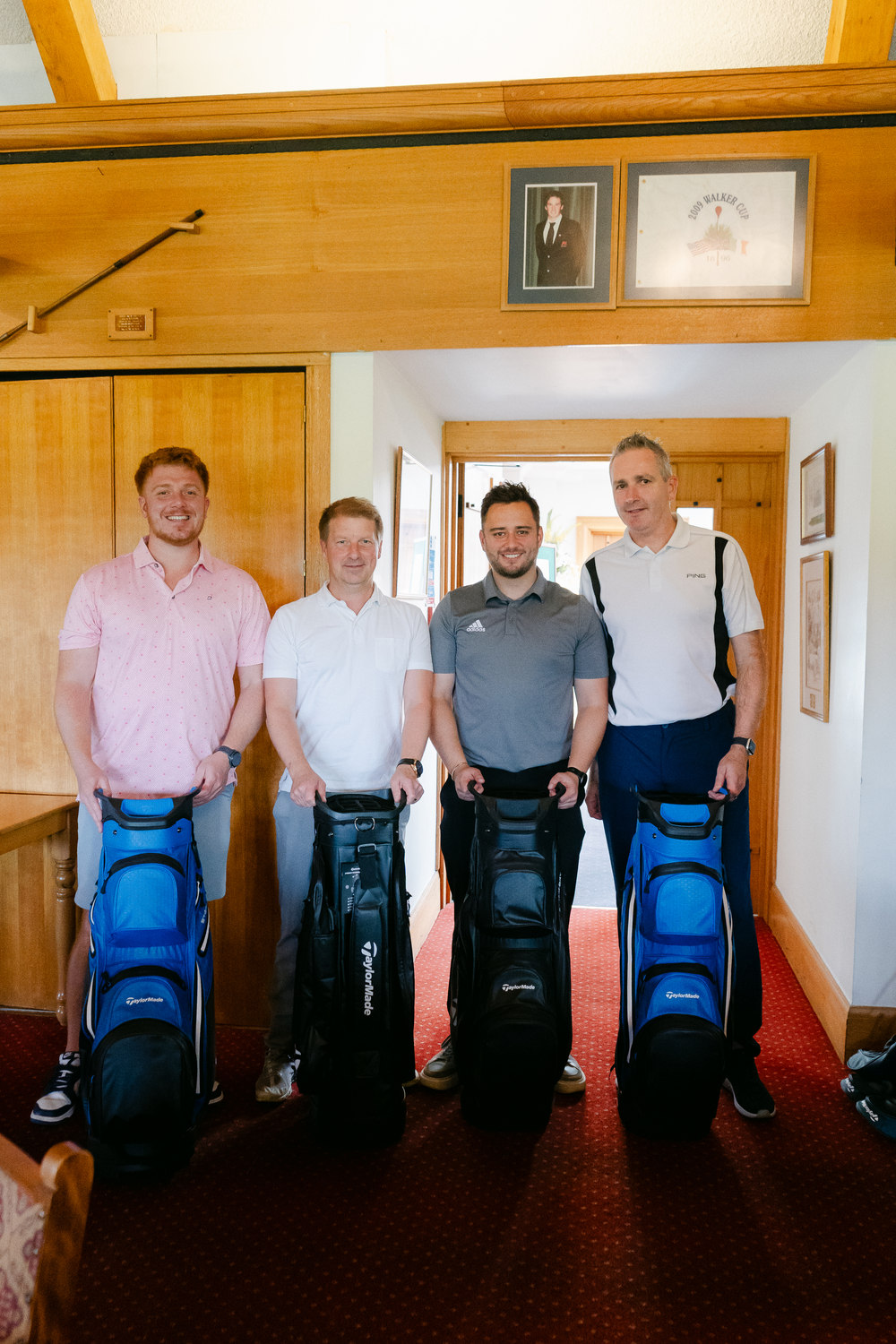
Trolleys return to the clubhouse four at a time.
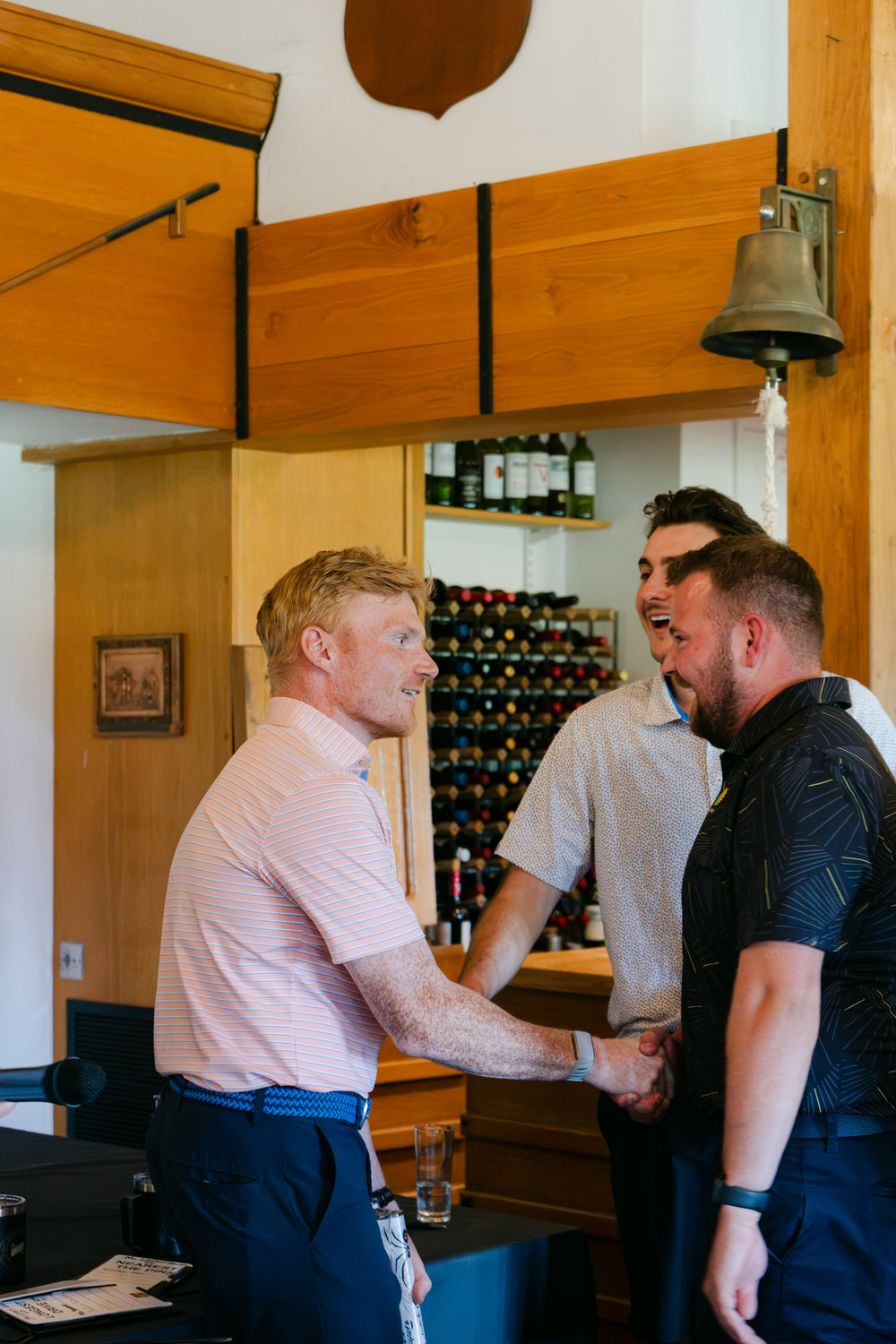
Bags are stacked in the corridor, shoes are changed, hands are shaken in a room with a bell on the wall.
The names on the sheet are no longer a draw. The next conversation between them will be about work.
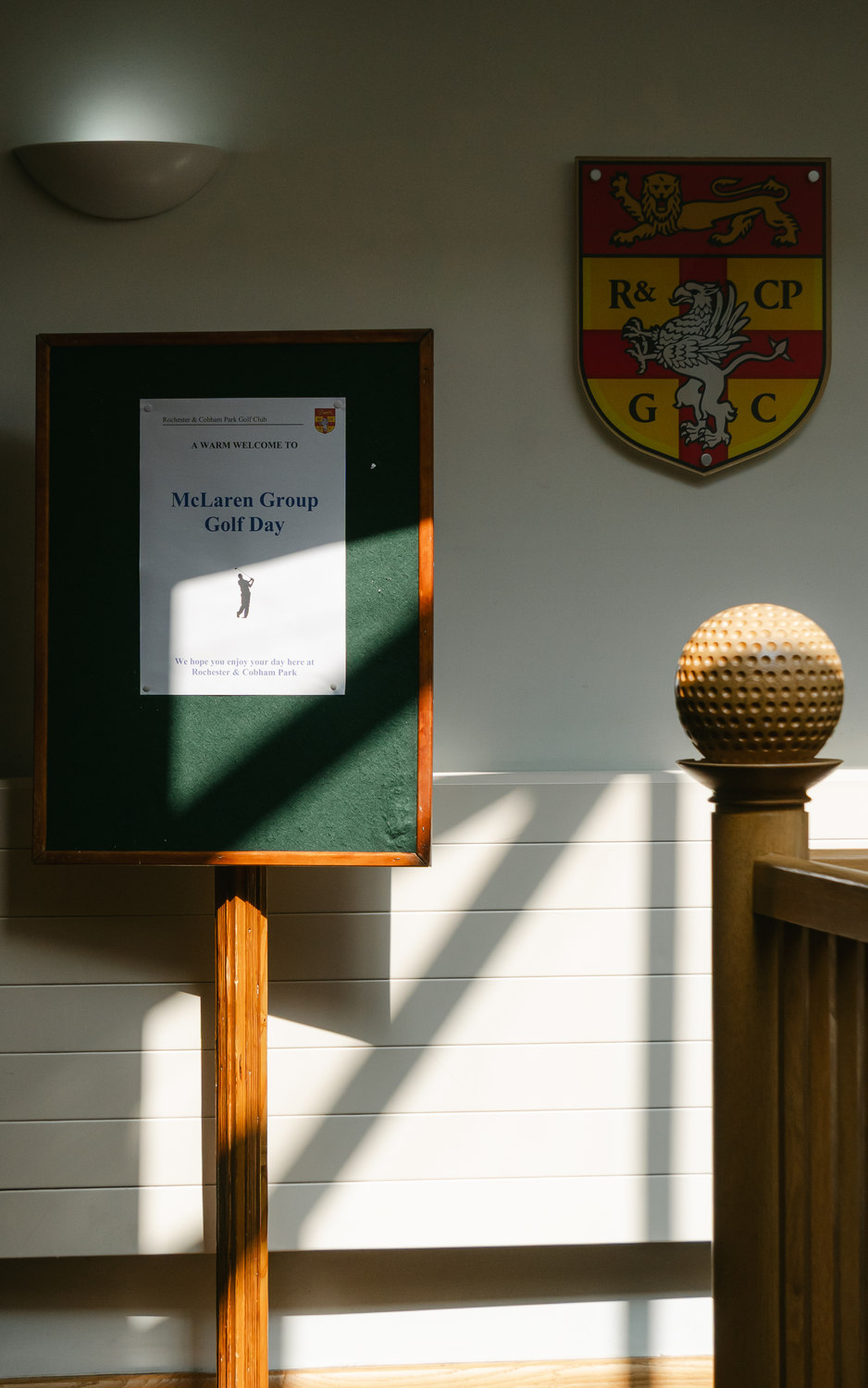
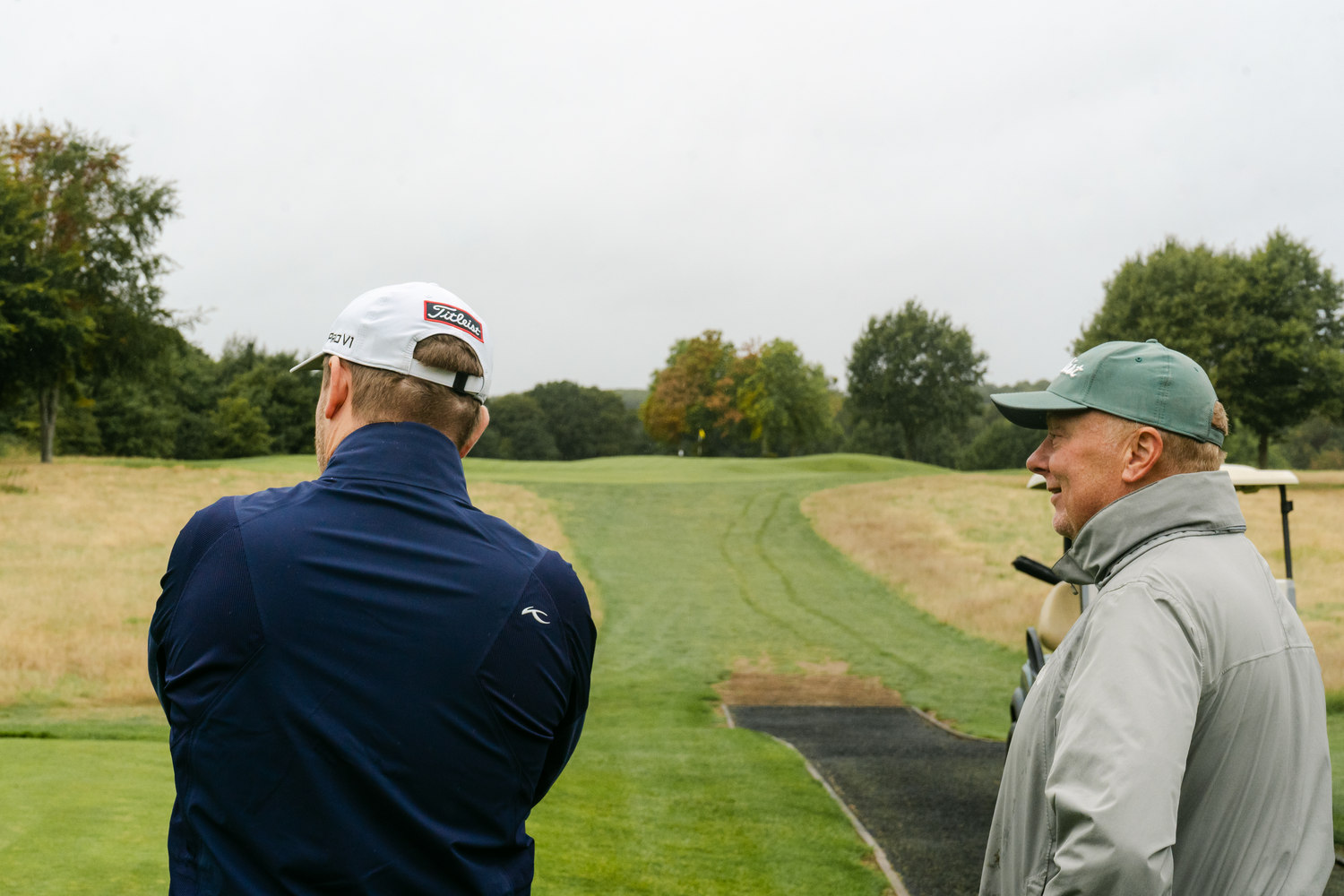
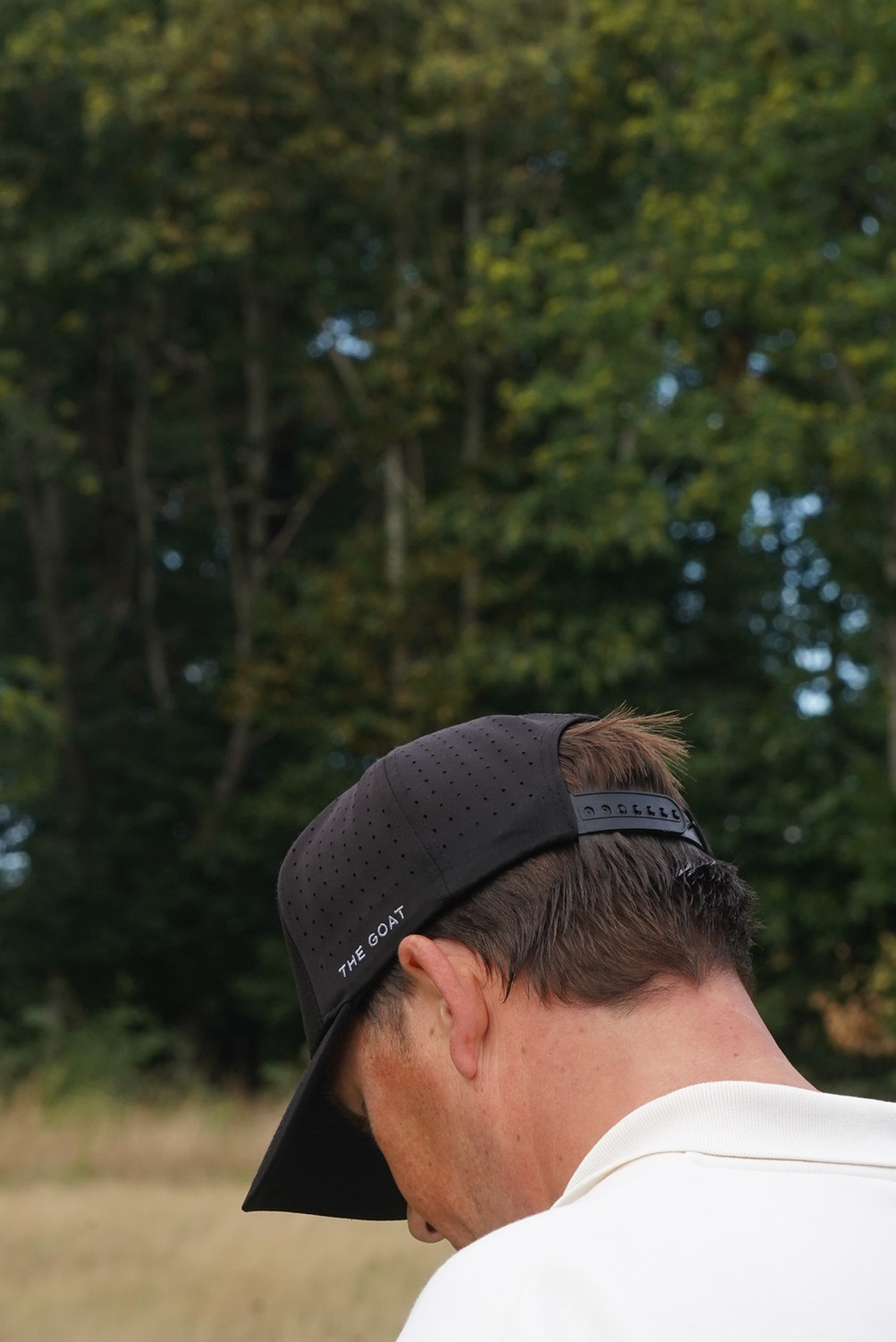
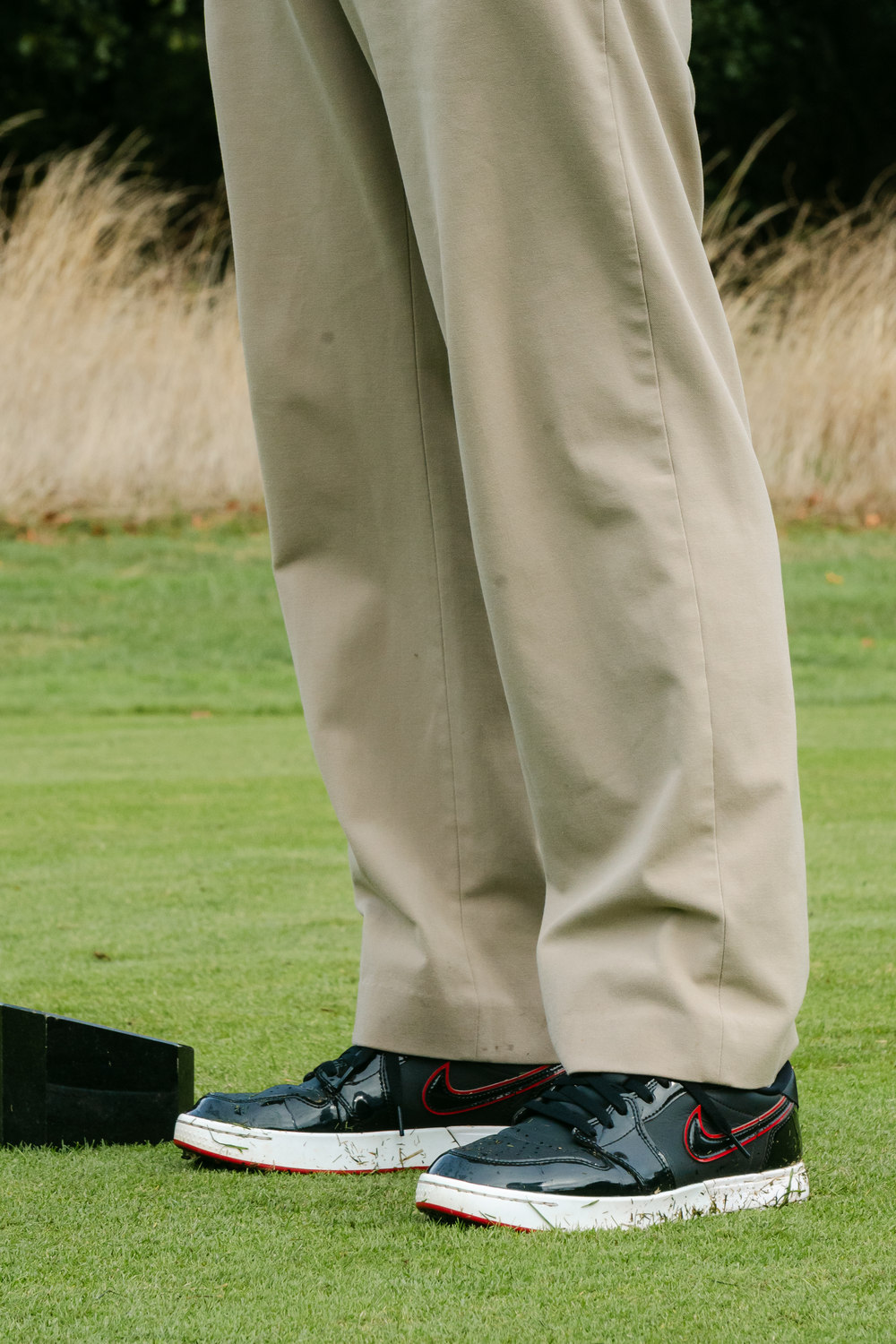
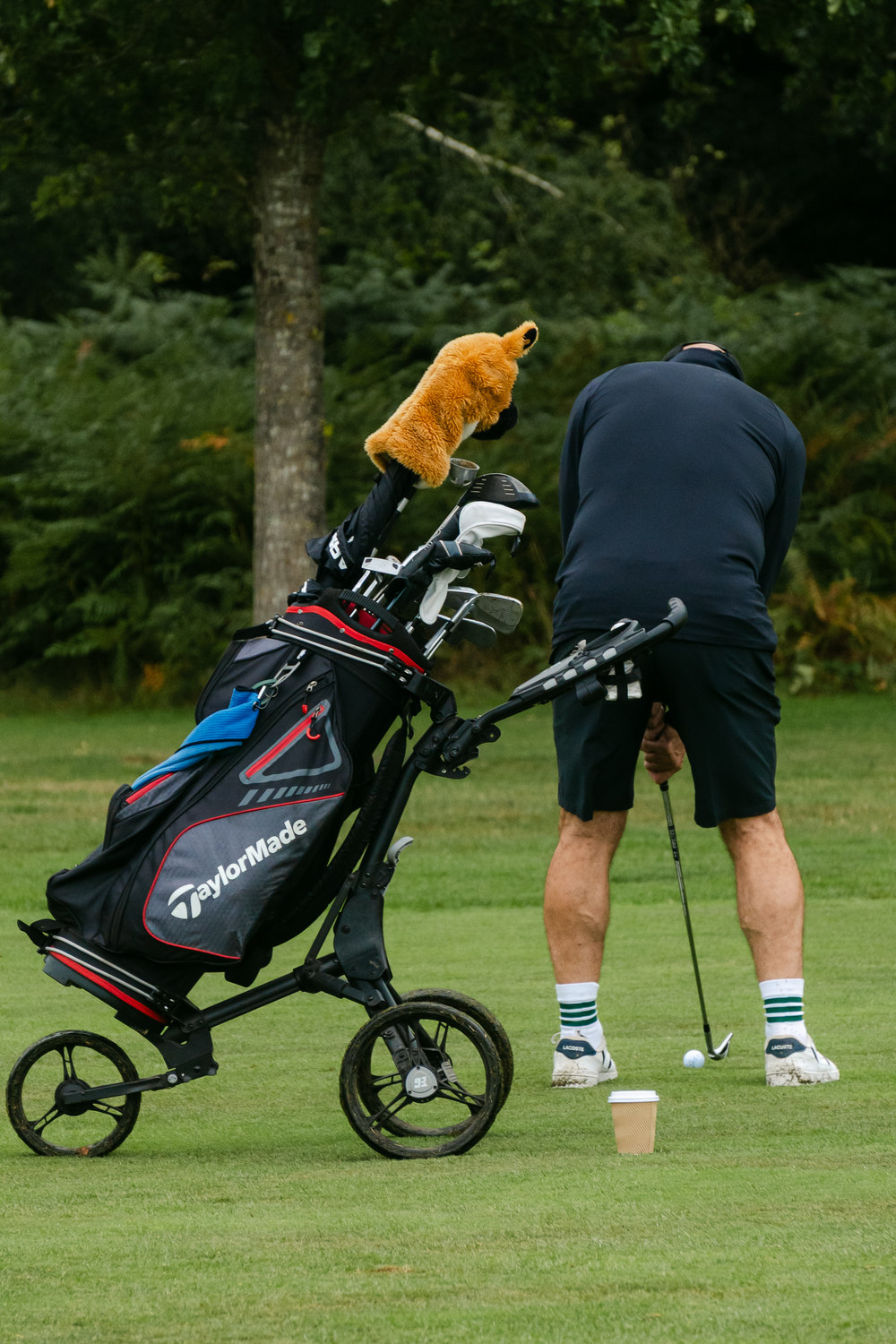
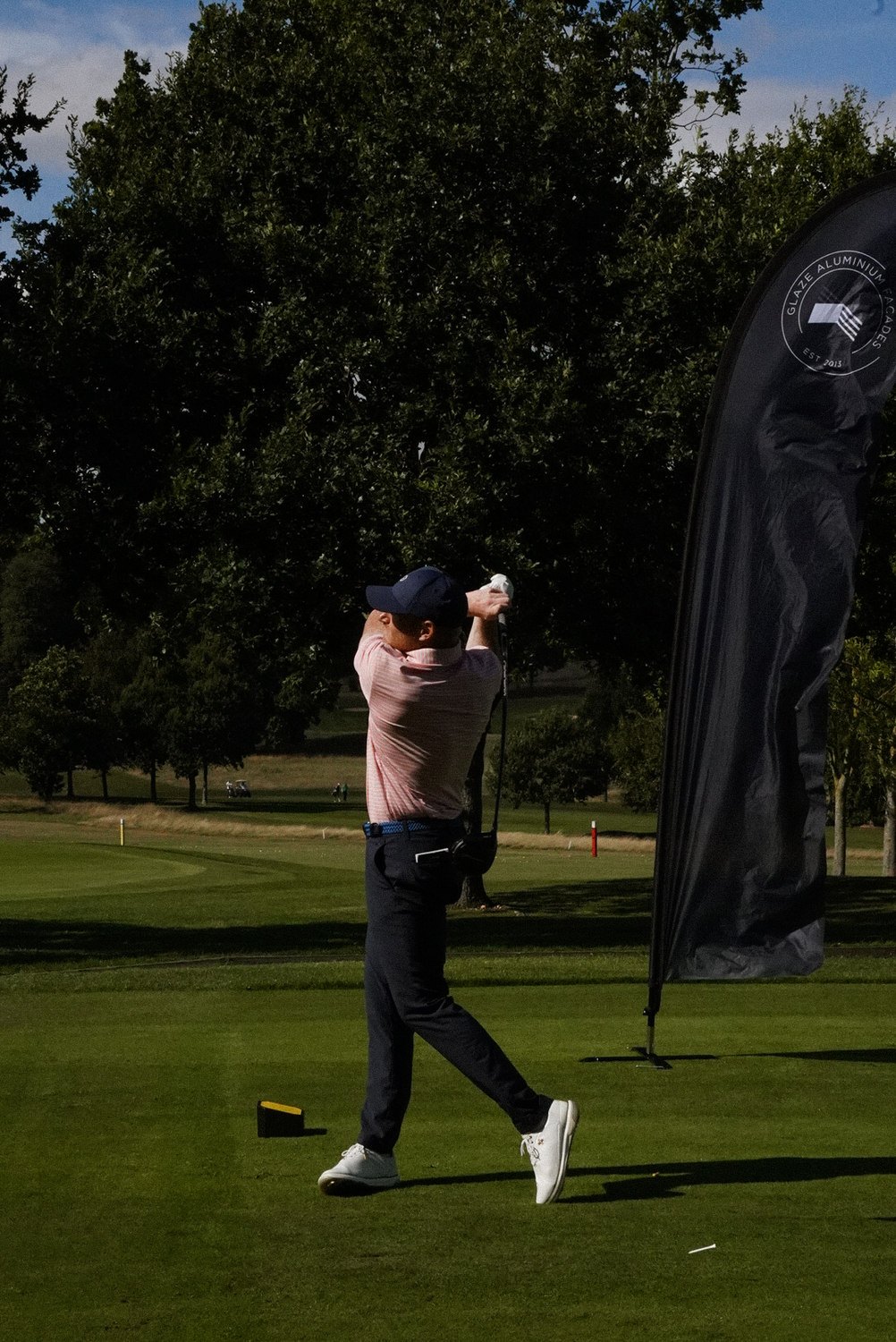
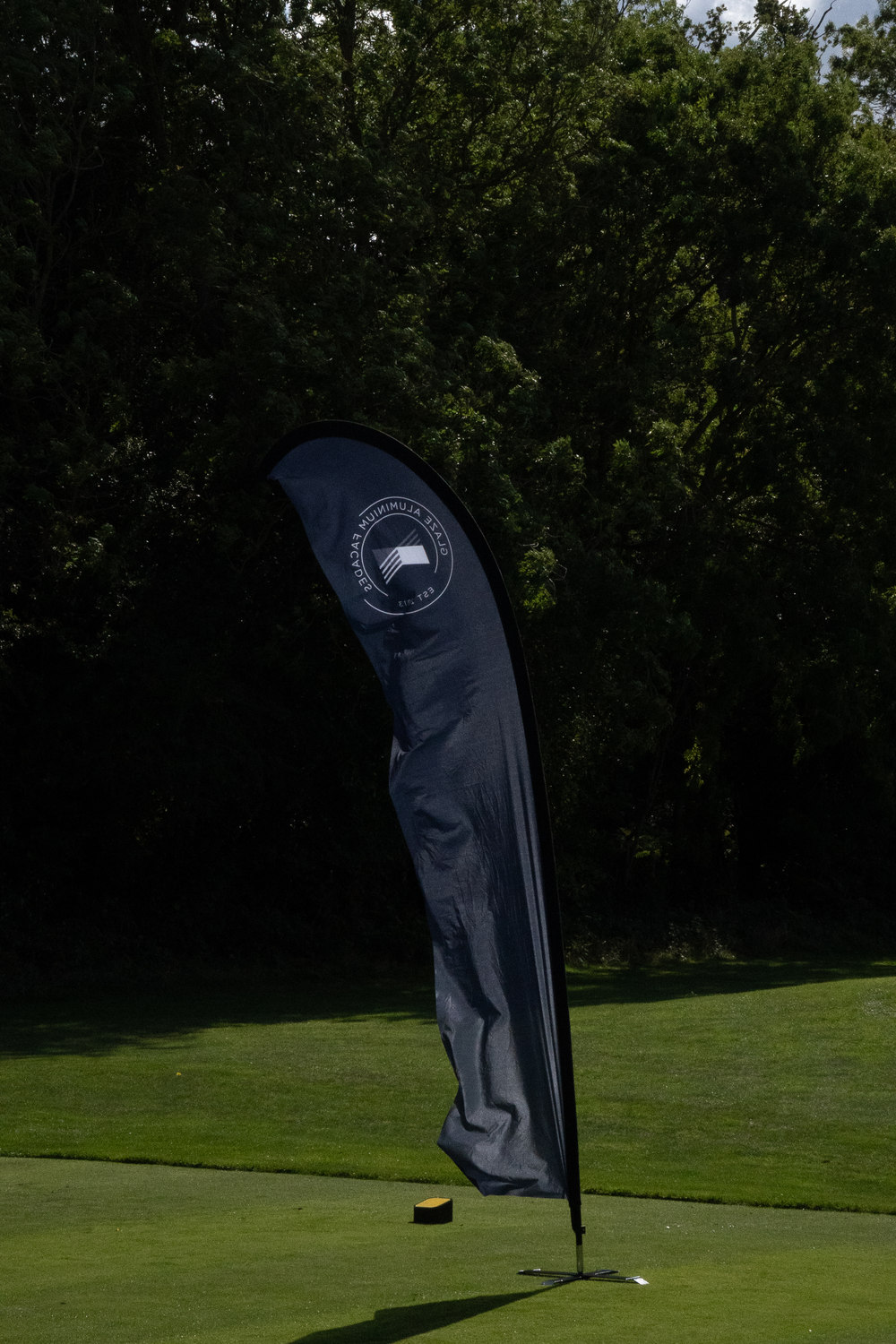
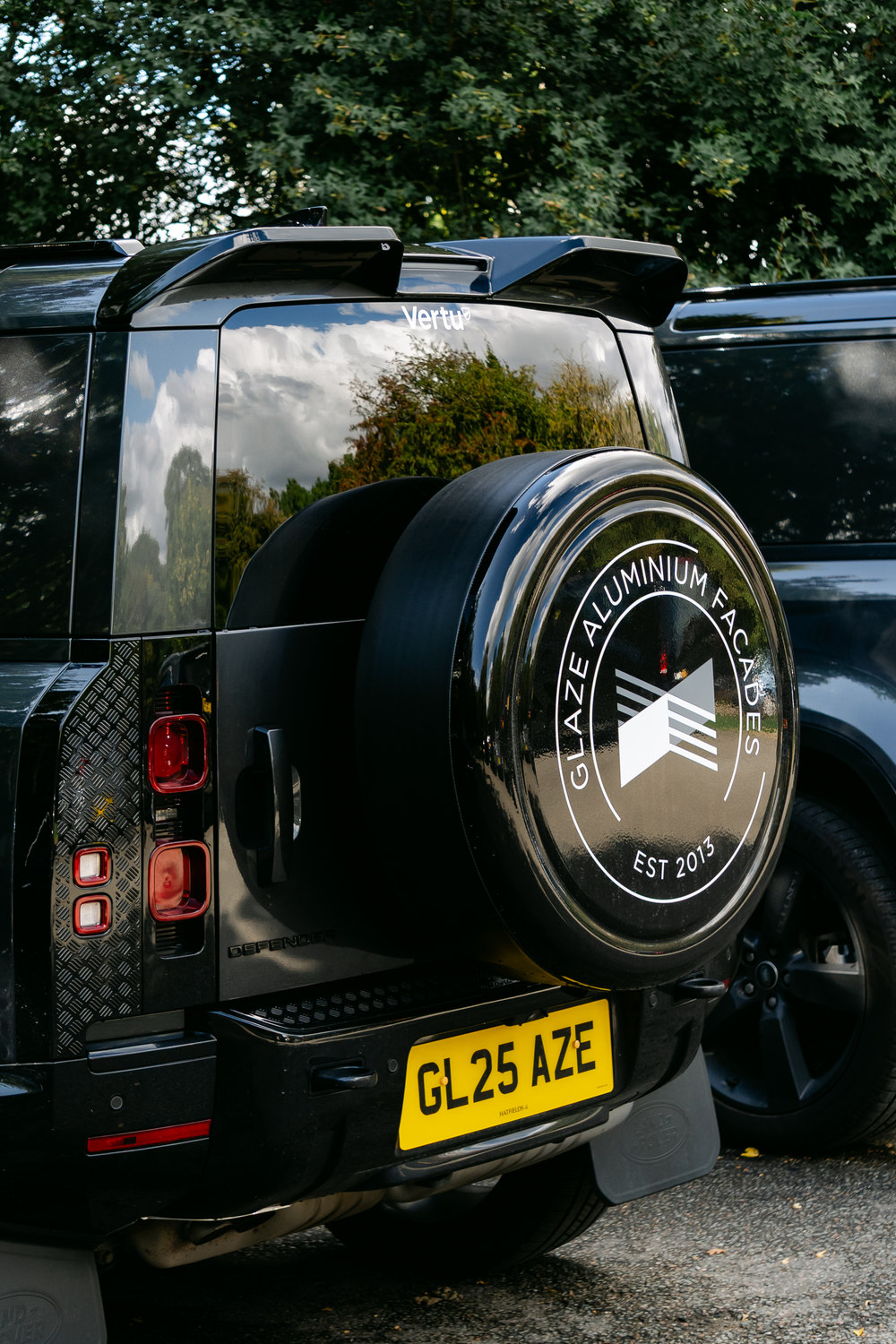

The day was the McLaren Construction Group Golf Day, held on 17 September 2026 at Rochester & Cobham Park in Kent and sponsored by Glaze Aluminium Facades, which was joined by five of its key supply-chain partners: Press Glass, OTIIMA, RGB, Weldall and Liquid Peel. Construction is an industry of long-distance relationships: a facade is drawn in one place, extruded in another, glazed in a third, and fitted on site by people who arrive after the glass has gone in. A golf day is one of the few occasions on which those people stand next to each other.
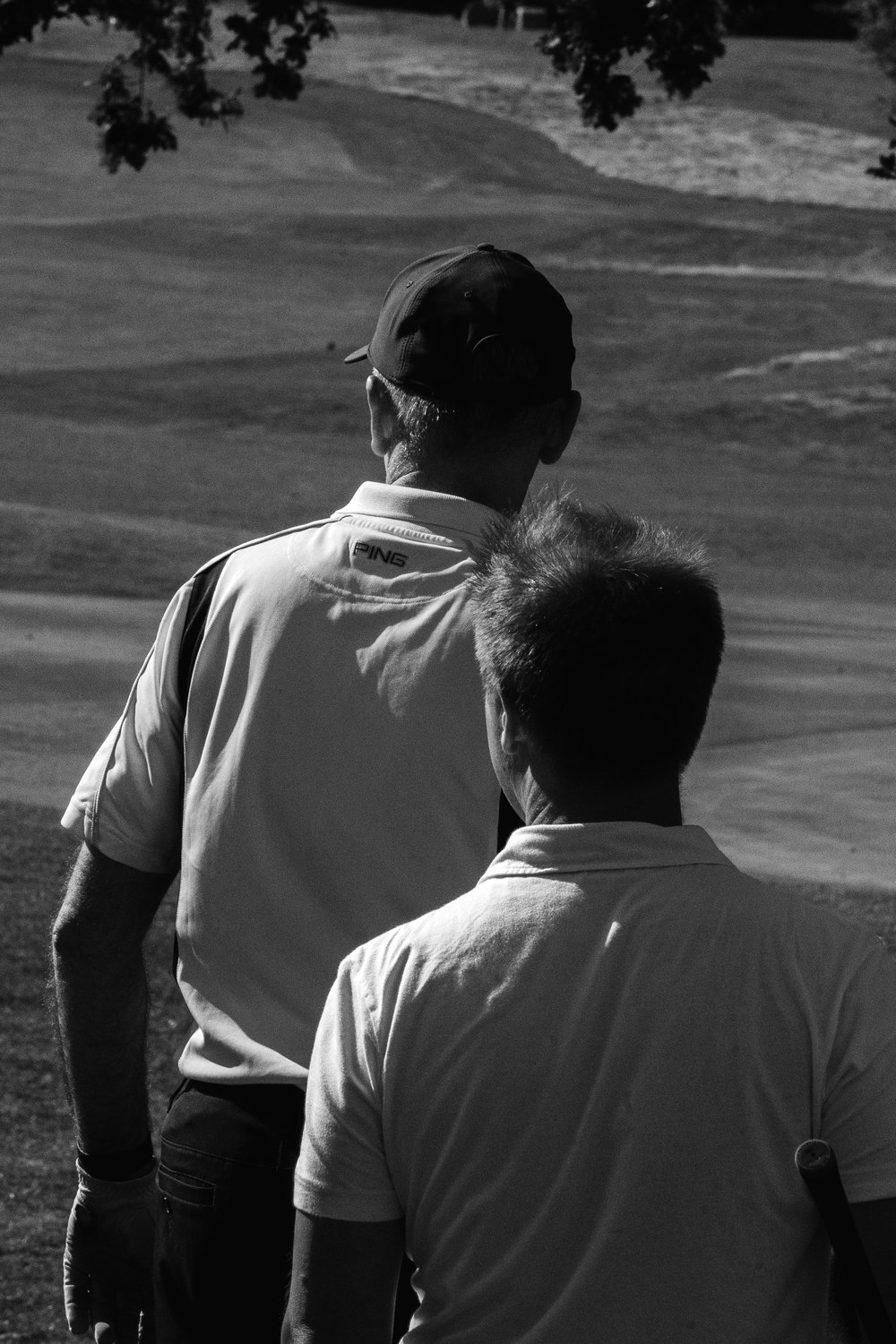
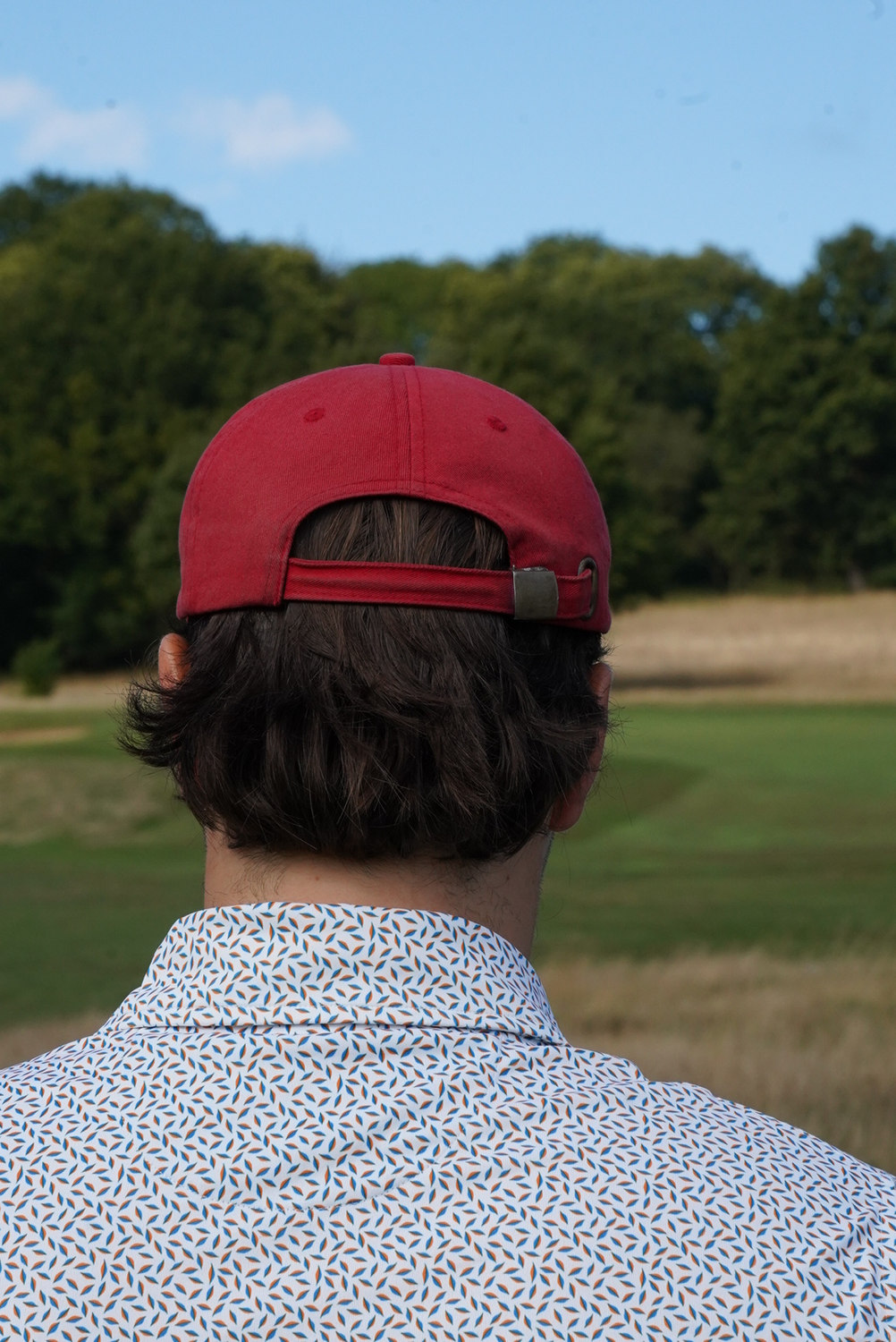
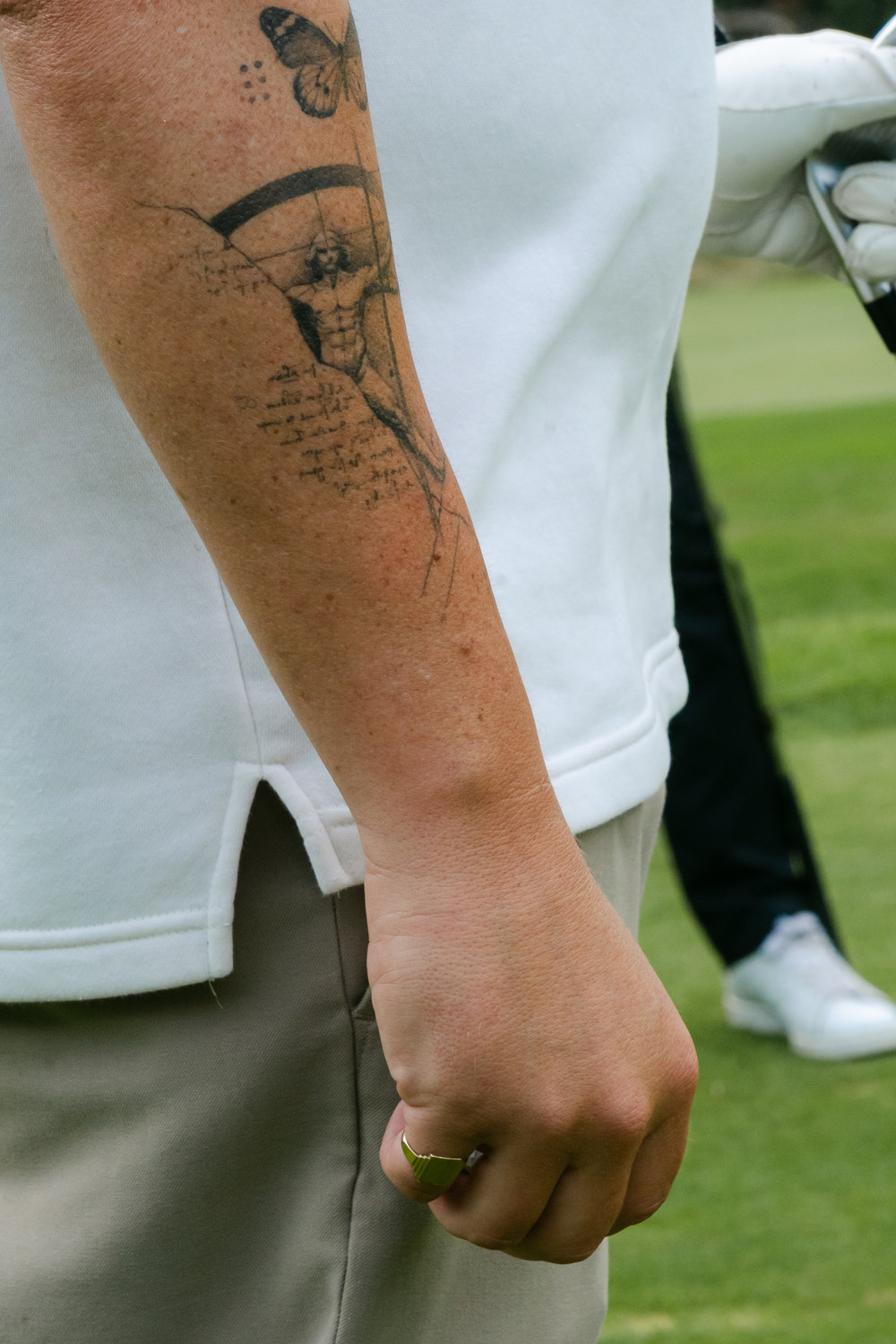
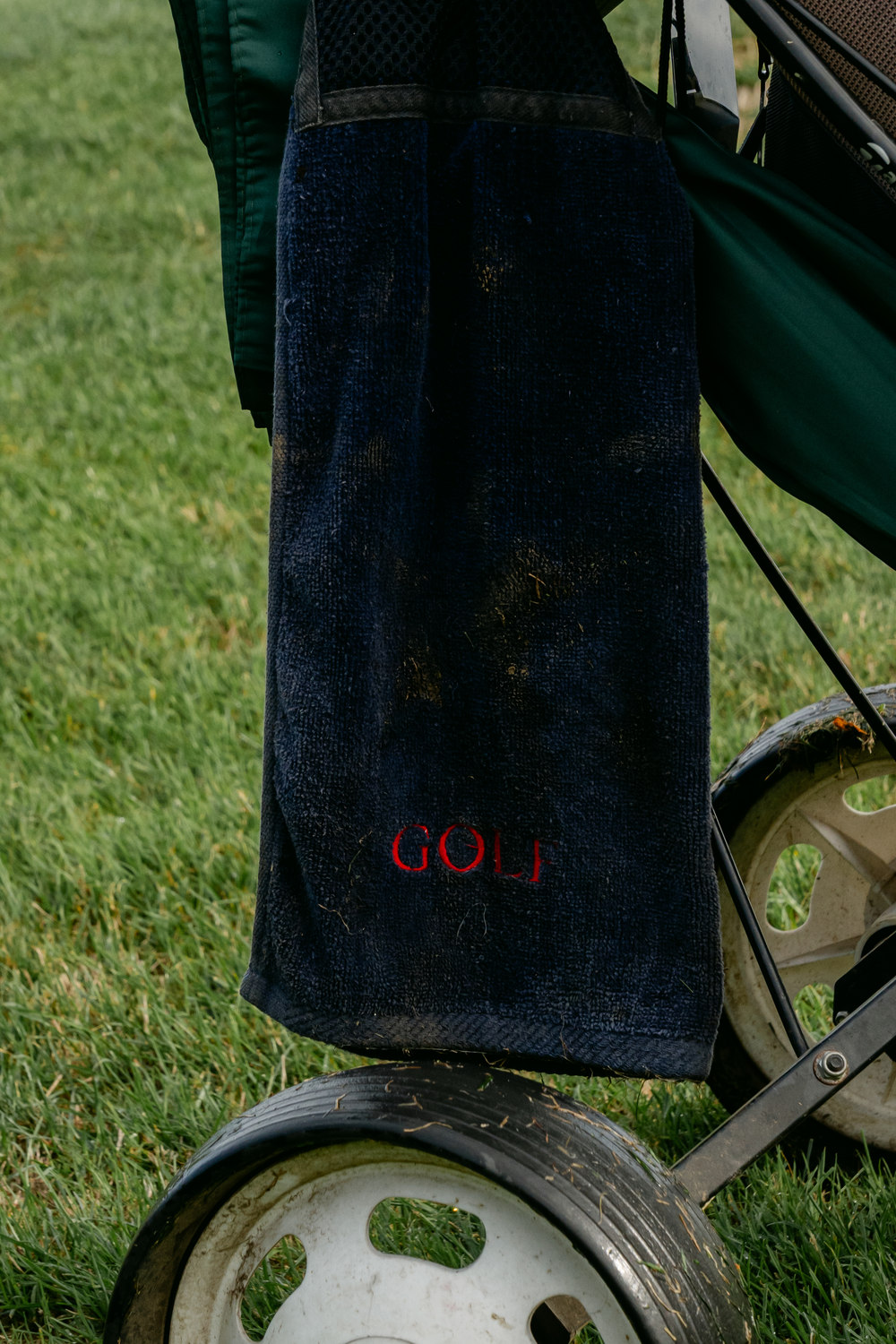
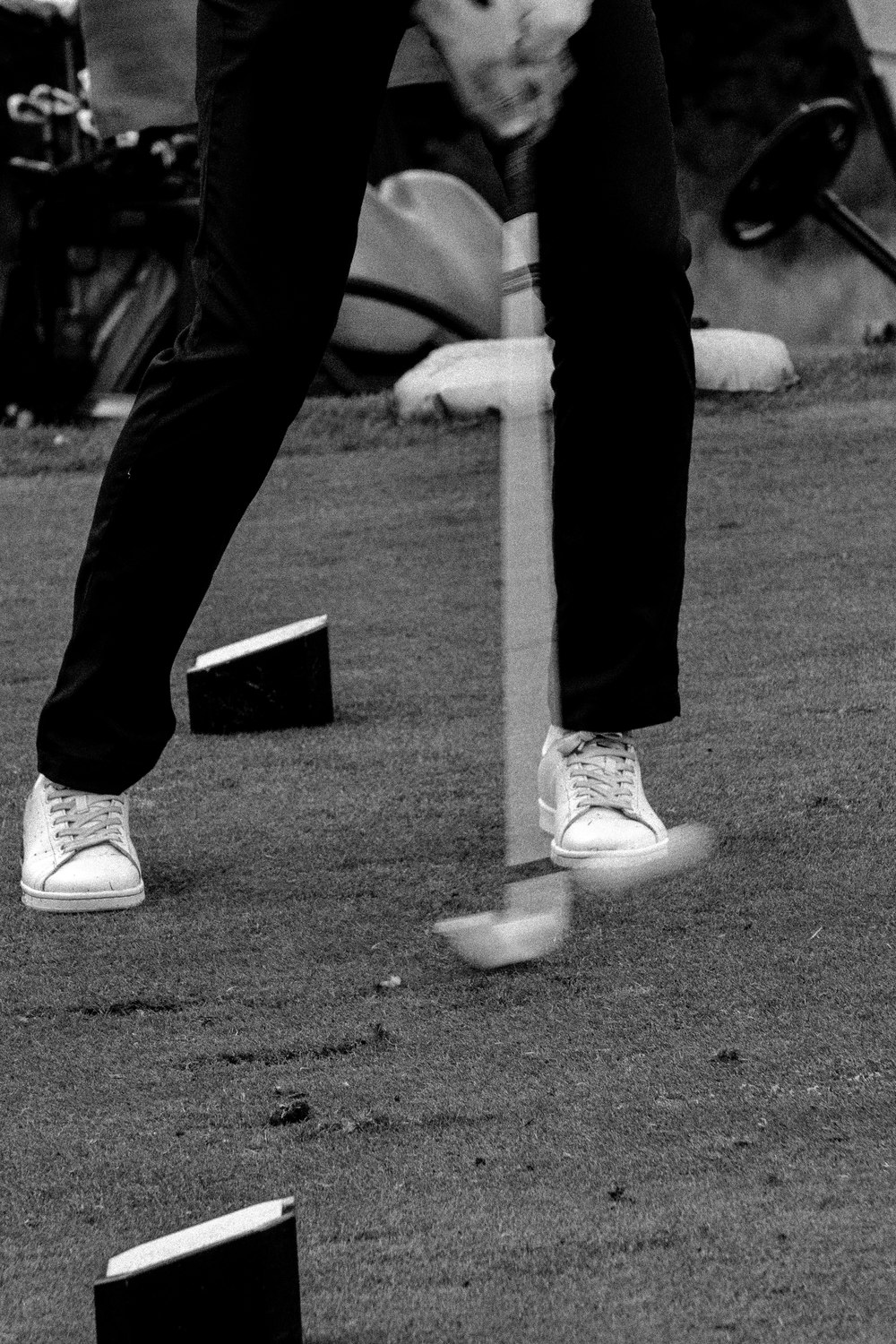
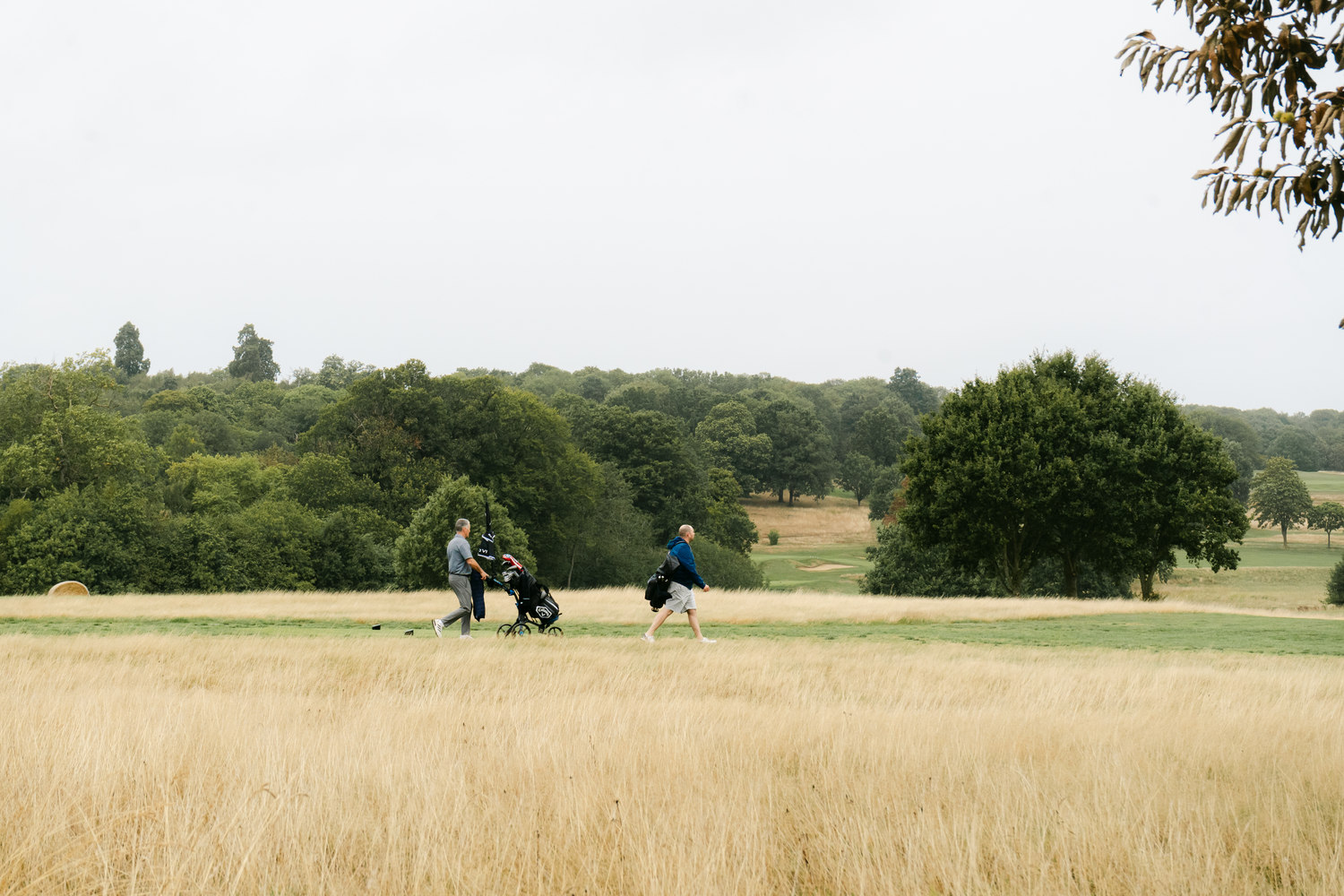
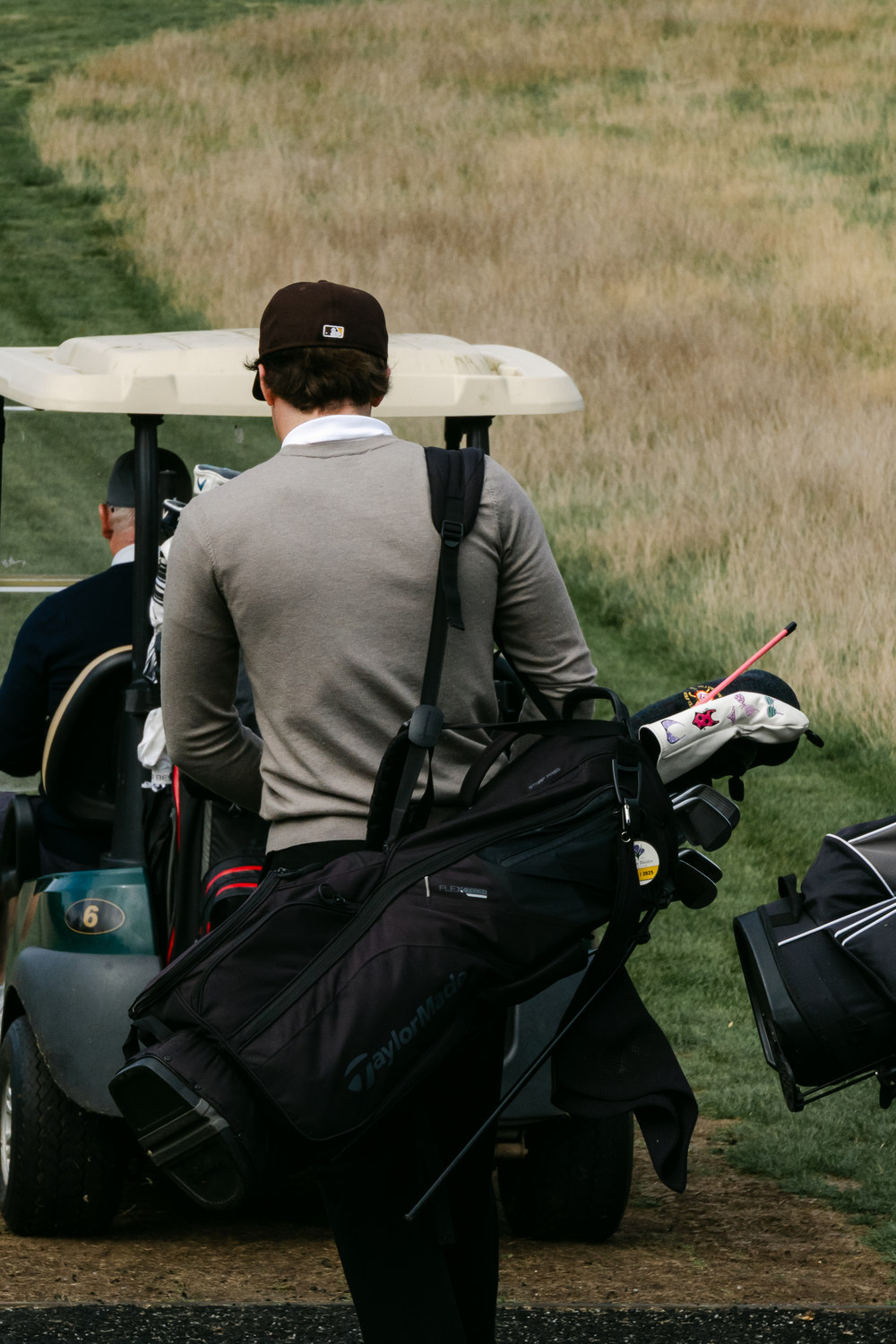
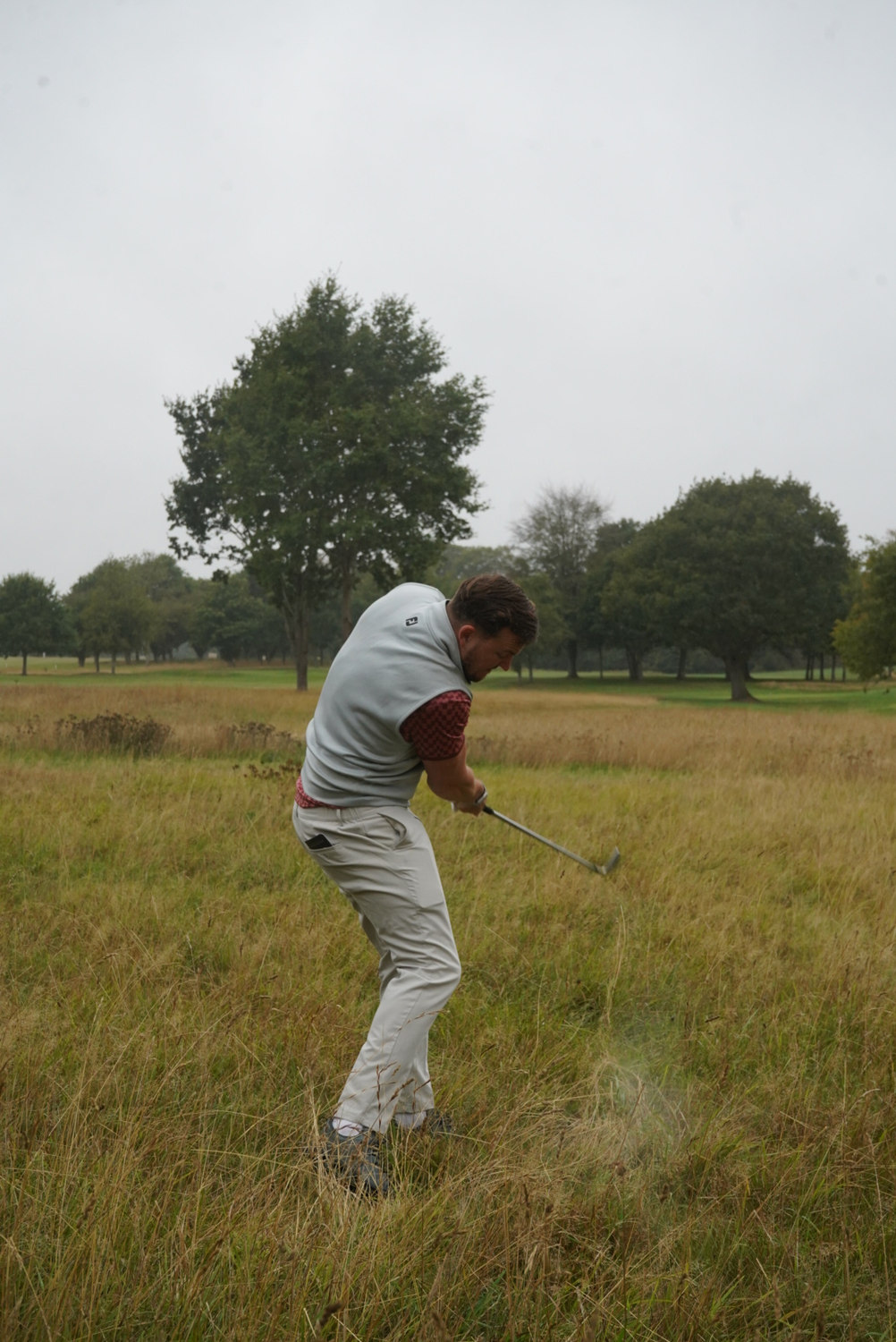
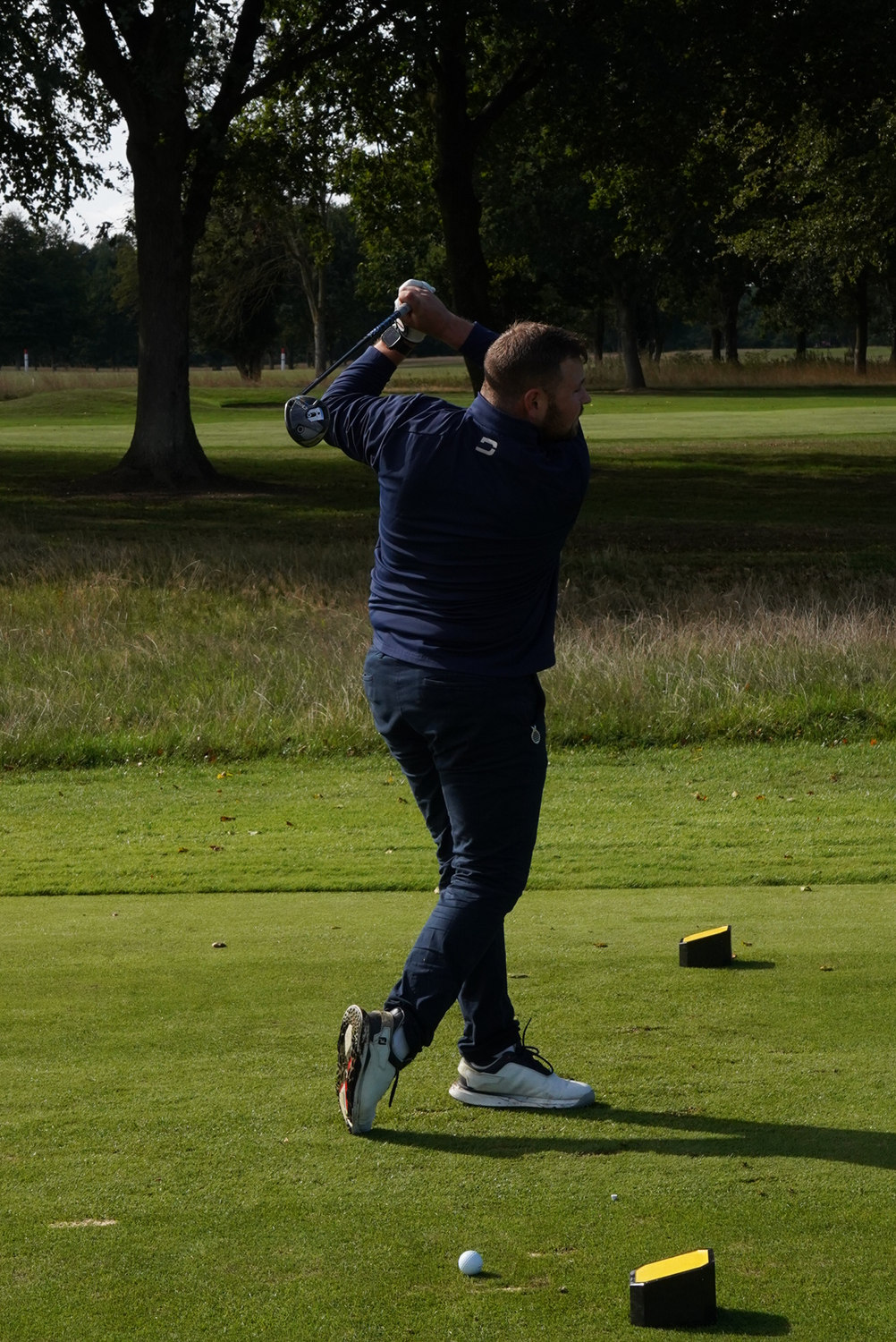
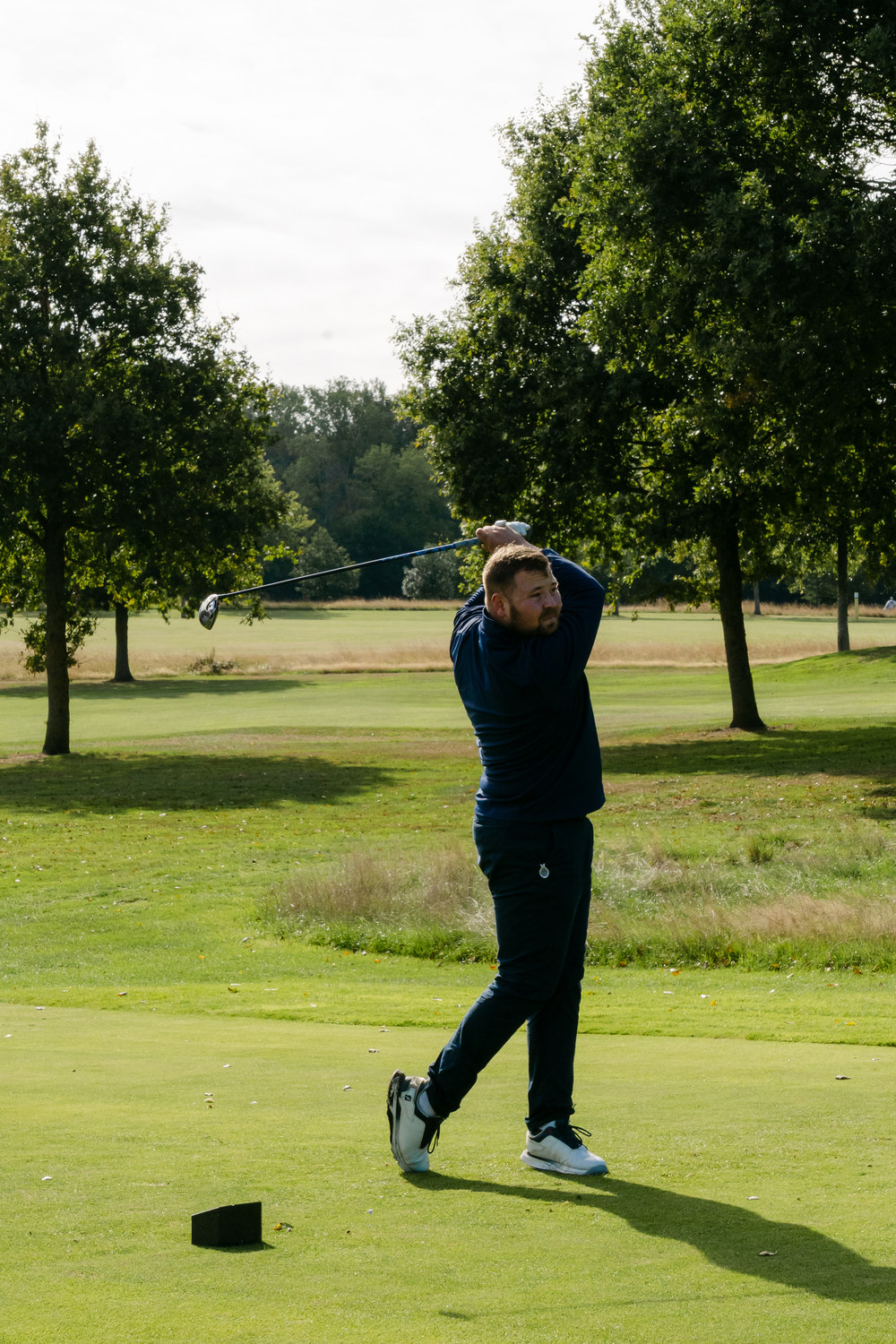
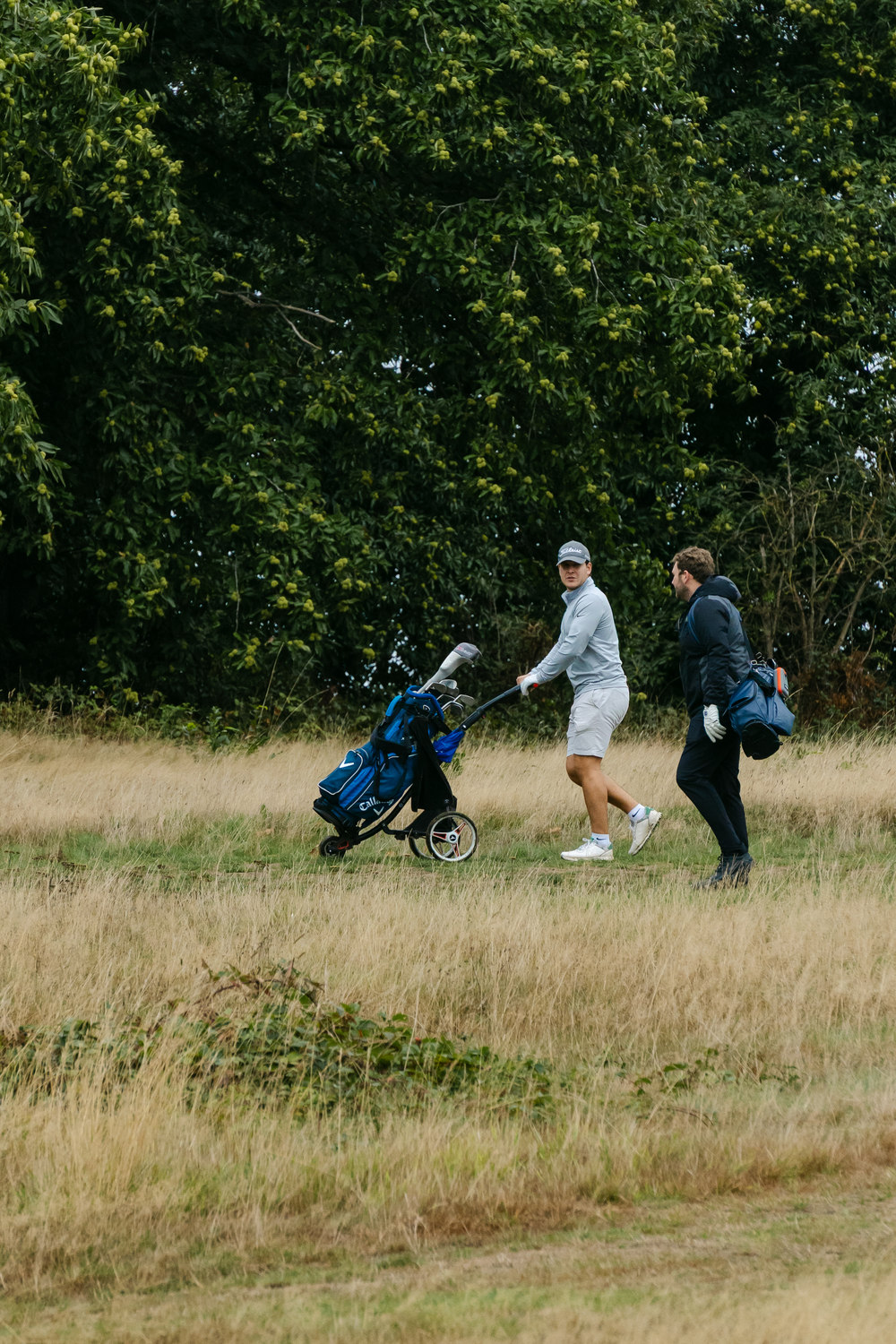
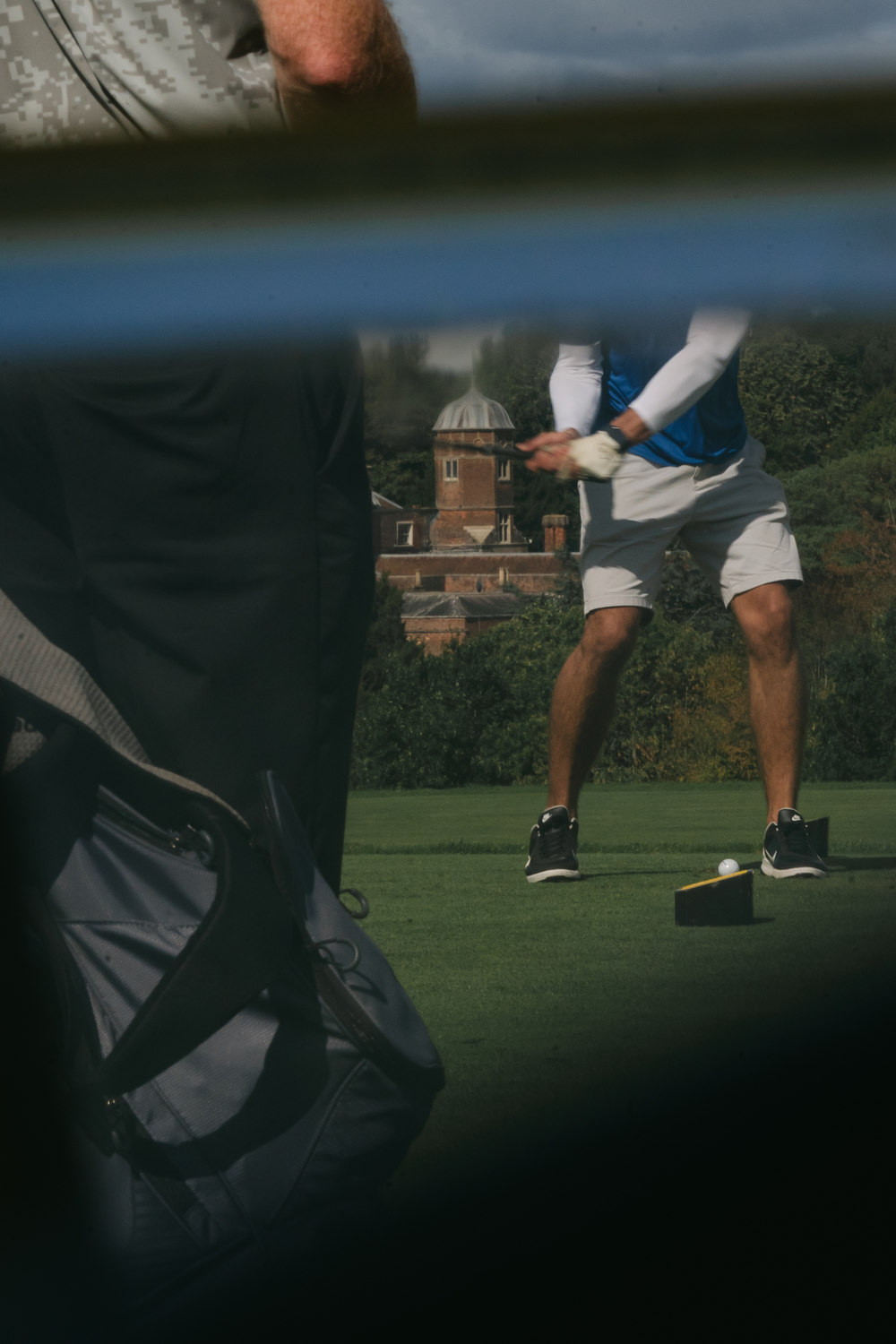
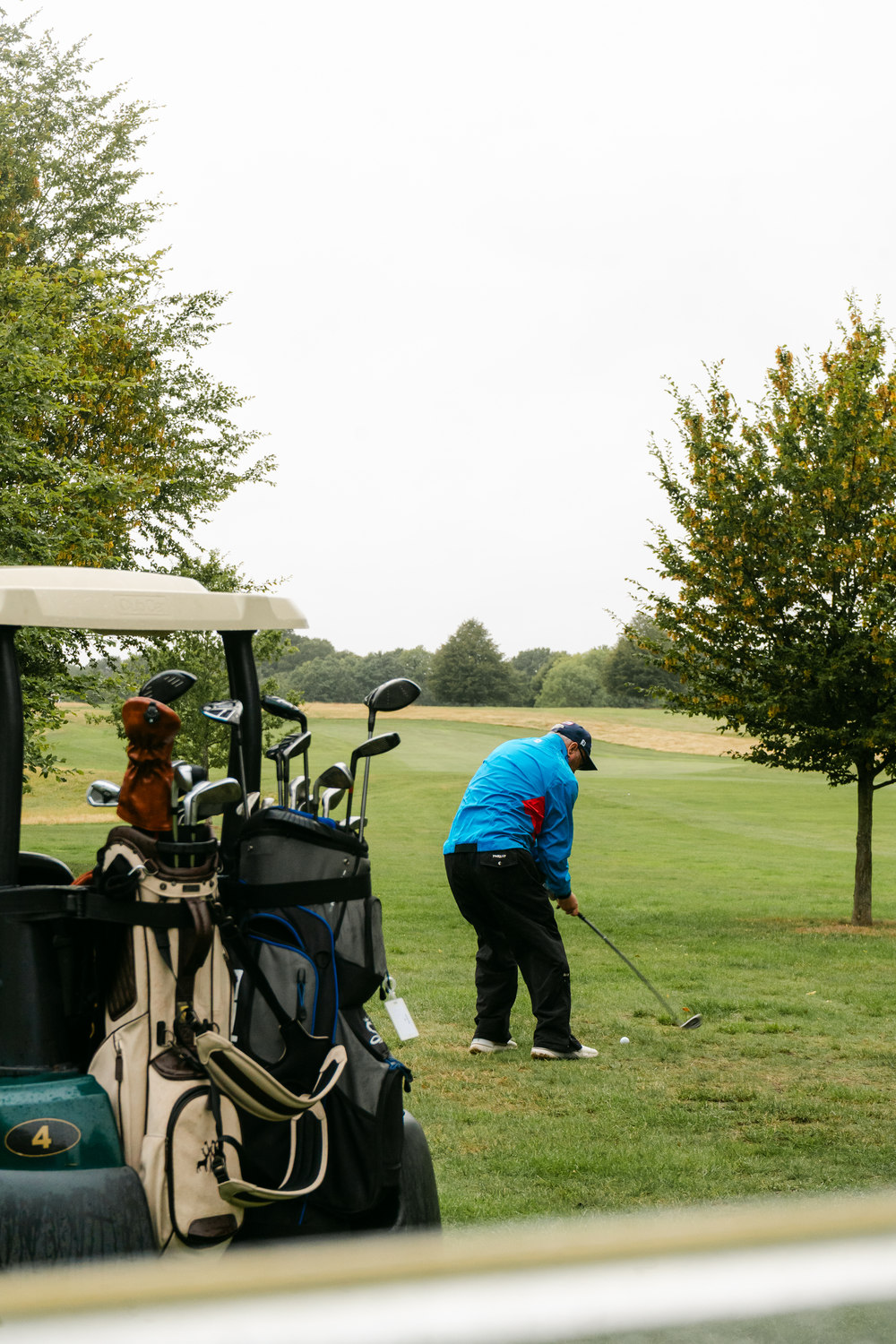
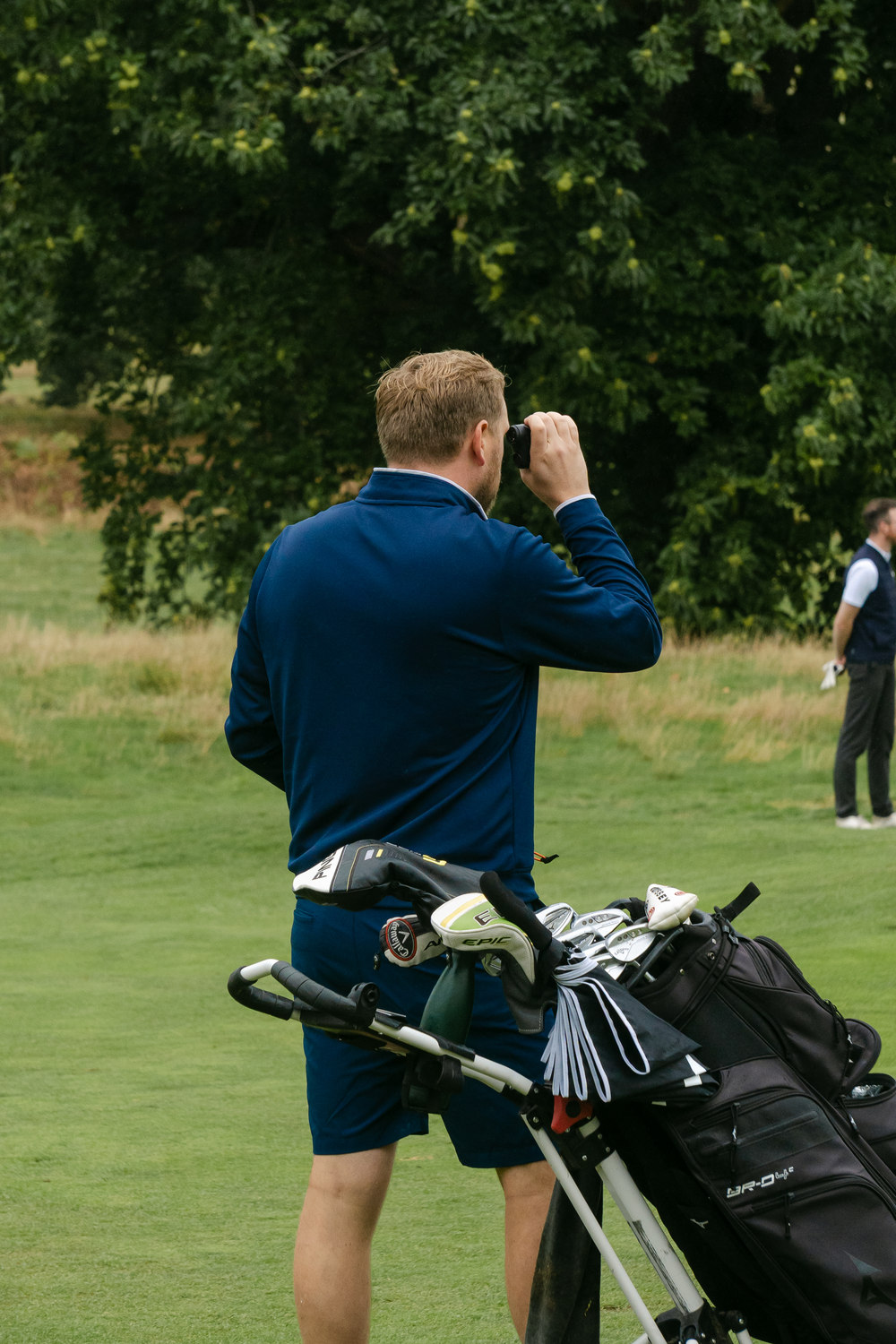
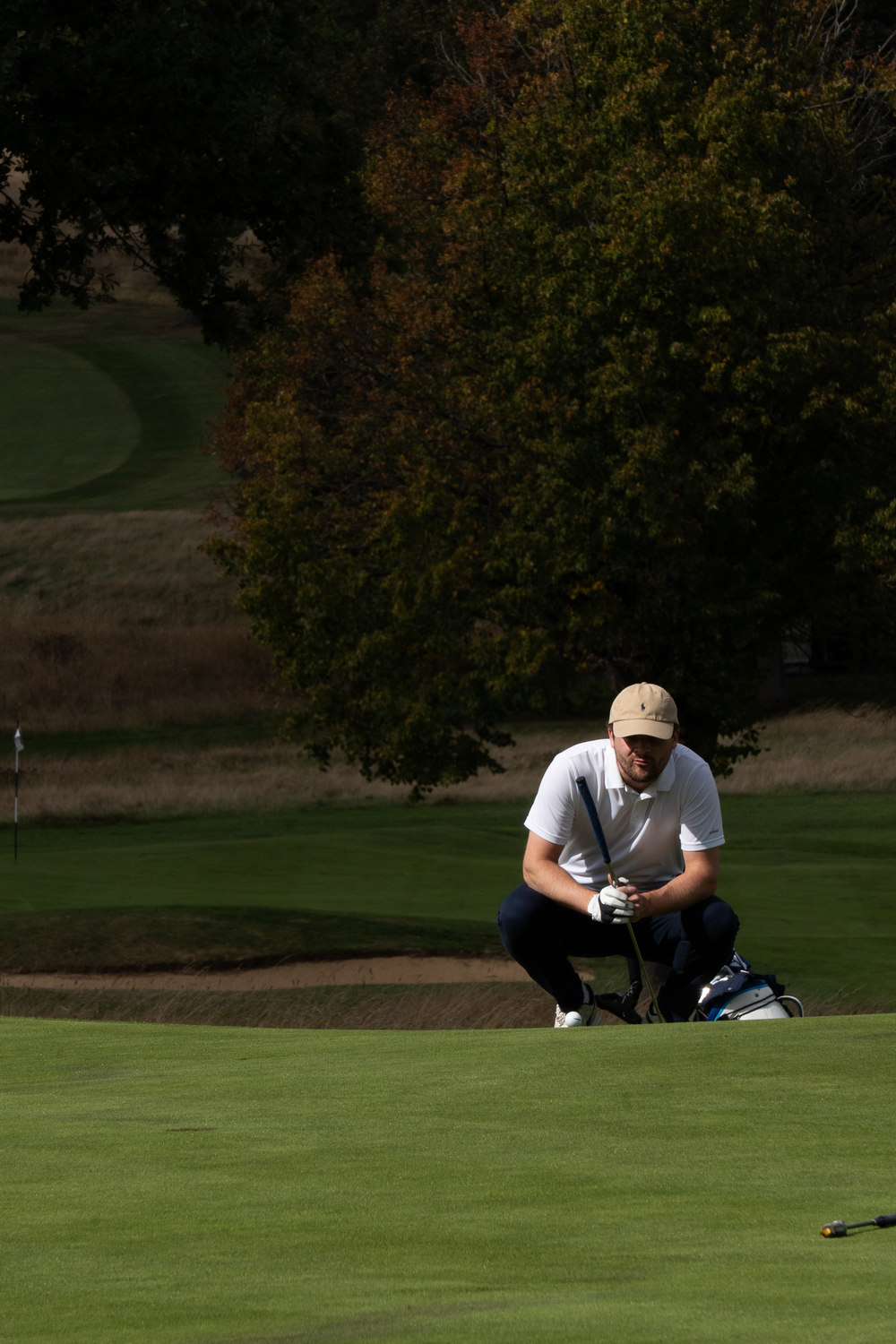
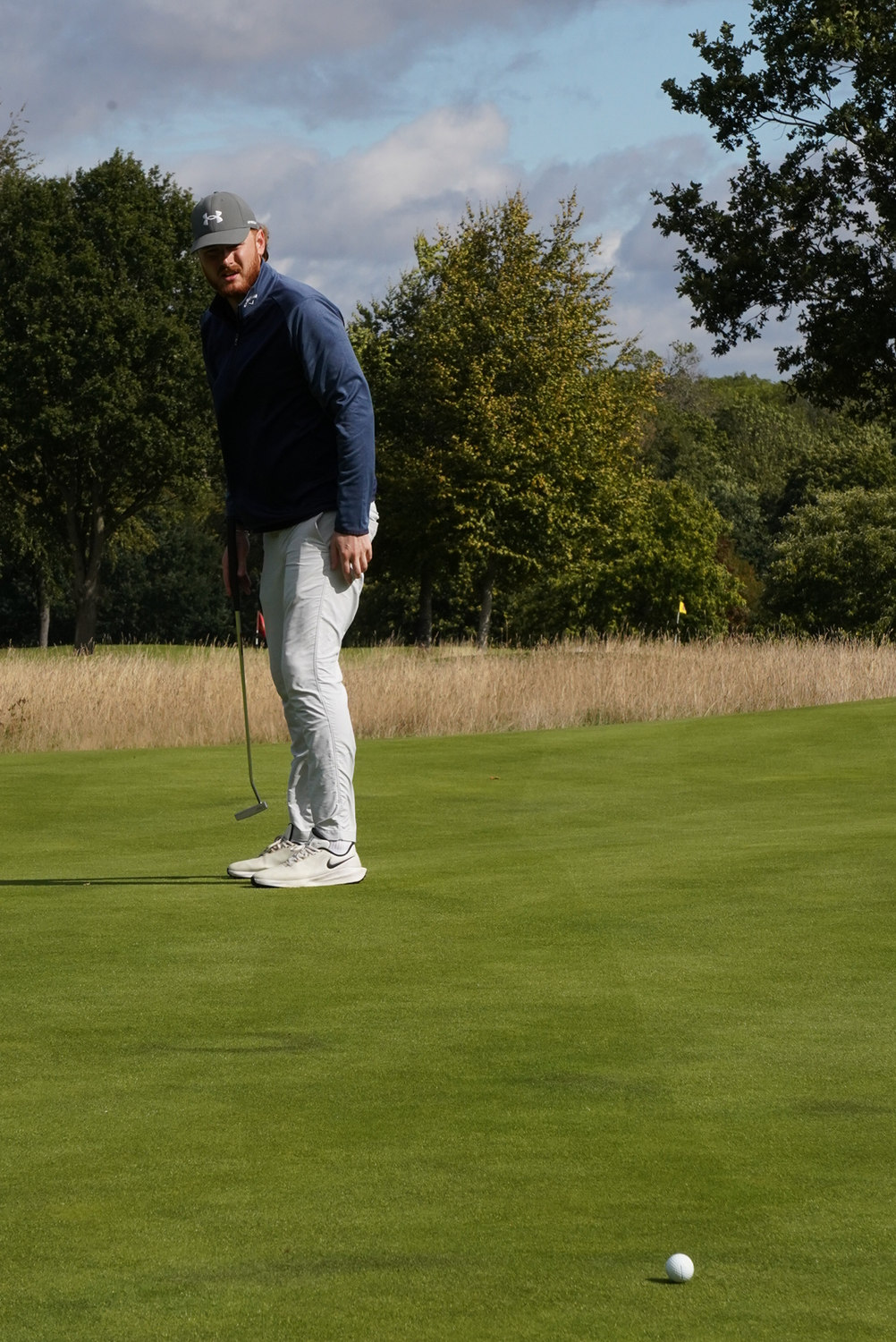
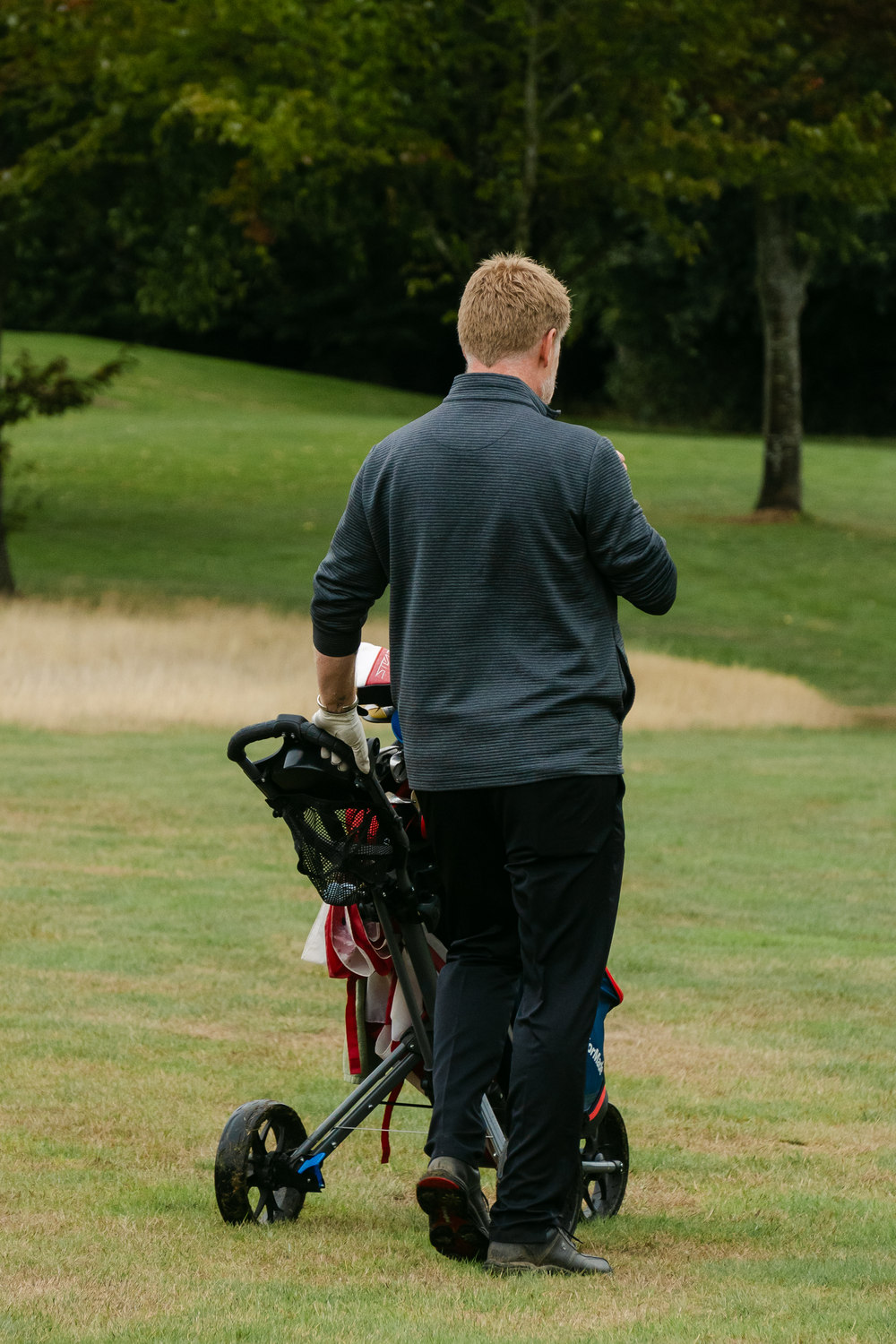
The photographs follow the groups rather than the golf, and most of them show a person only in part. A back under a cap. A pair of legs waiting at the tee marker. A figure too far off to name, crossing the rough. A man watched through the gap between a bag and a rail. Seen this way the day has no results in it at all, only several hours of other people’s company.
It pairs with The Ritual, a golf day in Leeds where the subject was the objects a round leaves behind: tees in a bowl, a glove drying on a post. This one keeps the people and photographs them the same way, in parts and at distance, so that the two studies hold the same occasion from either side of it. The full day in Kent is published as Common Ground, one hundred and eleven photographs across nine chapters.