The Crowd Has No Face
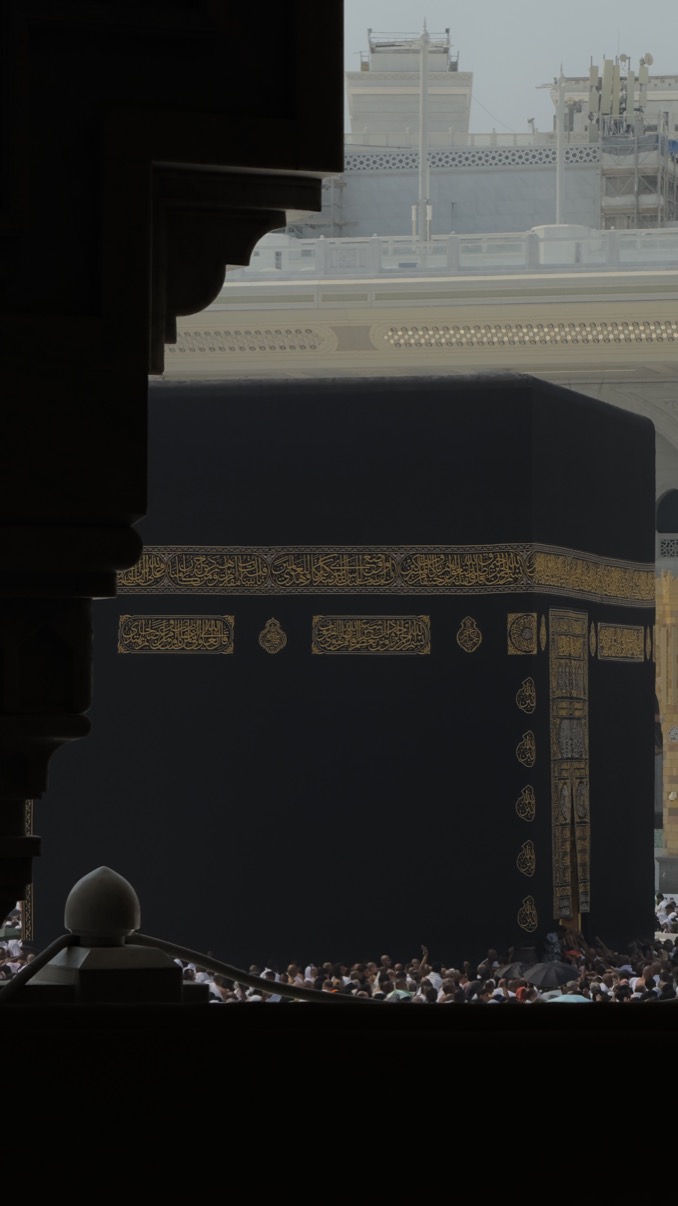
Beneath the great black cube, a crowd. Thousands of people pressed into a single mass at the foot of the Kaaba, and not one face is legible. From here they are a texture, a tide, a single body moving as one around a fixed point.
When people appear in this archive in numbers, they appear like this: as a multitude, never as individuals. It is partly the distance and partly the truth of the scene. A pilgrimage is not a collection of separate people having separate experiences. It is one act performed by many, and a photograph that picked out a single face would be telling a smaller and less honest story than the one in front of it.
The crowd is the opposite of the portrait, and it says the opposite thing. A portrait insists that this person, here, is worth your whole attention. A crowd insists that no single person is the point, that the individual has willingly dissolved into something larger. Both are true about human beings. The archive simply finds the second one more often than the first.
There is a humility in photographing the many rather than the one. It refuses to lift a face out of the throng, refuses to make a hero of anybody. Everyone in the frame is equal because everyone in the frame is anonymous, which at the foot of the Kaaba is precisely the point.
A crowd has no face, because for these hours nobody wished to keep their own.