RHS Chelsea Flower Show 2022
For a short period each year, a series of complete landscapes appears on a stretch of ground in London. Stone walls, water, timber structures and planting arrive together, fully formed, as if they had always been there.
They have not. Every surface, every path, every wall has been brought in, assembled and set in place. What looks settled is recent. What looks permanent will not stay.
The interest here was not in the planting schemes or the ideas behind them, but in how the elements sit together for the short time they exist. Stone against grass. Timber against sky. Water moving through a space that did not have water in it a fortnight earlier.
Pathways were followed rather than mapped. Enclosures were noticed rather than explained. The aim was to see these gardens as built environments first, the way one might look at a room rather than read about it.
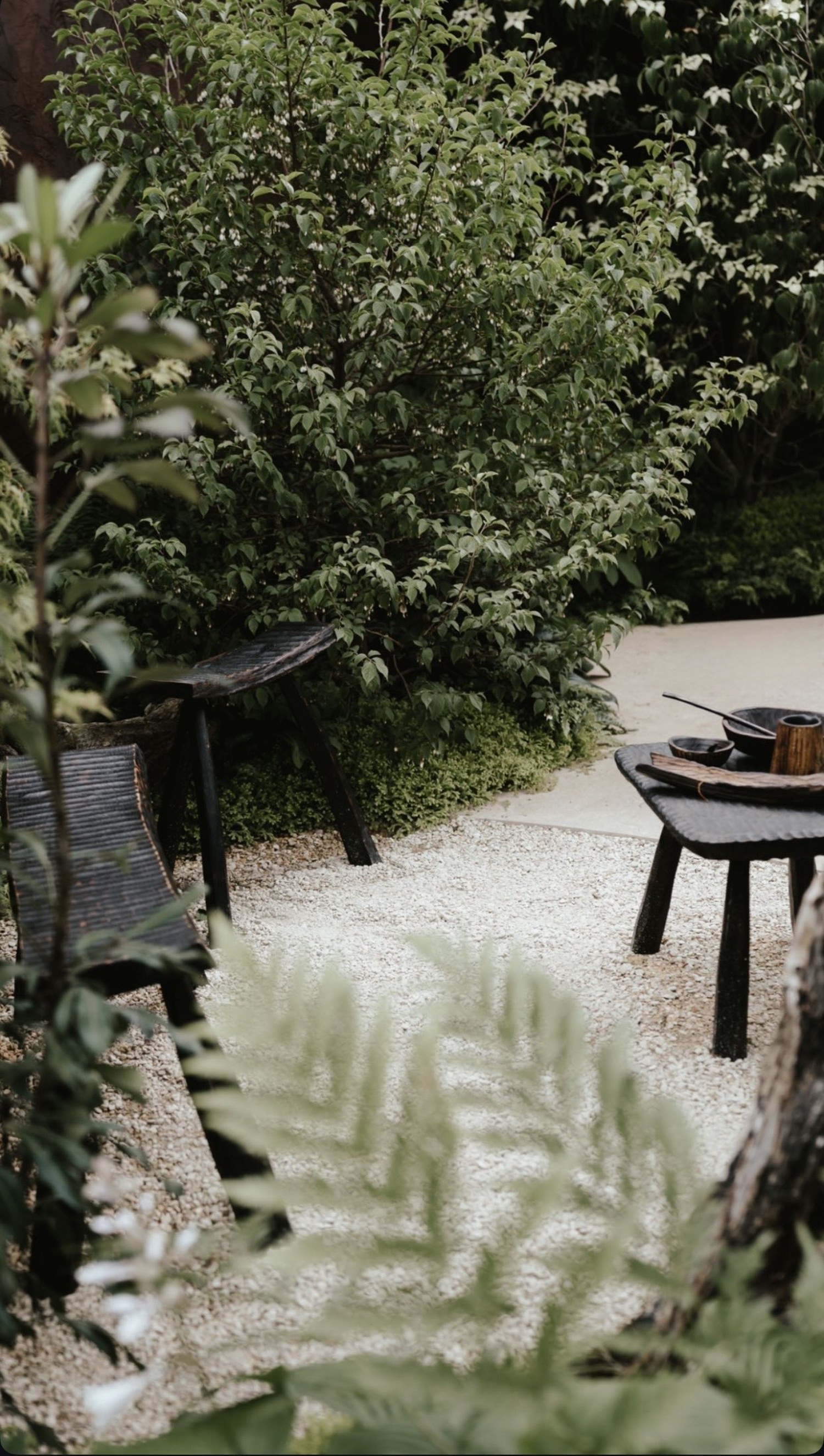
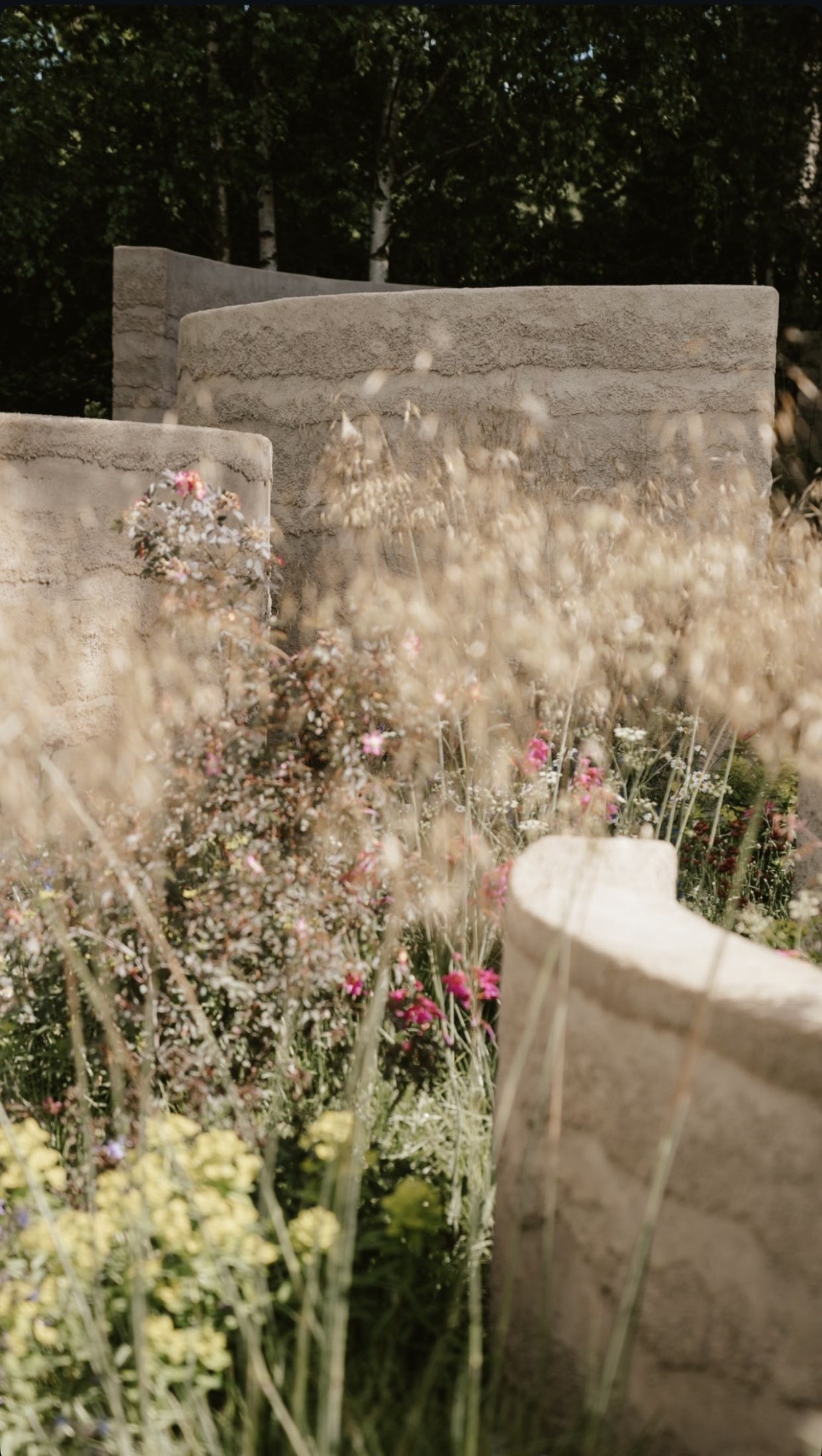
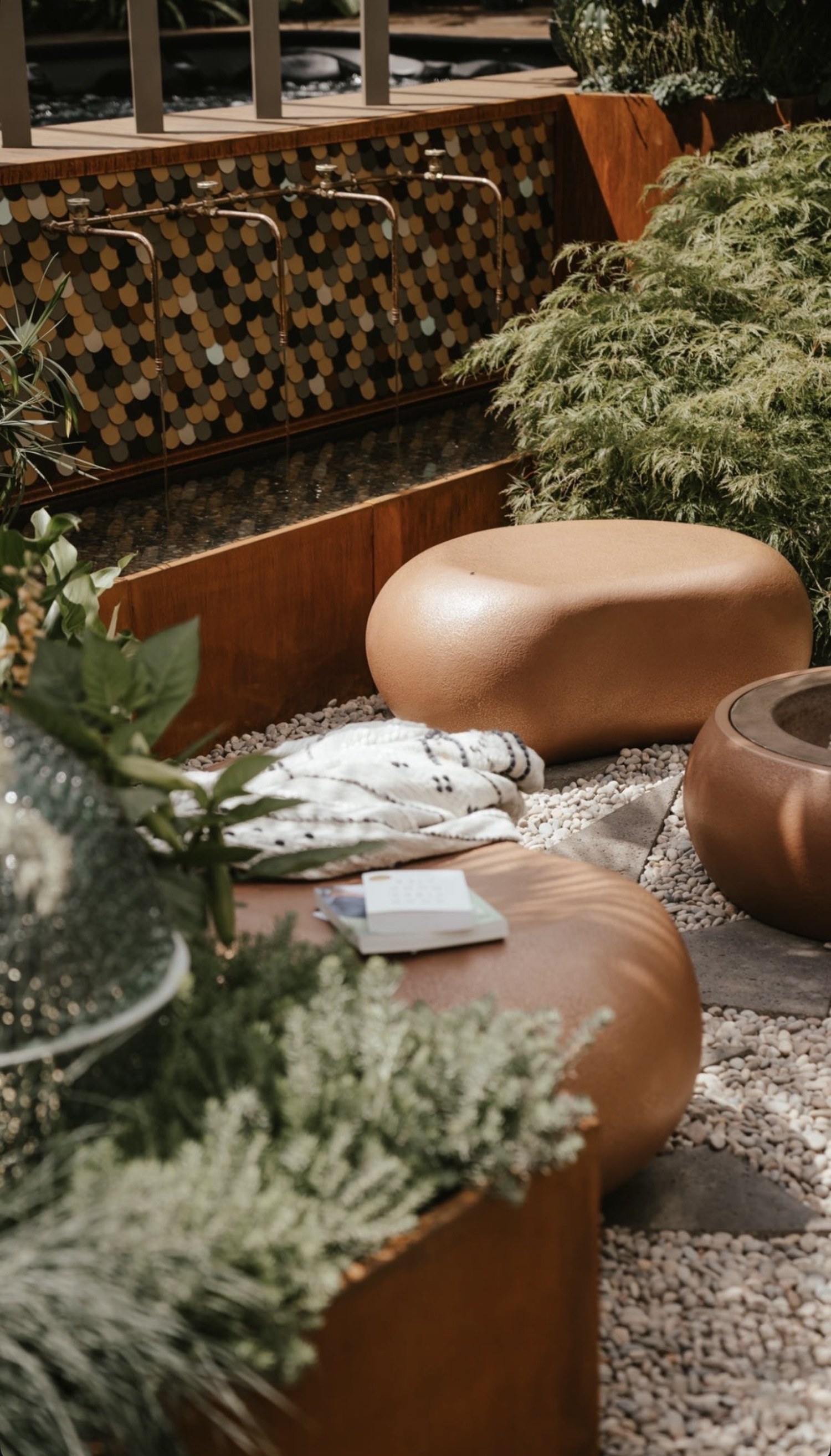
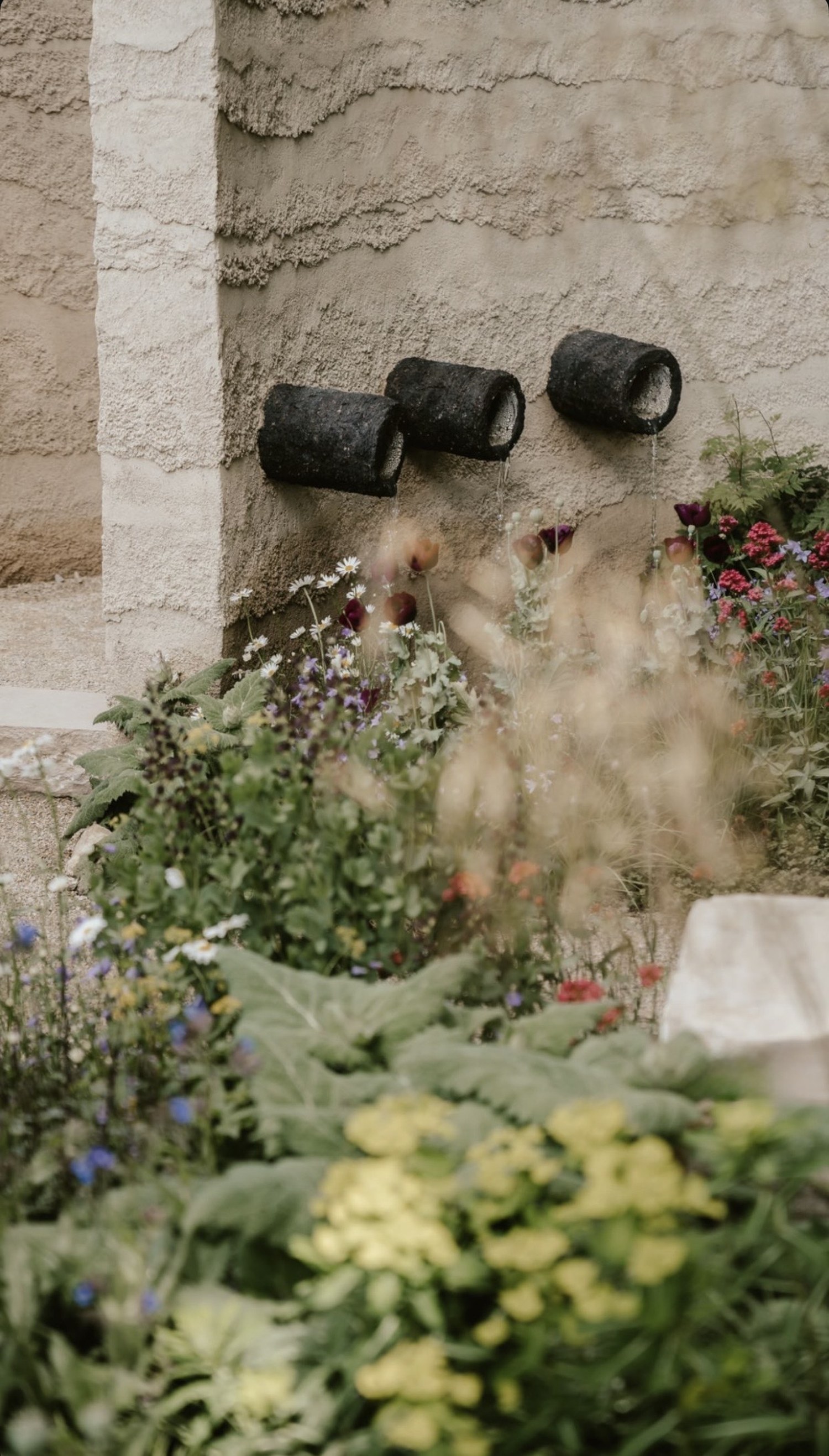
The photographs move through a sequence of thresholds, walls, water and shelter. A gravel path beneath dense planting. Water running from dark spouts into a bed of flowers. Rendered walls standing among tall grasses, their curves catching the light.
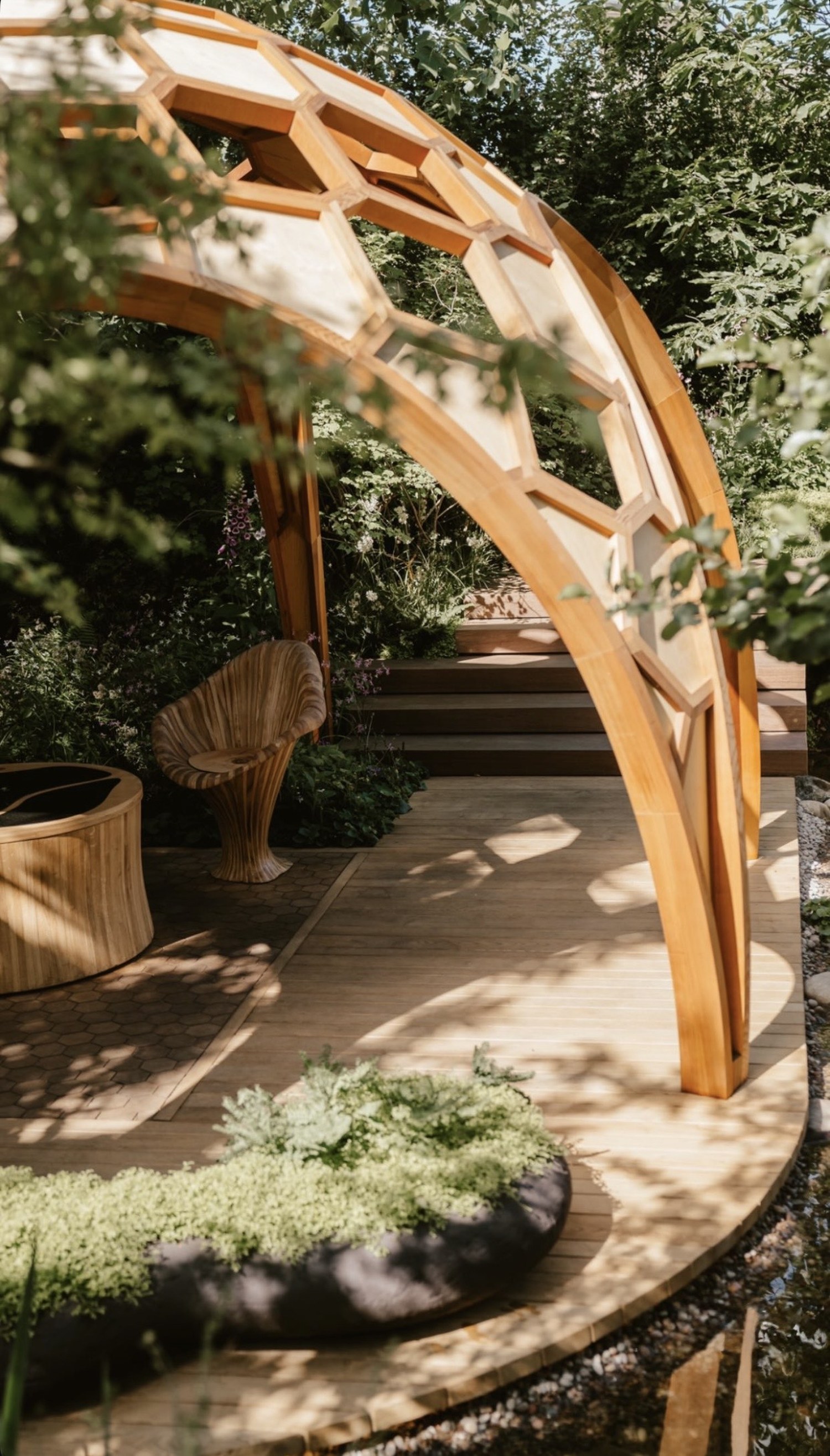
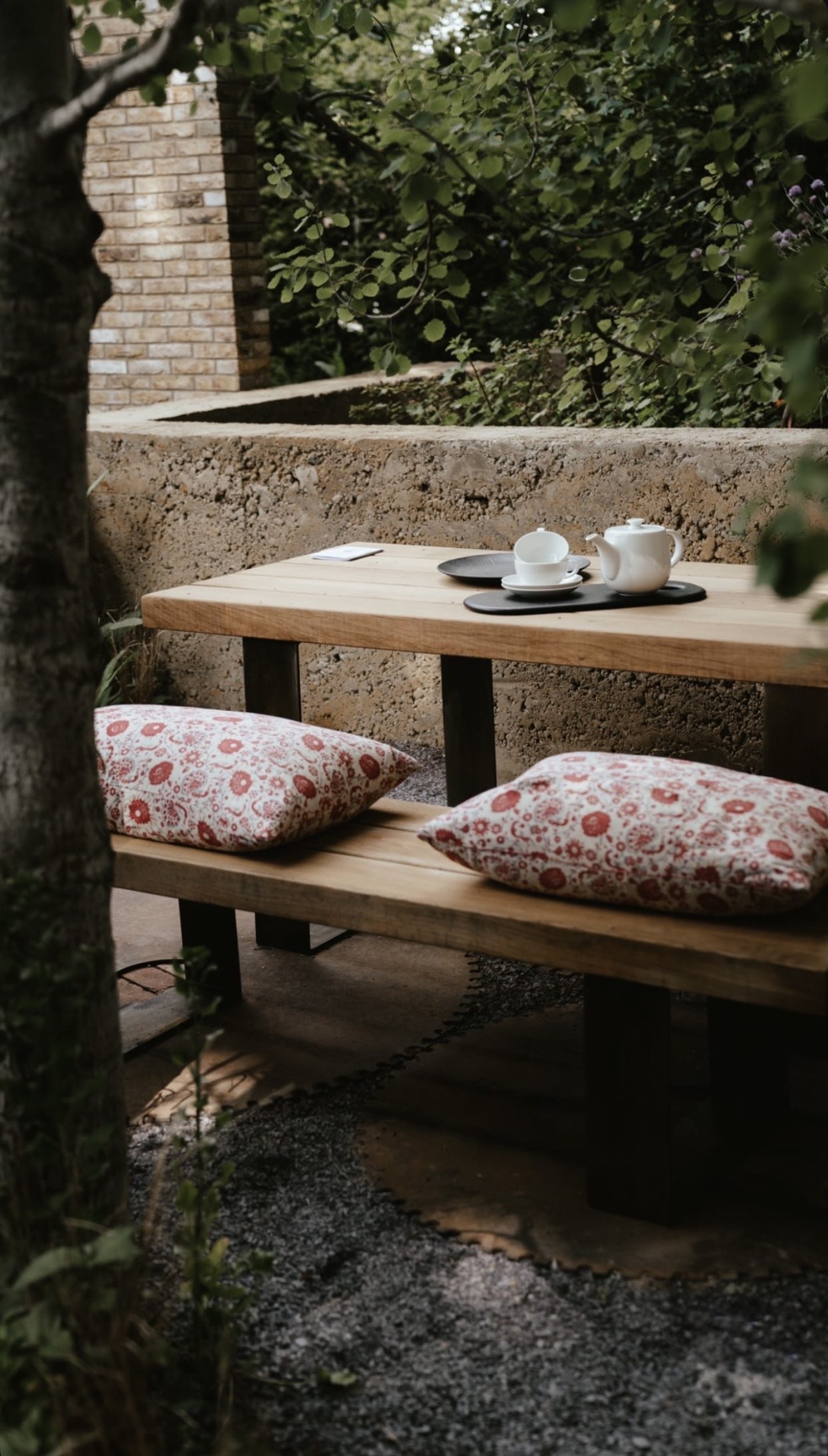
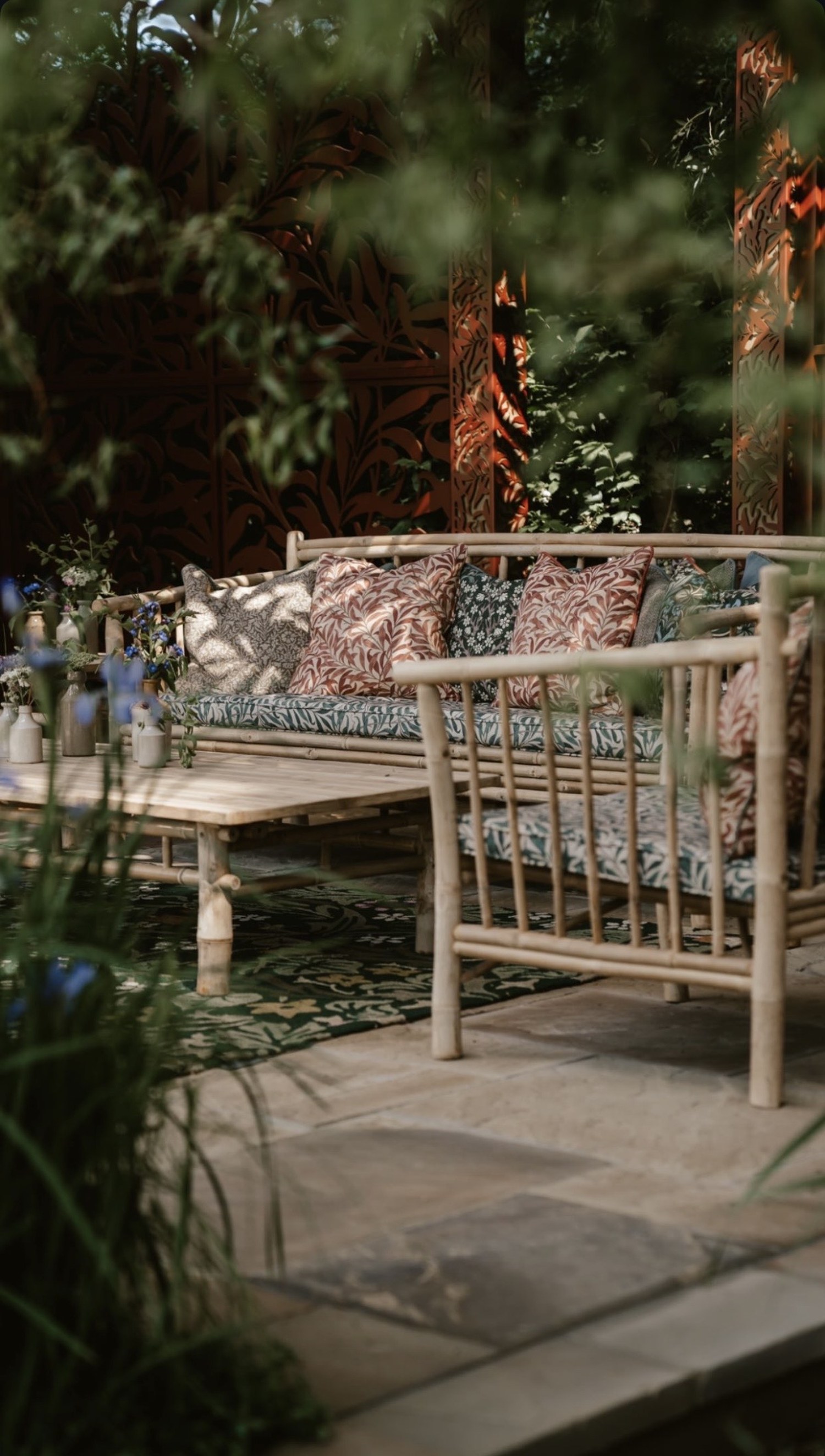
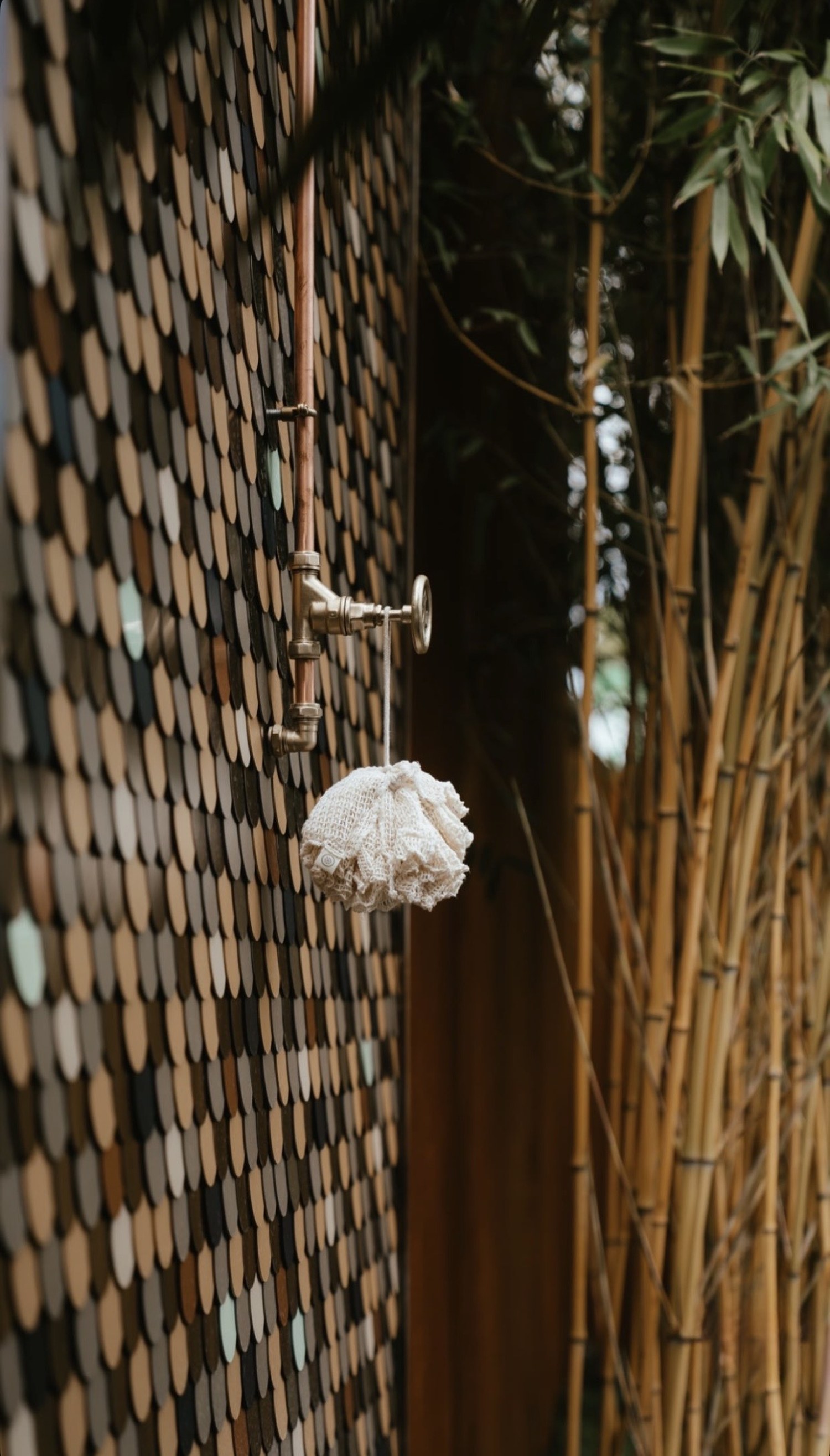
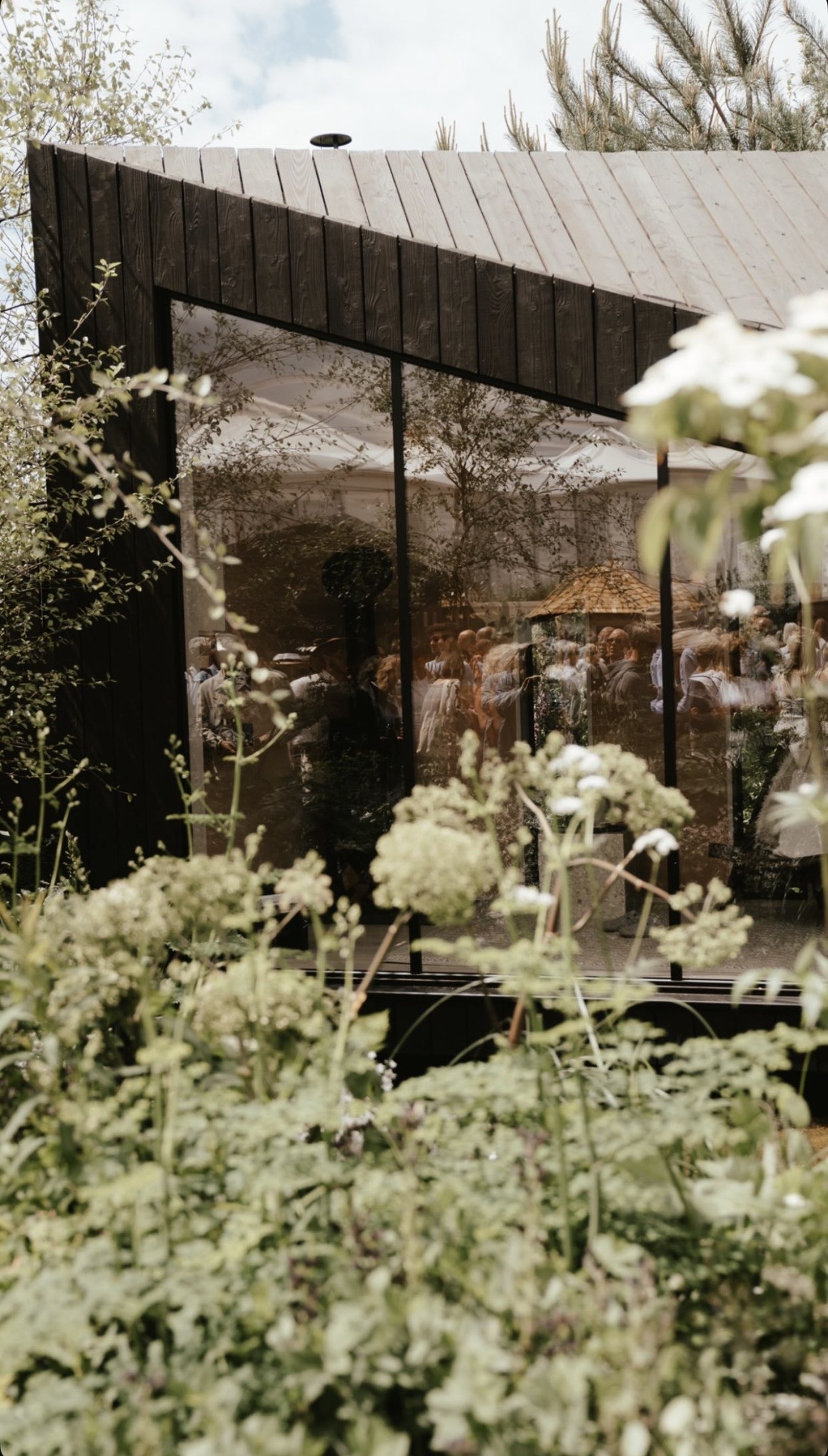
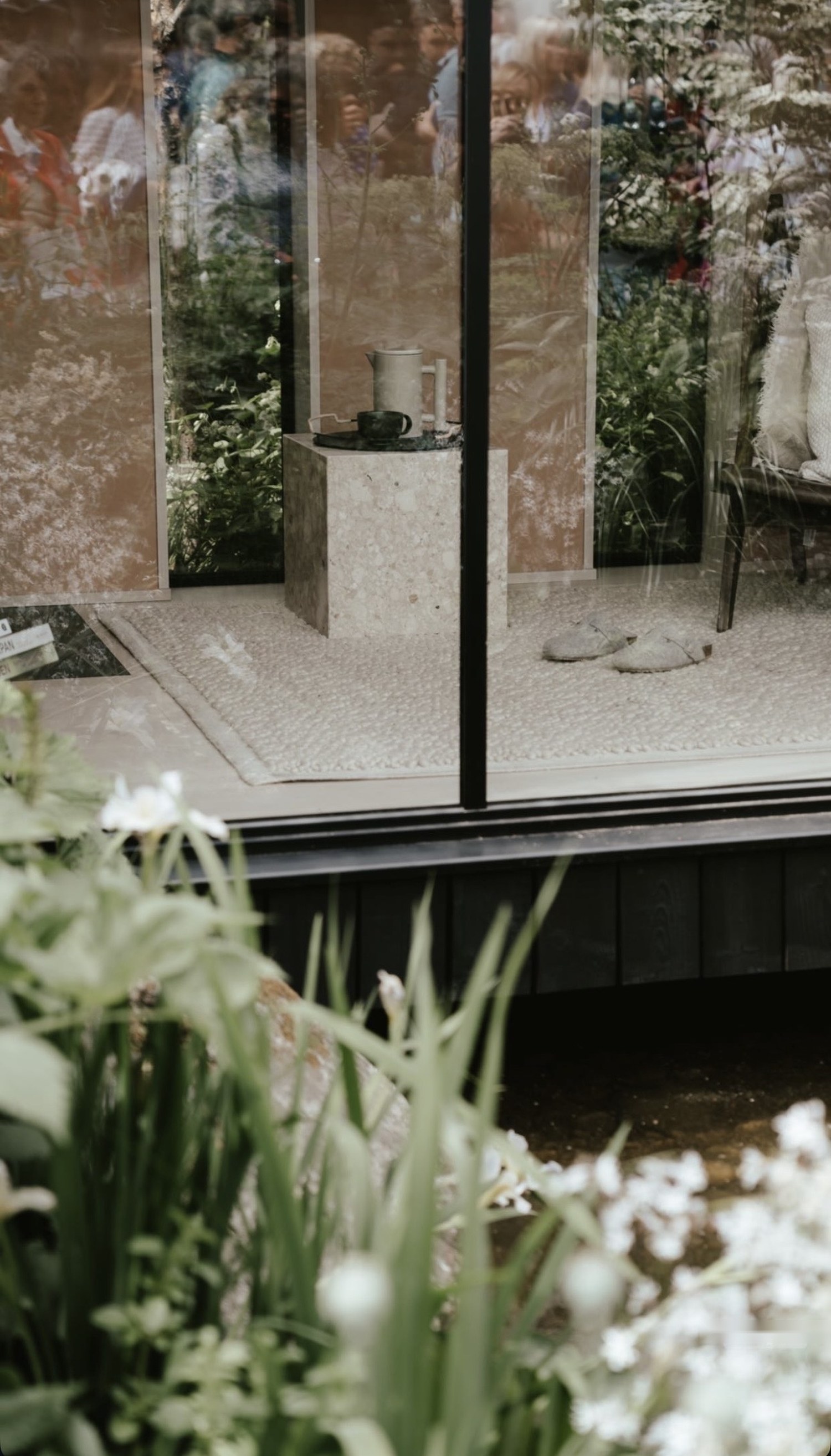
Further in, a timber structure opens overhead, its lattice throwing shadow across a deck. A table is laid as though for use. A patterned screen stands against the trees, and close by, a tap waits beside a folded cloth. Glass holds a reflection of the crowd outside. Inside, a room sits still, undisturbed, as if no one has entered it yet.
What remains is not the landscape itself but the memory of moving through it: from one threshold to the next, one material giving way to another, a space that was assembled in days carrying the conviction of permanence.
The Chelsea show garden is a brief form. It exists for a week and then disappears, leaving only photographs and whatever the visitor carries away from the experience. That brevity is part of what it does. A garden built to last would make different decisions. These were made for now, for the particular light of a May afternoon, for the space of a week.
The photographs are what stays. The gardens are already gone.
The RHS Chelsea Flower Show assembles, for one May week, complete landscapes on the grounds of the Royal Hospital: stone walls, mature trees, water and planting arriving as finished worlds, judged, medalled, and then dismantled. The study documents the show's astonishing central convention, gardens built to exist for days, with the permanence of their materials fully intact.
The photographs attend to the finished illusion and its seams: planting that reads as decades old on ground it met that month, the crowds' choreography past the frontages, the judging-hour stillness when the gardens briefly belong to themselves. Chelsea is horticulture as theatre at the highest technical level, and the study records both the performance and the stagecraft.
In the archive Chelsea opens the garden material that became Against the Display, Publication 005, whose two focus gardens, Sarah Price's and Jihae Hwang's, have their own studies alongside this survey. The show also seeded the Journal's temporary-worlds thread: no other subject in the collection builds so much permanence into so little time, or vanishes so completely.