Ralph's, London
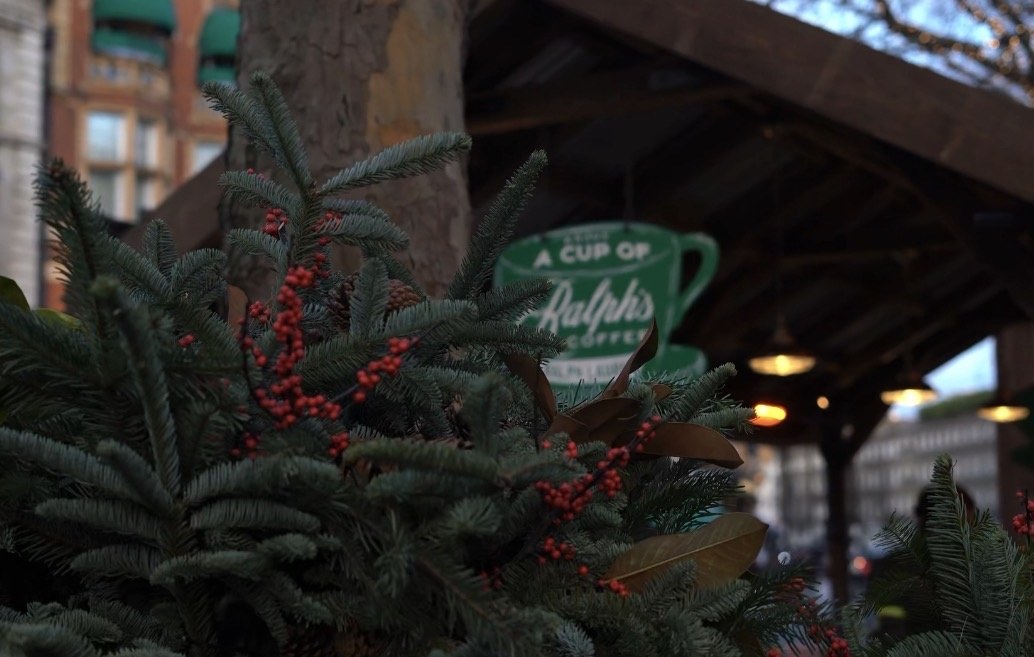
The sign comes first. A cup, cut from green metal, swinging slightly on its chains under a timber roof that wasn't here in November.
Above the kiosk, a bear stands watch in a Santa hat, looking out over bare branches strung with lights that haven't been switched on yet. Below, the same cup repeats on the kiosk wall itself, next to a menu in the same green and white.
You see the sign before you understand what it belongs to.
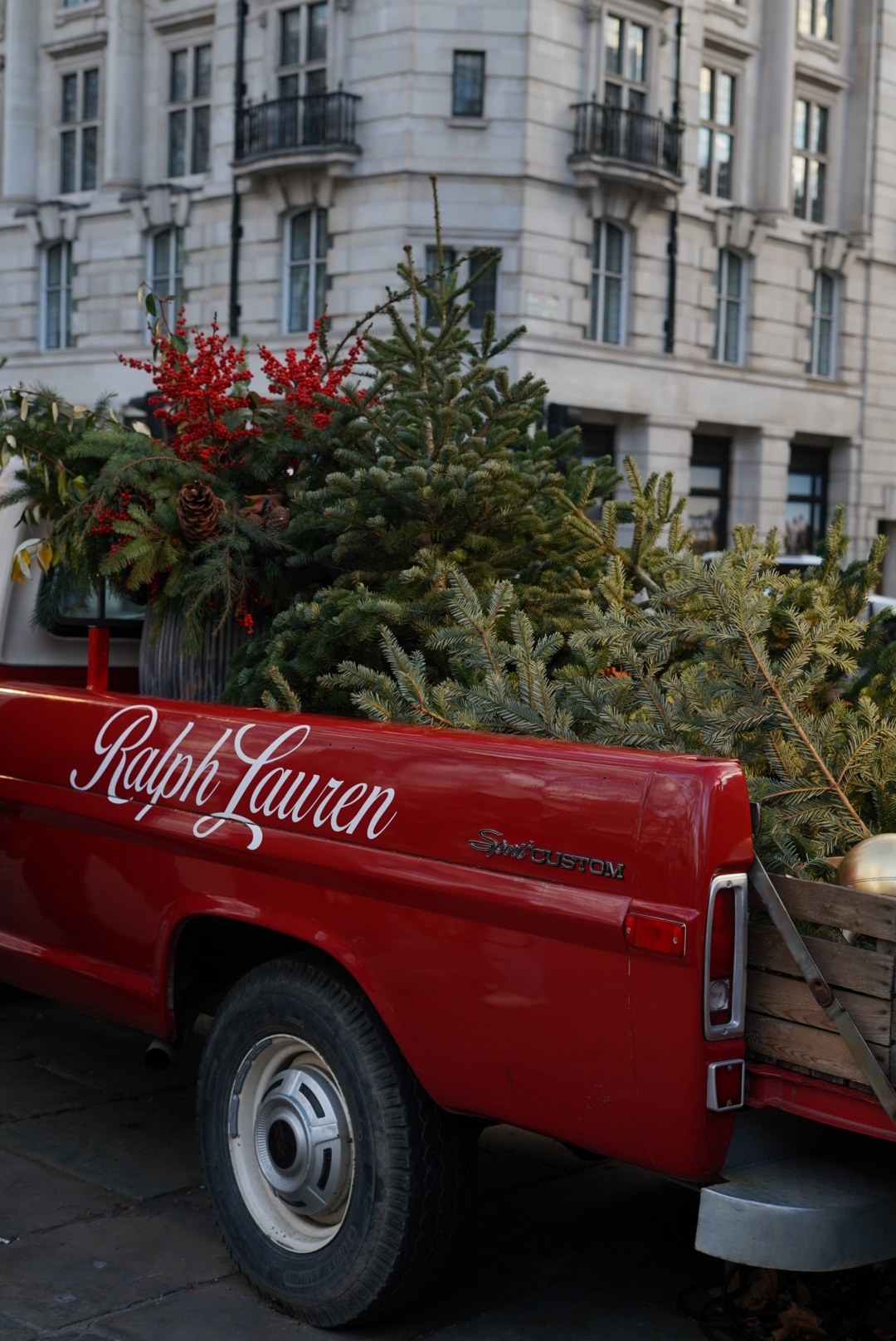
At the corner, a red truck sits loaded with pine, holly and a single gold bauble, white script running along its side. It isn't unloading anything. It's just there, parked, photographed, part of the display rather than apart from it.
The kiosk behind it does the same job in a different register: corrugated steel, an ORDER HERE sign, the cup logo fixed flat against the wall like a shop sign that's always been there.
Both objects exist for a few weeks a year and are stored for the rest.
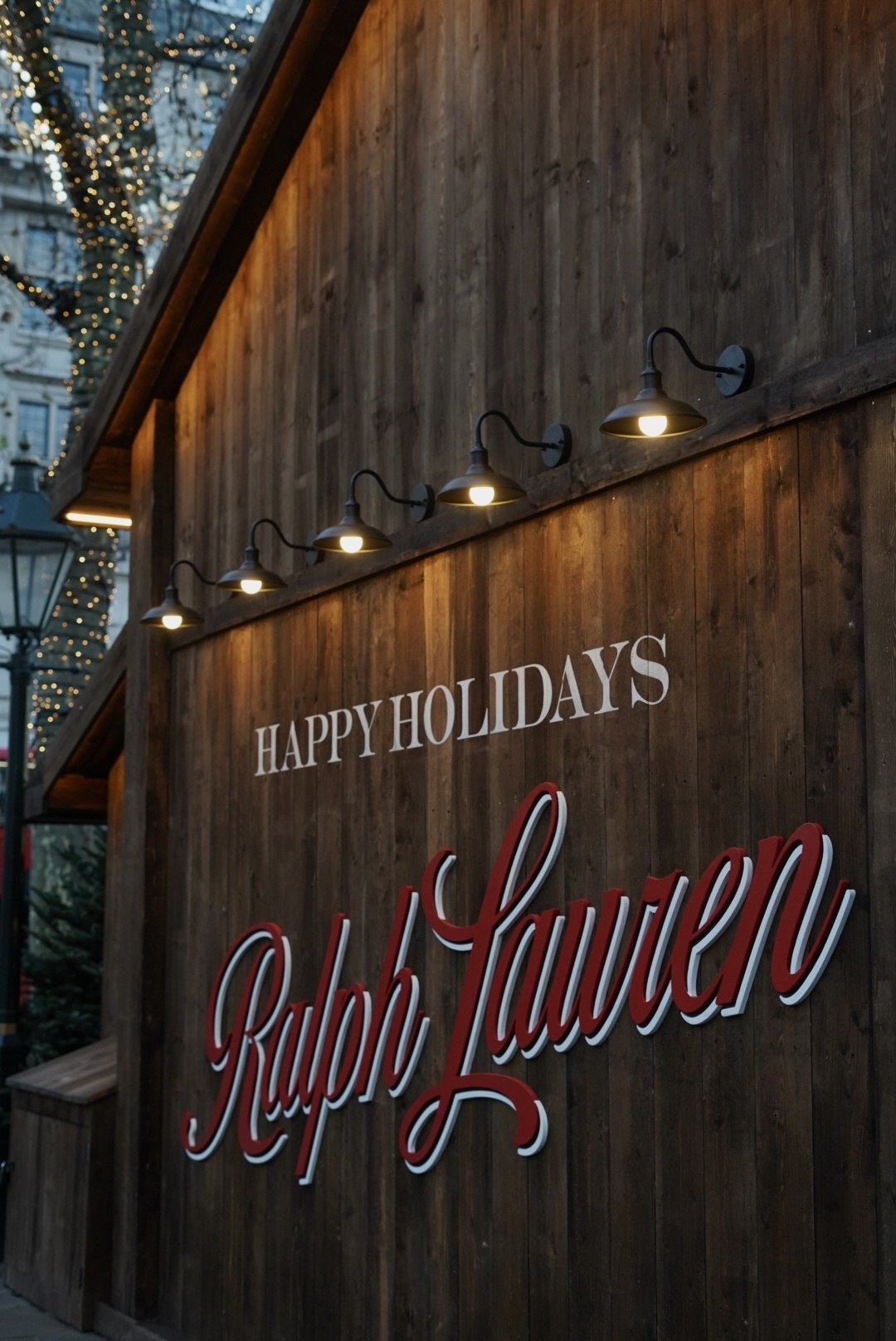
Lamps run along the top of a timber wall, lit even in daylight. HAPPY HOLIDAYS in white, then Ralph Lauren in red script below, the kind of signage that takes real installation to put up and take down again.
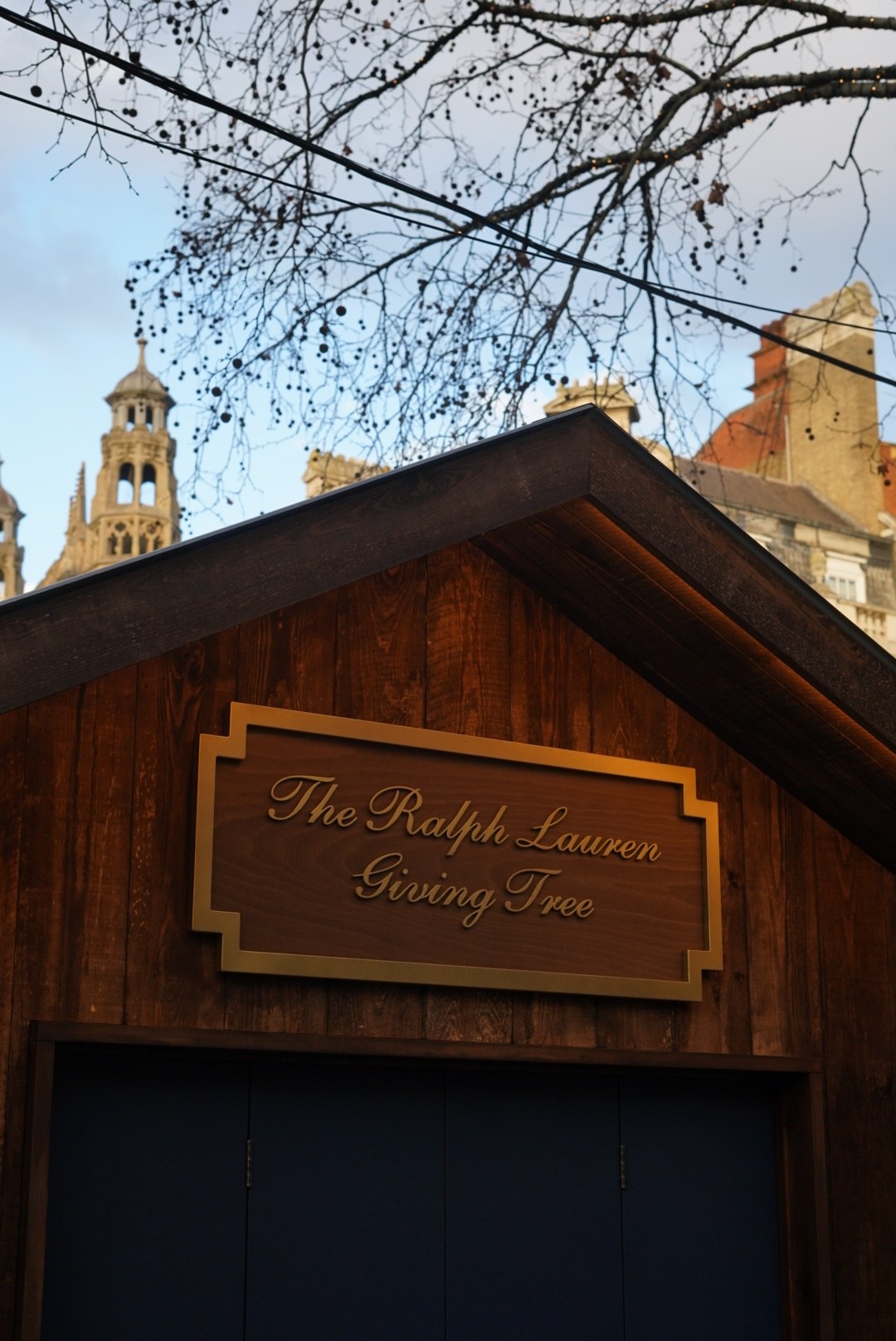
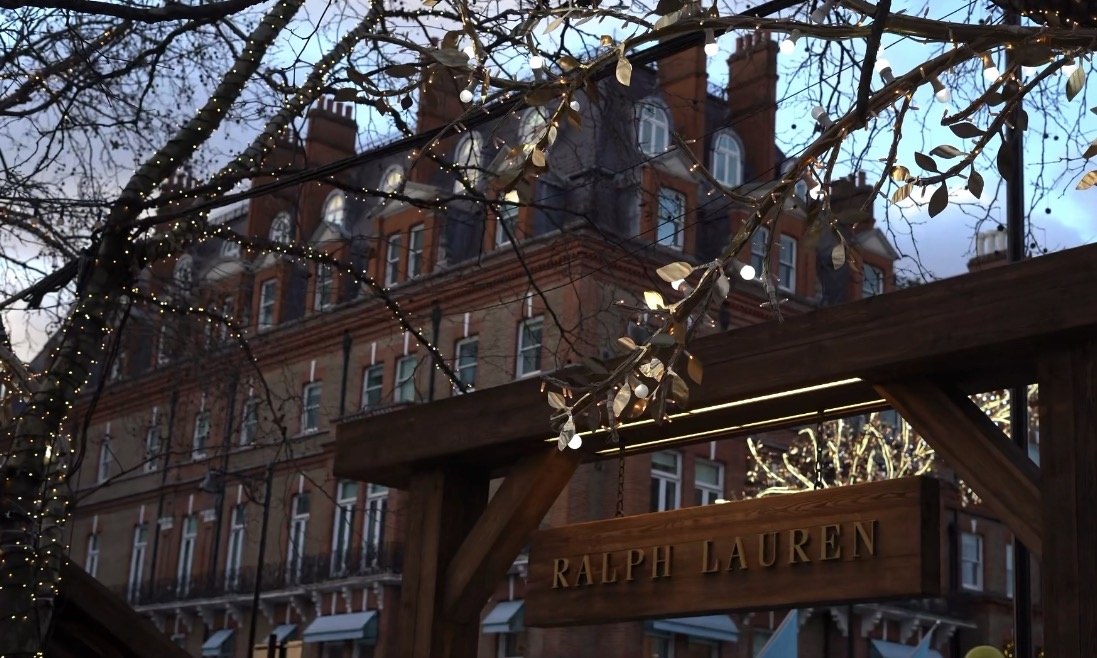
Round the side, a gable end carries a brass-edged plaque: THE RALPH LAUREN GIVING TREE. Behind it, London's older rooflines and a spire catch the last of the light.
These structures borrow the same materials as the buildings around them. Timber, brass, proportion. For a few weeks they're convincing.
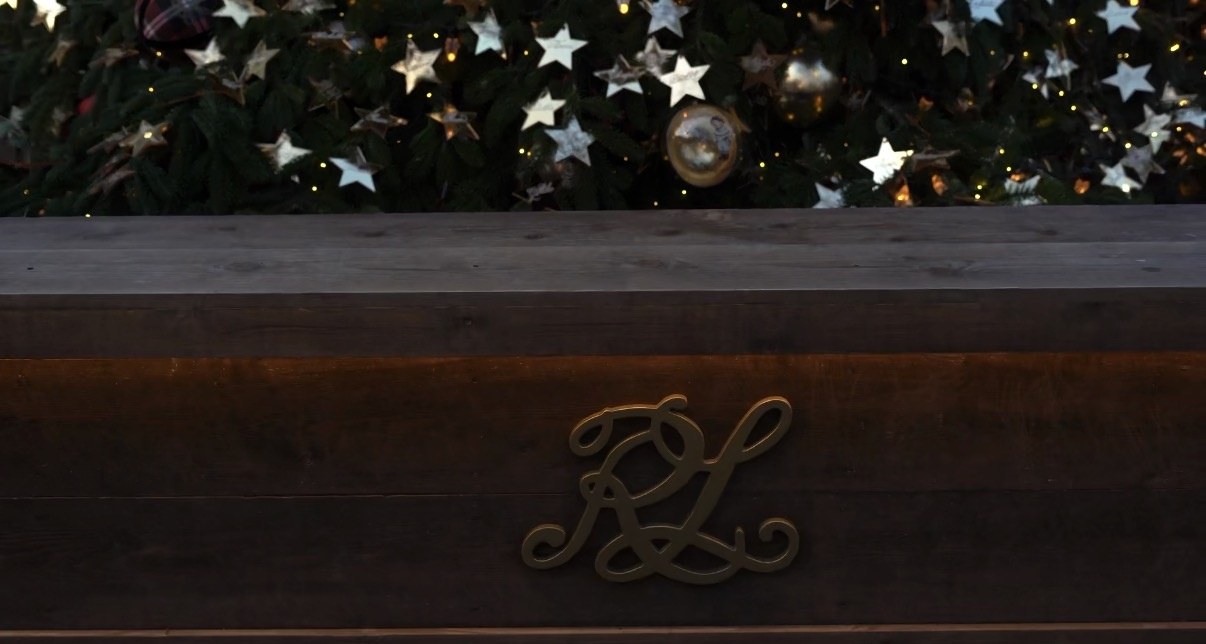
A monogram in brass sits low on a wooden bench, a Christmas tree glittering with stars behind it.
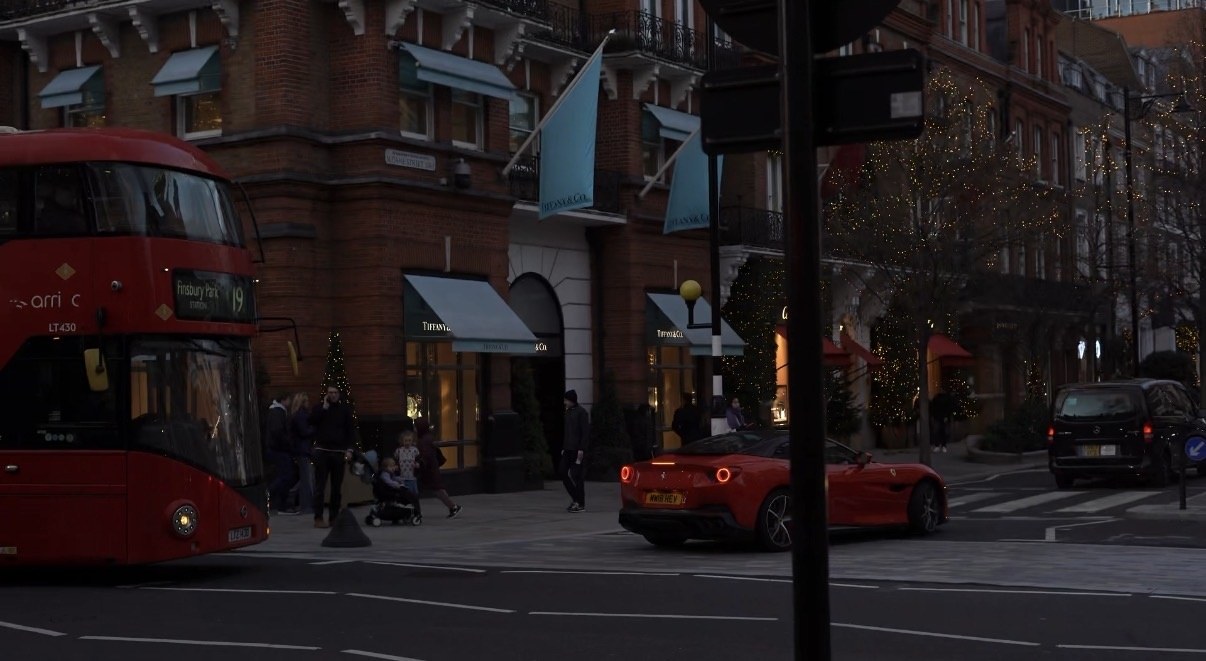
Down the street, a bus and a red car move through the dusk past Tiffany & Co, shopfronts lit, people walking past without looking up.
The monogram doesn't need explaining. It just needs to be seen again somewhere else.
Inside, the room goes dark. A leather chair, a framed photograph of a rider on horseback shot from behind, candlelight catching the glass.
A small vase of roses sits next to a lit candle on a side table. Everything else is in shadow.
Outside, the season is loud. In here, it's the same atmosphere at a much lower volume.
The street keeps moving. A bus turns the corner, the sign still hanging in the branches behind it, lights catching on bare twigs.
Nothing here is staged for an ending. In a few weeks the timber comes down, the truck goes wherever it goes for eleven months, and the corner goes back to being a corner.
What's left isn't the structure. It's just the memory of how well it worked while it was there.
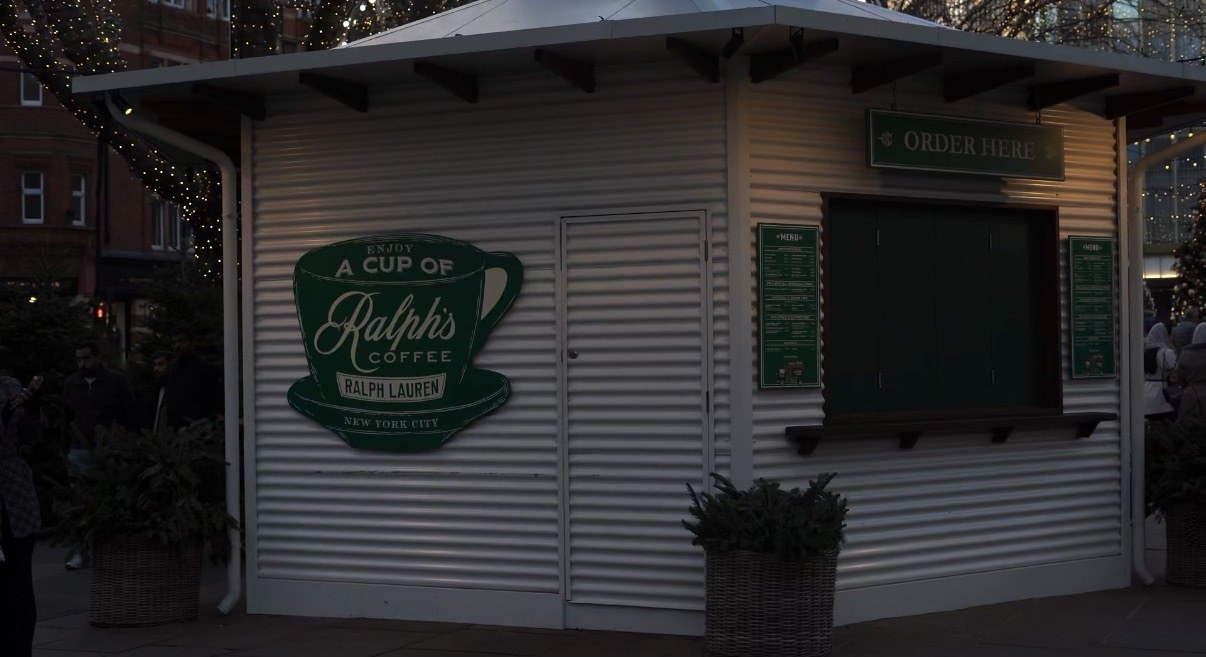
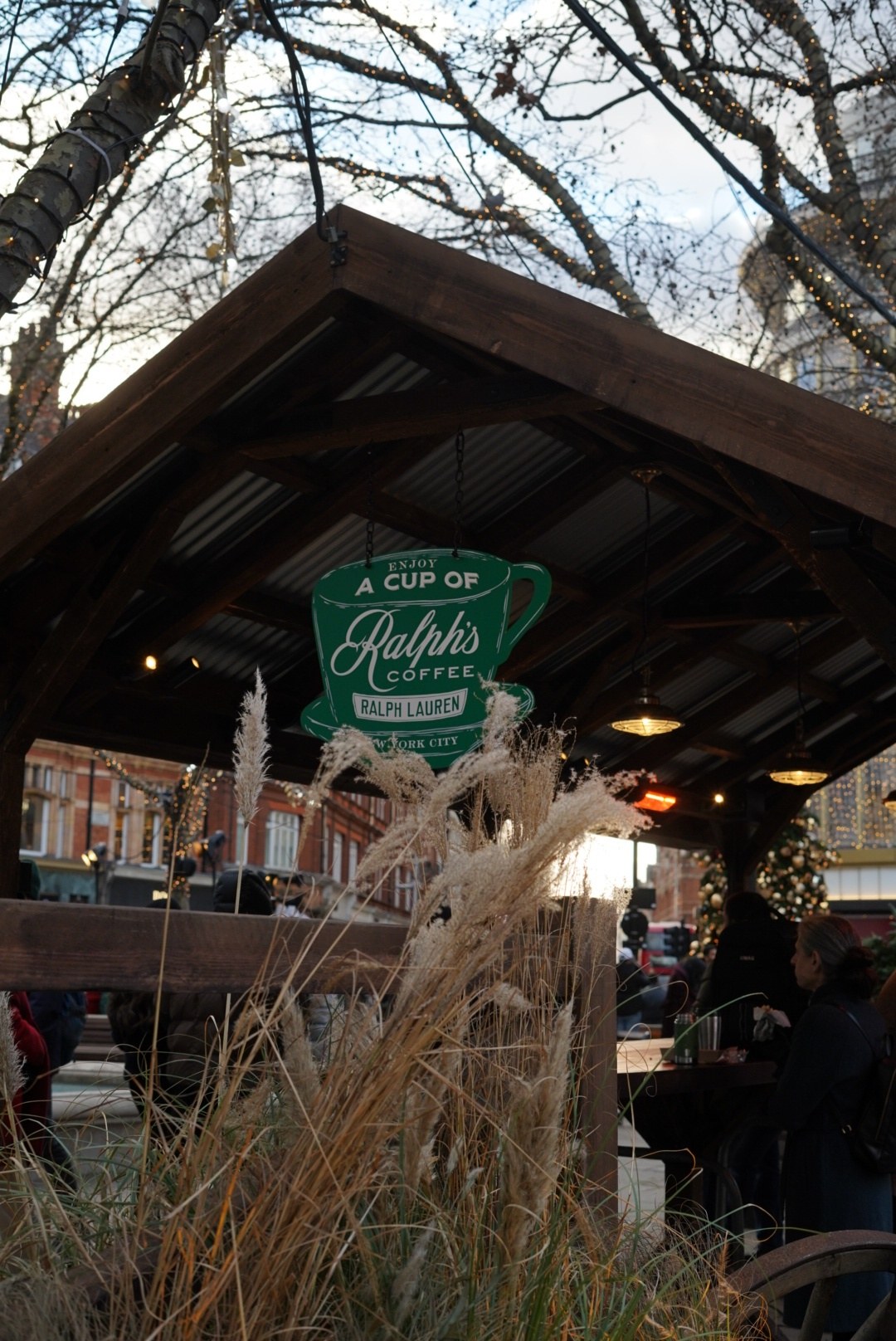
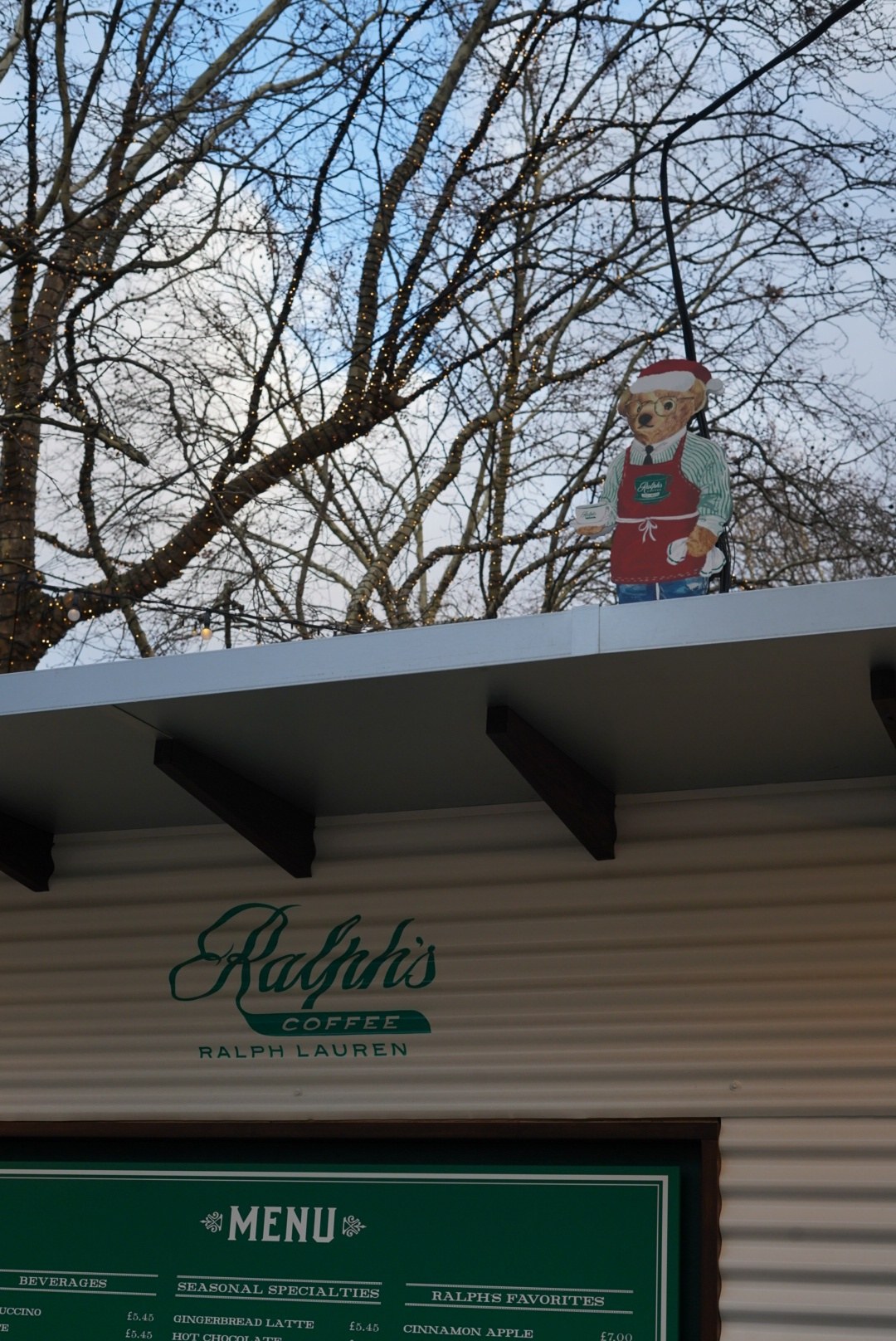
Ralph's Coffee on Regent Street is the seasonal outpost of Ralph Lauren's café brand, a green timber kiosk that appears outside the London flagship as the Christmas lights go up and disappears with them. The study treats its temporariness as the subject. Retail installs and removes small architectures constantly, but few brands build the ephemeral this completely: a swinging metal sign, a costumed bear above the roofline, the house green and white carried down to the cup sleeves, all erected for a season measured in weeks.
The photographs were made in the installation's early days, before the lights were switched on and the crowds formed, when the kiosk still had the slightly self-conscious air of a stage set awaiting its opening night. The sequence reads the object as the brand exercise it is: signals arranged in descending scale, from the bear on the parapet to the menu typography, each one repeating the argument that this pop-up belongs to a permanent world.
Within the archive the study pairs with the wider Ralph's Coffee survey and feeds the Journal's recurring interest in temporary worlds, spaces built to be dismantled, and what they reveal about the brands that build them. It also documents a London retail moment with a shelf life, which is part of the archive's quiet function: some of these photographs became historical records the day the kiosk came down.