KAAWA, Manchester
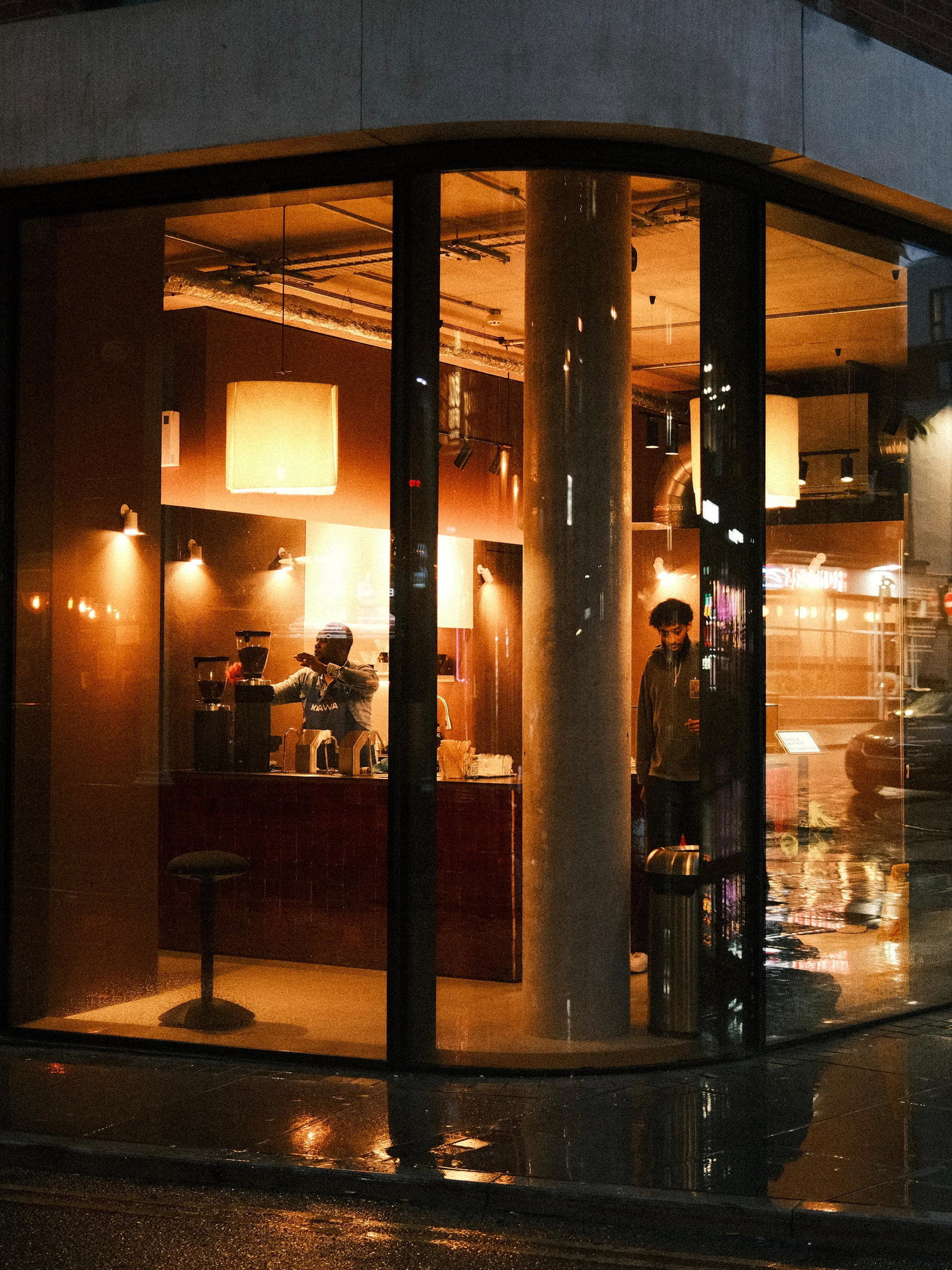
KAAWA occupies a corner in Manchester that most of the city has already passed through by the time evening settles. A wet pavement. The window lit from inside. The kind of place that reads immediately from across the road, not because it announces itself, but because it holds its own character against whatever the street is doing outside.
The café was opened with a specific intention: somewhere to stay after most things had closed. That intention is felt before anything is explained. The room is already at ease.
Manchester in the evening changes register. The daytime crowd thins. The light drops to what the interior offers rather than what falls through the glass from above.
At KAAWA that interior light is the whole atmosphere. Warm against the dark tones of the room. Reflected in surfaces that were not chosen for effect but contribute to it anyway. The space does not compete with the hour. It meets it, and holds there.
The photographs moved through the space rather than positioning themselves against a fixed view.
Reflections in a window. A counter before the last order. Chairs arranged as though someone just left them. KAAWA does not offer a composed room in the way some hospitality spaces do. What it offers builds slowly, and is difficult to locate in any single image.
The best hospitality asks very little of you. It does not perform welcome or engineer atmosphere. It simply arranges conditions in which ease arrives without effort on the part of the guest.
KAAWA does this consistently, and it is harder than it looks. The room holds a quality of stillness that does not depend on the hour or the number of people in it. Late on a wet evening in Manchester, with the street outside doing whatever the street is doing, the space simply continues to be what it is. That is the whole of it, and it is enough.
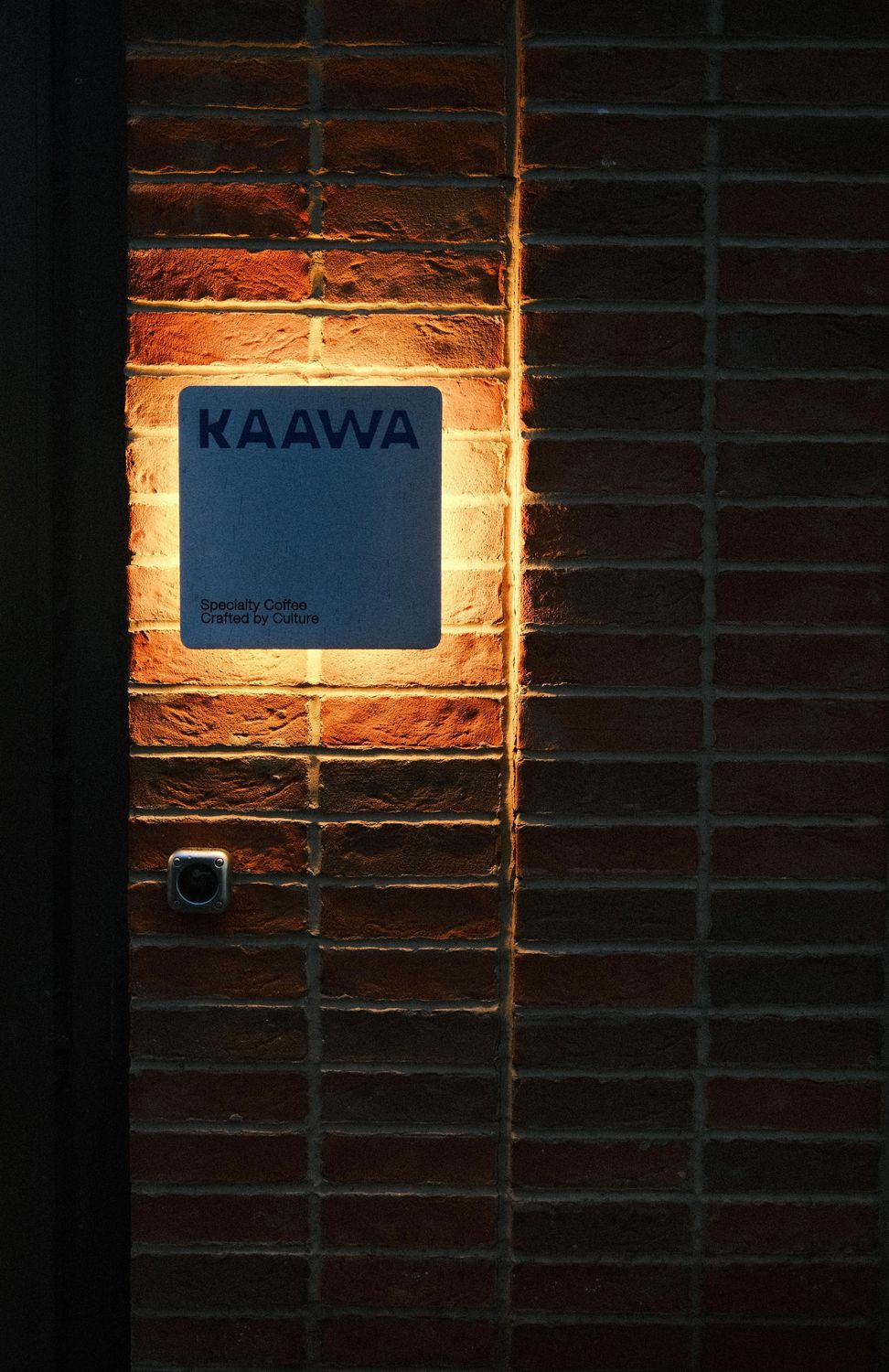
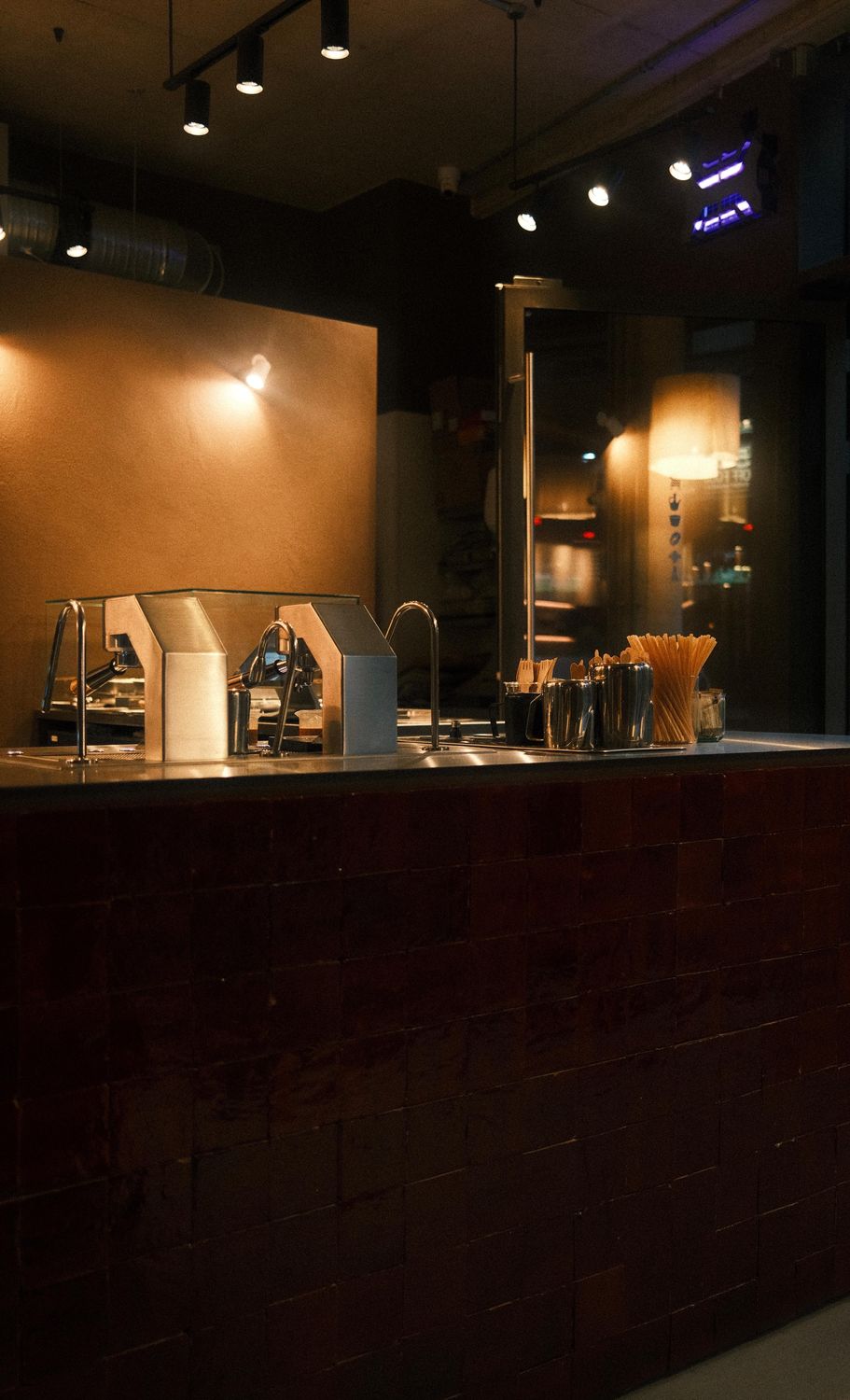
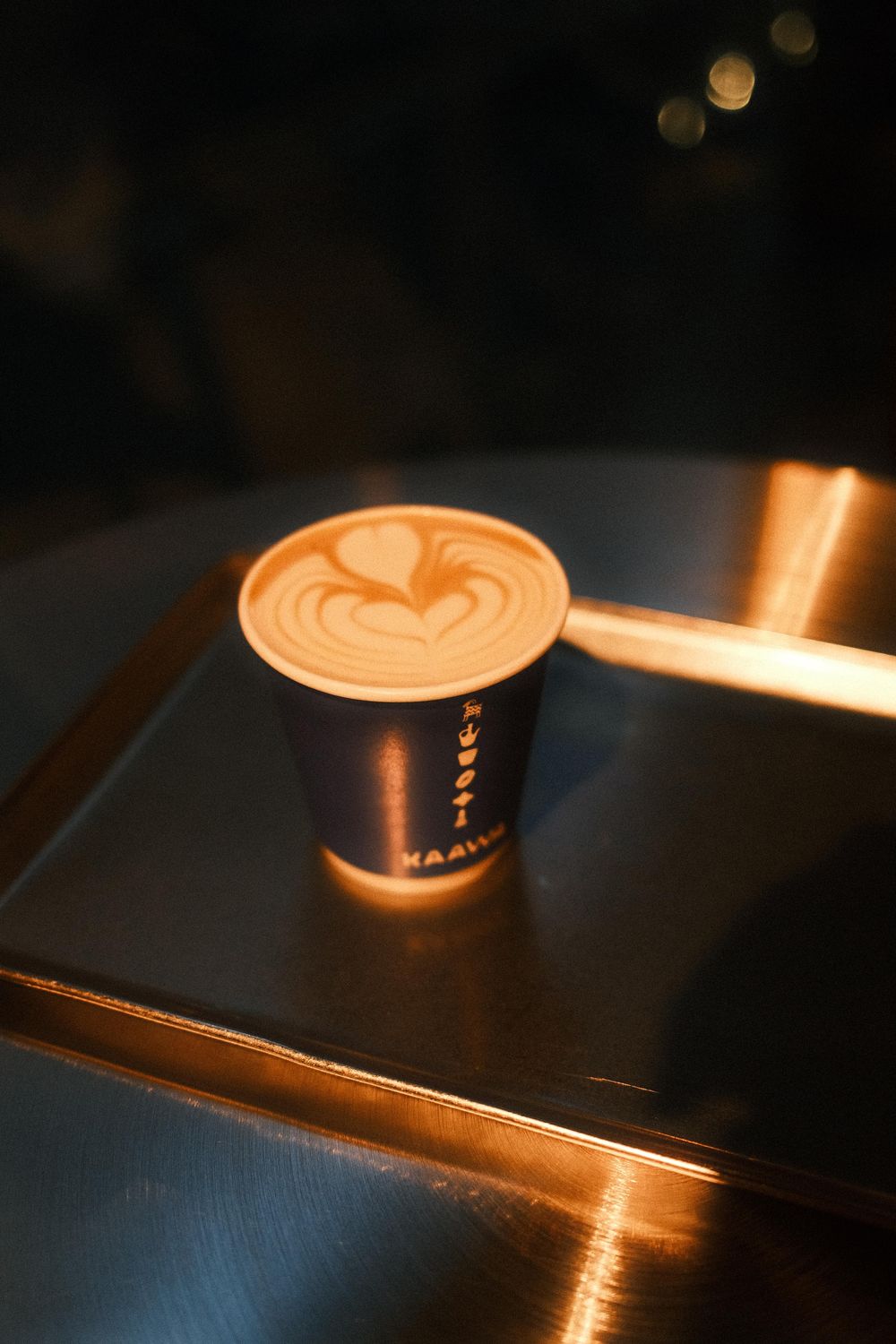
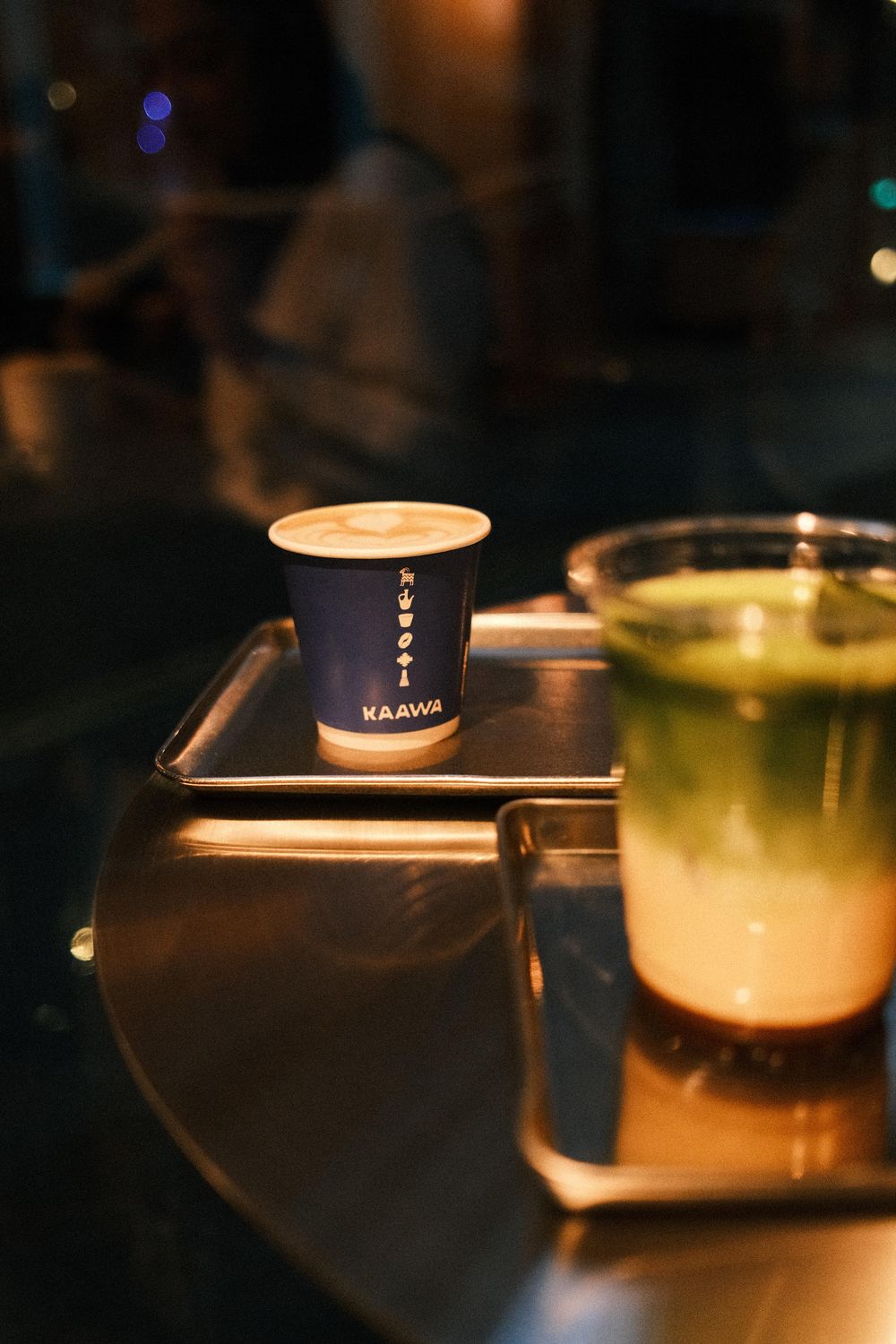
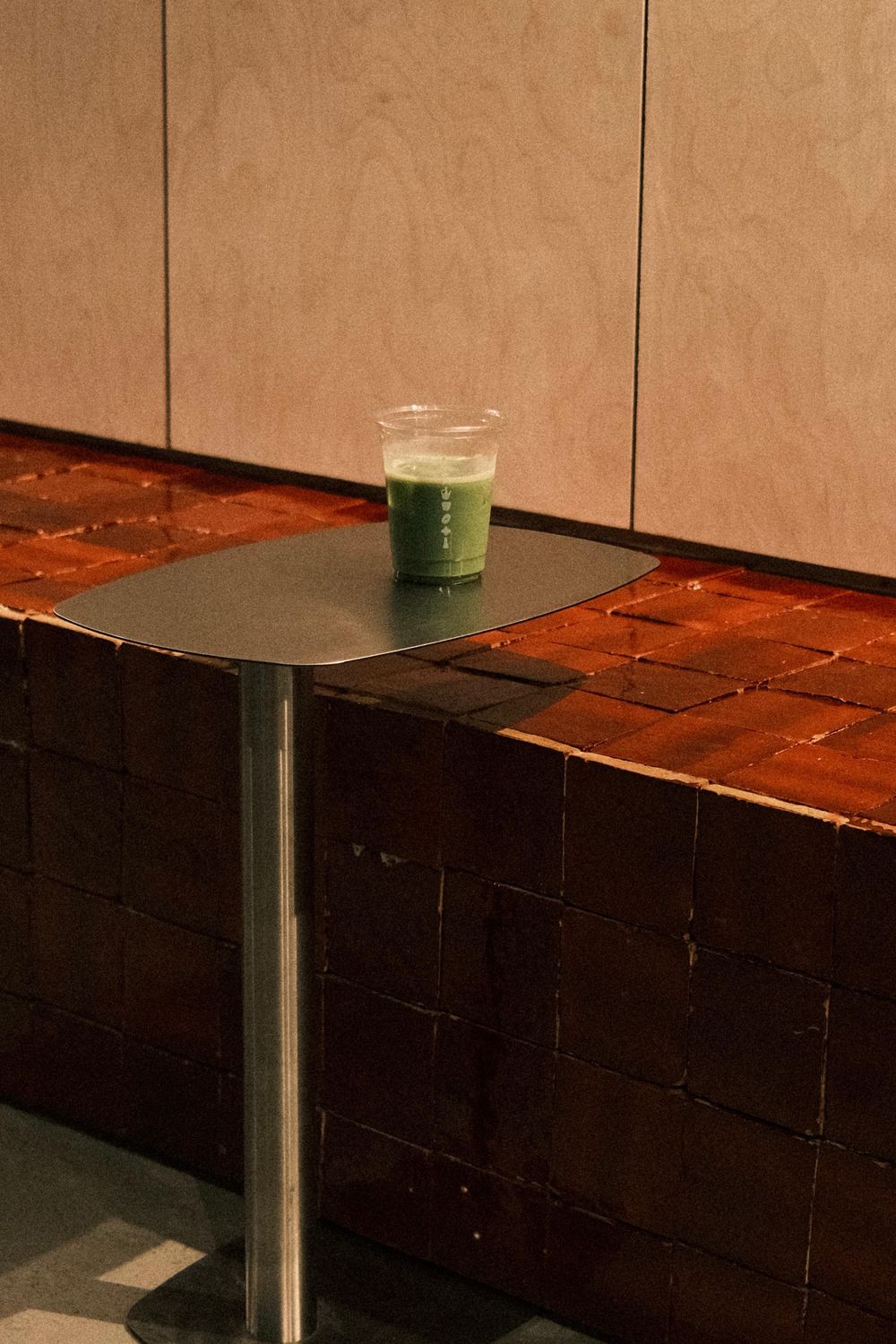
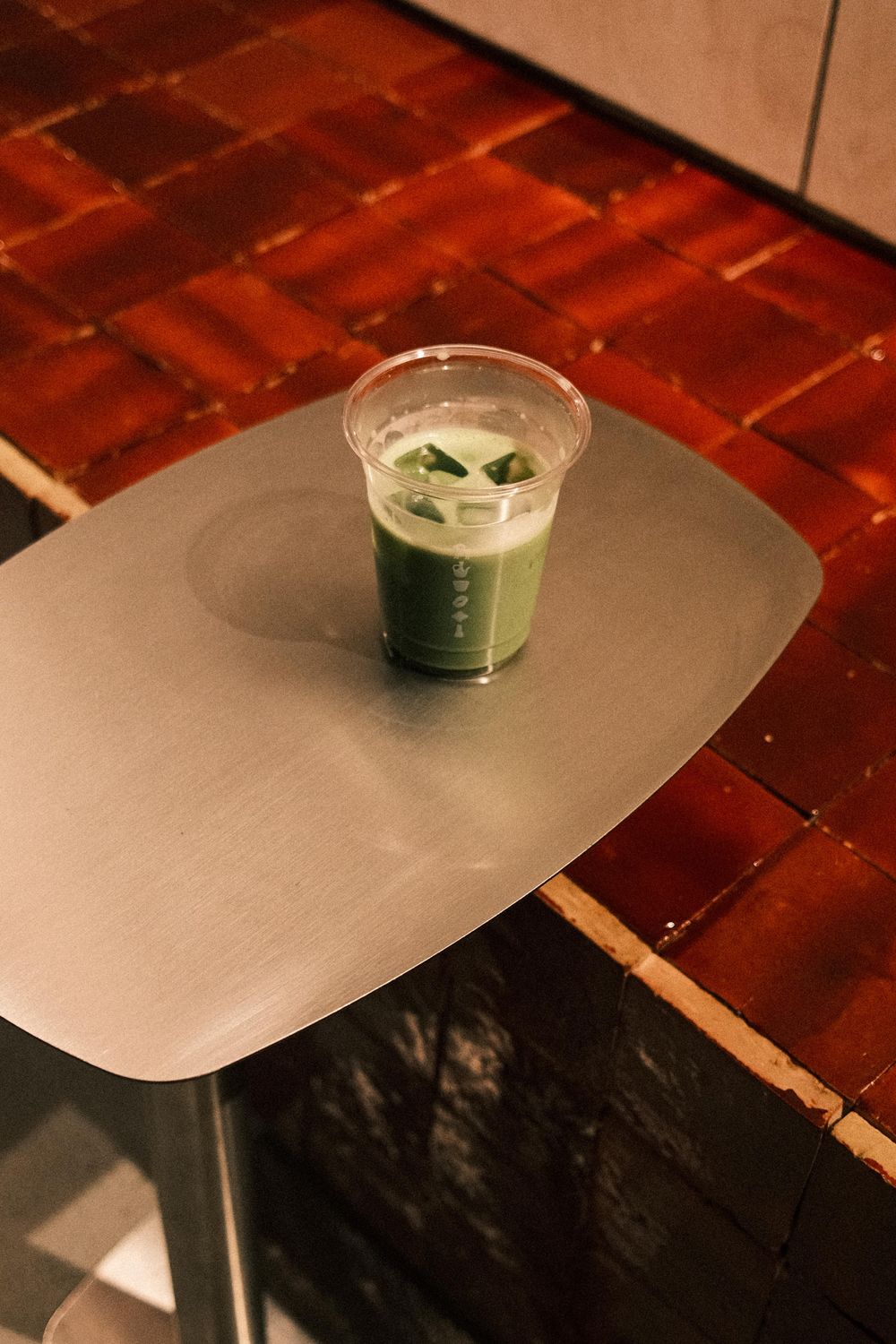
KAAWA occupies a glass corner in Manchester's Ancoats, the former mill district whose renovation made it the most concentrated stretch of independent hospitality in the north of England. The café's founding idea runs against the city's grain: somewhere to stay open, and stay welcoming, after most things close, built around coffee rather than alcohol. The name is drawn from the Arabic root for coffee, and the room's evening warmth, lamplight, terracotta, a lit counter working late, honours the word's origins more than its branding insists on.
The study was made on a wet weekday evening, from the pavement as much as the interior, because the café's real subject is the exchange between a lit room and a dark street. The corner glazing turns the whole operation into a vitrine: baristas at work, the machine's glow, one customer at the window ledge, all of it framed against reflections of the passing city. Manchester in the rain is a gift to this kind of photography, and the study accepts it gratefully.
In the archive KAAWA became more than a study. It grew into Open Late, the studio's fourth publication, and its night-time frames now travel the site from the home page to the hospitality collection. It stands as the clearest proof of the archive's founding premise: that a small room, documented seriously, can carry as much editorial weight as a grand one, and sometimes more, because nobody else thought it deserved the attention.