Alila Ubud
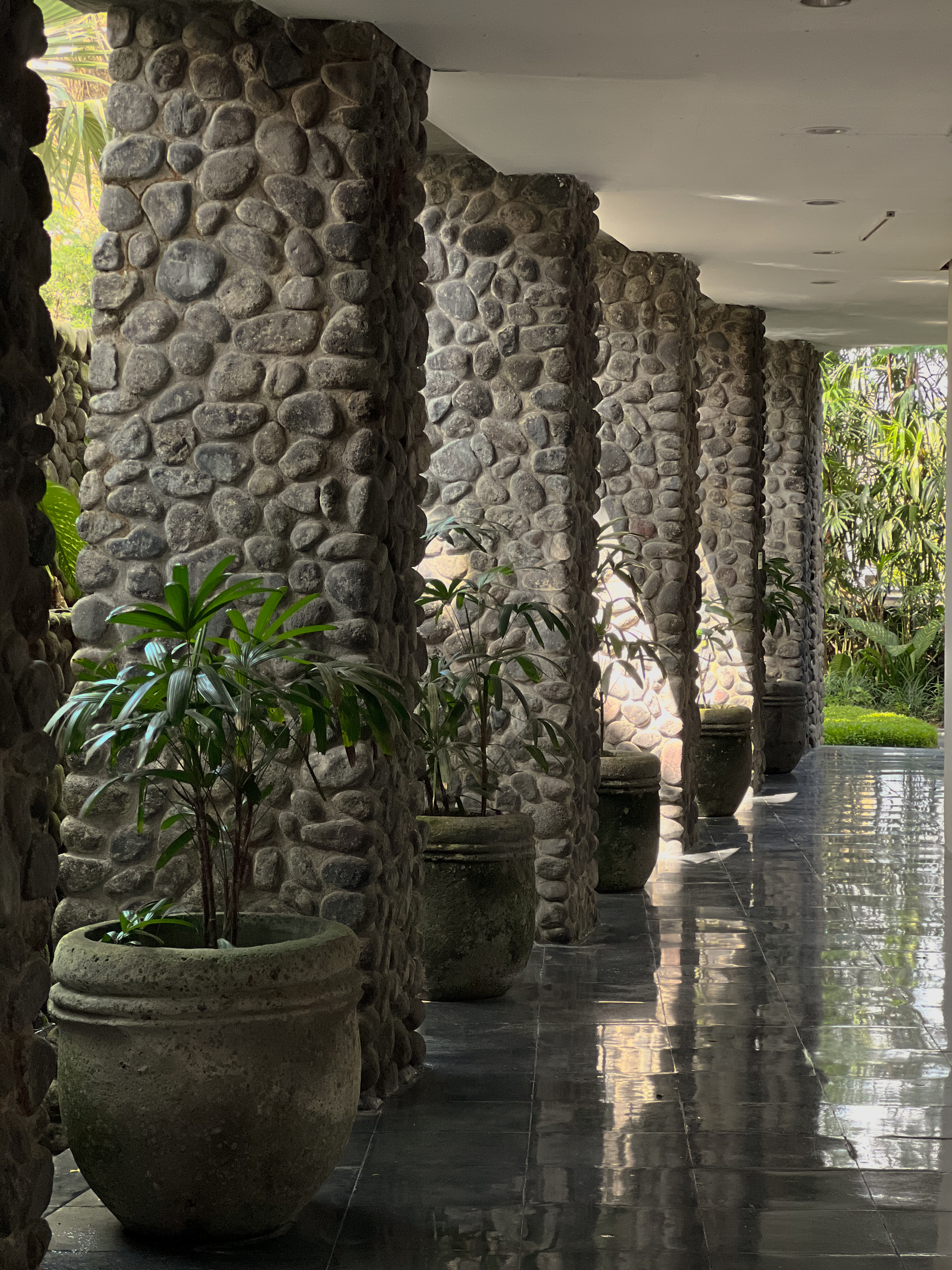
Stone, timber, thatched palm. The architecture of Alila Ubud does not announce itself. It arrives through texture, weight and the way light falls on surfaces made from the same landscape the building sits within.
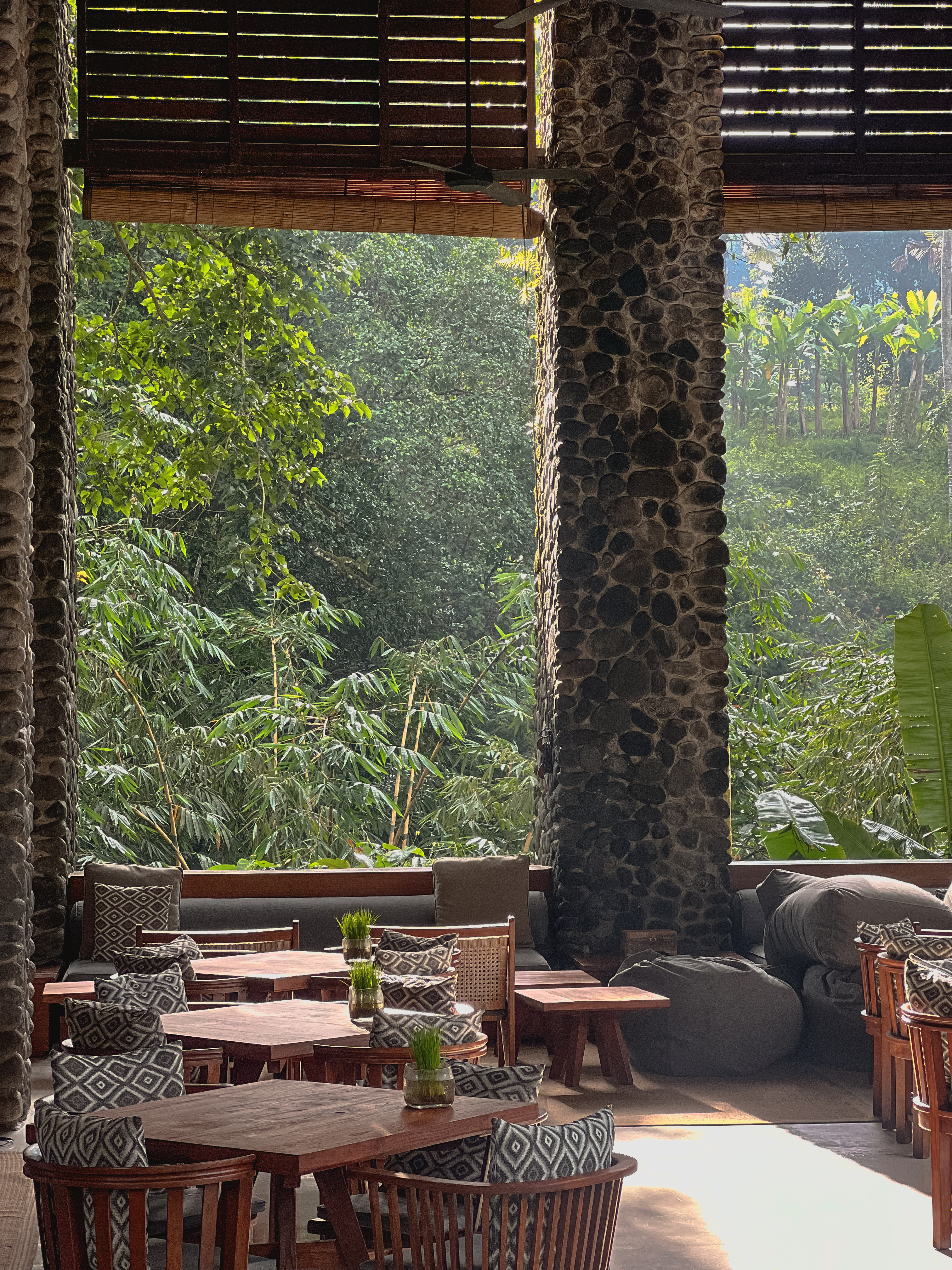
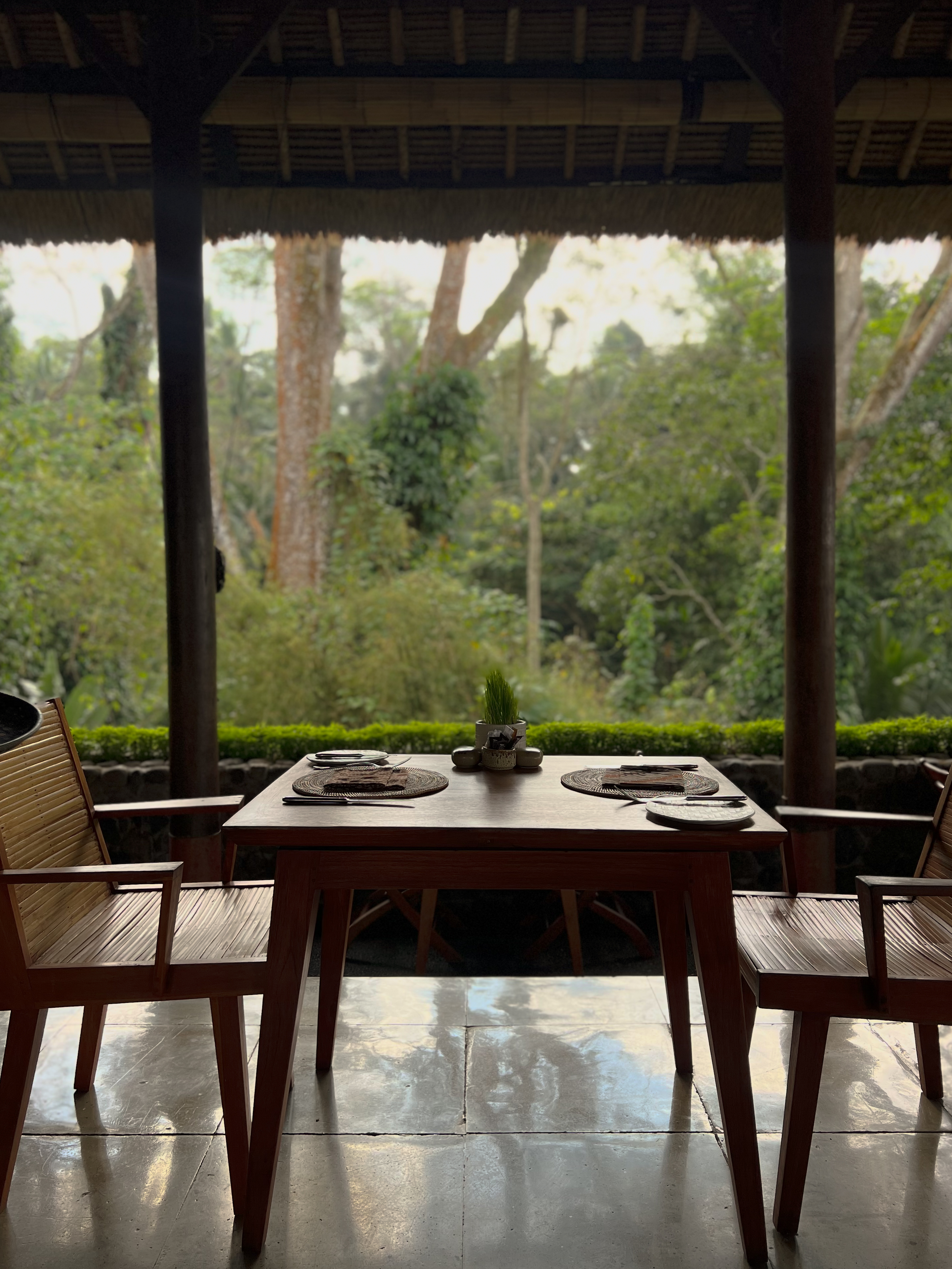
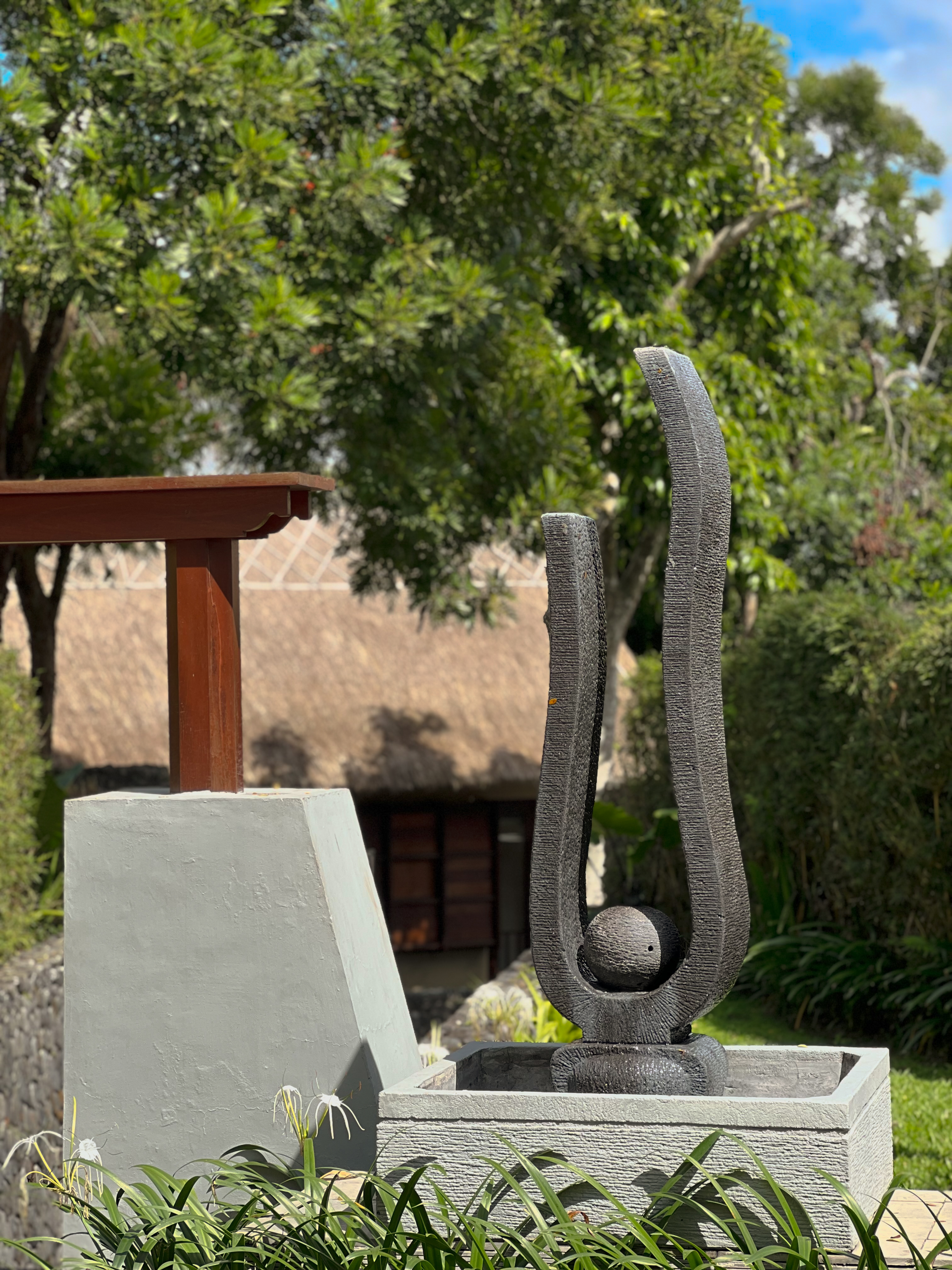
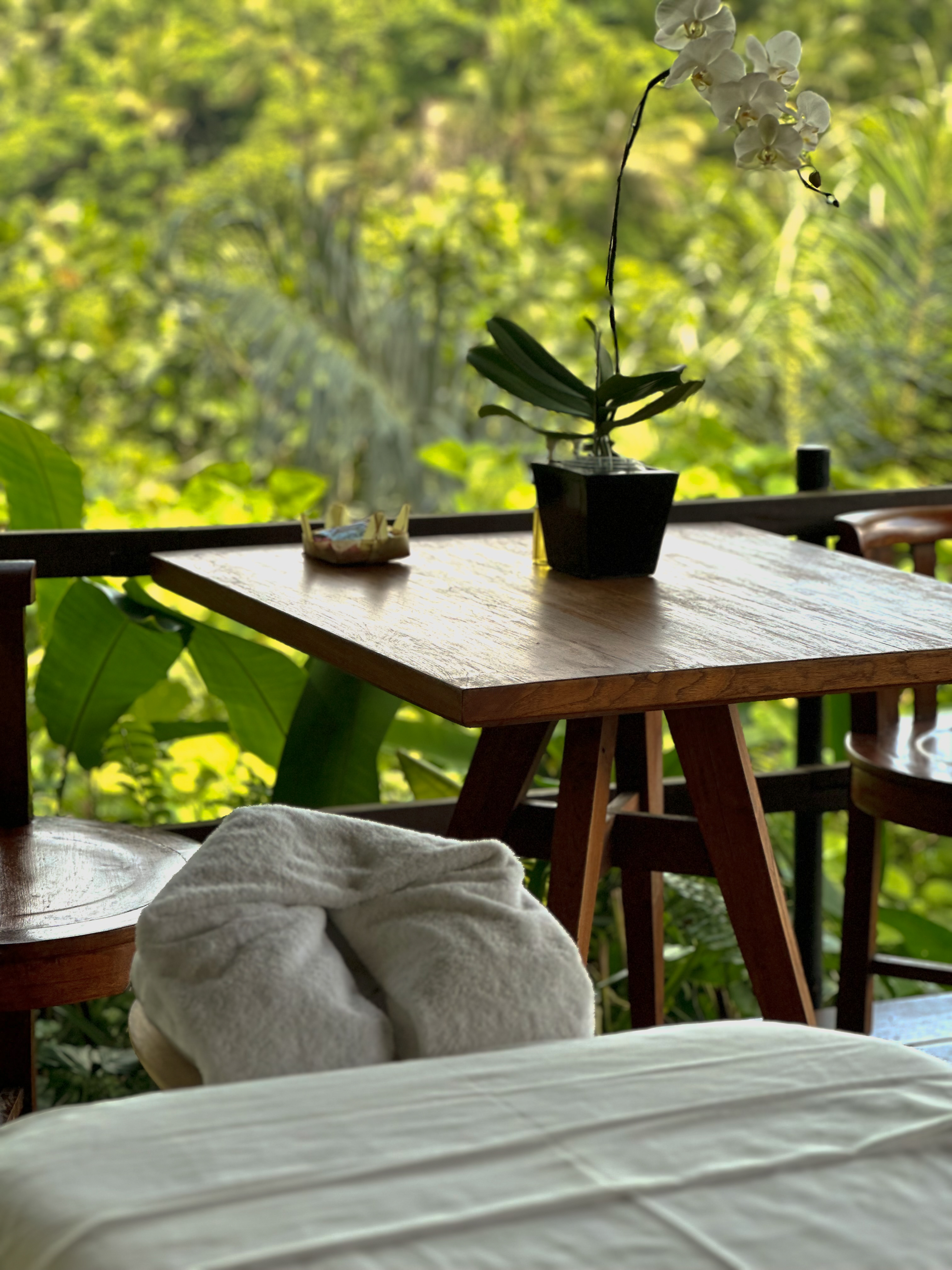
Each column, each corridor, each table belongs to a material conversation the forest is already having with itself. The volcanic stone sculpture in the garden, the hand-woven rattan in the room, the timber rack in the villa. Nothing here is decorative. Everything was already here in some form.
What the architecture does here is withdraw. The pavilions open on all sides. The dining space has no fourth wall. The pool holds the sky before a storm arrives. Shelter at Alila Ubud is not the absence of the outside but its considered meeting point.
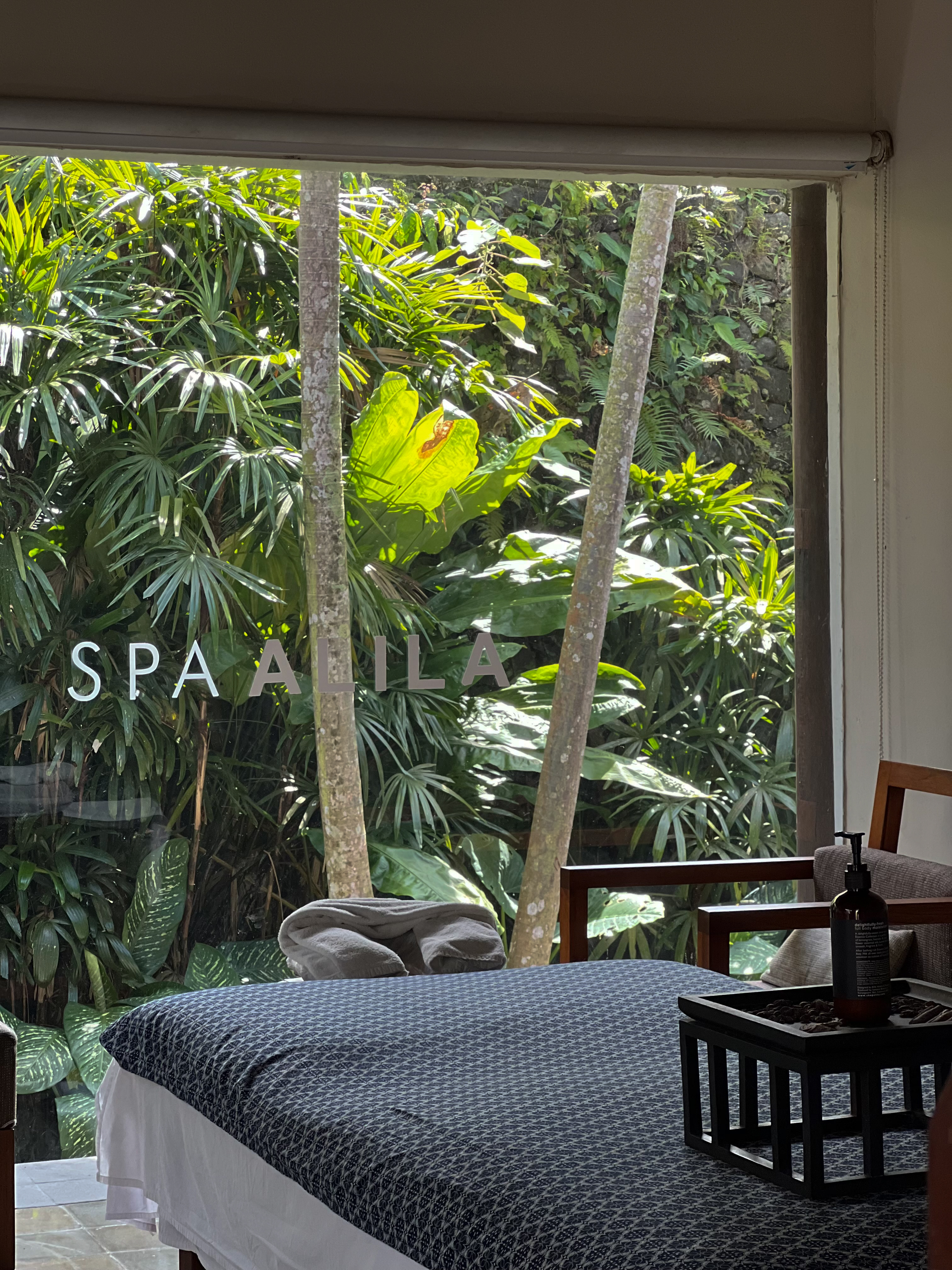
The jungle is not behind the glass. It is the view, the ventilation, the sound and the temperature. The architecture exists to make that relationship possible and then quietly step aside.
A study of hospitality shaped by landscape.
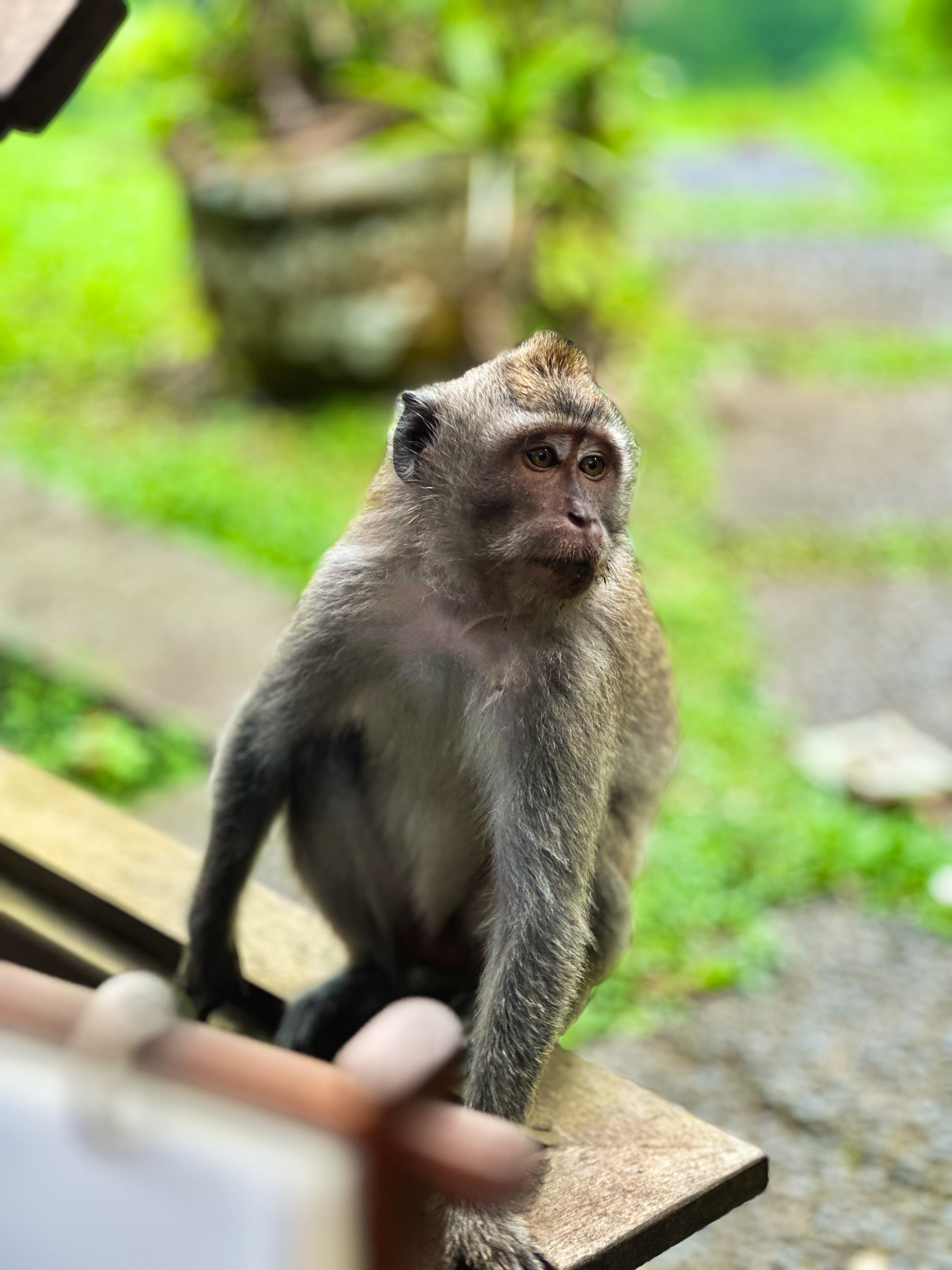
A robe hung on a timber rack. A table set for two beneath a thatched roof with rain arriving. A macaque on a railing, unbothered. What this place offers is not escape from somewhere but arrival at something. Stillness, material, ritual. The landscape makes no concessions, and the hospitality does not ask it to.
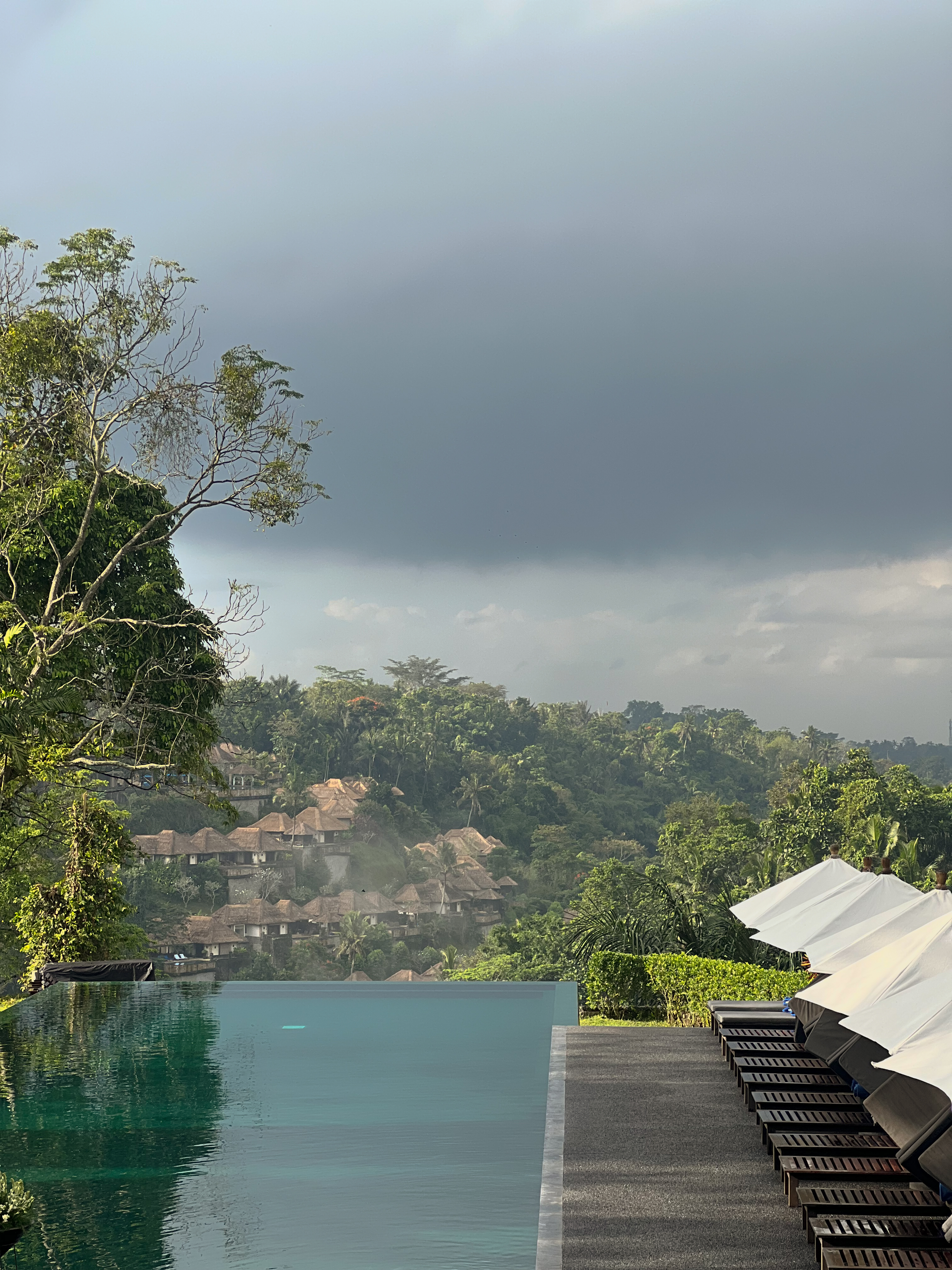

Alila Ubud sits high on the side of the Ayung River valley in central Bali, twenty minutes above Ubud town, in the belt of jungle and rice terrace that made the region famous before the traffic did. The hotel was designed by Kerry Hill, the Australian architect whose work across Asia effectively defined the quiet-luxury resort, and it shows every one of his signatures: local stone and timber used structurally rather than decoratively, courtyards that frame the landscape instead of competing with it, and the celebrated pool that appears to float against the valley like a held breath.
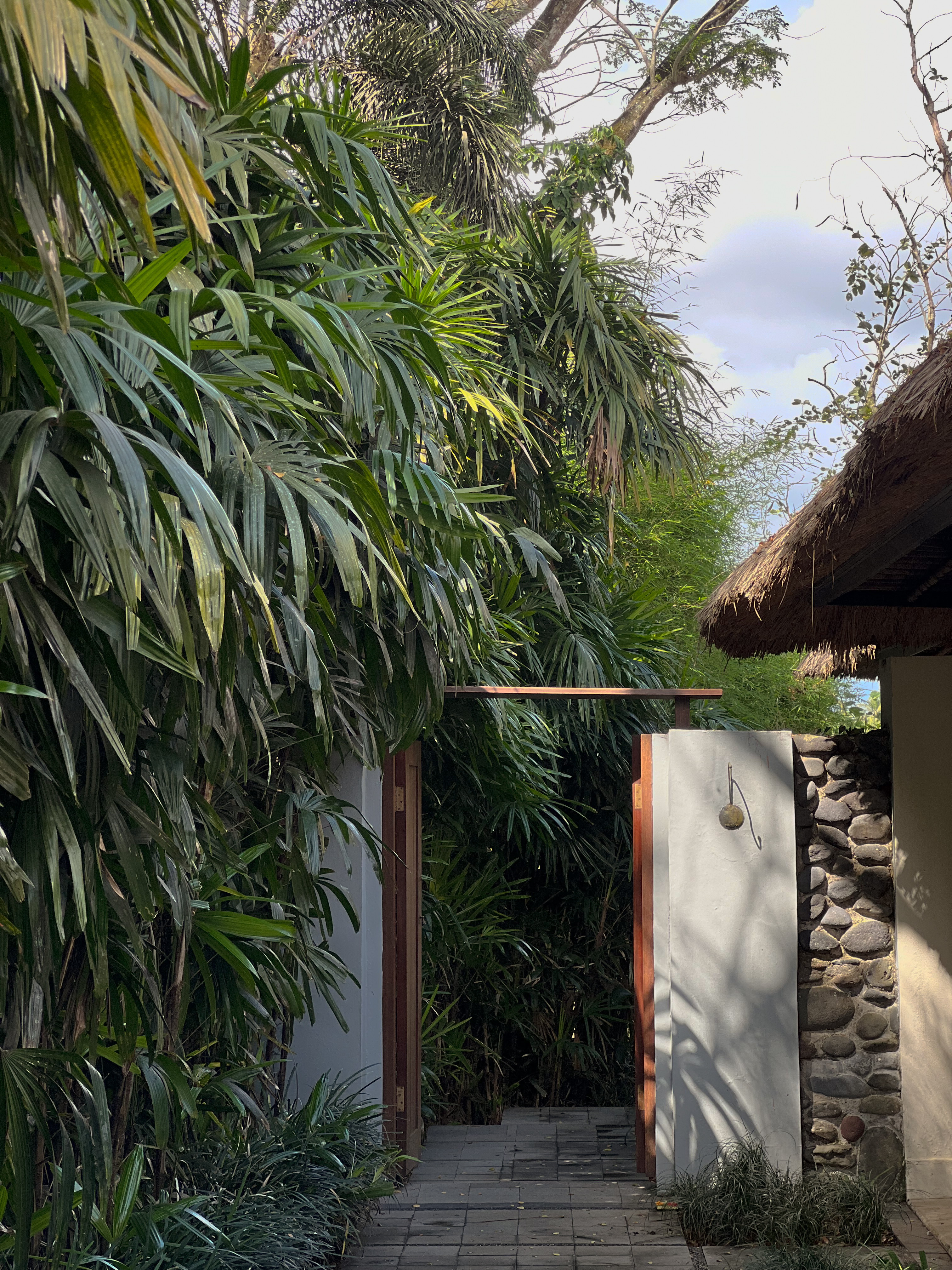
The study reads the property the way the architecture asks to be read, as a material conversation with the forest. The photographs stay close to surfaces: volcanic stone, hand-woven rattan, rain on lily pads, the moss the climate applies to everything as a finish. The jungle pathway and the timber gate carry as much weight in the sequence as any interior, because at Alila the threshold is the architecture; the buildings exist mainly to organise the moments of entering the landscape.
In the archive, Alila Ubud is the reference for hospitality that defers, the opposite pole to the Gulf's architecture of assertion, and one of the studies most often revisited when the studio thinks about materials. One frame from it opens a Journal essay on the first ten minutes inside a space. The lesson the whole property teaches is in that essay's territory: a building can be most present exactly where it chooses to disappear.