QINWAN, Msheireb
Qinwan feels less like a café and more like an expression of hospitality.
The name belongs to dates before it belongs to a room. Qinwan began as a Qatari dates house and grew outward into hospitality, and that beginning is still felt in everything the space offers.
It sits in Msheireb, the part of Doha that is being rebuilt rather than replaced. Stone surfaces worn smooth by movement and conversation. Palms repeated quietly across the room.
I did not come to photograph the food.
The dates and the coffee matter, but they are not the subject. The subject is the welcome built around them.
In the Gulf, hospitality is not a service. It is a form of respect, older than any café, offered before anything is asked for. Dates and coffee are how that respect is spoken.
I wanted to understand how a brand could take something so familiar and place it inside a contemporary room without losing the meaning.
I followed the gestures rather than the menu.
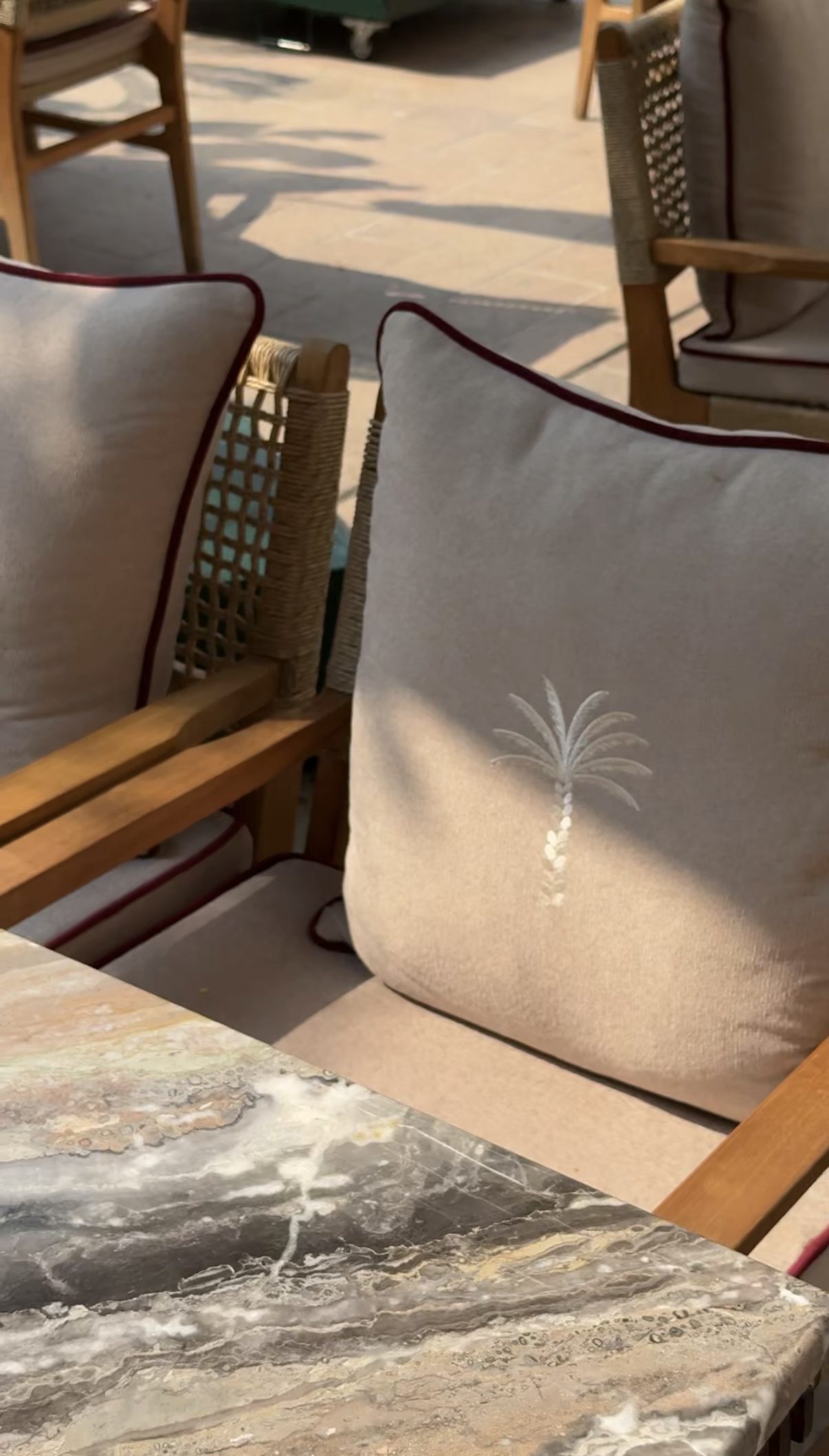
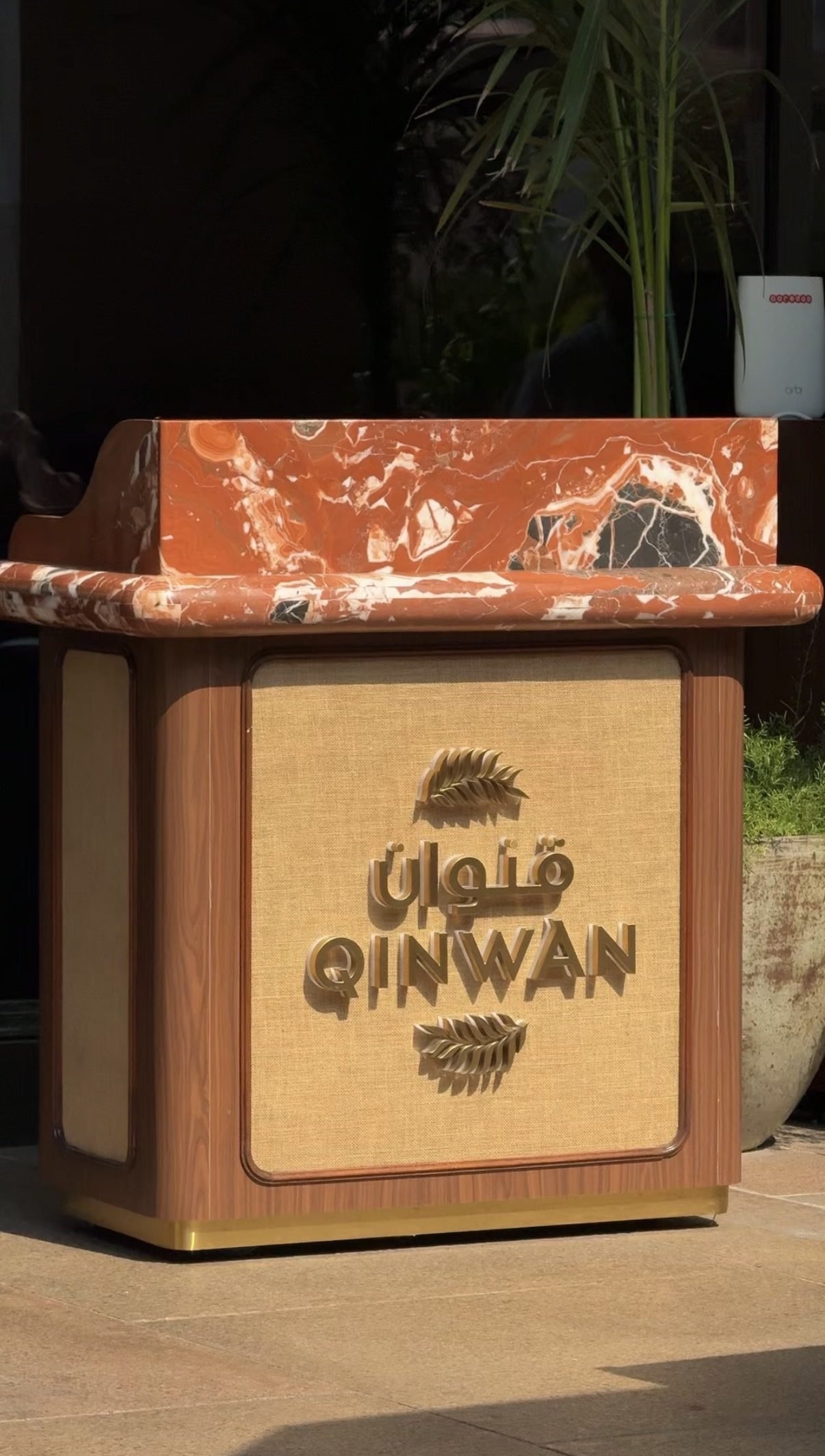
The palm appears everywhere once you begin to notice it. Embroidered into a cushion. Cast in brass on the host stand. Set in stone across an arch as a mosaic. The same symbol repeated until it stops being decoration and becomes identity.
This is how culture survives inside hospitality. Not through explanation, but through repetition. A motif returned to so often that it reads as belonging.
The materials carry the same intention. Red marble. Warm wood. Woven rope and linen. Surfaces chosen to age well and to feel familiar rather than new.
When the table arrives, dates and coffee are placed first. Not as products, but as gestures. The order matters. Hospitality before consumption.
The strongest hospitality rarely announces itself.
It reveals itself slowly. Through materials. Through repetition. Through the small ritual of being offered dates and coffee before anything has been asked.
Qinwan uses that language to build something that feels distinctly Qatari while remaining entirely of the present.
It is less a café than a continuation of a cultural tradition.
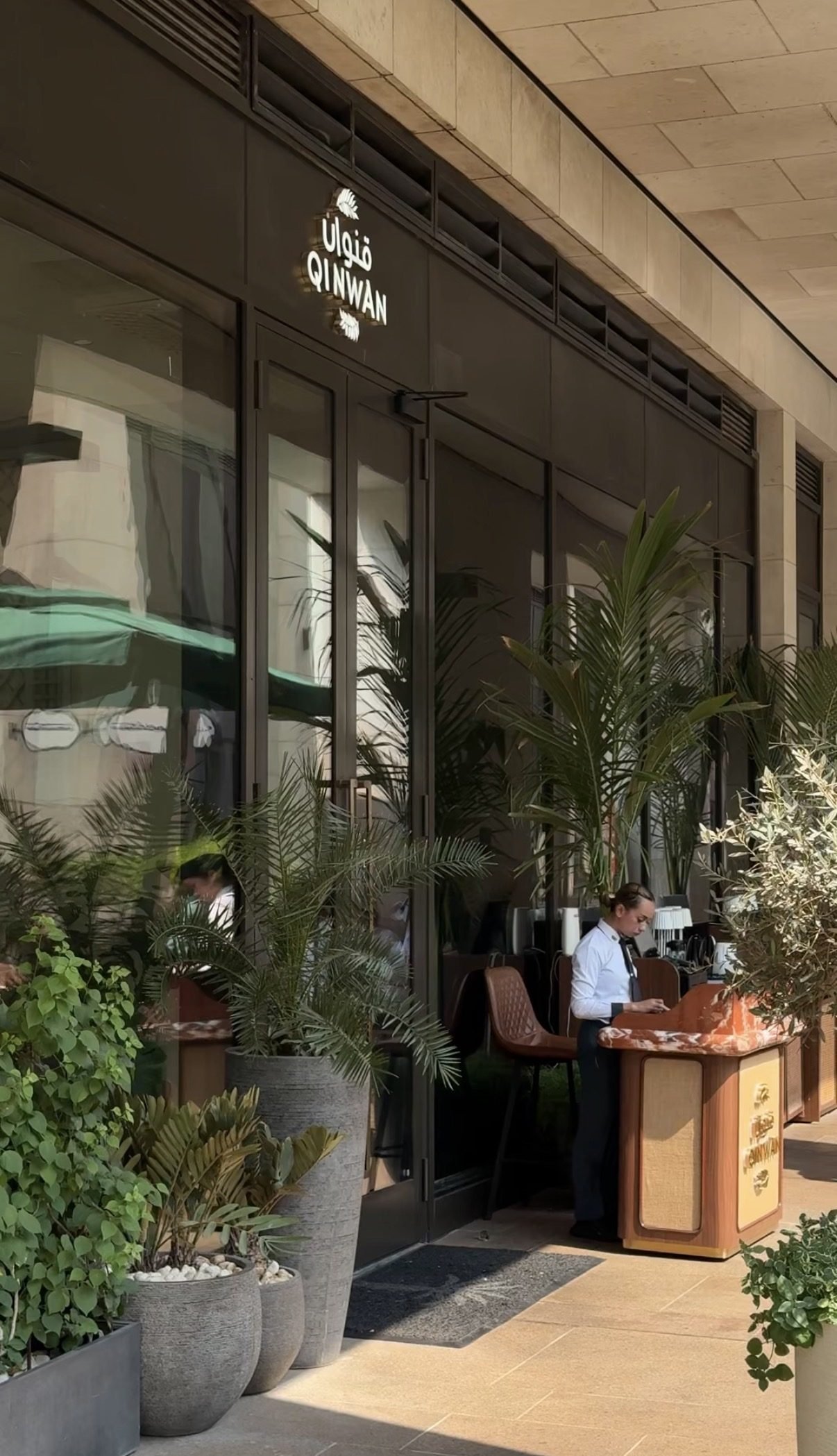
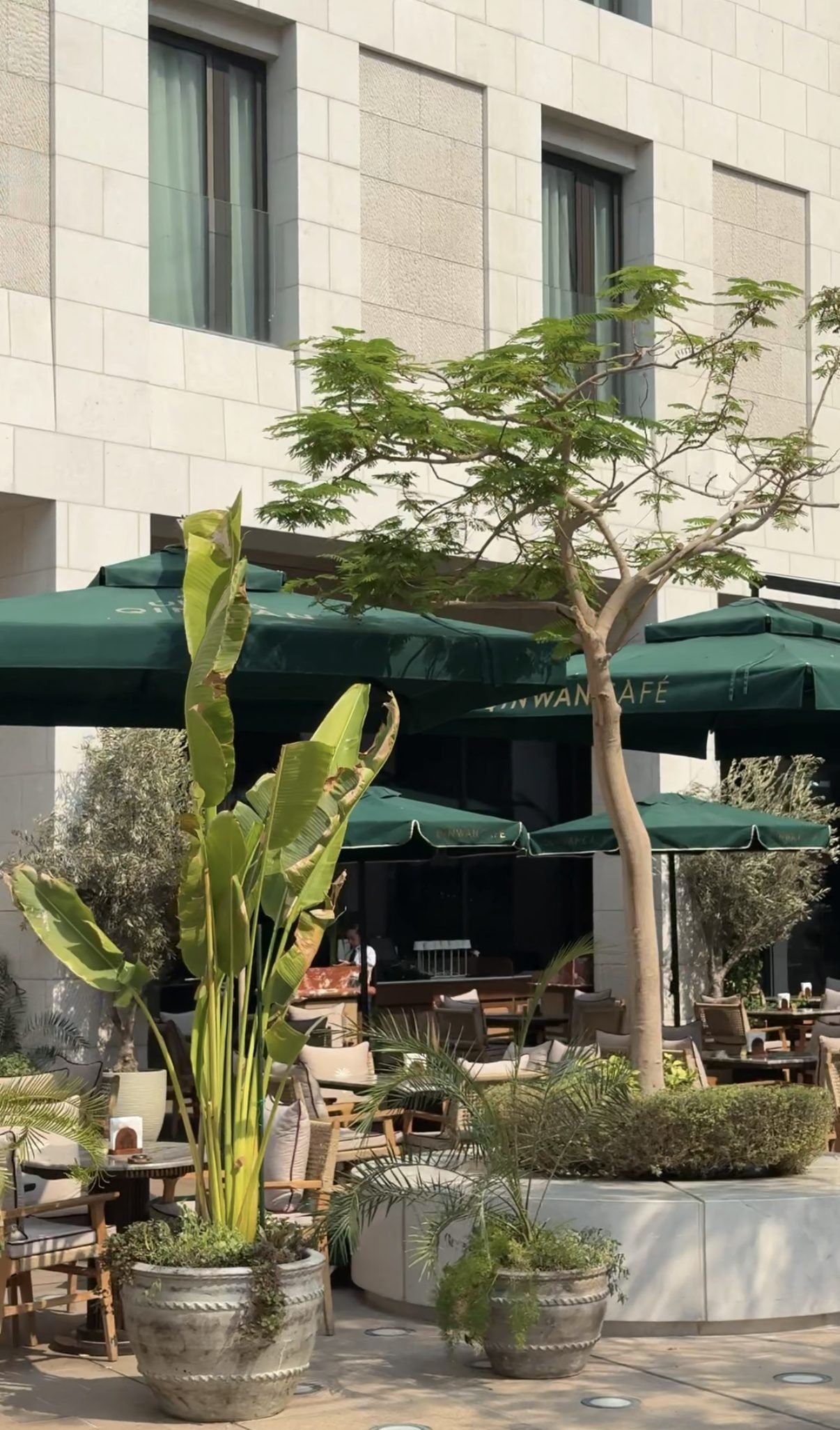
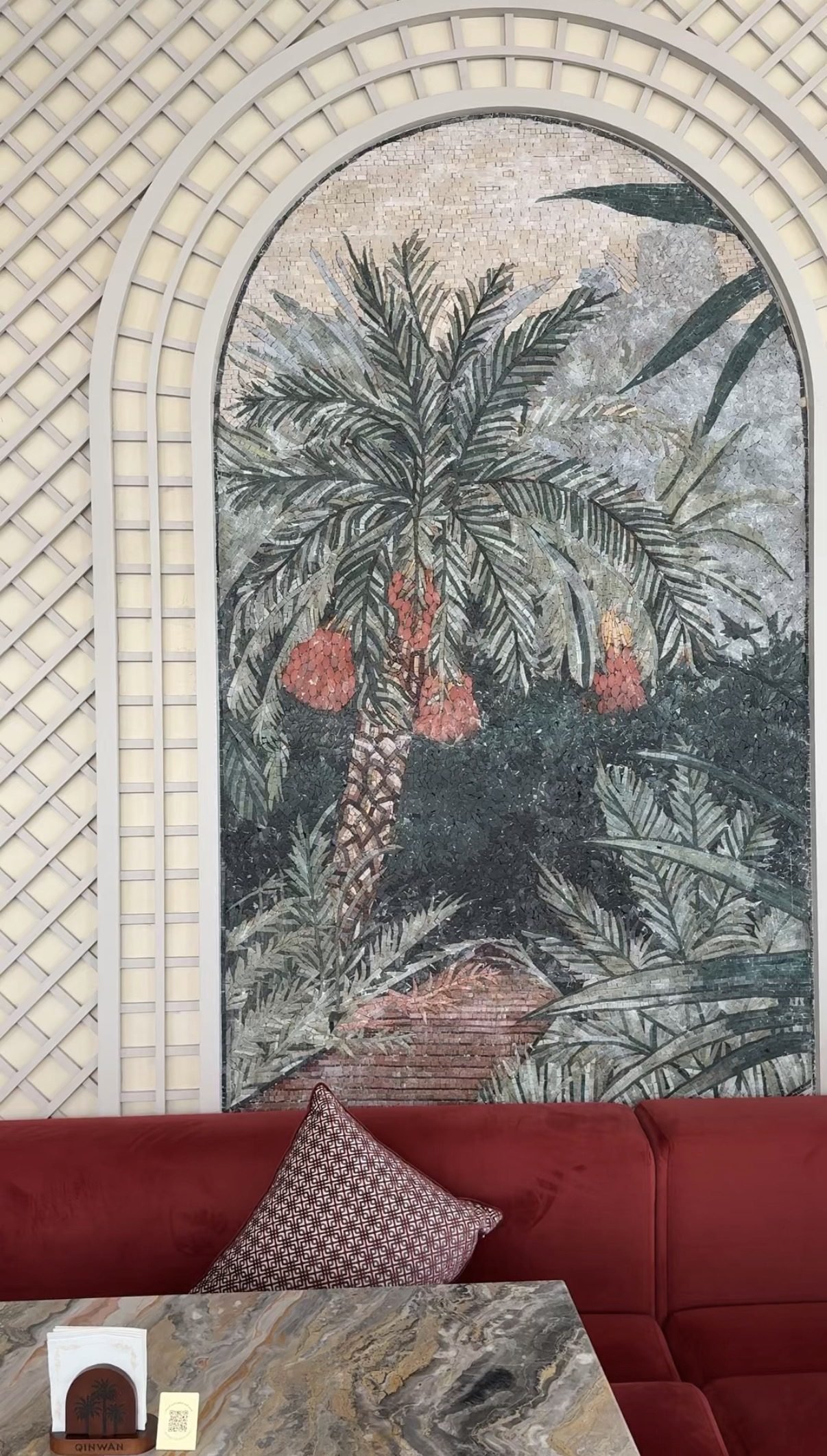
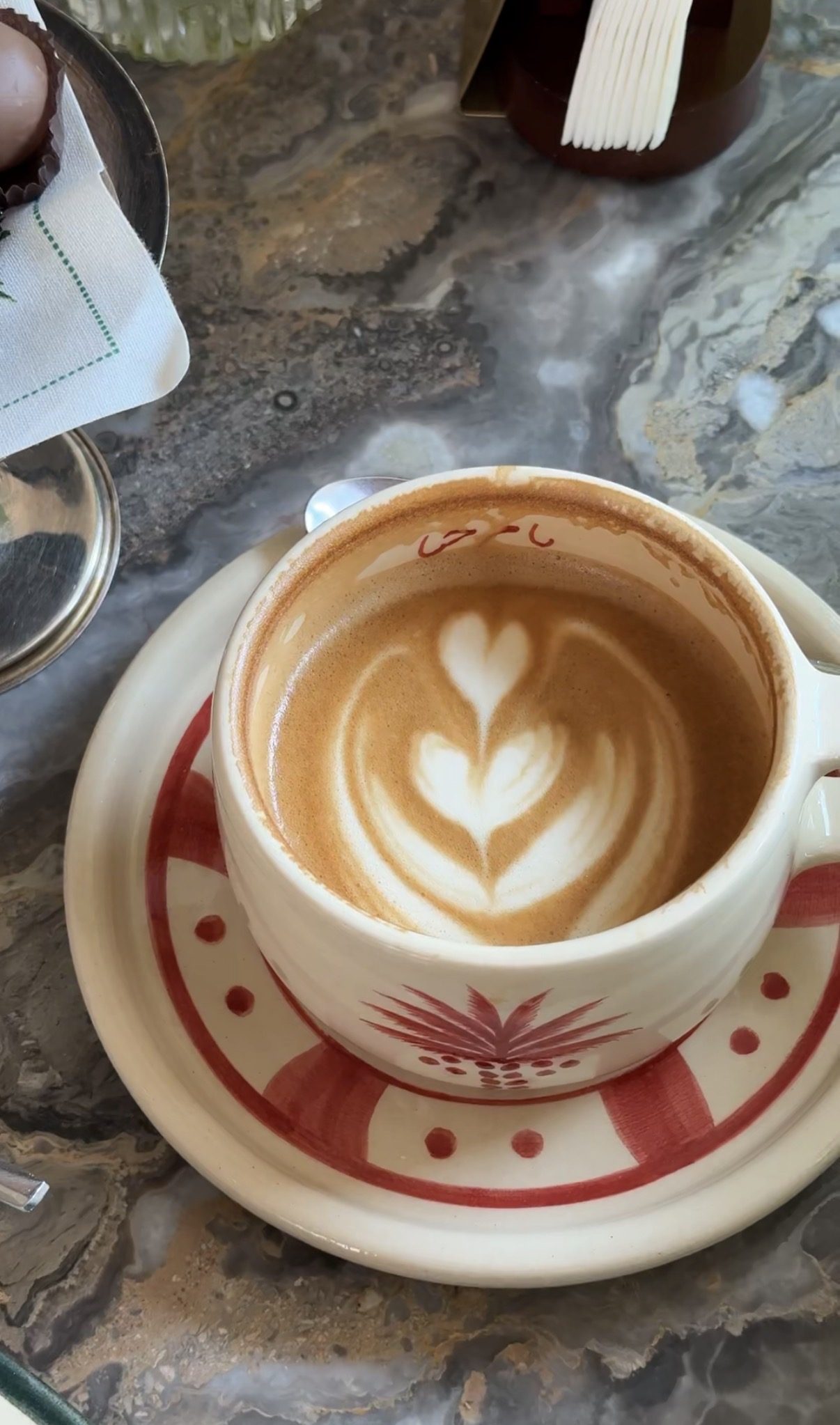
Qinwan began as a Qatari dates house and grew into a café, and that order of events explains everything about the room it keeps in Msheireb. Dates are the oldest hospitality in the Gulf, offered before coffee, before conversation, before business, and a space that starts from them starts from generosity rather than menu. The name has weight in Arabic, a qinwan is a cluster of dates on the branch, and the room carries the etymology gracefully: stone, palms, and a service culture built around offering first.
The study reads the café as an expression of welcome rather than a retail space. The photographs attend to the textures that carry the theme, worn stone, repeated palms, the presentation of the dates themselves, and to the way Msheireb's engineered daylight enters the room. The district was designed so its streets shade themselves; interiors here receive a filtered, directional light that most cities would need equipment to produce, and the study leans on it throughout.
Within the archive Qinwan carries the Doha chapter's clearest link between hospitality and heritage, and it seeded the thinking that later became a Journal essay on when not to commission: the observation that a room whose story is real requires nothing invented. It is also quietly one of the most searched-for subjects in the archive, evidence that a place built on an old idea, photographed honestly, travels further online than novelty does.