Marrakech, on film
Marrakech does not need help with colour.
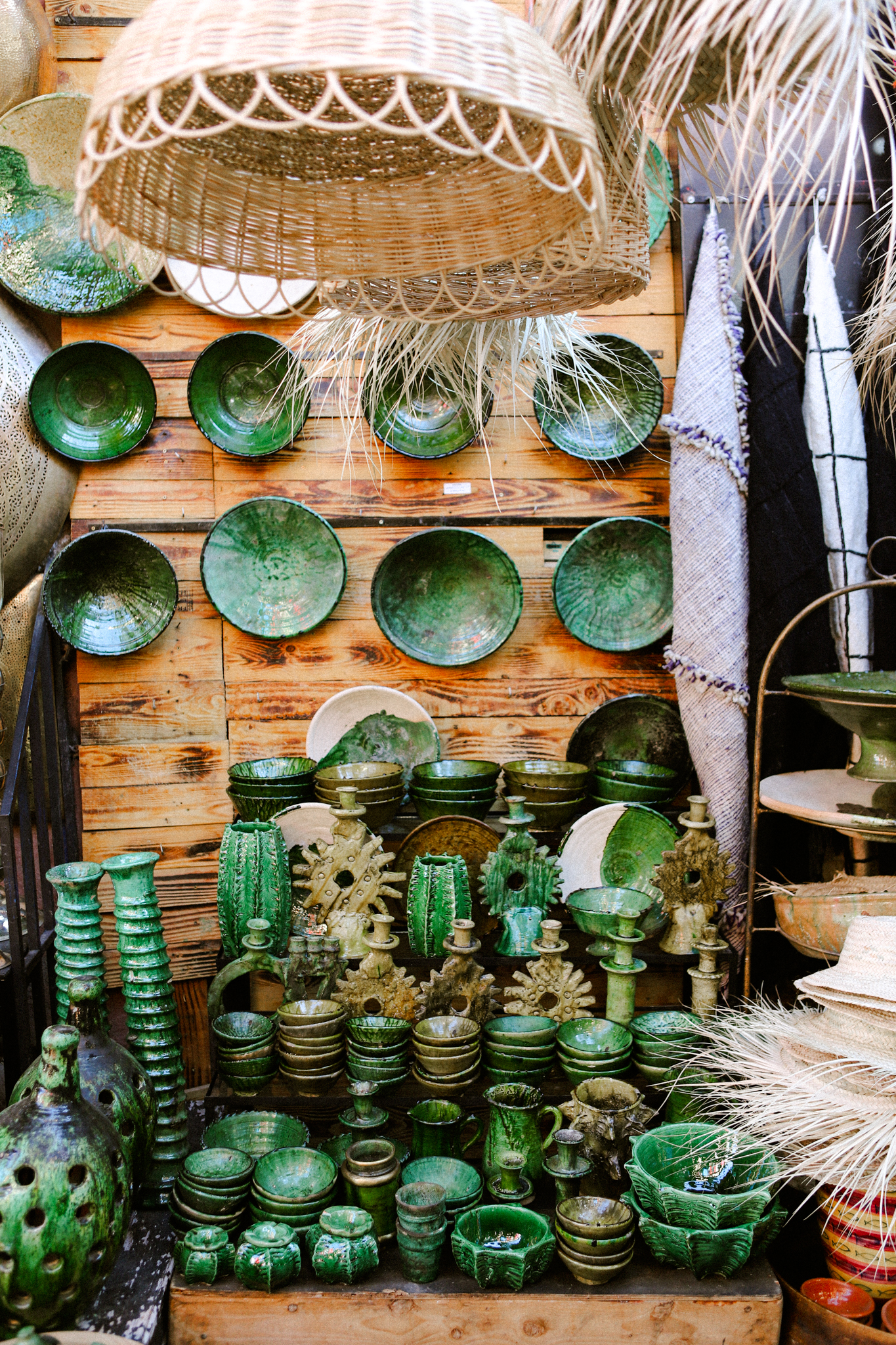
The walls are the colour of the earth they were raised from, somewhere between rose and rust, and everything hung against them argues with that ground rather than matching it. The wool. The beaten tin. A painted board above a doorway. Film suits a city built this way. It holds the red without shouting, keeps the shadows closed, and gives the afternoon the grain it already seems to carry. These frames were made on 35mm, on foot, at the pace the medina sets.
Most of the city is working.
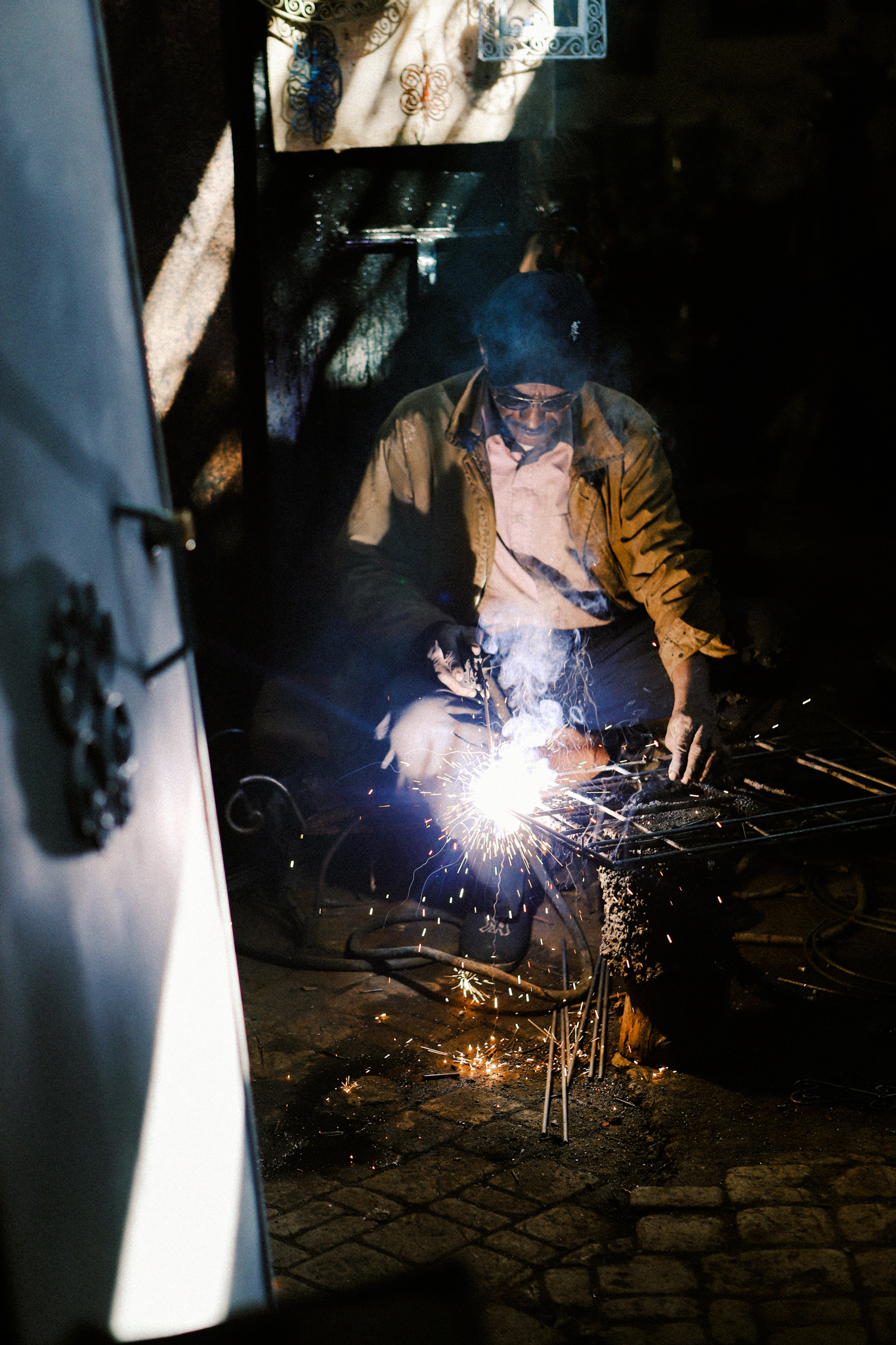
A man shines shoes with his hands raised mid-sentence. Another leans over a moped that has clearly been mended a hundred times before. In a dark doorway a welder bends into a spray of white sparks and the whole lane briefly takes his light. The souks are less a market than a run of small workshops that happen to sell what they make. You are rarely far from someone doing something with their hands.
Then a door, and the noise stops.
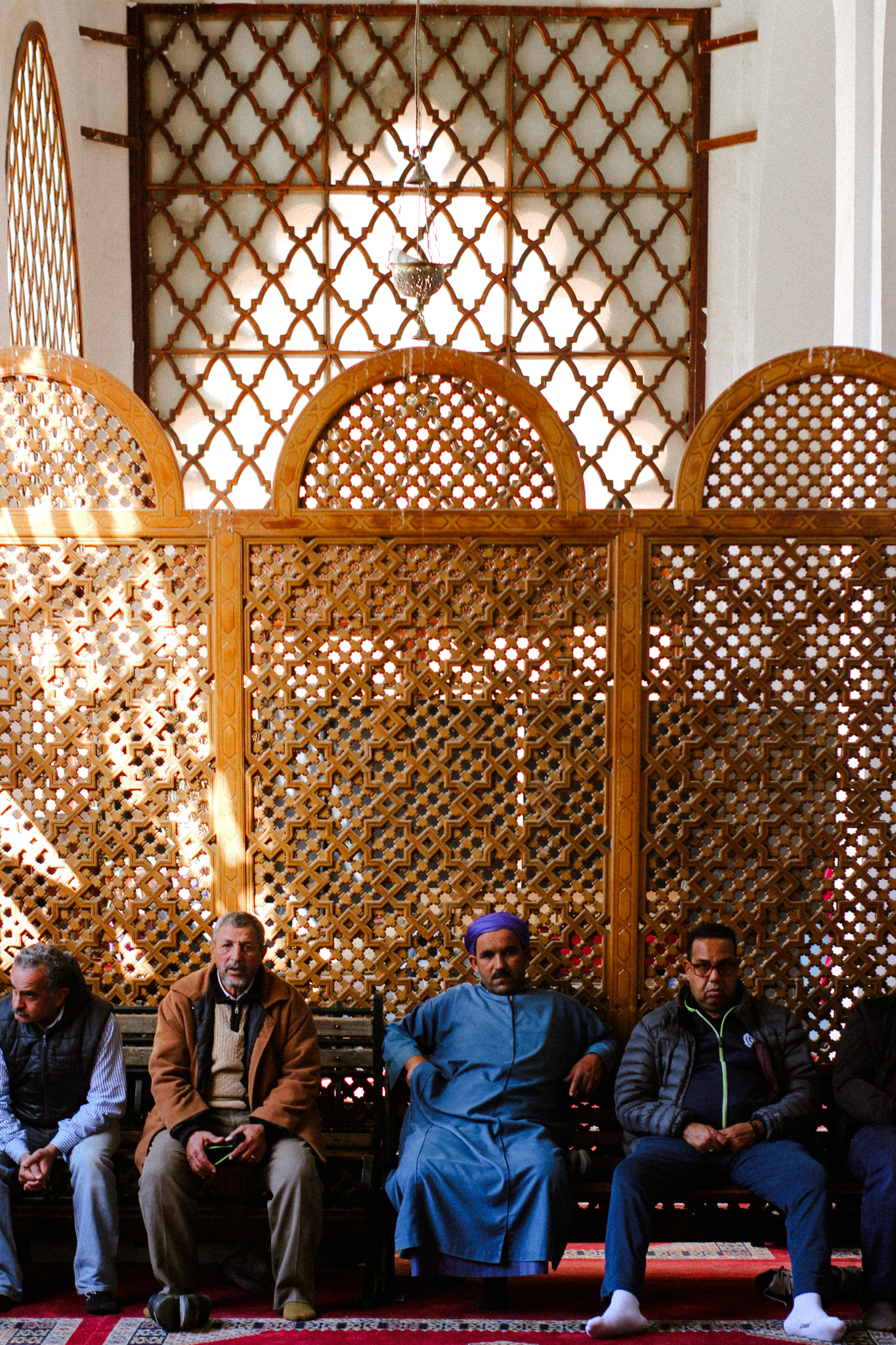
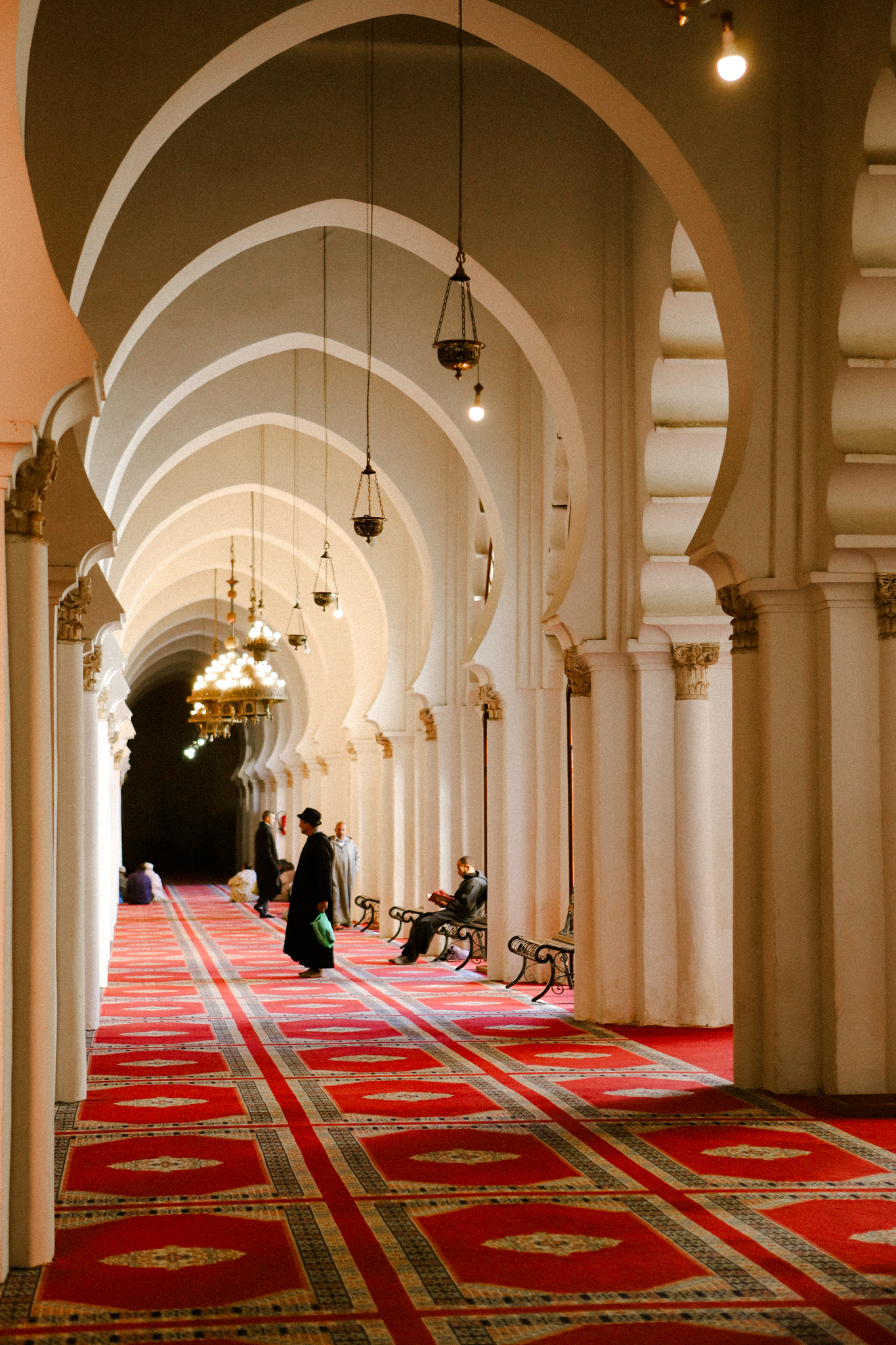
Inside the mosque the temperature drops and the colour changes register. Green tile beyond a screen. A red carpet running the length of an arcade toward a single chandelier. Men sit along a carved partition and wait, or rest, or pray. The medina presses right up to the threshold and is not allowed through. The quiet is not empty. It is kept.
Marrakech gives a photographer too much and dares them to choose.
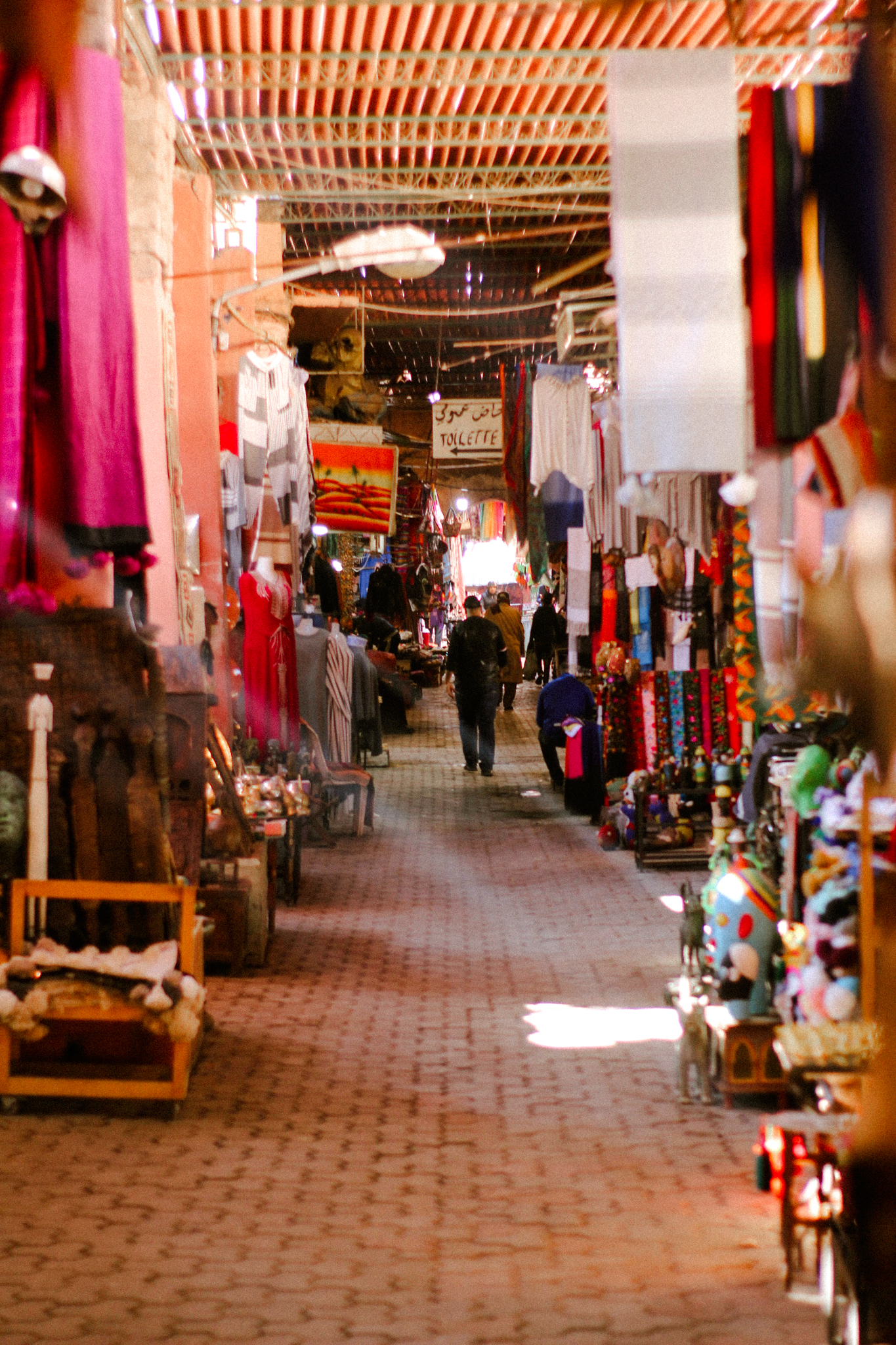
Every lane offers more colour and more incident than a single frame can hold. What survives the edit is not the most colourful thing but the most particular: a wall, a gesture, the exact light in a covered street at the middle of the day.
The city was already this colour. The film only agreed.
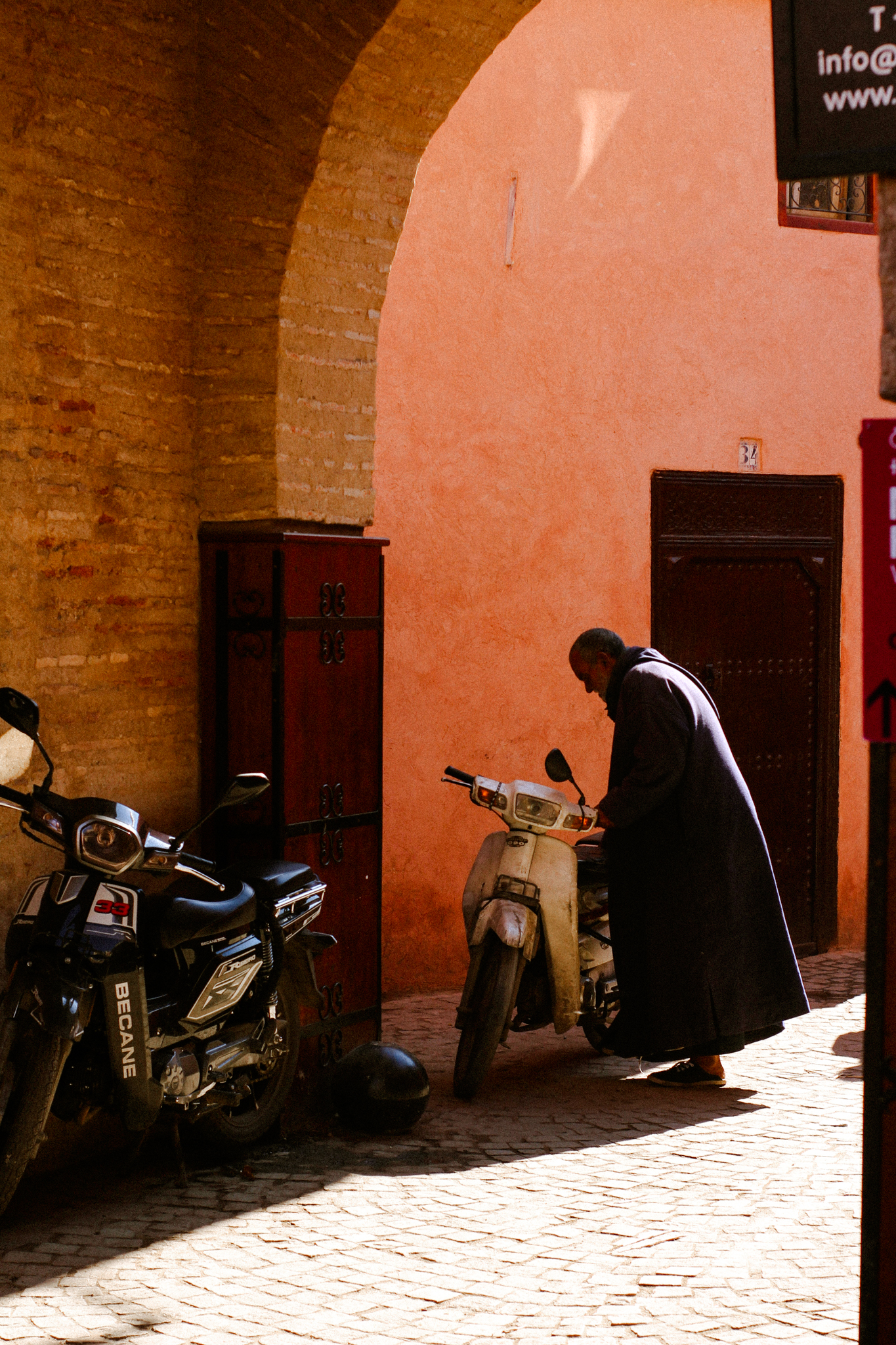
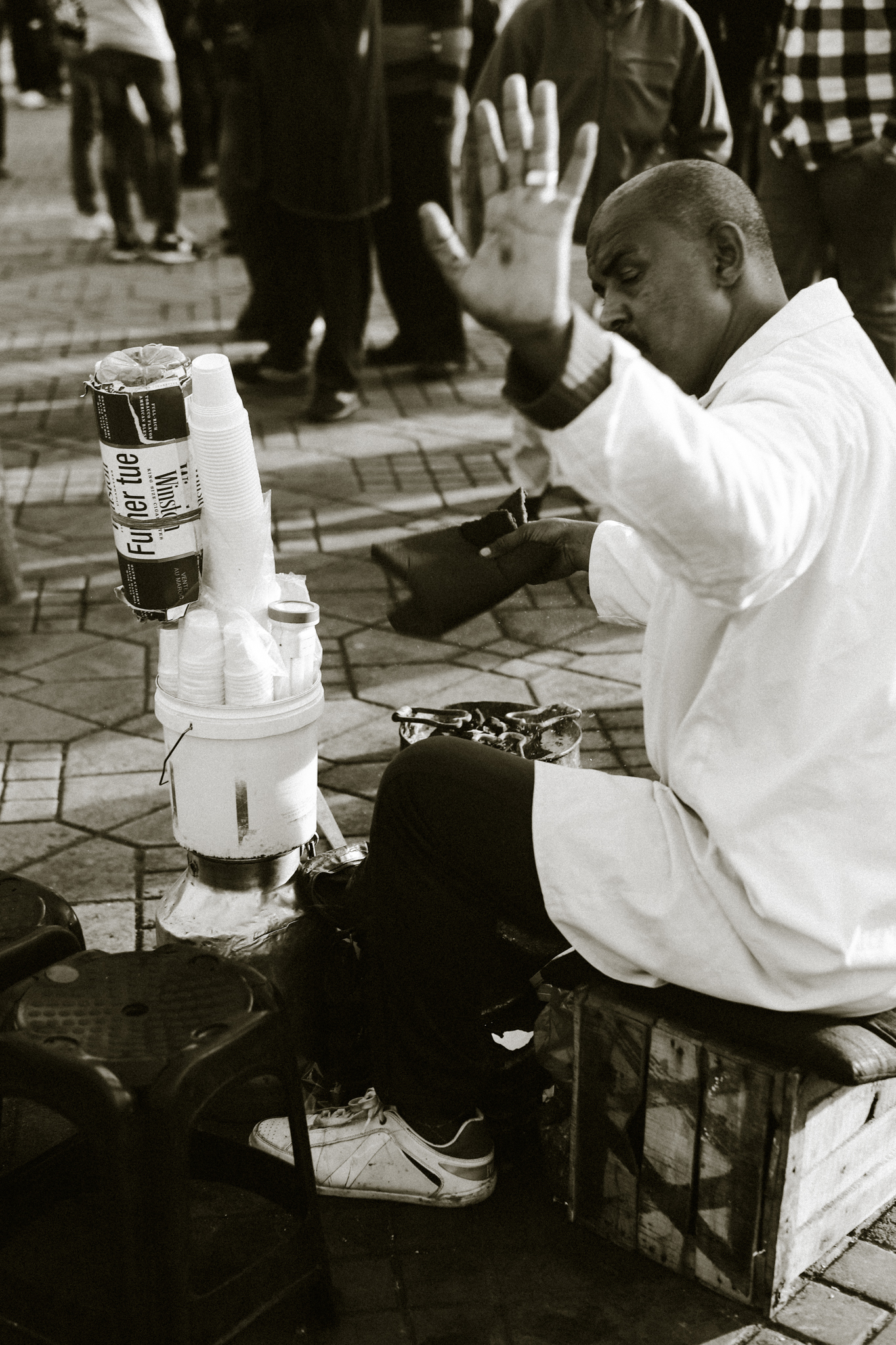
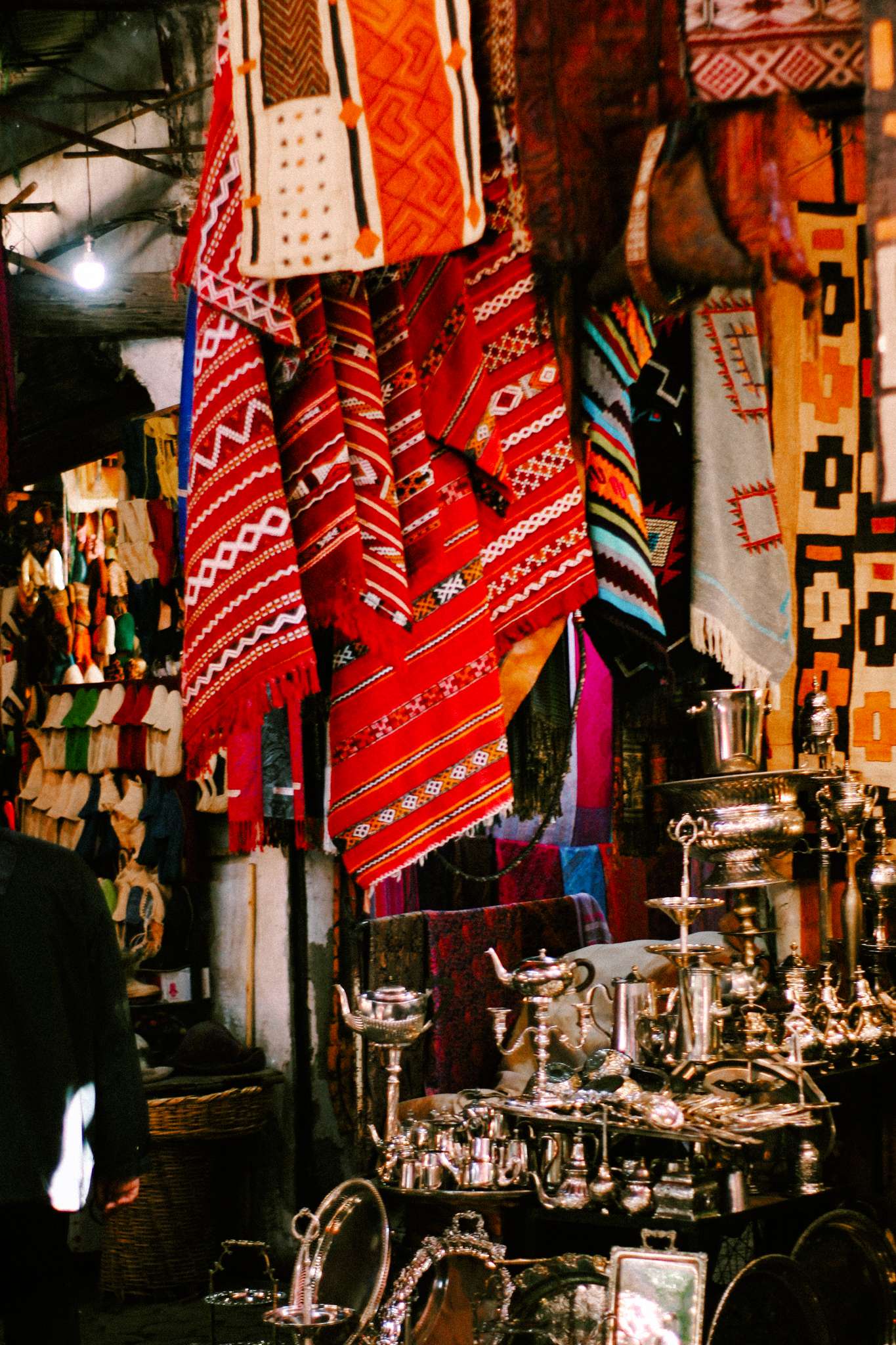
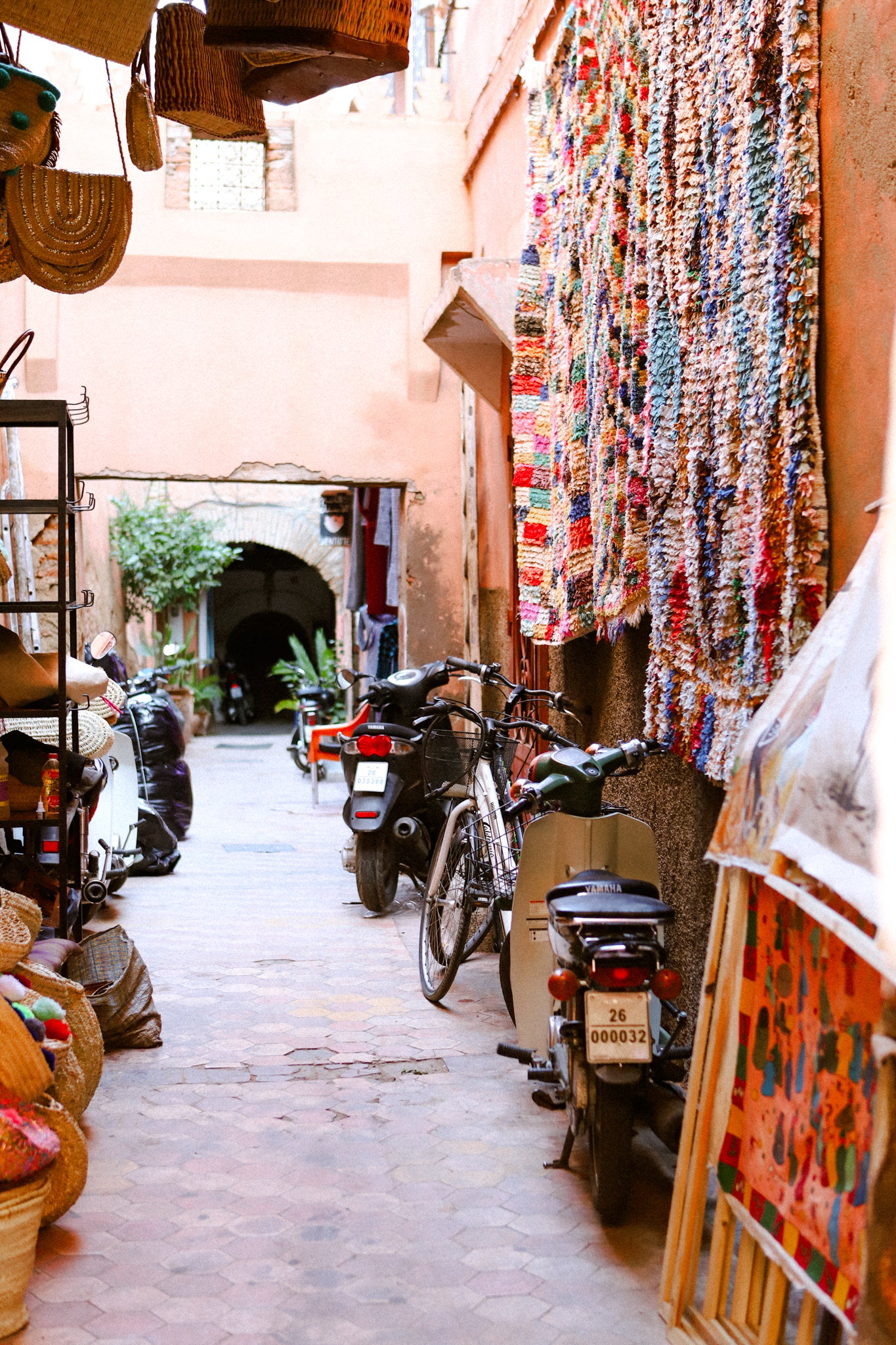
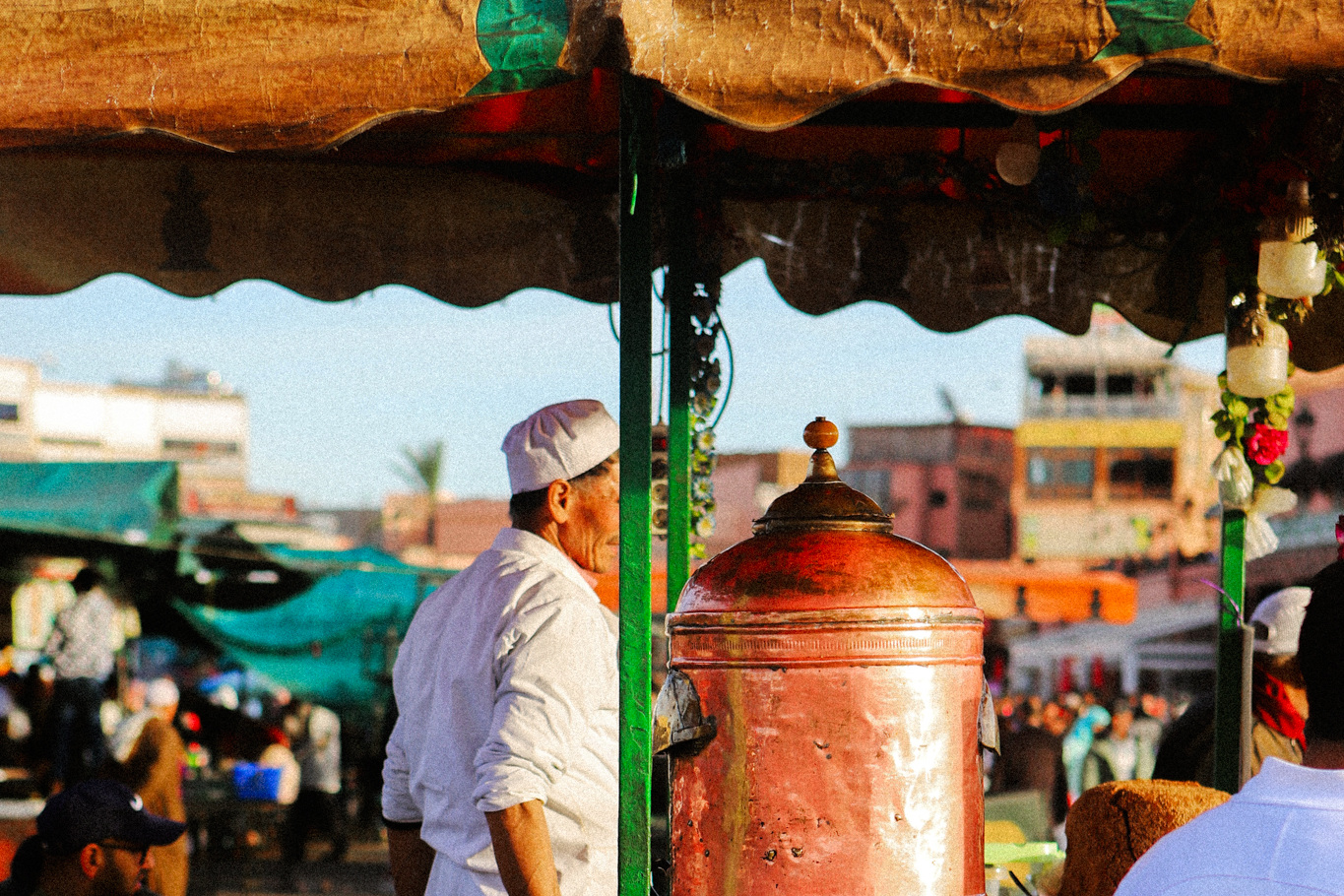
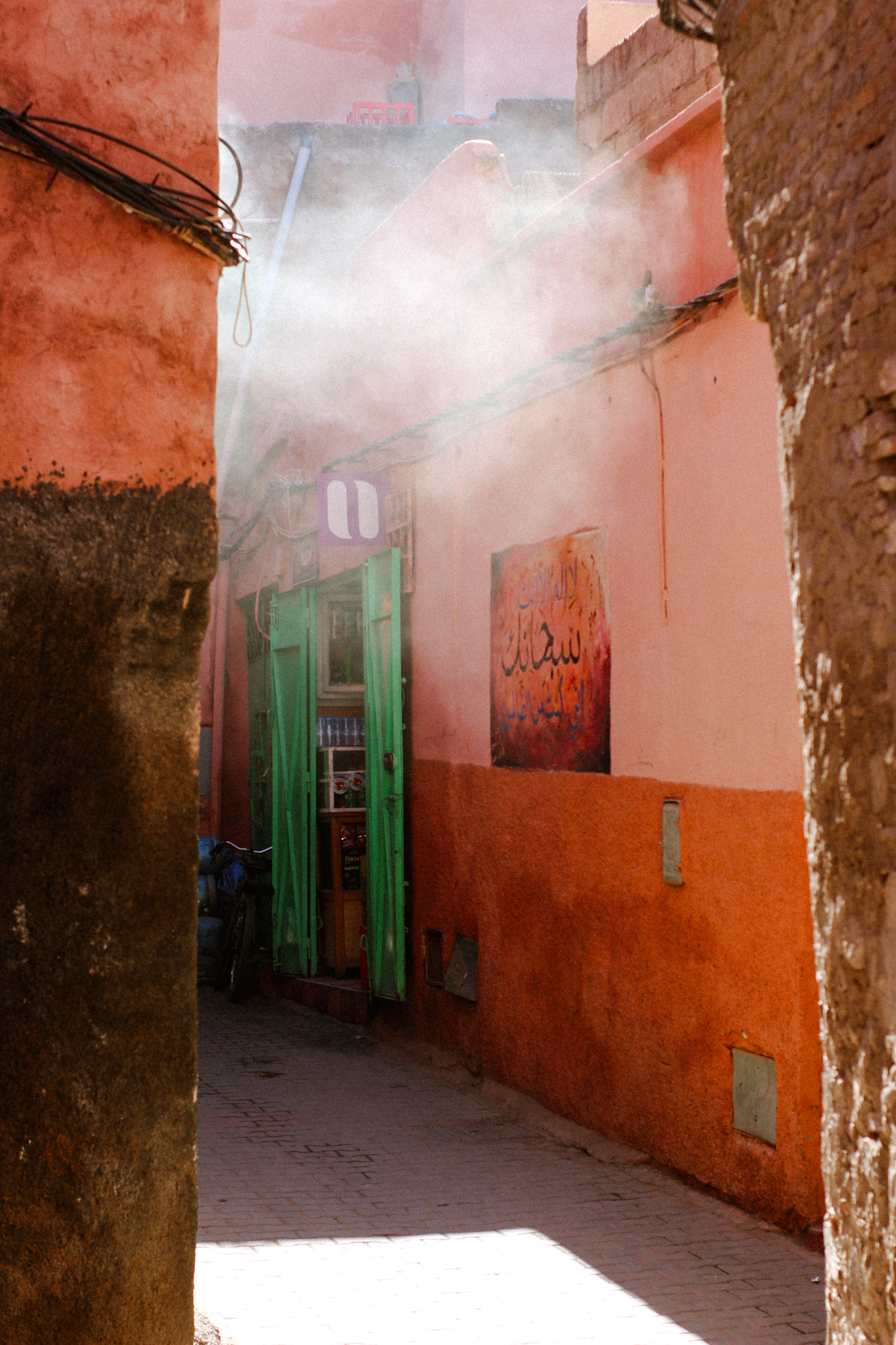
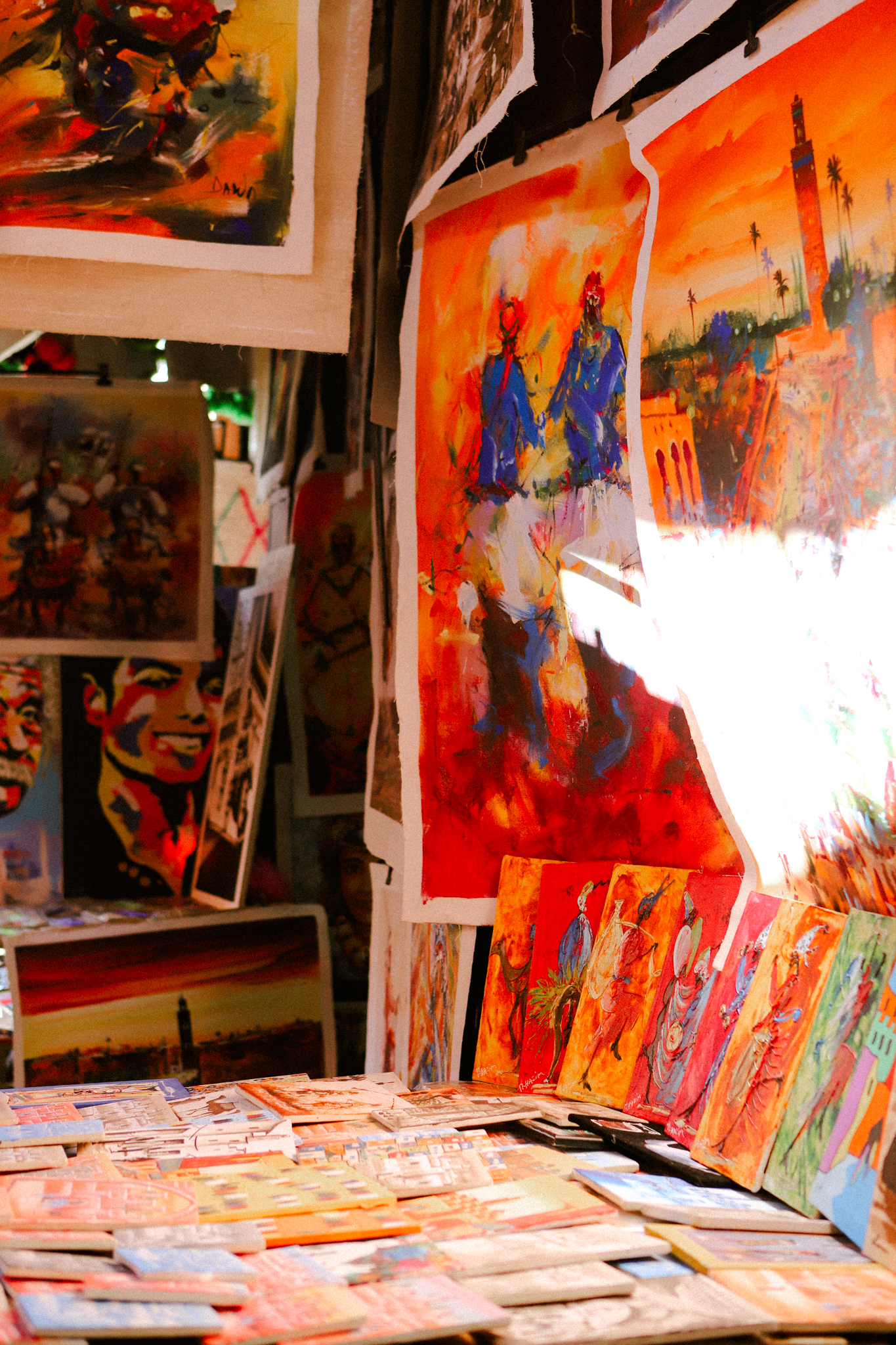
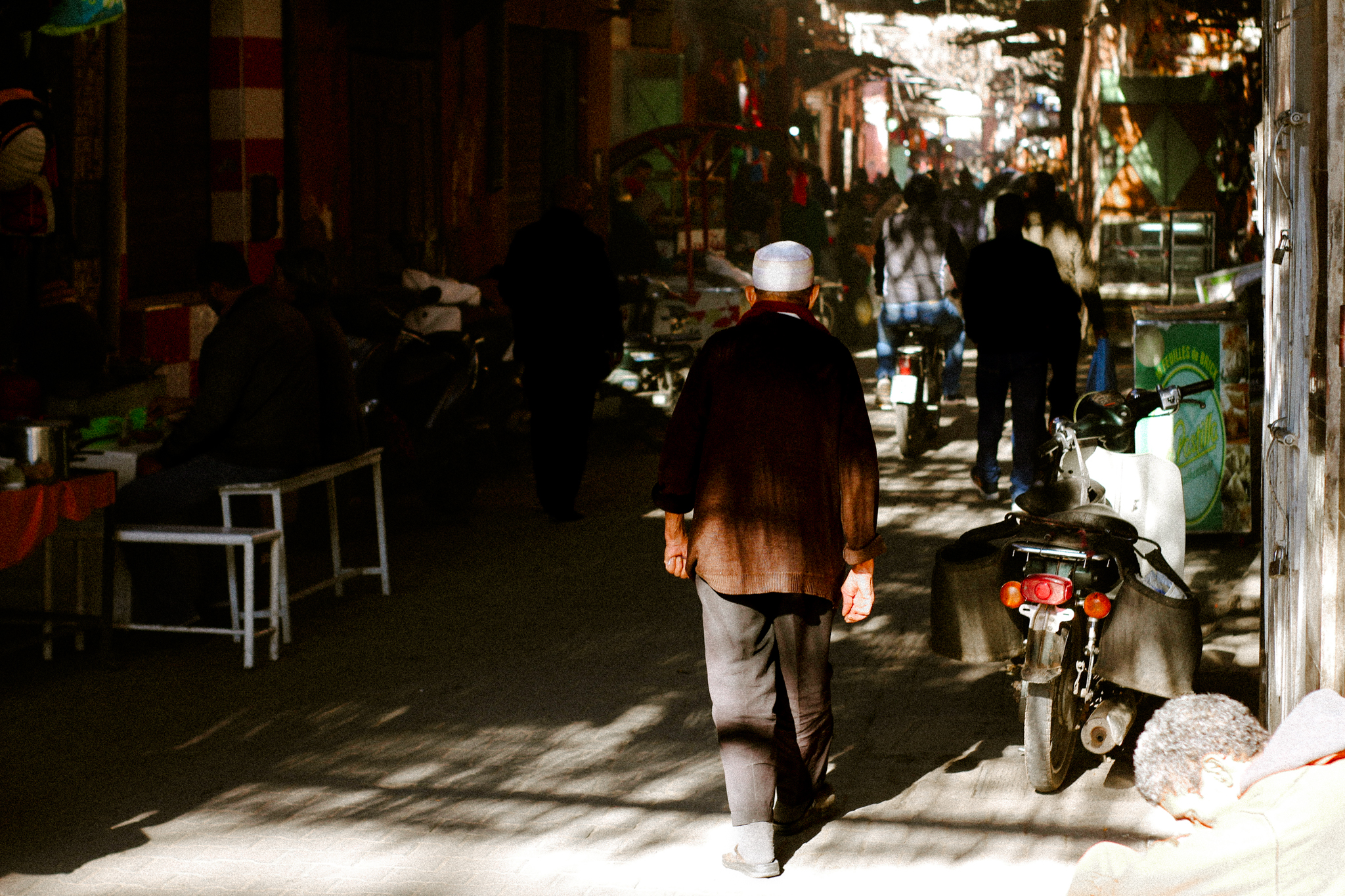
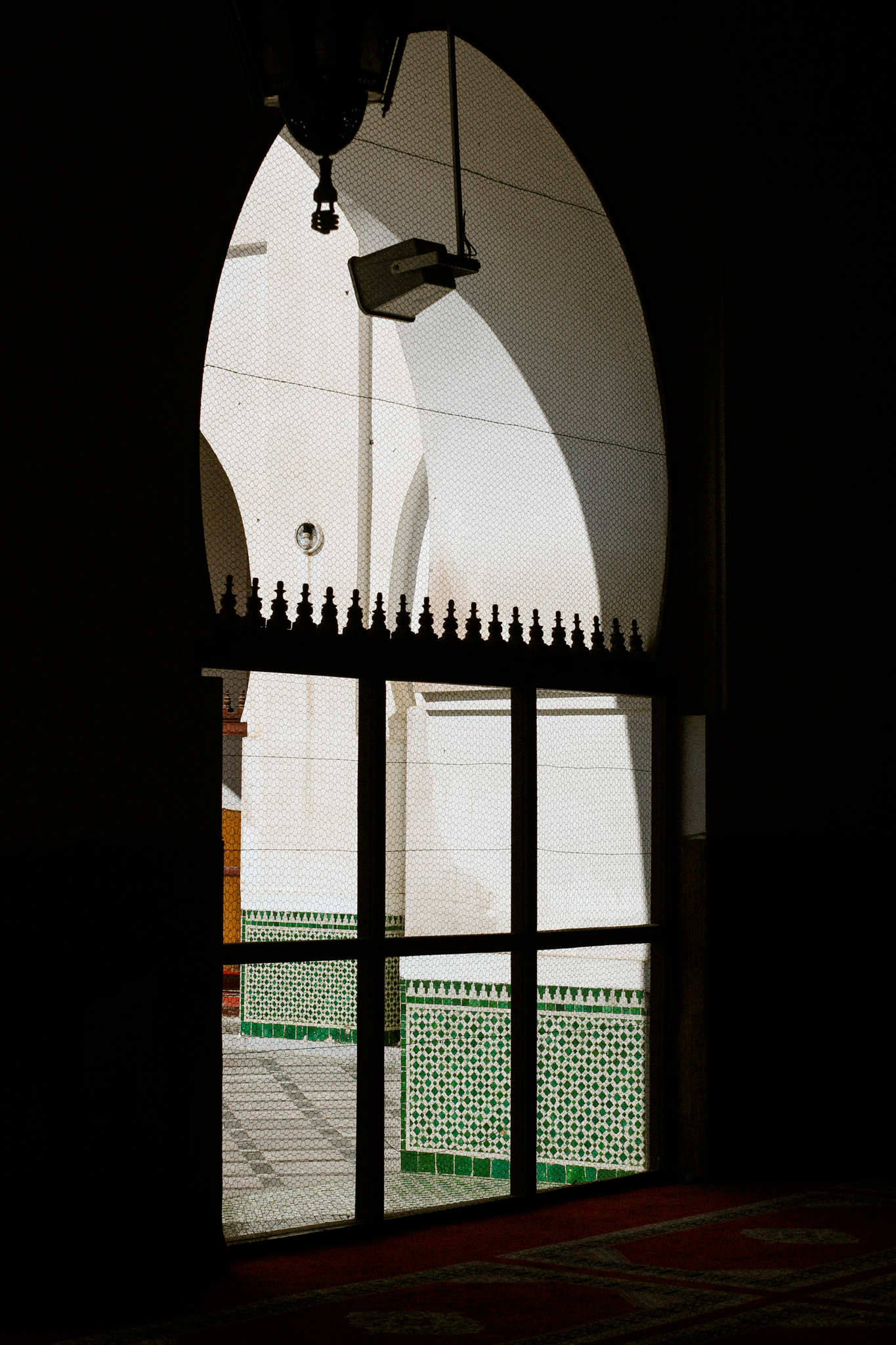
Marrakech grew as a caravan city at the foot of the High Atlas, and its old town, the medina, still works much as it always has: a walled run of souks, workshops and courtyard houses organised by trade rather than by map. The ramparts and many of the walls are rammed earth tinted with local ochre, which is how it earned the name the red city. This study was made on foot in the medina and around the Jemaa el-Fna, the square that turns into an open kitchen at dusk, rather than from the riad roofs that usually stand in for the place.
Everything here was photographed on 35mm film and edited for colour rather than correction. The aim was to see the medina at working pace: the shoe-shine and the welder, the textile and pottery stalls, the covered lanes that run from bright commerce into sudden shade, and the mosque interiors that keep a different air from the streets outside them. Film was chosen for the way it renders the city's particular palette, the rose walls and closed shadows, without flattening it.
It sits with the studio's other Moroccan work, the palace calm of Dar El Bacha and the two studies of Tangier, as their street-level counterpart: less the interior and the inheritance, more the trade and the noise. Where those watch a place hold still, this one follows it while it works.