Dar El Bacha
Dar El Bacha was built as a palace. The coffee came later. But the building does not behave as though anything has been added to it. The current purpose sits inside the original architecture as naturally as if the arches had always been designed to frame a table set for two.
The entrance prepares you. Carved plasterwork above the threshold, a courtyard beyond it, columns rising from a tiled floor to a ceiling that holds the afternoon light without releasing it. The ornament is not decorative in the way that word usually implies. It is structural, in the sense that without it the room would have no character at all. With it, the room has almost too much.
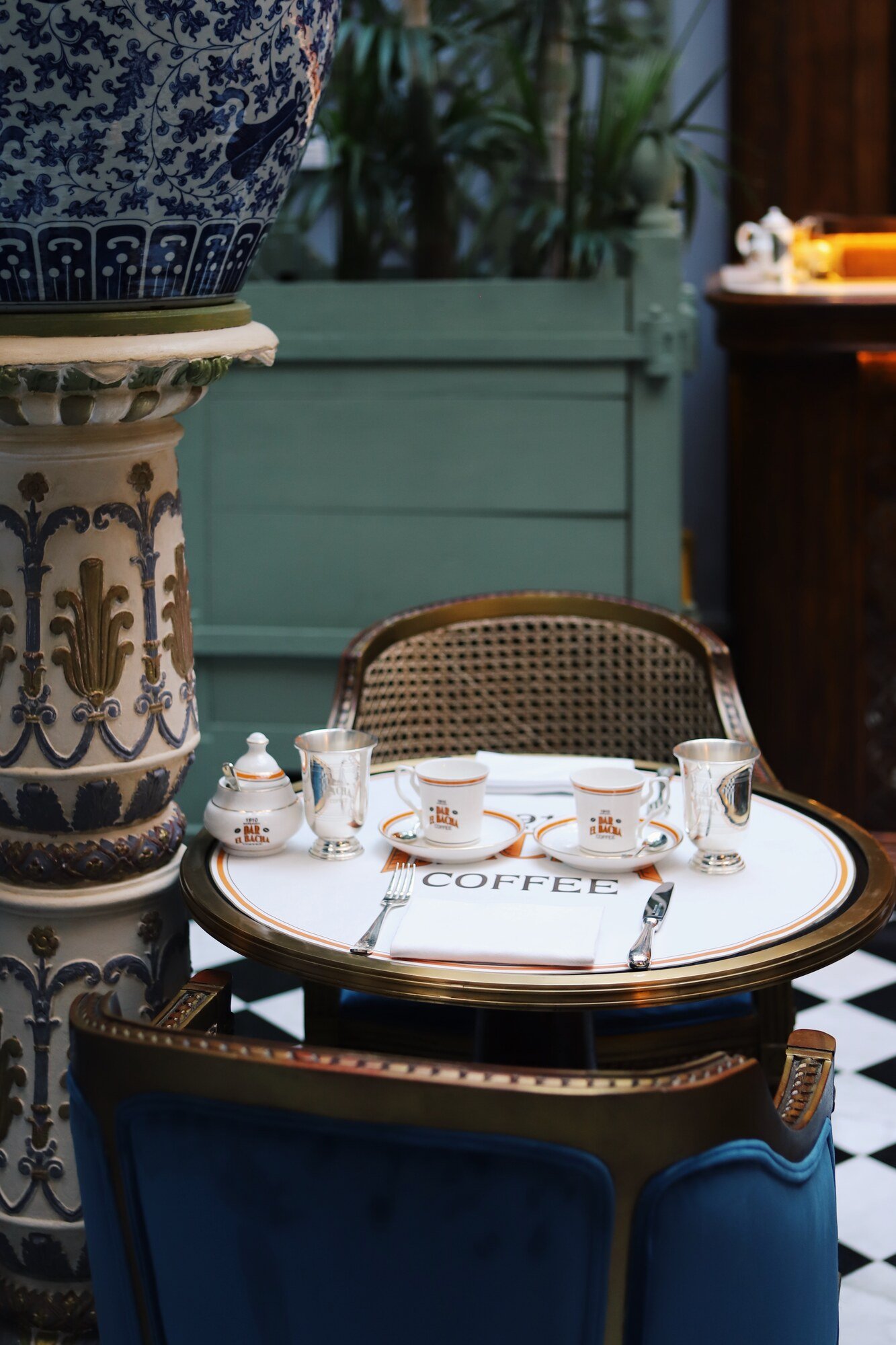
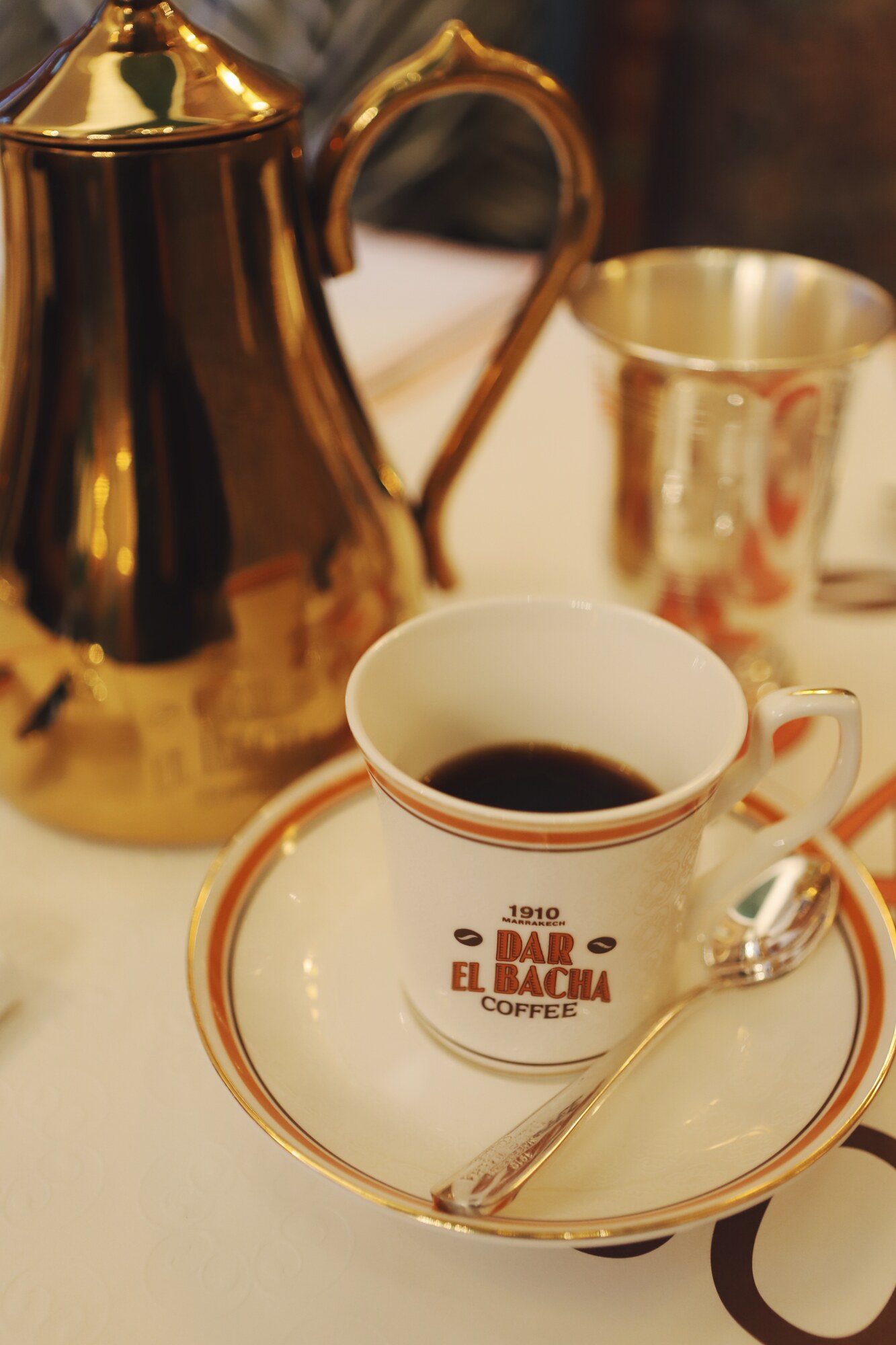
The coffee is served with an attention to sequence that has nothing to do with efficiency. The brass pot arrives before the cup. The cup before the explanation. The table is narrow and the chair faces into the room rather than away from it, which means there is nothing to look at but the space itself.
The room moves slowly. Not because it is unhurried in the casual sense, but because the architecture enforces a particular pace. The ceiling height, the distance between tables, the material of the surfaces: all of it produces stillness as a condition rather than an aspiration. The ceremony surrounding the coffee is simply the room expressing what it has always been.
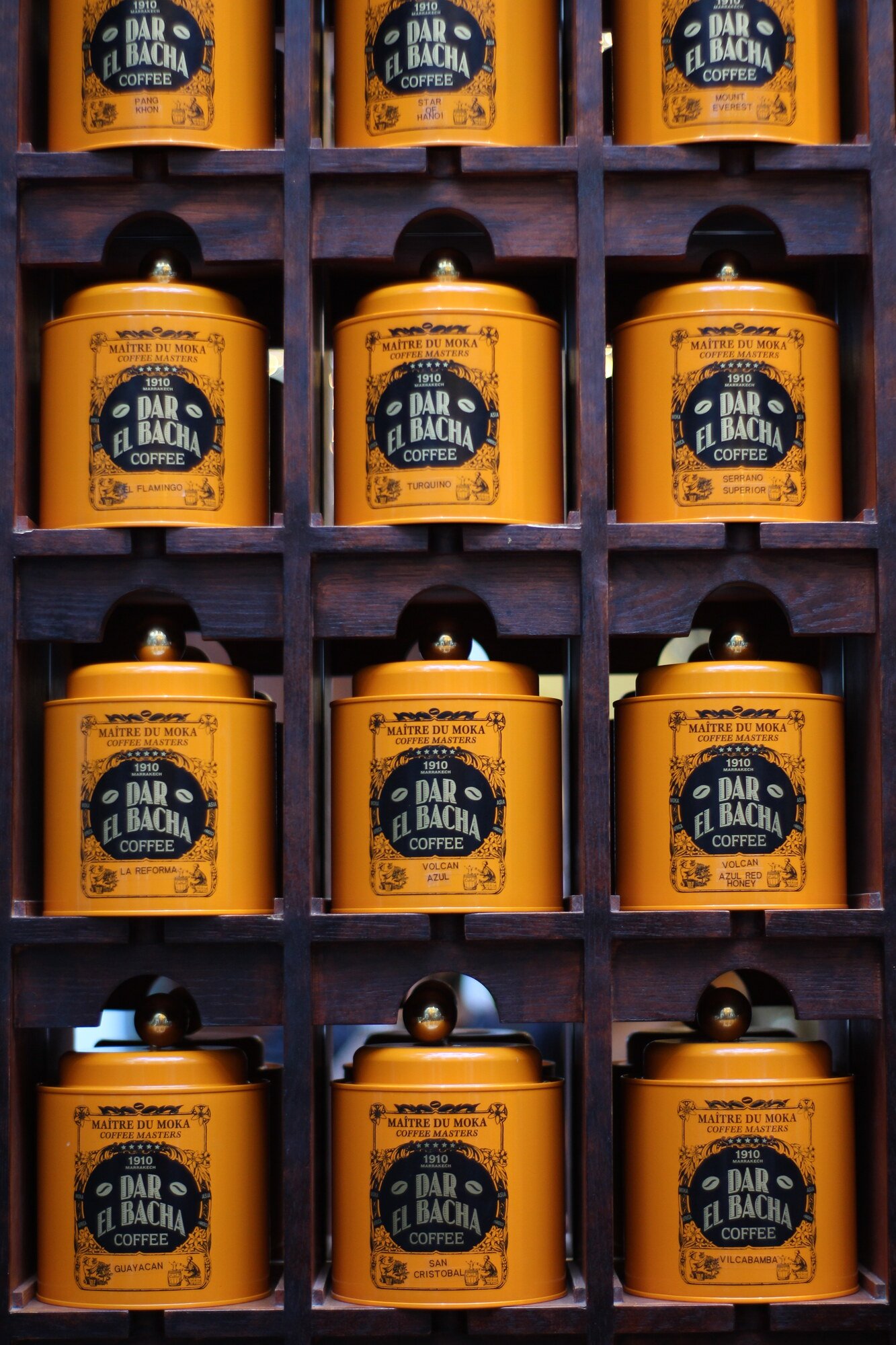
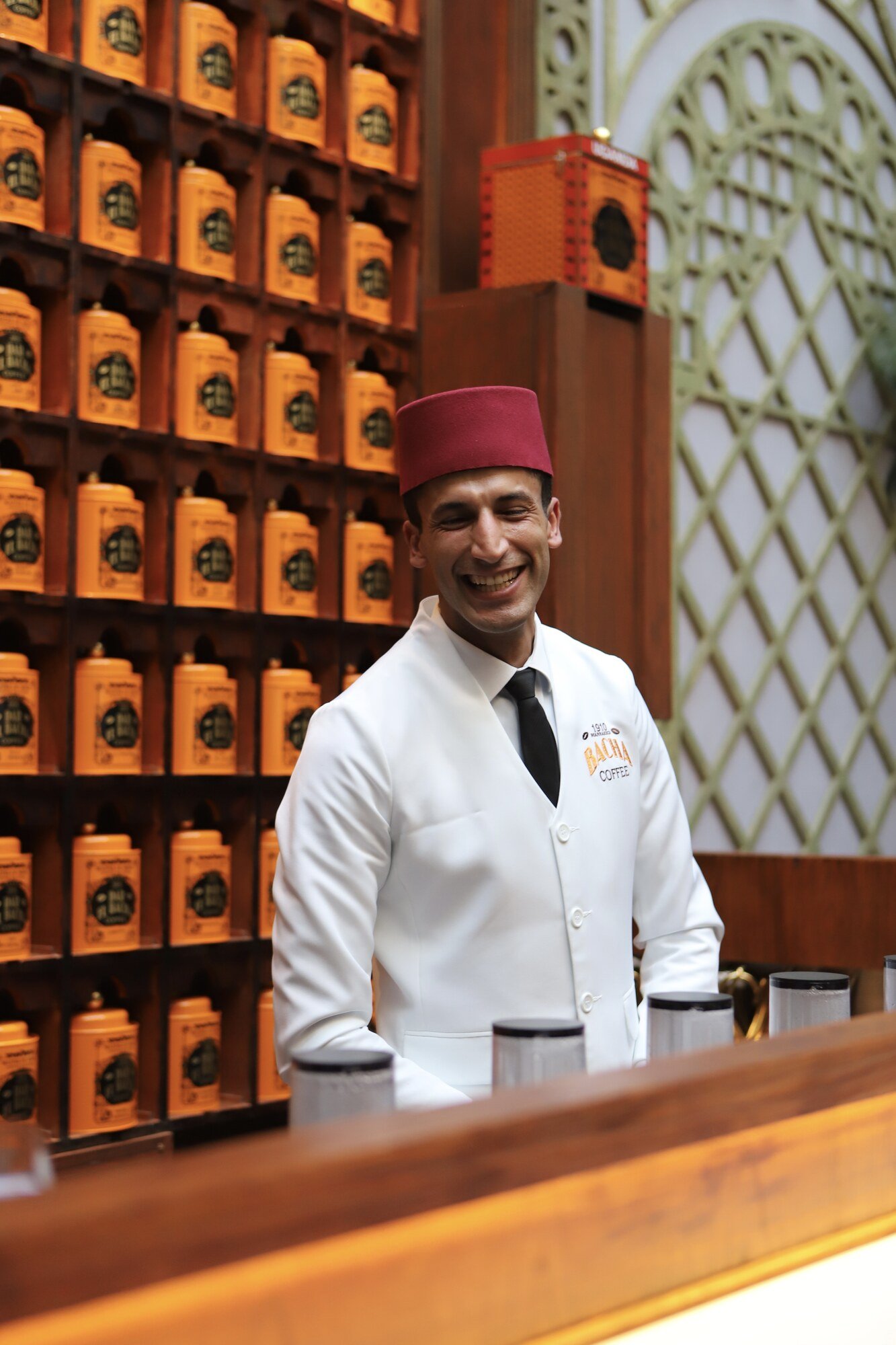
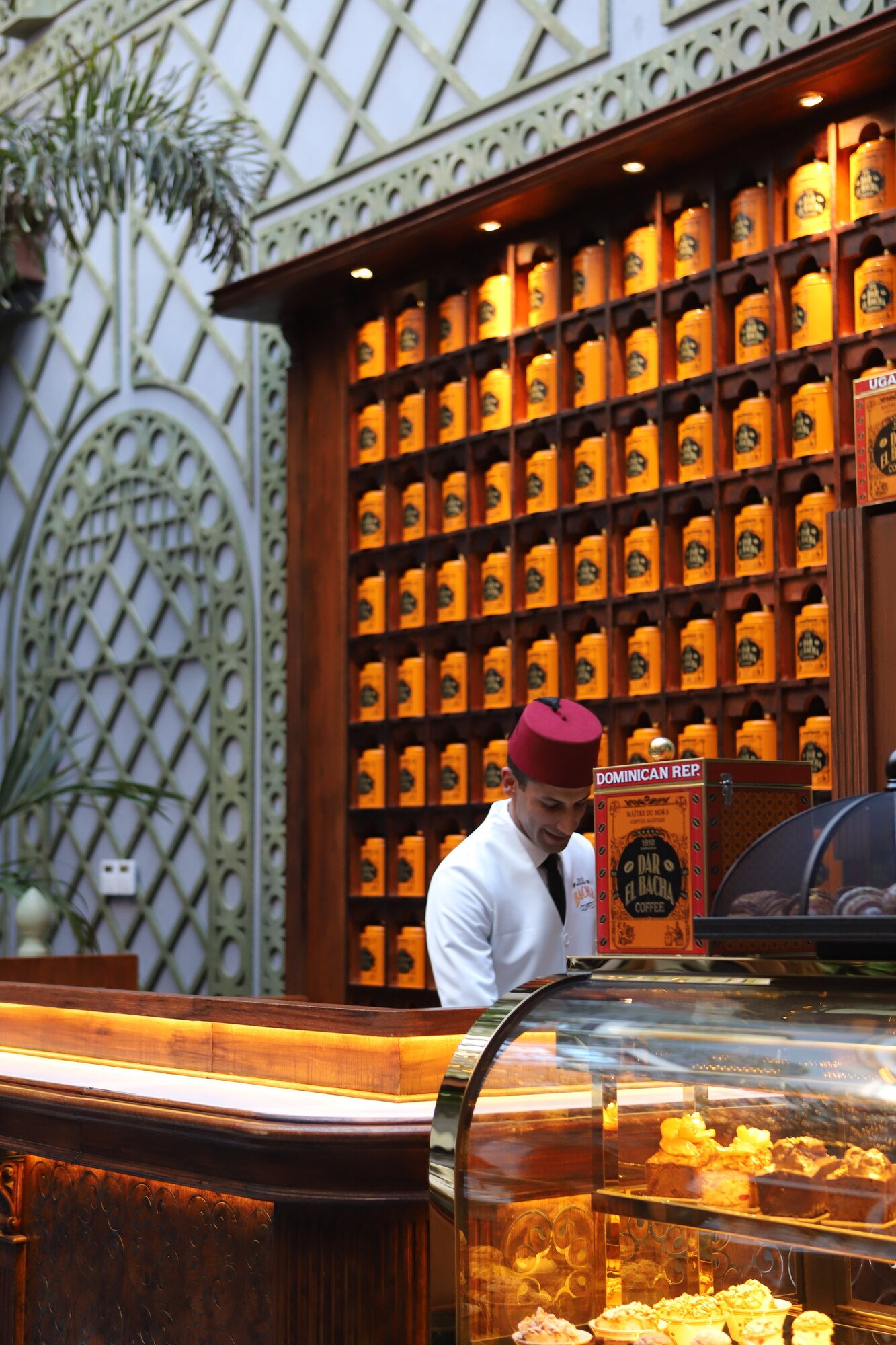
A brass pot, darkened with use, catching the light from the arch above the counter. Rows of tins arranged along the back wall with the regularity of a library catalogue, identical in form and distinguished only by label. A uniform that looks as though it has not changed in several decades, which in this context reads not as neglect but as confidence.
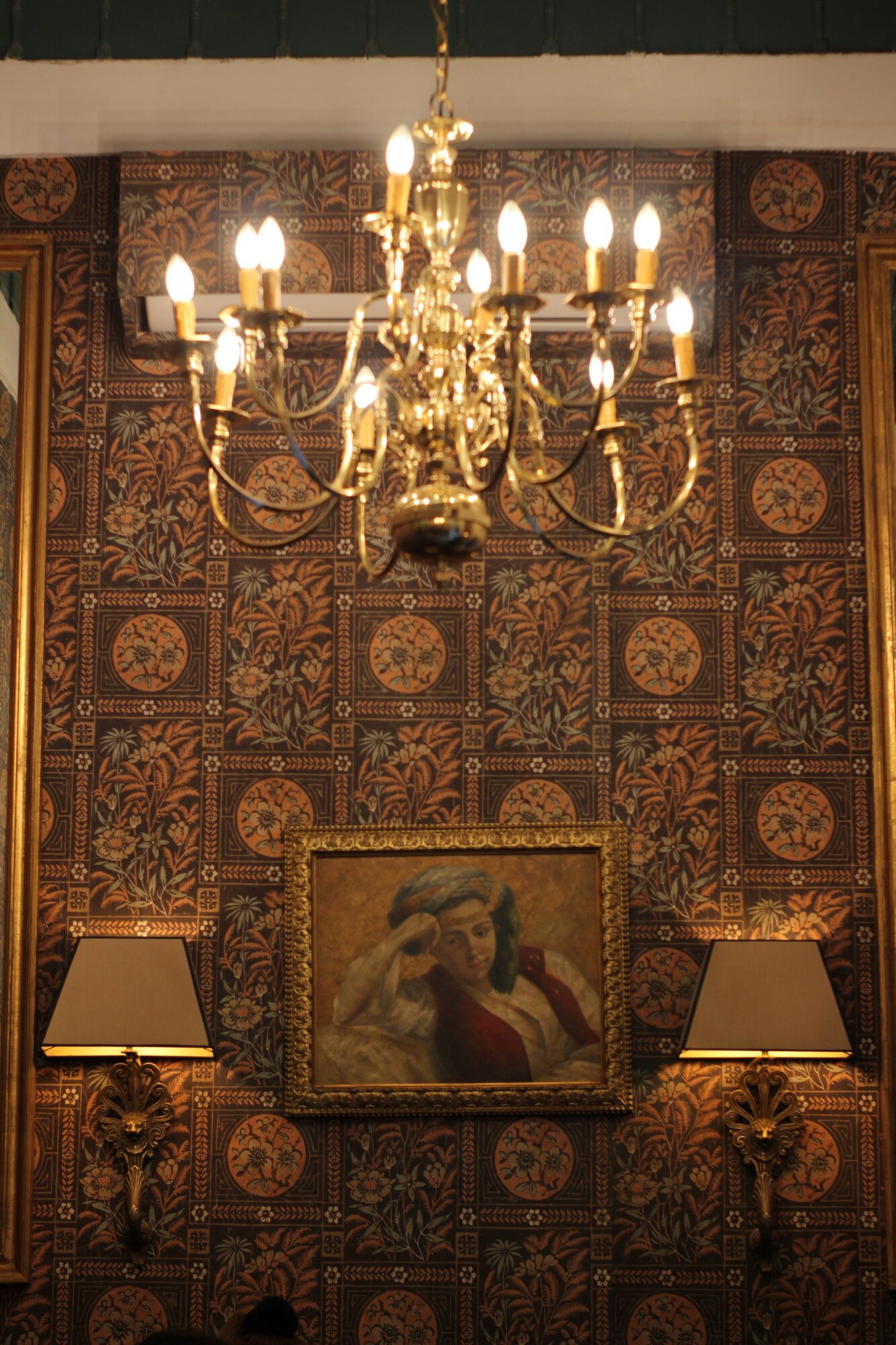
The room reveals itself in sections. The counter first, then the space behind it, then the full width of the hall: columns at intervals, arched openings giving onto further rooms, a chandelier overhead that was not chosen to match the space but was the space before anything else arrived in it. At mid-morning the room is neither full nor empty. It is exactly as it should be.
What remains is not a flavour but a pace. The pace of a building that was built to last and has lasted, and that carries its age without drawing attention to it.
Outside, Marrakech reasserts itself immediately: the sound, the light, the specific density of the medina in the middle of the day. Inside Dar El Bacha, none of that had entered. The building had been operating according to a different clock, and it had been doing so for a very long time.
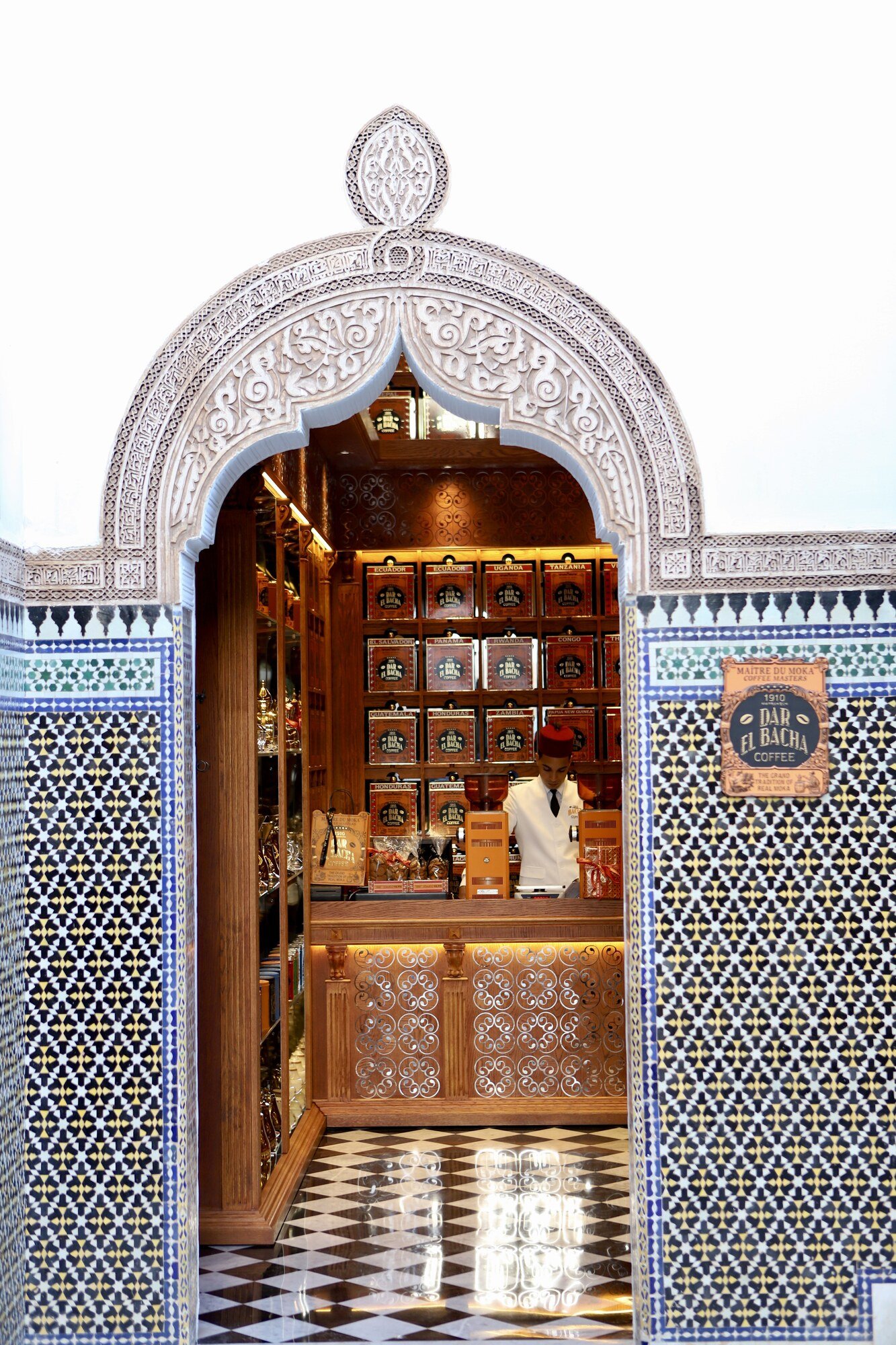
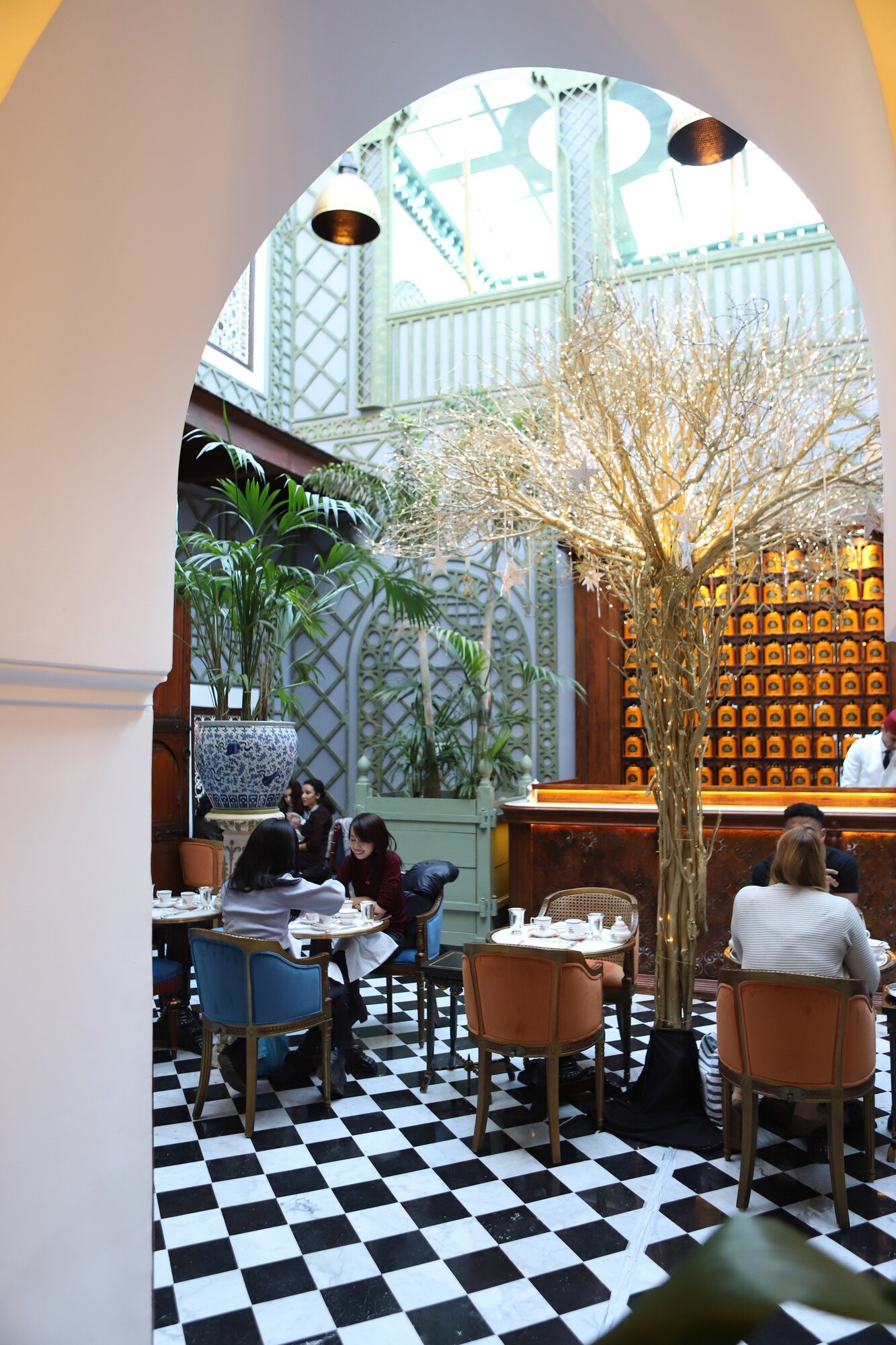
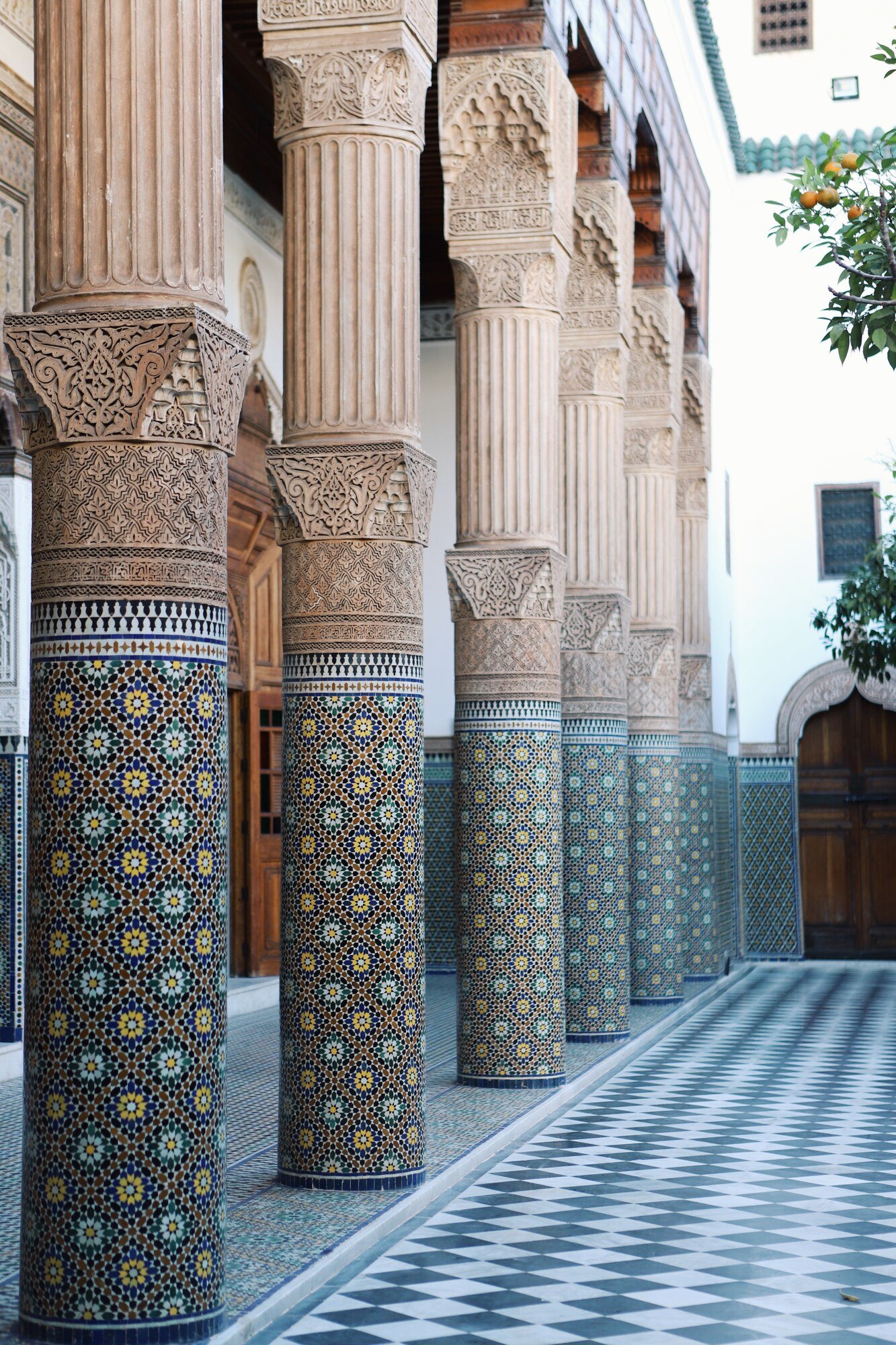
Dar El Bacha is a 1910 palace in Marrakech's medina, built for Thami El Glaoui, the Pasha of Marrakech, and now home to the Musée des Confluences and Bacha Coffee, the coffee house whose queues wind through the courtyard. The study concerns the building's second life: how a palace absorbs a café without either diminishing the other.
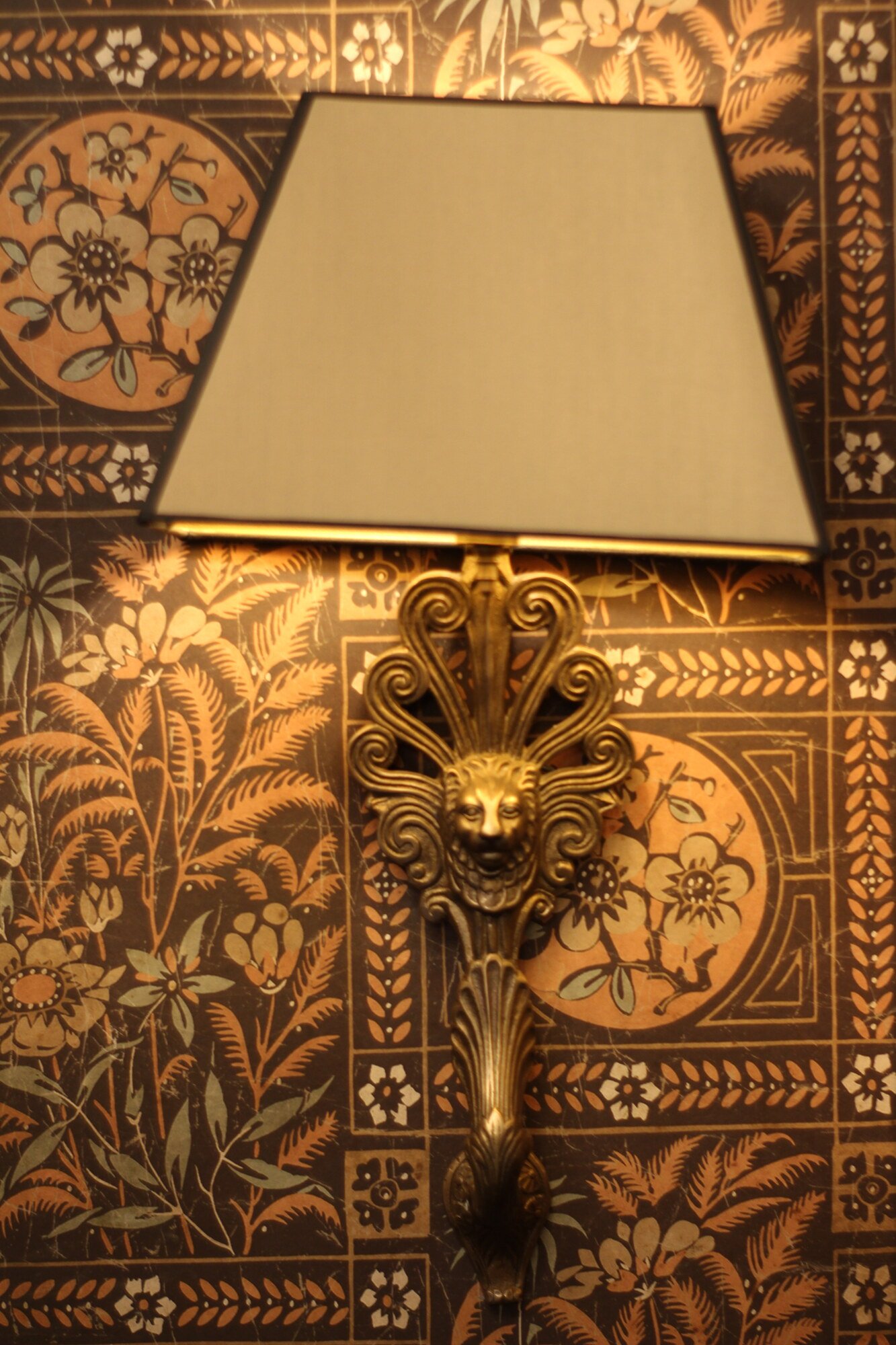
The photographs read the palace's grammar, zellige, carved cedar, the courtyard's citrus and symmetry, and the coffee ritual now conducted inside it: brass pots, uniformed service, the lamp inherited with the room. The building predates its purpose and outranks it, and the study's interest is the grace with which the new use defers, occupying the architecture as a guest rather than an owner.
The study forms the Marrakech chapter of Morocco, Publication 006, and its frames carry the Journal's essays on patina and inheritance. In the archive it stands for a category the studio watches everywhere: the building that was already beautiful before its current tenant arrived, and the discipline required, from operators and photographers alike, to leave that priority visible.