Mark Gregory
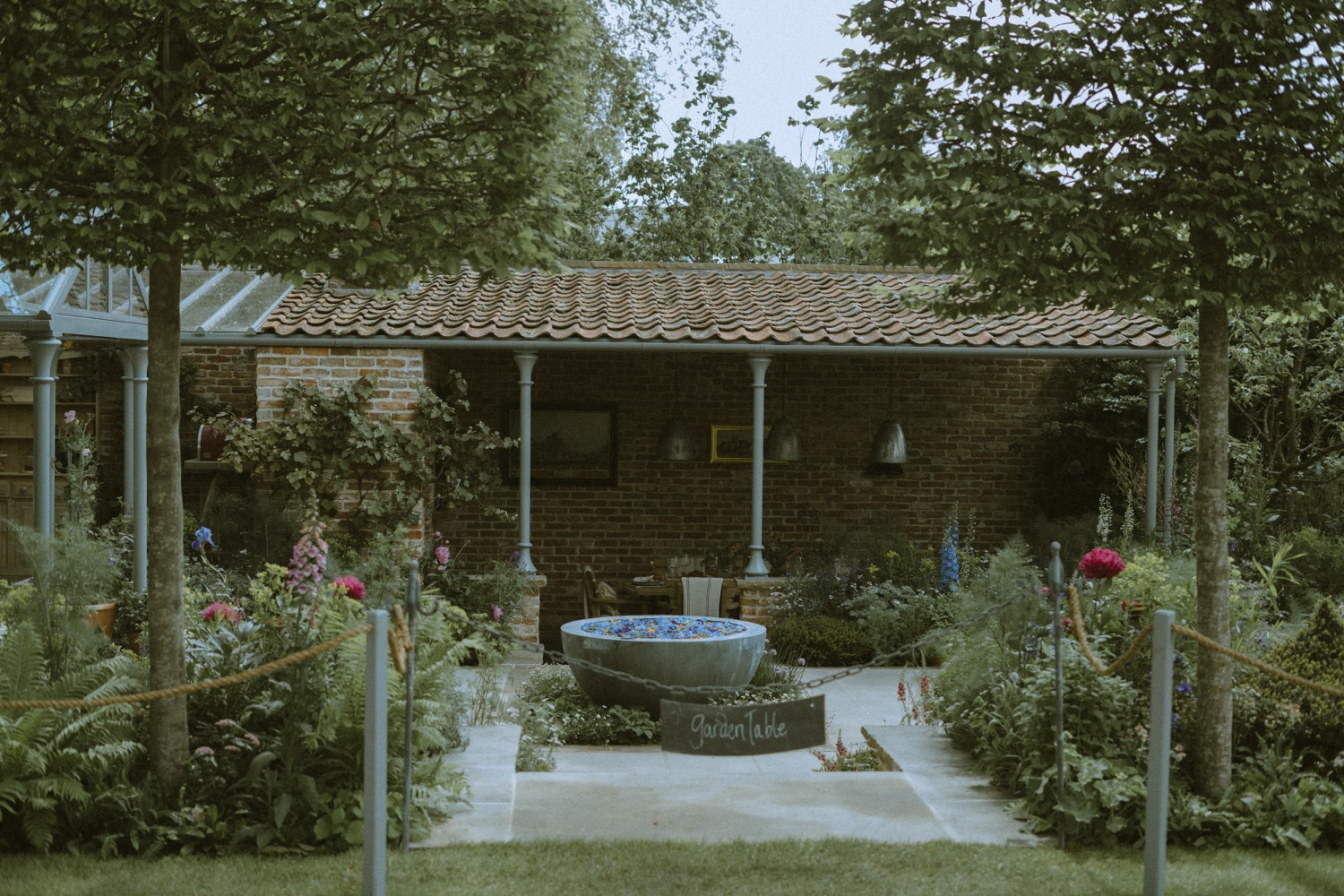
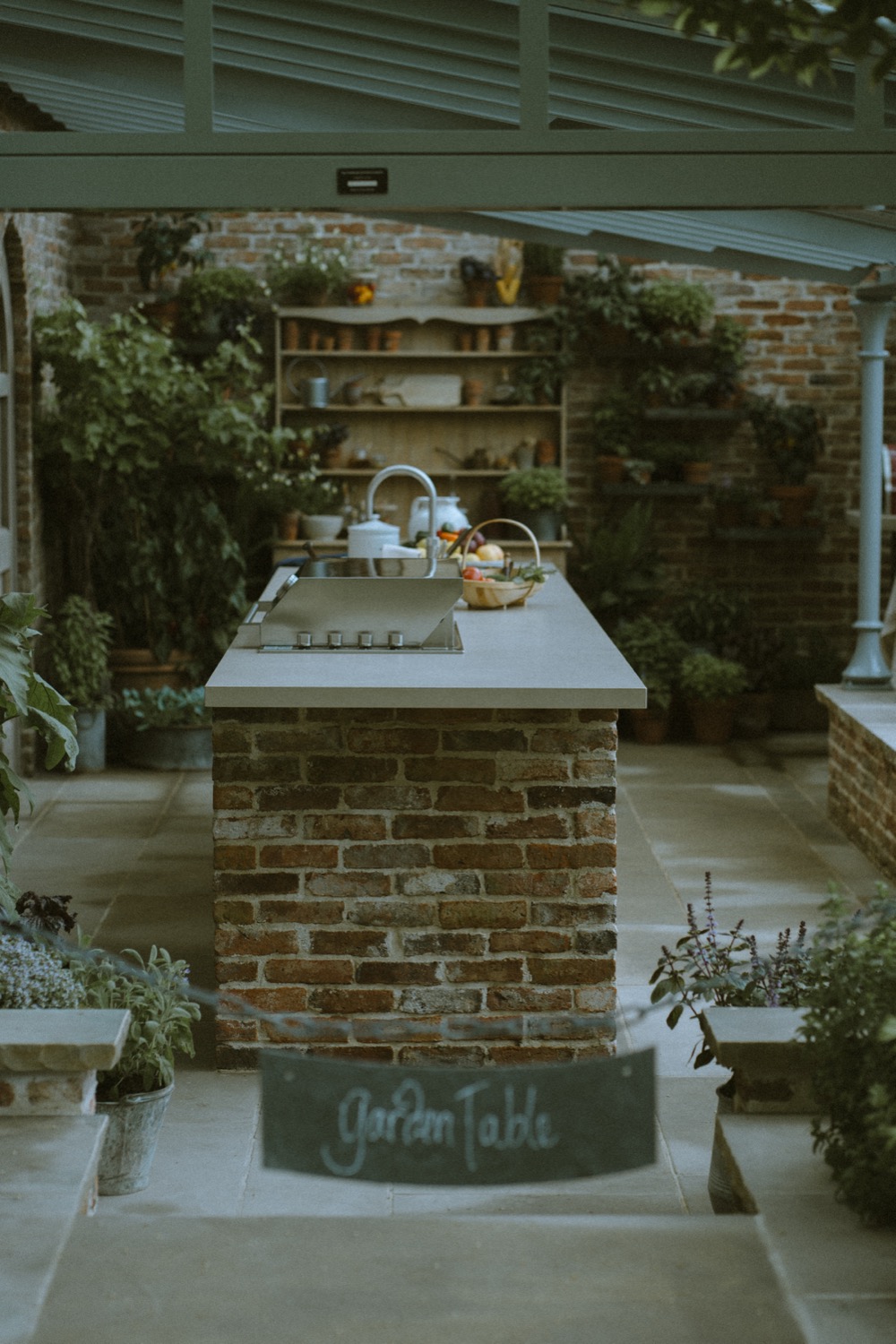
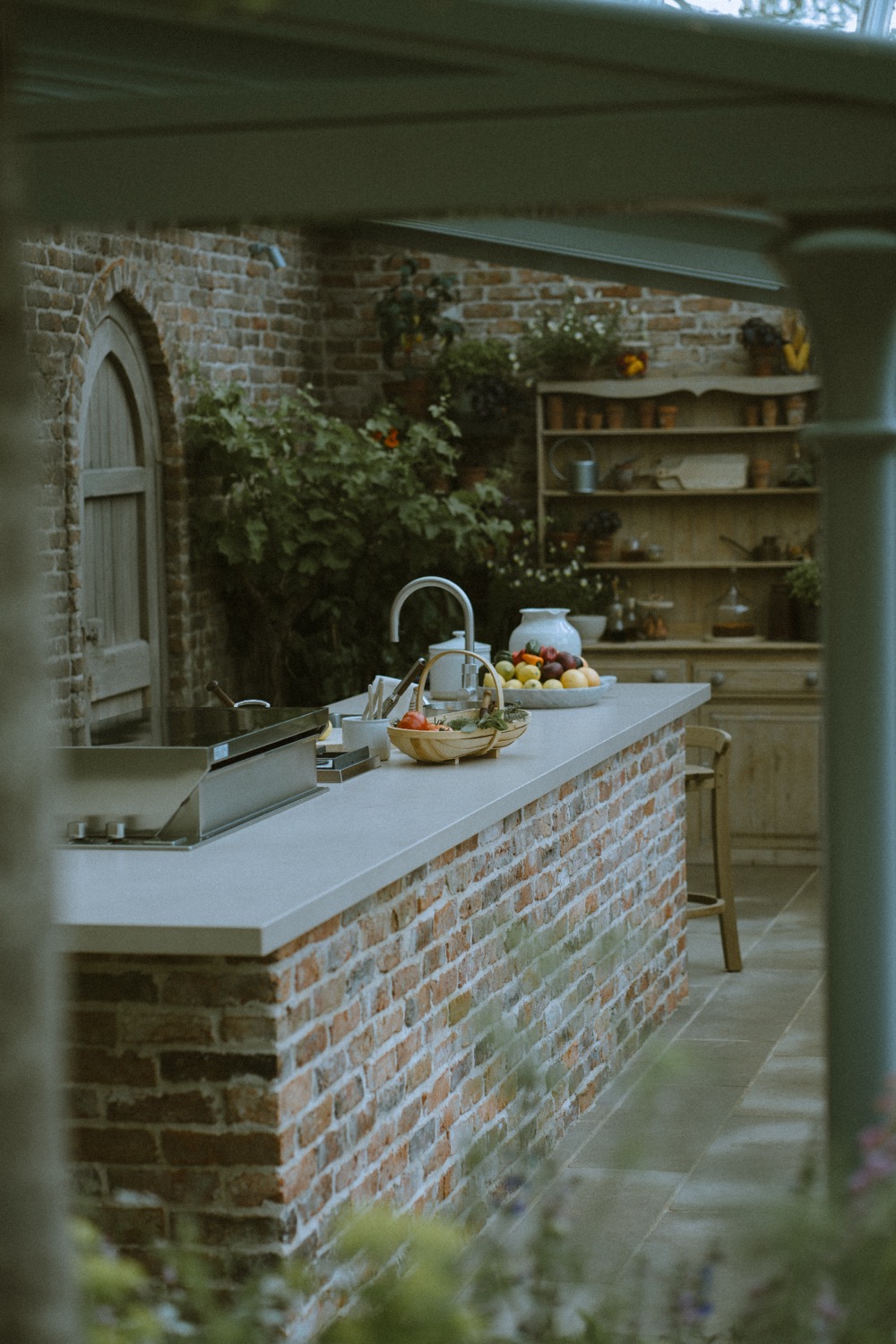
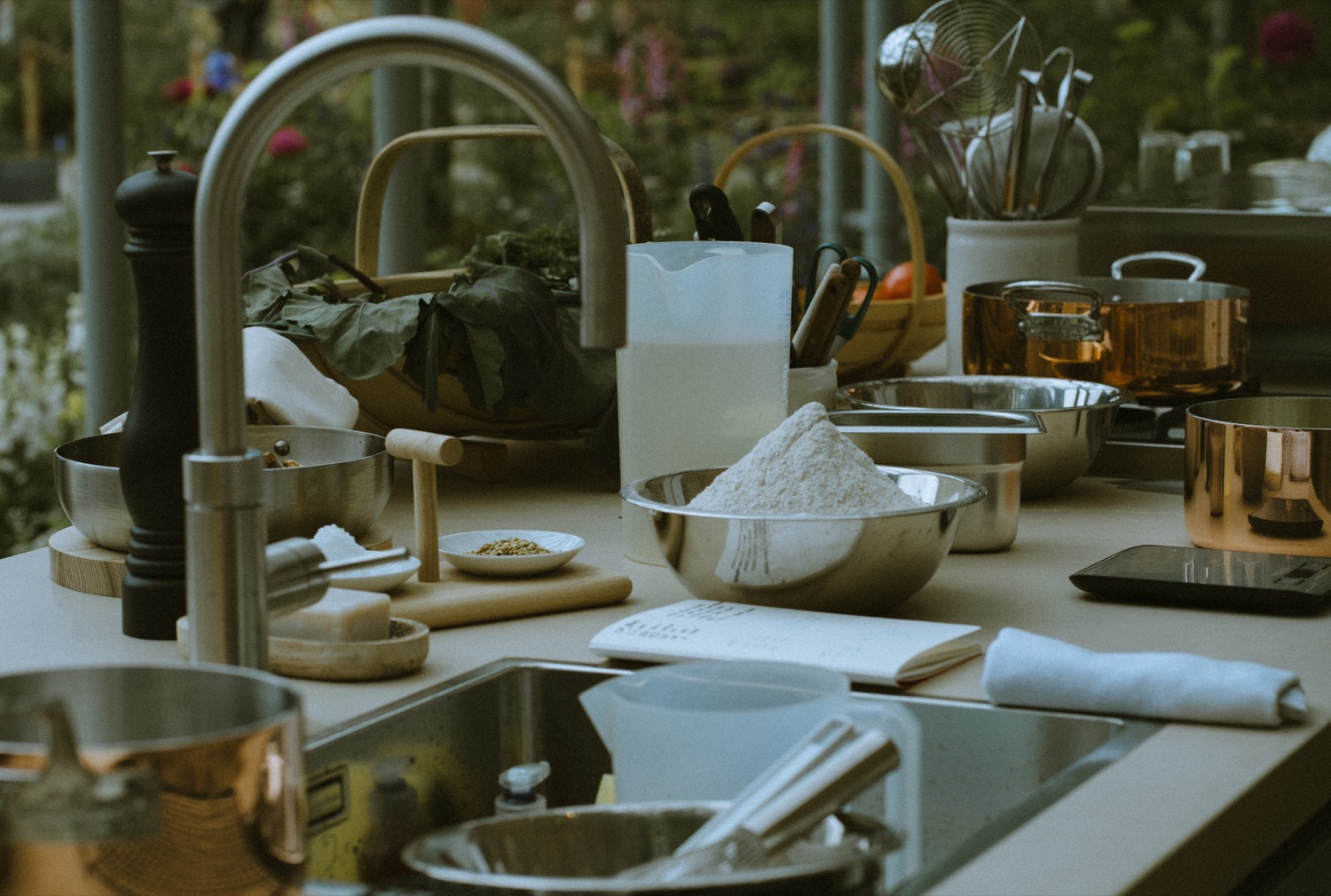
Show gardens are usually built to be looked at. This one was built to be lived in. At its centre stood a working kitchen: a brick island with a tap and a stove, a dresser stocked with provisions, a table laid for a meal that would actually be served.
The photographs were made on the finishing weekend, before the show opened. The build crews were still walking the paths, and the garden had already begun behaving like a household.
Reclaimed brick, a poured worktop, green cast iron holding up a tiled roof. Nothing about the construction asked to be read as temporary.
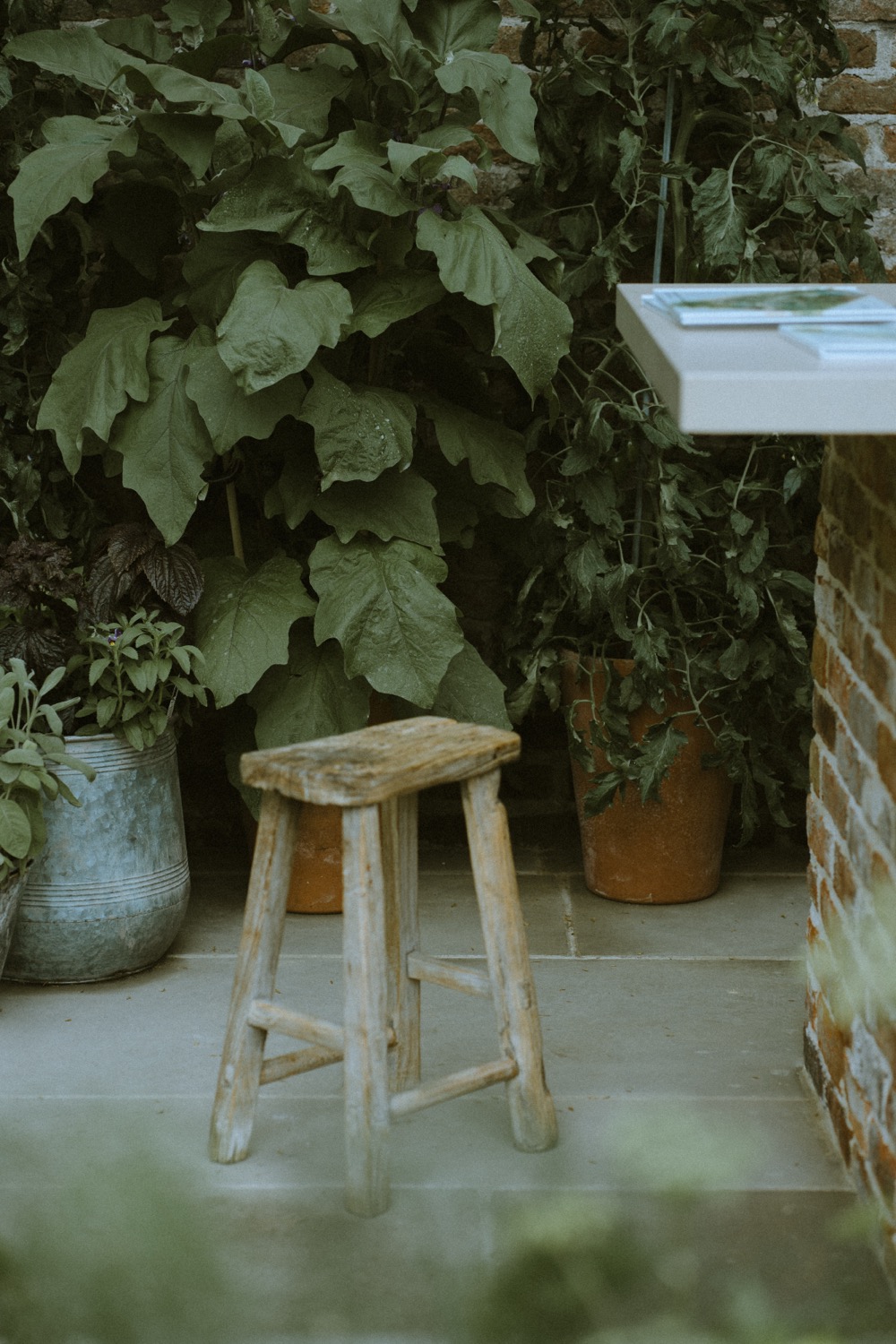
The dresser carried the argument further. Terracotta pots, a watering can, honey in a jar, basil growing within reach of the stove. A kitchen furnished the way gardens are planted, by accumulation.
Everything here was close to where it grew.
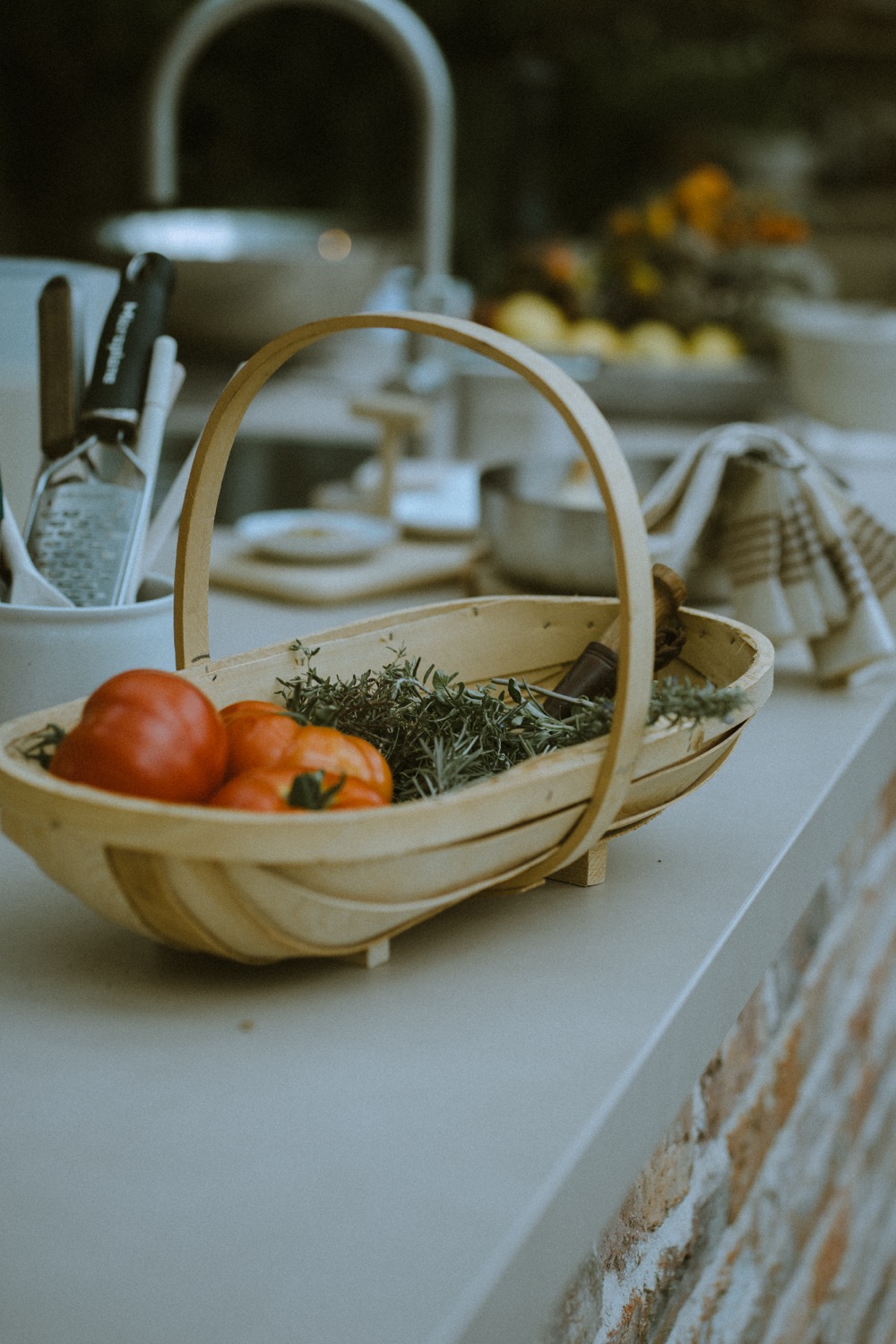
Tomatoes carried in a wooden trug. Herbs cut and laid across them. Logs stacked into a niche in the wall, chillies drying above. The distance from plot to plate was a few paces, and the garden kept measuring it.
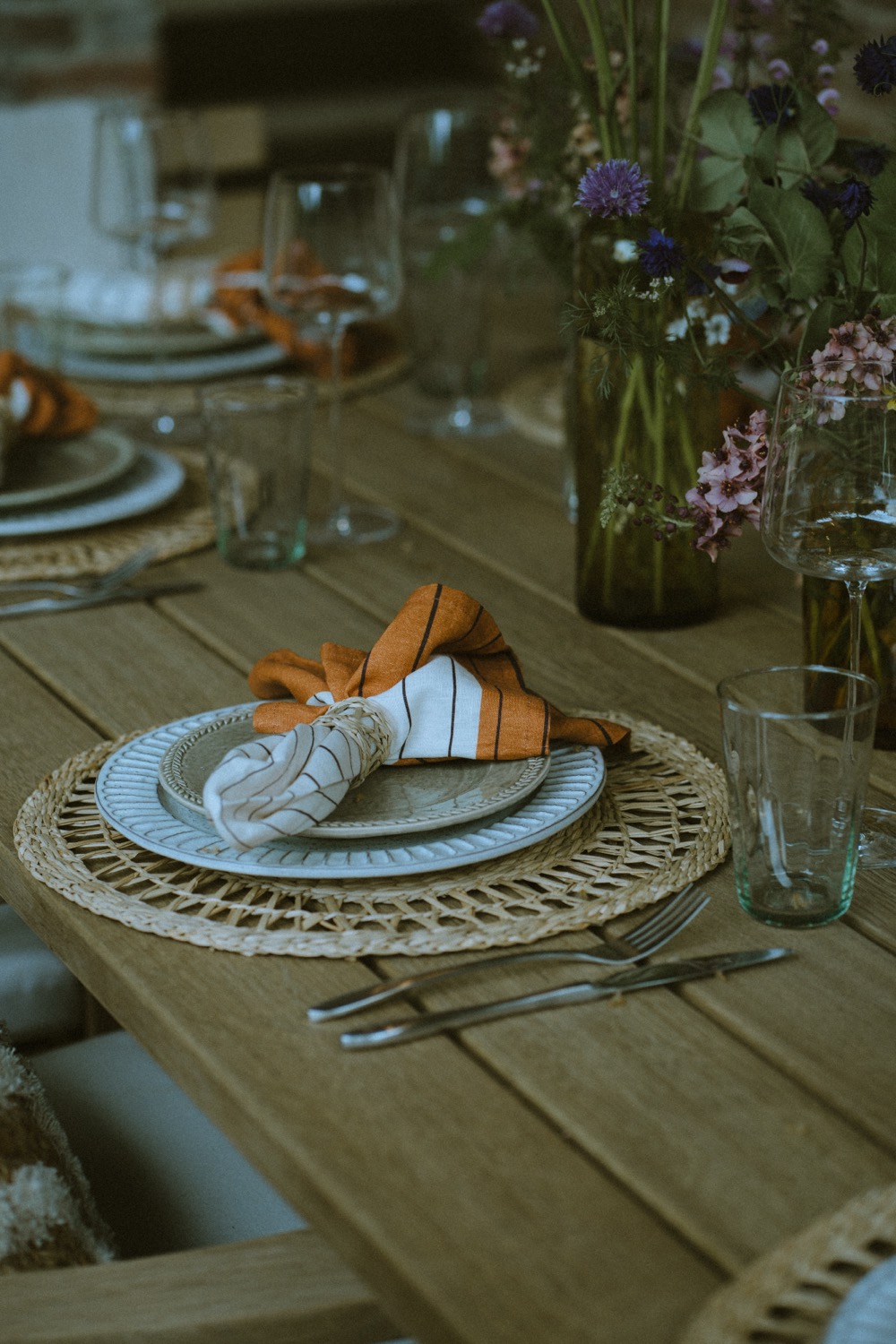
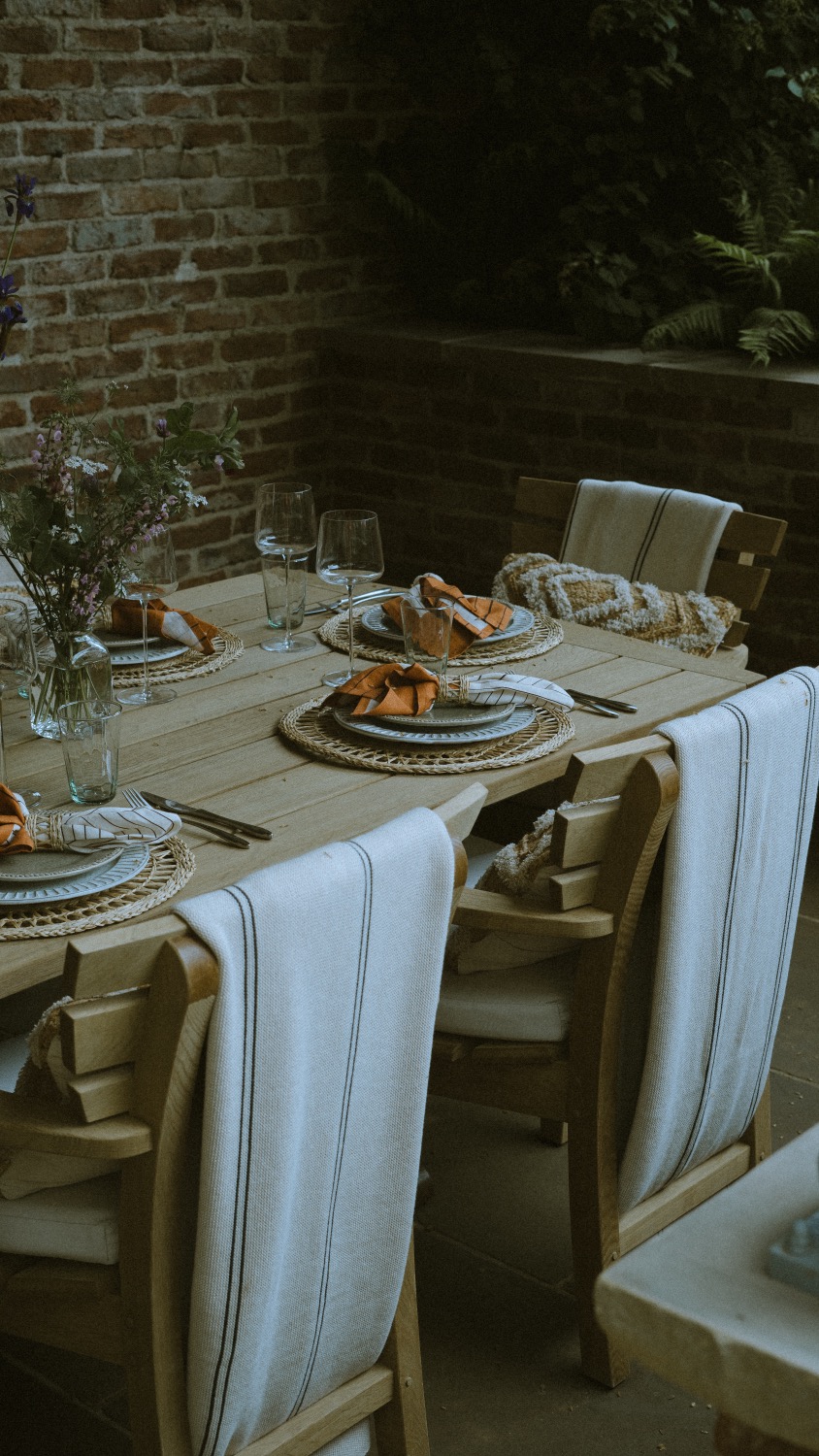
The dining room had no walls. Three concrete pendants hung over a long table, striped linen was thrown over the chairs, and meadow flowers stood in bottles between the glasses.
A fireplace, a mirror, candles on the mantel. The room made its case quietly: eating outdoors need not mean eating provisionally.
Chelsea gardens last a week. This one was built against that fact.
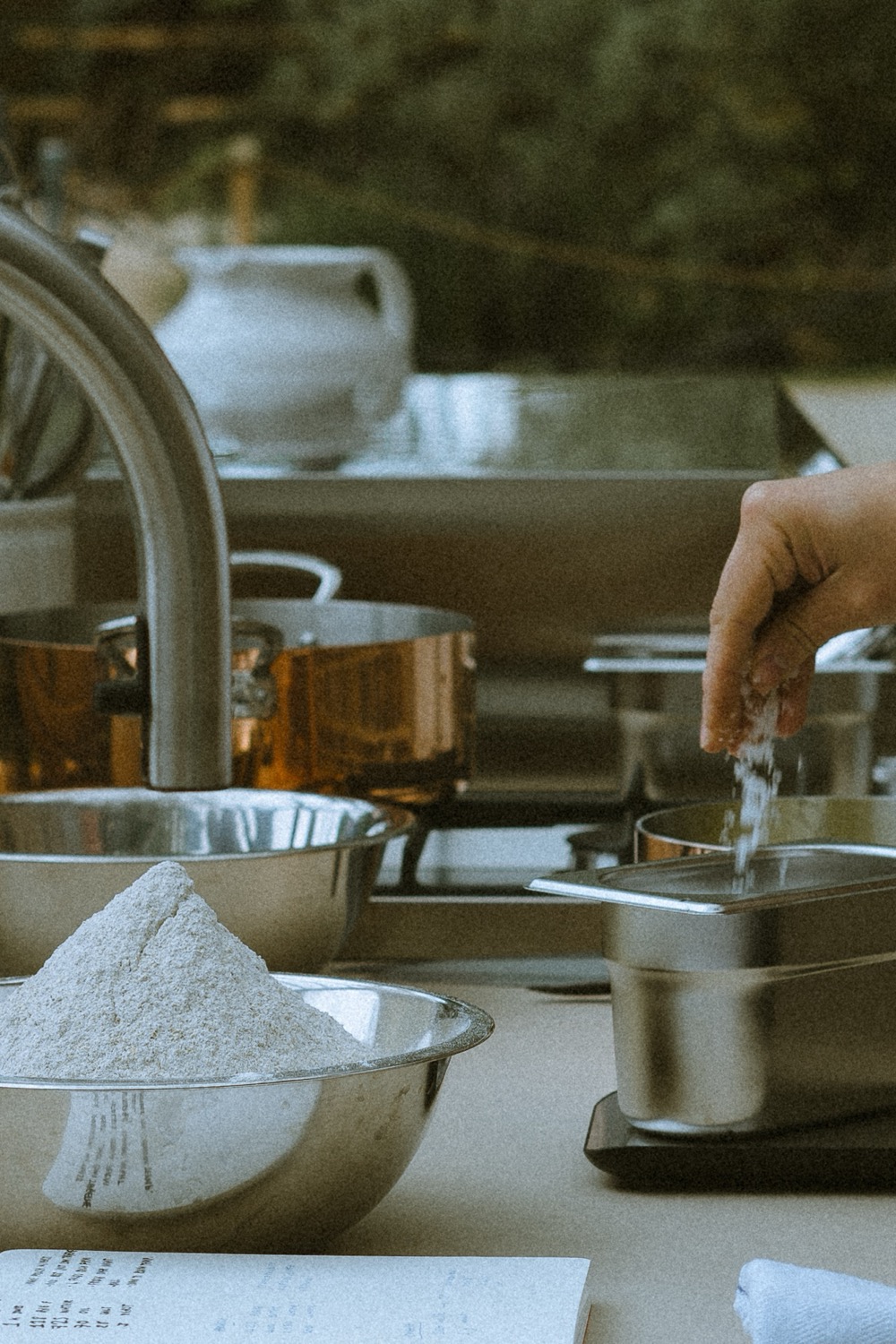
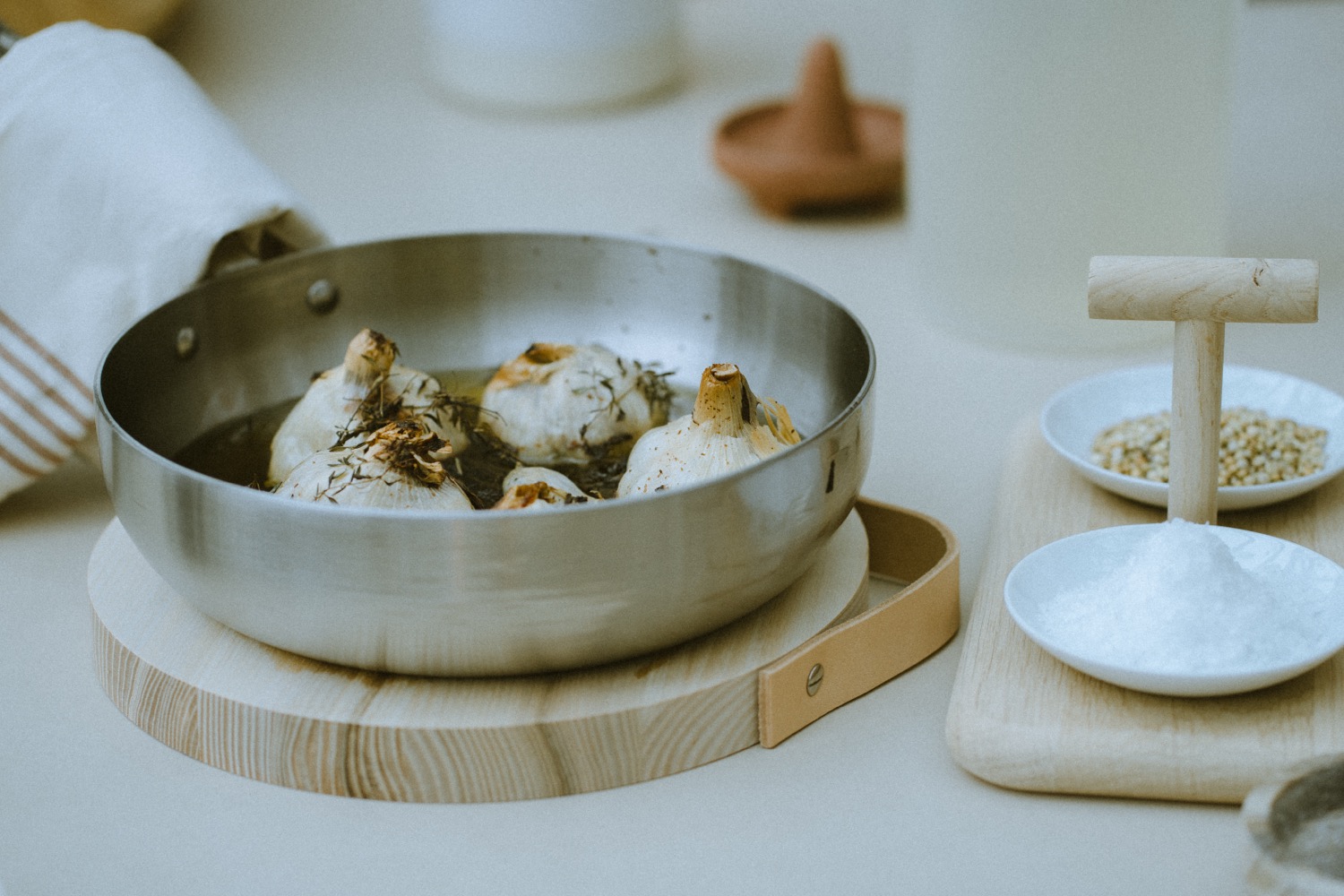
Bread was proved, garlic roasted, the table set and cleared. When the show closed, the garden left for another life elsewhere.
What the photographs keep is the proposition: a kitchen can belong to a garden as naturally as anything planted in it.
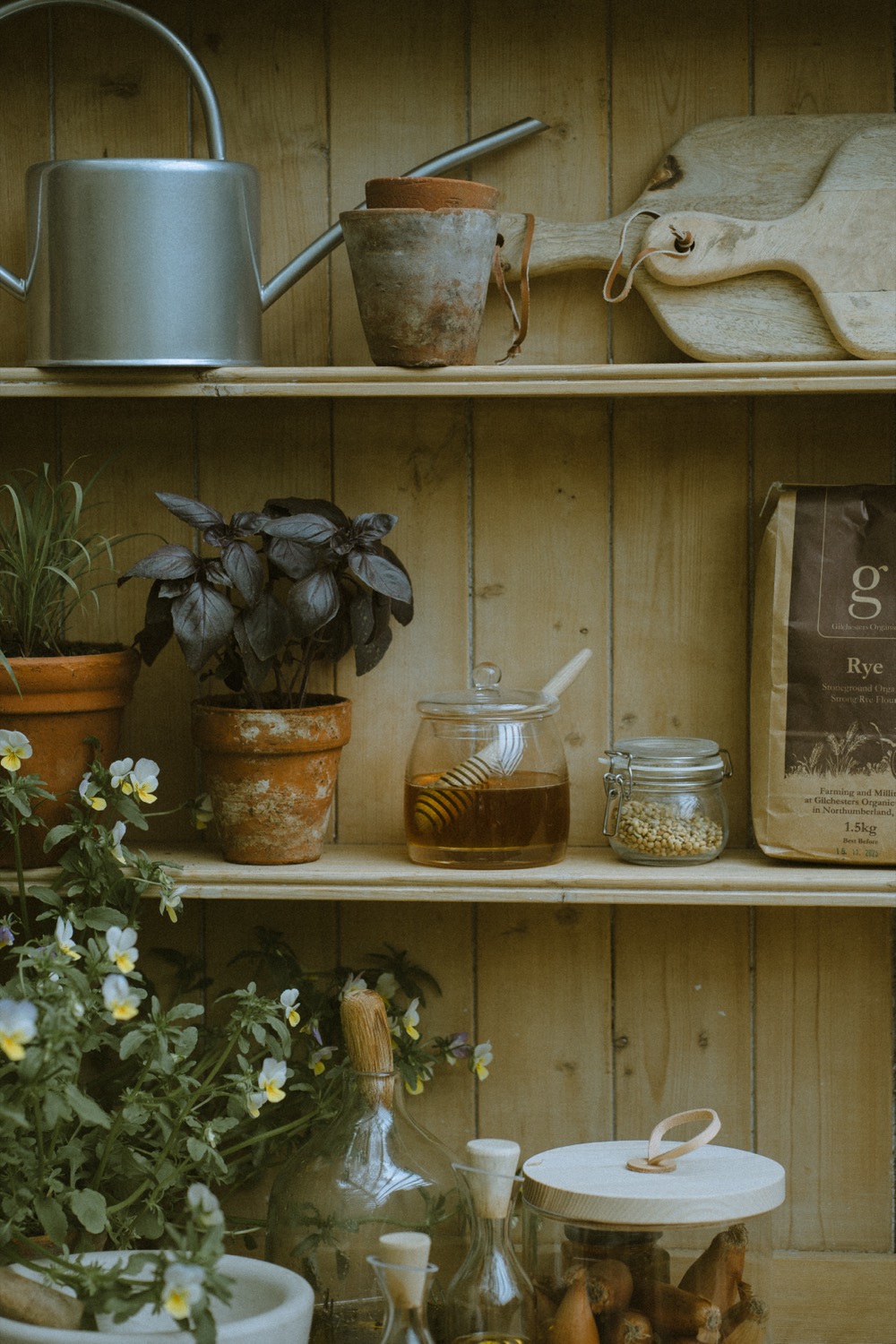
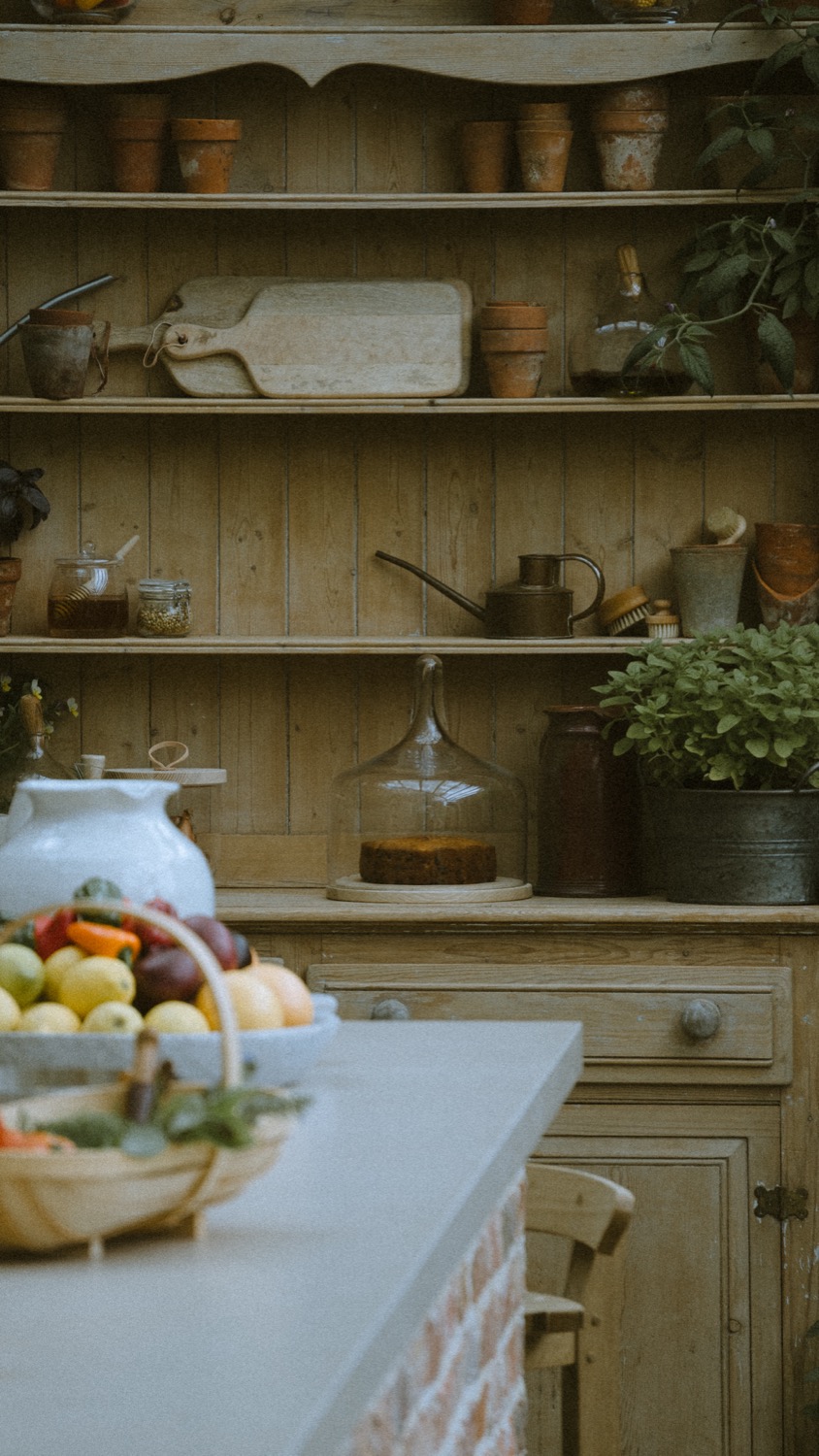
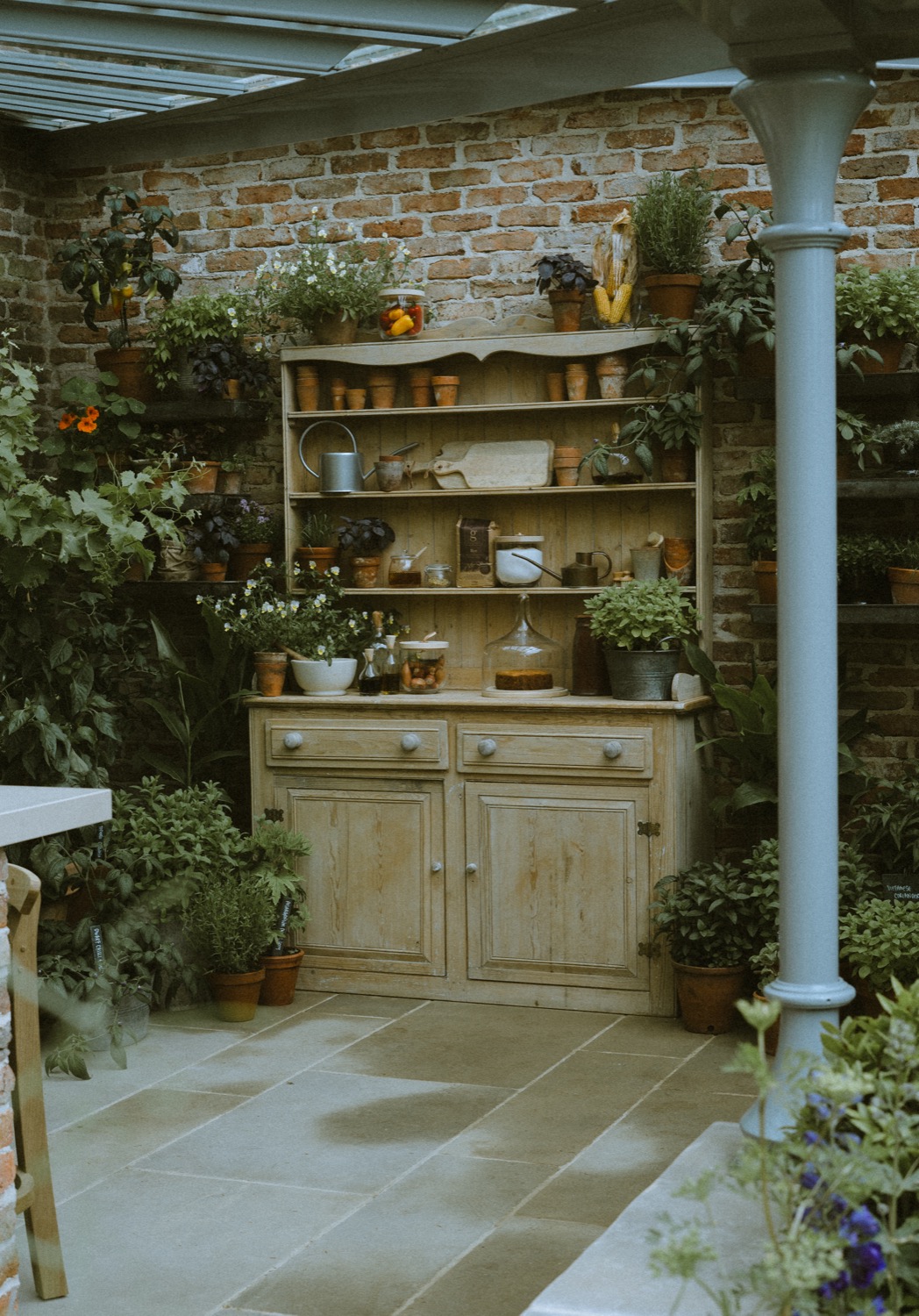
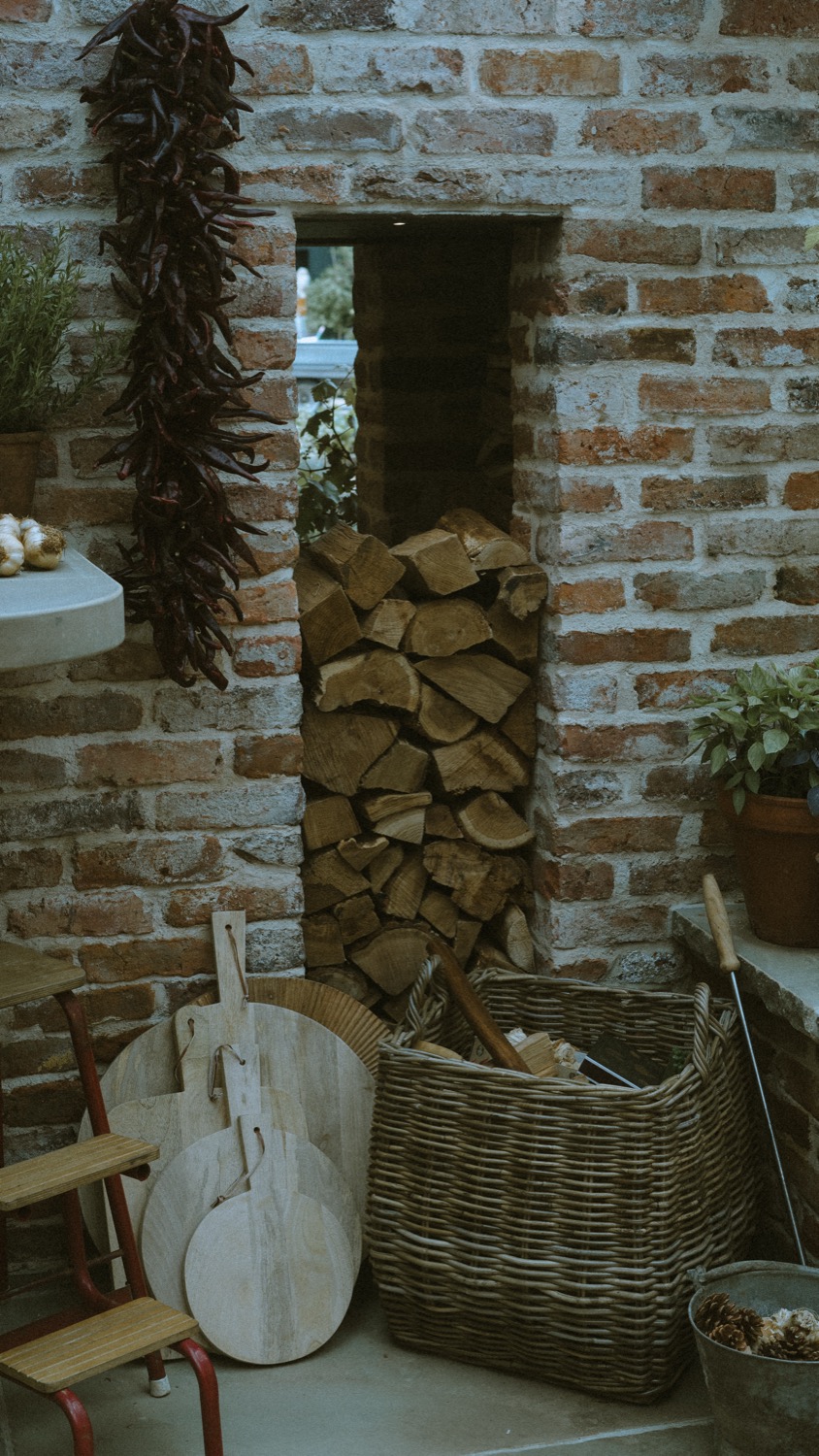
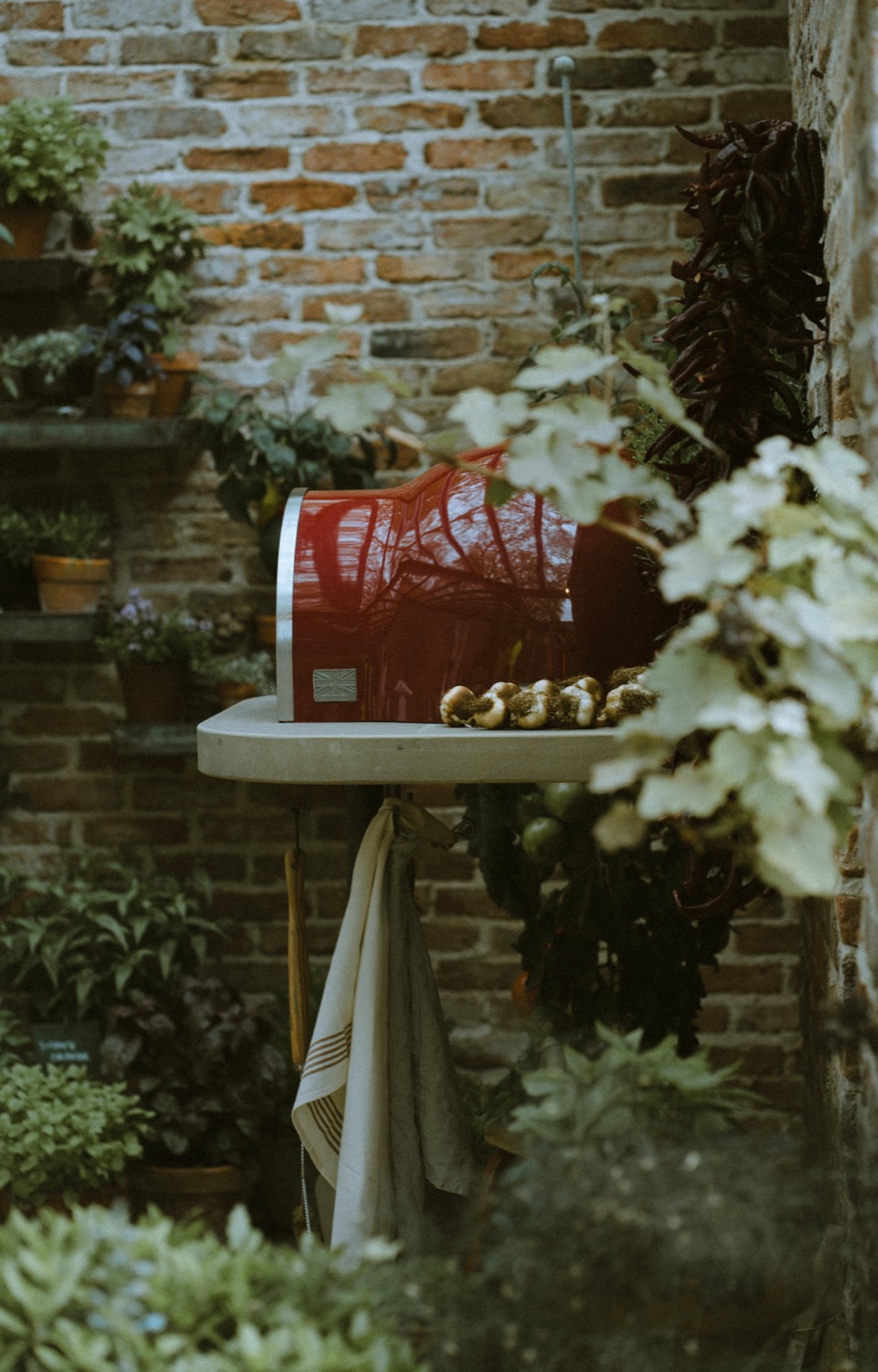
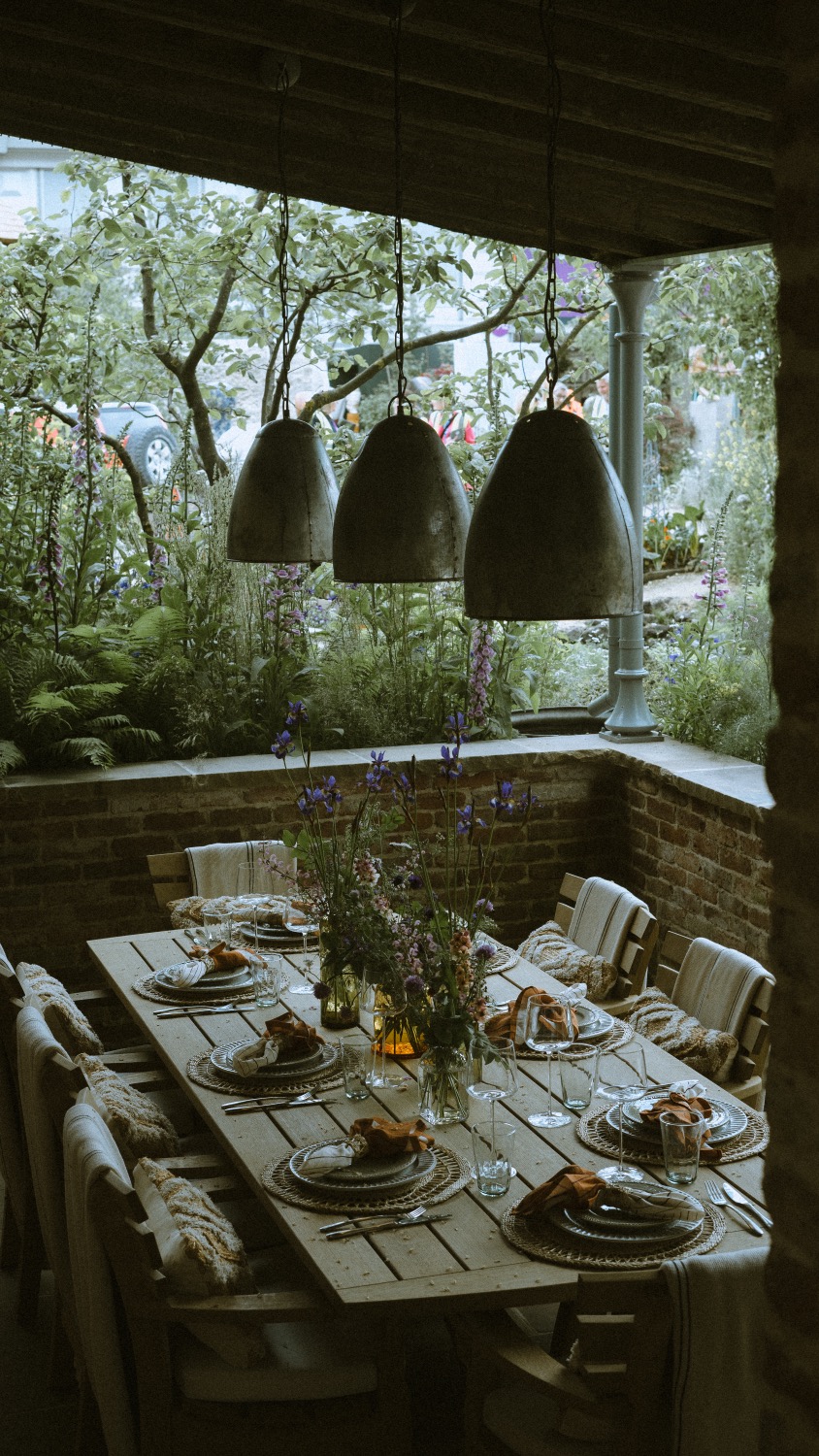
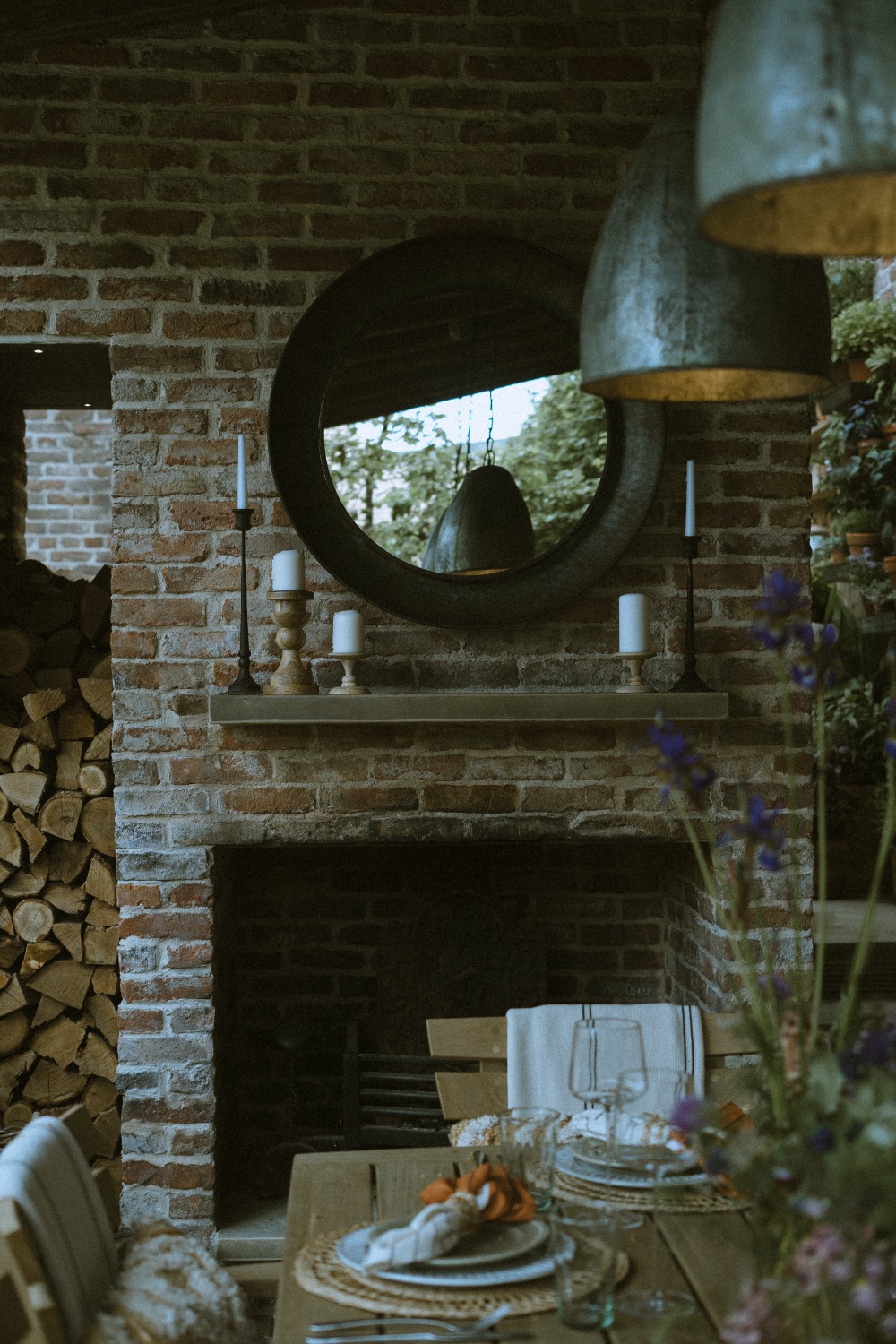
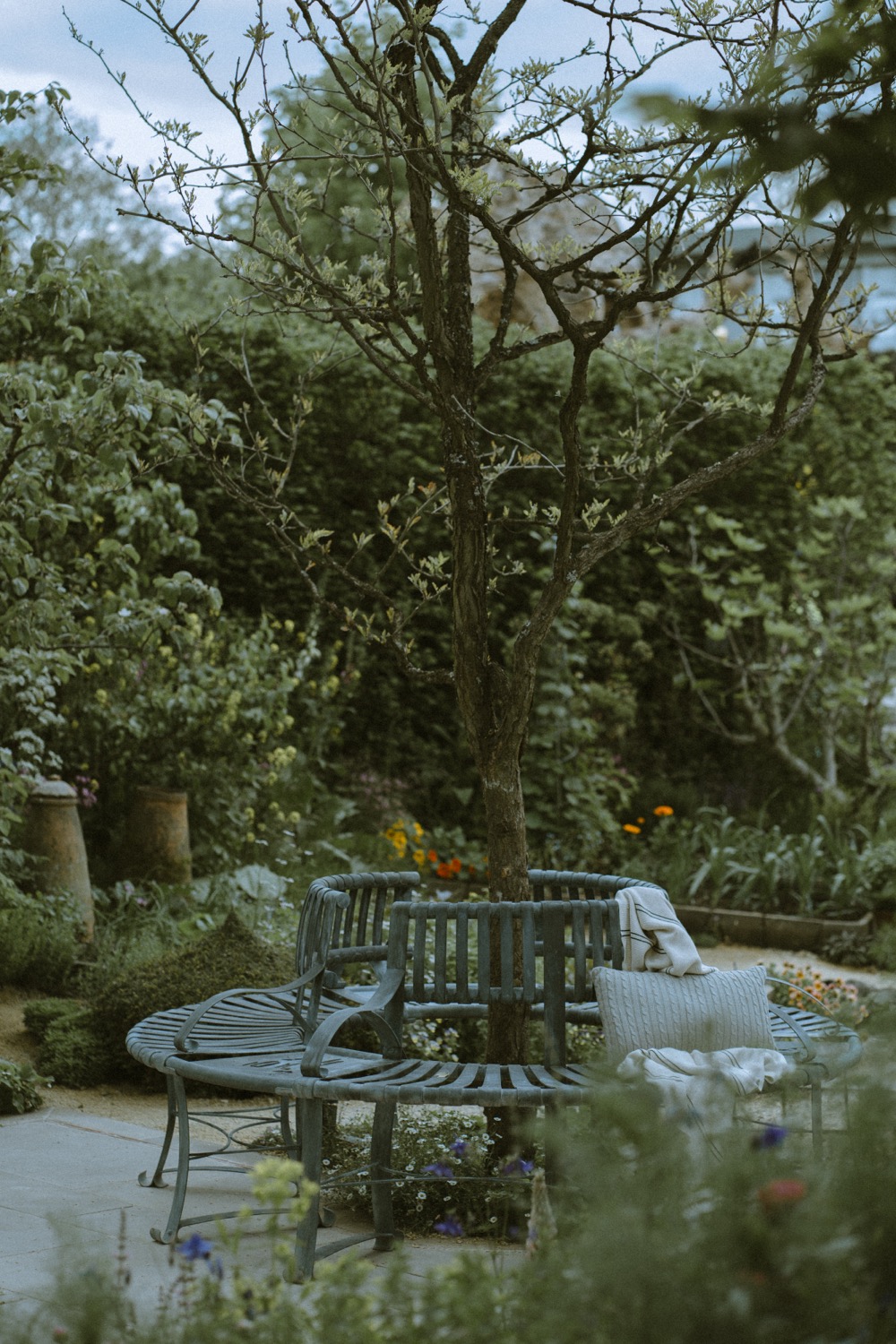
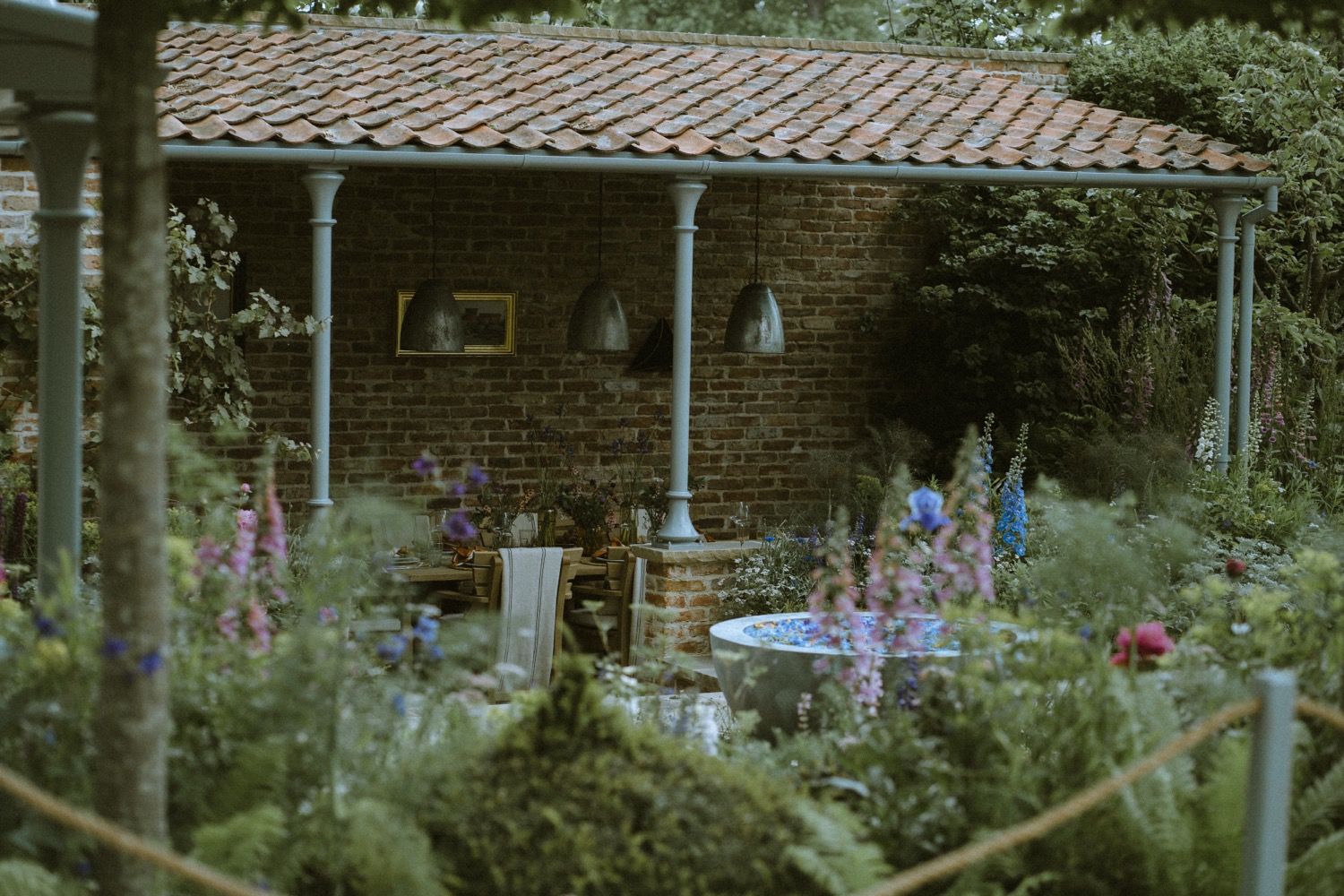
The Savills Garden at the 2023 RHS Chelsea Flower Show was designed by Mark Gregory of Landform Consultants, after four decades of building gardens at the show, and it centred on something Chelsea had not seen before: a fully working kitchen inside a show garden, cooking with produce grown on the plot. Reclaimed brick, green-painted cast iron and a clay-tiled roof held a kitchen, a dresser and a dining table among potager beds, and the garden was awarded Silver Gilt.
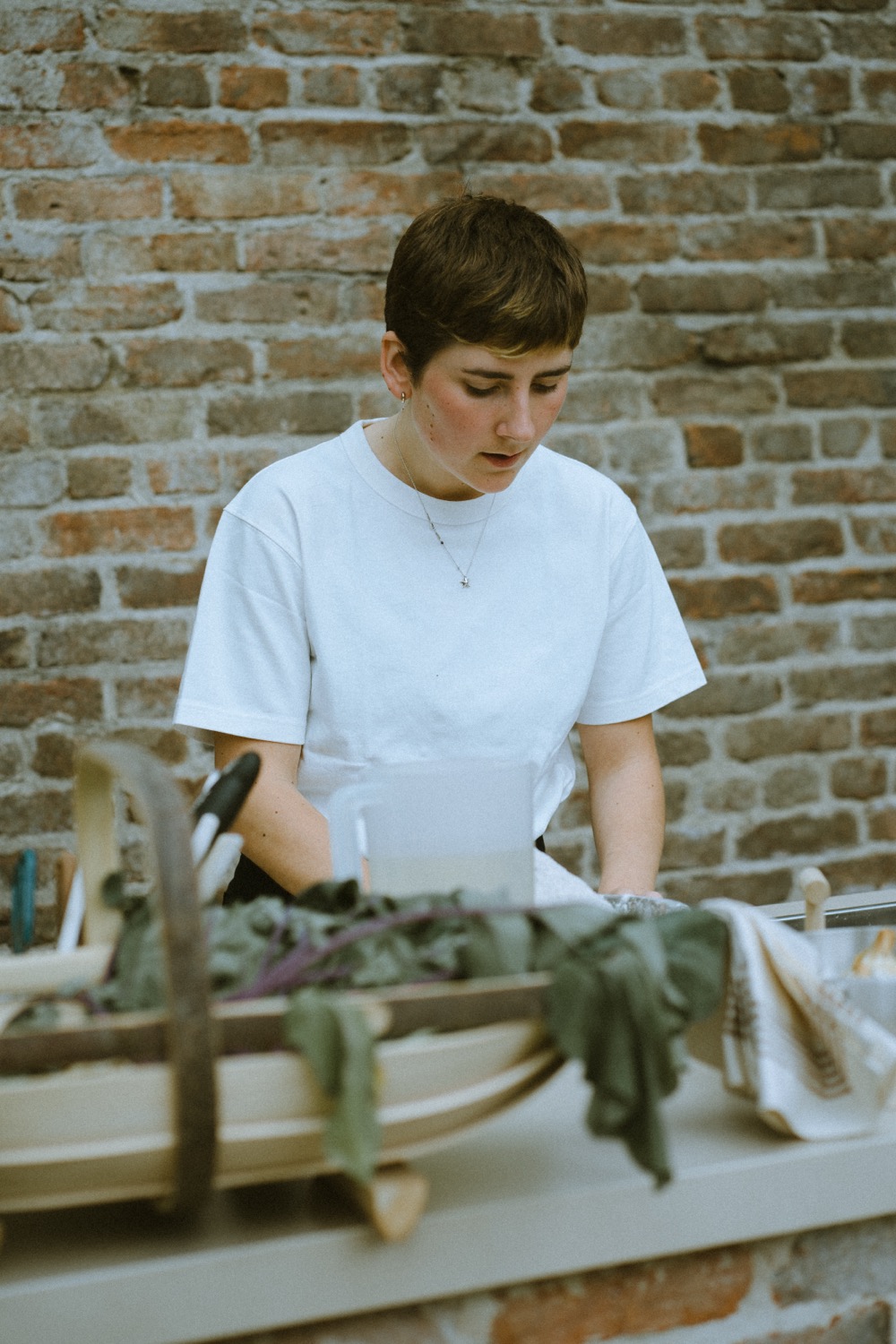
The photographs were made on the finishing weekend before the show opened, while build crews were still on the paths and the kitchen was being tested for the week ahead. That timing shaped the study. There were no visitors to photograph past, and the garden could be observed doing what it was designed to do: flour weighed at the sink, a trug of tomatoes set down on the worktop, the table laid for nobody yet. Almost every frame concerns the domestic life of the place rather than its horticulture.
Chelsea returns through the archive in different registers: the 2022 survey of landscapes built to disappear, and Sarah Price’s garden seen from the edge. This study belongs with the kitchens rather than the gardens. When the show closed, the garden was taken down and rebuilt at a residential home for young people in Nottinghamshire, where the kitchen went on working.