Temporary Worlds
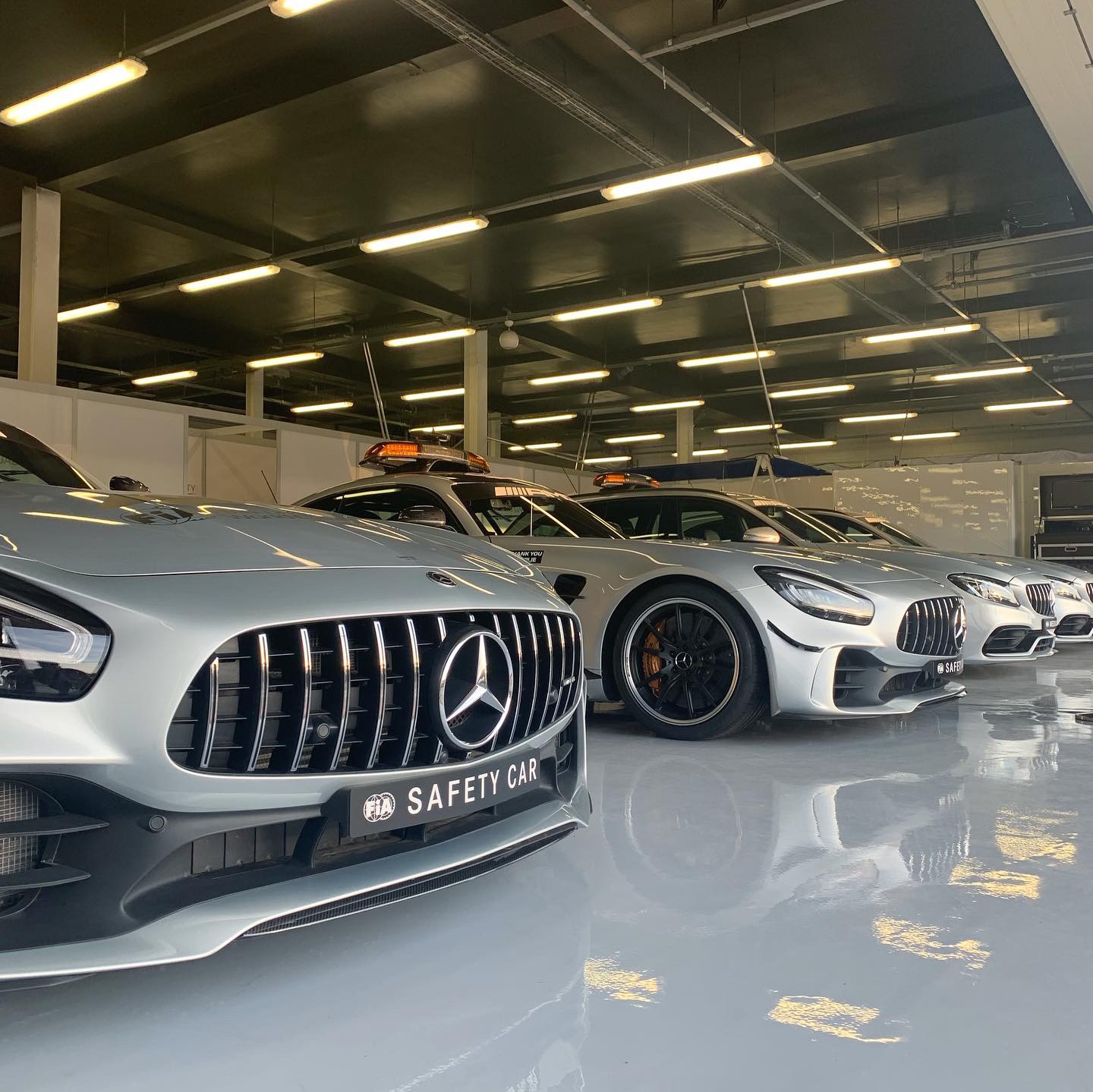
A paddock is built in days and dismantled in hours. Everything about it is real except its permanence. The garages, the hospitality suites, the barriers that will define exactly where a crowd may and may not stand: all of it exists with total conviction for a weekend, and then it is gone, returned to whatever a circuit is when nobody is racing on it.
This is the condition shared by every event photographed for these studies. A World Cup, assembled for a month inside a country that will spend the following decade being asked about it. A tennis tournament in a garden that reverts to being simply a garden the following Monday. A golf club at dusk, holding an atmosphere that belongs to that particular evening and no other.
The instinct is to photograph the occasion. The competition, the ceremony, the moment the world was watching for. That photograph already exists, made by hundreds of other cameras pointed at the same thing.
The more interesting photograph is of the infrastructure around the occasion. The engineers working before the cars leave the garage. The marquee interior before the first guest arrives. The particular quality of light in a temporary structure that was never designed to be looked at, only to function.
These worlds are assembled with total seriousness and no expectation of lasting. That combination produces something worth looking at closely, precisely because it will not be there to look at again.
The photographs are what remains once the temporary world has been packed away. Not a record of the event. A record of the world built to contain it.