BYREDO, Leeds
The Victoria Quarter arcade is a covered retail gallery of ironwork, stained glass and gilded detail. Most boutiques inside it lean into the grandeur. BYREDO does not.
The store occupies its corner with deliberate restraint. The interior is pale, cool, structured. Shelving holds bottles at intervals rather than in rows. Stone, steel, leather. The materials are present without announcing themselves. It is a room that has made precise decisions about what to include, and an equally precise decision about what to leave out.
The bottles are nearly identical from one fragrance to the next. The labels reveal the name and little else. The packaging avoids unnecessary decoration at every scale.
This restraint is not accidental. It is the product. In a retail environment built around differentiation and display, BYREDO's position is built on consistency: what remains the same rather than what changes. The shelf reads as a single object rather than a collection of objects, and the effect is one of conviction rather than abundance.
The materials accumulate quietly. Stone countertop. Steel fixtures. Leather. Glass cases holding candles and objects selected with the same logic as the fragrances they sit beside.
Each object is given room. Nothing competes for attention. The composition of the store reads as an interior thought about at the level of detail usually reserved for a single room in a private house. The Victoria Quarter continues its business beyond the threshold. Inside, the pace is different.
What BYREDO offers is not a product but a position. The restraint is structural. Bottle, label, material, space: all subject to the same discipline. Nothing is added that does not need to be there.
The store inside the Victoria Quarter is a room of considered objects inside an arcade of considered objects, and it holds its own register without raising its voice to do so. That is a more difficult thing to achieve than it appears.
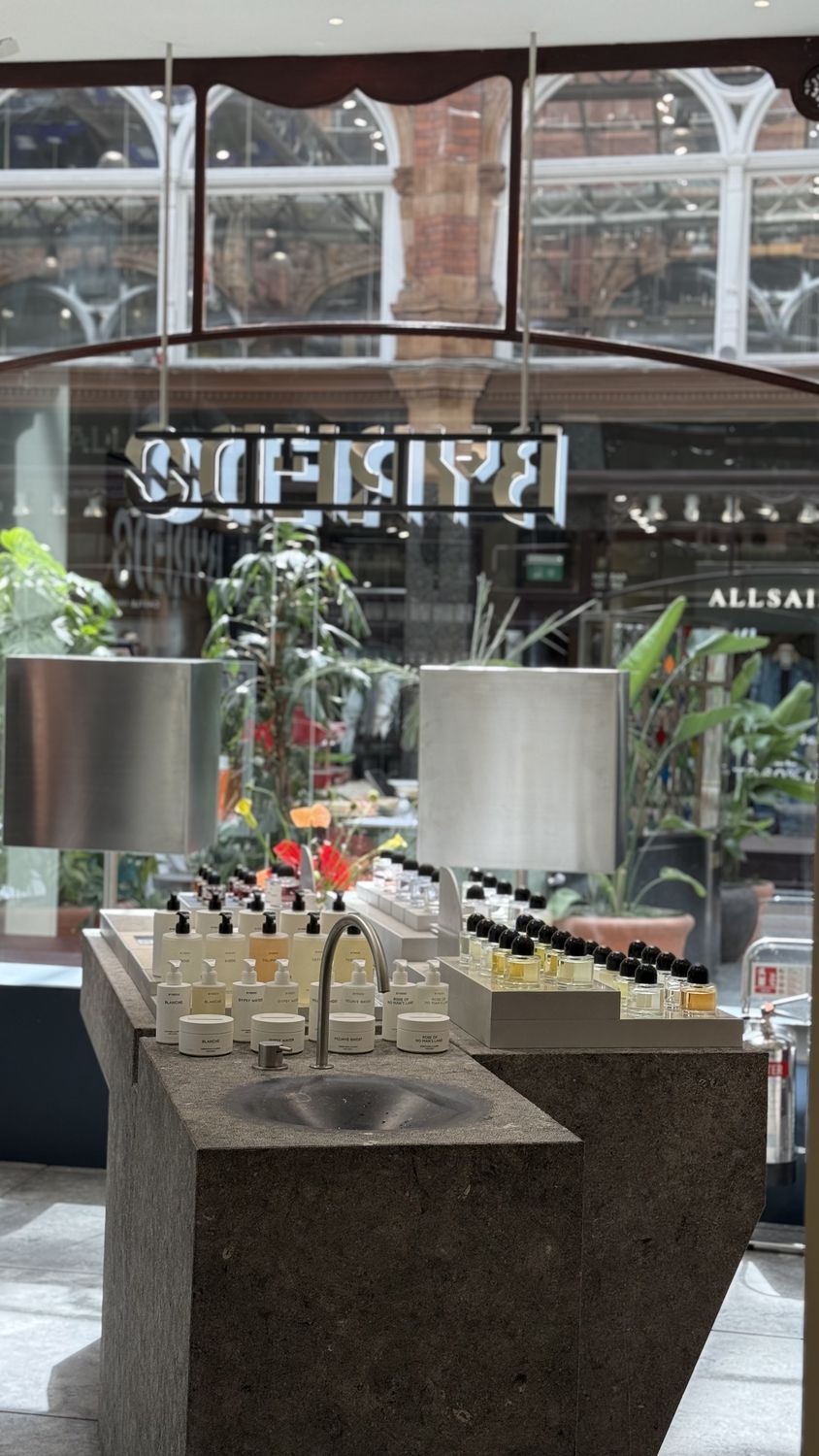
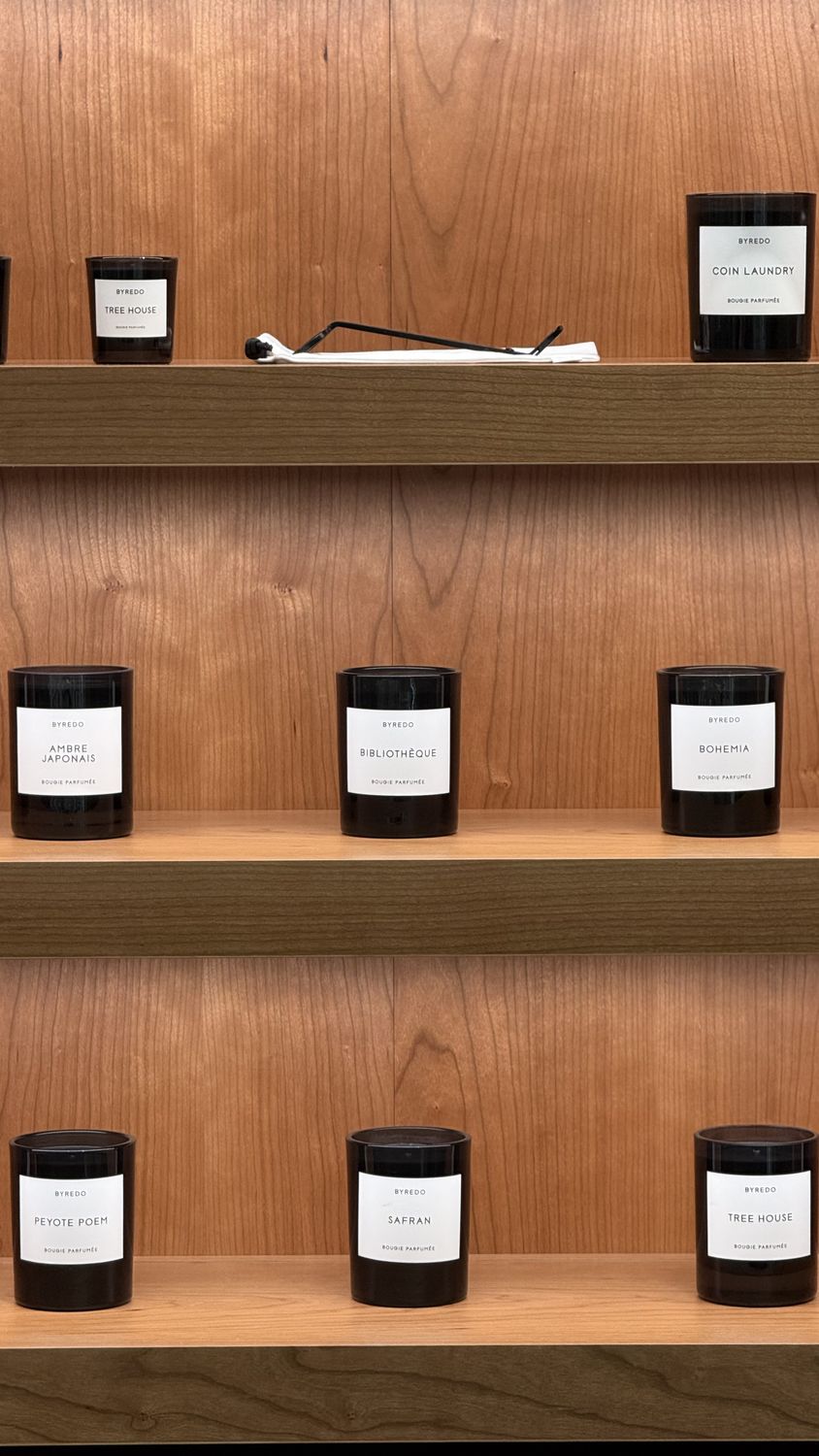
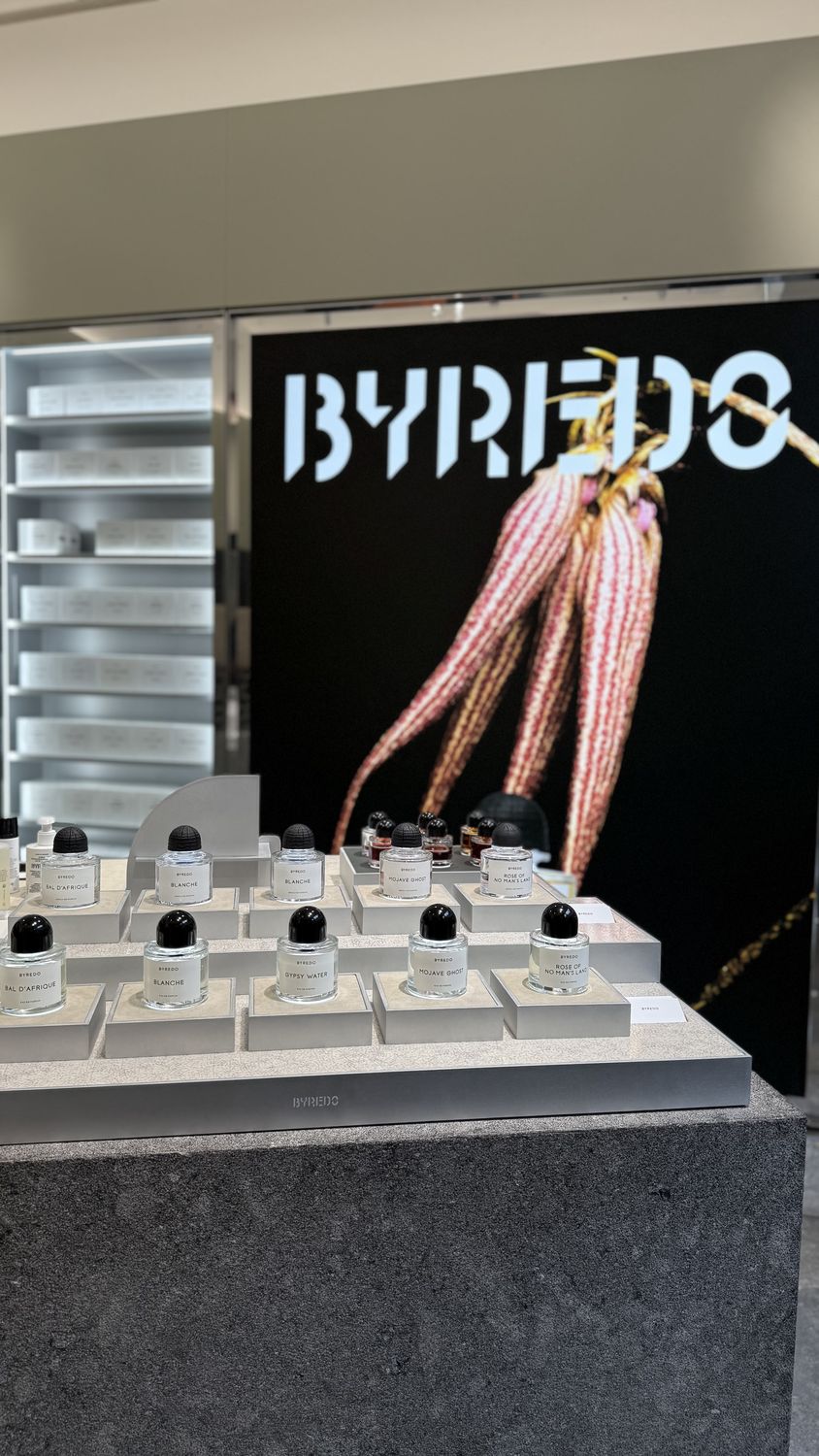
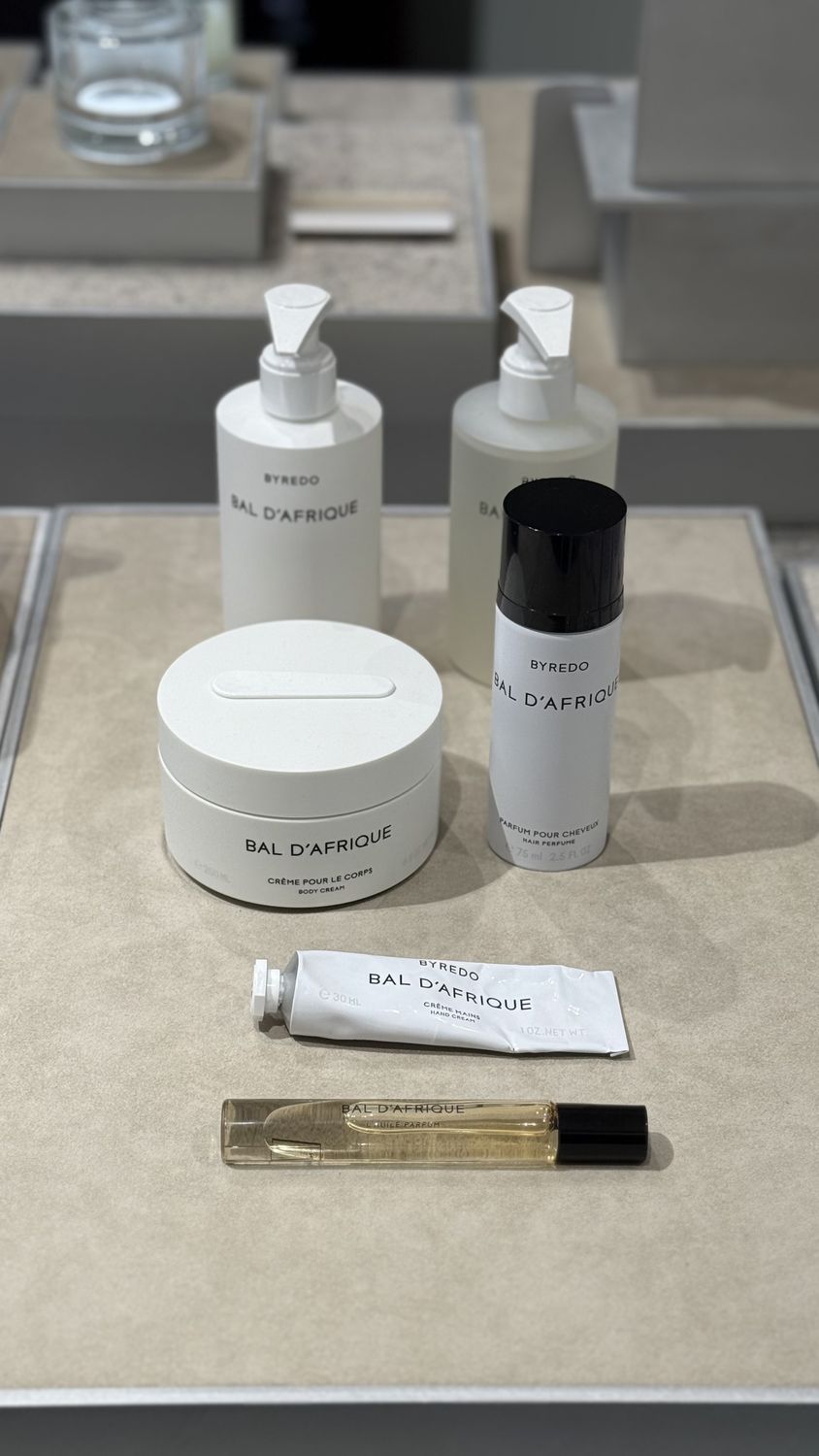

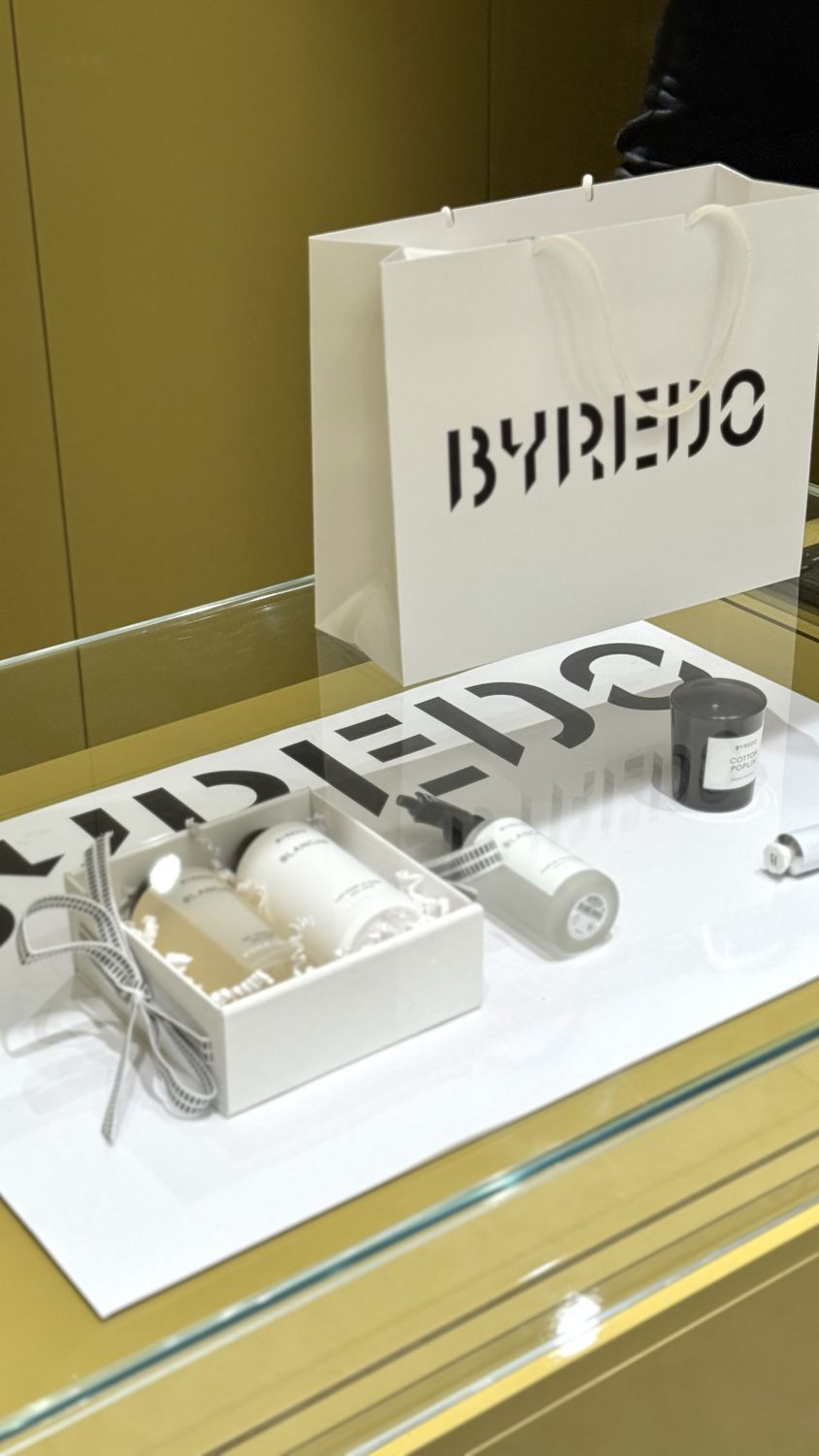
BYREDO's Leeds store sits inside the Victoria Quarter, the 1900 Frank Matcham arcade of ironwork, marble and stained glass that remains the most theatrical retail architecture in the north of England. The Swedish fragrance house's response to all that Edwardian abundance is the study's subject: a pale, spare, precisely structured interior that declines every invitation the building extends. Restraint, installed inside exuberance, on purpose.
The photographs work the contrast: the arcade's gilded perspective narrowing to the store's cool geometry, product ranged like laboratory stock, the house's minimal typography holding its corner against stained glass. BYREDO's founding idea, fragrance treated with a designer's economy rather than a perfumer's romance, is legible entirely in the joinery, which is what makes the store photographable in the first place.
In the archive the study gives the Craft category its clearest single image of brand-as-refusal, and it partners the Journal's essays on restraint and on why fragrance houses build rooms. It is also a note on geography worth making to clients: the house chose Leeds, and the arcade, and the corner, and every one of those choices communicates as loudly as the interior. Where a brand builds is the first sentence of what it says.