FUEGUIA 1833, Milan
Some collections are built to be displayed. Others are built to be explored. Inside FUEGUIA 1833, shelves rise towards the ceiling and ladders wait beside them. The space feels less like a boutique and more like an archive still in the process of being assembled.
The house draws together art, botany and memory. The fragrances carry the names and landscapes of the southernmost reaches of the Americas, Tierra del Fuego and the territories around it, places most people will never visit but that exist here as scent and story.
The archive around them matters just as much as what it contains. Specimens, books, objects arranged as though the collection is still in the process of being assembled. The shelves are not decorative. They are the argument.
What remains is a feeling of curiosity. The space does not resolve into a single room with a single reading. It opens onto itself in stages, and each stage offers something the last one did not.
The sense is that there is always another shelf to discover, another fragrance to pull from the archive, another piece of the story still to place. That feeling is not accidental. It is the point of the house.
The object is only part of the story. The building it inhabits, the collection assembled around it, the care taken with how each thing is placed and labelled. Together they form a context that no individual bottle could carry alone. FUEGUIA understands that the experience of a fragrance begins long before the first spray.
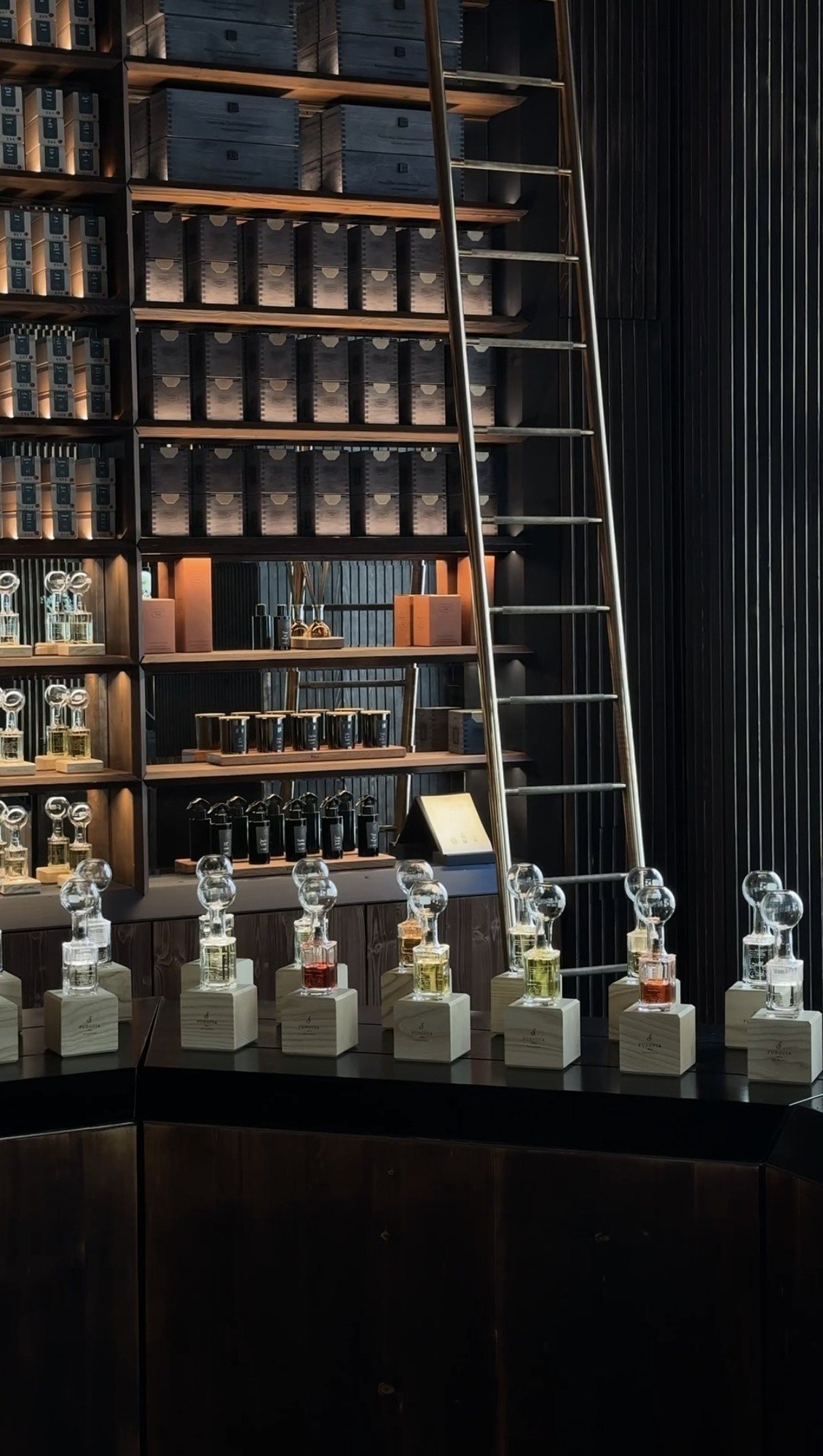
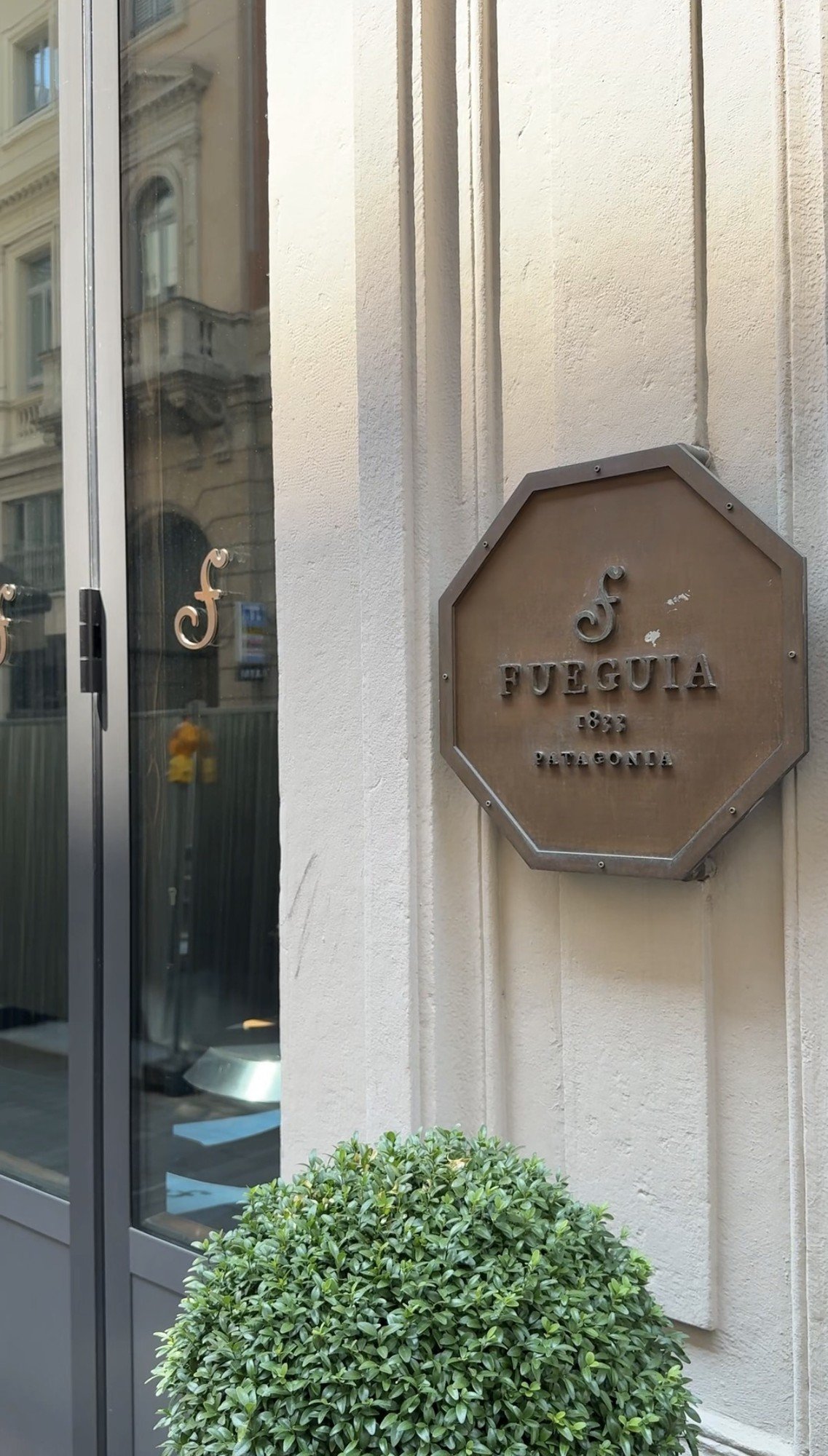
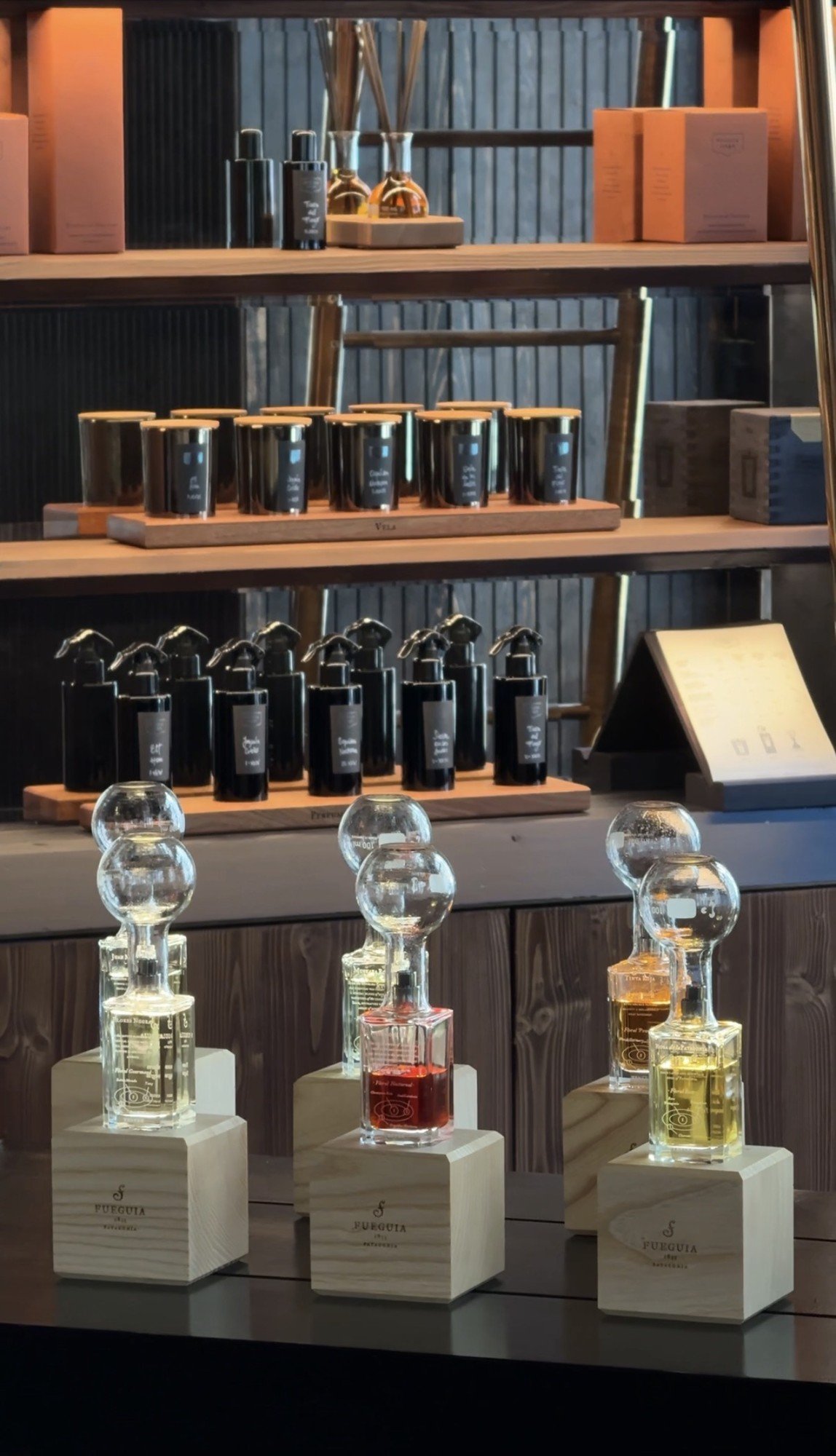
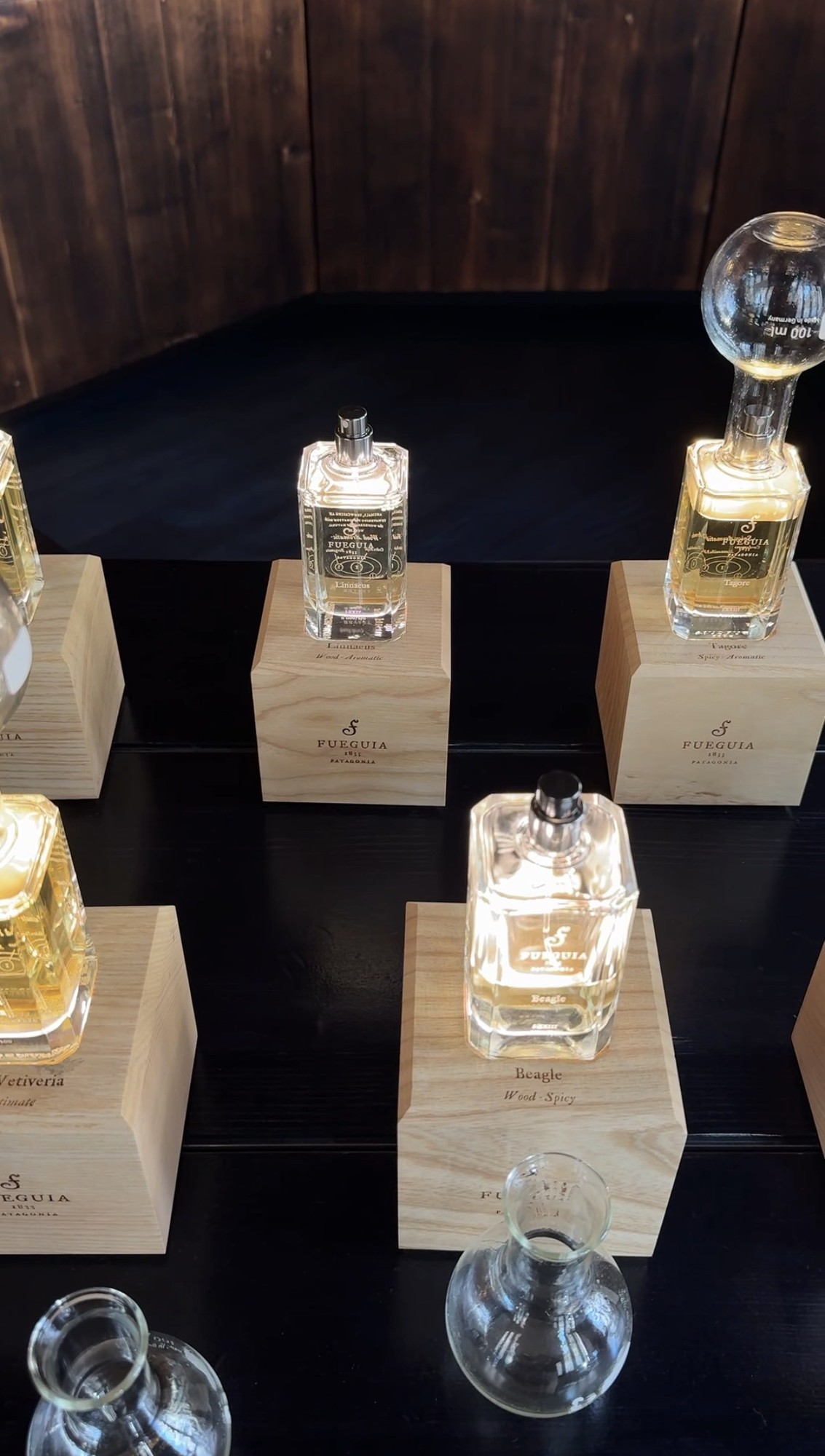
Fueguia 1833 is the Argentine fragrance house of Julian Bedel, named for Patagonia's Tierra del Fuego and its founding year refers to Darwin's arrival there; the house distils its own materials, many from South American botany, and treats perfume as natural history as much as luxury. Its Milan space behaves accordingly: shelves rising to the ceiling, ladders waiting, vitrines of raw materials, less a boutique than a working archive that happens to sell its contents.
The study reads the room as the collection it presents itself to be. The photographs climb the shelving, attend to the labelling, the drawers, the specimen logic of the display, and record the store's central proposition: that provenance, patiently accumulated and precisely organised, is the most persuasive luxury argument available. Nothing here is staged for desire in the conventional retail sense; the desire is produced by the organisation itself.
Within the archive Fueguia supplied one of the site's most-used frames, the archive shelves that front the Journal's essay on what a brand's archive is worth, and its study completes the scent grouping's argument alongside BYREDO's restraint and Guerlain's hospitality: three fragrance houses, three entirely different rooms, one shared understanding that the invisible product makes the room the message.