Al Mourjan Lounge
Water first. A pool the length of a room, holding the ceiling on its surface. A staircase curves above it, in no particular hurry to arrive anywhere.
Read in isolation, this could be a hotel, a gallery, a members’ club. It is none of these.
A place built for waiting, inside a building built for movement.
Beyond the walls, everything is in motion. Gates, screens, departures, the particular low-grade anxiety of air travel. Here, the brief is the opposite: slow the hour down. The lounge succeeds because it does not try to distract from the fact that you are still at an airport. It simply makes that fact irrelevant for the duration of a meal.
The materials hold the room: dark water, timber, leather, polished steel catching the light. The frames follow the way the room asks you to move. Slowly, without pressure to arrive anywhere in particular.
Only later does the context arrive. The hall. The signs. The yellow bear beneath its lamp. The reminder that all of this stillness sits a few minutes from the gates.
Departure is the only thing on anyone’s mind. The room is built to let you forget it, and it does so entirely through architecture and atmosphere rather than distraction. There is no screen showing departure times inside the lounge itself. You leave when you choose to, not when you are reminded to.
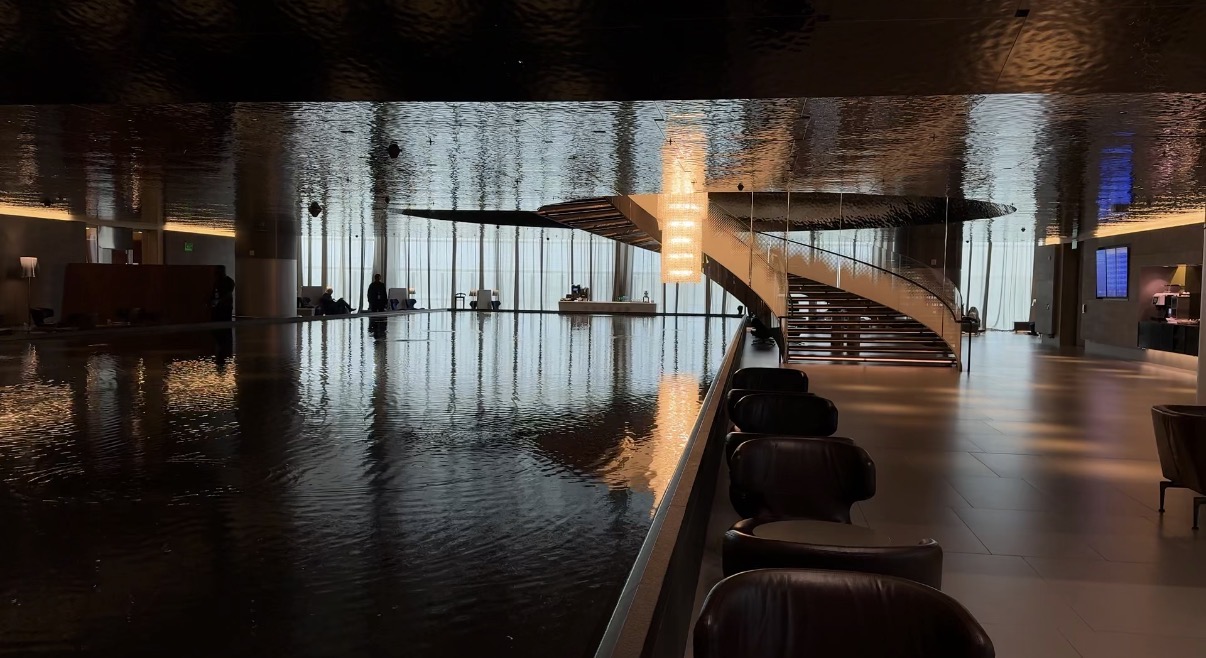
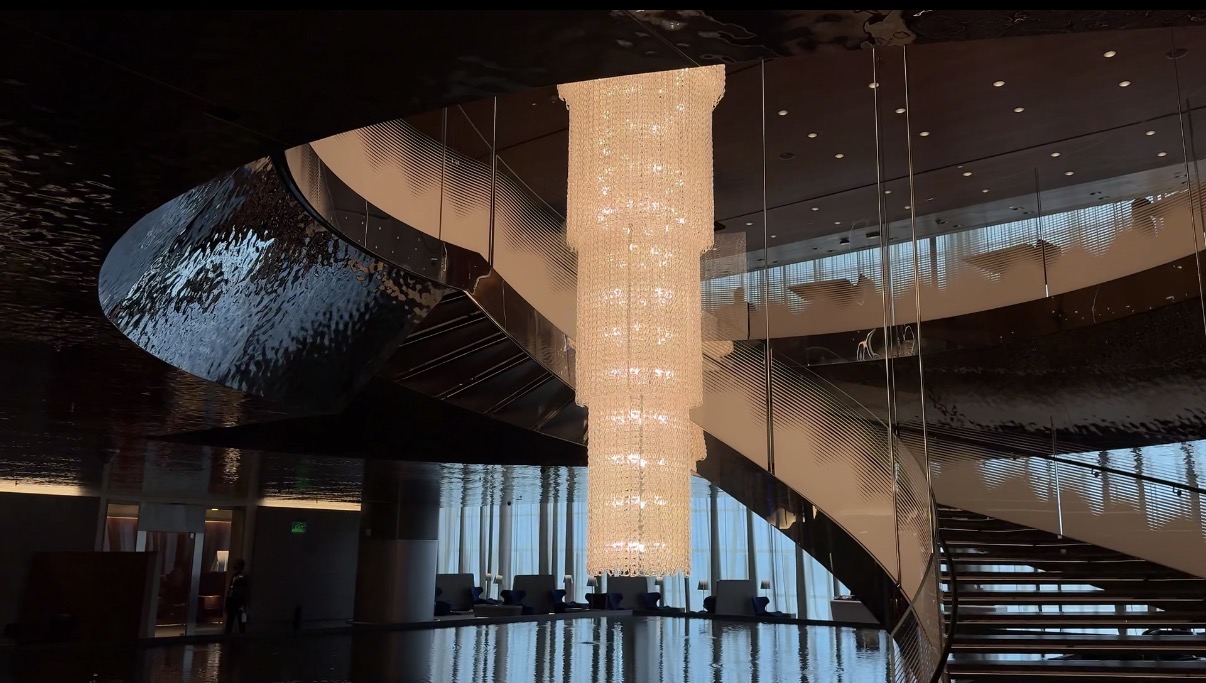
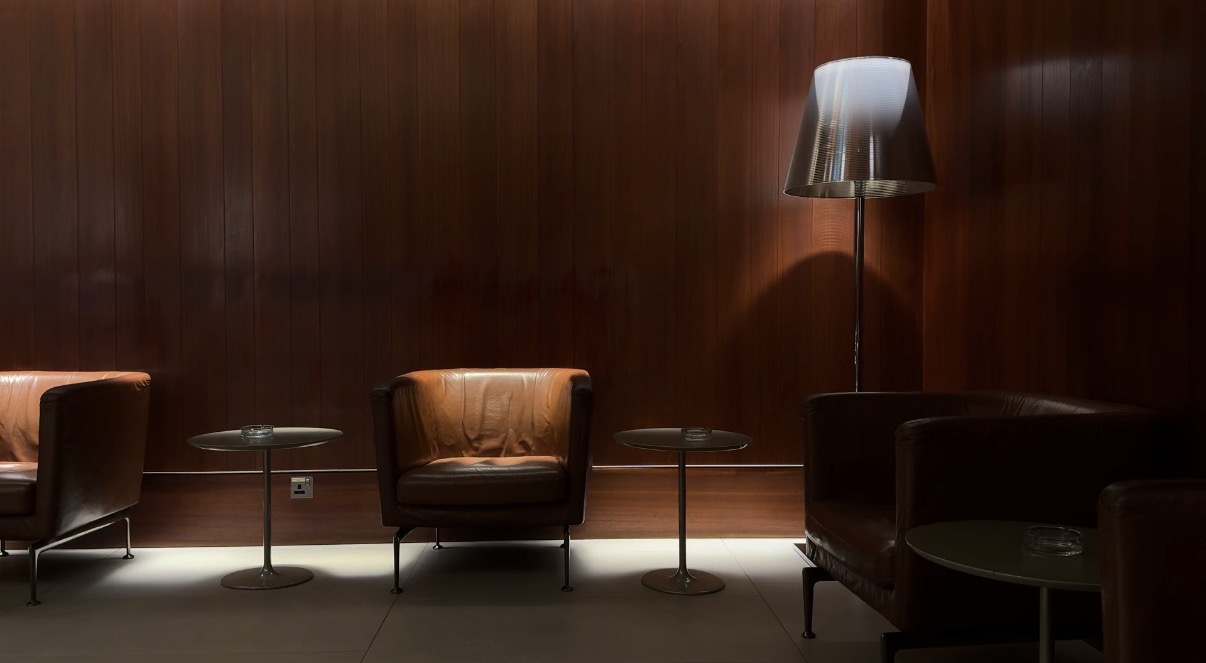
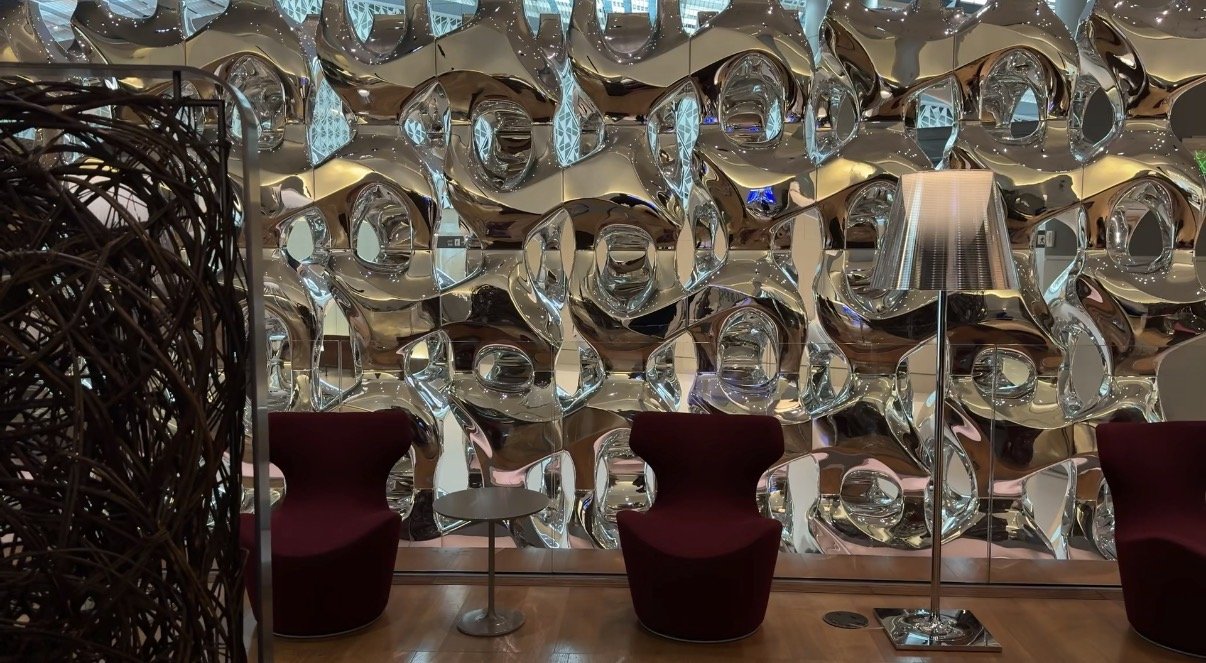
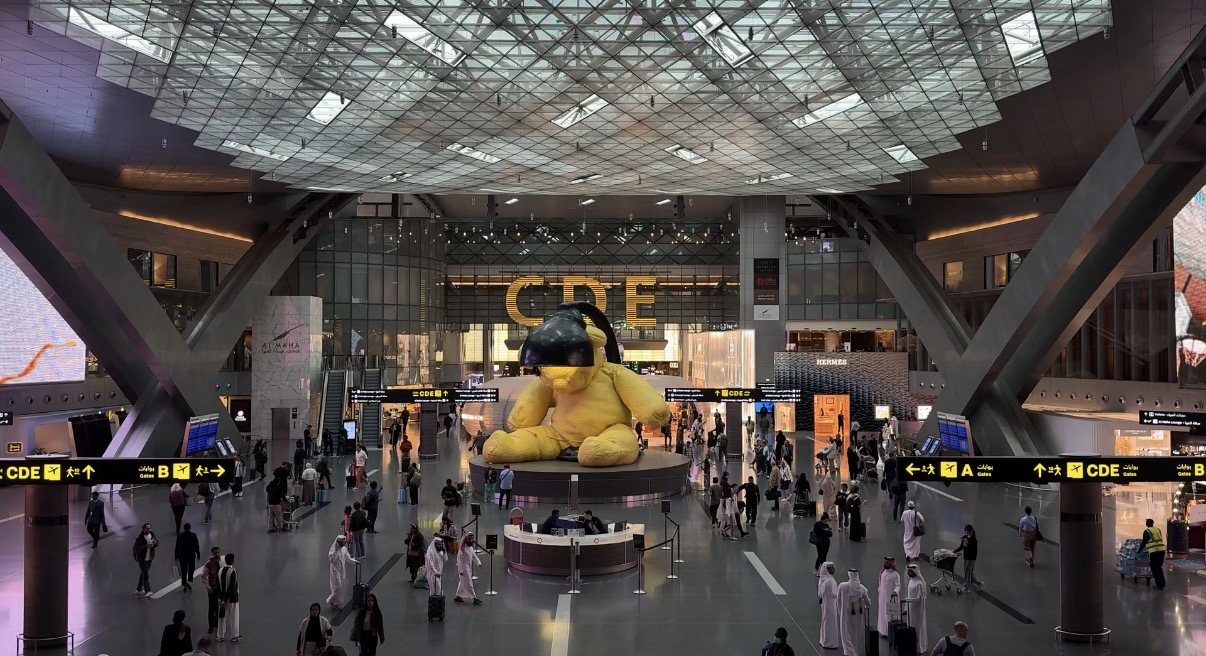
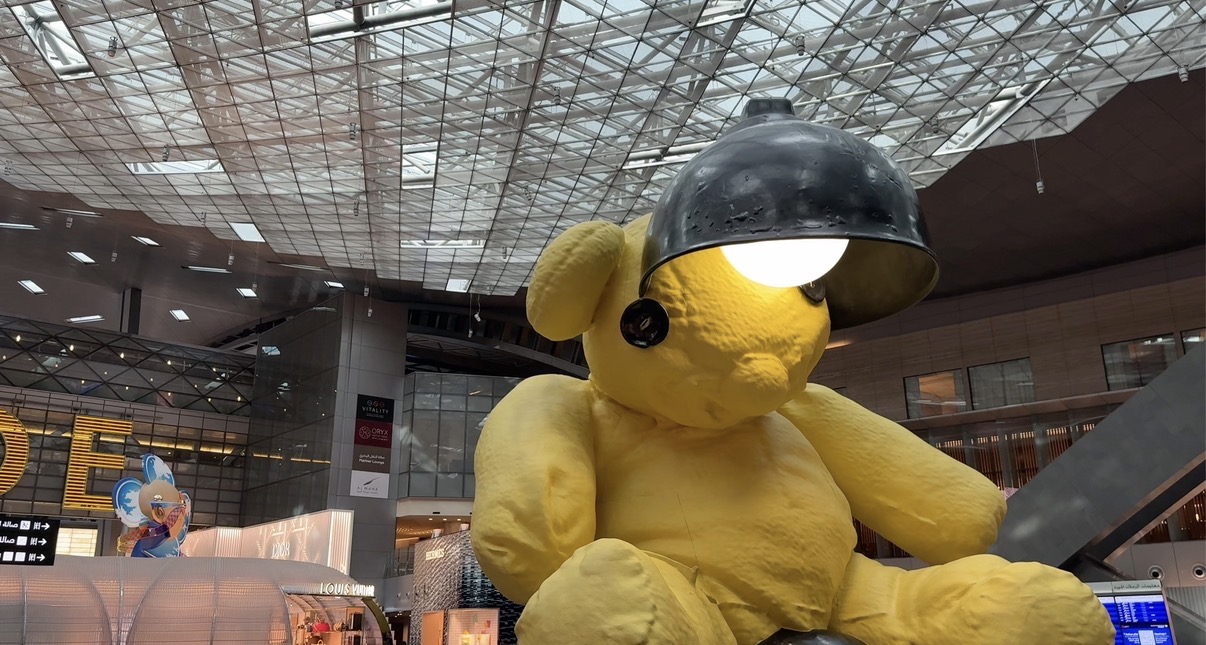
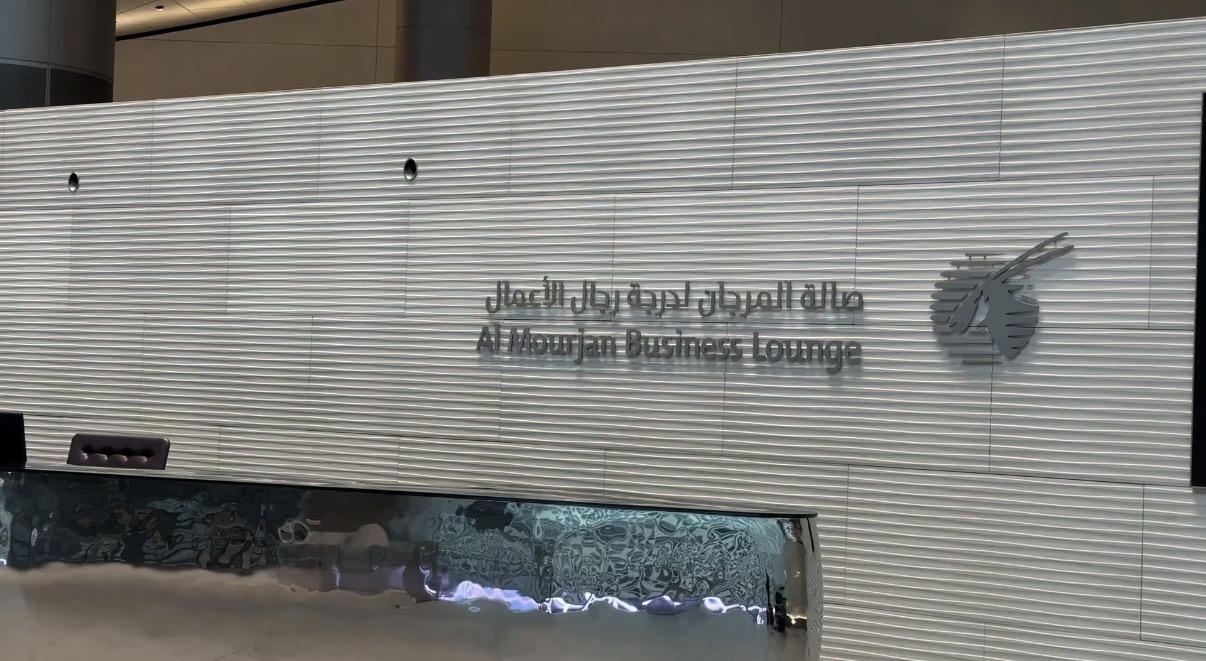
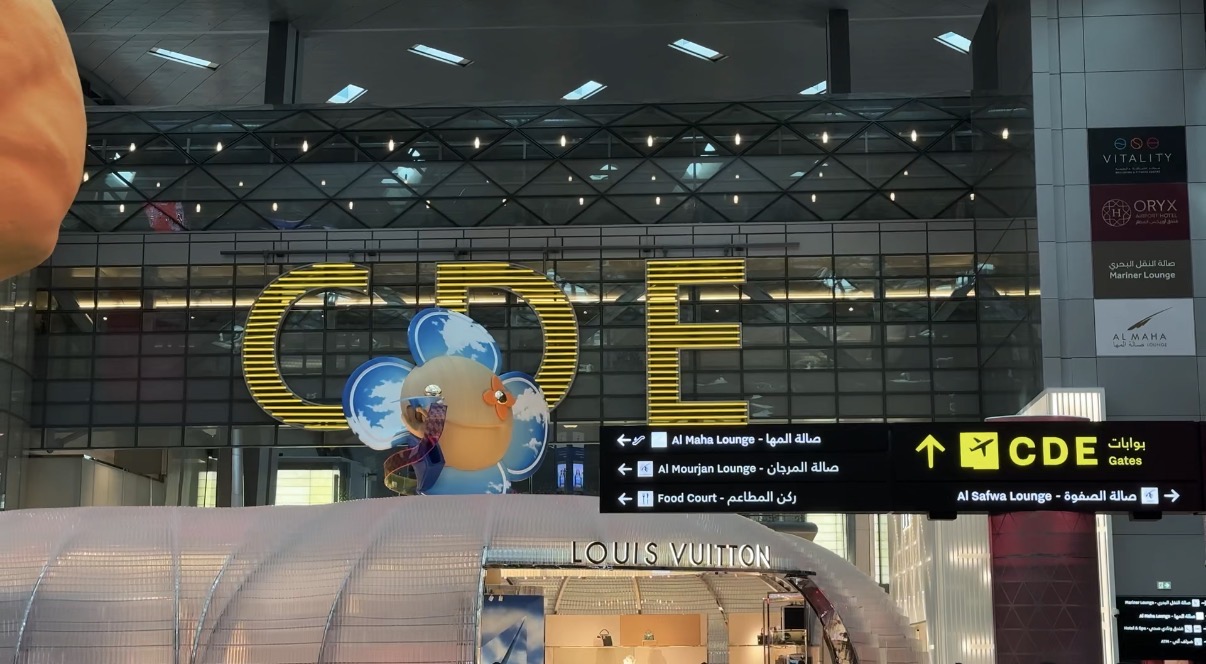
Al Mourjan is Qatar Airways' flagship business lounge at Hamad International Airport, a space of genuinely civic scale, the reflecting pool alone is the length of a building, serving the world's transit passengers between flights. Airport lounges are hospitality's strangest genre: rooms of hotel-grade ambition that nobody chooses as a destination, existing entirely inside waiting. The study takes that condition seriously and photographs the lounge as what it is, an architecture built to hold time rather than events.
The photographs were made mid-journey, as a passenger, in the long hours the lounge is designed for. They attend to the devices that make waiting dignified: the pool holding the ceiling on its surface, the staircase that curves without urgency, the sightlines that never show you a gate. The sequence deliberately excludes the airport beyond, because the lounge's entire achievement is that exclusion, a quiet room manufactured inside one of the loudest building types on earth.
In the archive Al Mourjan closes the hospitality collection's spectrum, in passing, alongside the hotels and cafés, and it anchors the Journal's planned writing on transit as place. It is also a note toward the Doha publication the studio intends: any honest portrait of that city includes the airport, because Doha is, by design, somewhere the world passes through, and Al Mourjan is where the passing-through is treated as a guest.