The Buttery Bakery
Before the bread, before the coffee, before the first customer arrives, there is a room.
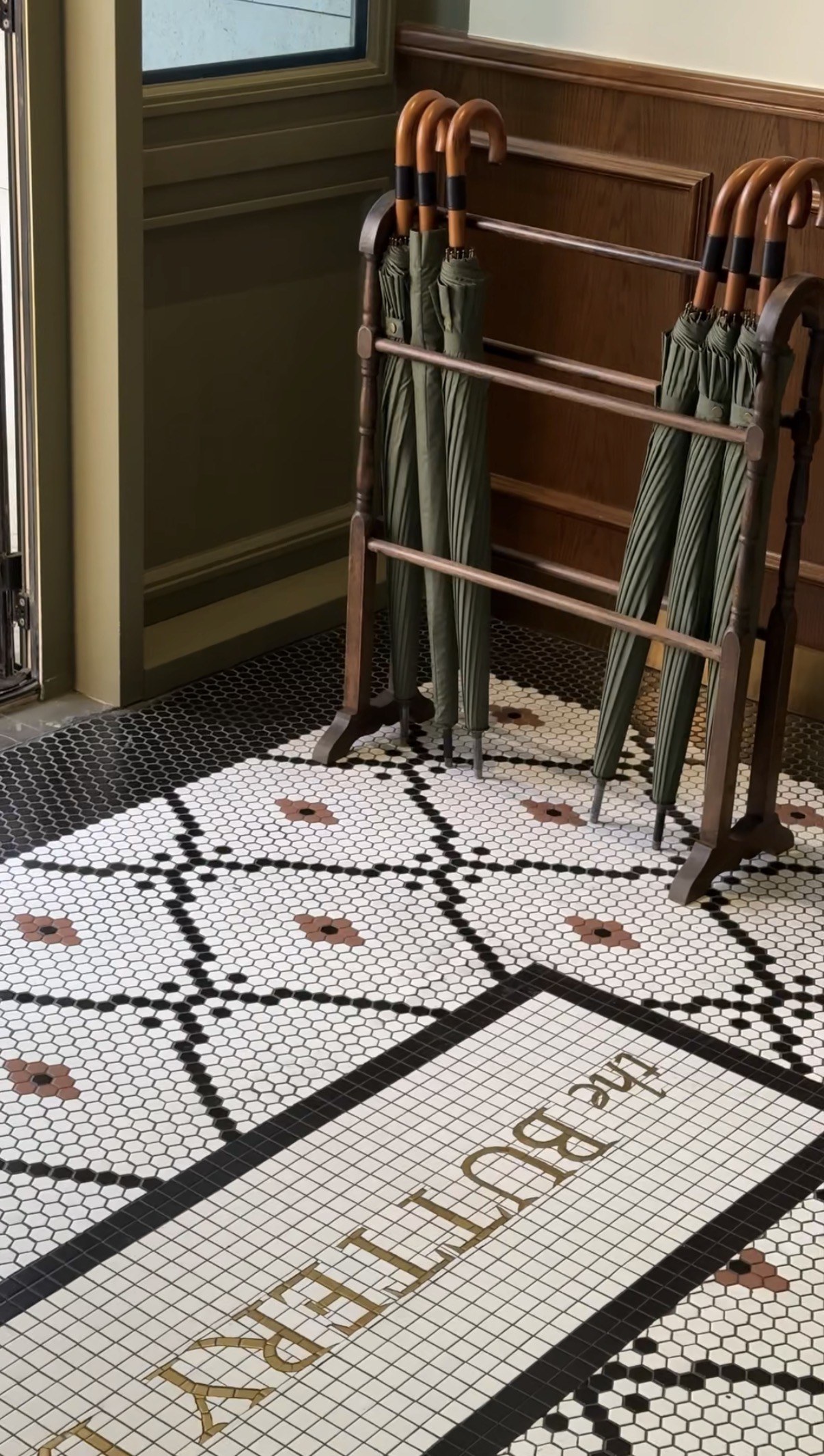
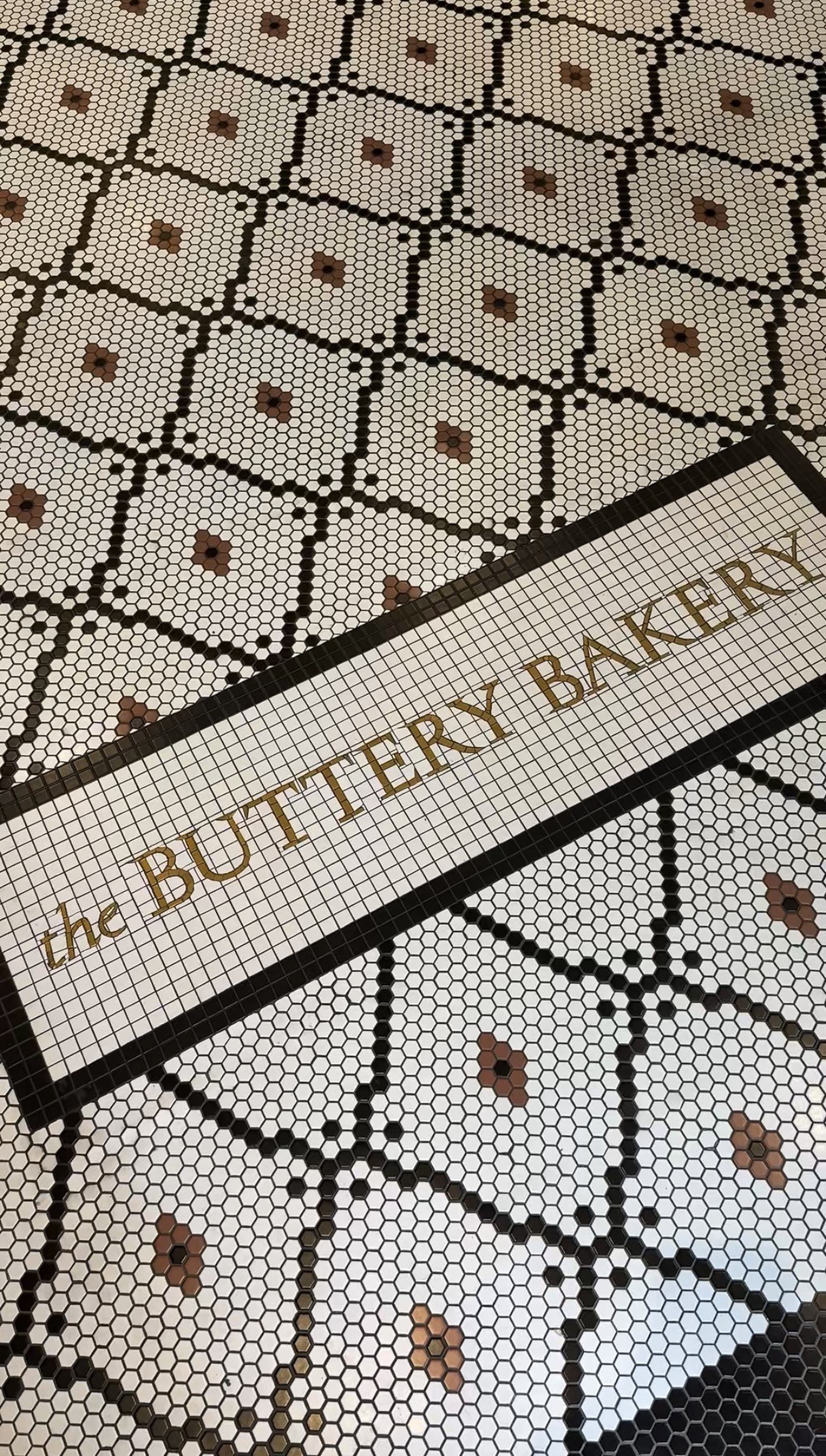
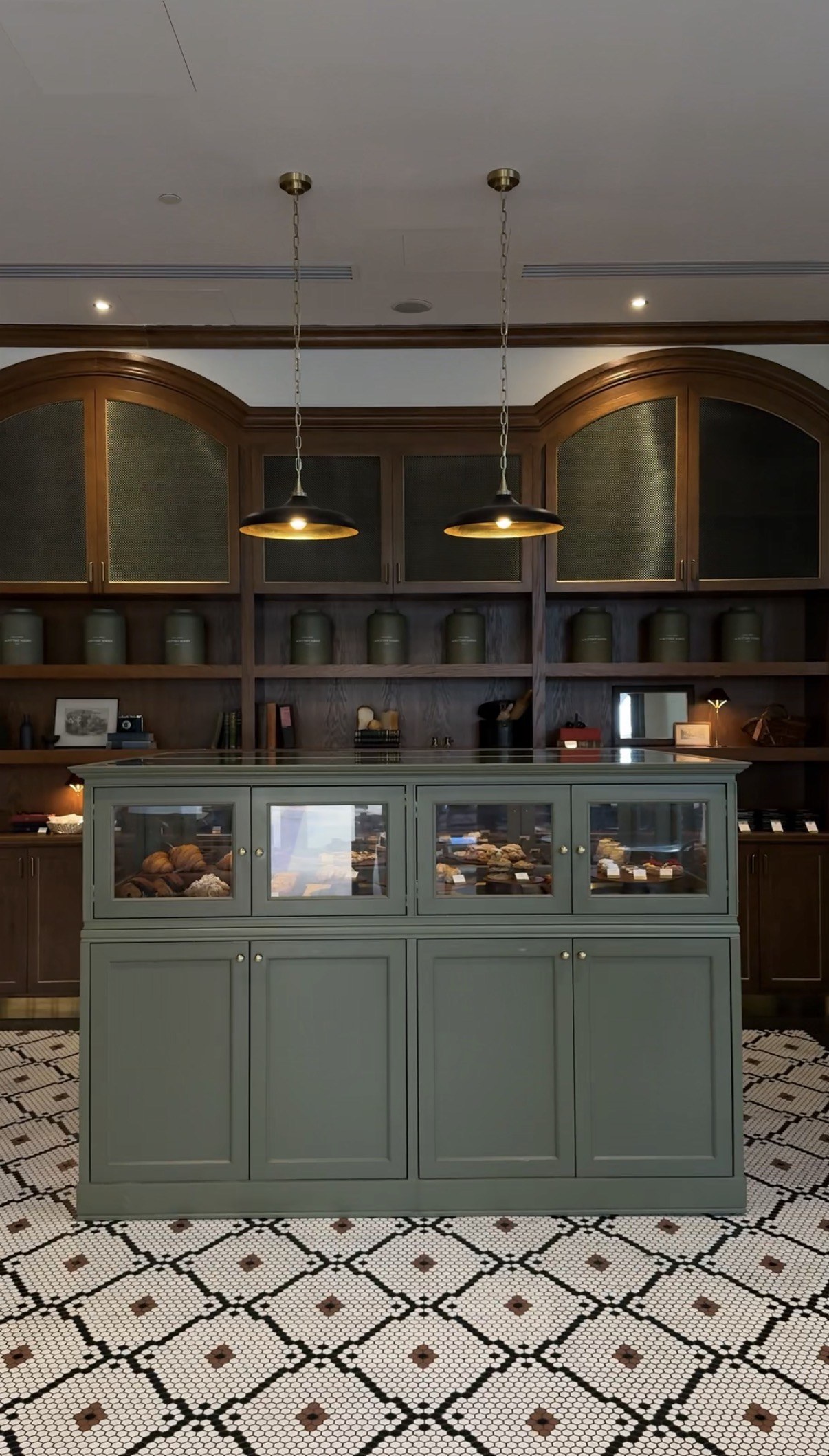
The Buttery Bakery is built from repetition. Brass appears more than once. Timber repeats across walls, shelving and counters. Green returns in display cabinets, packaging and umbrellas waiting by the door. Even the floor follows its own pattern, carrying the same geometry from entrance to counter.
The approach was to document how hospitality can be expressed through material consistency and restraint.
The Buttery’s interior holds a clear visual language and does not break from it. Brass appears beside timber. Timber appears beside stone. The green of the display cabinets repeats in the packaging. Nothing competes for attention. Each object appears to belong to the one beside it.
Photography working through the relationship between architecture, service, objects and atmosphere. Moving from the threshold inward: the mosaic floor at the entrance, the counter as the first moment of transaction, then the shelving, the display, the table, the service.
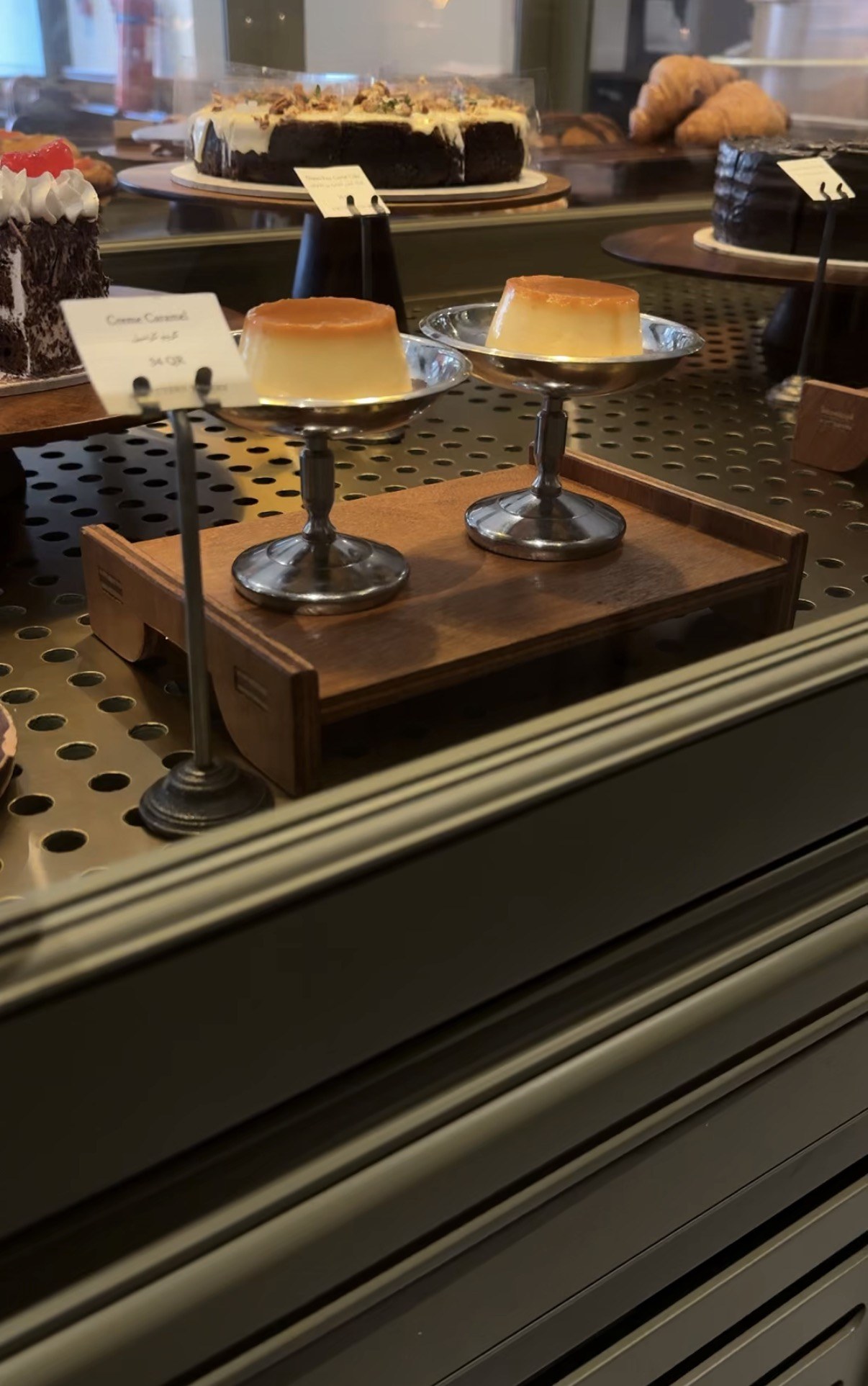
The result is not a bakery defined by its products but by its atmosphere. The pastry counter changes daily. The room, and the feeling it produces, remains constant.
A room where every detail appears to belong to the one beside it. The material language is consistent enough that you notice when something has been added that does not belong, and nothing has been. That consistency is not an accident. It is the whole of the work.
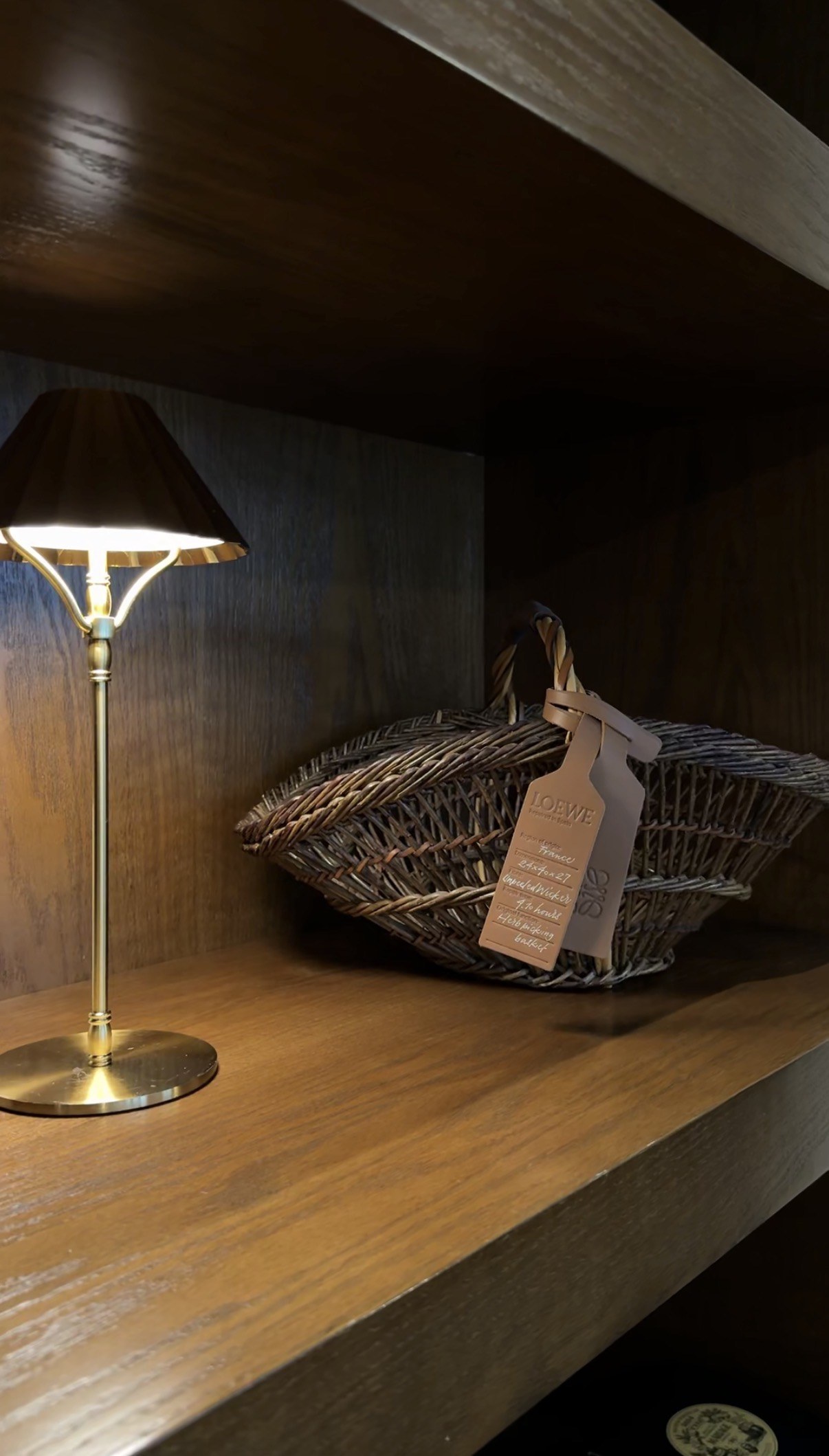
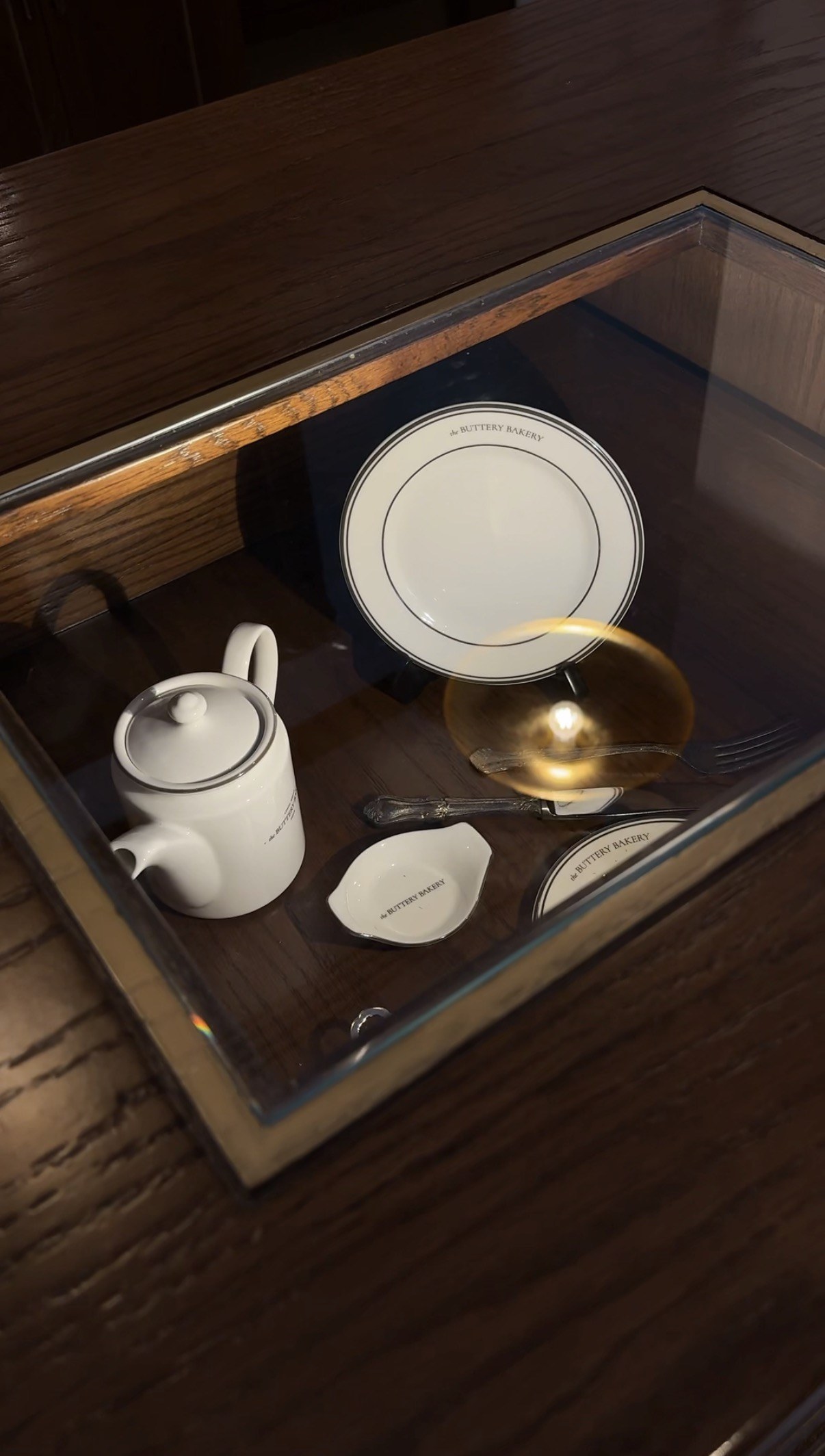
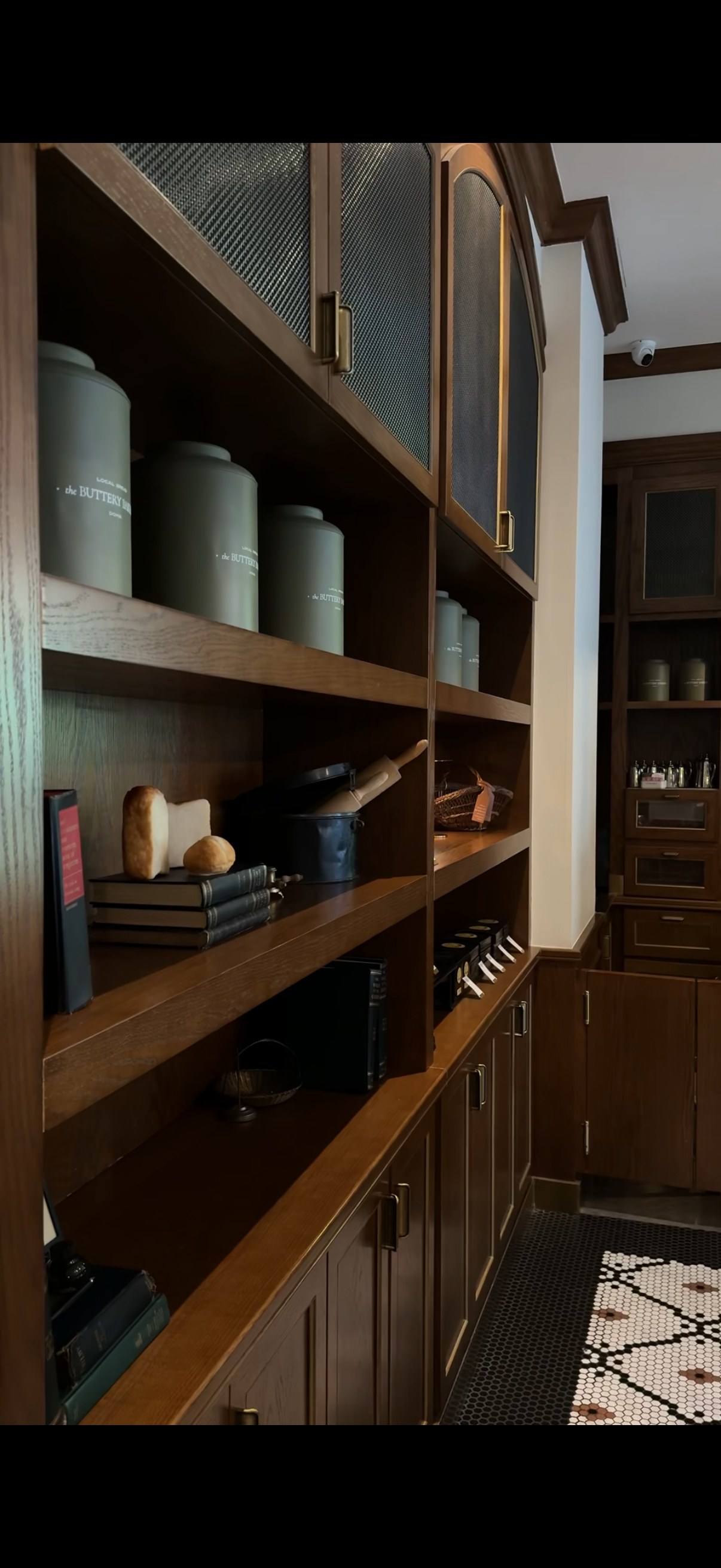
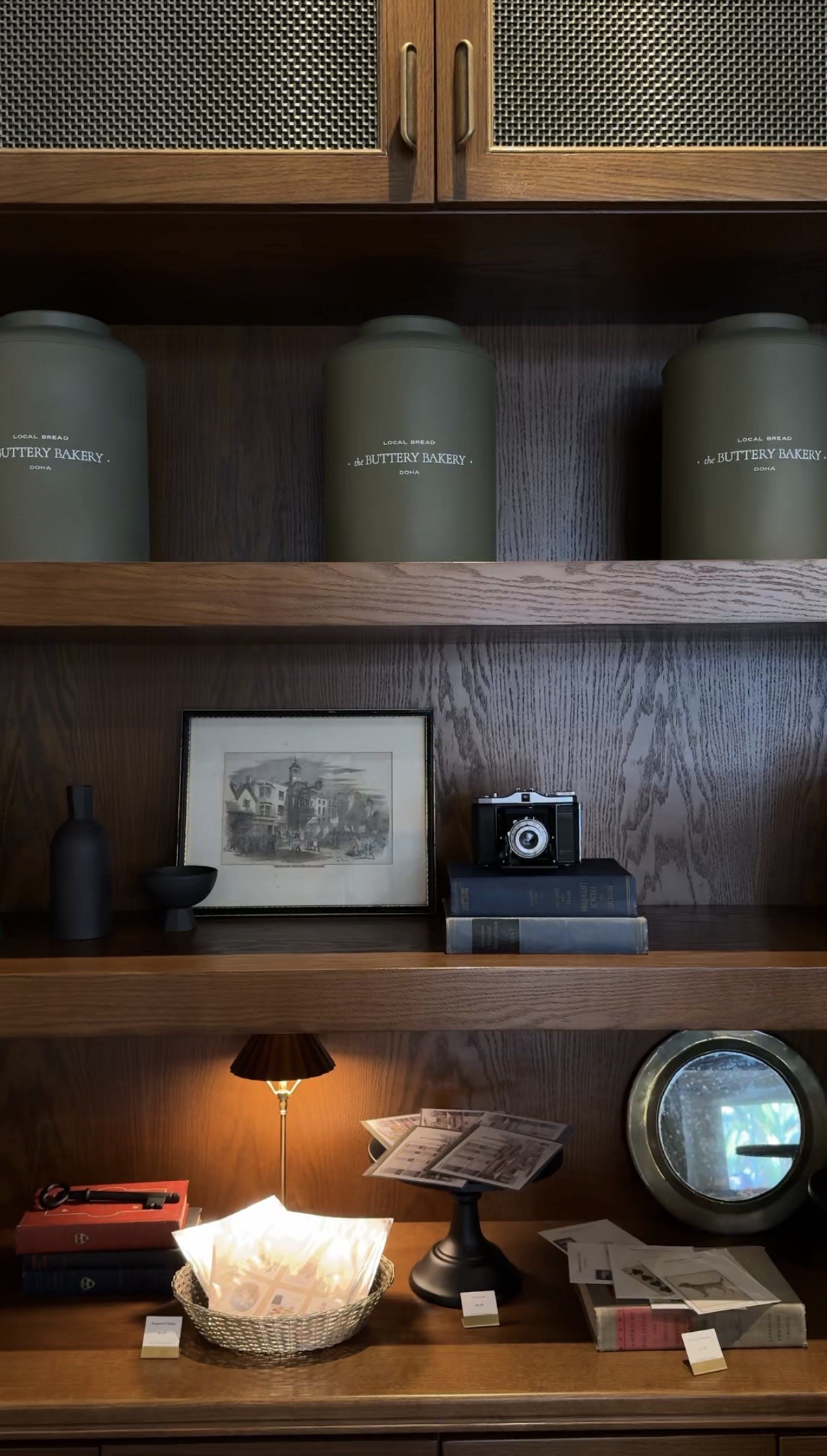
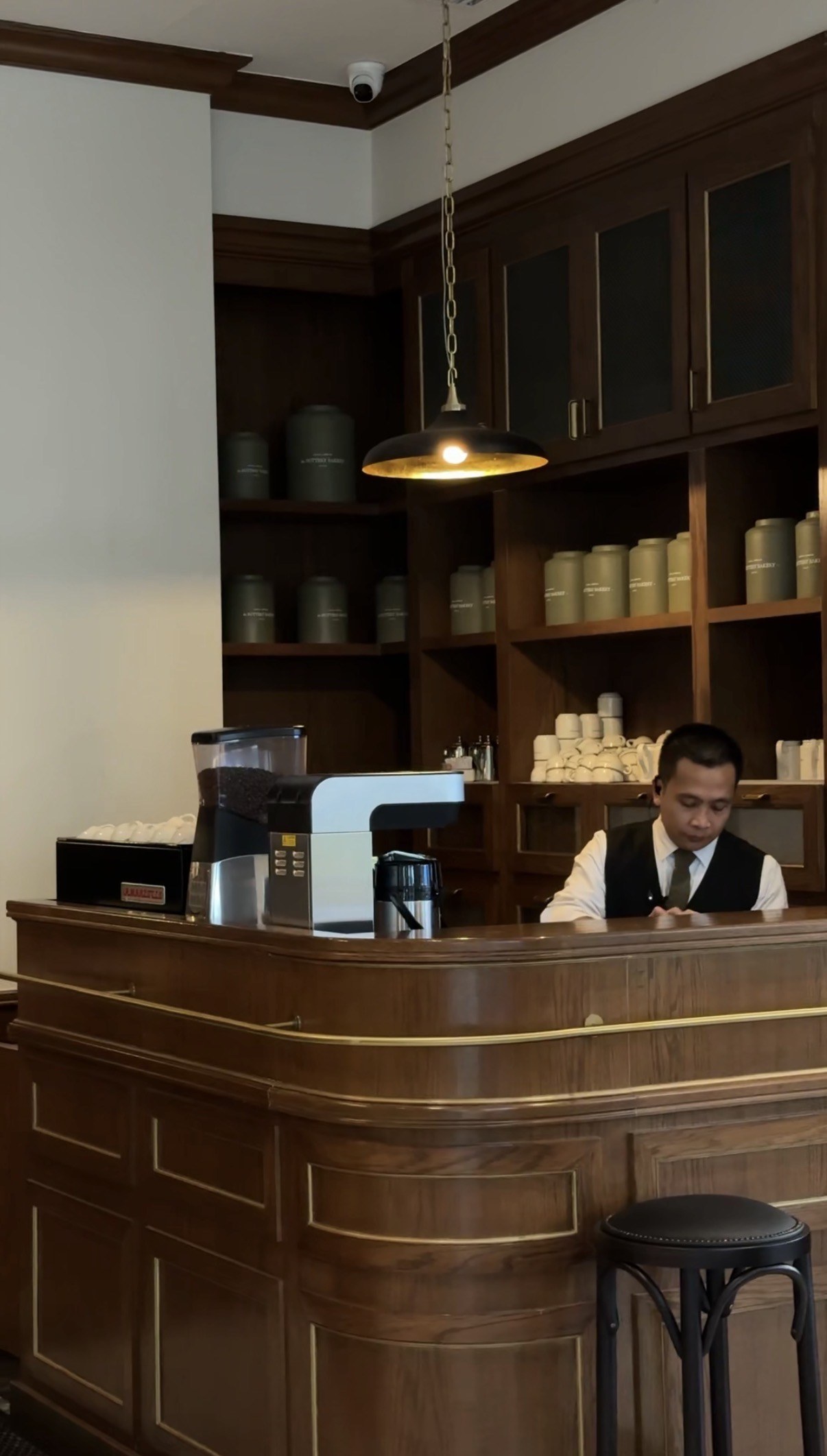
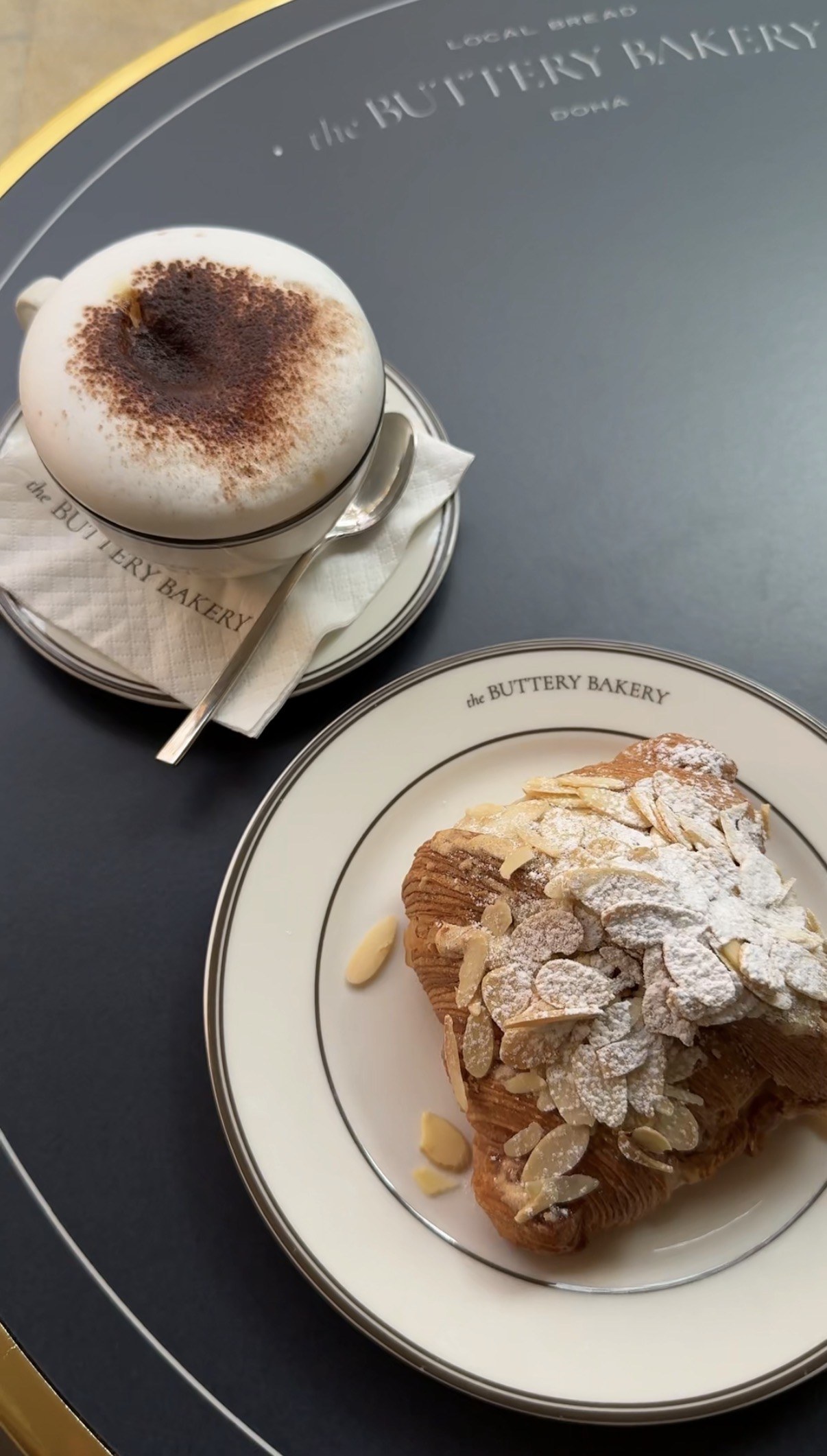
The strongest impression is not left by a pastry or a cup of coffee.
It is left by repetition.
The floor, the shelving, the lighting, the packaging and the service all speak in the same voice. Nothing demands attention. Everything contributes to atmosphere.
Hospitality begins long before the first order is placed.
The Buttery is a Doha bakery built with a completeness that is still rare in the region's independent food scene: brass, timber and a particular green carried from the facade through the cabinets to the umbrellas at the door, a room designed as thoroughly as its product. It belongs to the generation of Qatari-owned hospitality that stopped importing concepts and started composing them, and the study exists partly as a record of that shift.
The photographs were made around the morning bake, when a bakery is most itself: trays moving, the counter filling in waves, the first customers arriving into a room that already smells finished. The sequence follows the repetition the space is built from, materials recurring surface to surface, geometry carried across the floor, the same green returning at every scale, because repetition done this deliberately is the visual signature of an owner who decided everything once and meant it.
Within the archive the Buttery sits alongside Qinwan and EARTH in the Doha chapter's small-room wing, and it supplied the morning-sounds material that later became a Journal essay. It also serves a practical editorial point the studio makes to food businesses considering photography: the product shot is the least persuasive image a bakery owns. The room, the rhythm and the morning are what people are actually choosing between, and they can only be photographed on site, early, by someone paying attention.