What the View Does
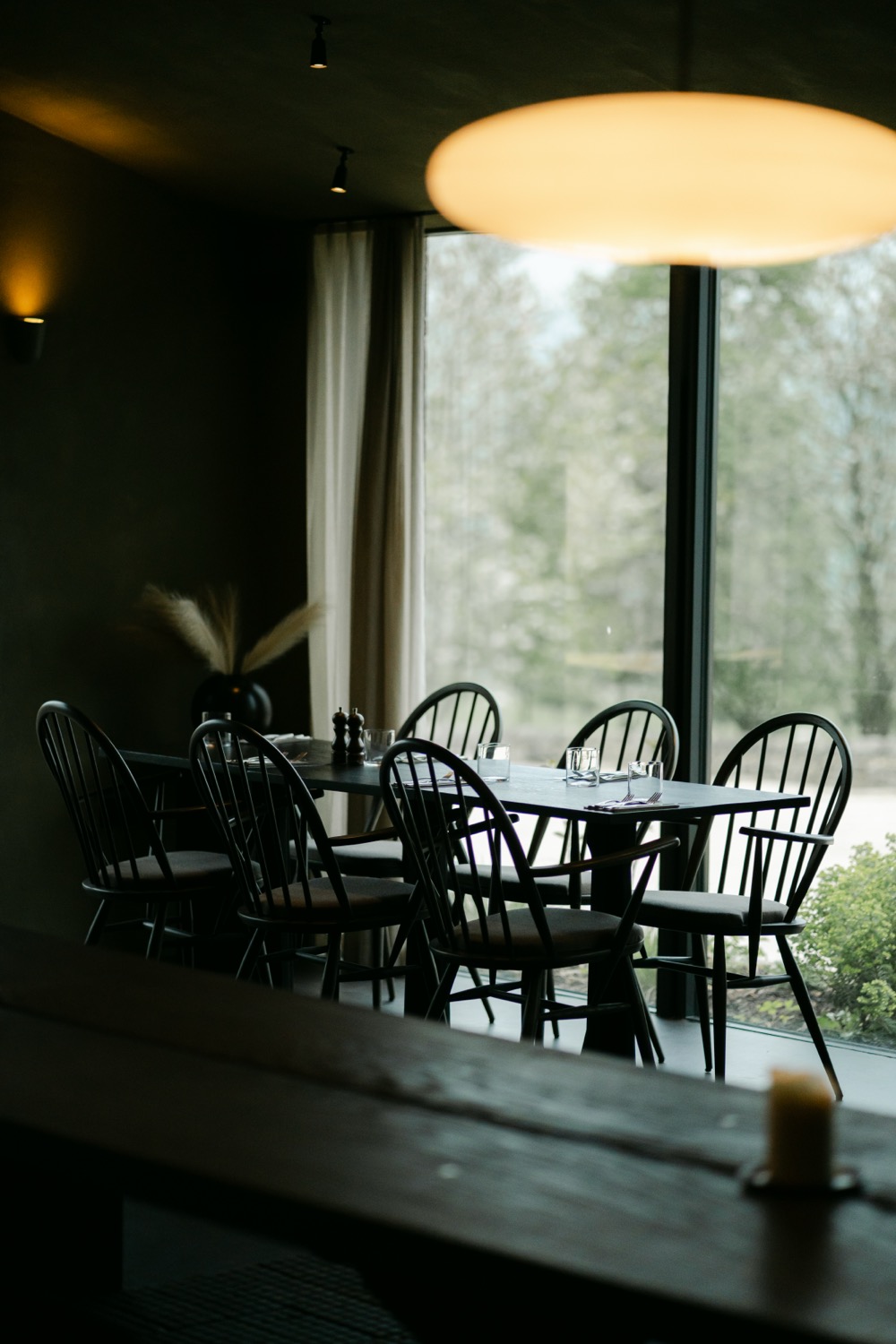
A restaurant that faces a wall has already made a choice about what kind of evening it expects.
The view is never neutral. A window onto a garden slows a meal down. It introduces something outside the room's control: the light changing, a bird crossing, the trees shifting. That movement outside makes the stillness inside feel more deliberate. Guests linger differently when there is something to watch that is not the person across the table.
Designers talk about a room's relationship to its exterior as though it were a spatial consideration. It is also an editorial one. A restaurant that turns its best seats toward a blank wall is making a statement about where it believes the experience lies. A restaurant that turns them toward a view is making the opposite statement, and both can be right, but neither can avoid having made the choice.
A large window onto woodland at dusk does something particular that a painting of woodland at dusk cannot replicate. It updates itself. The light that falls through it at six in the evening is not the light that will fall at eight, and the room those two different lights produce are not quite the same room. This means a guest who arrives early and stays late has, in a small way, eaten in two different places.
That is not an accident. It is what a view does when the room it is placed in understands why it is there.