The Ritz-Carlton, Bali
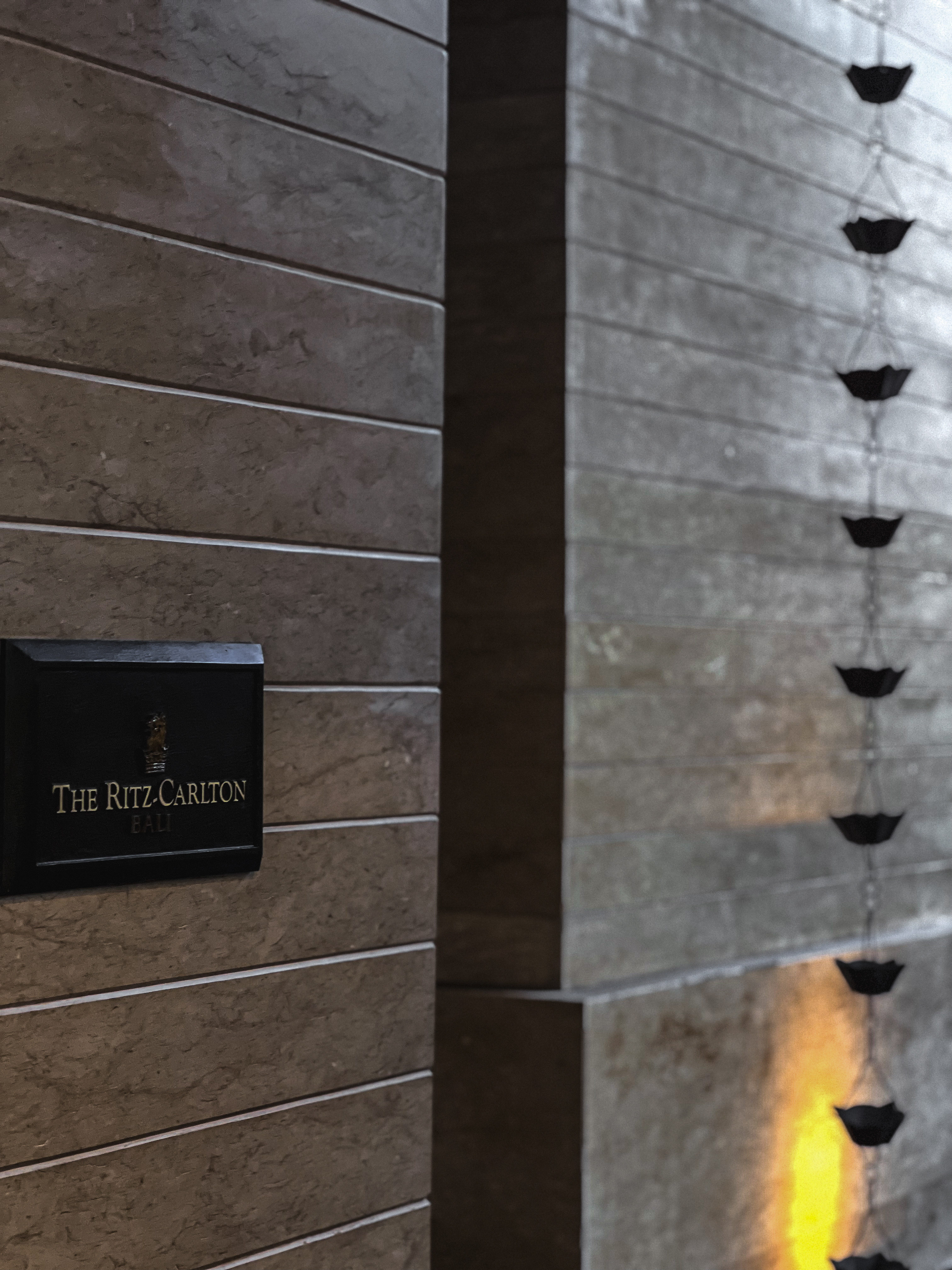
The approach begins before the entrance. Stone walls, a brass plaque, a rain chain hanging beside it. The name appears quietly, at eye level, against layered stone. Light does not come from above here. It rises from below.
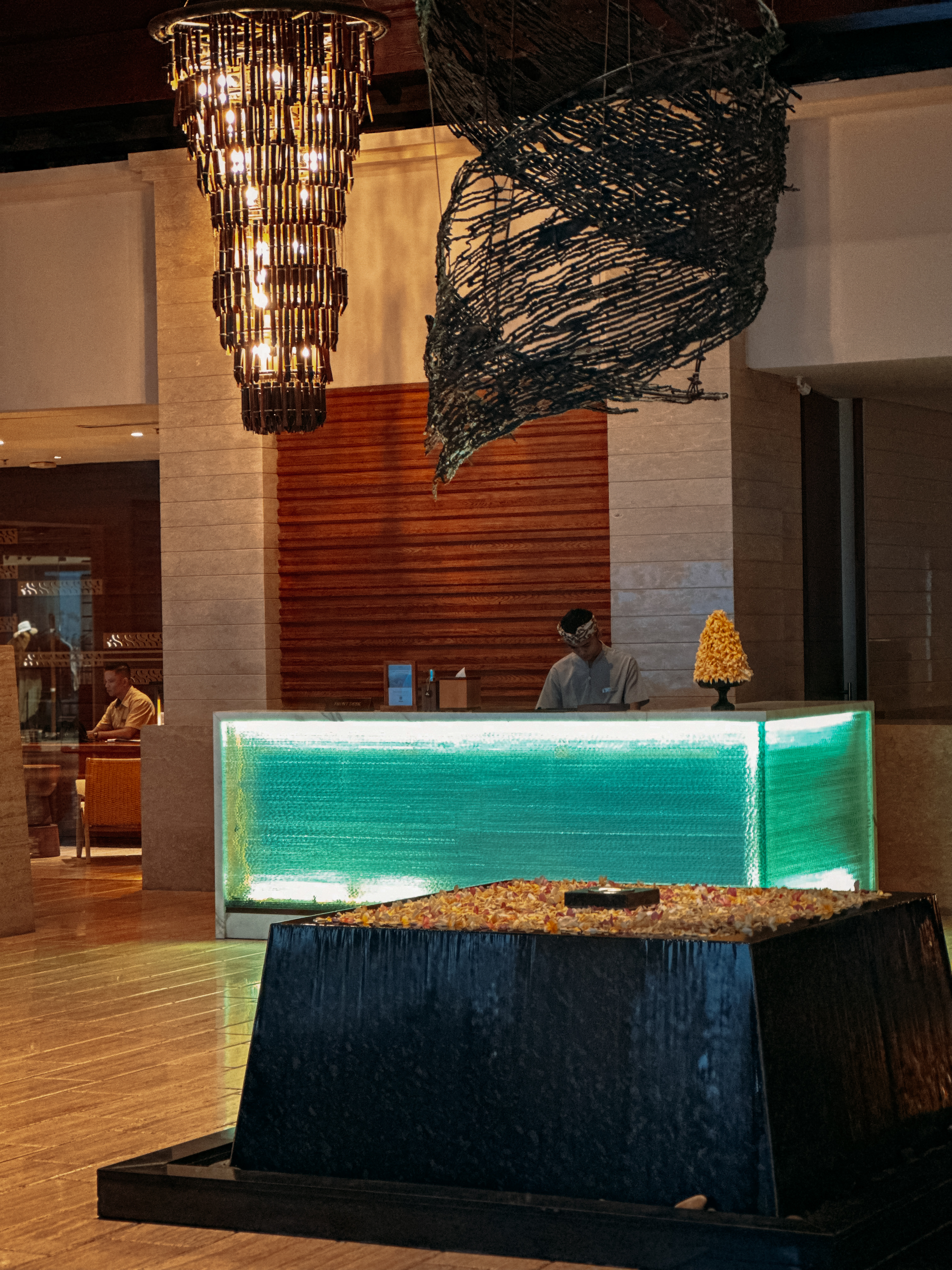
Inside, the lobby opens across levels. A reception desk glows from within, pale green, lit through glass and water. Above it, a large sculptural form hangs suspended against warm timber panelling: dark wire, the suggestion of a bird. The space asks you to look up before you have found your bearings.
The light changes quickly. Between late afternoon and dark there is a period of perhaps twenty minutes when the courtyard architecture becomes something different from what it is by day.
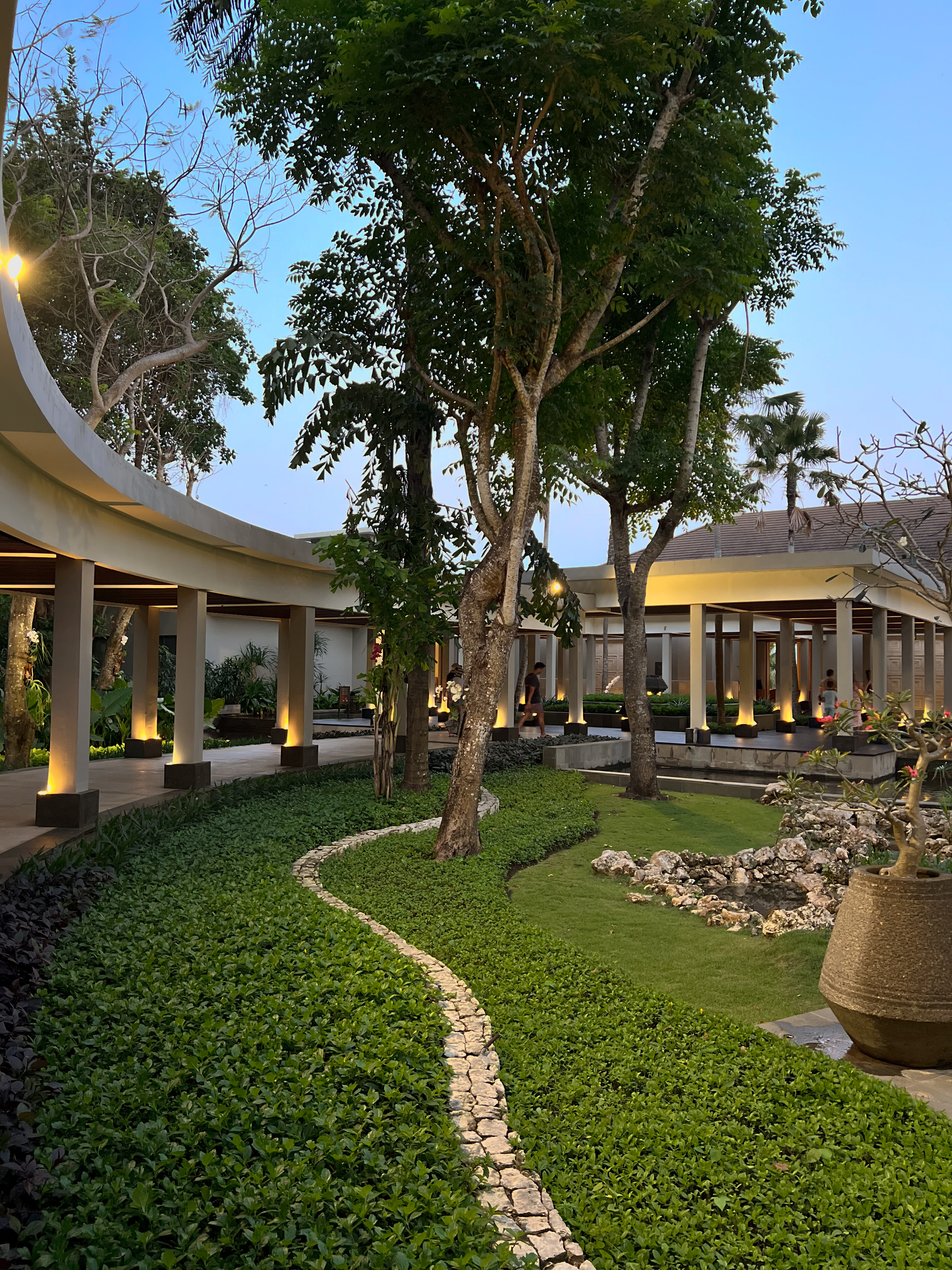
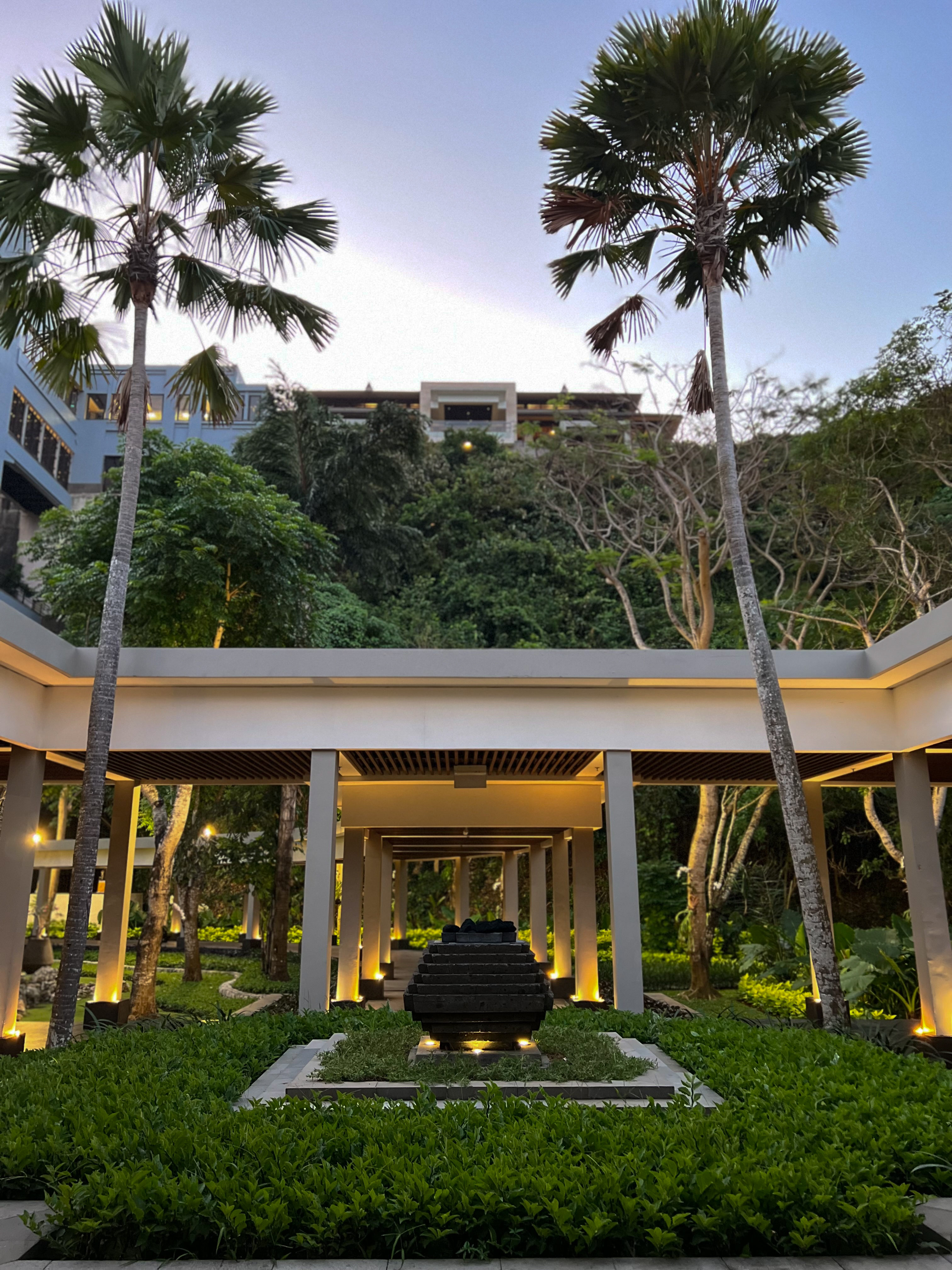
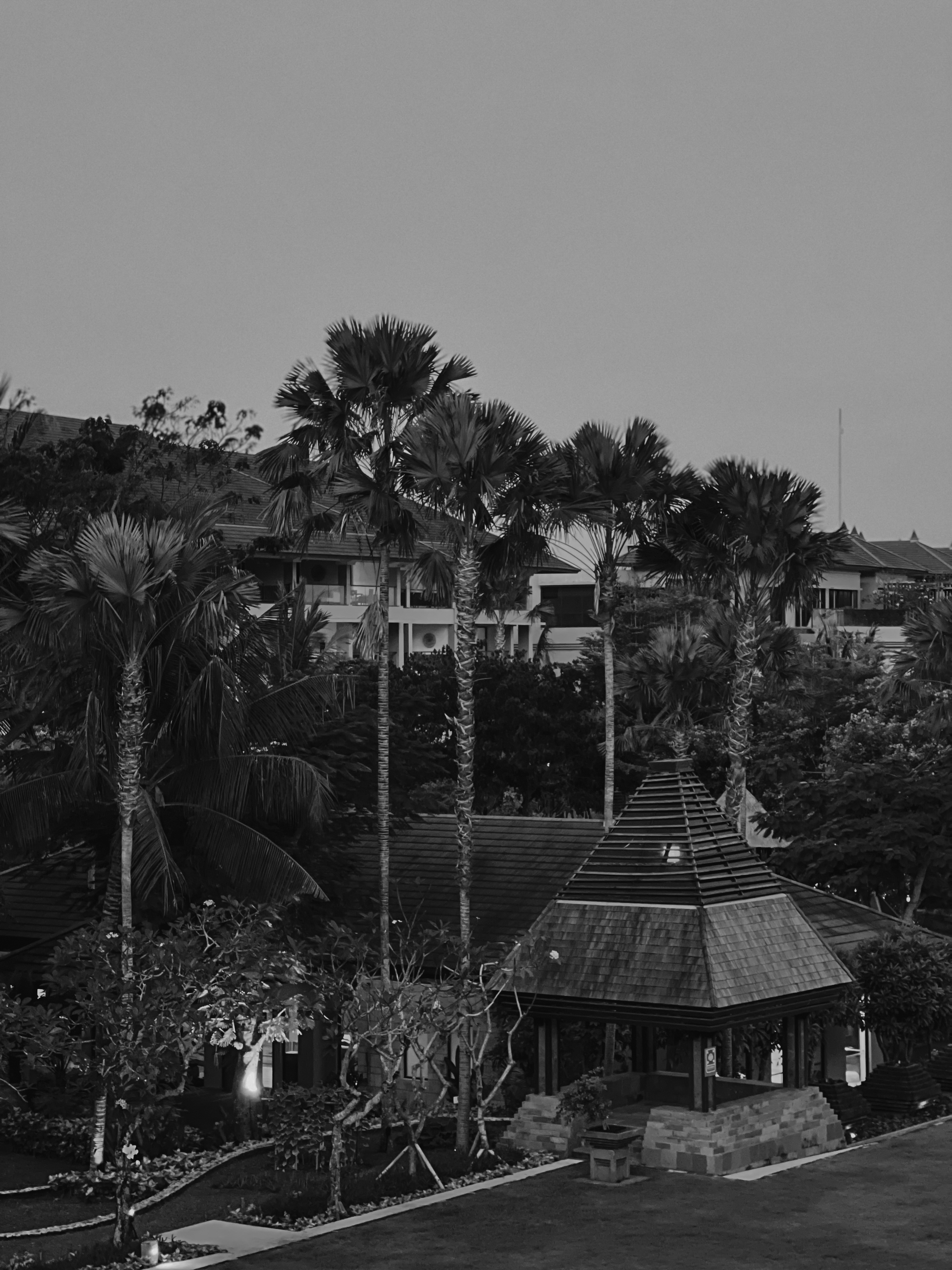
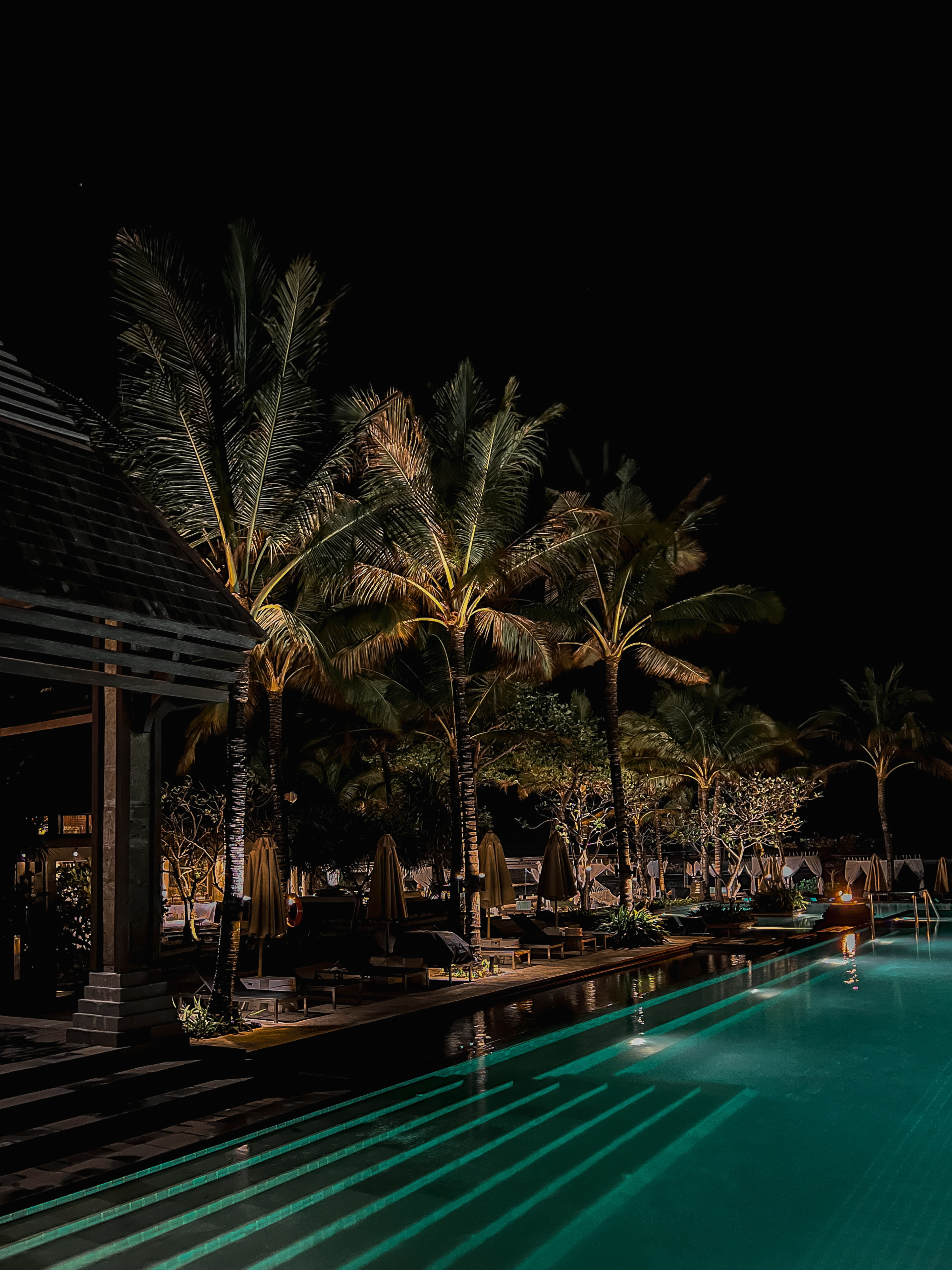
Warm uplighting catches the underside of colonnades. A curved stone path moves through low planting. Tall palms stand against a sky that has not quite decided on its colour. At the centre of one courtyard, a dark sculpture sits on a low plinth, symmetrical, the palms behind it reading like a composed frame. Elsewhere, a tiered pavilion stands among trees. In black and white, the architecture loses its specificity and becomes something older. Pyramid rooftop, ascending steps, palm fronds at the edge. The kind of structure that belongs to no single place or century.
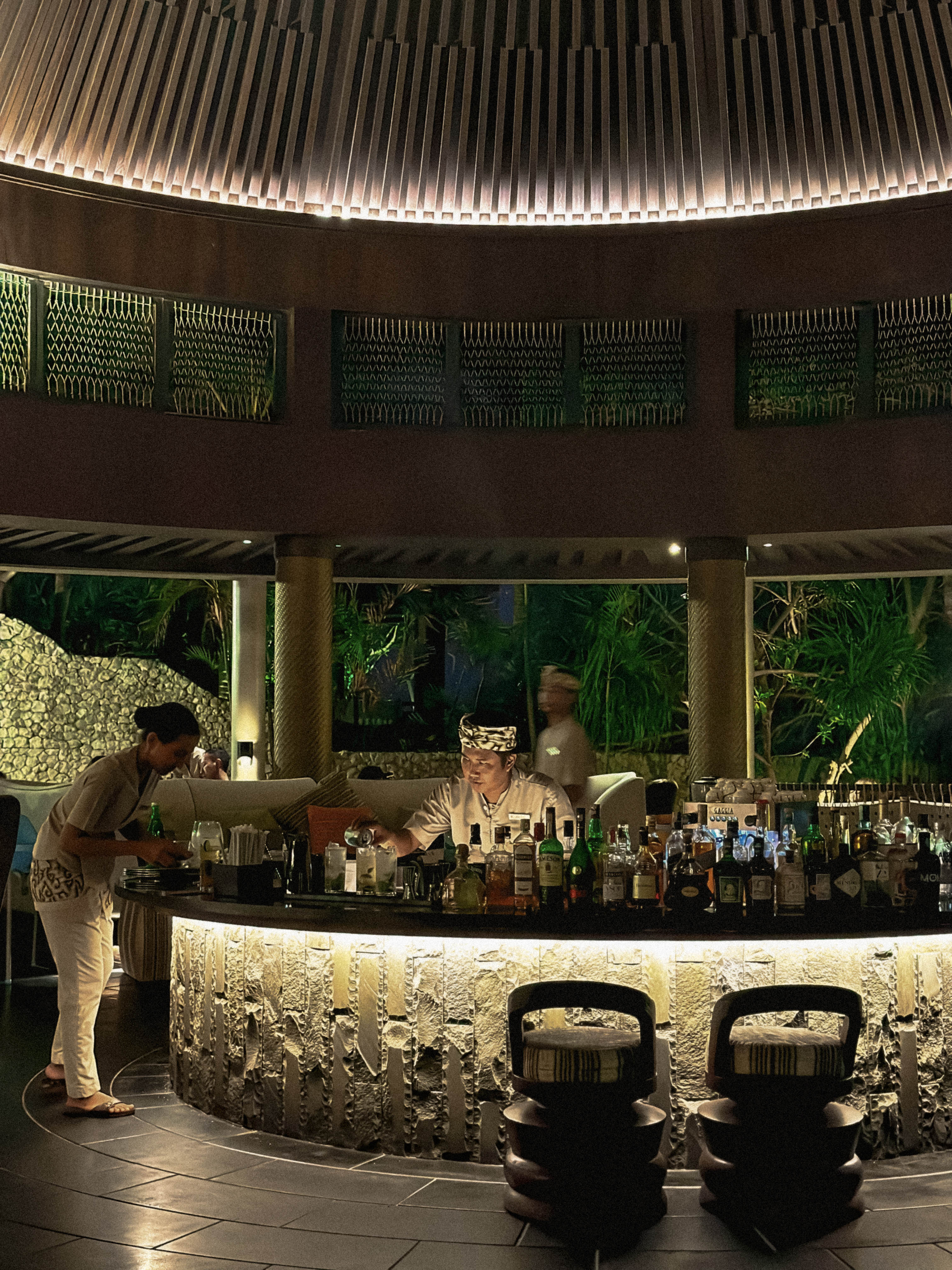
The circular bar is in full light by the time the sky goes black. A barman in traditional Balinese headwear works at the centre of a round counter, lit bottles arranged behind him, the ceiling above ribbed and dark. The room is a bowl. The ceremony of the evening has begun.
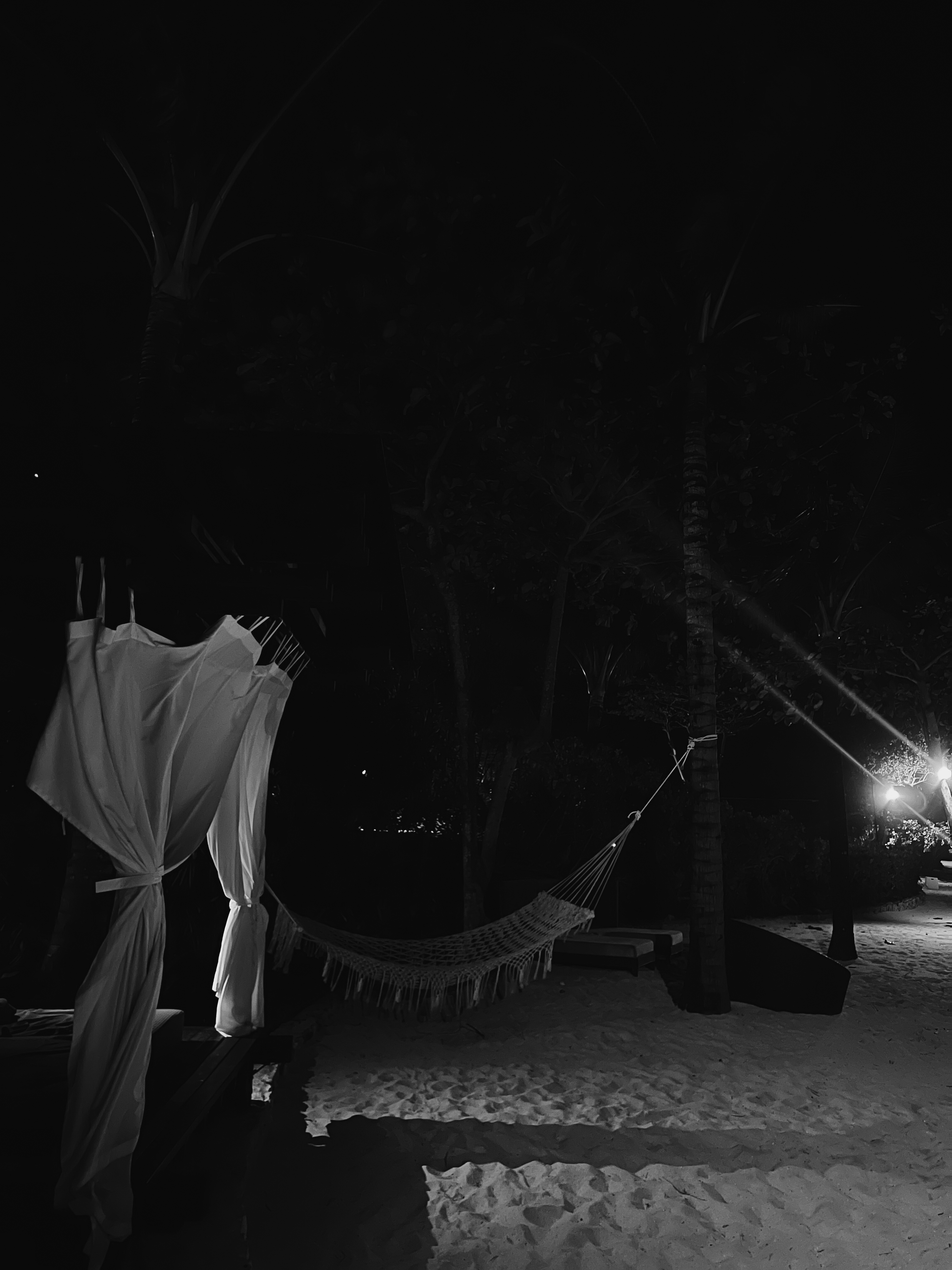
At the beach, a curtained cabana, a hammock slung between palms. In black and white, the image is almost entirely shadow. A single point of light in the distance, possibly a flame. The sand is pale. Everything else is dark.
An atmosphere shaped by light.
The Ritz-Carlton, Bali stretches along the coast at Nusa Dua, on the island's southern peninsula, where a cliff drops the resort from its arrival level to the beach below. It is a large property by any measure, but the study concerns itself with a narrow band of it: the hour after sunset, when the architecture switches from resisting the tropical light to producing its own. Reception desks lit from within like lanterns, water walked over on stone, carved screens throwing patterns upward. Balinese resorts at dusk become essentially theatrical, and this one stages itself with unusual restraint.
The photographs were made in that single register, deliberately. Daylight resort photography is the most saturated genre in hospitality, and it flattens properties into interchangeable blues and greens; the same buildings after dark reveal their actual material decisions. Here that means stone that holds warmth in lamplight, timber ceilings that close the great volumes down to human height, and the sculptural pieces, suspended, backlit, reflected in water, that carry the eye through spaces too large to light conventionally.
Within the archive the study functions as the studio's clearest case for photographing hospitality at the edges of the day. Nothing here would survive noon. Everything here justifies dusk. For a property considering how it wants to be documented, the Bali study is the working demonstration: the hours a hotel is most proud of are almost never the hours it gets photographed in, and correcting that mismatch is half of what an editorial commission is for.