Salon de Parfums
Salon de Parfums is not encountered by accident.
It sits apart from the main movement of Harrods, held on the sixth floor, reached through a more deliberate route than the rest of the store. The distance matters. By the time the room opens, the noise of the building has already fallen away, and fragrance is no longer presented as something casual or immediate.
This study looks at Salon de Parfums through scent and display. A quieter world within Harrods, where perfume is given space, privacy and architectural attention. The room is not arranged like a department. It feels closer to a series of small maisons, each one holding its own language of glass, flowers, wood, gold, shadow and light.
Part of the atmosphere is created before arrival.
Salon de Parfums is not placed on the path of everyone passing through the store. It requires direction. The journey upwards creates a sense of separation, as if the room is held slightly outside the normal rhythm of retail. That remove gives the space its first form of luxury: not noise, not abundance, but distance.
Inside, the number of brands feels controlled. Each house is given its own setting, its own furniture, its own way of holding scent. The floor becomes less about choice and more about distinction. A quieter order, where rarity is communicated through space.
The boutiques within Salon de Parfums carry their own atmospheres.
Some are dark and polished, built through lacquer, gold and reflection. Others are softer, held by flowers, pale shelving and glass. Bottles sit beneath arches or behind cabinets, arranged not as stock but as small objects of identity.
The craft is not only in the perfume itself. It is in the world built around it: the cabinet, the counter, the chair, the mirror, the pause before a bottle is lifted. Each maison turns scent into a room before it becomes something worn.
Fragrance asks for a kind of attention that cannot be rushed.
It has to be approached slowly. Seen first, then held, then tested, then remembered. Salon de Parfums understands that rhythm. It gives scent a setting that feels almost ceremonial, where the visible details prepare the body for something invisible.
Glass creates distance. Flowers soften the room. Reflections multiply the bottles. The staircase, the seating, the cabinets and the light all slow the encounter down. Nothing is presented as ordinary stock. Everything is placed as though scent needs architecture in order to be understood.
This study is about exclusivity as atmosphere.
Salon de Parfums does not rely on scale in the way Harrods does below. Its power is quieter. It comes from access, separation, privacy and the careful selection of houses allowed to occupy the floor. It shows how luxury can be made through fewer doors, fewer rooms, fewer names, and more attention around each object.
For mkd STUDIO, Salon de Parfums becomes a study of scent as a private craft. A place where fragrance is not only bottled, but staged, sheltered and given its own architecture.
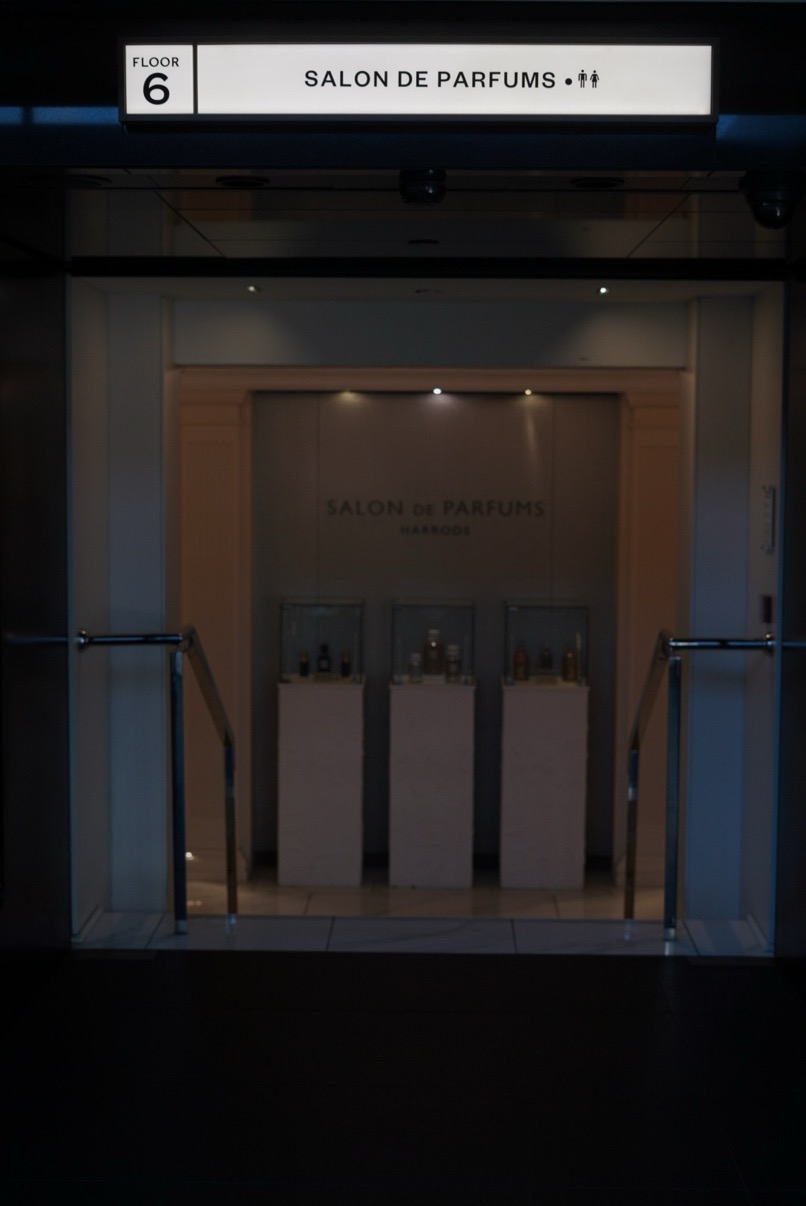
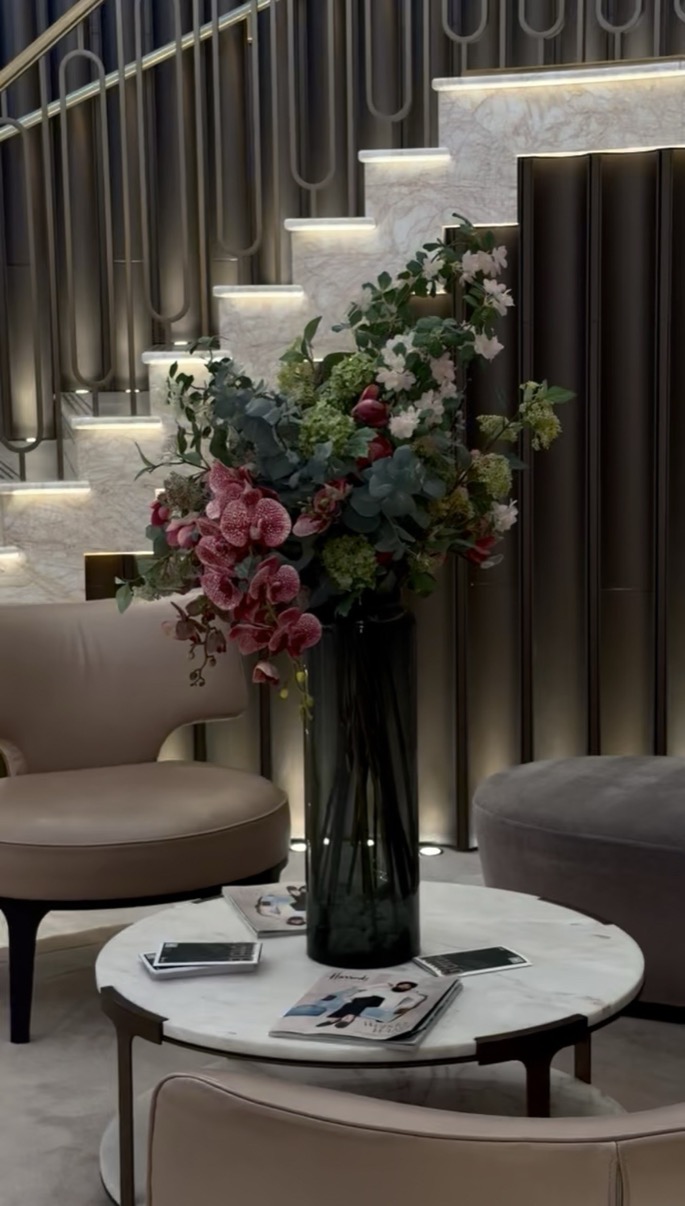
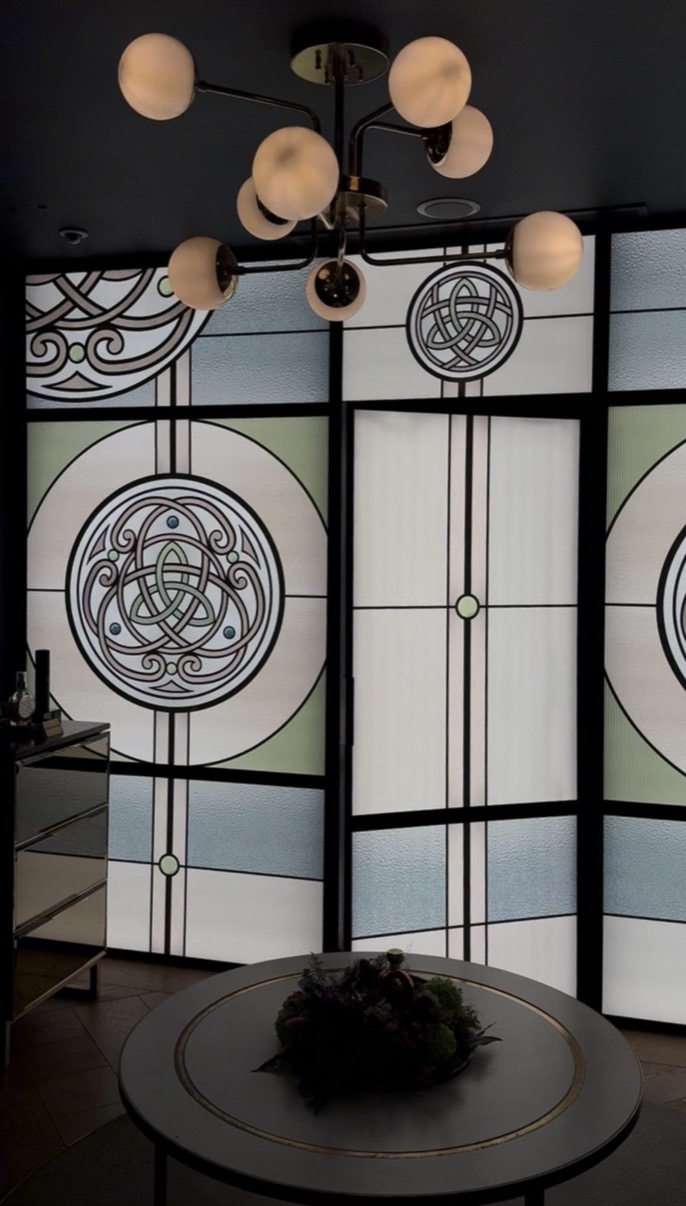
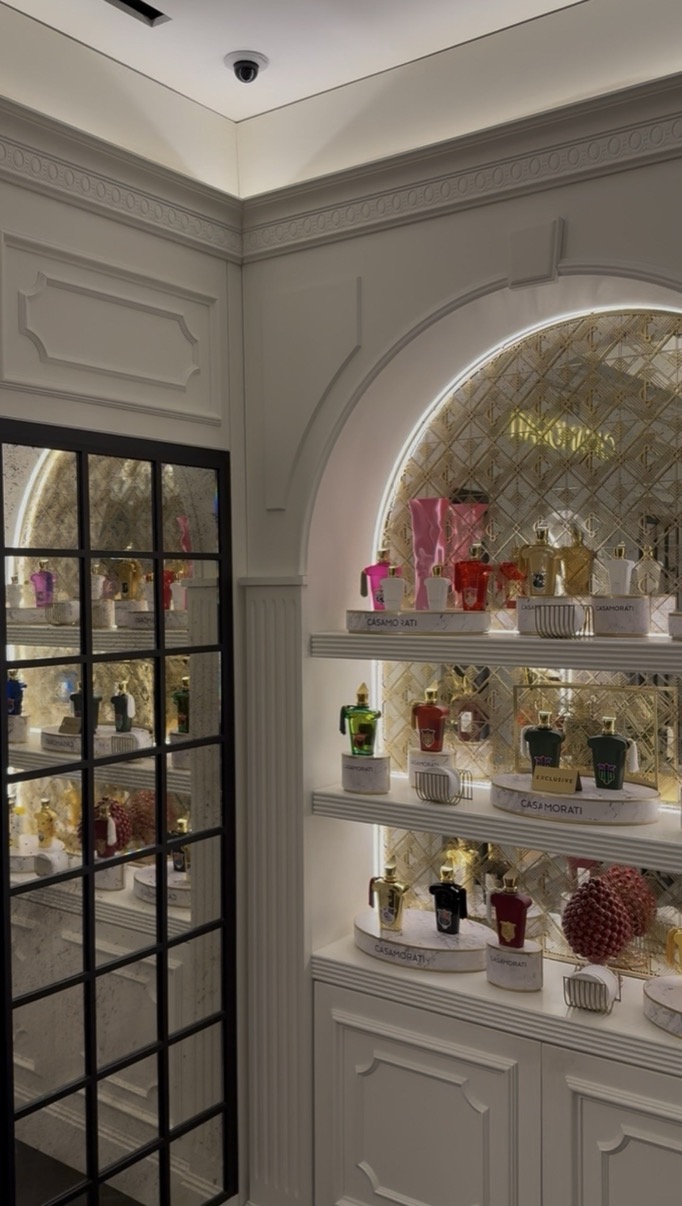
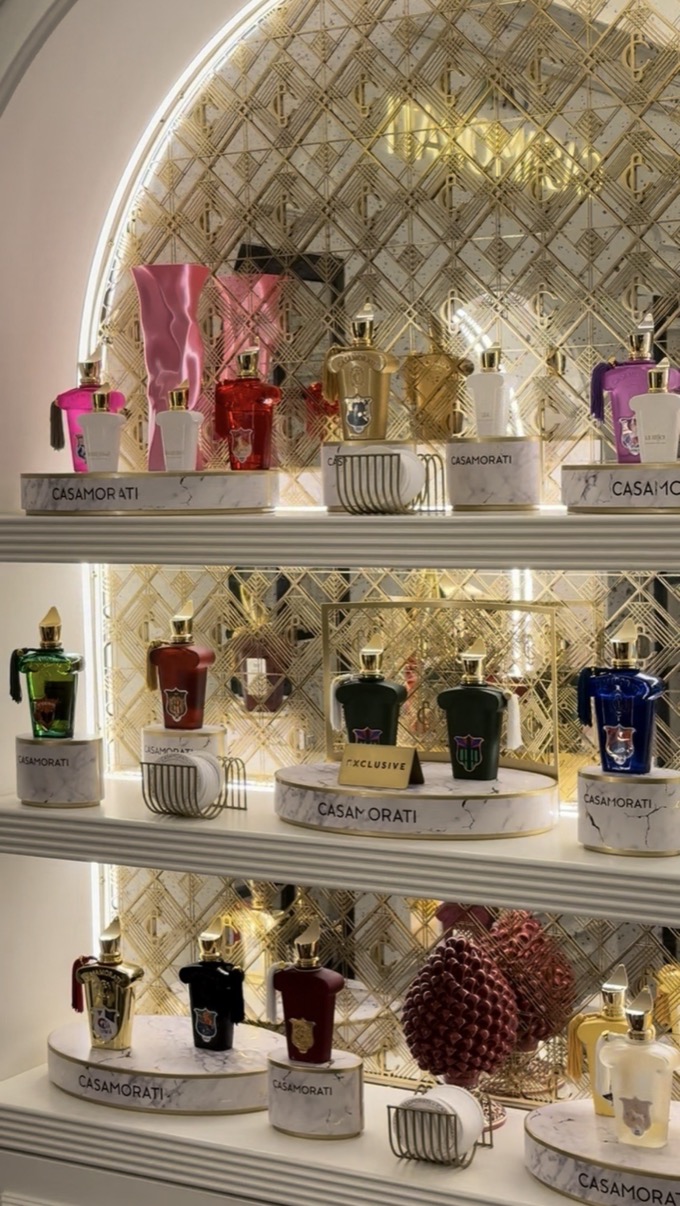
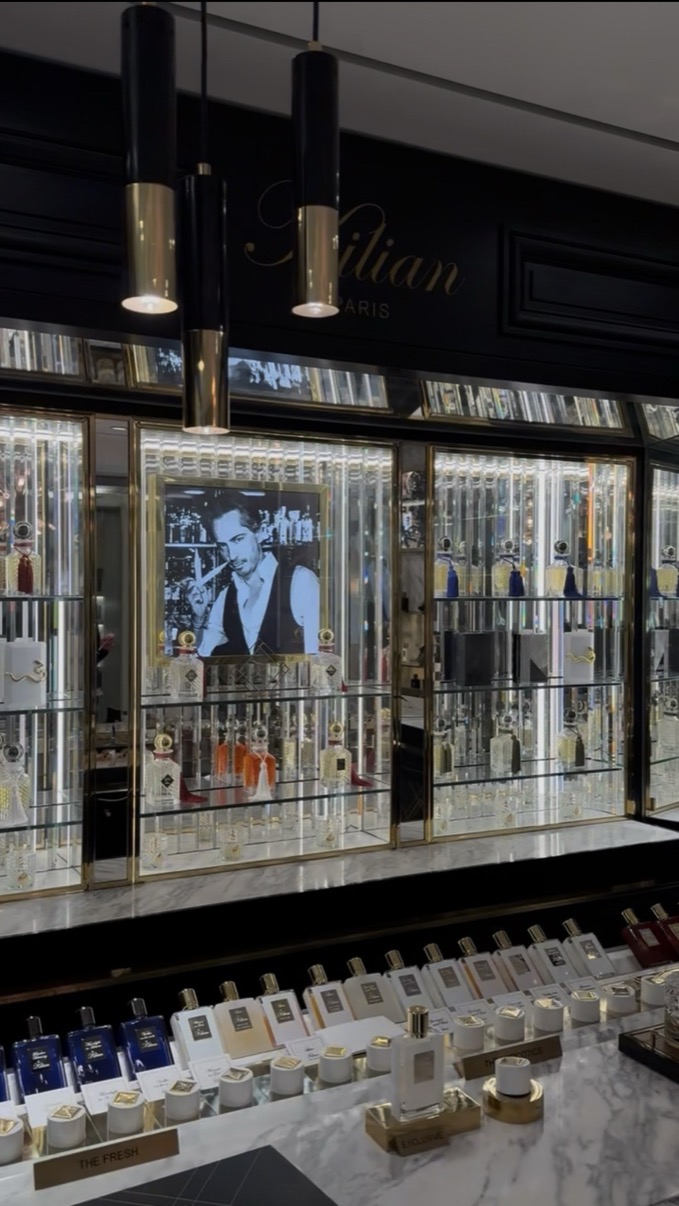
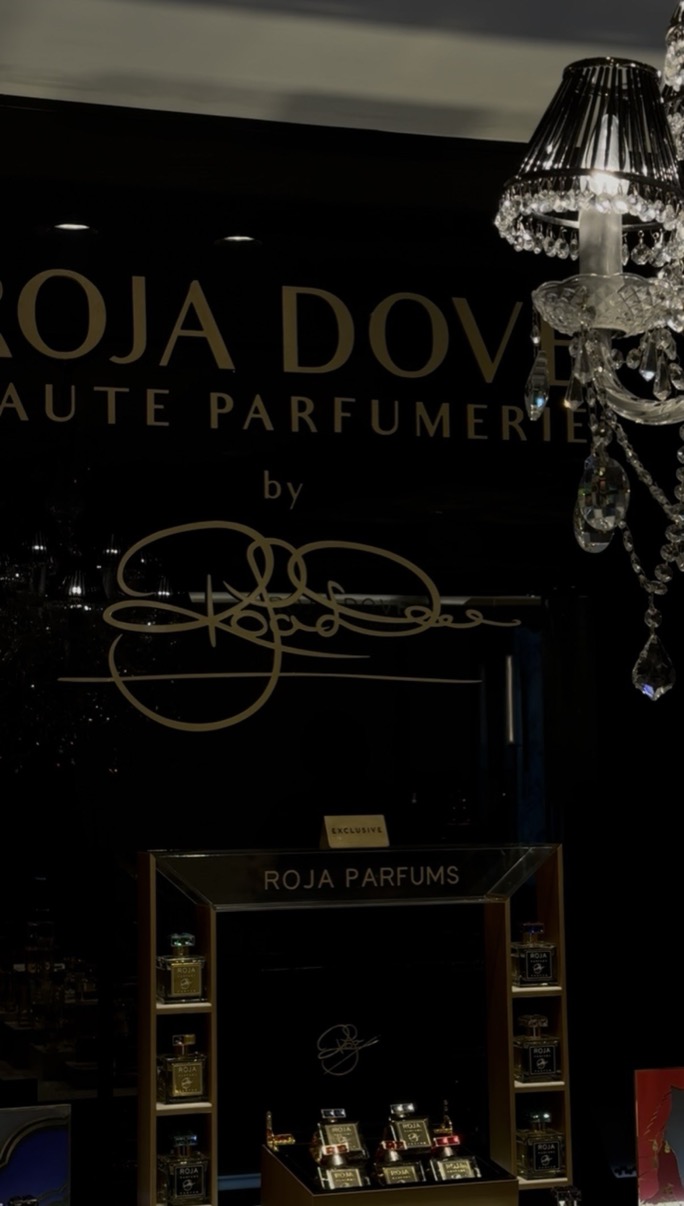
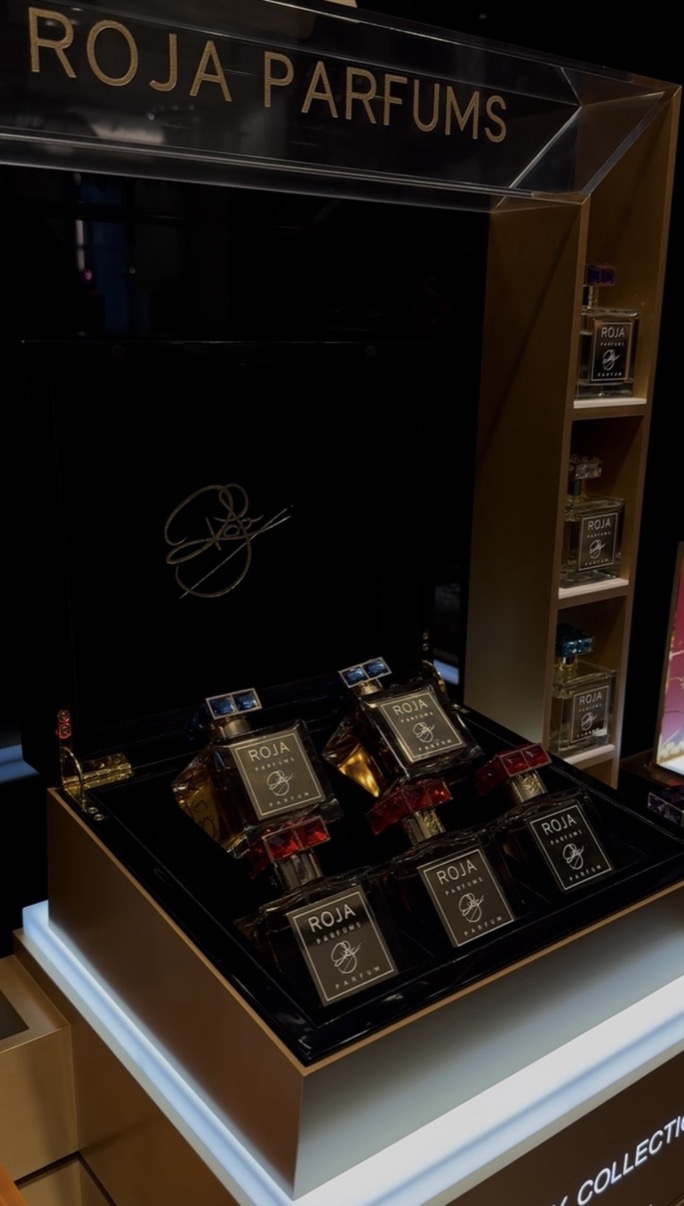
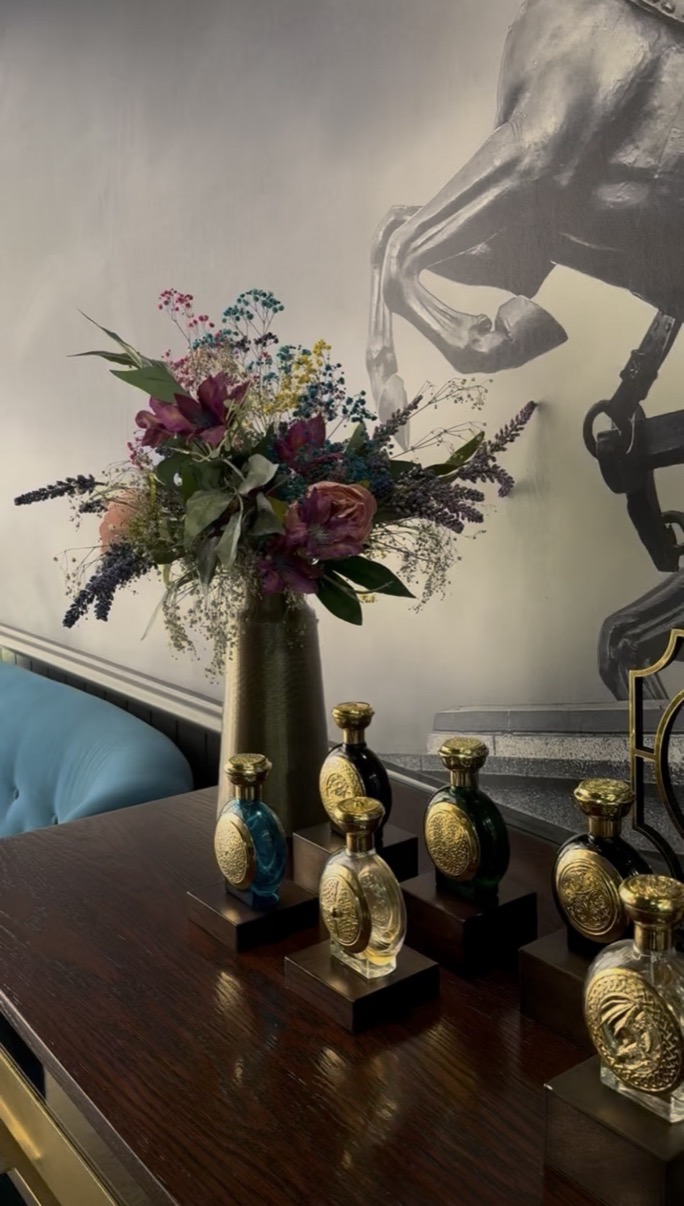
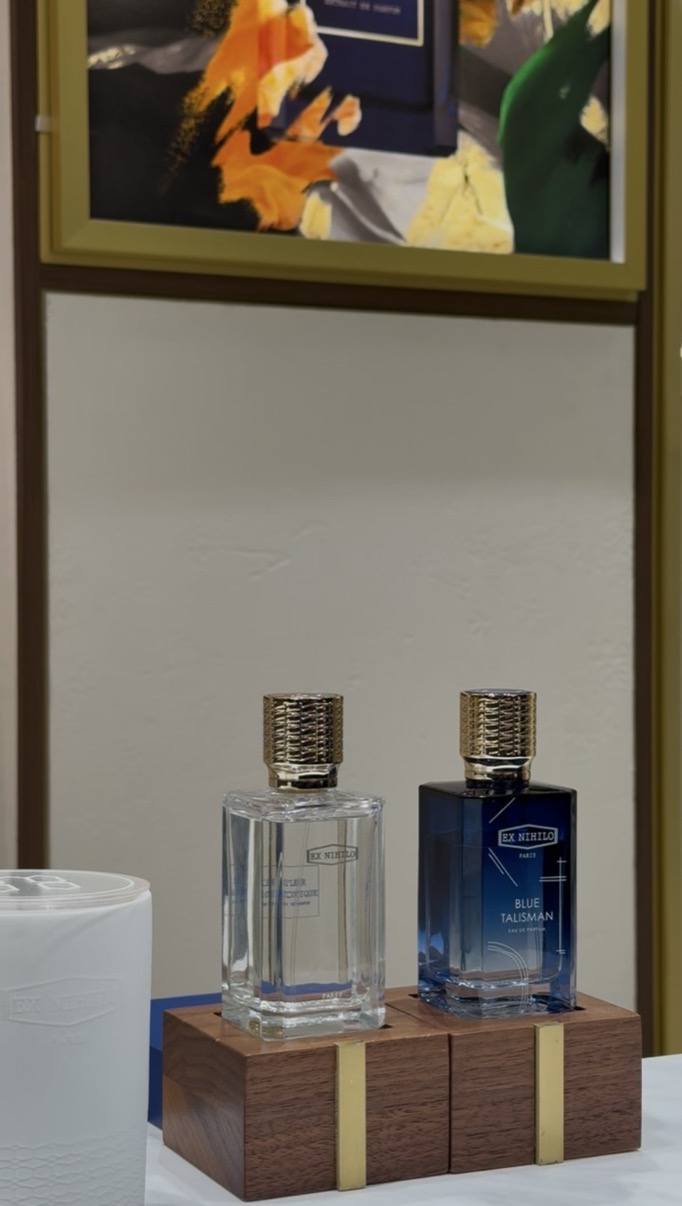
Salon de Parfums occupies the sixth floor of Harrods, deliberately the store's least accidental destination: a floor reached on purpose, where the great independent and private fragrance houses keep their London rooms. Roja, Clive Christian, the haute lines of houses whose ground-floor counters tell simpler stories, each maintains a small architecture of its own inside the salon's hush. The study was made as a slow circuit of that floor.
The photographs attend to the staging of scent, the one product retail cannot show: bottles lit like reliquaries, cabinetry built to museum standard, the acoustic softness that signals expense before any price is read. The salon is effectively a gallery district at the scale of a single floor, and the sequence treats each house's room as a small national pavilion, reading identity through joinery, colour and light.
Within the archive the study is the London counterpart to Guerlain at Katara and the factual backbone of the Journal's essay on what niche perfumery actually is, whose argument was formed walking this floor. It also extends the archive's running theme, the invisible product and the visible room, to its most concentrated case: an entire retail floor organised around substances that photograph as nothing at all.