Harrods
Harrods is built to be seen before it is entered.
At Christmas, that act of looking becomes even more deliberate. The façade, the windows, the doorman, the wrapped objects and the warm interiors all become part of a wider performance of arrival. Nothing is presented casually. The store turns display into theatre, and theatre into a form of craft.
This study looks at Harrods through seasonal display. Not as shopping, and not as spectacle alone, but as a study of how objects, windows, uniforms and architecture are arranged to create a sense of occasion.
The windows hold the street.
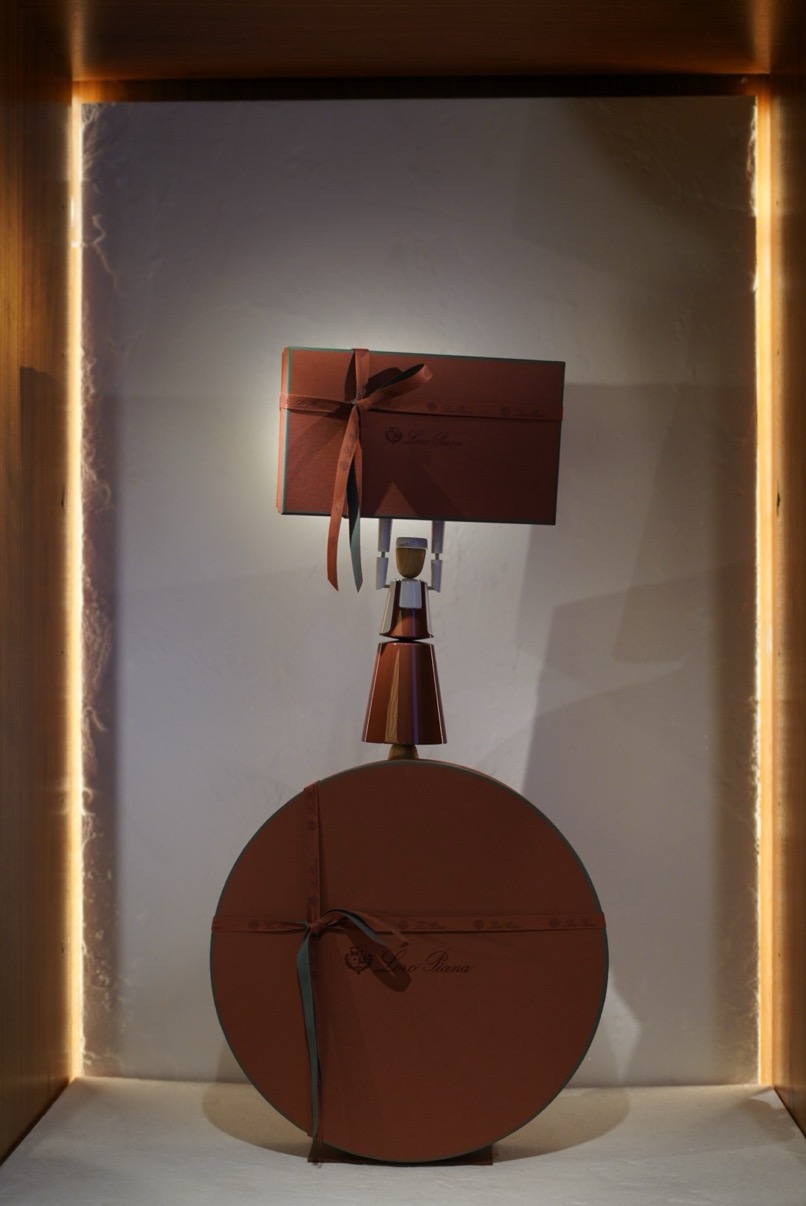
Behind glass, objects are lifted out of use and placed into small worlds: wrapped boxes, sculptural forms, winter textures, perfume, fabric, light. The display is not only about what is being sold. It is about building a scene around desire, memory and season.
Christmas gives the windows their atmosphere, but the craft is in the control. The angle of a box. The glow around an edge. The use of scale. The distance between object and viewer. Each detail is arranged to slow the eye before the door is reached.
Harrods carries a formal language.
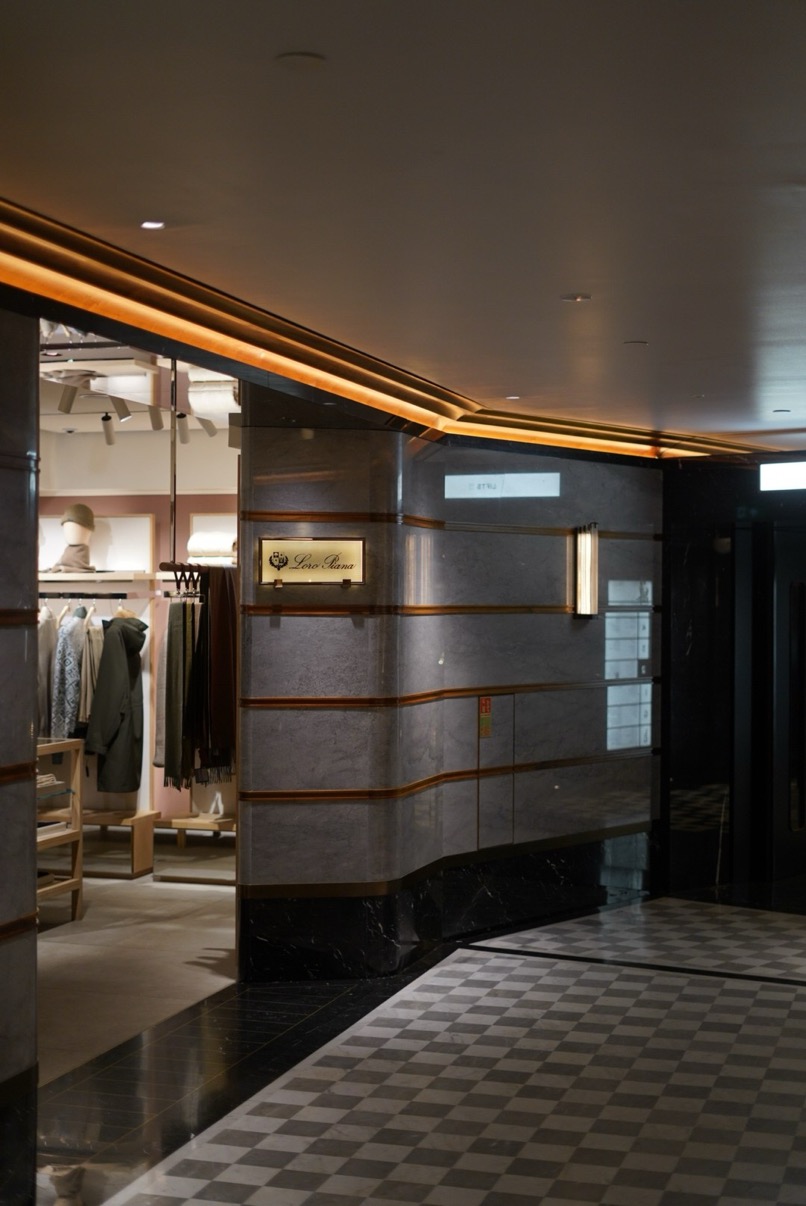
The doorman at the entrance, the polished threshold, the historic façade, the lit interior beyond the street. These are not background details. They are part of the store's choreography, shaping the moment of entry before anything has been purchased.
There is a ceremony to the way luxury presents itself here. It depends on repetition, uniform, material, service and the careful management of distance.
The smaller details carry much of the feeling.
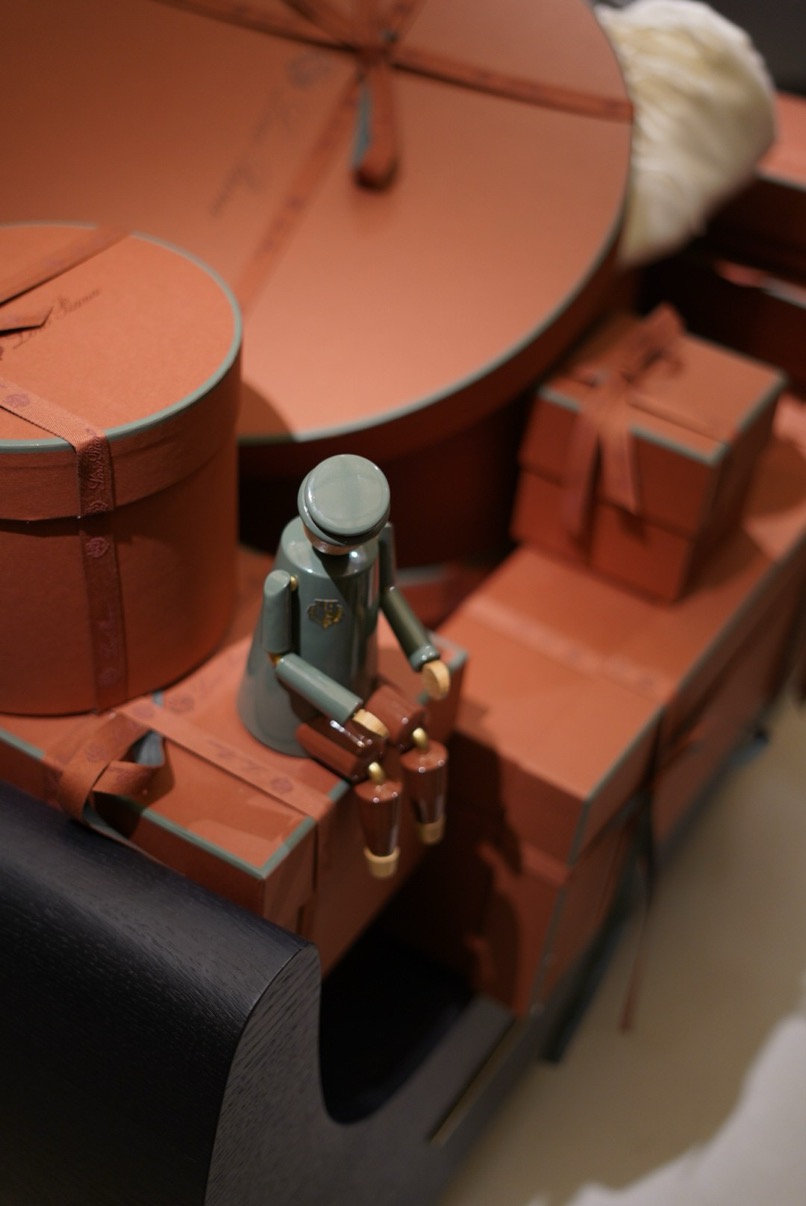
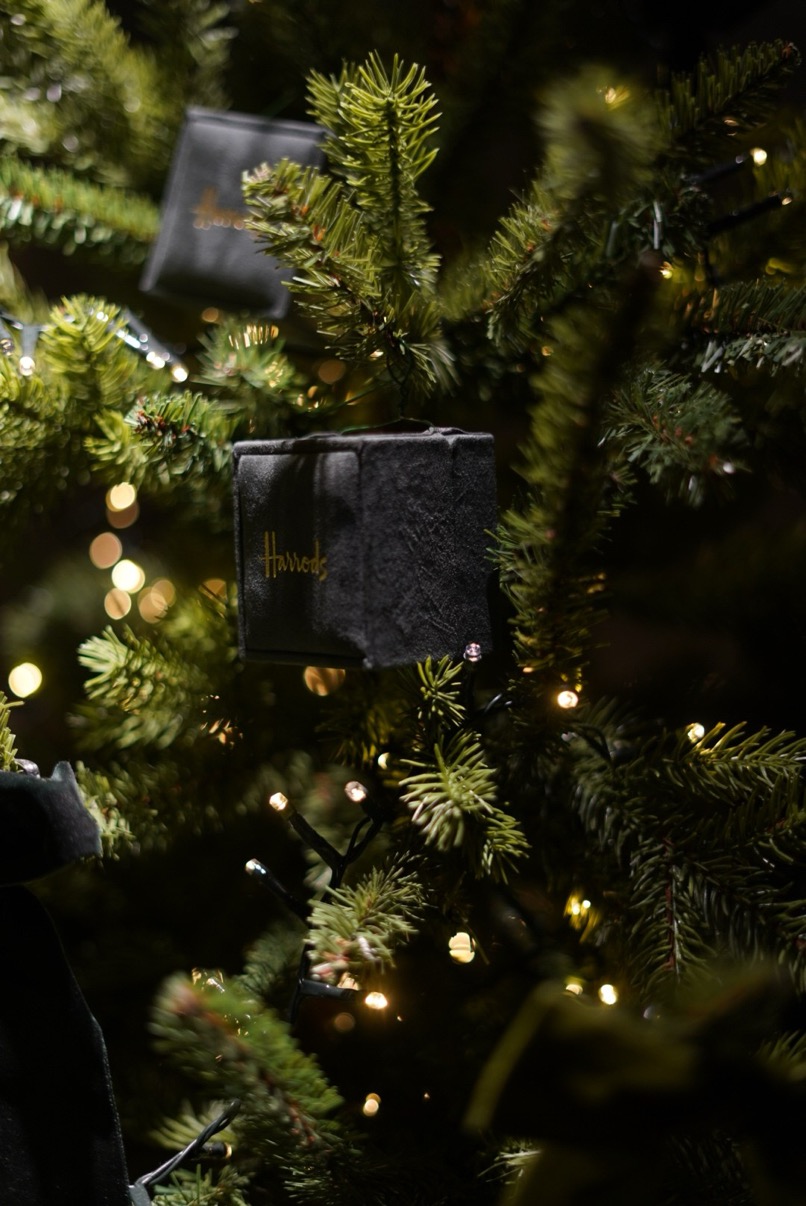
A box tied with ribbon. A bottle placed beneath branches. A miniature world built for a window. A dark corridor edged with warm light. These objects become more than products because of how they are held. Display gives them weight, almost like props in a seasonal ritual.
The craft is not always in the object alone. It is in the way the object is framed.
This study is about presentation as craft.
Harrods at Christmas does not rely only on decoration. Its atmosphere is made through arrangement: glass, light, uniform, packaging, façade and threshold. The store becomes a stage where commerce is softened into ceremony.
For mkd STUDIO, Harrods becomes a study of seasonal display. A place where the act of display is treated with the same care as the objects themselves.
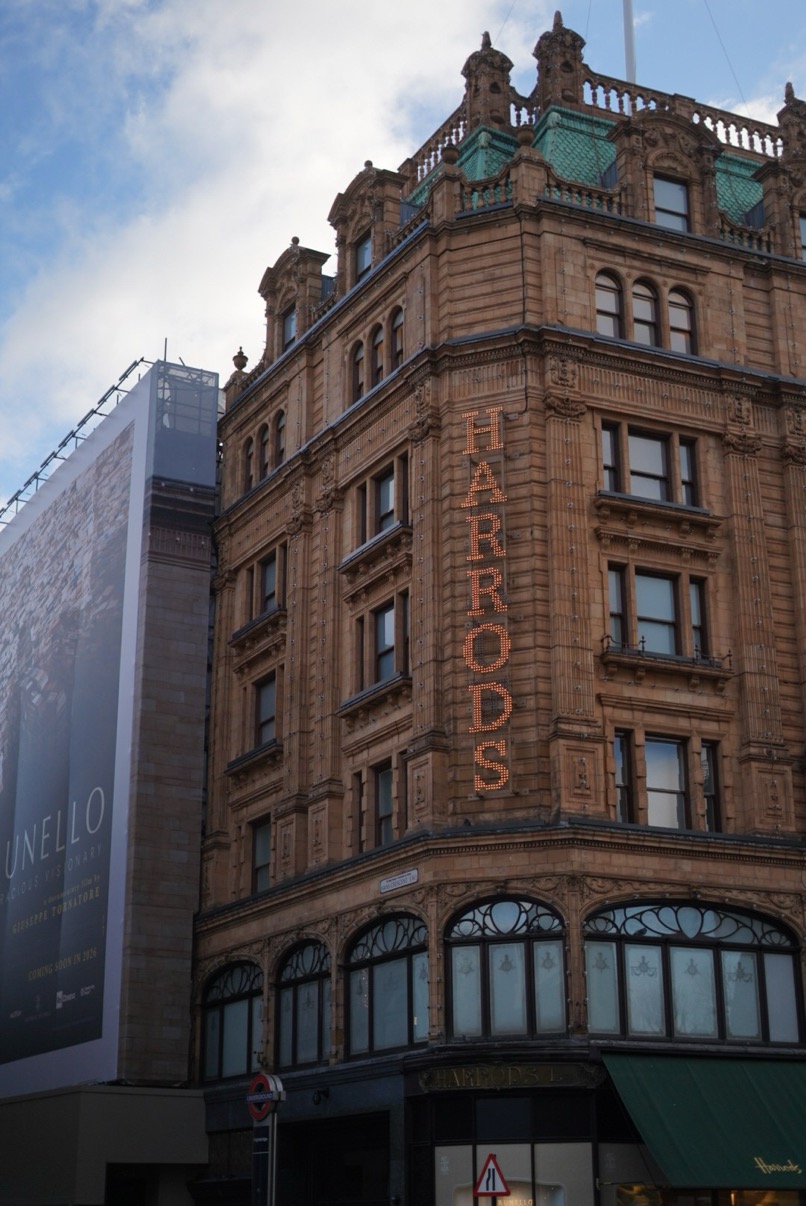
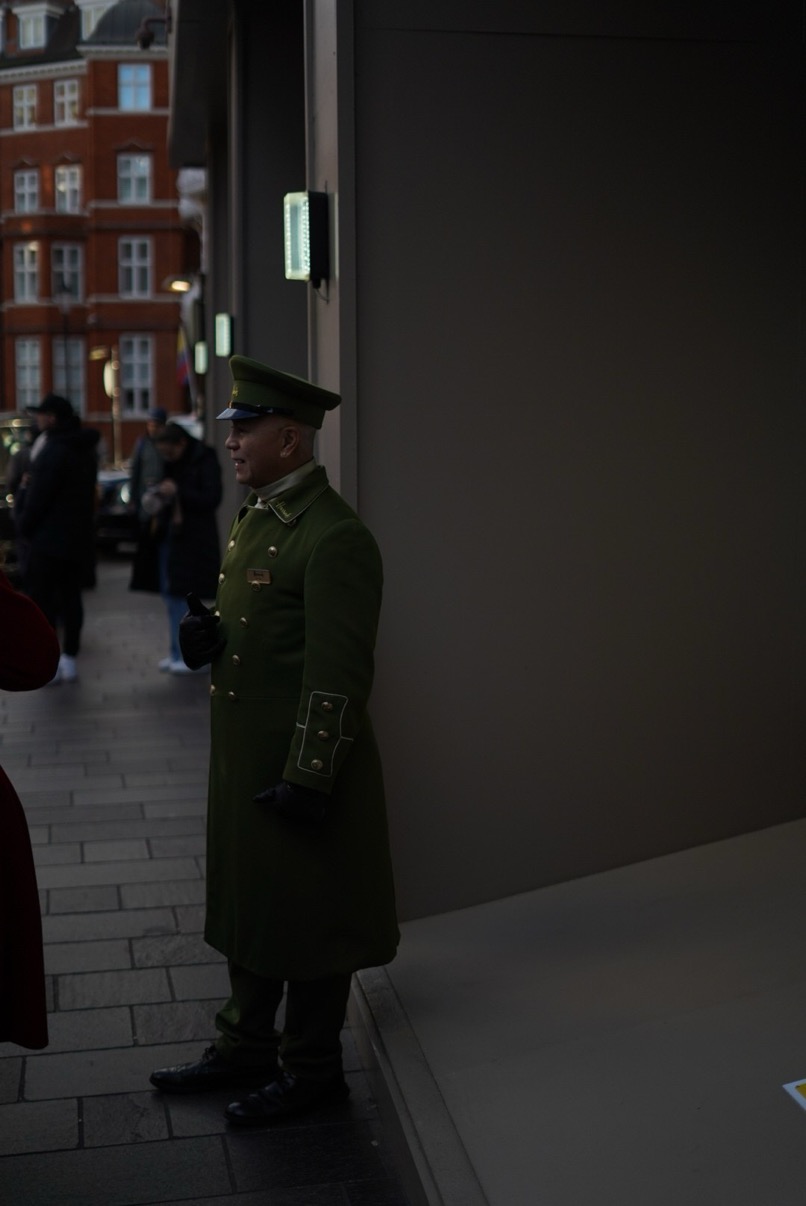
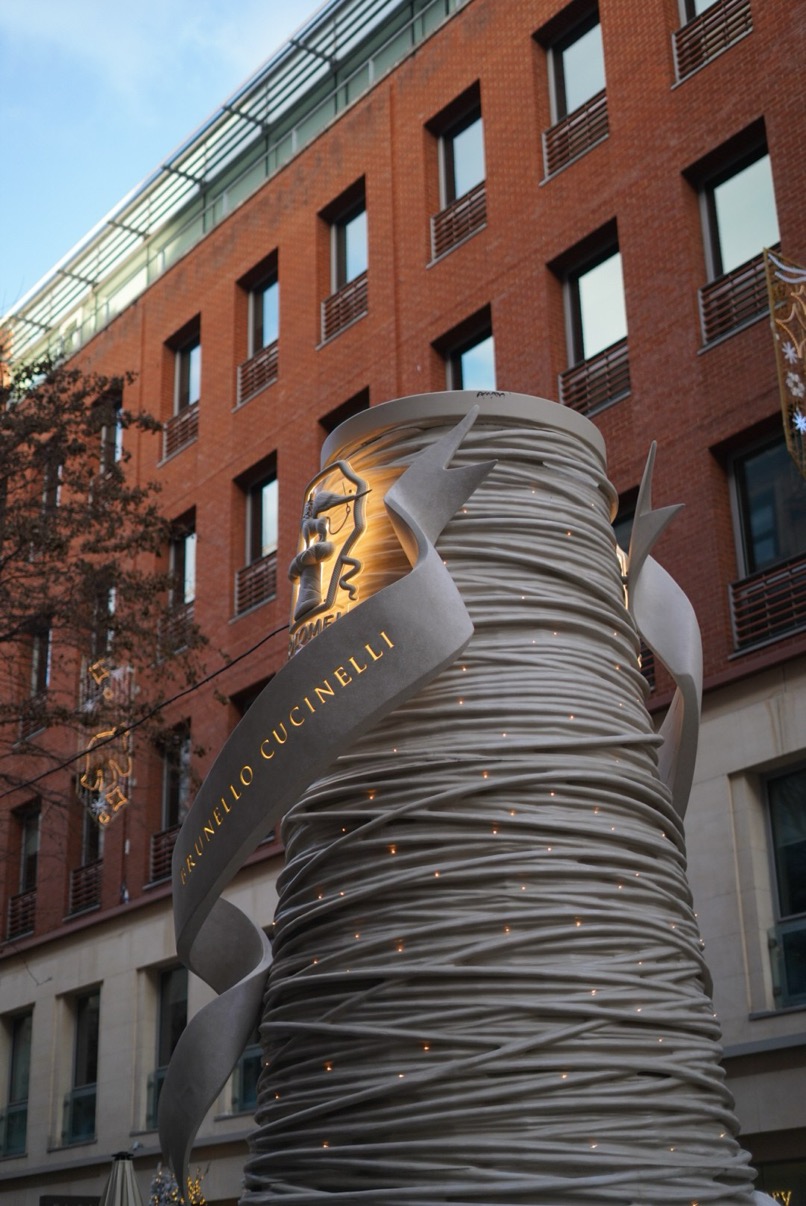
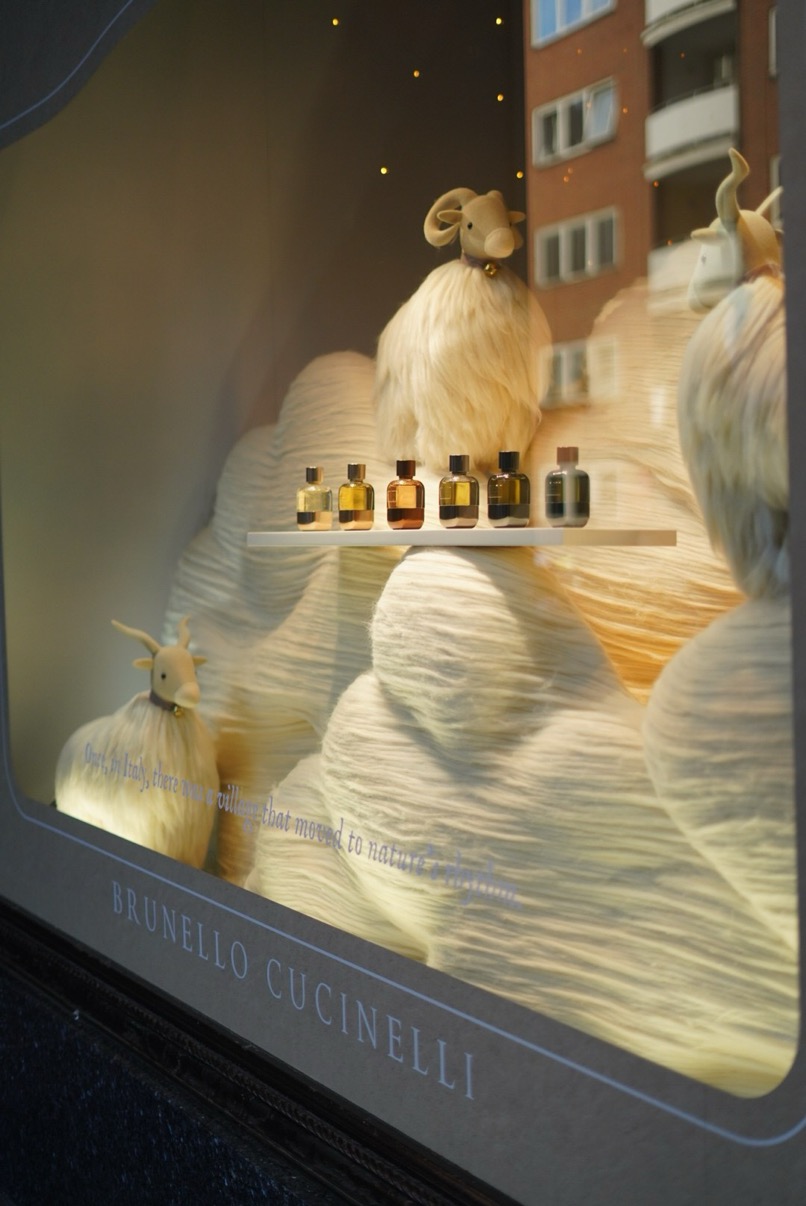
Harrods at Christmas is one of retail's oldest theatrical productions: the Knightsbridge facade in its lights, the window schemes changed like stage sets, the doormen in green, a department store performing arrival for the several million visitors who pass through the season. The study was made in that period, and its subject is the performance itself, the apparatus by which a shop, over a century and a half, taught the world to treat entering it as an event.
The photographs follow the sequence a visitor actually experiences: facade before window, window before door, door before interior, each stage more curated than the last. Attention stays on the constructed details, the wrapped objects that are displays rather than gifts, the lighting that turns terracotta into backdrop, the choreography of the entrance, because Harrods's craft is precisely this staging, maintained daily at a scale no other store attempts.
In the archive the study leads the Craft category's London material and pairs with Salon de Parfums, its own sixth floor, as outside and inside of the same institution. It also underpins the Journal's essay on the difference between content and record: the seasonal displays photographed here no longer exist, which is the point. Retail this temporary needs its record made in the weeks it stands, and the archive now holds one season of it permanently.