Guerlain at Katara
Katara, Doha. A square that was simply a square the month before, and will be again. For a short while, a fragrance house has moved in: umbrellas in its own pale yellow, gold chairs set out under the stone, a counter where there was nothing.
The architecture around it does not flinch.
A house known for one language, attempting another. The question was translation. How does a perfume become a place you can sit inside? Something you can taste, or drink while the afternoon passes?
Not coverage of an occasion. A record of a conversion.
Arrival first, the way any visitor finds it. Then the house itself: the bee bottle in its glass case, gold repeated until it stops being decoration and becomes weather.
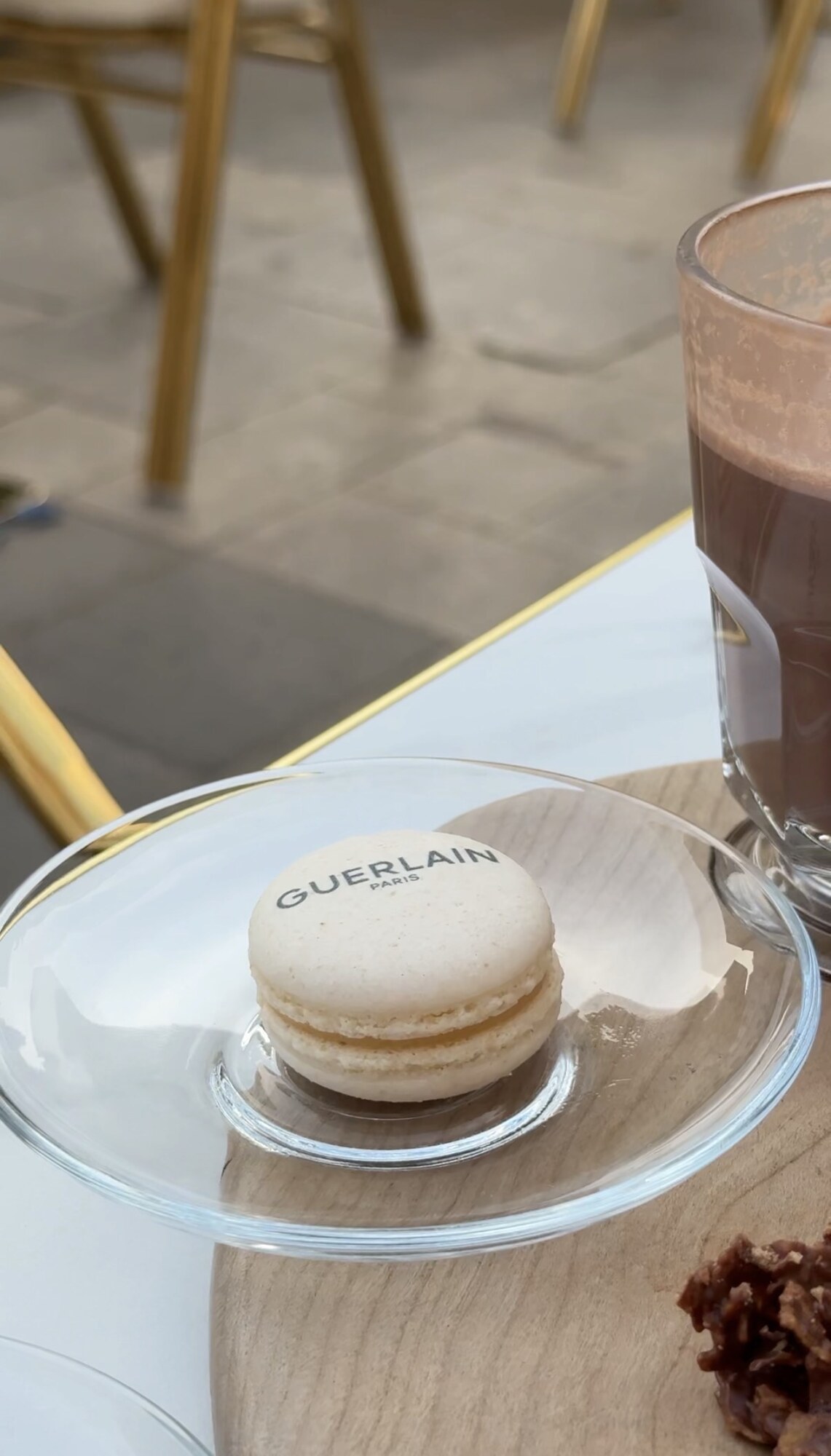
The centre of the work is the smallest frame. A macaron carrying the name of a perfume house, a chocolate cooling beside it. The collection follows, arranged in the open air, and then a last look back through the columns.
It was never serving food. It was saying its name in another language.
The square has since returned to itself. This page is where the translation remains.
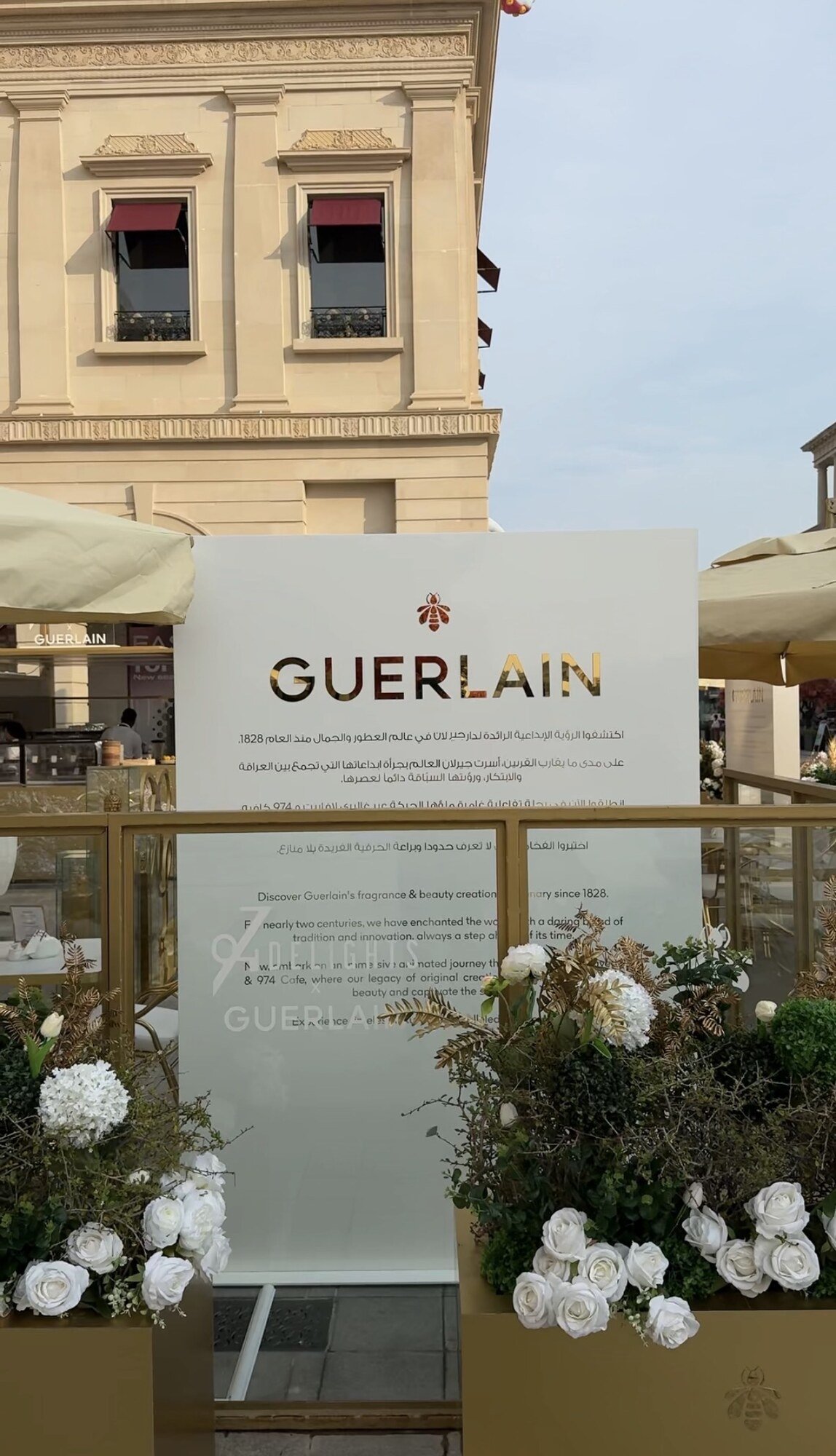
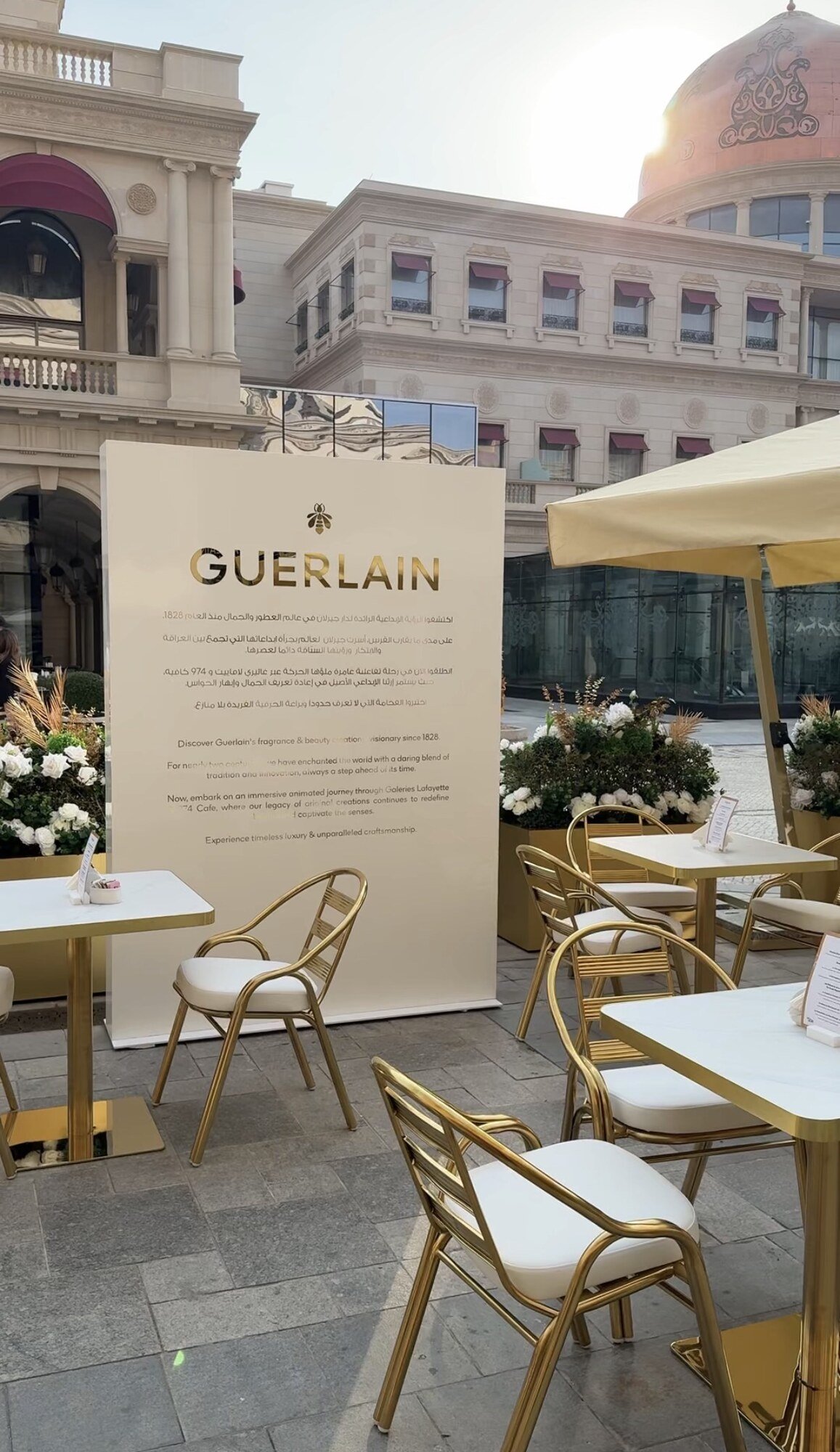
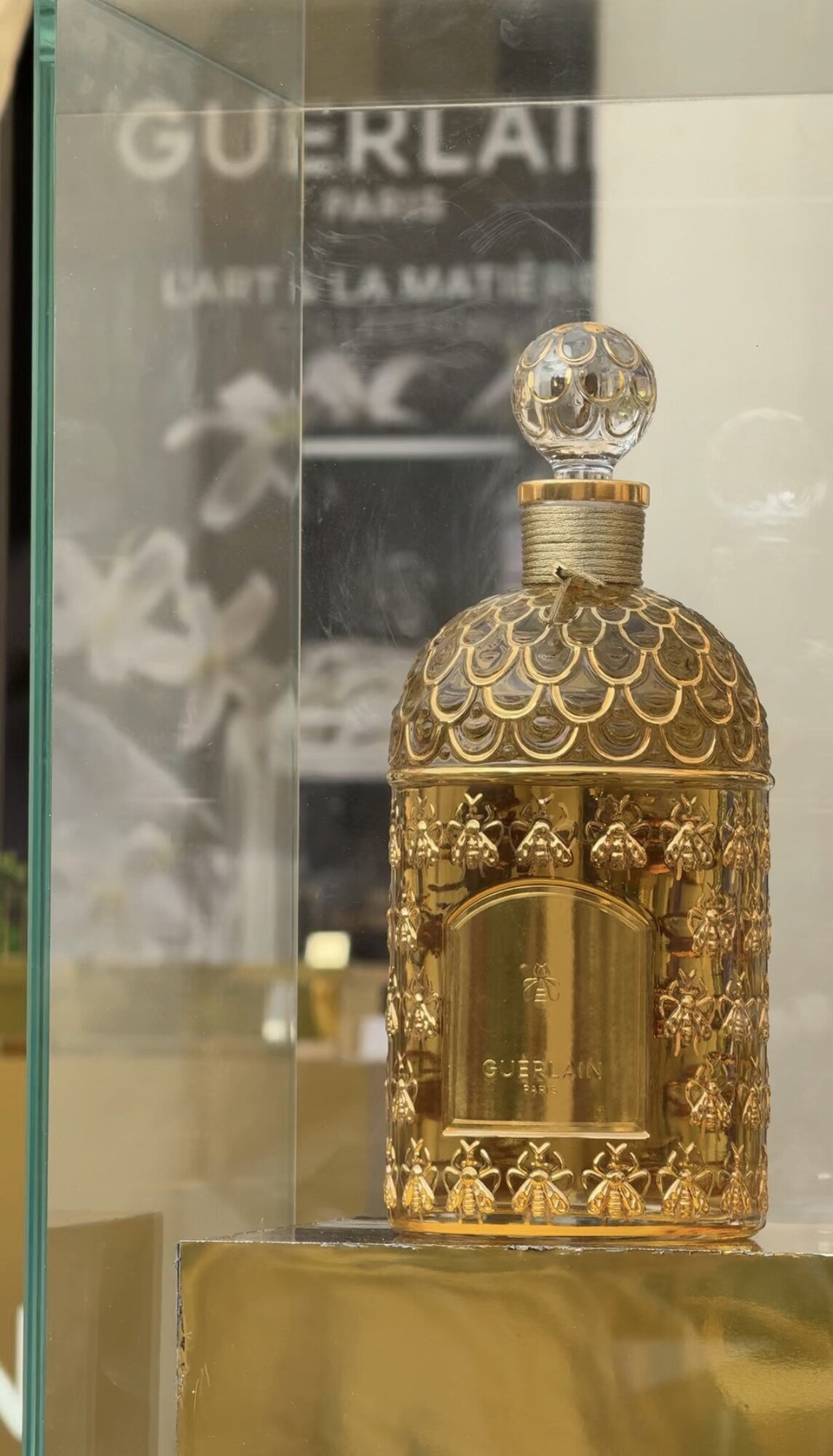
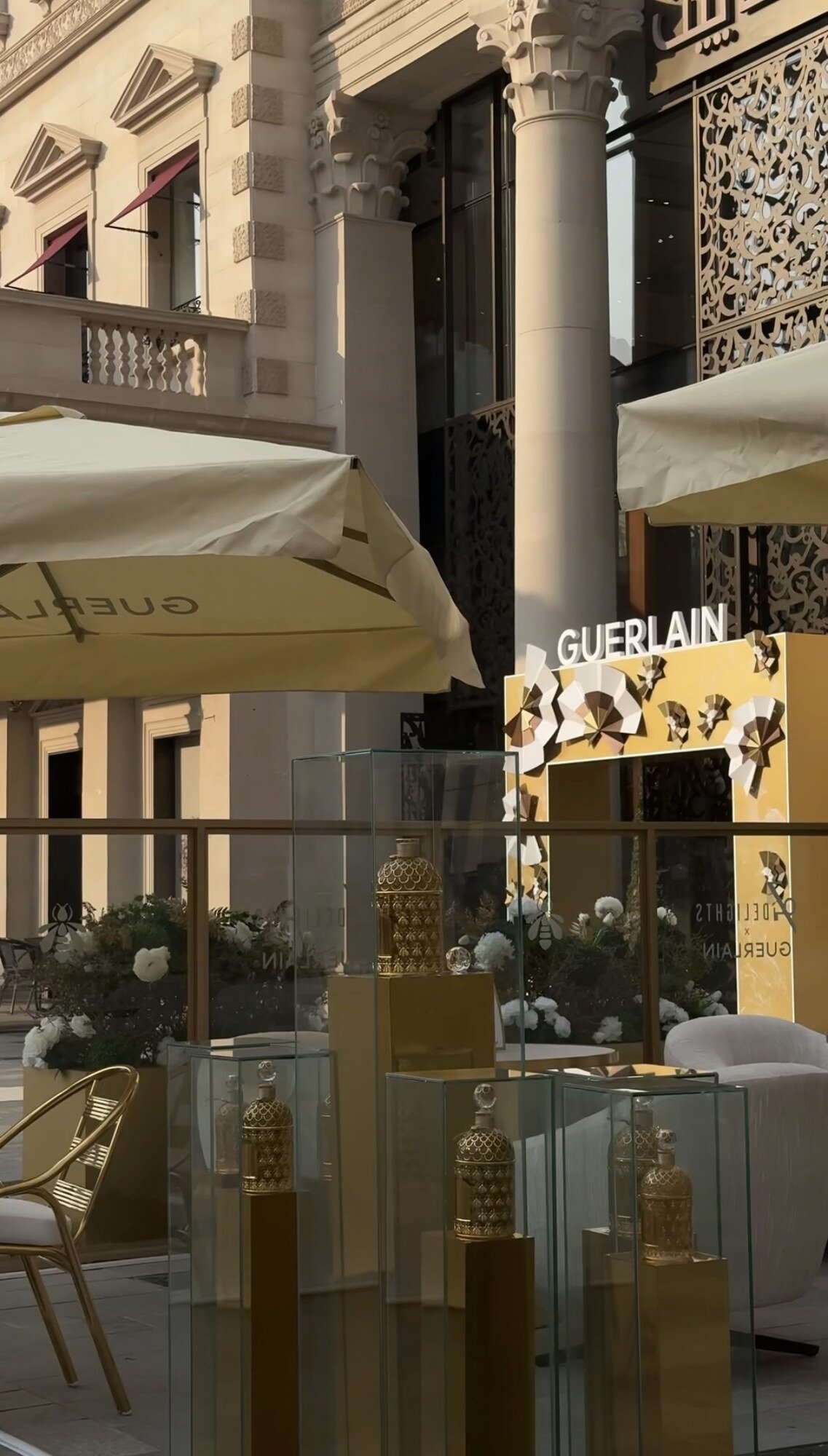
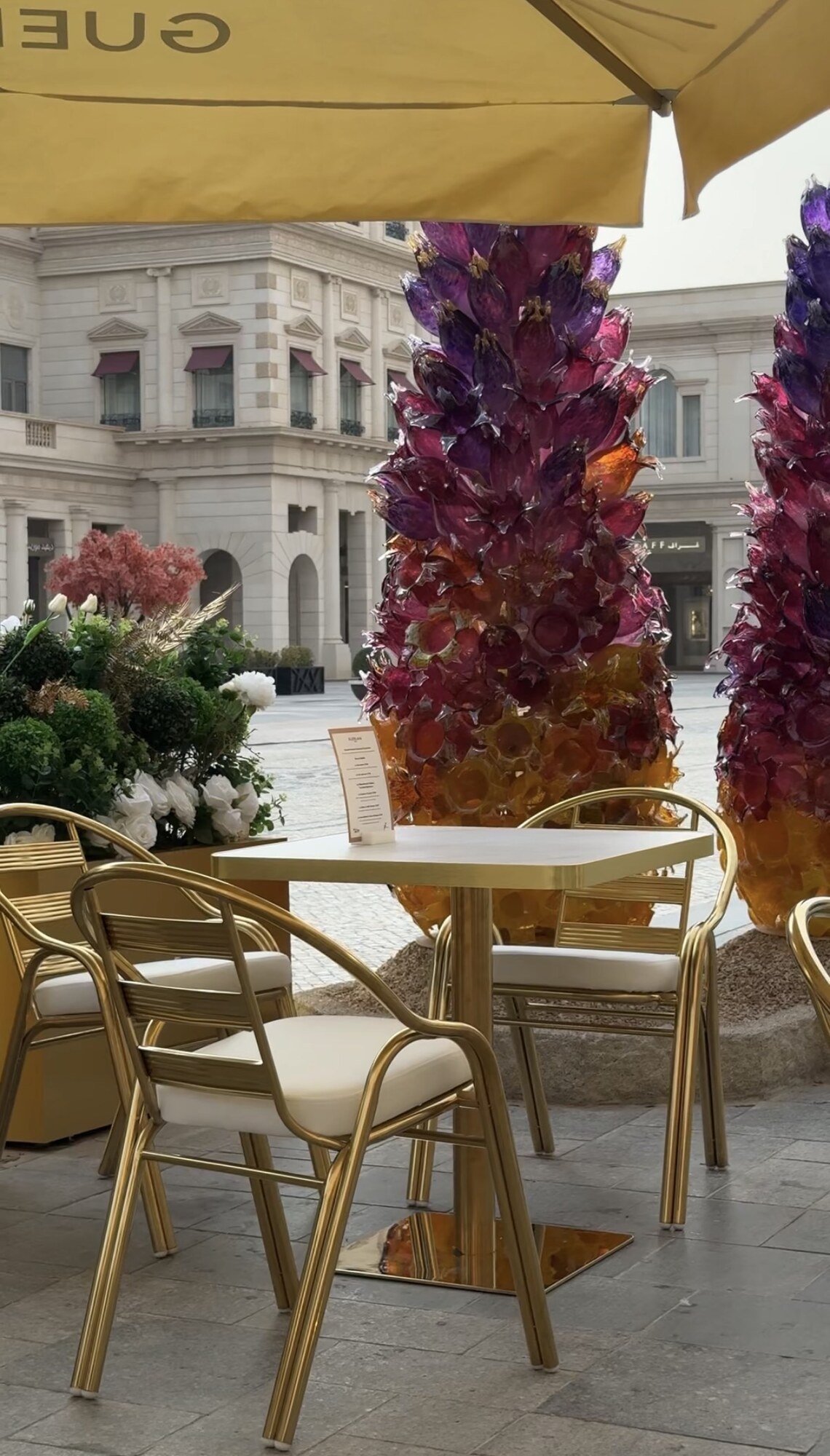
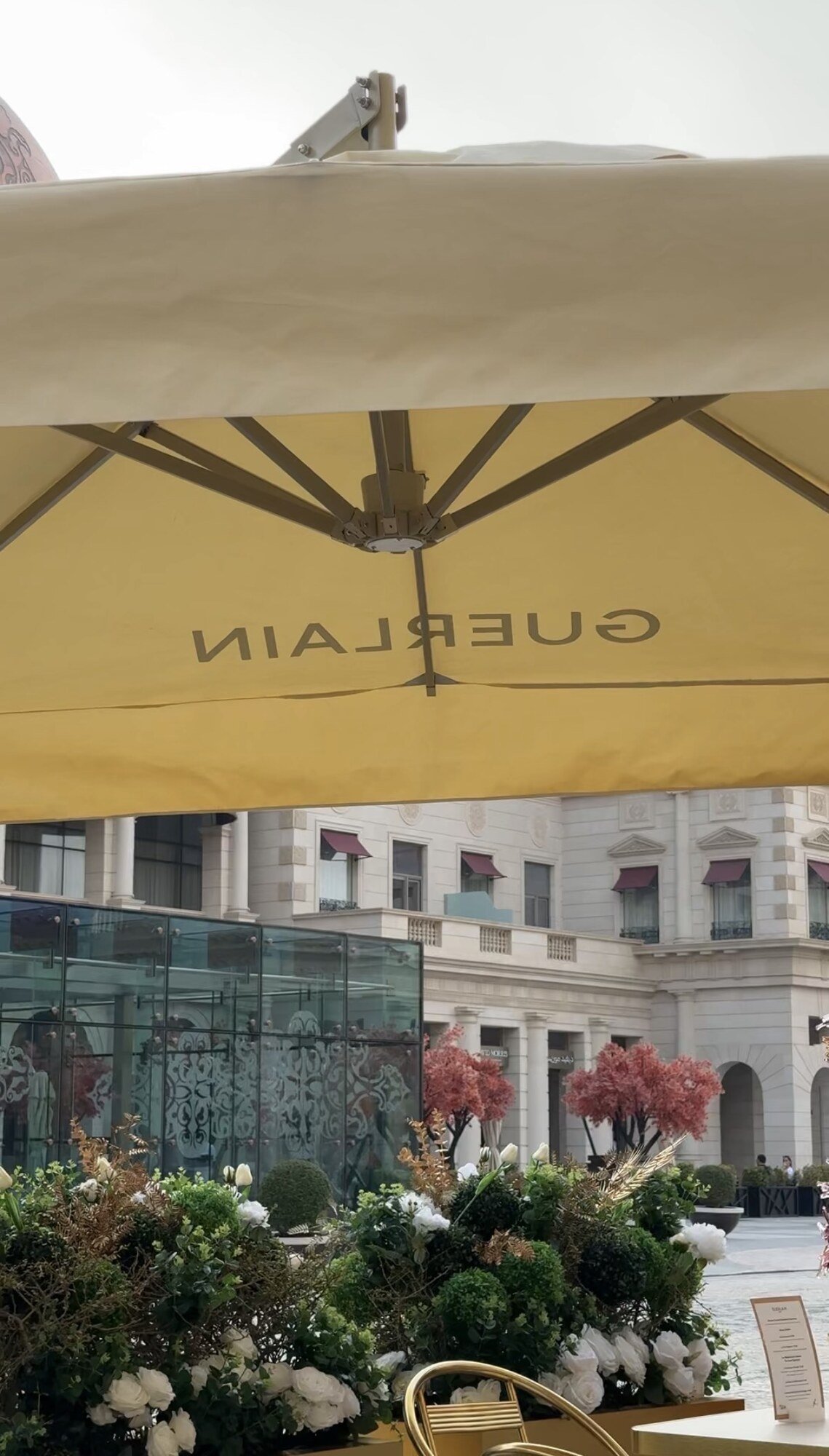
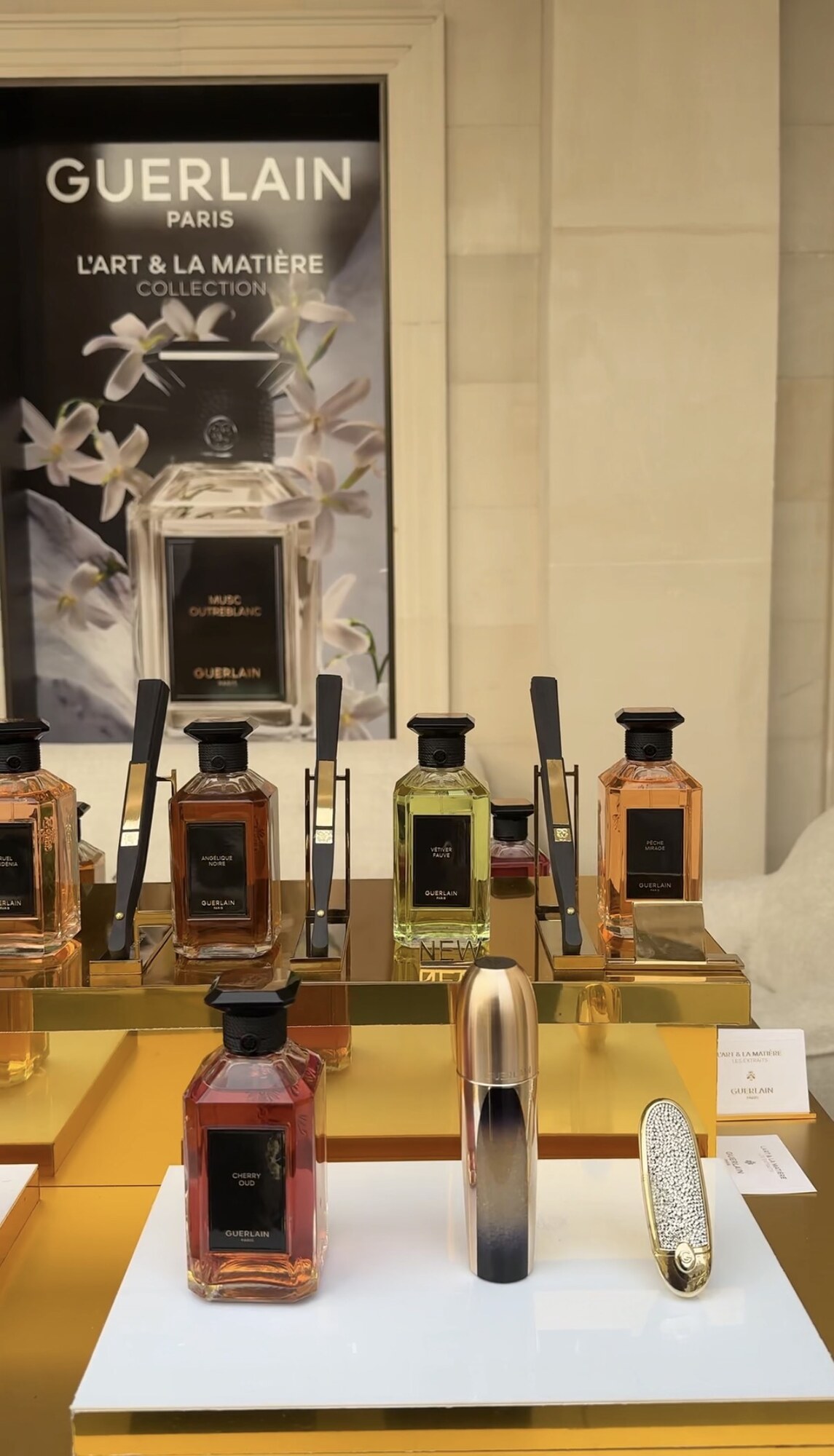
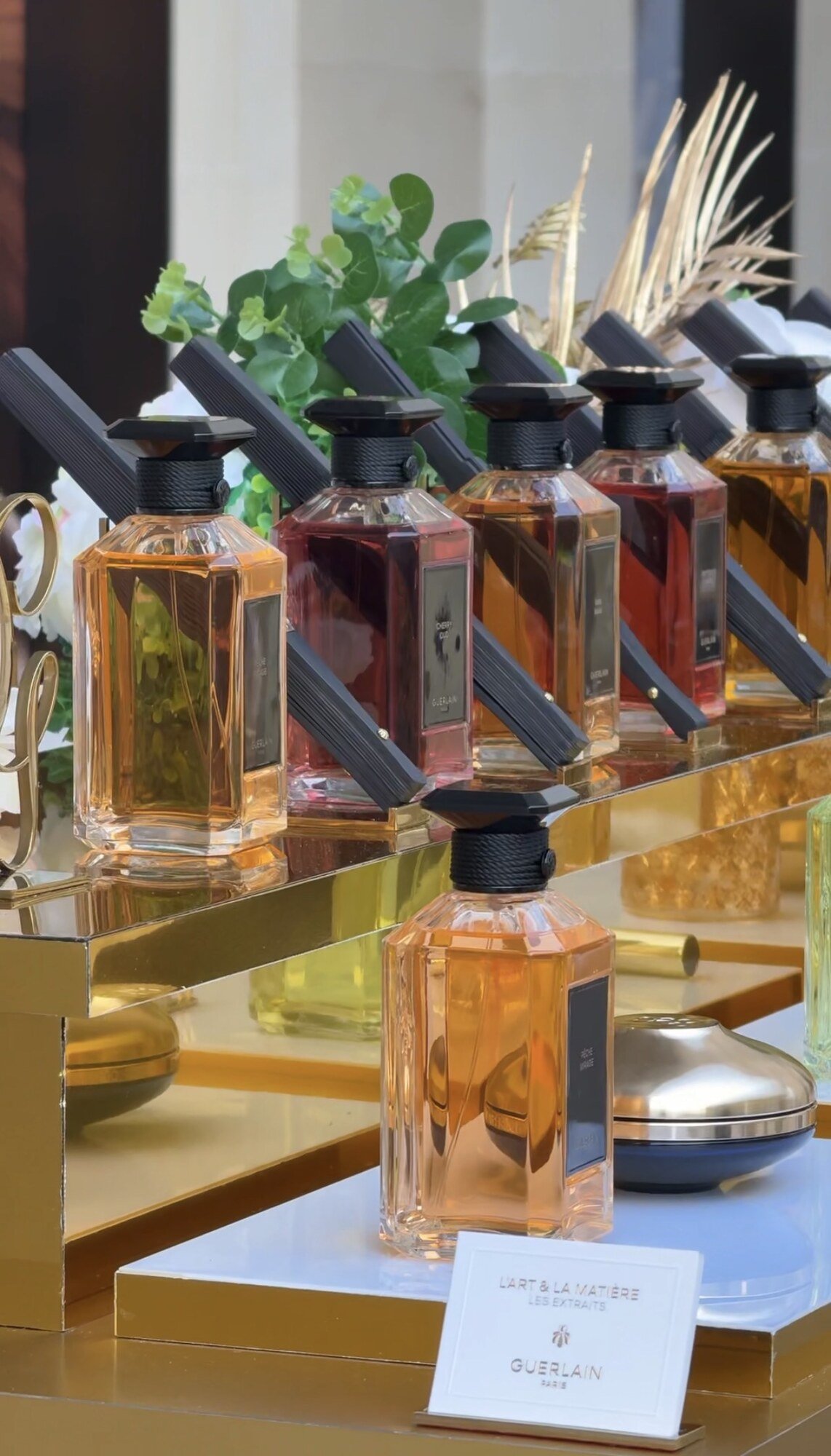
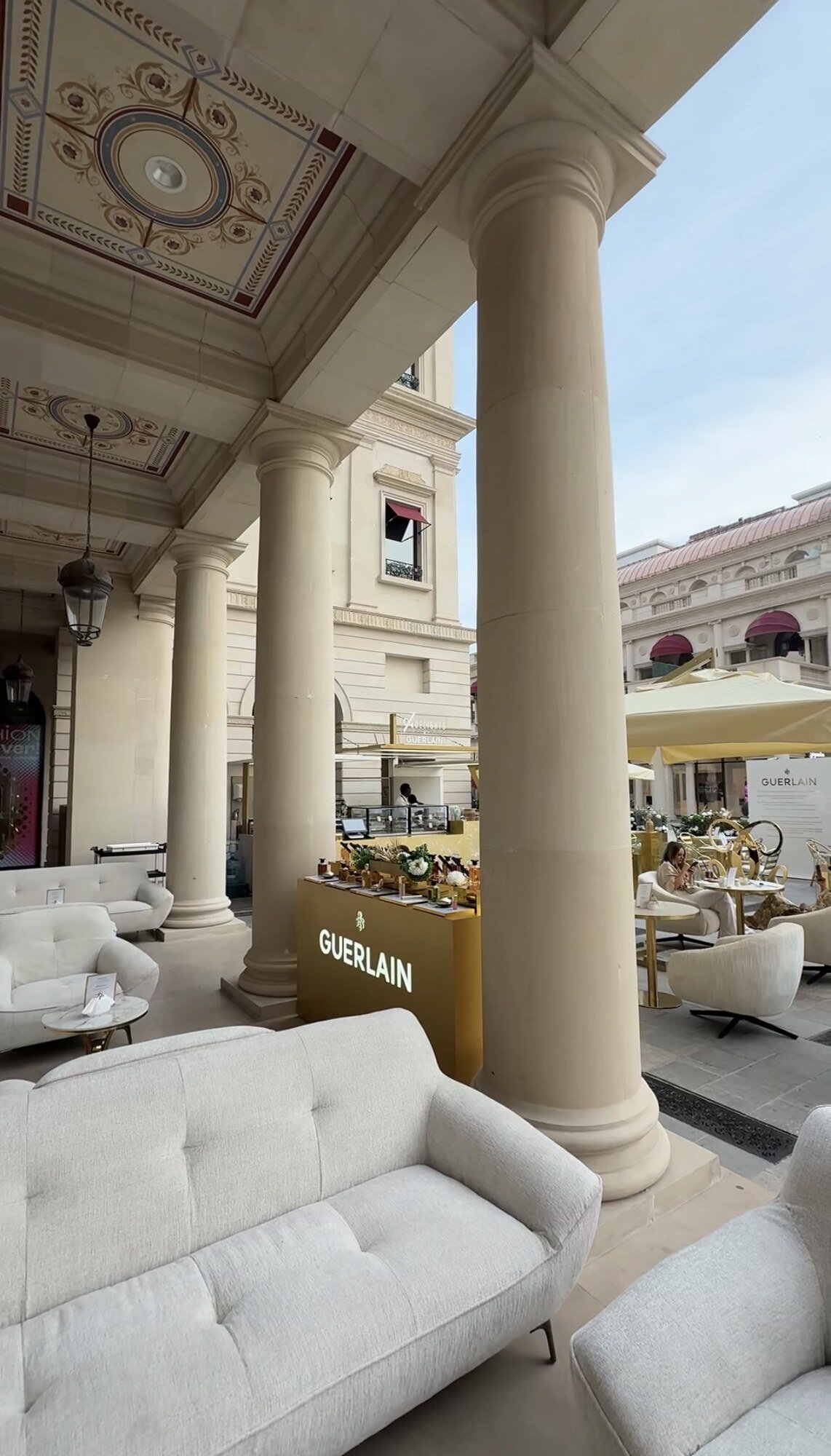
For a season, Guerlain installed itself in Katara, Doha's cultural village on the bay: parasols in the house's pale yellow, gilded chairs on the stone, a counter and café where the square had been empty. Katara exists for exactly this kind of temporary occupation, and the French house's version was unusually complete, perfume, patisserie and furniture composing a small Parisian climate inside the Gulf evening.
The study documents the installation as hospitality rather than marketing, which is what distinguished it: the house did not display products so much as host evenings, and the photographs follow that hosting, the service at the counter, the yellow against the stone, the way a two-century-old Parisian identity translated itself into outdoor Gulf leisure without diluting either. Temporary builds rarely receive serious photography; this one repaid it.
In the archive the study joins Salon de Parfums and BYREDO in the scent grouping and supplied a hero image to the Journal's essay on fragrance houses and their rooms. It is also now a record of something gone, the installation was dismantled on schedule, which gives it the archive's recurring afterlife: photographs that were editorial when made and became historical when the subject was packed away.