The Ned, Doha
The Ned arrived in Doha with a specific kind of confidence. Not the confidence of a new building asserting itself, but something older and more deliberate. Scale used in service of atmosphere rather than impression.
The lobby establishes this immediately. Columns, deep ceiling height, materials that do not announce themselves loudly. A space designed to feel already known, as if the building had always been there.
The photographs followed the light rather than the floor plan.
A staircase rising through the building. The Members signage set against panelled wall. A dining room in the hour before service, tables dressed and the room still. The Ned does not organise itself around a single centrepiece. It accumulates. Each corridor arrives at something worth pausing for.
The guest rooms operate at the same register as the public spaces.
Dark linen. A desk positioned toward the window. The kind of detail that does not announce itself: a lamp, a surface, the quality of the hardware. The consideration visible in the lobby carries into the room, and stays there.
A building this large rarely feels this still.
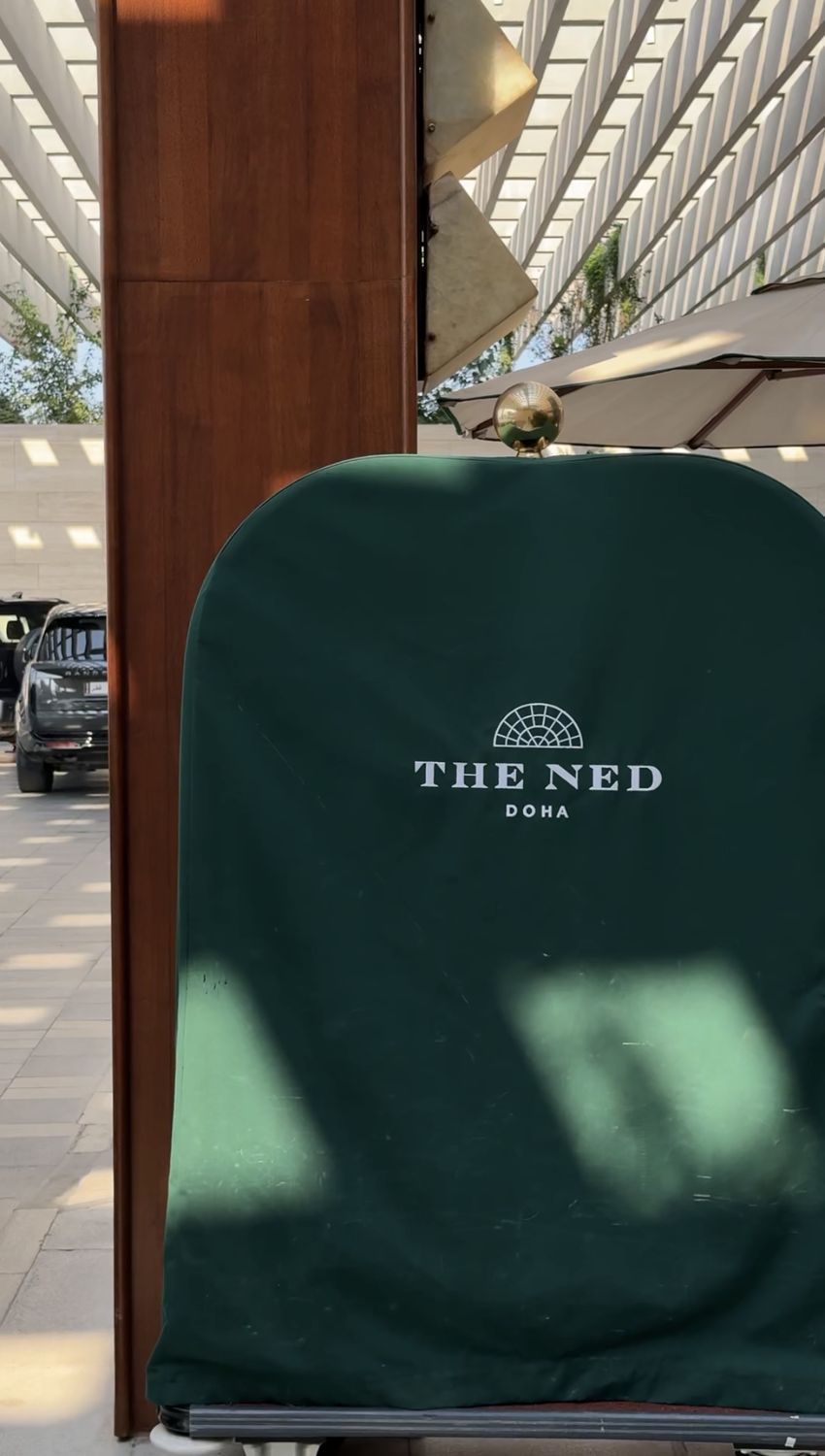
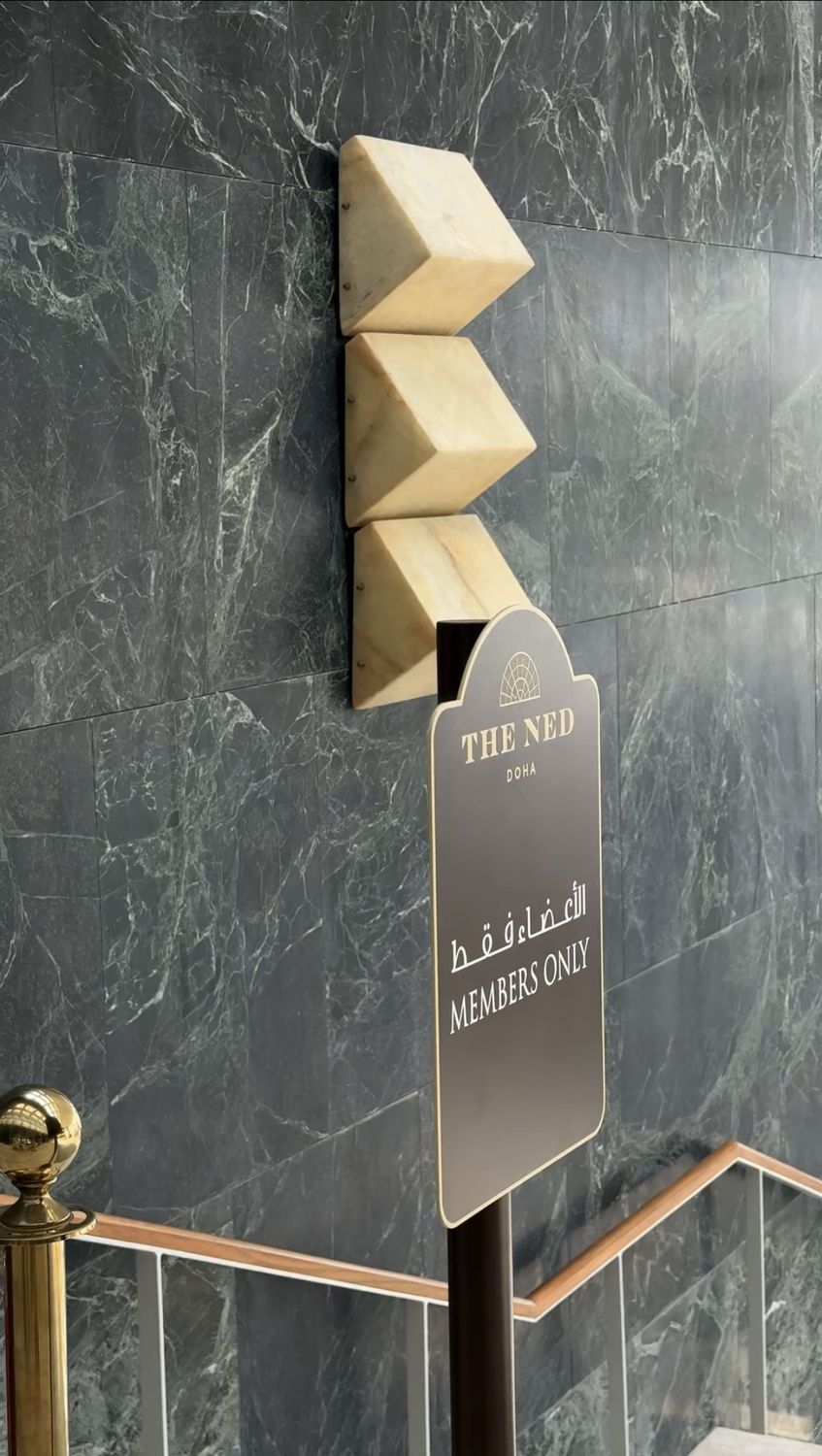
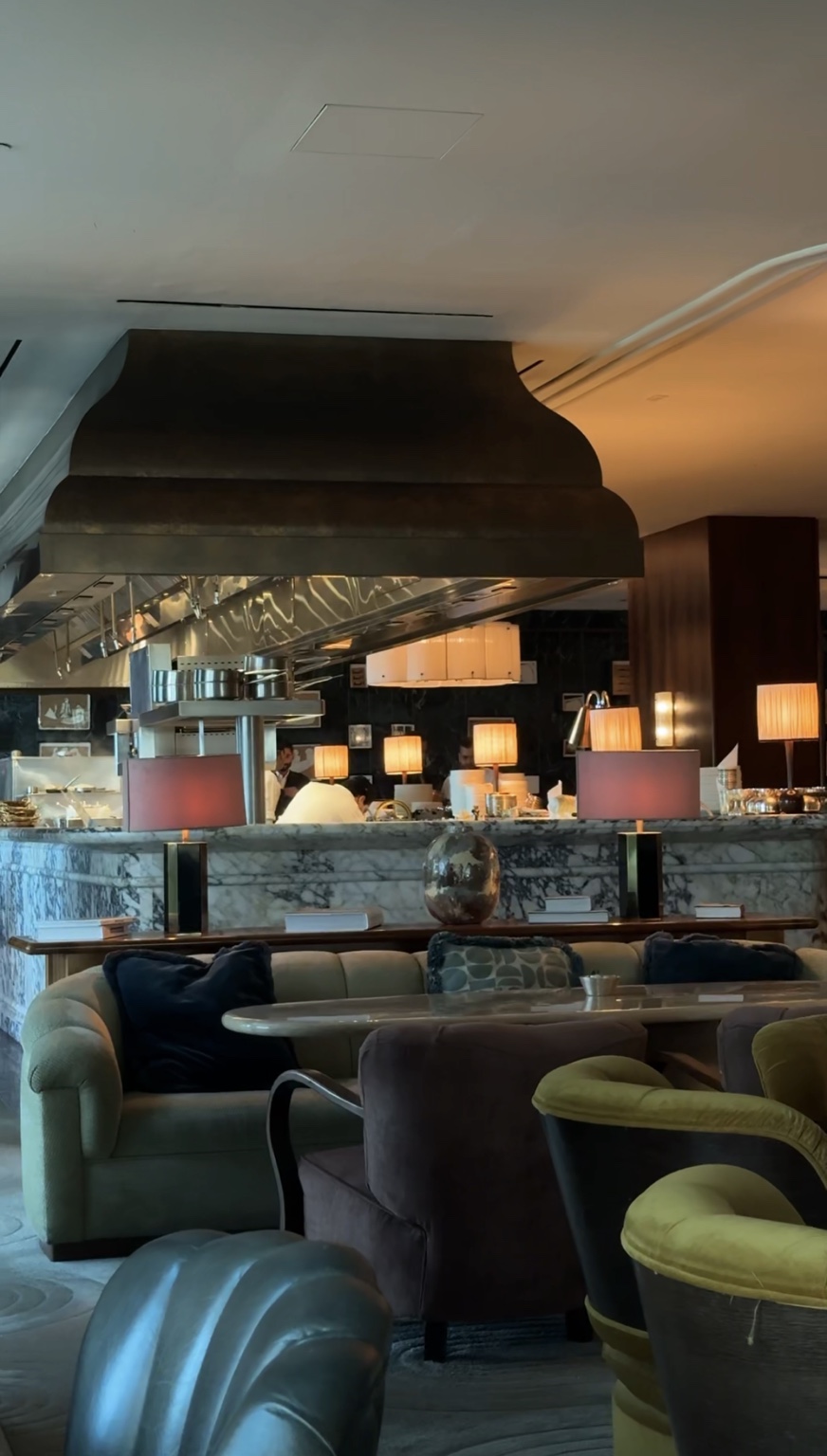
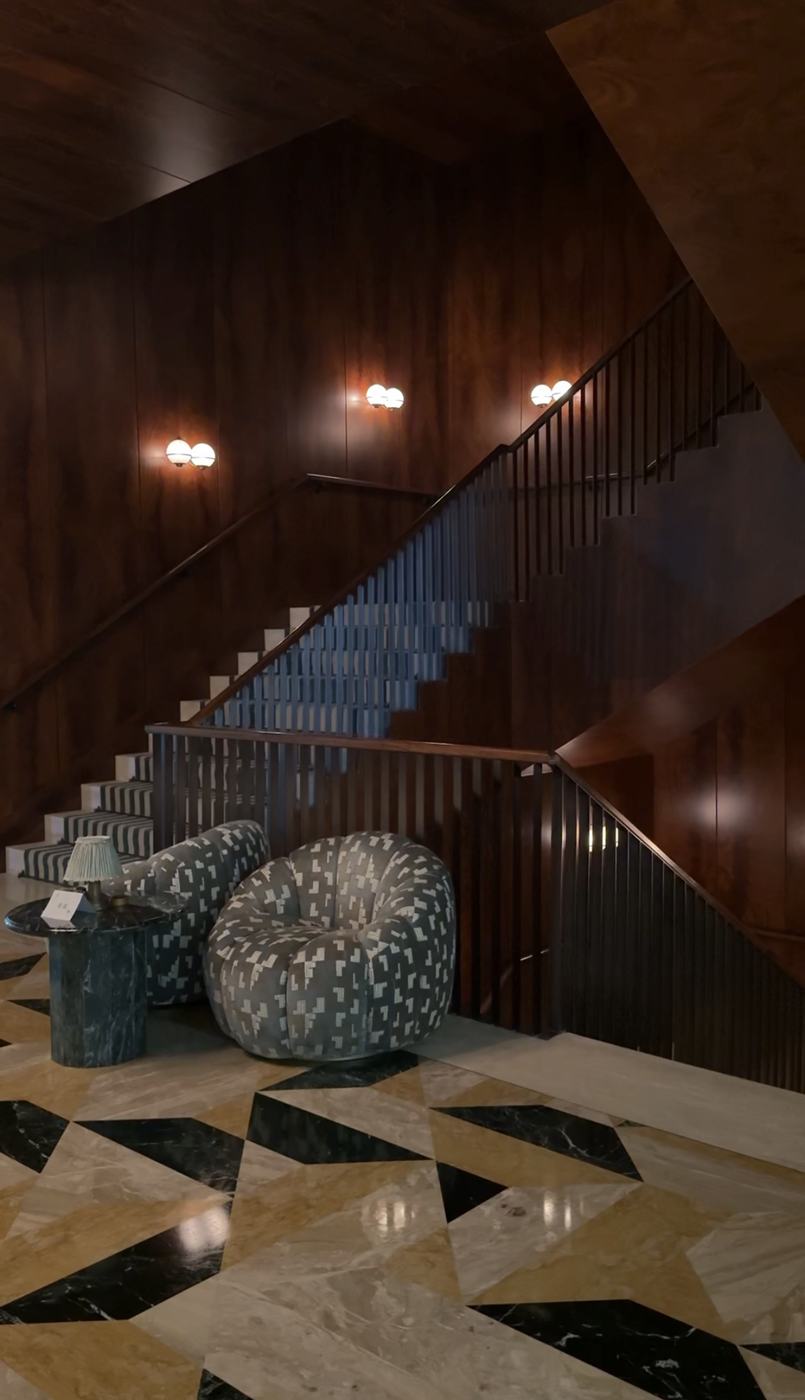
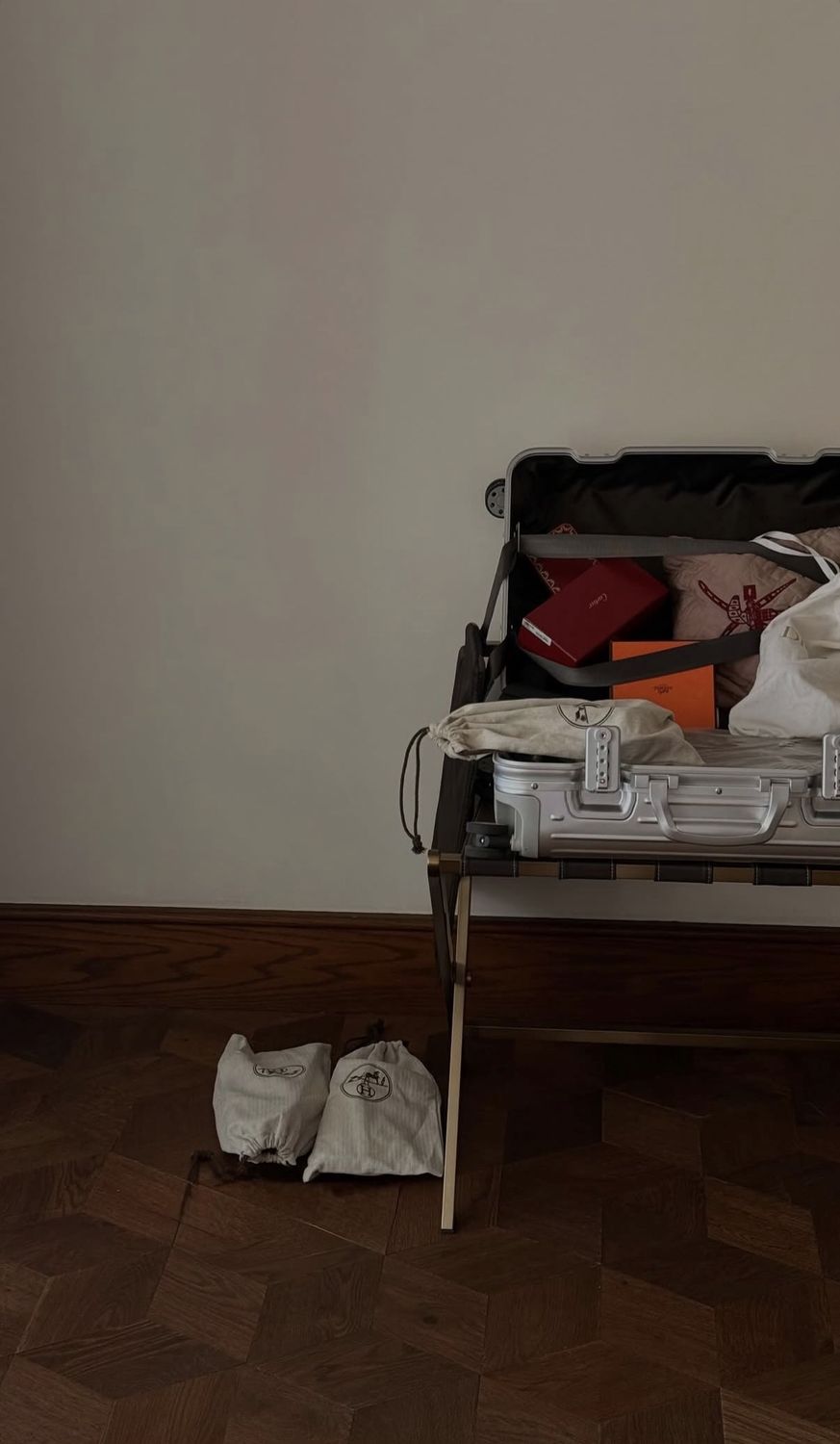
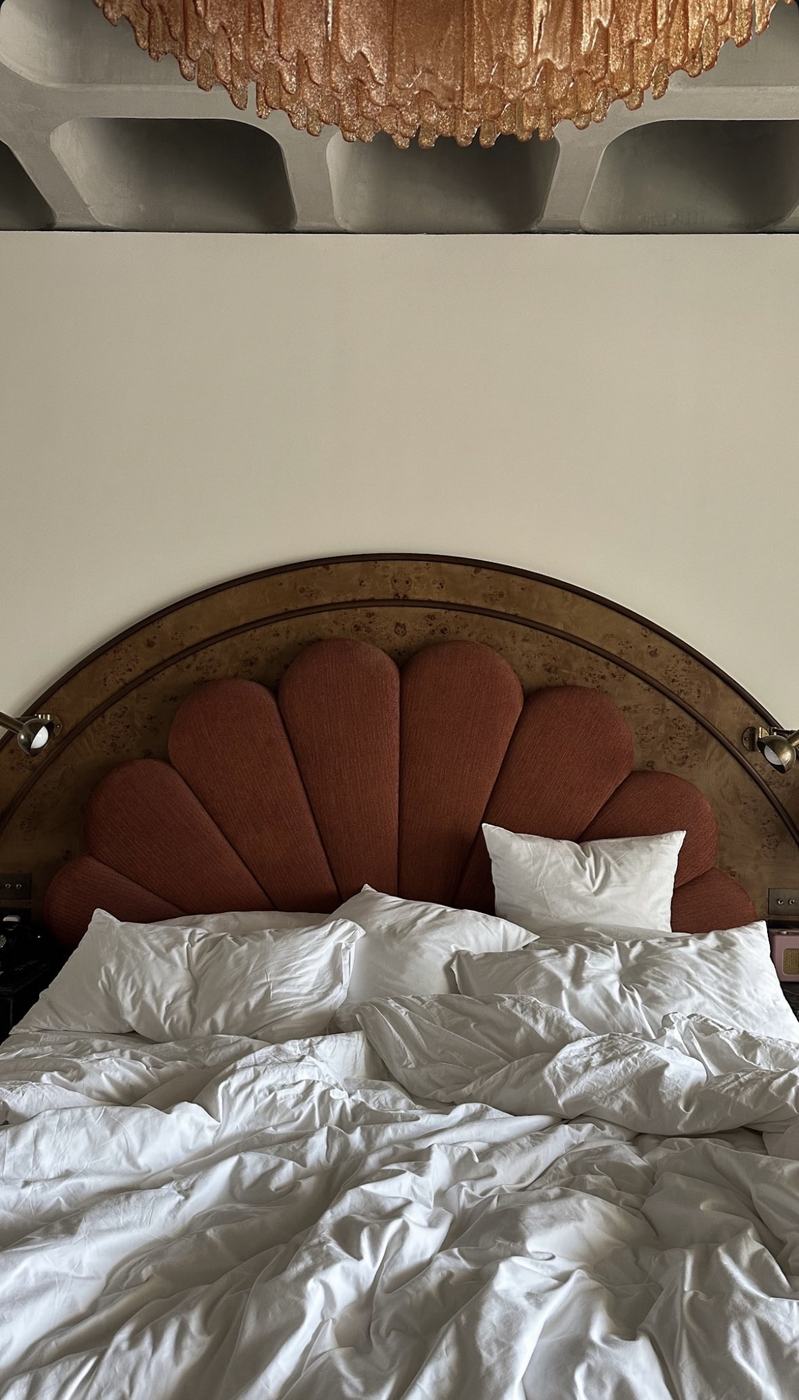
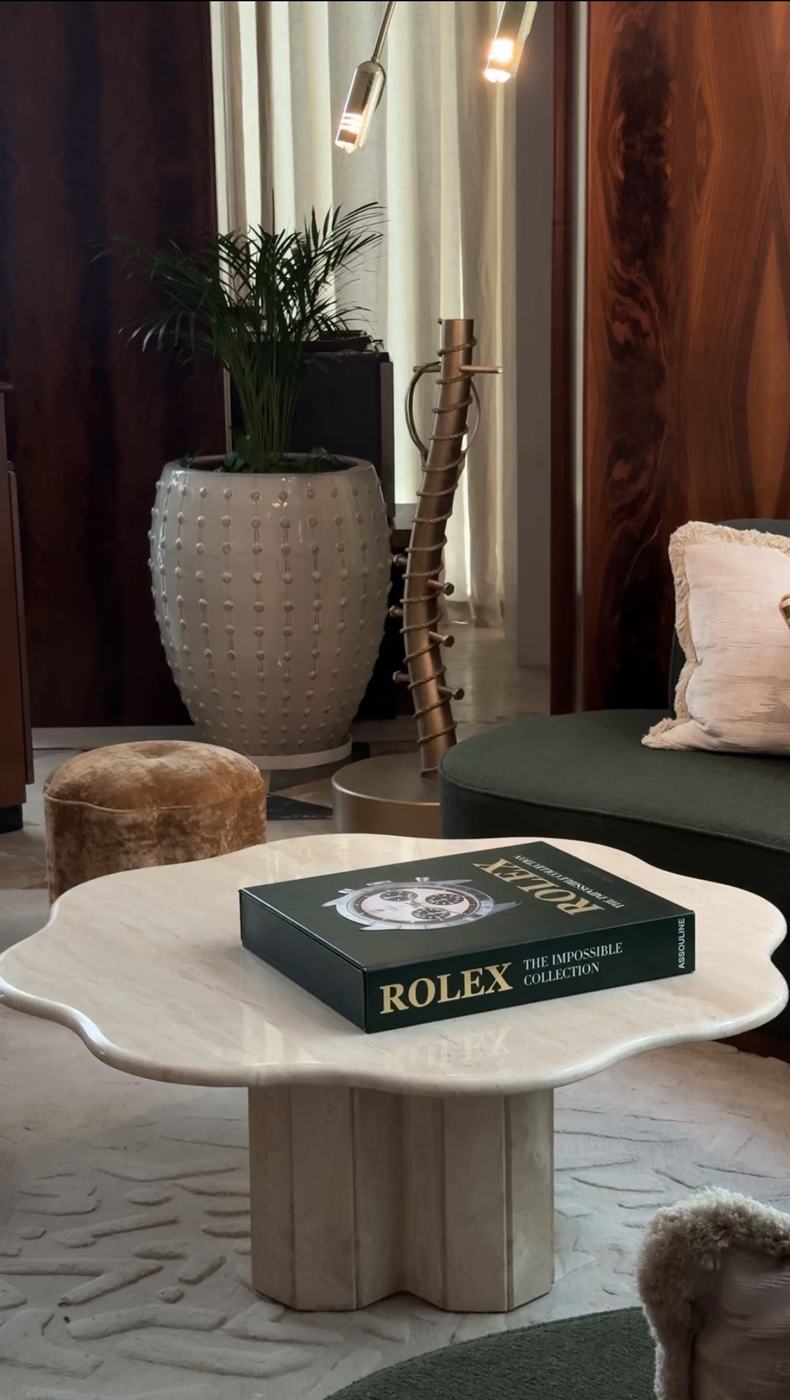
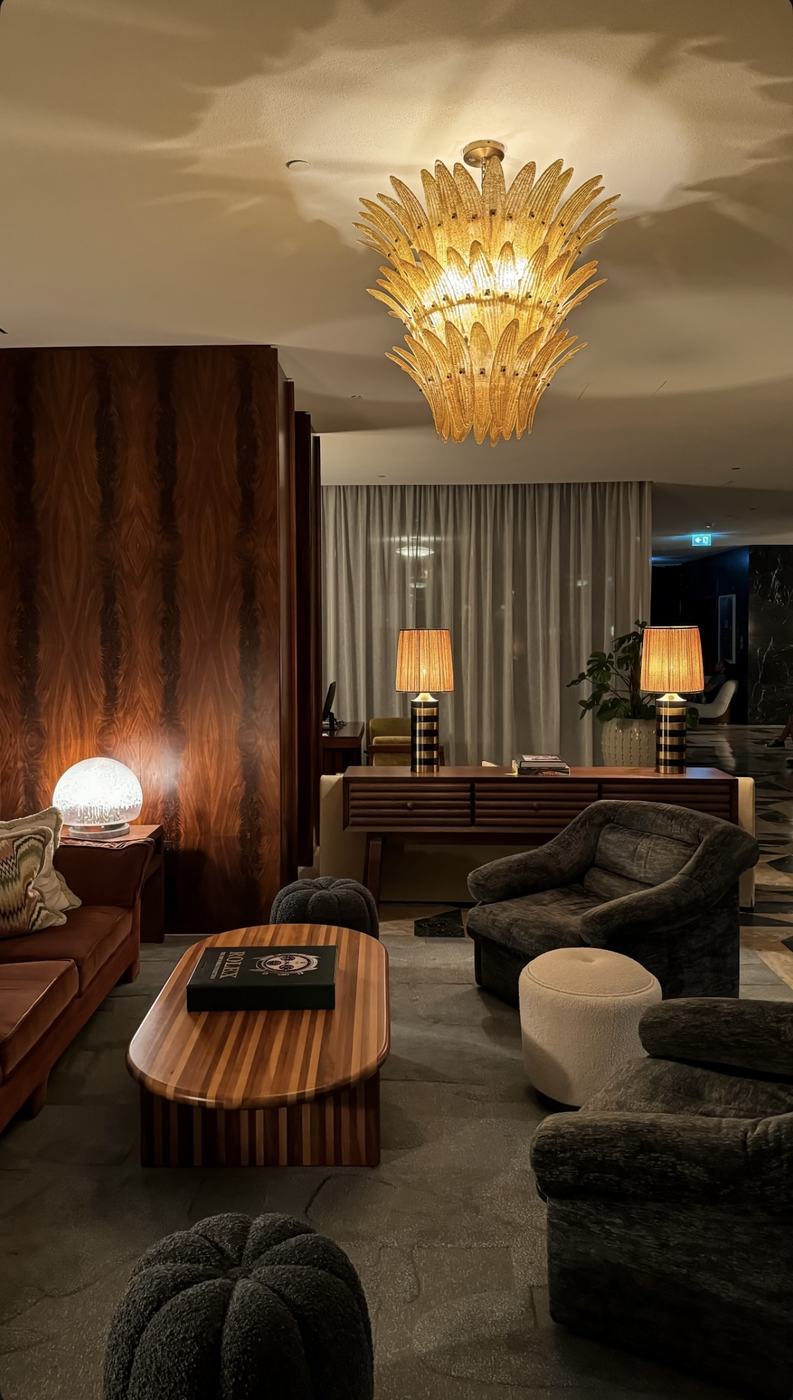
The Ned occupies the former Ministry of Interior building on Doha's Corniche, a piece of 1970s Gulf brutalism that most cities would have demolished and that Doha, to its credit, handed to a hotel group known for exactly this kind of adaptive conviction. The London original occupies a former bank; the Doha outpost repeats the trick with government architecture, keeping the deep concrete grid of the facade and placing nearly ninety rooms, a members' club and a floor of restaurants inside it. It remains one of the very few hotels in the Gulf built into a genuinely existing building, and the difference is legible everywhere: the proportions were inherited, not rendered.
This study was made across repeated visits rather than a single stay, in the hours when the building's character is least performed: mid-morning in the lobby after the breakfast crowd, the corridors in the early afternoon, the pool deck as the light left it. The photographs concentrate on what the renovation chose to keep, the weight of the columns, the darkness of the palette, the way the interior treats shade as a material in a city that mostly fights it.
The study later became the studio's second publication, and the hotel remains a reference point for the whole archive: proof that scale and quiet are not opposites, and that the most confident hospitality in a new city can come from the oldest building on the street. For the studio it is also the standing answer to a question clients ask often, which is what editorial photography of a hotel actually looks for. It looks for what this building has: decisions that hold up when nobody is performing.