Raffles, Doha
The same name, a different language. Raffles came to Doha not as a relic but as a statement: geometry, water and light, set on the edge of the Gulf where the city is still writing itself.
The green of the arches reads differently against the Gulf than it would anywhere else. The light here is whiter, the shadows harder. The scale of the place is not modest, and it is not meant to be. This is hospitality as architecture, architecture as position.
To read luxury in its newest dialect. Not the weight of history but the confidence of the present. Scale held in marble and glass, the sea borrowed as a view, ornament drawn in clean modern lines.
Where the Singapore property asks you to slow down and remember, Doha asks you to look up. The lobby dome reflects its own interior. The fountain sits at the centre of an atrium designed around it. Everything has been placed with intention, and the intention is legible.
Photographed in the flat bright heat of the day, through arches and across water. The frames that held were the ones where the building turned its geometry toward the light.
The arches frame the skyline. The pool holds the sky. At the marina, the hotel faces the Gulf directly and does not look away. The geometry here is confident: it knows what it is doing with the light it is given.
An inheritance, rewritten in glass and water. Both Raffles properties carry the same name and the same idea of hospitality. What changes is the language it speaks in. Singapore speaks in memory. Doha speaks in the present tense.
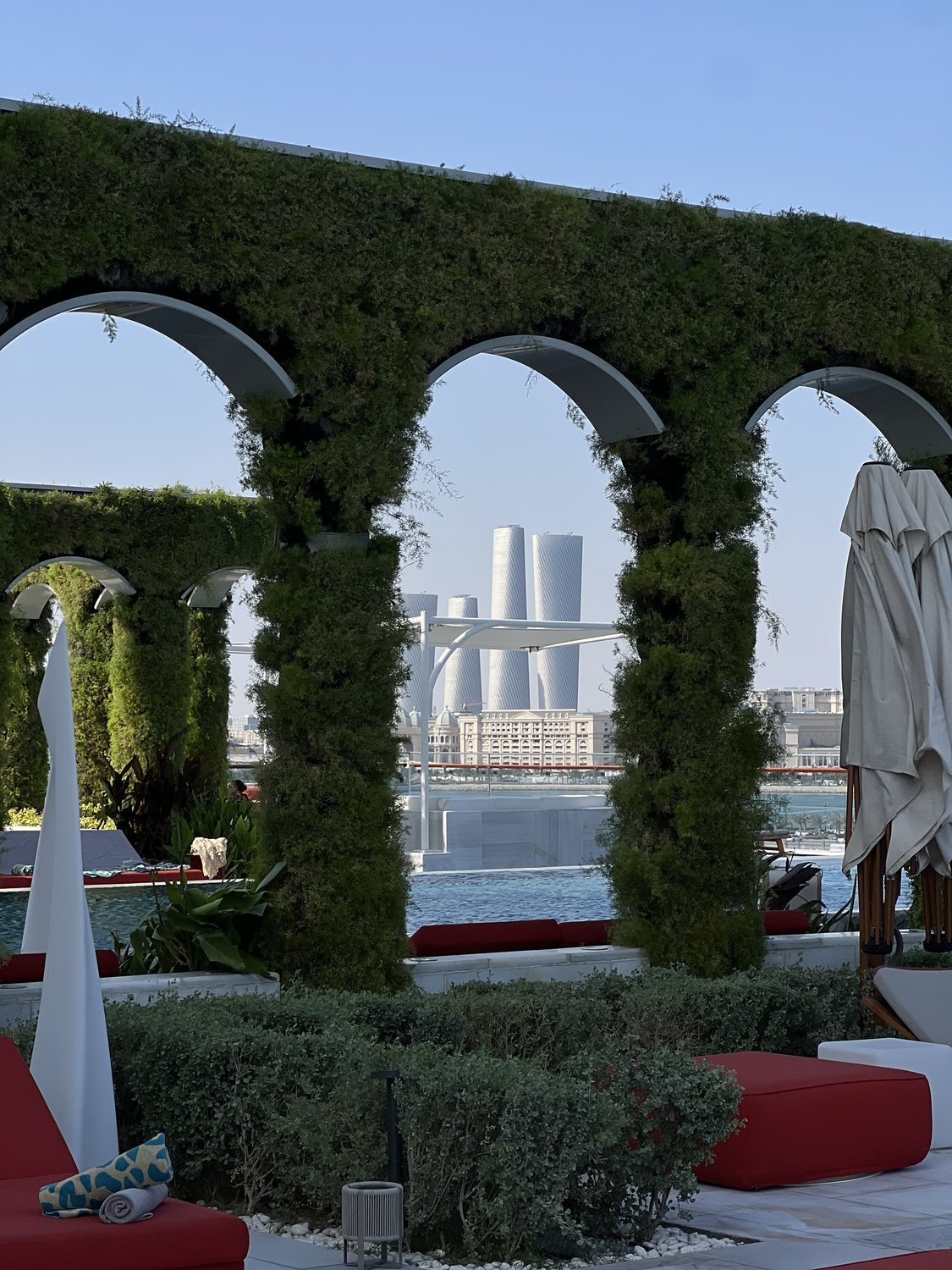
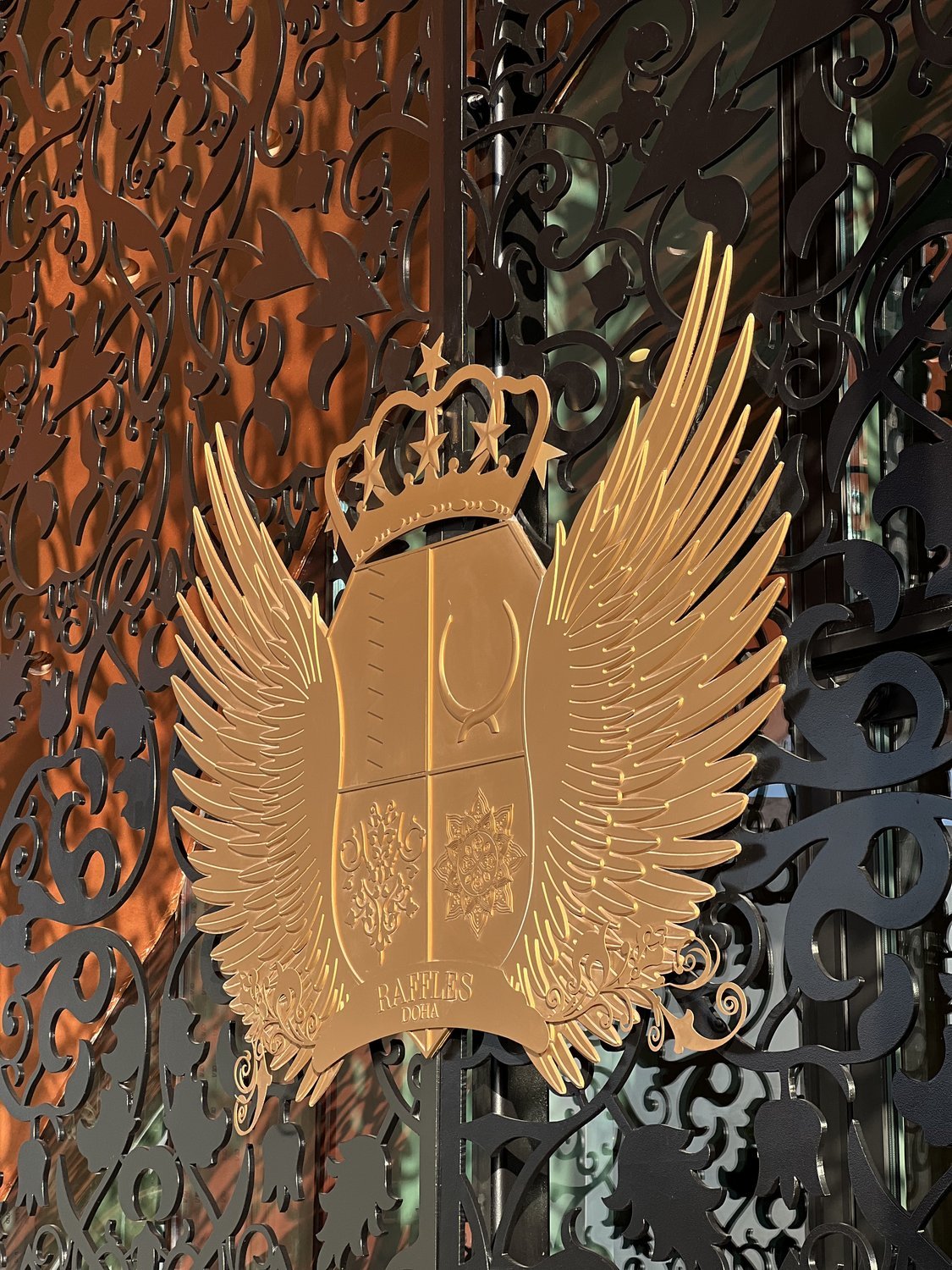
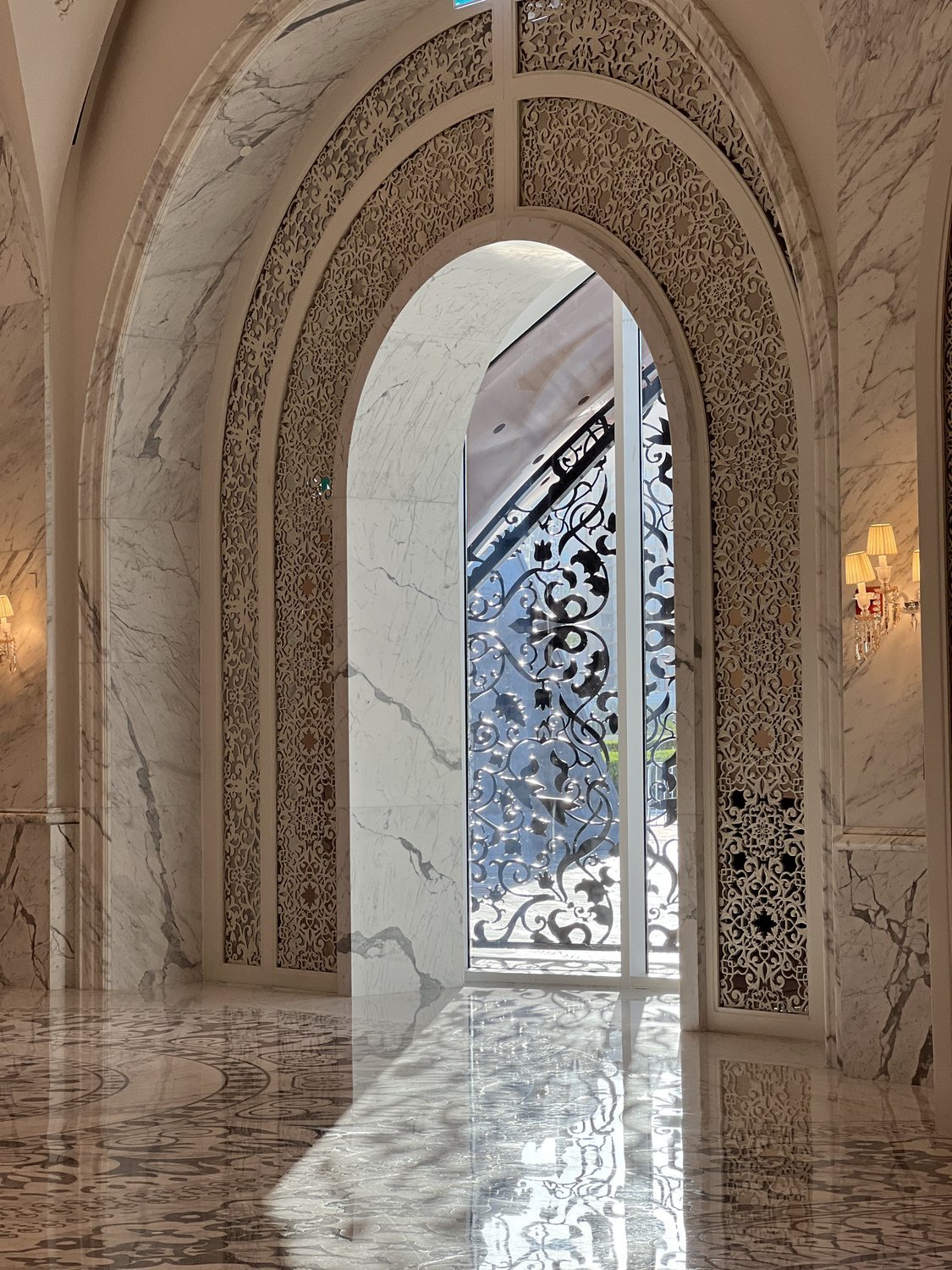
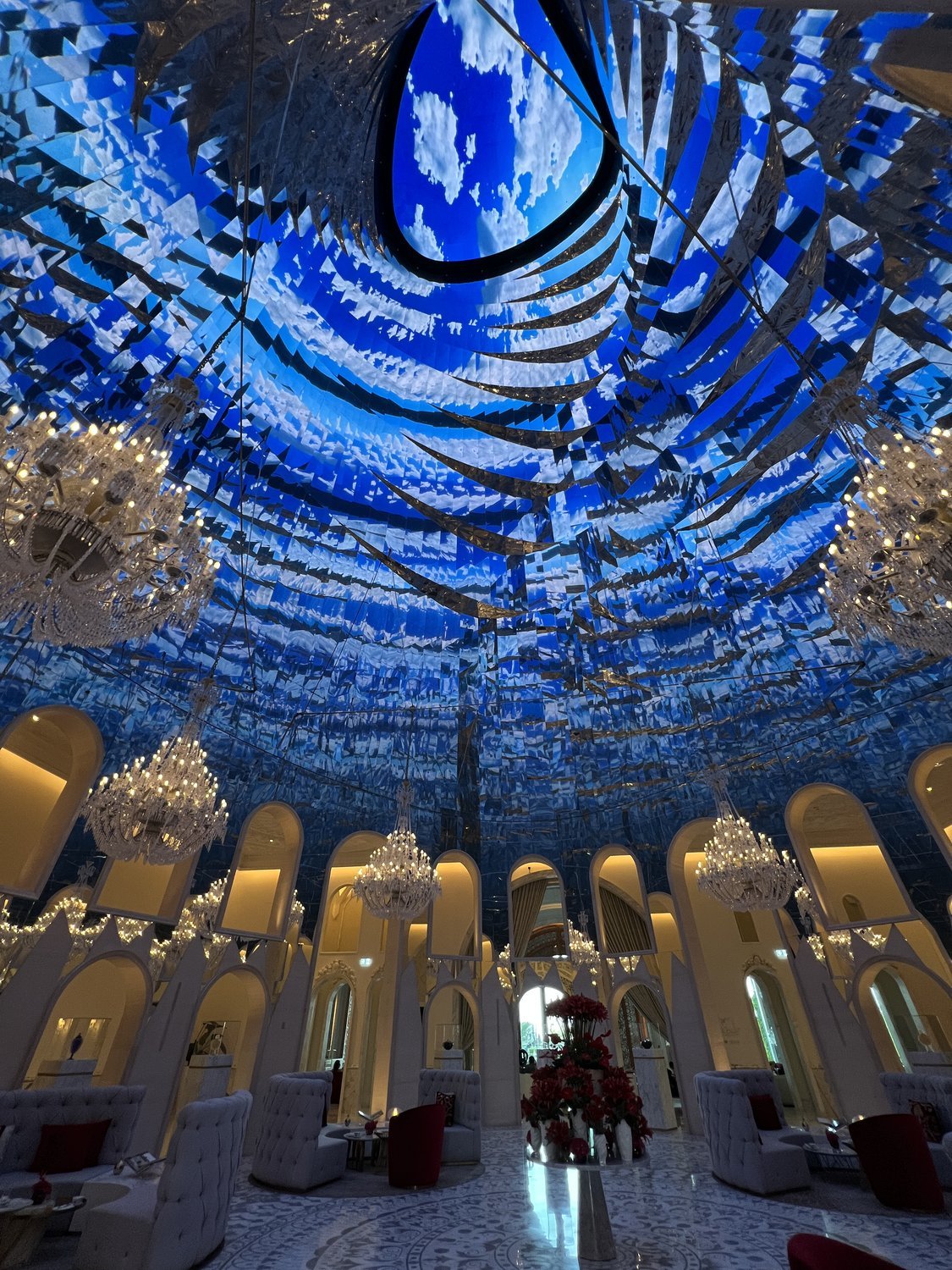
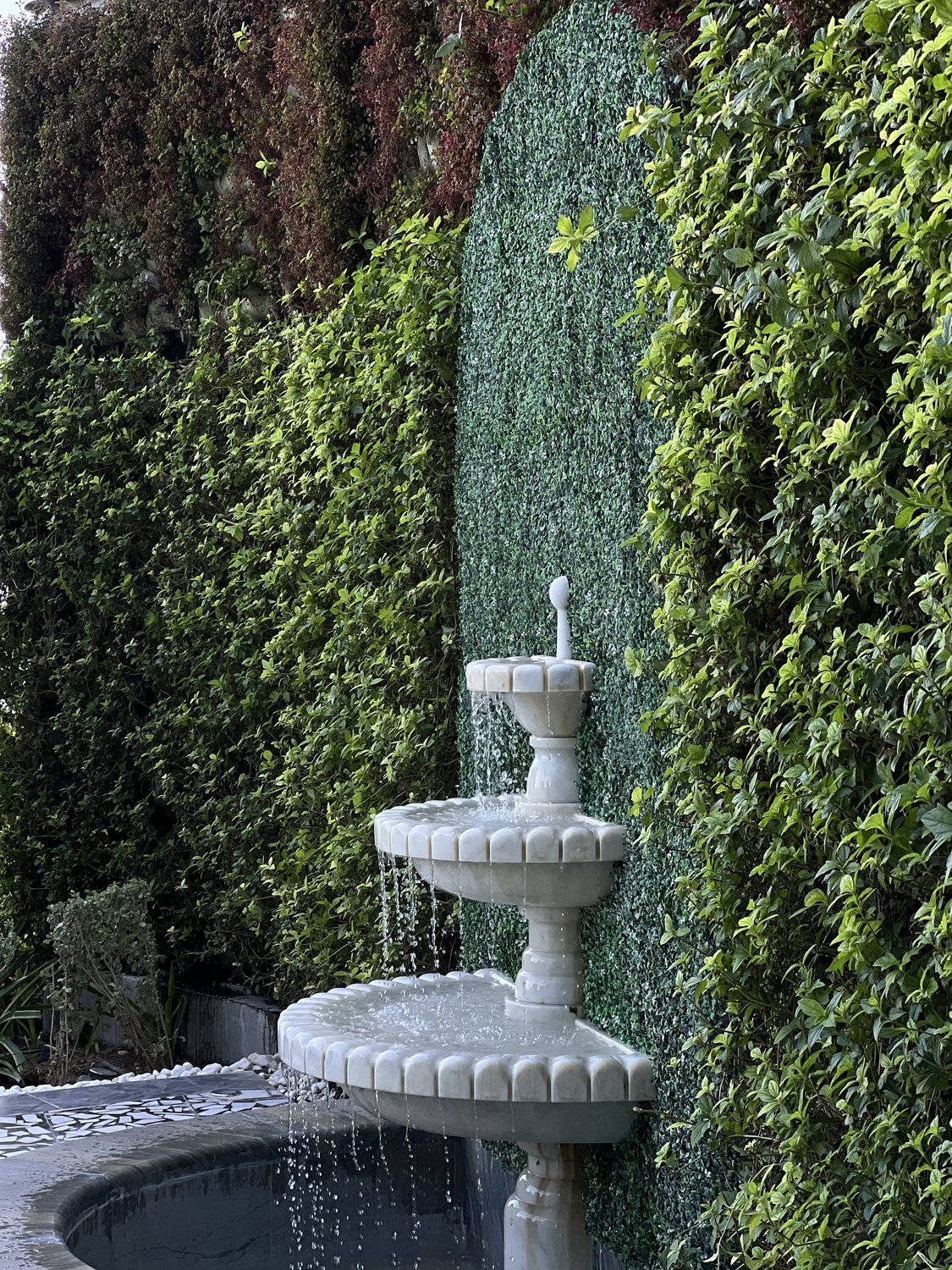
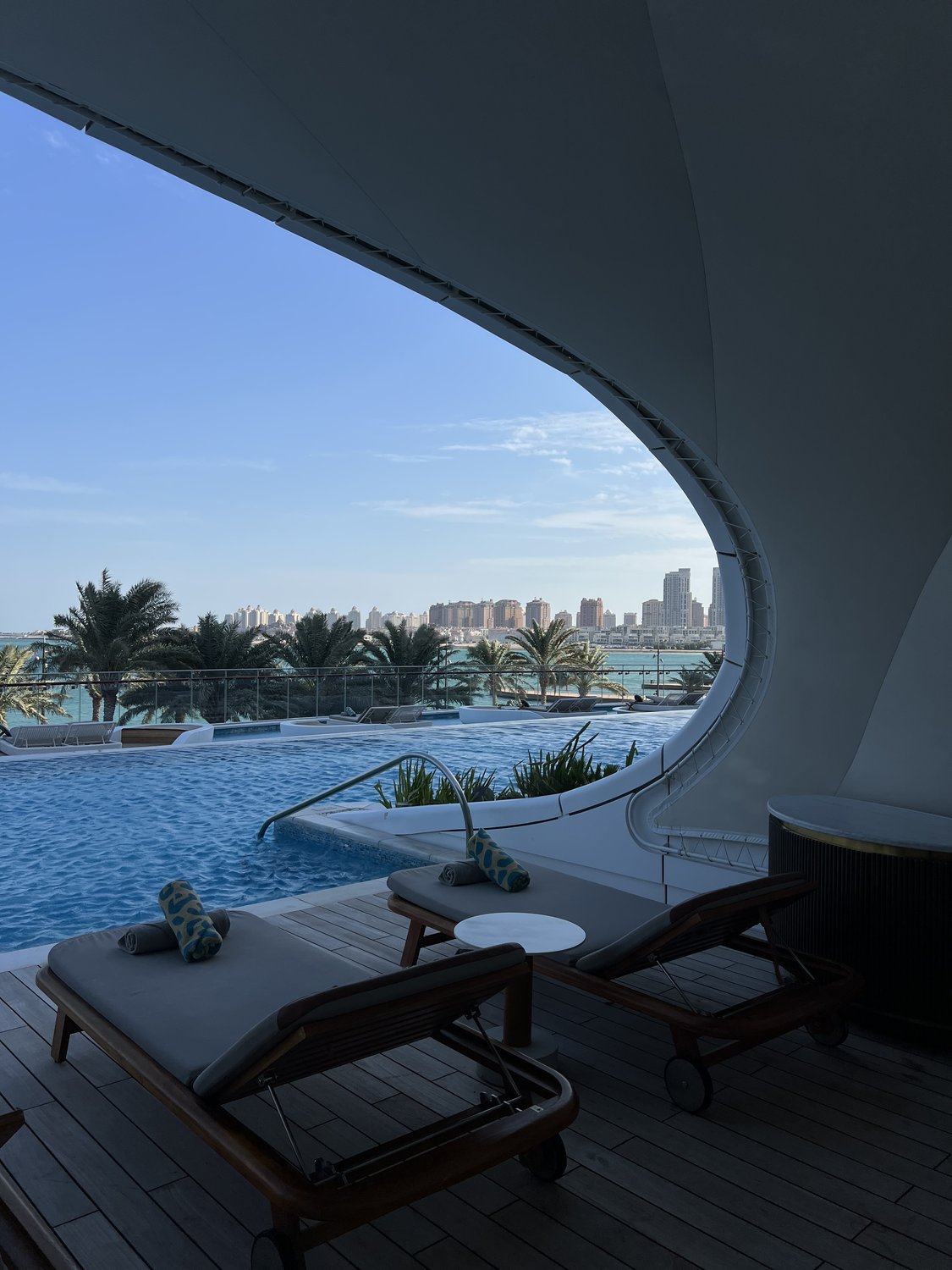
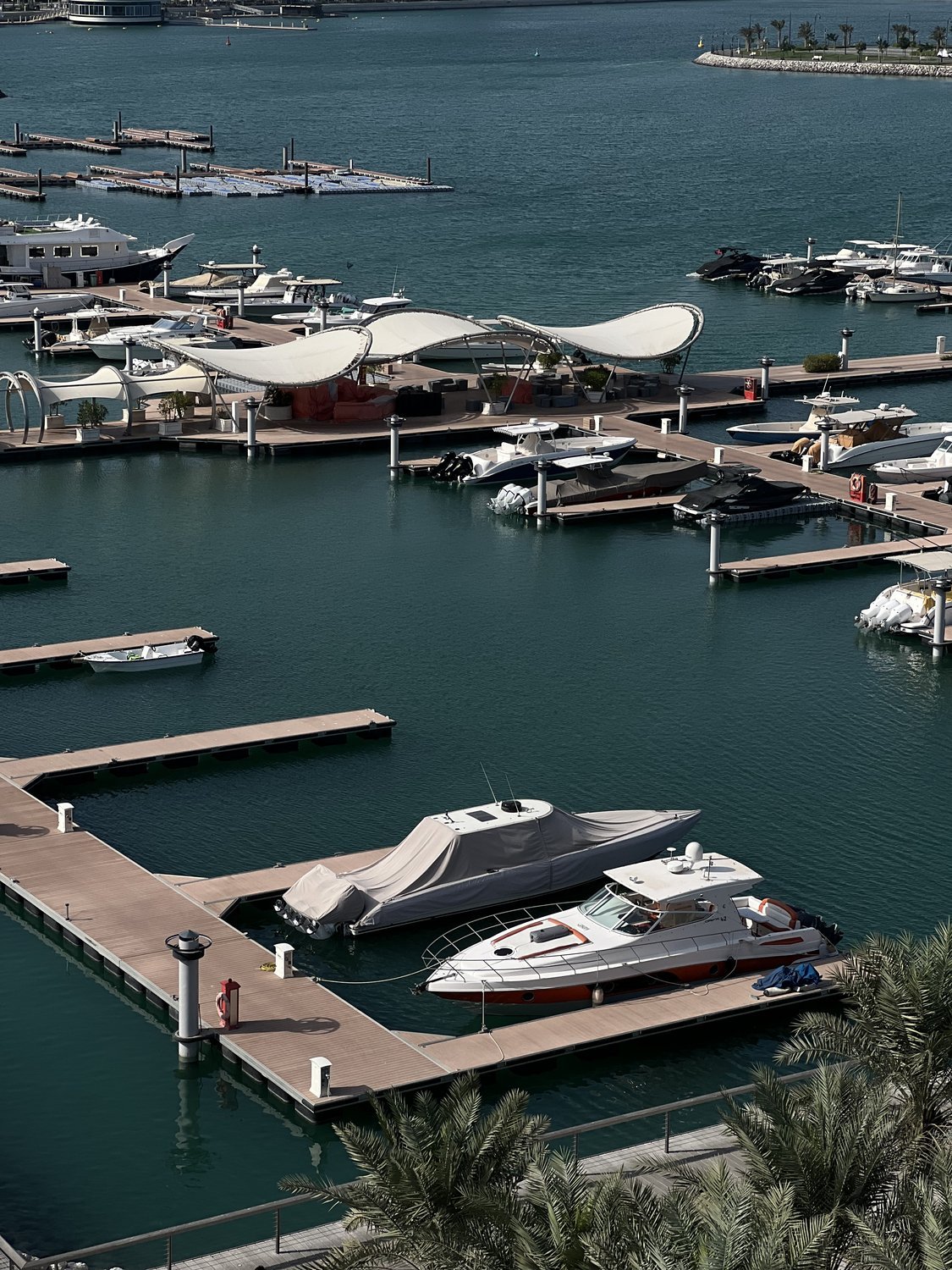
Raffles Doha occupies one of the two towers of the Katara Towers development in Lusail, a building shaped like the crossed scimitars of Qatar's seal and visible from most of the city's northern shore. It is as far from the white colonial original in Singapore as the brand extends: a hotel of arches, water and engineered light inside one of the most photographed silhouettes in the Gulf, opened in 2022 as Lusail itself was being finished around it. Where the Singapore house wears a century of history, Doha's wears none at all, and makes its argument entirely through geometry and scale.
The study treats the hotel as architecture first: the repetition of the green arches, the courts of still water, the interior distances that turn walking into procession. It was photographed in the harder light the Gulf actually has rather than the softened version hotels prefer in campaigns, because the building is at its most itself when the shadows are hard: the geometry sharpens and the green reads against the white like enamel.
In the archive it sits as the counterpart to its Singapore namesake, and the pair make a useful study in what a hospitality name actually carries. Not a style, evidently, since the two share none. What travels is a posture: the assumption that the hotel is a landmark and should behave like one. The editorial interest in Doha is watching a brand-new building attempt, plausibly, the same certainty it took the original a century to earn.