Education City Mosque
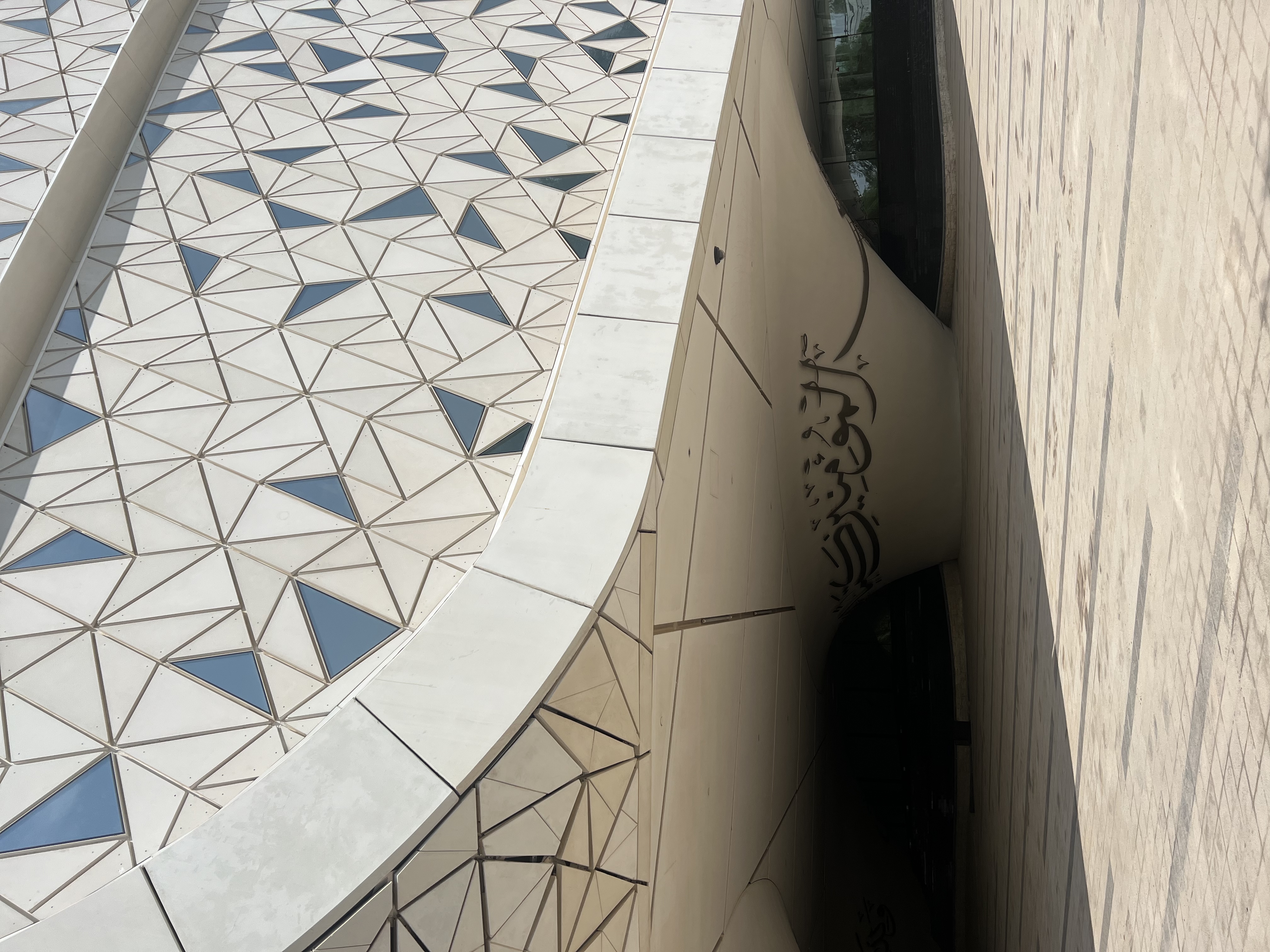
A curved white form sits at the centre of the campus, elevated enough that you see it before you reach it. The roof extends outward, its underside in shade, and above it the building opens into a skin of calligraphic glass. The letters run in lines across the full height of the facade, large enough to read at distance. The courtyard below is planted with olive trees. Stones are set low in the ground. The building does not announce itself. It simply waits to be approached.
The roof is triangulated. Each panel meets the next at a slight angle, so the surface shifts in the light as you move around it. Beneath the roof's edge, the calligraphic facade begins. Up close the letters are a metre high, rendered in white on dark glass, and they wrap the full circumference of the building. The courtyard curves with it. Olive trees line the outer edge. The shadow cast by the overhang moves across the paving as the morning goes on. At the entrance, a single line of Arabic is set into the underside of the canopy. Smaller than everything else around it. Easy to miss.
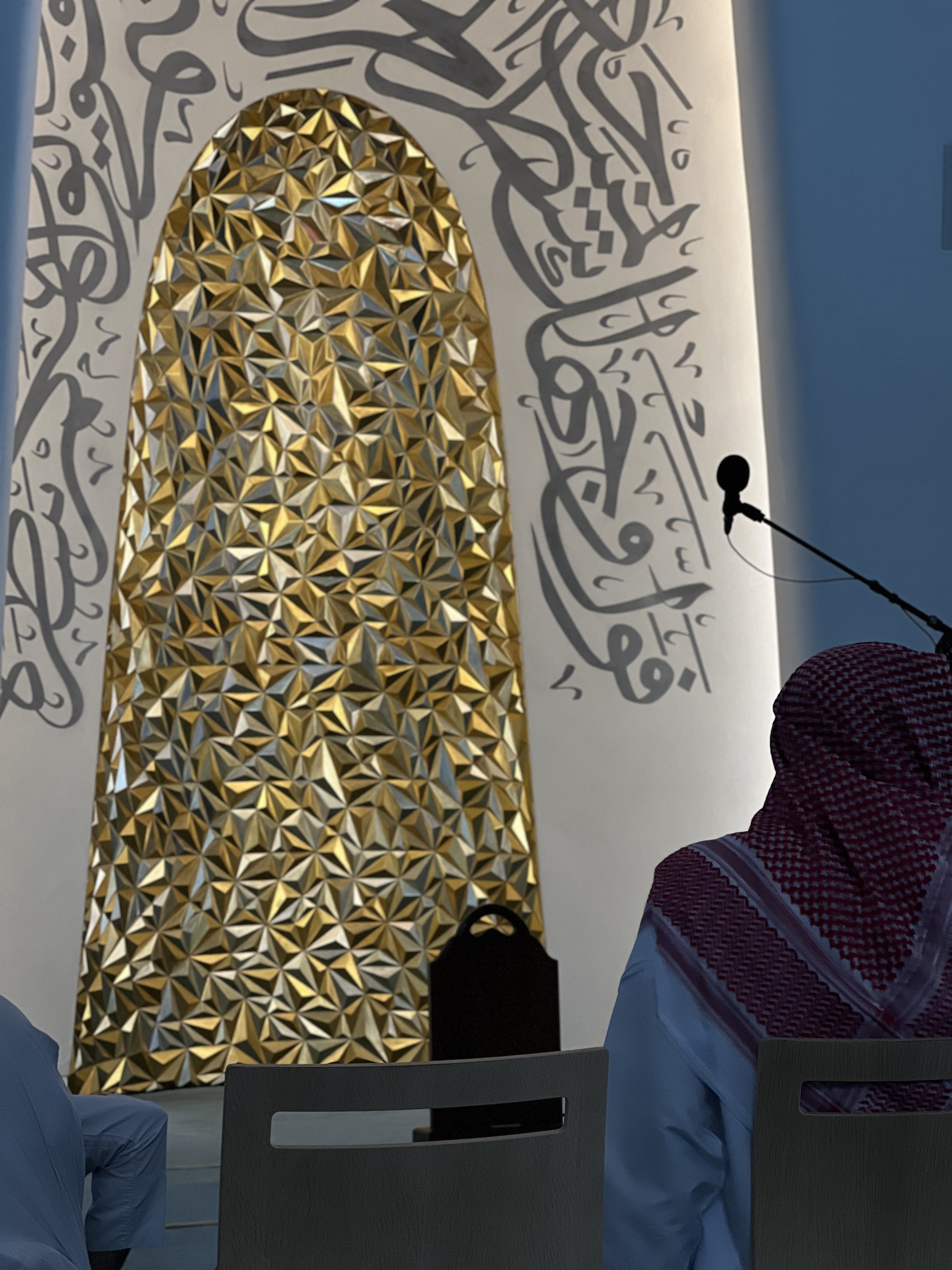
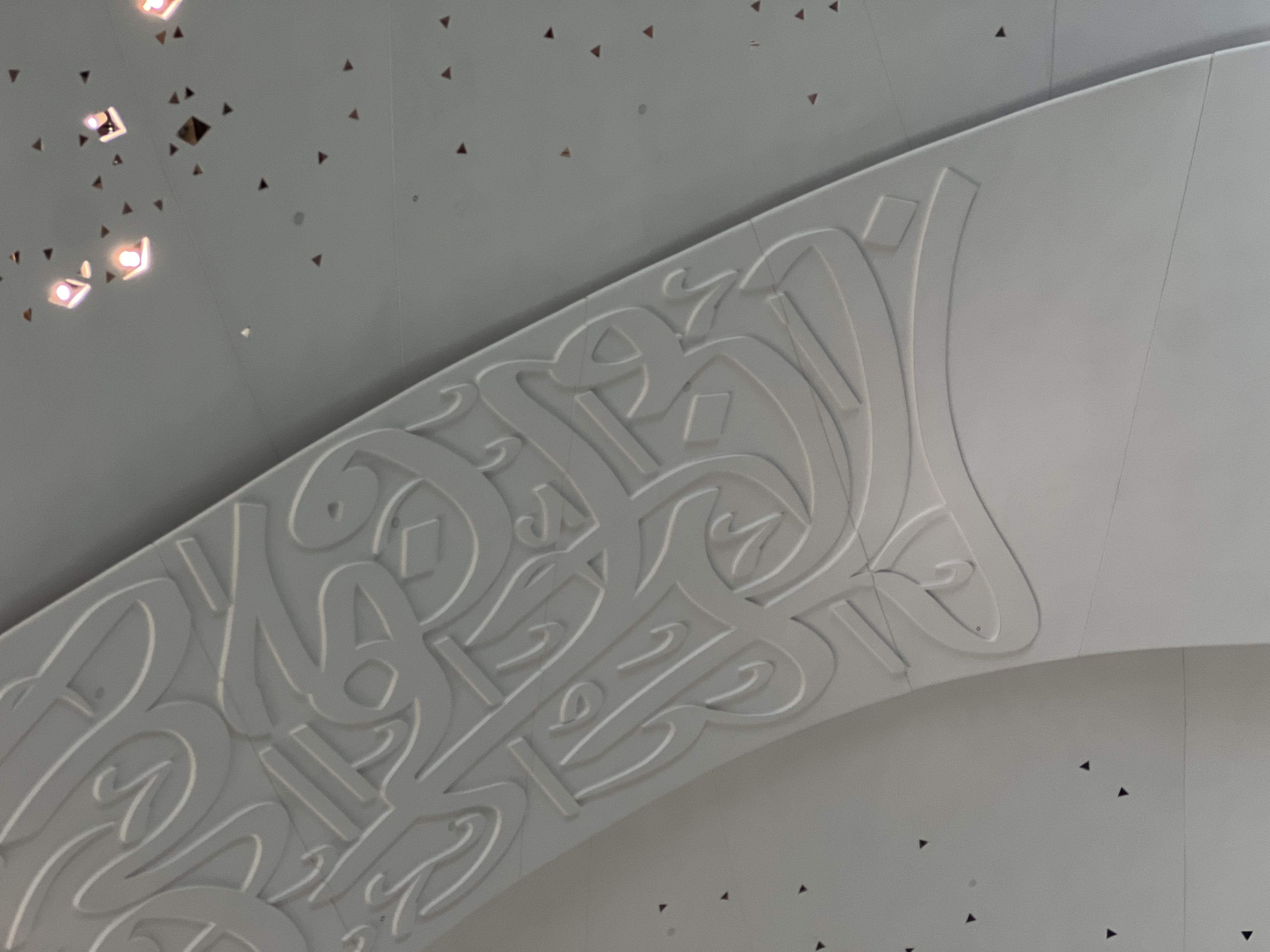
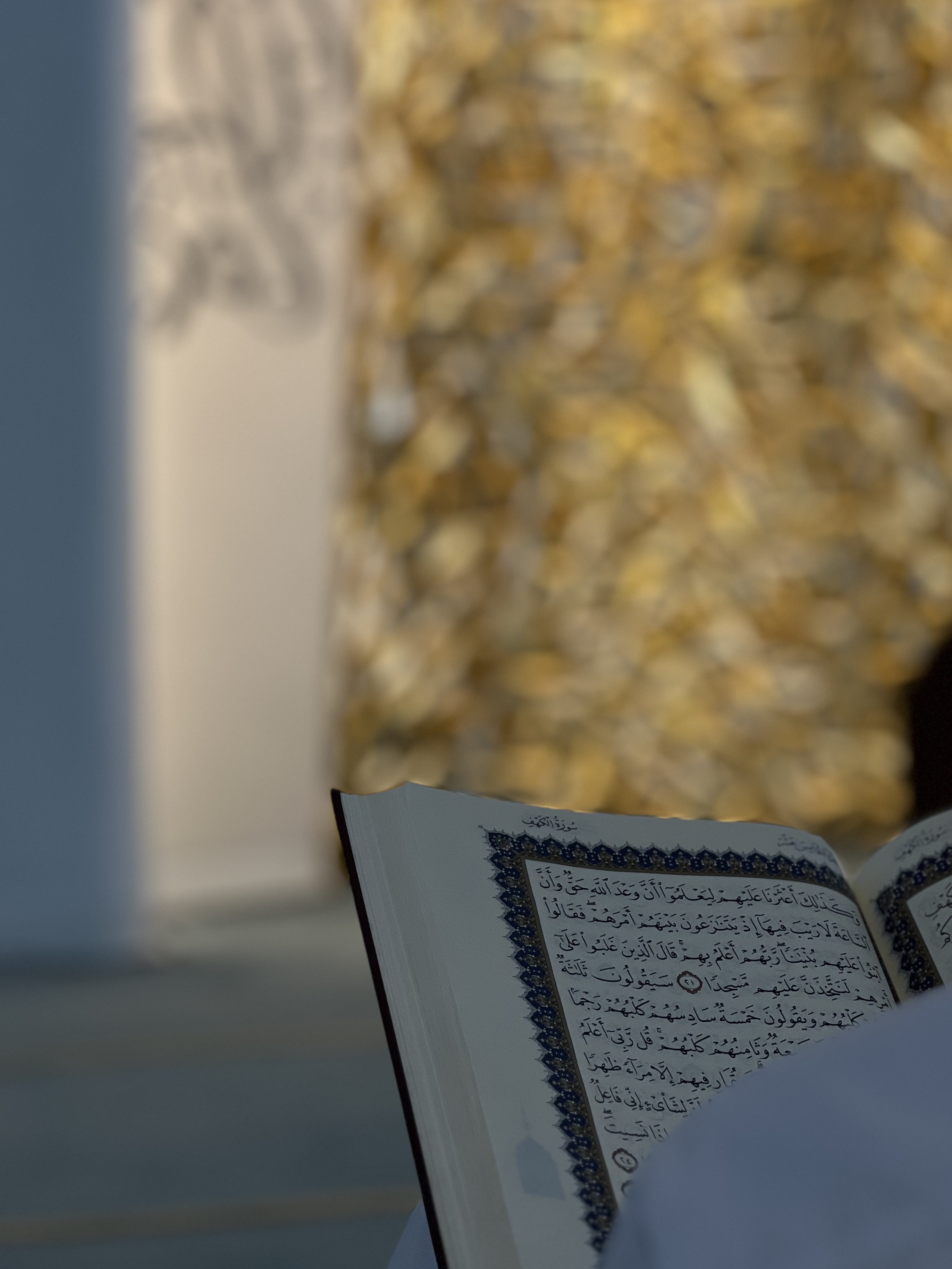
Inside, the ceiling is white and perforated with small triangular openings, each holding a fragment of mirror or a warm light. The effect is not dramatic. You notice it gradually. A corridor leads past a wall that reads simply: Quiet Chambers. Inside those rooms, a Qur'an rests open near the mihrab, its pages in the foreground and the gold faceted wall softly out of focus behind. The mihrab itself is built from hundreds of small triangular surfaces, each angled differently, so the gold changes depending on where you stand. Someone is seated. A microphone stand is positioned to the left. The room is occupied but quiet.
The building is large, and built with considerable precision. But the image that stays is the smallest one: an open book, a few centimetres from the lens, with the gold wall behind it reduced to a blur. Everything at distance. Everything close.
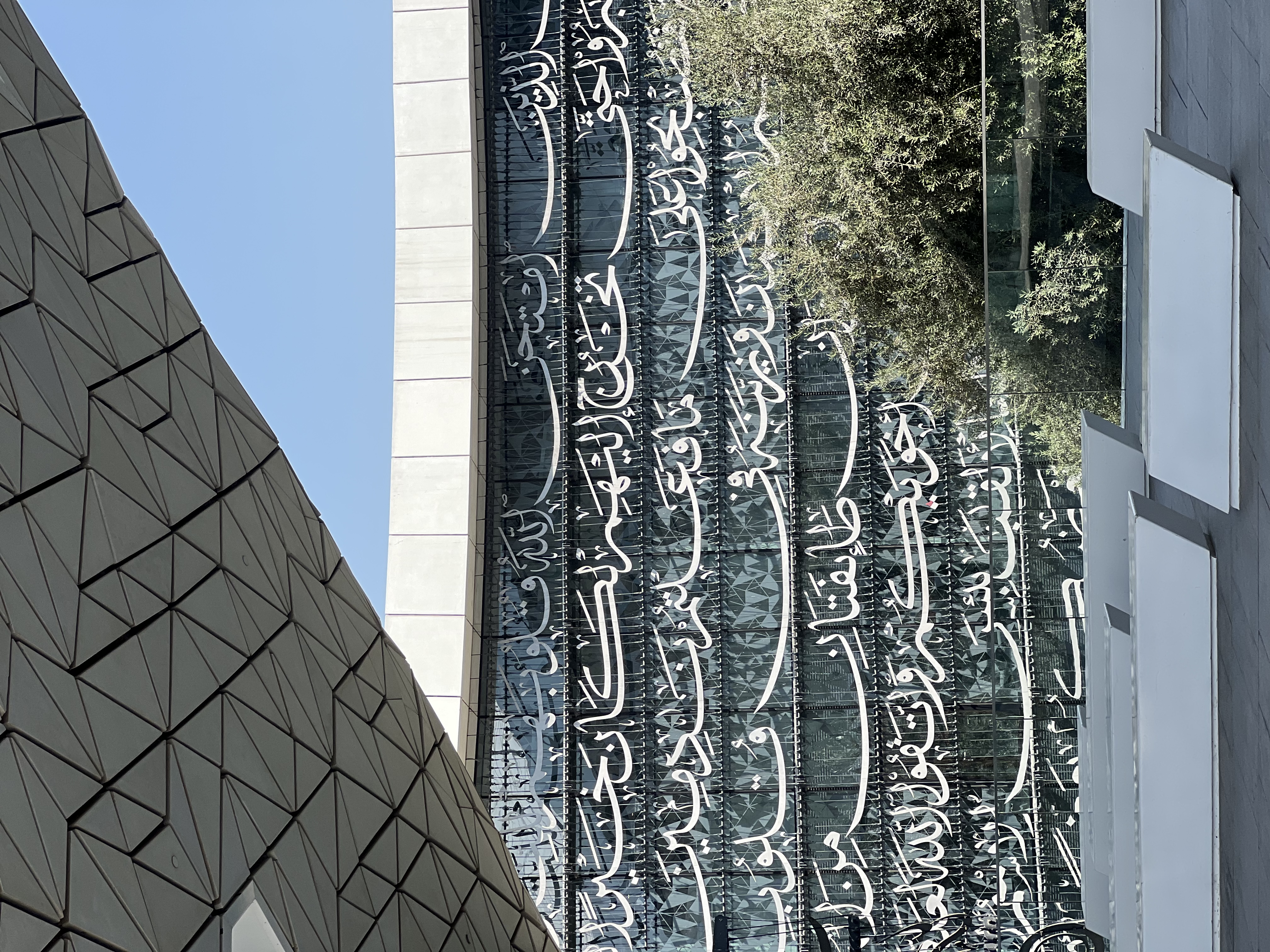
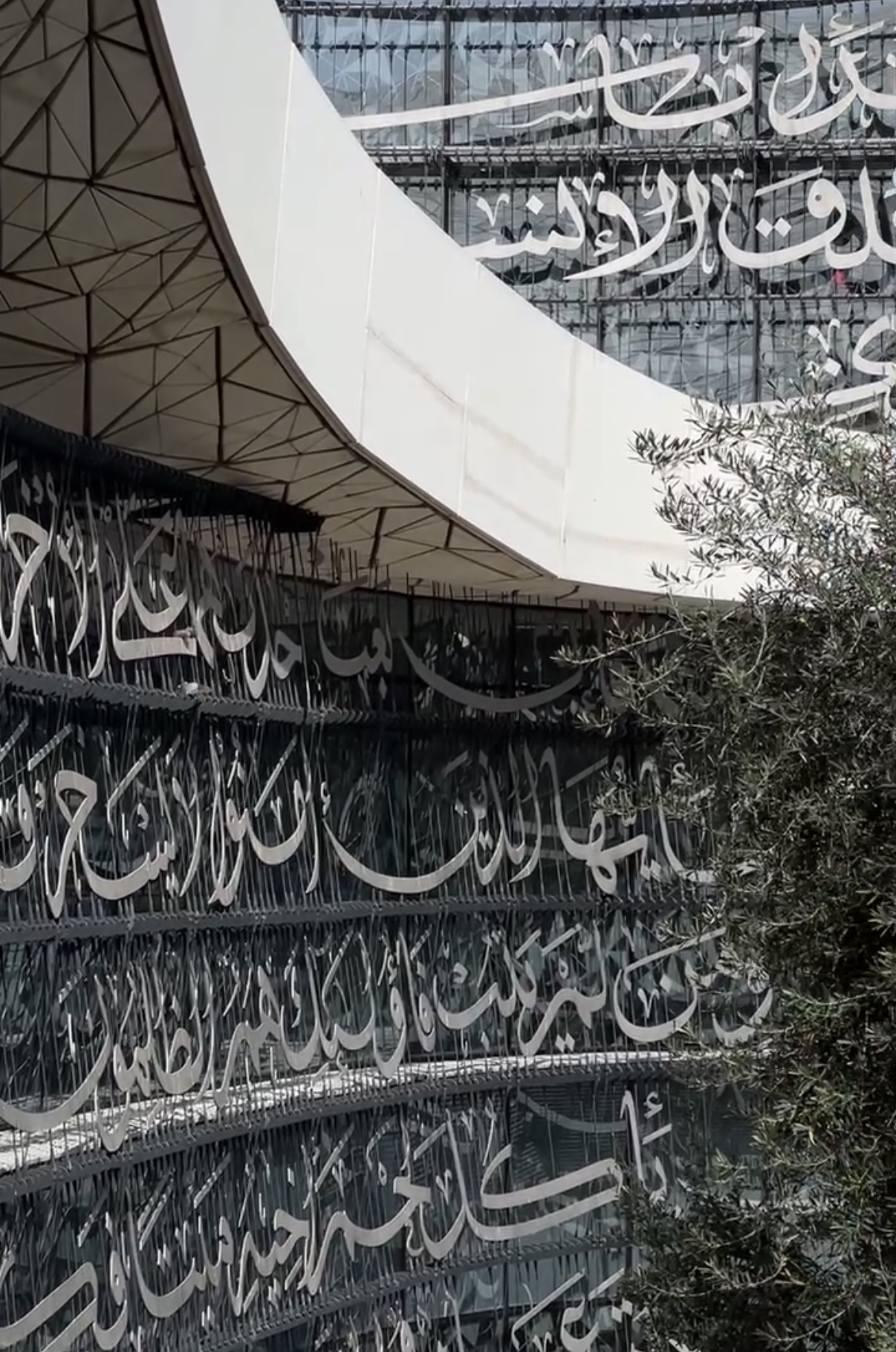
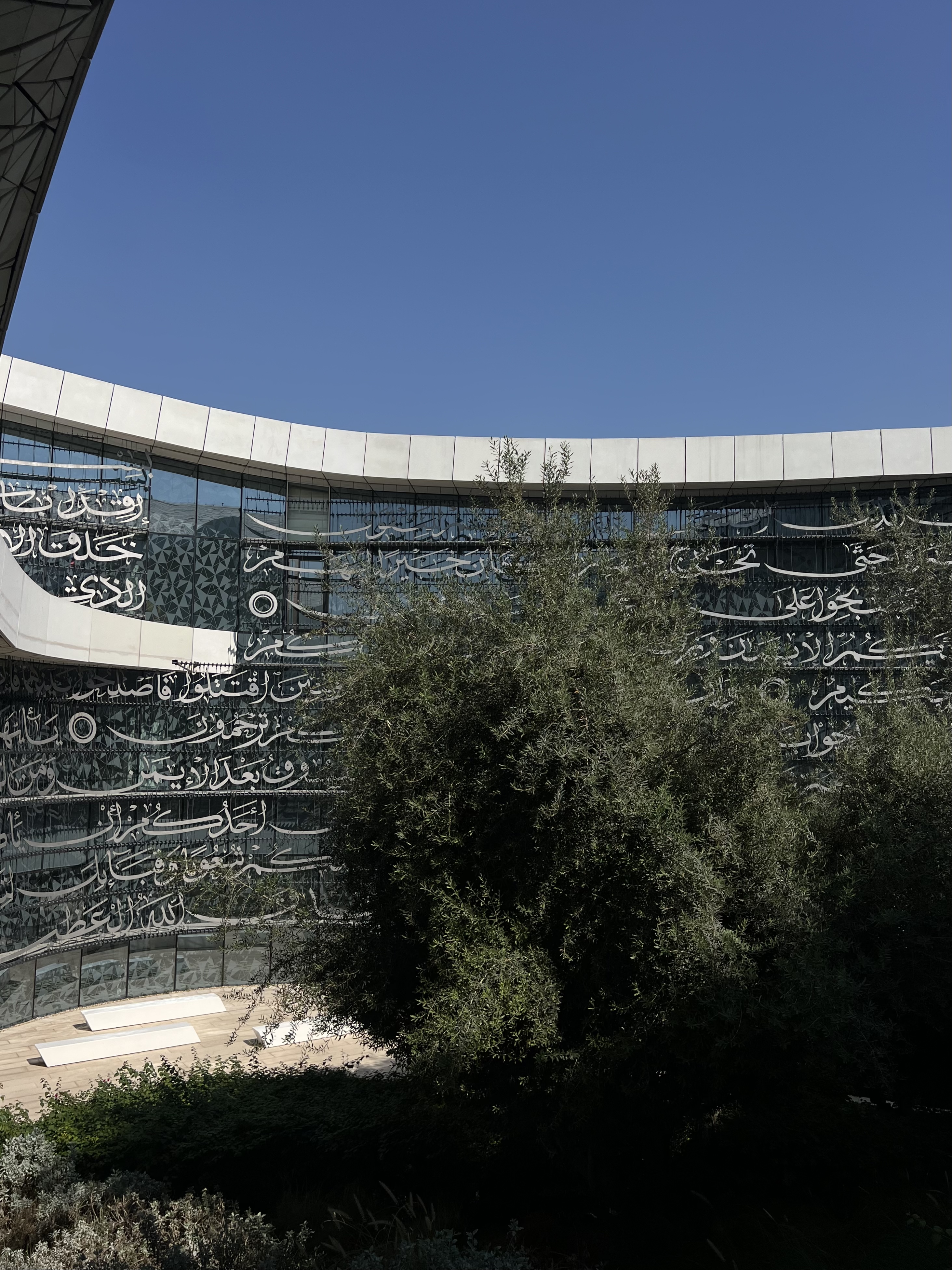
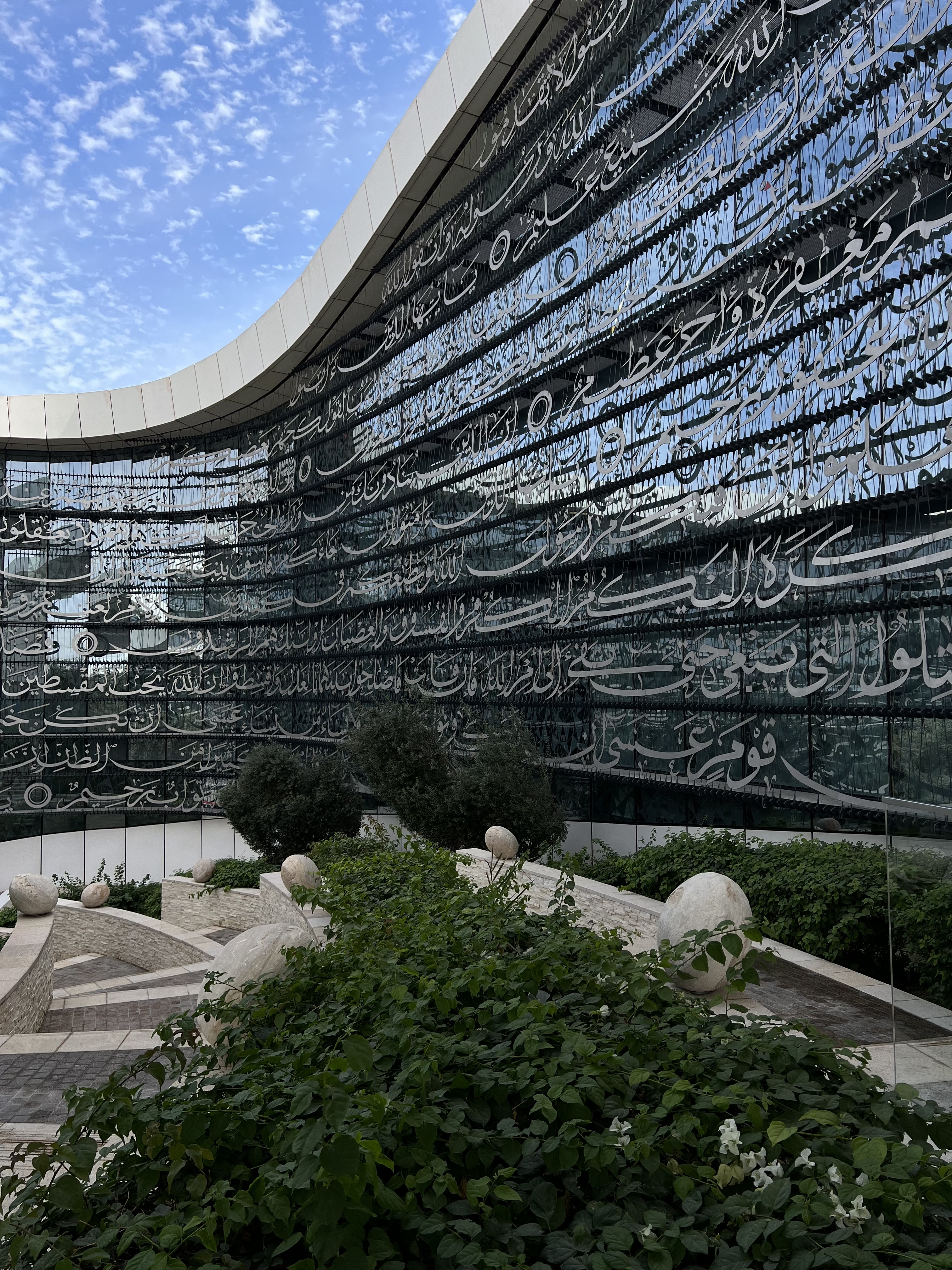
The Education City Mosque, formally the Minaretein building by Ali Mangera and Ada Yvars, stands at the centre of Doha's university campus on two spiralling minarets, its facade a running skin of calligraphic glass through which Quranic text becomes the building's actual surface. It is among the most architecturally ambitious mosques of the century, and the study reads it as what it is: theology conducted through geometry and light.
The photographs follow the building's three languages, the curved white mass, the calligraphy running in glass lines across it, the shaded underside where the structure lifts, and the way daylight is admitted through lettering, so that the interior receives scripture as illumination in the most literal sense. The study was made across a day's changing angles, the facade rewriting itself with the sun.
In the archive the mosque extends the collection's sacred-architecture thread between the Gulf's civic modernism and the pilgrimage cities' inherited forms, and it will carry the faith chapter of the planned Doha publication. It also stands alone as the archive's clearest case of contemporary religious architecture treated editorially: neither monument photography nor devotion, but attention.