Why the Figure Changes the Scale
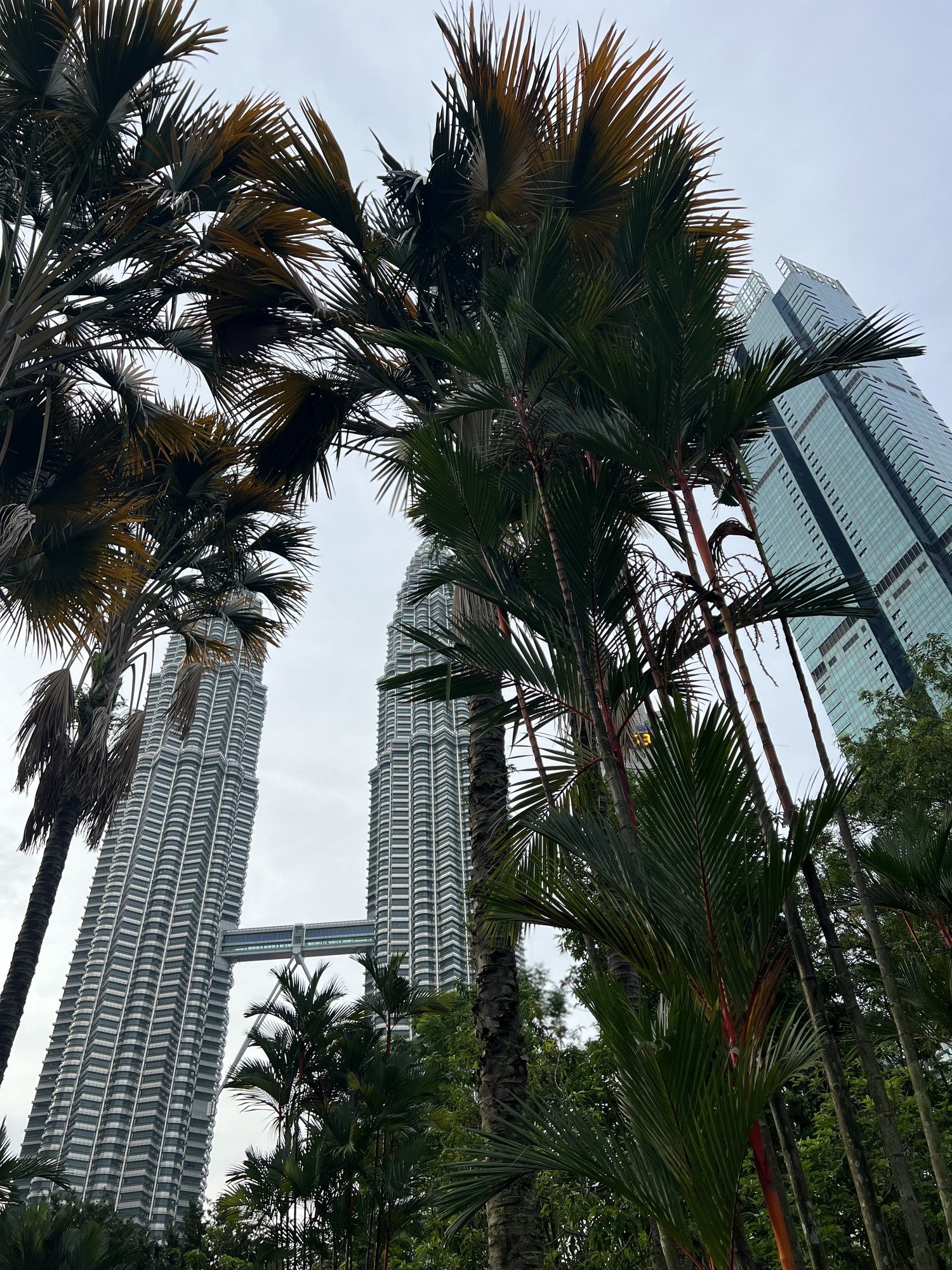
Look up through the palms and the towers climb, but it is hard to say how far. The fronds could be ten feet from the lens or forty. Without a person anywhere in the frame there is nothing to measure against, and the eye, denied a ruler, simply decides the scene is vast.
The human figure is the oldest unit of scale in a photograph. We read a space by imagining how a body would fit inside it. Remove the body and the space becomes strangely free, able to feel grander or more intimate than it truly is, because nothing in the frame contradicts the impression.
This is why the empty architectural photograph so often flatters. A lobby without guests reads as more monumental; a suite without occupants reads as more generous. The absence does not only remove the clutter. It removes the yardstick, and the space quietly expands into the gap.
Add one person and the truth returns at once. The palms resolve to their real height, the towers settle onto the skyline, the scene accepts its actual size. A single figure is worth more than any caption. It tells you, instantly and without a word, exactly how large the world in the picture is.
To leave the figure out is to let the space decide its own scale.