The Board Behind the Ball
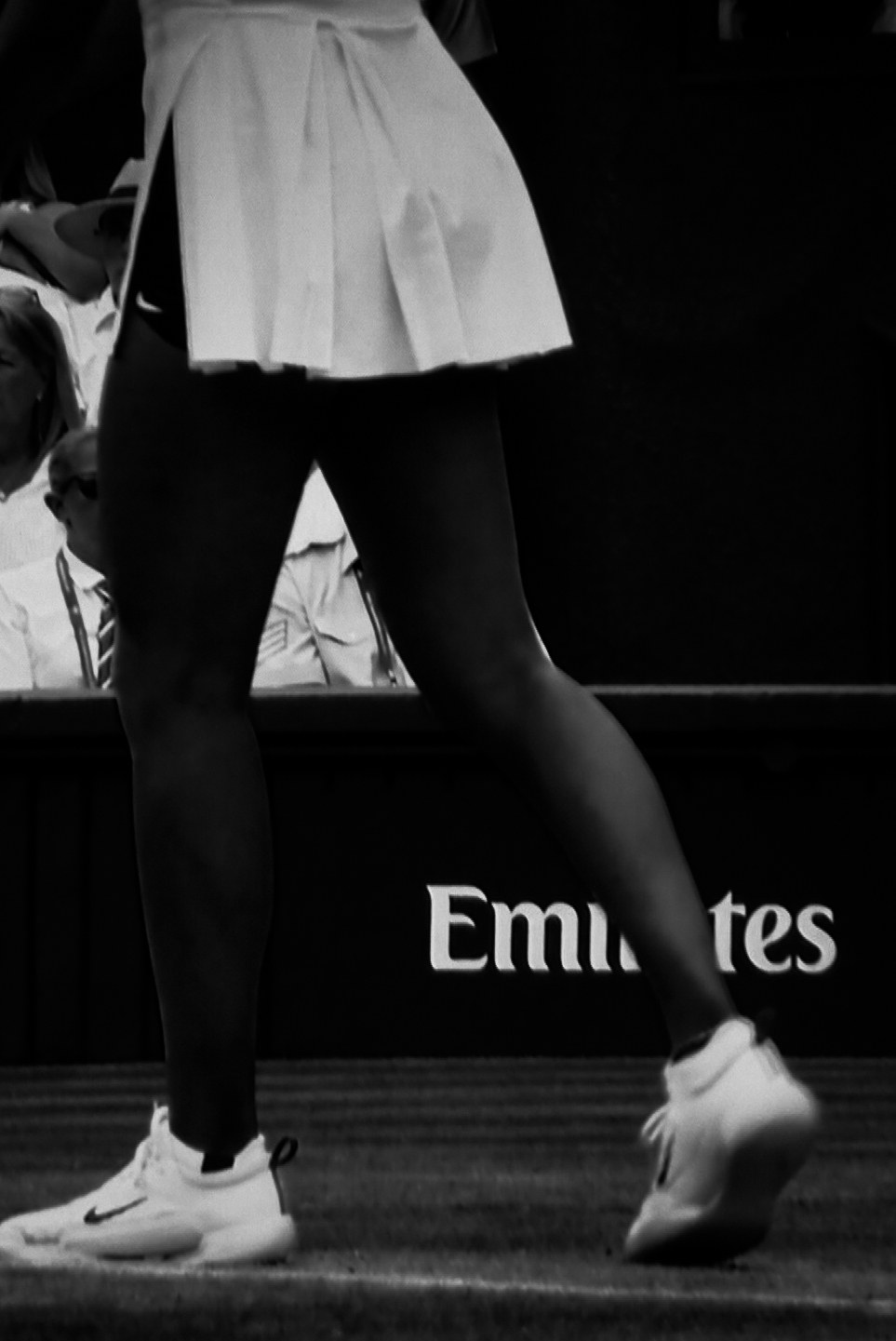
Perimeter advertising is made for a camera that never stops moving. The board is priced in seconds of screen time, designed to resolve at the edge of a pan, calibrated to be legible in the moment a shot travels across it. Its whole life is motion. Nobody involved in its design ever imagined someone would simply look at it.
Photography receives it differently. A photograph holds the board still, for as long as anyone cares to look, and under that stillness the arithmetic reverses. The ball crosses in front of a board for a fraction of a second. The board stands in the frame all afternoon. In the broadcast the game is permanent and the advertising is fleeting; in the photograph it is the advertising that endures, hardened into the architecture of the scene.
Watch a match with this in mind and the boards begin to behave like buildings. They establish the horizon. They hold the colour of the event steady from end to end. Players wait in front of them, towel off against them, disappear behind them. A name repeated along a perimeter stops being a message and becomes a wall, and walls tell you more about a place than messages do.
This is the unexamined half of what a sponsor buys. The seconds of broadcast time are counted and invoiced. The permanence in every photograph made that day is thrown in without anyone pricing it, and it is the half that lasts. The footage is watched once. The photographs are kept.
The board was designed to be glimpsed. It should be designed to be looked at.