Why Fragrance Houses Build Rooms
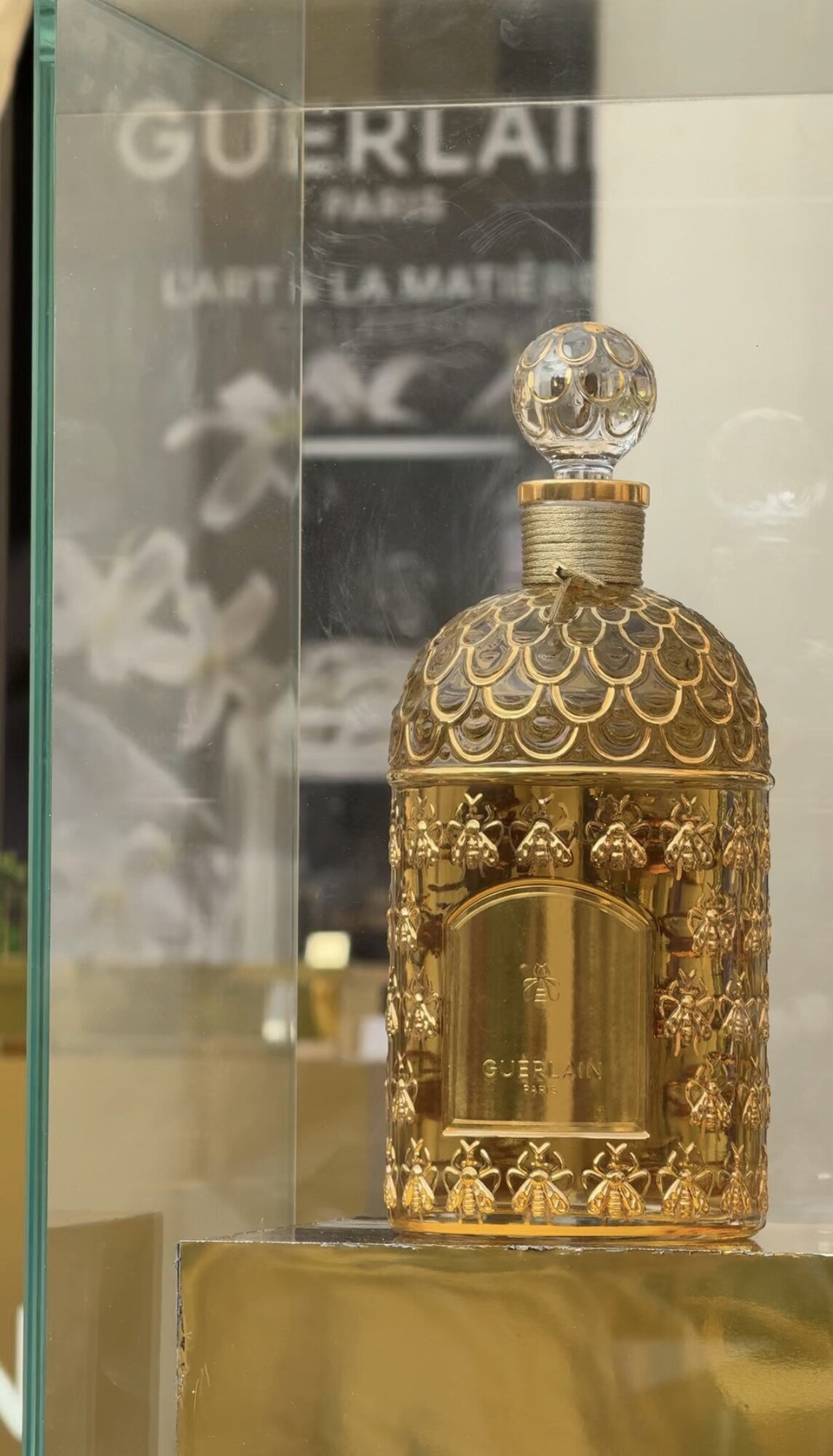
Perfume presents its makers with a commercial problem that no other luxury has: the product is invisible, silent, and cannot be photographed. A watch can be shot in macro. A handbag can be carried through a campaign. A fragrance is a colourless liquid in a bottle whose entire value exists in the air, briefly, and differently for every person who meets it.
The serious houses have all arrived at the same solution. If the product cannot make the argument, the room must. This is why fragrance retail, at its best, is the most carefully considered retail there is: the house cannot fall back on displaying the goods, because there is nothing to see. Every material choice, every surface, every decision about light and pace and how a visitor is greeted becomes a description of what the perfume is like, made in the only language available.
Watch how the good rooms do it. Guerlain at Katara translates a Parisian house into Gulf light without losing either. A Byredo boutique is as spare and exact as its labels, because the minimalism is the brief. Fueguia in Milan surrounds its bottles with a laboratory’s worth of labelled drawers, arguing provenance and patience before a single scent is offered. None of these rooms are decorated. They are composed, the way the perfumes are composed, and the visitor understands the house before smelling anything.
This is also why fragrance retail rewards editorial photography in a way most retail does not. The photographs cannot show the product either, so photographer and perfumer are working the same problem from the same side: conveying something invisible through everything around it. The room is the closest a scent ever comes to being visible. It deserves to be recorded as carefully as it was built.