The Shadow
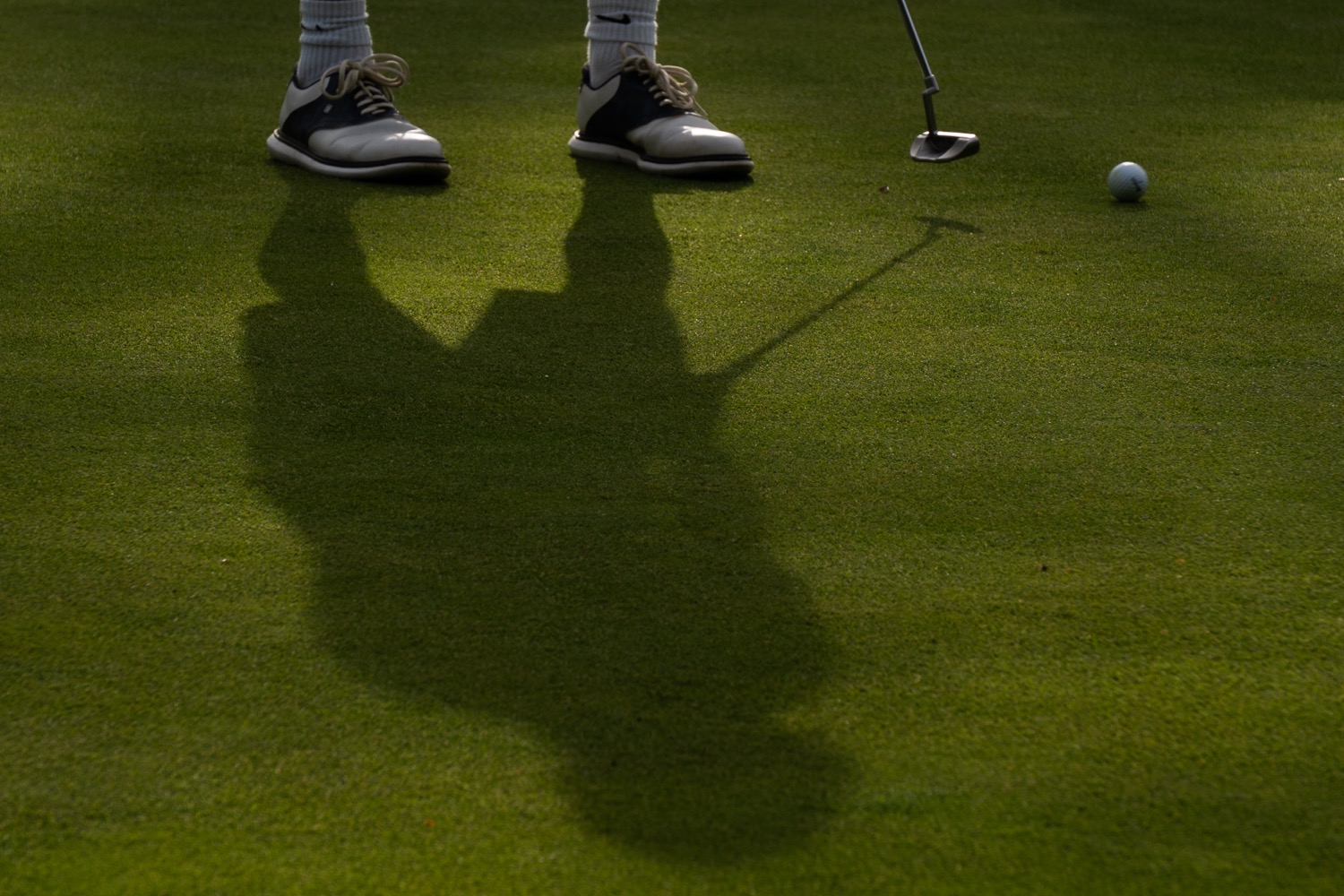
The man is barely in the picture. Two feet, the head of a putter, a ball waiting to be struck. Everything else of him is a shadow, thrown long across the green by a low sun, more complete than the body that cast it.
A shadow is the least a person can appear and still be present. It has no face by definition, no colour, no detail, only a shape and a posture. And yet it is unmistakably someone: you can read the stoop of concentration, the angle of the club, the whole attitude of a man about to putt, in a grey outline lying on the grass.
This is the far end of the archive's habit. The cropped figure kept the body and lost the face. The turned back kept the whole person and hid the face. The shadow keeps almost nothing, and still it is enough. We are very good at reading each other from very little, and a photographer who trusts that can leave almost everything out.
There is a small honesty in photographing the shadow rather than the man. It admits that what mattered was never the individual but the act: the stillness before the stroke, the same stillness in anyone who has ever stood over a ball. The shadow belongs to no one, which is another way of saying it belongs to everyone who has stood there.
A shadow cannot be identified, only recognised.