The Photograph That Needed One Person
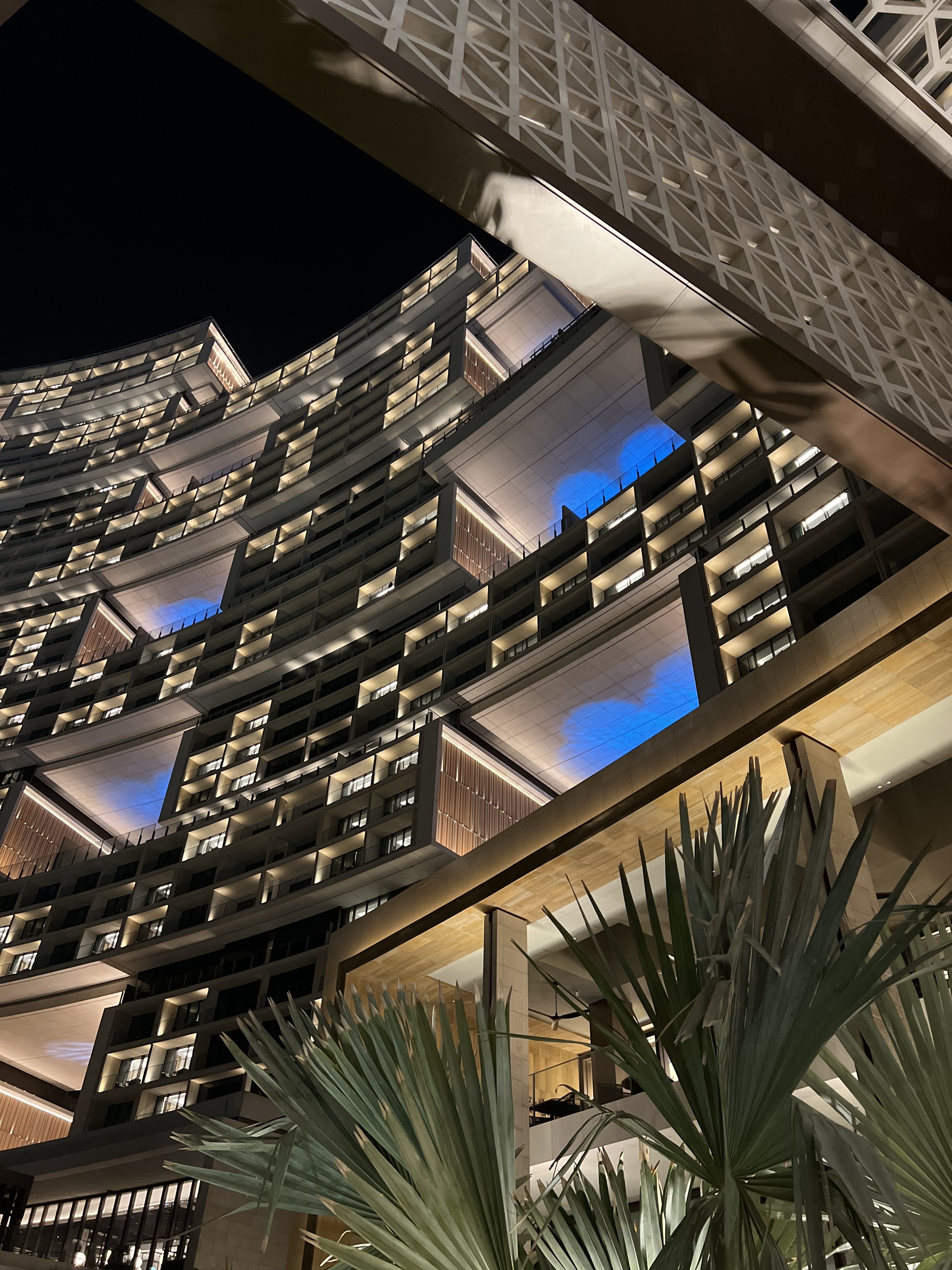
The building rises, lit and enormous, balcony above balcony into the night. It is a technically faultless photograph and a slightly cold one, and after a while you understand why. There is no one in it, and this is a picture that needed someone.
Most of the time the empty frame is the right frame. But the rule has an edge, and grand architecture is where it fails. Past a certain scale a space without people stops feeling like an invitation and starts feeling like an exhibit. The monument that should draw you in instead holds you at arm's length.
A single figure would have rescued it. One person on a balcony, one silhouette crossing the forecourt, and the whole tower would have gained a pulse. Not because the person is interesting in themselves, but because they convert the building from a specimen into a place where a life is plainly possible.
This is the argument the rest of the archive has quietly been having with itself. Empty rooms invite; empty monuments exclude. The whole skill is knowing which of the two you are photographing, and being willing, just occasionally, to let a person into the frame.
Some rooms are completed by absence. A few are completed only by a figure, and the art is telling them apart.