The Guest of God
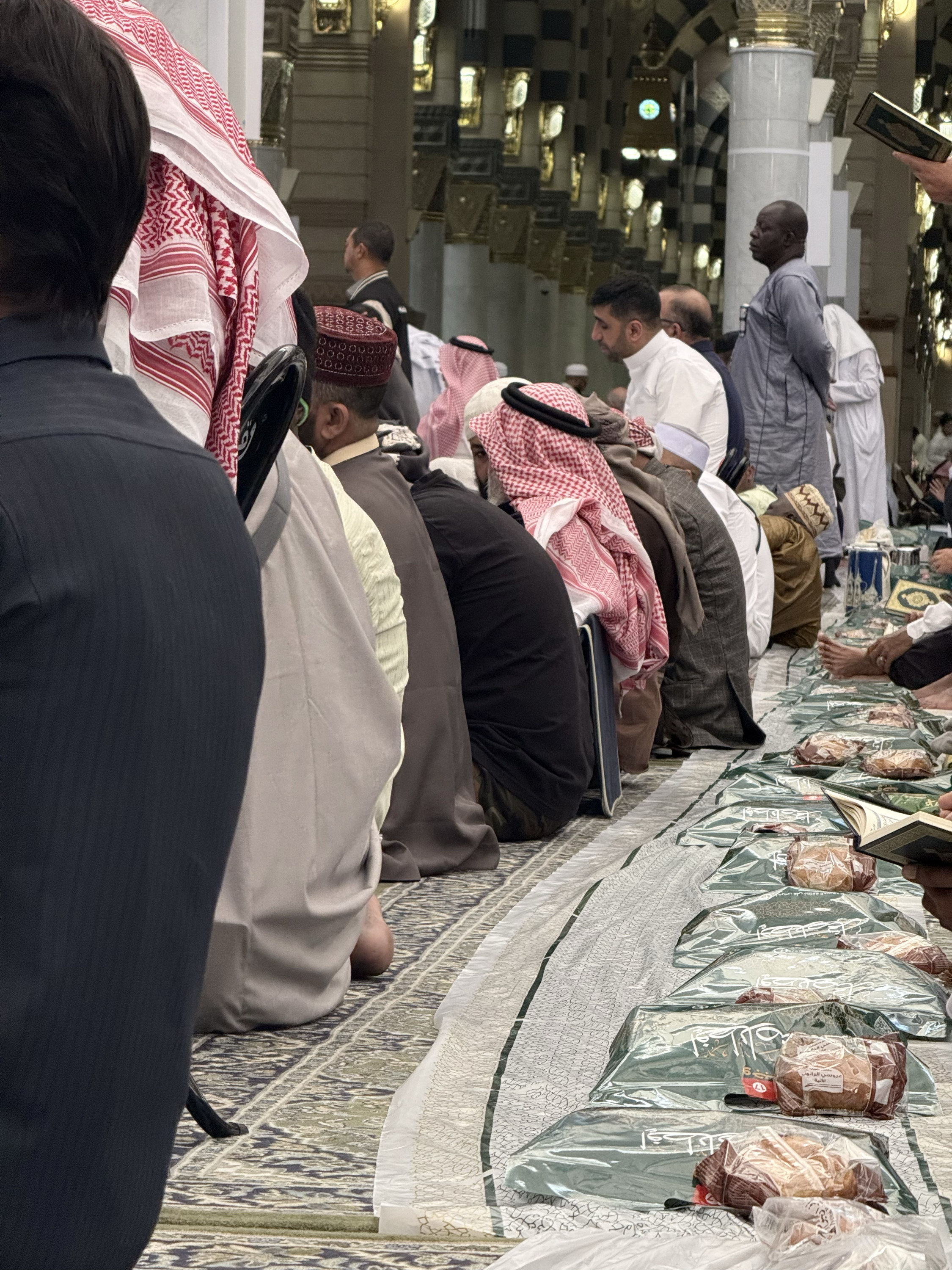
There is one place in the world where the logic of hospitality is inverted completely. In Makkah and Madinah the visitor is not a customer to be satisfied or a tourist to be managed. The tradition names the pilgrim the guest of God, and the entire apparatus of both cities, from the families who lay out food along the mosque carpets to the volunteers who spend their evenings handing out water, is organised around a single premise: the host is not the one being paid.
The consequences are visible everywhere and unlike anything in commercial hospitality. In Madinah, families compete for the honour of feeding strangers at sunset, guarding the same stretch of carpet across generations, and the meal is pressed on the pilgrim with an insistence no restaurant would risk. Nothing is being sold. The books record the Prophet ﷺ saying that whoever believes in God and the Last Day should honour their guest, and the city has treated the sentence as standing orders for fourteen centuries. The pilgrims cannot repay any of it, and this is not a flaw in the system. It is the system.
Being received this way does something to the visitor that no hotel can replicate. The pilgrim arrives with the modern guest’s reflexes, the wallet reached for, the service assessed, and finds them useless. There is nothing to tip, nobody performing, no relationship between what is given and what was paid. Most describe the same progression: bewilderment, resistance, and then a kind of undoing, as they realise the only appropriate response is to receive well, and one day, somewhere, to host someone else the same way.
This Journal has spent a volume asking what makes a good guest. The two sanctuaries hold the oldest answer on record: a good guest is one who understands that hospitality was never a transaction, and that every act of receiving carries the quiet obligation to pass it on. The guest of God goes home owing everyone. That, the tradition suggests, is precisely the point.