The Cropped Figure
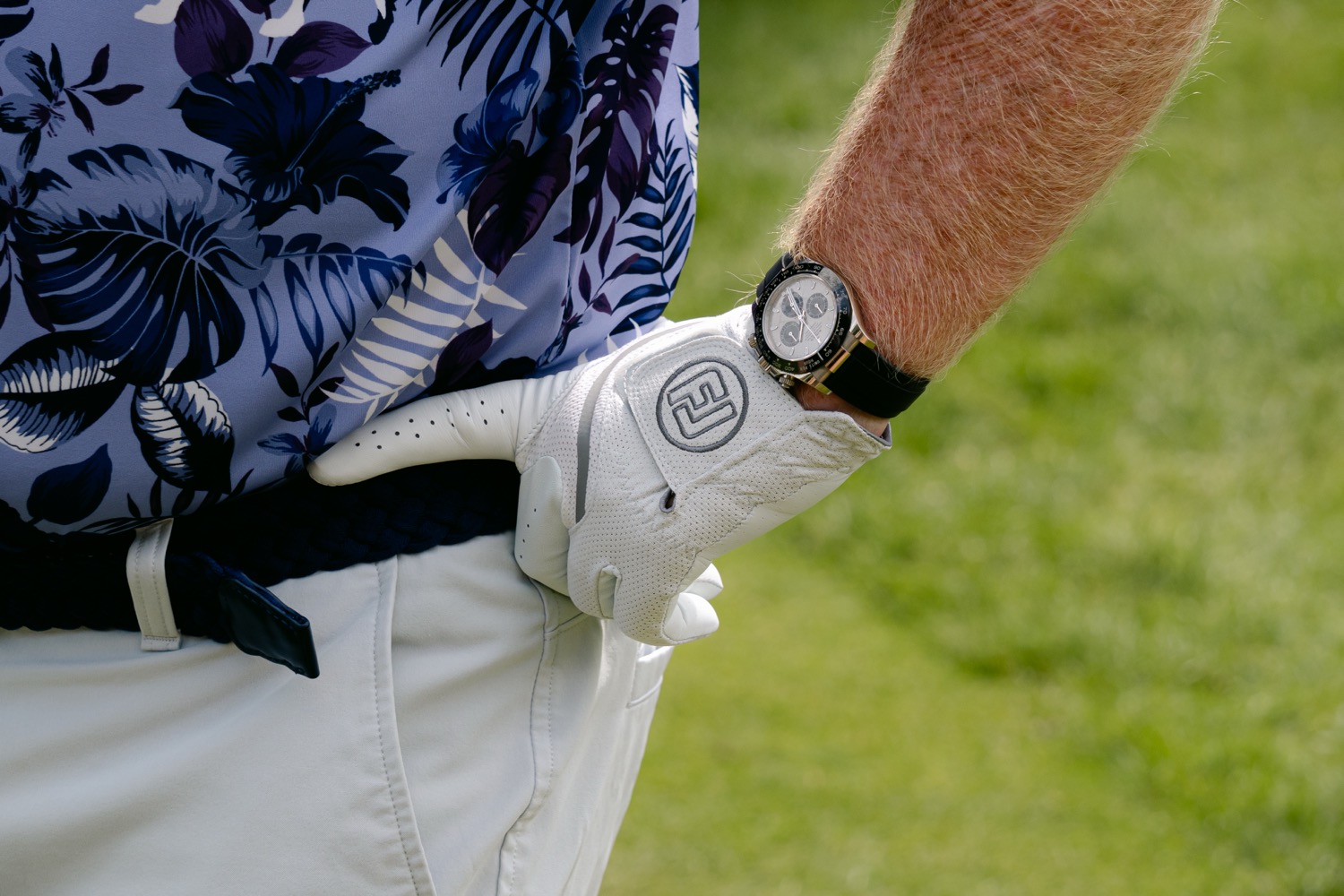
A gloved hand, a watch, a patterned shirt, the top of a belt. The photograph stops at the collarbone, and the man it belongs to is never shown. You could pass him in the clubhouse an hour later and not know him.
This is how the archive photographs people when it photographs them at all. Not portraits, but fragments: a wrist, a pair of hands, the back of a jacket. The frame comes down somewhere below the chin, and what remains is a person described entirely by what they wear and what they hold.
There is a discretion in it, and something truer than discretion. A face invites you to judge a particular man. A gloved hand and a good watch invite you to notice the afternoon he is having: the care of the kit, the ease of the stance, the fact that this is a day he dressed for. The fragment is about the occasion. The face would have been about him.
Photographers reach for the crop instinctively and rarely examine why. It flatters, and it sidesteps the awkwardness of the posed portrait. But it also does something quietly generous. It lets the man stay a type rather than a name, and a type is far easier to stand inside.
Cut off the face, and you are left with the day itself, worn on a wrist.