The Back Turned
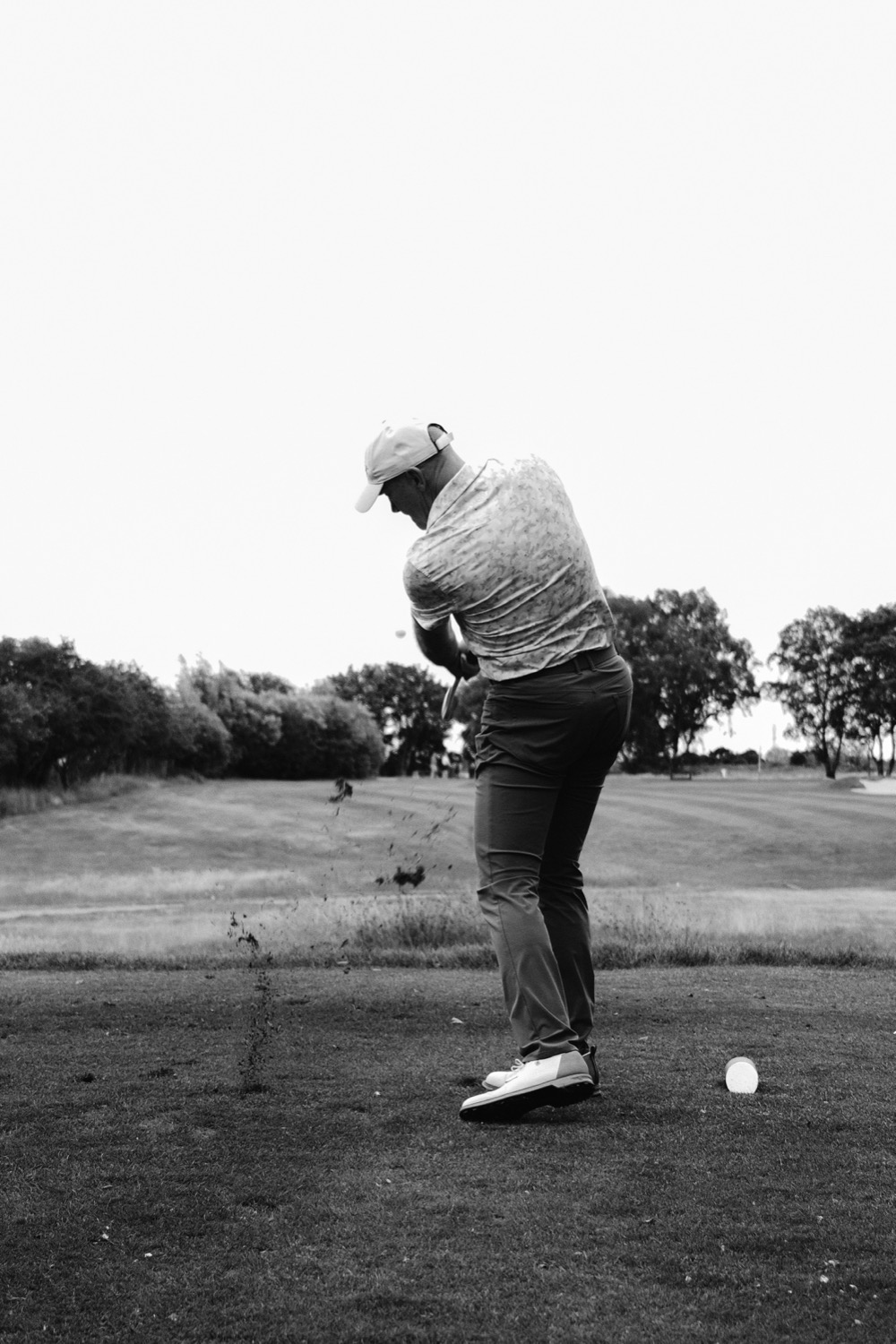
He is caught at the top of the swing, the club a blur behind him, the whole body wound and about to release. And his back is to the camera. Whatever is happening on his face at this moment, nobody will ever see it.
The archive is full of turned backs. The golfer mid swing, the traveller walking into the view, the figure at the rail looking at what we are also being shown. It is the oldest way to include a person without making the photograph about them. They face the world; we face them; the face itself stays private.
A back is strangely companionable. When someone in a photograph looks out at a view, we look with them, over their shoulder, borrowing their vantage. Turn them round to face us and the spell inverts: now we are the ones being looked at, and the view is behind us, forgotten. The turned back keeps the subject pointed where the photographer wanted it.
There is respect in it too. The swing is a private effort, half concentration and half nerve. To photograph it from the front would be to take the man's composure. From behind, he keeps it, and the photograph keeps only the effort.
The back tells you everything the moment is doing, and nothing about who is doing it.