Music Nobody Chose
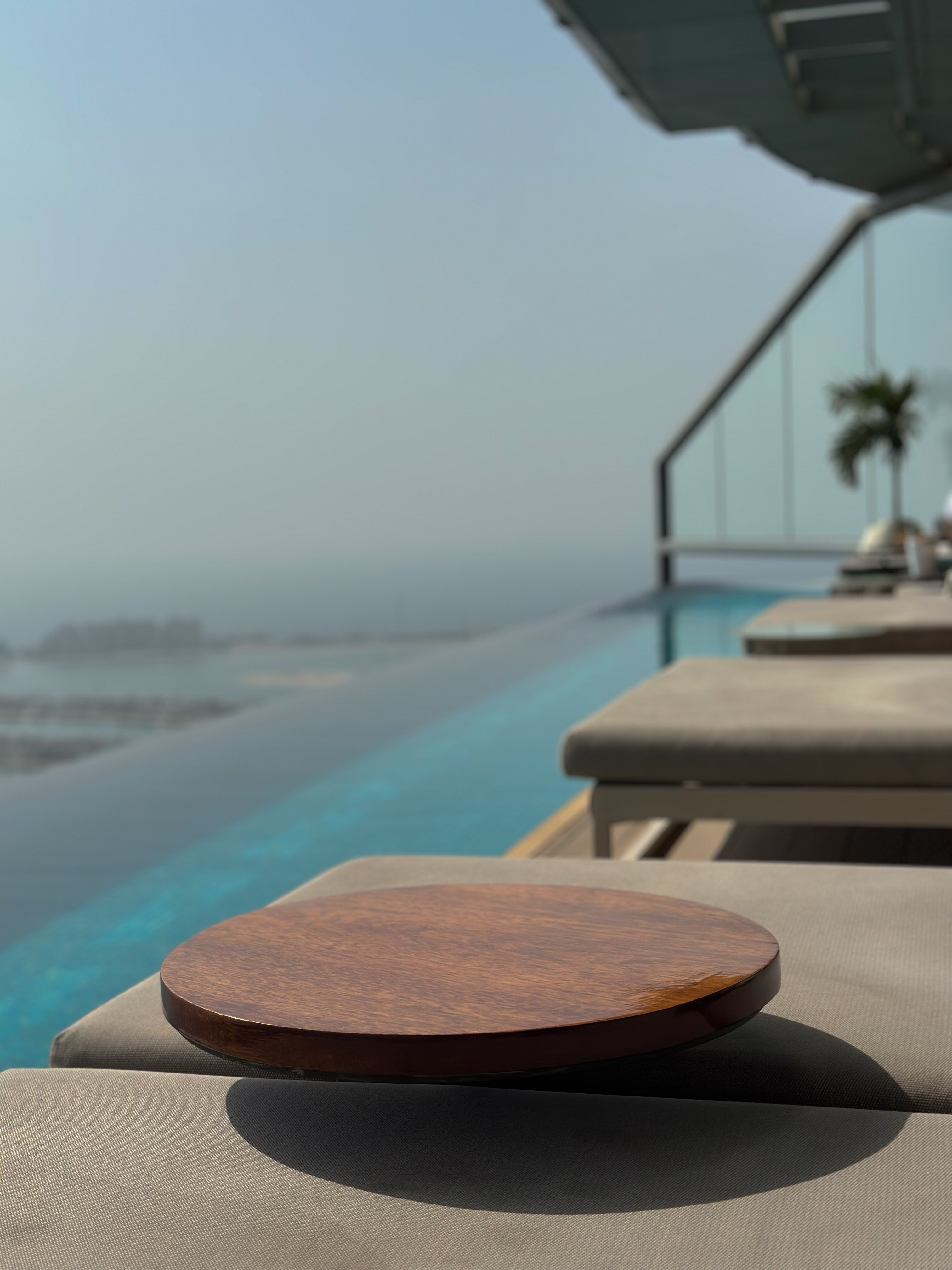
A hotel spends two years and a fortune deciding every surface a guest will touch: the stone, the timber, the weight of the cutlery, the exact warmth of the corridor light. Then it opens, and into this composed world someone pipes a playlist that nobody with authority ever listened to, licensed from a service, titled something like Luxury Lounge Vol. 7. The most pervasive element in the room, the one entering every guest’s head continuously, is the only one that was never designed.
You can hear the outsourcing. The deep-house pulse at breakfast, set to a tempo no one eating eggs has ever wanted. The same forty songs circling a pool deck from Dubai to the Maldives, an accidental global standard of nowhere in particular. The acoustic covers of songs that were better before they were made polite. None of it is offensive, which is the problem: it is engineered to be unobjectionable, and rooms full of unobjectionable sound all feel like the same room.
Then there are the places that decide. The café whose owner plays what the owner actually loves, at conversation volume, so the music behaves like a member of staff with taste. The restaurant that matches sound to hour, letting the morning be nearly bare and the evening gather. The lobby confident enough to play nothing at all and let the building speak, which is the boldest programming there is. In each case the guest may not consciously notice, but they feel the difference exactly as they feel the difference between art chosen and art supplied by the metre: somebody was here, and meant it.
The test this Journal keeps applying to rooms applies without modification to what plays in them. Does this detail show evidence that somebody cared? A playlist is a material like any other. It can be specified with the same seriousness as the stone, and the places that understand this have rooms that sound like themselves, which is rarer than rooms that look it.