What Paint Covers
Paint is the material decision that looks least like a material decision. It is the last thing applied and the first thing seen, which gives it an authority over the room that it has not necessarily earned.
What paint covers is almost always more interesting than paint. Beneath the smooth emulsion of most contemporary interiors is lime plaster, stone, brick, or timber: materials that predate the coating applied over them by decades or centuries and that have a surface character no paint colour can replicate. The decision to apply paint is, in part, a decision about how much of that underlying material to allow to remain visible. Some buildings make that decision well. Many make it without making it, defaulting to white or off-white across all surfaces because paint is easier to specify than a considered exposure of what is already there.
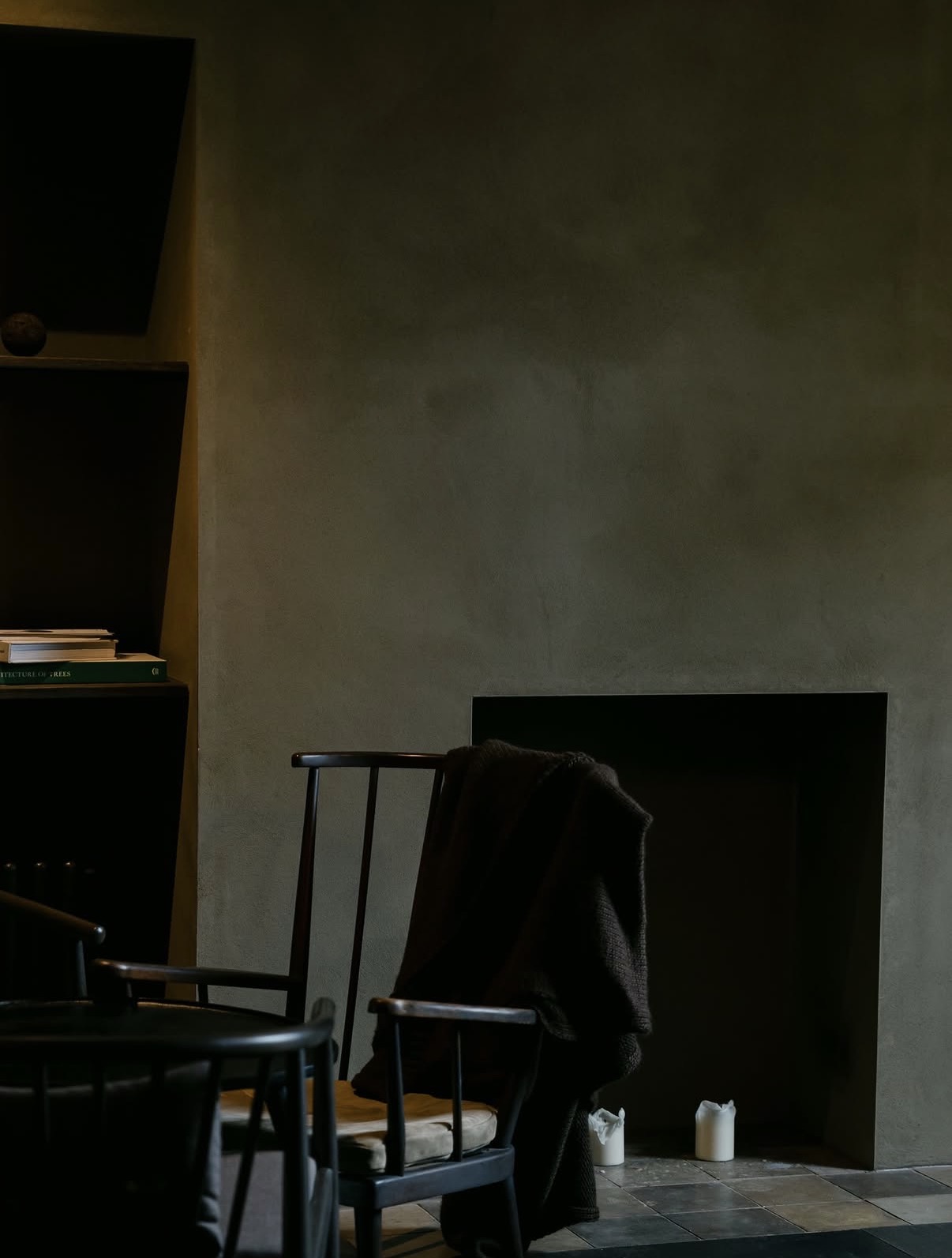
Clay plaster occupies a different position. It is not a covering in the way paint is a covering: it is a material that breathes, that holds and releases moisture with the building, and that develops a surface over time that records the hand of its application. Two coats of clay plaster on the same wall will not look identical in a decade because the material is continuing to move and respond in ways that a sealed emulsion does not. The texture that results, the slight variation across the surface, the places where the trowel worked faster or slower, are not imperfections to be corrected by a further coat. They are the record of the making, which is what the material was always going to communicate if left to do so.
The unlit fireplace, the worn chair, the wall that has never been repainted: these are the elements of a room that carry evidence of duration. Paint, applied repeatedly over whatever came before, tends to erase that evidence in layers. The rooms that feel most settled are usually the ones where something was decided against covering, where someone looked at what was already there and recognised that the alternative to painting it was simply not painting it.