What Linen Says
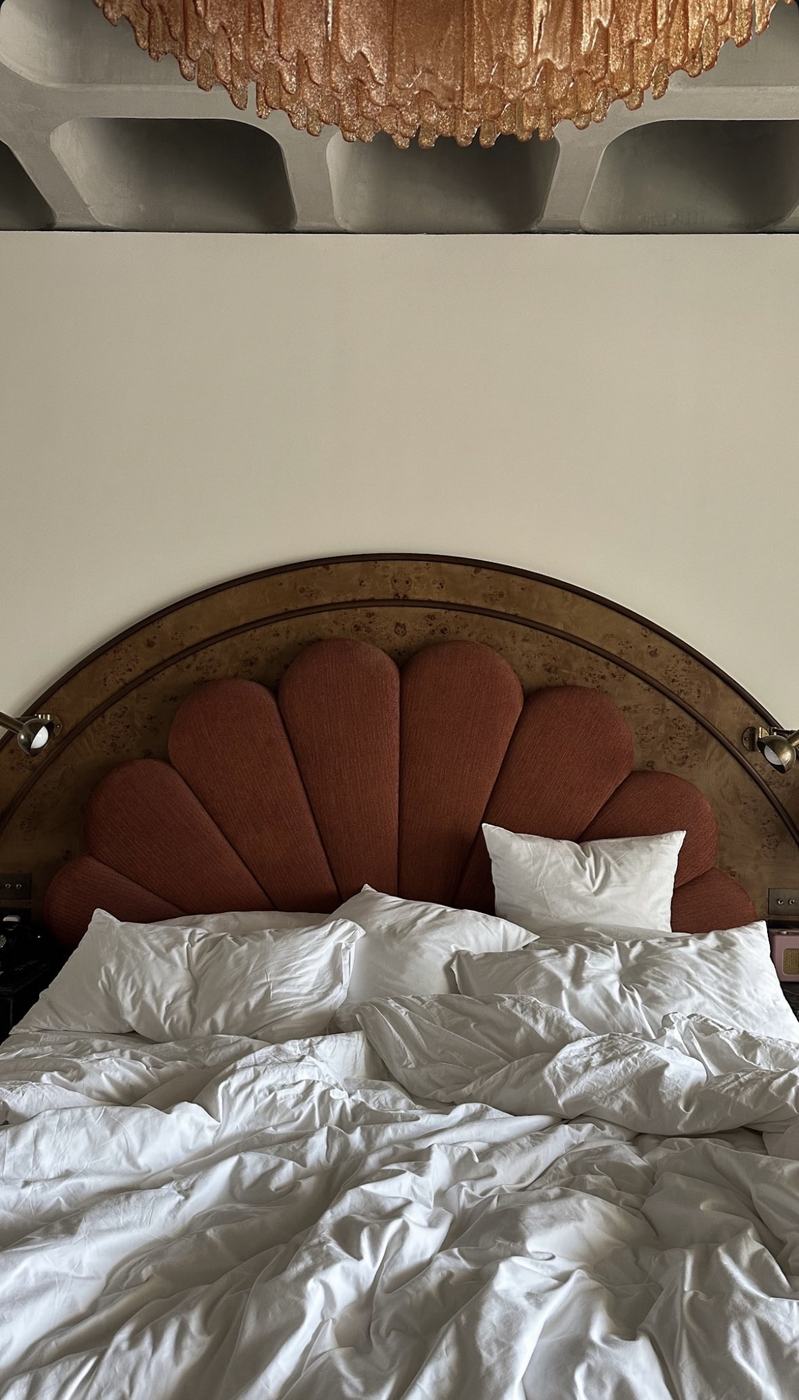
Touch is the sense photography cannot carry. But the decision to use linen rather than polyester is visible in the image anyway, in the way the fabric falls, holds light, and creases.
Polyester does not crease in the same way. It holds its shape under tension and recovers quickly, which is useful operationally and damaging aesthetically. The perfectly smooth bed that photographs cleanly is frequently a polyester bed: the material is behaving correctly by its own logic, which is a logic of maintenance rather than of experience. Linen, pressed and turned down, shows the hand that did it. The slight variation in the surface, the natural irregularity in the weave, the way the fabric pools rather than lies flat at the fold — these are not imperfections. They are evidence that something was made from a plant rather than a factory process, and that distinction is legible even in a photograph taken from across the room.
The choice of natural fibre in hospitality is not listed in any brief as a values signal, but it functions as one. A guest who has slept in both will not necessarily be able to articulate the difference between them on waking, but they will have slept differently. The material that breathes does something through the night that the material which does not breathe cannot replicate. The consequence of that difference arrives in the morning as a quality of rest that has nothing to do with the room's rating or price point and everything to do with a procurement decision made months before the guest arrived.
This is one of the places where hospitality operates furthest from what photography can document. The image of a well-made linen bed is beautiful, but it is not the point of the linen. The point is what happens in the dark, in contact, over eight hours. That experience leaves no photograph. It leaves only a guest who slept well and does not know precisely why, which is exactly the condition good material is designed to produce.