The Silhouette
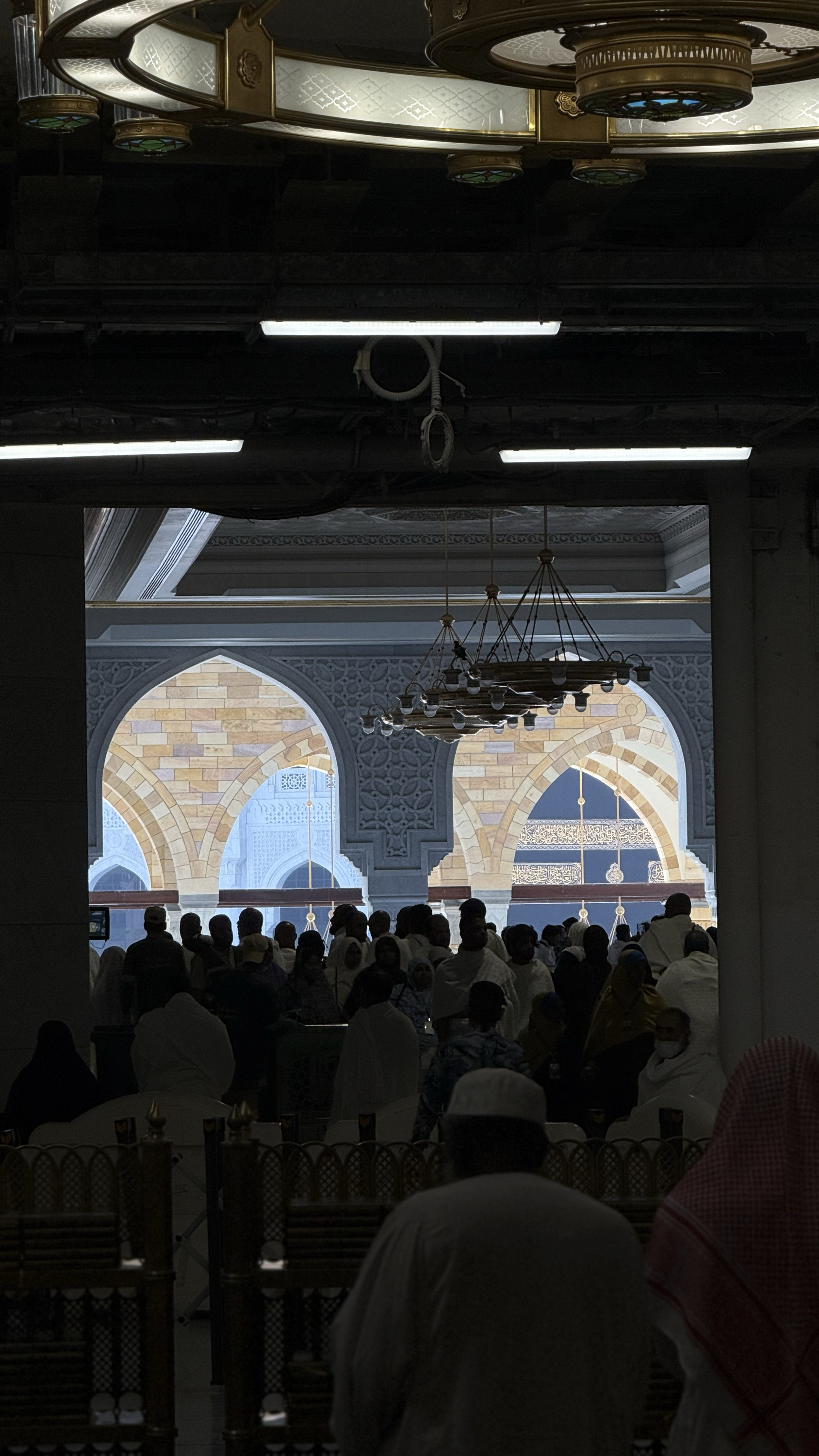
Against the lit arches of the mosque, the worshippers are cut out in black. Robes, shoulders, the round of a head: shapes only, filled in with shadow. The light behind them has taken their faces cleanly away.
The silhouette is the crowd's quieter cousin. Where the crowd removes the face by number, the silhouette removes it by light: the figure is right there, close enough to touch, and still unreadable. Backlighting is the gentlest kind of anonymity. It hides nothing on purpose. It simply keeps its subjects on the dark side of a bright window.
Photographers love a silhouette for its drama, but its deeper gift is discretion. In a place of worship a legible face would be an intrusion, a private devotion made public. The silhouette lets the archive stand inside a sacred space and record the fact of prayer without recording the person praying. It witnesses without exposing.
And it universalises, as all these methods do. A silhouetted figure bowing could be anyone who has ever bowed. Strip the features and you strip the particulars: the age, the nationality, the wealth or want that a face would broadcast. What remains is the posture alone, which is the only part that was ever anyone's business.
Light can take a face away more kindly than any crop.