The Decision to Use Brass
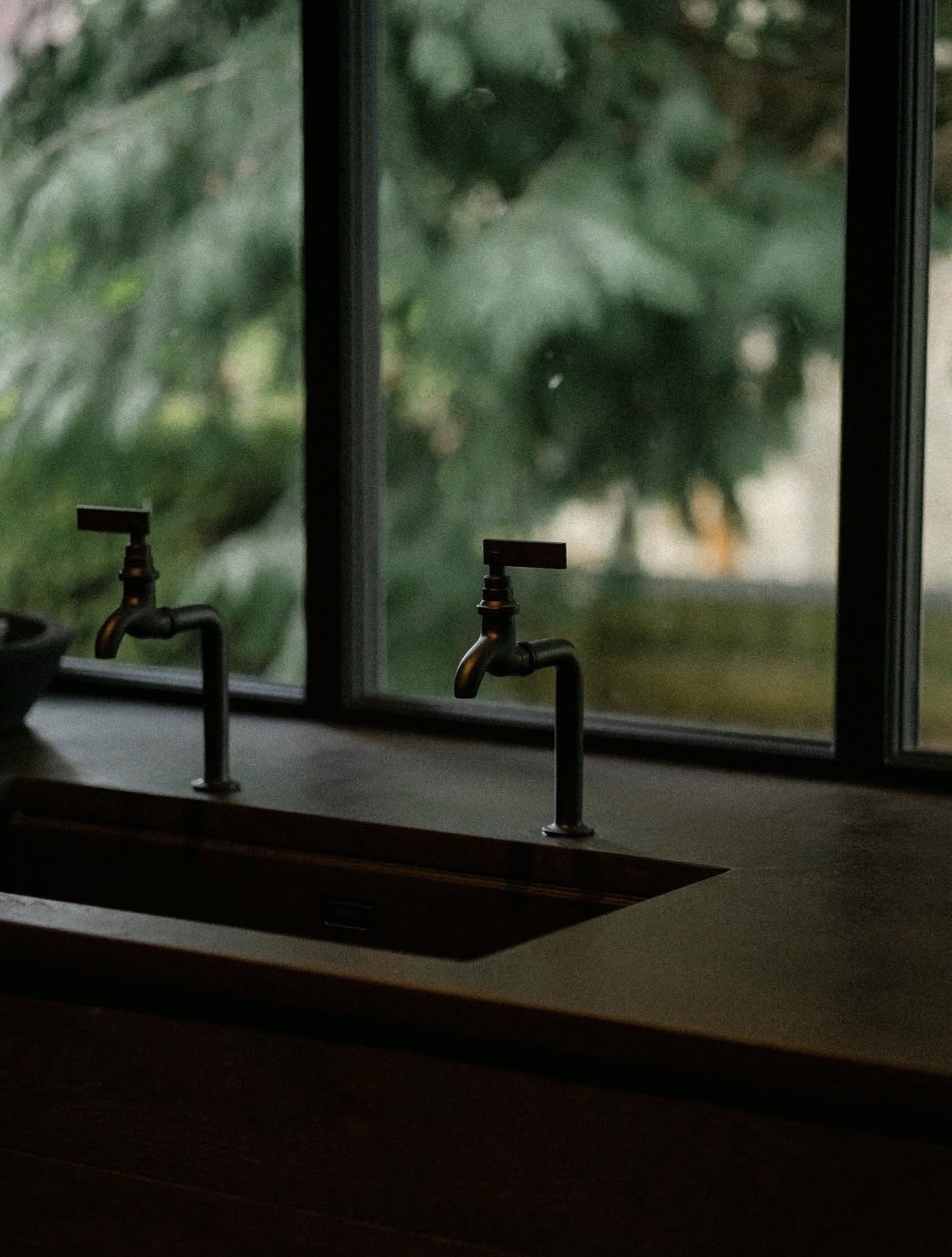
Hardware is the detail that dates a room fastest and endures longest when the choice was made for the right reason.
The door handle is touched on every entry and exit. The tap is turned multiple times a day. The light switch is pressed without looking. These are the objects in any room that accumulate the most contact, and they are also among the objects specified last, often by whoever is closing out the budget after everything else has been decided. The consequence of that ordering is visible in almost every space where the hardware feels slightly wrong: not wrong enough to name precisely, but wrong in a way that makes the whole room feel less resolved than it should.
Brass has outlasted every decade that declared it finished. It was unfashionable in the 1990s, when chrome was modern and anything warm-toned read as dated. It returned not because taste reversed itself on a whim but because chrome aged badly in ways brass does not: it scratched to reveal base metal, it corroded at the joins, it looked institutional rather than considered. Brass tarnishes to a surface that most people now recognise as richer than the surface it started at. The unlacquered version that darkens where hands have touched it most is doing something no chrome fitting has ever managed, which is recording its own use.
The reason a brass fitting endures when a chrome one dates is not purely aesthetic. It is material. Brass is an alloy that was chosen by people making things to last before the question of whether it was fashionable had any meaning. Its return to interiors and hospitality is a recognition, made more or less consciously, that some material decisions predate the cycle of taste and sit outside it. Choosing brass is not a trend decision. When it is made well, it is a decision not to make a trend decision, which is a different and more durable thing.