Before the Renovation
The room that is about to be dismantled is rarely photographed. The room that has just been renovated is photographed immediately and at length. The record almost always begins after the change, which means what existed before is preserved only by accident, if at all.
This is an odd gap in the way institutions think about their own histories. The brief for a renovation begins with what the space will become. Nobody in that meeting is commissioned to document what it currently is, in full, before the work begins. The assumption is that everyone knows what it looks like. By the time the hoardings come down, that knowledge has already started to blur. Photographs taken on phones during the construction period, if they exist at all, are procedural records of the work rather than editorial records of what was lost or changed.
What the archive preserves, when it exists, changes the way a renovated space is understood. A photograph of a hotel corridor as it was twenty years ago is not just a historical document. It is a measure of every decision the renovation made: what was kept, what was updated, what was removed because it no longer suited the brief, and what was removed because it no longer suited the decade. These are different kinds of removal, and the before photograph is the only thing that makes the distinction visible.
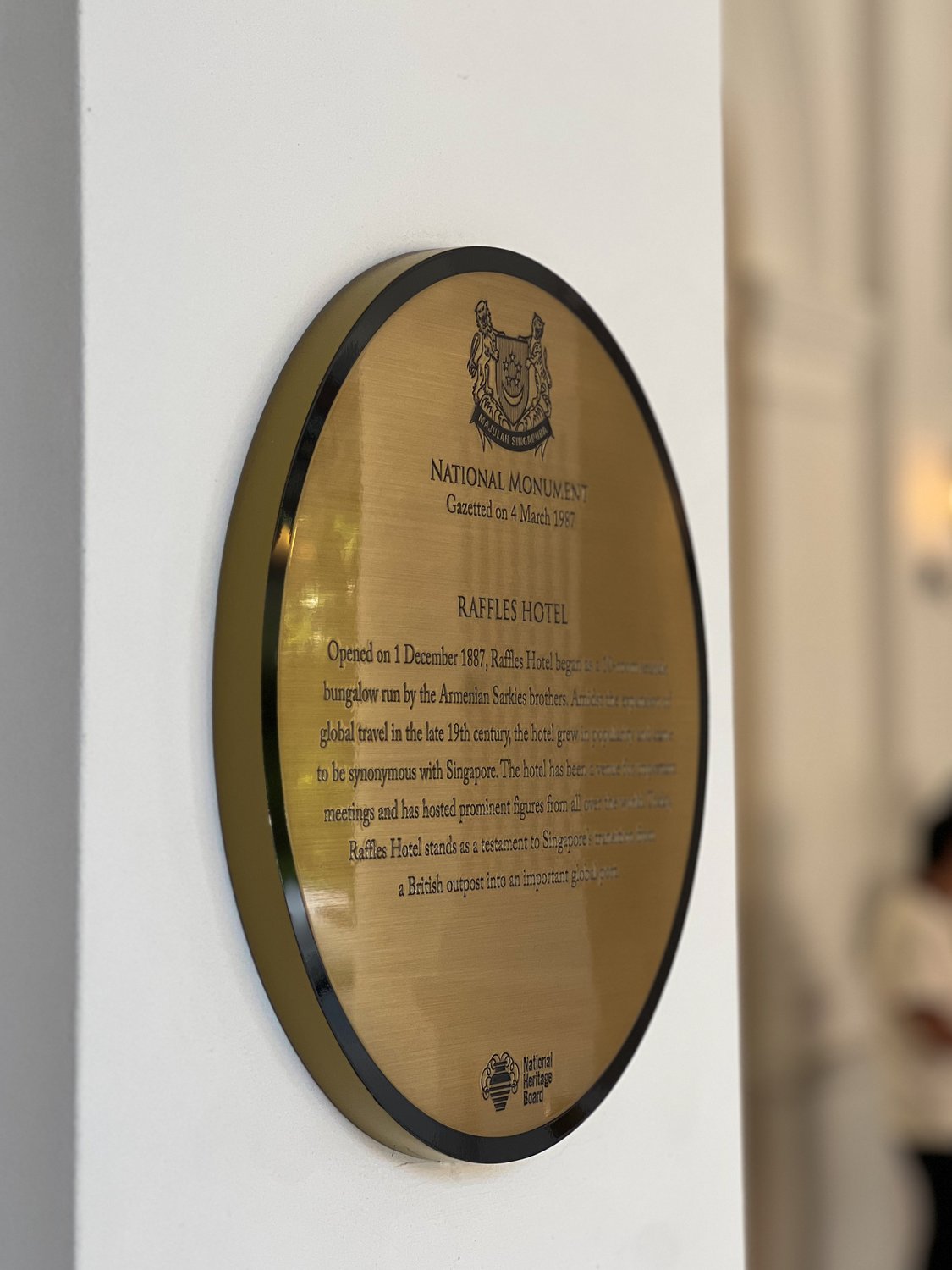
Some places have understood this. Raffles in Singapore has been photographed at every stage of its long life, and those photographs now form part of what the property is: the layered record of a building that has been through many versions of itself and remained recognisably itself throughout. The photographs do not just document history. They are evidence of continuity, which is a more valuable thing for a hotel to be able to show than any single renovation could provide.
The before photograph is the one that almost never gets made. The commission to make it would need to come from someone who already understood what was about to be lost, and that understanding almost always arrives too late.