What Oud Communicates
In the perfume vocabulary of the West, oud is a note: a dark, resinous accent that arrived in European perfumery in the early 2000s and has been used, sometimes knowledgeably, ever since. In the Gulf and across much of the Muslim world it is something else entirely. It is not a note. It is a language, spoken fluently by everyone, with a grammar of occasion, generosity and welcome that takes visitors years to fully read.
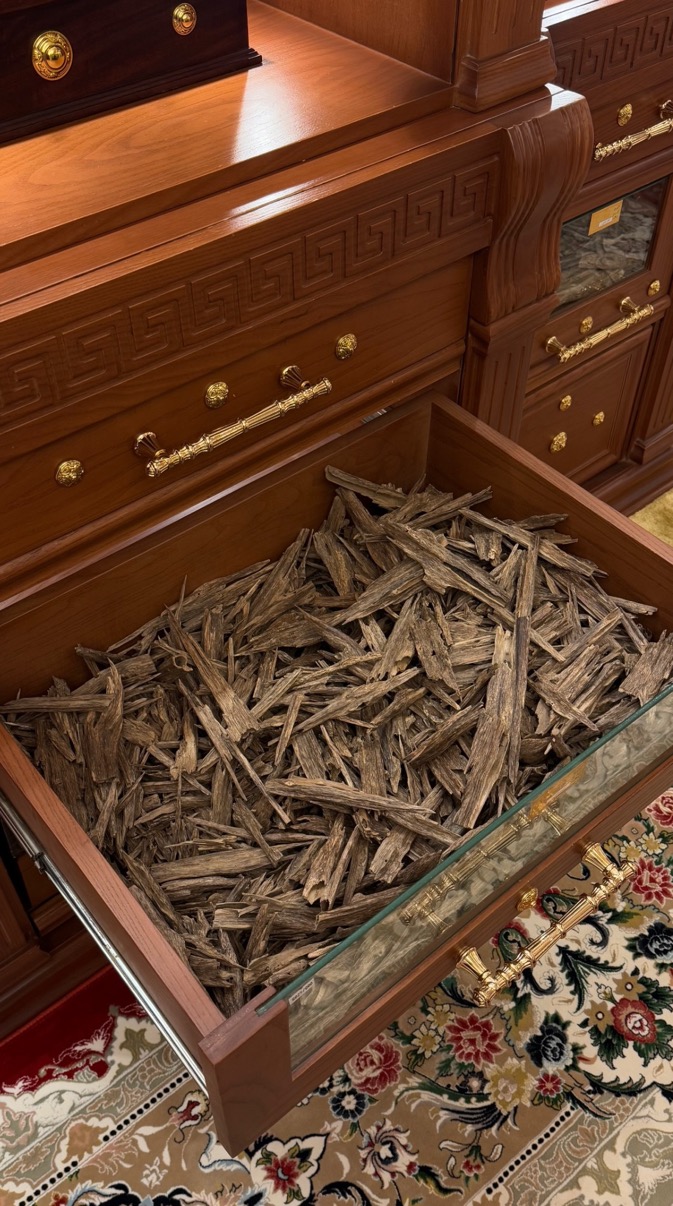
The material itself explains some of this. Oud is the resin-saturated heartwood of aquilaria trees, formed only when the tree is wounded and responds; the finest grades are older, rarer, and dearer by weight than silver. It is sold from open drawers in souks from Makkah to Doha, examined piece by piece, burned rather than sprayed. The smoke of a good piece is offered to guests as a matter of course: the burner passed around a majlis, each visitor perfuming their clothes in turn. To be received with oud is to be told, without a word, what your visit is worth to the host.
This is scent behaving as hospitality infrastructure, and it is far older than the perfume industry. The tradition records the Prophet ﷺ loving perfume, and the region has never needed a second reason: scent before prayer, scent for guests, scent as the finishing of any occasion that matters. The drawer of oud in a Makkah shop is not a luxury counter. It is closer to a cellar of vintages, and it is consulted with the same seriousness.
For the Western houses now building oud into everything, the lesson is not about the ingredient. It is that in one part of the world, fragrance never became a personal accessory. It remained social: something done for others, offered to others, remembered by others. A perfume culture where the question is not what are you wearing but how were you received. That is what oud communicates, and no amount of the note, used as a note, can say it.